Feeds:
Posts
Comments

Archive for October, 2012

Nicholas Kristof ‏of the NY Times just tweeted: “Sandy has left our neighborhood perfect for Halloween: darkened houses, spooky streets, fallen trees. Just no kids out.”

My sister, a doctor, lives in New York City. She writes: “It’s like there are two cities, one north of 34th St, the other south of 34th St. The ‘south’ city has no traffic lights, no electricity, every block is patrolled by police cars day and night, stores and schools are closed, people are climbing up 10 to 25 floors to get to their apartments because the elevators don’t work, cars that were parked on the street have floated away, etc.

“The ‘north’ city, where we are, is pretty much normal but with traffic jams because everyone is using cars to get around due to the lack of subways. … Many patients cancelled. One walked here today, from 49th to 102 St.”

Meanwhile, Halloween. Suzanne and Erik are taking their dragon-costumed baby around their old Harlem neighborhood.

Erik’s mother and sister and kids had to give up the idea of taking Amtrak to visit their old haunts in New Jersey, as Amtrak Northeast Corridor service  is cancelled post-hurricane. Still, they came all the way from Sweden to trick or treat with old friends in Princeton, so they rented a car and are knocking on doors right now.

My husband and I went to our two-year-old grandson’s neighborhood park, where all the little kids dress up and there are hot dogs and delightful festivities of all sorts. One event is a “fashion parade.” Each costumed kid emerges from a little tent, is announced to the adoring, camera-clicking adults, and walks down a runway.

My grandson had a fireman costume to go with his spiffy fireman rain boots.

Read Full Post »

Another MassChallenge entrant that, like Erik’s company, won start-up money on October 23 is Lovin’ Spoonfuls. I was delighted to see this worthy nonprofit  mentioned by Noelle Swan in an article on food resources in Spare Change News, sold by Homeless Empowerment Project vendors.

“The first time Ashley Stanley walked into the back room of her local grocery store in search of discarded food, she found towers of eggplants, tomatoes, and potatoes rising up around her. The produce was not spoiled or rotten; it simply no longer fit on the display shelves and had been moved off the floor to make room for fresher shipments. Dumbfounded, she asked if she could have the food. She loaded up her car with as many vegetables as she could and drove to Pine Street Inn, a homeless shelter in Boston. …

“A recent study from the Natural Resources Defense Council lends credibility to Stanley’s suspicion that the country is not experiencing a lack of food. Nearly half of the food produced in the United States never makes it to the table, according to the study released in August 2012. Food goes to waste at every link in the food chain. Farmers plow unharvested crops into the ground, grocers discard unsold food by the caseload, and restaurants pour mountains of leftovers into dumpsters. In total, Americans throw away $165 billion worth of food every year, 40 percent of all the food produced in the nation.

“At the same time, 1 in 5 Americans was unable to pay for food at some point in the last year, according to a recent Gallup poll. …

“When Stanley first showed up at the door to Pine Street Inn with her arms full of vegetables, she said the staff seemed shocked to see her. …

“Since then, the former corporate luxury retailer has redistributed more than 150,000 pounds of food to area homeless shelters, domestic abuse safe houses, and food pantries. She started out delivering food in her own car while seeking donations and grants. Today, she has three employees, two trucks, and a waiting list on both sides of the equation.

“Lovin’ Spoonfuls is just one of a handful of food rescue organizations in the Boston area.” More.

Photograph of Ashley Stanley by Mike Diskin

Read Full Post »

Lisa W. Foderaro writes in today‘s NY Times (here) about several elaborate carved-pumpkin events in and around New York City. Her article caught my eye because yesterday Suzanne and Erik took their baby dragon and Erik’s mother, sister, niece, nephews (in costume), yours truly and my husband to something pretty dramatic along those lines. In Providence.

As I was reading Foderaro and feeling competitive with New York, this bit in the story jumped out:

“Two carvers, Ray Villafane and Andy Bergholtz, who developed a national following on the Food Network’s ‘Halloween Wars’ show, were at the [New York Botanical] Garden in mid-October, using six-inch rinds of Atlantic Giant pumpkins to sculpture the zombie, whose organs and intestines poke through his cracked ribs. Their assistants were busy harvesting chunks of pumpkin with handsaws and, for the zombie’s jeans, steaming pumpkin rinds.

“Mr. Villafane, a commercial sculptor who has made a year-round business out of carving pumpkins, said … his one disappointment this year was that the official ‘all-time biggest pumpkin,’ the first to weigh more than a ton, did not make it to the Bronx, as was planned. The 2,009-pound specimen, grown by Ron Wallace in Coventry, R.I., ran into trouble.

“ ‘It sprang a leak and rotted on the way,’ Mr. Villafane said. ‘We wanted to carve the world-record holder, so that was sad.’ ”

Well, excu-use me! A Rhode Island monster pumpkin should have gone to the Roger Williams Zoo’s Spectacular, which was way better than anything the Times described. I’m afraid that Mr. Villafone tempted fate. Clearly a curse struck that giant pumpkin when it crossed the border.

The Roger Williams Zoo Spectacular lasts the whole month of October, involves 25 carvers carving 25,000 pumpkins (replaced as they decay), and many fun themes (with piped-in music). We wandered from “Star Wars” to Beatles to “Gone with the Wind” to “The Wizard of Oz” and on and on. I was as amazed as the relatives visiting  from Sweden.

The idea of 25 people carving pumpkins for a month is in itself amazing to ponder. How much do pumpkin carvers get paid? What work do they have during the other 11 months? Are any from Rhode Island School of Design?

The Spectacular would have been a bit scary for the youngest among us, I think, but he was jet-lagged and zonked out in the stroller. A buffet before the walk around the lake was super and got us in early, in front of incredibly long lines. Read more about it all here.

Photograph by Suzanne, Luna & Stella

Read Full Post »

The 2012 Curry Stone Design Prize winners have been announced. The awards, given to “social design pioneers,” will be presented at the Harvard Graduate School of Design on November 15.

How cool are these winners?

According to the Curry Stone website, New York City’s “Center for Urban Pedagogy (CUP) collaborates with teachers and students, policy experts and community advocates, and artists and designers to visually communicate complex urban-planning processes and policy-making decisions.”

Liter of Light, Manila, Philippines, uses water in bottles to create solar lamps for people living in dark tenements.

“Model of Architecture Serving Society — aka MASS Design — is a Boston-based architecture firm that has created a niche practice in designing healthcare facilities in resource-limited settings, primarily in countries emerging from crisis.”

The Riwaq Center for Architectural Conservation in Ramallah “has spent more than two decades documenting Palestinian heritage and culture through restoration of the built environment.”

“Jeanne van Heeswijk is an artist who facilitates the creation of lively and diversified public spaces, typically from abandoned or derelict sites.”

More here. Be sure to check the pictures here.

Photograph: Jeminah Ferrer
The Liter of Light project uses water  in bottles to create solar lamps for the poor.

Read Full Post »

According to Lisa Gansky at Shareable (an online community offering tips for a better life through sharing), home food businesses are back.

In August 2012, writes Gansky, the California State Assembly passed legislation to ensure legal status for “small-scale cottage industries that sell baked goods and other ‘non-potentially hazardous’ food items produced in home kitchens.

“We’re talking homemade cookies and brownies, jams, jellies, fruit pies, mixed nuts, flavored vinegars, dried teas, roasted coffee, and other yummy stuff that’s already legal in more than 30 other states. …

“The California Homemade Food Act … clears the way for home cooks in the world’s eighth-largest economy to make and sell a wide range of products without the need to invest in commercial kitchen space or comply with the zoning and regulatory measures that govern larger producers and producers of meat and dairy products.” Read more at the Christian Science Monitor.

What about food-business incubators like the wonderful one I visited when Suzanne was still living in San Francisco? I guess they will adapt. After all, some entrepreneurial food businesses do need a commercial kitchen. Read about the good work of San Francisco’s La Cocina here.

I also know of two Massachusetts incubators for food entrepreneurs that have helped to launch successful companies. One is midstate at the Franklin County Community Development Corporation, here. The other, CropCircle Kitchen, is in the Greater Boston area — Jamaica Plain.

Photograph: Lucas Jackson/Reuters/File
Butch Bakery cupcakes  in New York City. California has joined more than 30 other states in allowing small businesses that make jams, jellies, pies, cookies, brownies, and other treats to operate out of the owners’ homes instead of requiring a commercial kitchen.

Read Full Post »

Boston Photos

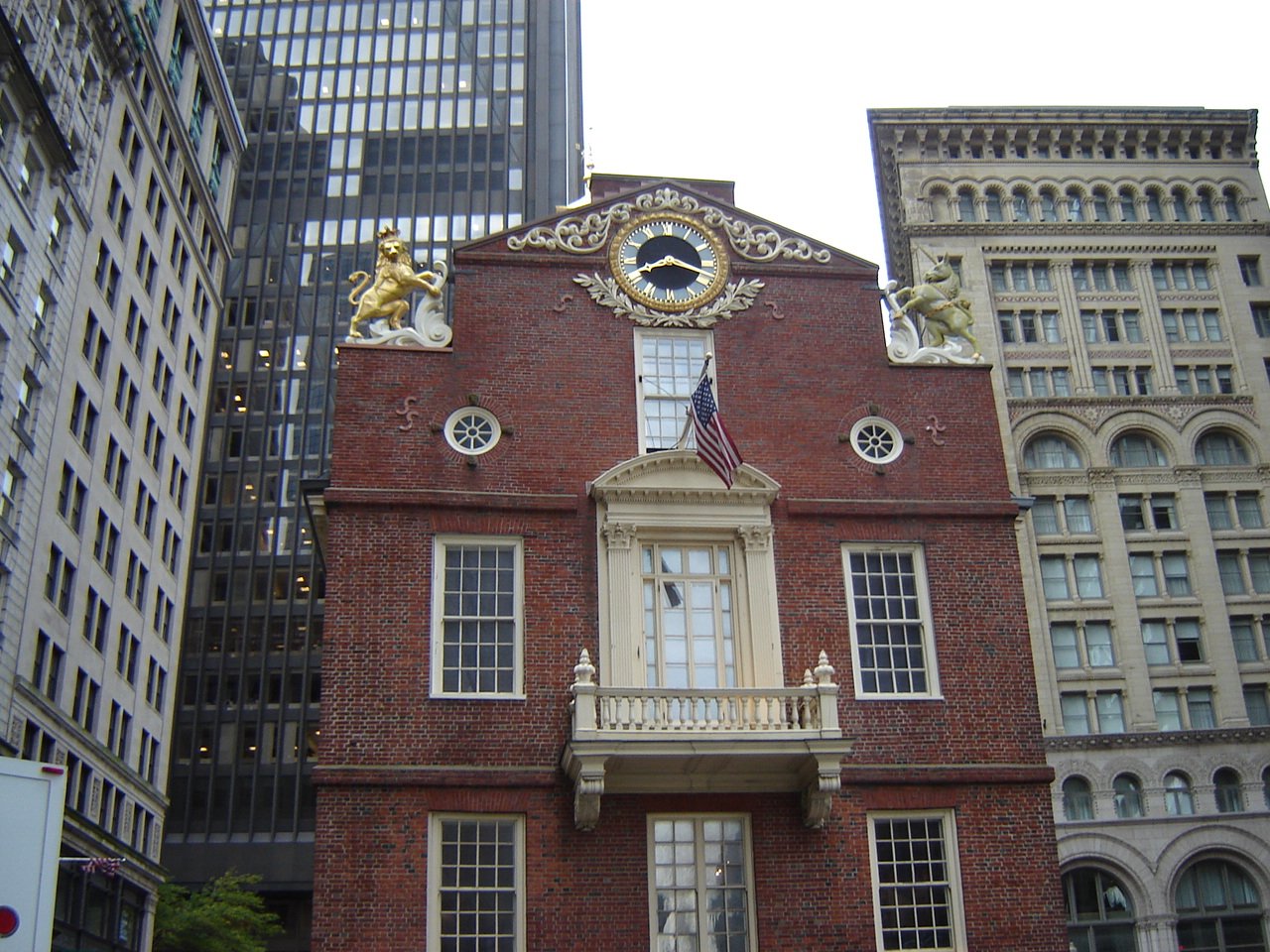
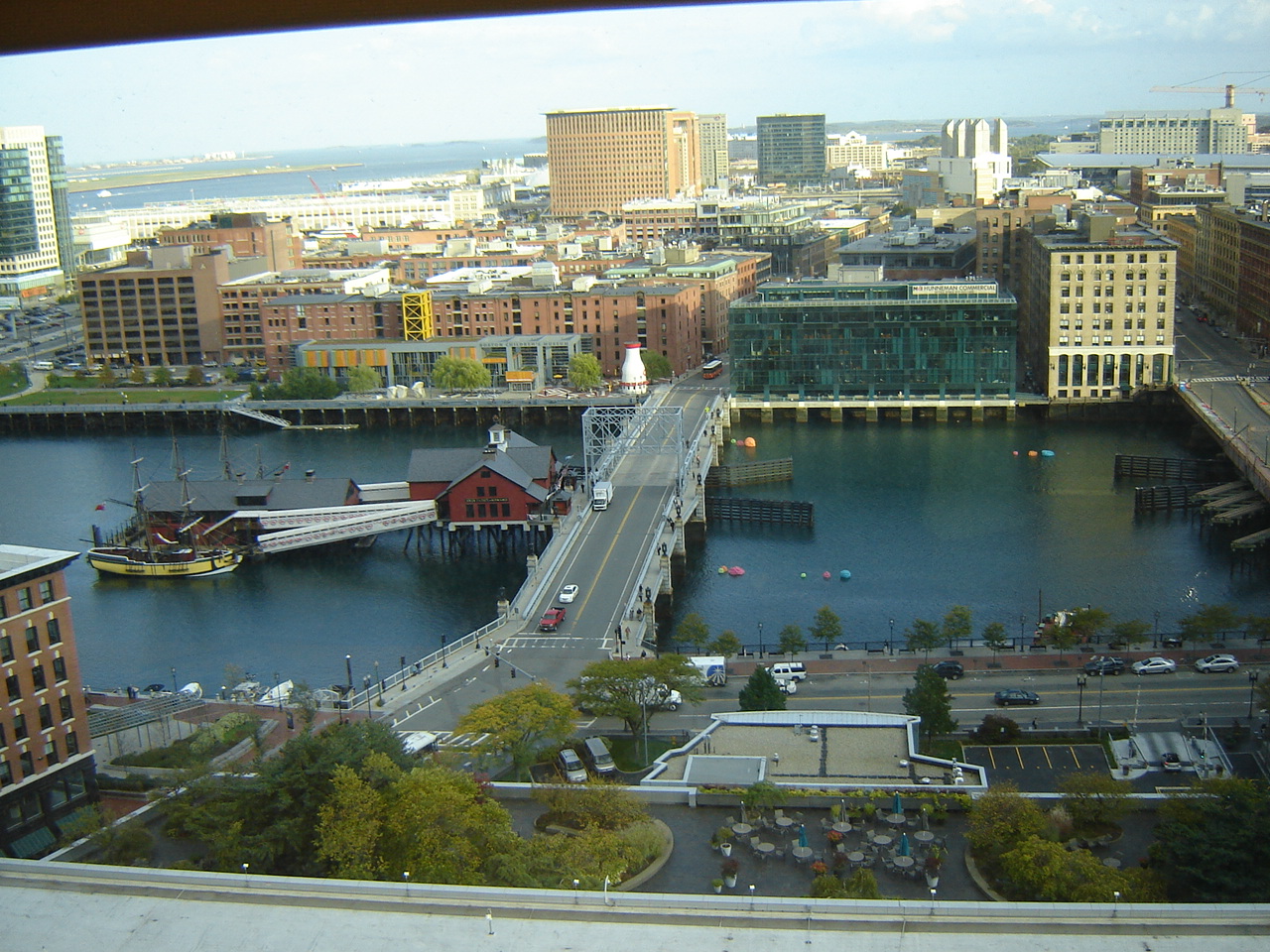
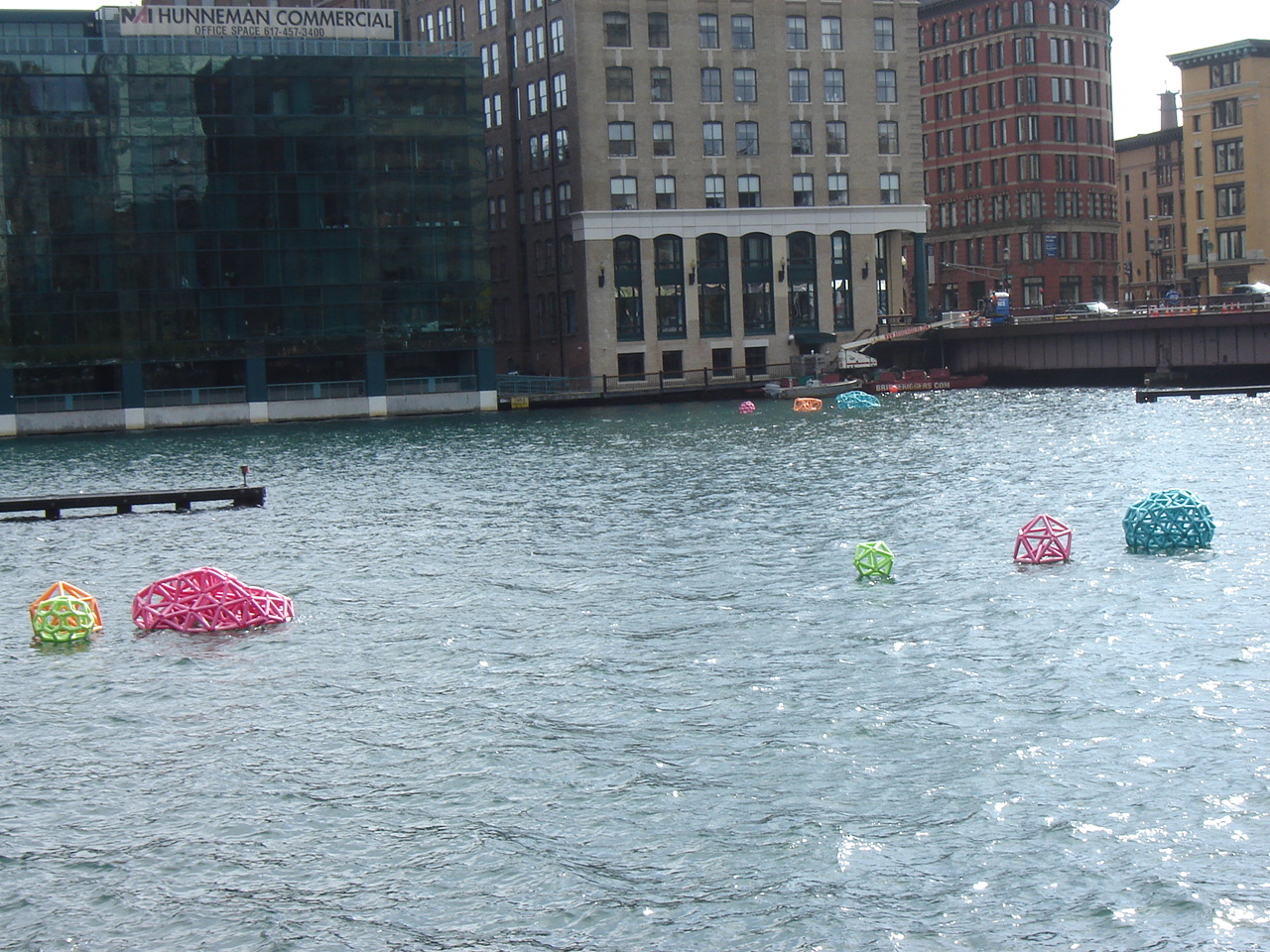
Here are a few recent photos of Boston, including a sun-dial sculpture dedicated to healers through the ages at Massachusetts General Hospital, the original State House, and Fort Point Channel from my office building. Can you see the brightly colored, twisty toys in the channel? Art objects appear in the water every once in a while and remain for a couple months before they vanish.

Read Full Post »

I like stories about people who want to help others and then do it by sharing whatever skill they have.

Mary Wiltenburg writes in the Christian Science Monitor about a woman who conveys her love of knitting to men in prison. It took persistence to make it happen.

“The first warden Lynn Zwerling approached with her idea recoiled as if she might bite. The second wouldn’t meet with her. The third claimed to love the idea, then fell out of touch. Outrageous, said the fourth.

“The fifth, Margaret Chippendale, at a minimum-security men’s prison outside Baltimore, didn’t have much hope for Ms. Zwerling’s plan either.

” ‘She brought the program to me and told me: “Your inmates will get hooked. It will relax them, empower them,” ‘ remembers Ms. Chippendale, a 40-year veteran of Maryland’s Department of Public Safety and Correctional Services. ‘And my gut reaction is: “Lynn, I’m always looking for ways to do that, but I’m not sure I’m going to get a bunch of big, macho guys to sit around a table and knit.” ‘ …

“Now, nearly three years later, 254 felons have passed through the Knitting Behind Bars program. Its annual budget is $350, which Zwerling and fellow volunteers raise selling yarn-ball necklaces at the annual Maryland Sheep and Wool Festival. Other donations come through Ravelry.com, a social network for knitters. …

“Adam Hoover is working on an electric blue-and-black striped hat, a fresh pirate skeleton tattoo still raw on his pale forearm.

“The idea that participants give many of the knitted hats they make to local elementary school students appealed to Mr. Hoover. ‘I know how it feels to be out there in the winter sometimes,’ he says. …

“Hoover and [inmate] Harris say the group is a place where they can relax and let their guard down. As they say this, the group falls silent while a red-faced young man with a spider-web tattoo on his neck tells Zwerling about his little brother’s troubles in foster care.

“Nowhere else in the prison do guys share their personal struggles like this, whispers Hoover. ‘I think the ladies bring it out of you,’ says James Russell, working on a pale blue hat beside Hoover. ‘They just have an ease, like you can talk to them about anything. Like a mother would do.’ ”

Read more.

Photograph: Joanne Ciccarello/Christian Science Monitor
Lynn Zwerling, cofounder of Knitting Behind Bars, sits in front of the Jessup Pre-Release Unit in Jessup, Md., where she teaches inmates to knit.

Read Full Post »

Aren’t inventors great? There certainly seem to be a lot around these days.

Of course, I am still a bit high on the Mass Challenge Awards last night, thrilled about Erik and the other deserving winners, like the nonprofit GRIT (Global Research Innovation and Technology), which makes an inexpensive wheelchair for use in the Third World.

Here’s another cool invention, from Israel: a cardboard bicycle.

Ori Lewis and Lianne Gross write at Reuters, “A bicycle made almost entirely of cardboard has the potential to change transportation habits from the world’s most congested cities to the poorest reaches of Africa, its Israeli inventor says.

“Izhar Gafni, 50, is an expert in designing automated mass-production lines. He is an amateur cycling enthusiast who for years toyed with an idea of making a bicycle from cardboard. …

“Cardboard, made of wood pulp, was invented in the 19th century as sturdy packaging for carrying other more valuable objects, but it has rarely been considered as raw material for things usually made of much stronger materials, such as metal.

“Once the shape [of Gafni’s bicycle] has been formed and cut, the cardboard is treated with a secret concoction made of organic materials to give it its waterproof and fireproof qualities. In the final stage, it is coated with lacquer paint for appearance.

“In testing the durability of the treated cardboard, Gafni said he immersed a cross-section in a water tank for several months and it retained all its hardened characteristics.

“Once ready for production, the bicycle will include no metal parts, even the brake mechanism and the wheel and pedal bearings will be made of recycled substances, although Gafni said he could not yet reveal those details due to pending patent issues.” Read more from Reuters, here.

Check this video posted by Gadizmo.

Baz Ratner /Reuters /Landov

Read Full Post »

The Old Cambridge Baptist Church in Harvard Square is quite the place for Good News.

Worthy groups rent space in the basement: Cambridge Child and Family Associates (mental health clinicians); the Homeless Empowerment Project, which organizes the Spare Change News vendors; the Adbar Ethiopian Women’s Alliance; the National Gay and Lesbian Task Force; and Solutions at Work (“helping people transition out of homelessness”).

But the reason I know about the Old Cambridge Baptist Church is that I went there Sunday to see ballet.

According to the church’s website, the José Mateo Ballet Theatre “occupies the worship space of the congregation for six and a half out of seven days per week.  The church and the ballet company are long term partners, with a forty year lease.  On Saturday nights, the worship space is reconfigured from a ballet studio into worship space, as chairs, altar table, organ, piano, and choir risers are moved into place for the worship service on the following day.”

Train buddies have been telling me for years that the ballet company is good and that the Sanctuary Theater is beautiful, and finally I got there. The program consisted of three pieces. The audience sat café-style at little tables. A small bar sold beverages and chocolates, and in the intermissions an accomplished pianist played classical music.

José Mateo, a Princeton grad originally from Cuba, is a talented choreographer with an energetic outreach to the community and to groups previously underserved by ballet. (Check this site.)

The three selections that made up his “Mysterious Arrangements” on Sunday were beautifully performed, and it was great to see the dancers up close in a church. One piece, performed to recorded Bach (Orchestral Suite #2), was an expression of joy. Two other dances, choreographed to Messiaen’s “Quartet for the End of Time” and to Philip Glass’s “String Quartet #4,” were both abstract and emotional.

A few words from the director’s program notes convey the vibe: “abstract,” “personal and social tensions,” “dramatic,” “physical and psychological dynamics,” “ambiguous.”

The Ballet Theatre also does a “Nutcracker” every year in a variety of locations to reach diverse audiences.

Photograph of José Mateo ballet “Circles”: Gary Sloan

Read Full Post »

The Mass Challenge Awards Ceremony takes place tomorrow night at the Boston Convention Center. Erik is one of the 26 entrepreneurs who are finalists in the Class of 2012. He first read about Mass Challenge on this very blog the day before the deadline for applying!

The whole family is excited that Erik has done so well. Suzanne and John (both entrepreneurs) will be sitting at his table at the big event. Erik’s mother, lately arrived from Sweden, will be strolling the baby around South Boston with a little help from yours truly.

The Awards Ceremony includes Governor Deval Patrick. Orlando Jones will moderate. And I am a particular fan of speaker Gerald Chertavian.

A native of Lowell, Chertavian so appreciated the mentoring he received in high school that he served as a Big Brother in college and for years after. Having sold his own entrepreneurial company, he decided to give back by building an organization to give young low-income but motivated people a paid year to prepare for the workforce through internships and training.

For more on the unique approach of Chertavian’s nonprofit YearUp, now in many U.S. cities, look here.

YearUp photograph of Gerald Chertavian

Read Full Post »

The fall color is the same pretty much every year, and yet it’s always amazing.

I walked around Concord and Cambridge, parked near a West Concord brook to go to the street fair (where a woman at Dabblers reminded me how to cast off in knitting), and hung out with an entertaining two-year-old.

Read Full Post »

Cathryn J. Prince has a story in the Christian Science Monitor about a research ecologist who thinks we can have our cake and eat it too: that is, have a strong economy and a sustainable future.

Prince writes, “As head of the conservation biology department at Antioch University New England in Keene, NH, [Tom] Wessels isn’t against chopping down trees or clearing land to farm. He just wants to see more people embrace sustainable forest and land management practices.

“Wessels, trained as a research ecologist, says economics plays as much a role in protecting the environment as does saving energy. Think how the adoption of fair trade principles for growing and selling coffee have changed the economics of that industry. Forests can benefit in the same way.

“ ‘Adam Smith, the father of modern economic theory, wrote about this in Wealth of Nations,’ Wessels says. ‘People will act out of self-interest, but they can support each other doing it. …

“Market forces can help to conserve forests and farmlands, says Wessels, who also serves as chair of the Vermont-based Center for Whole Communities. …

“ ‘We are incredibly frivolous about our energy use,’ Wessels says. ‘Any organism or population that is energy wasteful gets selected out of the system.” Charles Darwin explained this when he wrote about survival of the fittest, he says. Survival of the fittest also means survival of the most adaptable, and the most energy efficient, he says. …

“Partnering with more than 400 organizations in 47 states, Whole Communities aims to help create communities where people rely on each other for their food and other needs.

“For example, Wessels would like to see Detroit become a different kind of urban jungle. The city has lost about 50 percent of its population since the late 1980s. Empty lots abound. But now community gardens have begun to fill these open tracts with food crops. The Detroit Food Policy Council and the city government want to make Detroit food secure by 2020 – meaning that everyone will have access to sufficient, safe, and nutritious food.

“ ‘A lot of our focus is around food security,’ Wessels says. ‘Detroit will become a model for other urban areas.’ ” More here.

Photograph: Cathryn J. Prince

Read Full Post »

I came across a nonprofit organization called BUILD on the website of the accelerator incubator MassChallenge (where Erik is among 26 finalists who will be honored at Tuesday’s awards). BUILD helps inspire students to graduate from high school by getting them engaged in an entrepreneurship project.

“MassChallenge Partner BUILD Greater Boston is gathering a select group of entrepreneurs to mentor student business teams in some of the city’s lowest performing high schools.

“BUILD is an exciting 4-year college success program that uses entrepreneurship to motivate disengaged students to excel academically, graduate from high school, and succeed in college. …

“To help students become college-eligible, BUILD also provides tutoring, test prep, mentoring, and college planning advice. Entrepreneurship is the hook — but college is the goal. Over the past 13 years, 95% of BUILD seniors nationally have been accepted to college, with 88% accepted to 4 year colleges and universities.

A student team calling itself “the Dream Team and their mentors, including MassChallenge Alumni Shonak Patel, won 1st place at the Youth Business Plan Competition at Northeastern University on June 2, 2012, receiving $1,500 to start their business.”

According to the Bay State Banner, the Dream Team’s product is an “inspirational iPhone case, made of bamboo and customizable to have the purchaser’s own dream etched into it.” More here.

See video highlights of the competition from the Boston Business Journal.

Being a BUILD mentor gave me the opportunity to use my passion for entrepreneurship to inspire greatness in others.— Shonak Patel, Charlestown Mentor and MassChallenge Alumni. 

Read Full Post »

Today I want to highlight Taylor Barnes’s story in the Christian Science Monitor about the transformative effect of volleyball among poor Brazilian children.

But first an admission that the topic of volleyball reminds me (incongruously) of the movie A Thousand Clowns, in which an out-of-work writer goes around New York City fulfilling lifetime ambitions such as  standing on Park Avenue at dawn and hollering, “All right, all you rich people; everybody out in the street for volleyball.”

OK. Got that off my chest. Back to Brazil.

“Roberto Bosch’s volleyball school was getting nowhere,” writes Barnes. “Then he invited kids from the slums to join for free.

“The gangly [Bosch] joined his first volleyball club at age 12; before he was old enough to drive, he was already under contract and being paid for playing the sport. In college, Betinho, as he is known [in Rio], dropped out of his classes in economics to travel with a professional team. When he competed in the youth world championships in Italy at age 20, he was considered the best player on earth.

“But health concerns made him leave pro volleyball just as his peers were graduating from college. Soon he found he was struggling to find a new direction for his life. …

“His wife suggested he start his own volleyball school.

” ‘Given that I was really depressed, really low at the time, I didn’t think I was capable’ of running a school,’ he says. Still, he set up a volleyball court on Rio de Janeiro’s glamorous, celebrity-studded Leblon Beach.

” ‘In the beginning, it was one old net, three old balls, and one student, which was my wife,’ he recalls. …

“Then Betinho had an idea … Why not go to the public schools and offer volleyball lessons to students free of charge?”

Students from the favelas and shantytowns jumped at the chance. As the school’s reputation grew, wealthy children signed up, too. Volleyball became the great leveler in Rio. And Betinho found a purpose in life, better than the first.

More here.

Photograph: Jimmy Chalk
Roberto Bosch teaches beach volleyball on Leblon Beach in Rio de Janeiro. His students come from both local slums and wealthy neighborhoods.

Read Full Post »

Following up on my tree entry a couple days ago, I want to tell you about what two Rhode Island School of Design teachers decided to do with one ancient tree.

An old elm tree that met its end two years ago at the Frederick Law Olmsted National Historic Site in Brookline might have been headed for the chipper, but two faculty members at Rhode Island School of Design had a better idea,” writes Cate McQuaid in the Boston Globe.

“The elm, designated as a witness tree by the National Park Service because it was present as history was made, provided material for the Witness Tree Project, taught each fall by RISD associate professor of American studies Daniel Cavicchi and artist Dale Broholm, a senior critic in the school’s furniture design department.

“Undergraduates took two classes, one in history and one in woodworking. They visited the site, studied Olmsted, often recognized as the father of landscape architecture in the United States, and made objects inspired by what they learned.” More.

Photograph: Dale Broholm/RISD, Witness Tree Project
Wood from the Olmsted Elm after it was processed at a saw mill in Lunenberg last summer and made ready to start a new life.

Read Full Post »

Older Posts »