Feeds:
Posts
Comments

Archive for July, 2011

I make an annual carrot cake. I have an old, tattered newsprint recipe living in a Ziploc bag, but this year the recipe was on a shelf several hours away from where I needed to buy the ingredients (long story), so I’m putting them here for future Internet access.

2 cp flour, 1 tsp baking soda, ½  tsp salt, 1-1/2 cp sugar, 2 tsps cinnamon, 3 eggs, ¾ cp buttermilk, ½ cp oil, 2 tsps vanilla, 1 8-1/2 oz can crushed pineapple, 2 cps grated raw carrots (no liquid), 1 cp chopped nuts, 1 cp flaked coconut

I will print the recipe, too, if you ask.

The question is always what to do with the extra buttermilk. I have used it for cornbread in the past. You can also put it in your blueberry pancakes the next morning. I don’t know anyone who likes to drink it.

Except Amelia Earhart.

I’ve been reading a 2010 self-published book called by Allene G. “Squeaky” Hatch, Real Pearls and Darned Stockings: Tales of the Hudson Valley, which includes a memorable visit that Amelia Earhart paid to Squeaky’s family when Squeaky was little.

Squeaky’s Uncle Clint was stowing away his biplane at the Hudson Airport one night when he saw storm clouds threatening. A woman approached him from her own plane, and he recognized the famous aviatrix. Writes Squeaky:

“ ‘Could you recommend a good hotel nearby for my co-pilot and me?’ Earhart asked.

“Clint’s answer was that the best place to stay was his farm.” He phoned the house, and Squeaky’s mother rushed madly around to get ready. Having heard that Earhart liked buttermilk, and having none in the house, Squeaky’s mom improvised, mixing viengar with fresh milk! At dinner Amelia Earhart took a polite sip of the “buttermilk.” She didn’t take a second, says Squeaky.

Read Full Post »

In Worcester attending a conference last Wednesday, I worried. Maybe I shouldn’t park my car in the shady part of the lot where there are no lines for parking. I took a chance. When I put the key in the lock at the end of the day, a voice started shouting over and over, “Hey!” I hoped the voice wasn’t addressing me.

“Hey! Hey! Open the window. You parked in front of my gate. I live here. That’s my house. I drive my car in that gate. See that gate? I had to park my car in the street because you’re in front of my gate. All my things were stolen. I had a thousand dollars of stuff. It was all stolen.”

Me: Oh, that’s terrible. I’m so sorry. I saw the fence in front. I’m so sorry. I didn’t see your gate.

“I had a thousand dollars of stuff. They broke in. They took everything. Electronic equipment. Everything. I have the police report. You want to see the police report? I didn’t have you towed.  I had to park in the street.  I live here. See that house. That’s my house. I swing my wife in the hammock. Look. Back up a little. Back up a little more. See that? That’s my hammock. I swing my wife in the hammock.”

Me: It’s very nice. Very colorful. Where’s it from?

“It’s from El Salvador. My wife and I are from Puerto Rico. It’s from the guy who had the house. I live here. I pay all my bills on time. I’m an alcoholic. But I’m responsible. I pay all my bills on time. Look, I have this dollar. I just want to buy a beer, but I don’t have any money. You can give me anything.”

Me: Here’s a dollar. But it’s not good to be an alcoholic. You should go to AA.

“That’s a good idea! Where is it?”

Me: I don’t live in Worcester. You should ask someone in Worcester where there’s an AA.

“Where do you live? I’ll write it down. I’m gonna call you.”

Me: Oh, I live east. Near Boston.

“In Salem? In Salem where the witches are?

Me: Yes. With the witches.

“You should come back. You can park your car any time. I’ll watch it for you.”

Me: You really should have me towed.

“No, no, no. I’ll watch it for you!”

Read Full Post »

The young lady mechanical doll on the soap box stands like a statue.


If someone offers a bill, she flutters her eyelashes, blows a kiss, waves her fan, bows, and turns back into a statue. She is usually in the same spot when I walk to the playwriting class on Thursdays.


Read Full Post »

I am a huge fan of Tyne Daly, the actress. I enjoyed her on the TV series “Cagney and Lacy,” was blown away by her Mama Rose in the musical “Gypsy,” and am not at all surprised by Ben Brantley’s July 8, 2011, glowing review of her portrayal of Maria Callas in “Master Class.”

He writes, “Ms. Daly transforms that script into one of the most haunting portraits I’ve seen of life after stardom.”

But I was not always a fan. No way. Not when Tyne was taking all the ingenue roles at the Jr. Antrim Players in Suffern and a cute guy I knew was always drooling about “Time for Tyne.”

Nope. Starting with Gilbert & Sullivan’s “HMS Pinafore,” in which I was crummy ol’ Cousin Hebe, Tyne snared all the lead roles. We girls in wallflower parts would hiss to one another with resentful envy, “Of course, she comes from a theater family,” and  “Her father is James Daly,” and “The whole family does summer stock.” We didn’t like to admit that Tyne was also very comfortable and capable on the stage, had a sweet voice, and was pretty.

Fortunately we grew up and learned to give credit where credit is due.

Read Full Post »

I went to school with the daughter of the consul general from Taiwan. One time she told me that the people of mainland China looked physically different because of communism.

I thought I already knew a bit about China. After all, my mother had traveled there in the 1930s as an assistant to Owen Lattimore (cowering later under the dark cloud manufactured by Joe McCarthy and his ilk, who saw Reds under every teacup). She was always talking about China. so although I realized my high school friend probably knew more about China than I did, I had doubts about her statement. How could living under communism make a Chinese person look different from family members on Taiwan?

Nowadays, a rapprochement between the two Chinas is in the air. At first I was surprised that so many people living in Taiwan — and accustomed to views like my friend’s — seemed to have no trouble talking about reunification with the mainland. But family does reach out to family.

Now I see that two sections of an ancient scroll are also being reunited. An article in the NY Times last week describes a new Taipei exhibit and the reunification of “Dwelling in the Fuchun Mountains.” Writes the Times:

“Wu Hongyu, a wealthy Ming Dynasty art collector, was evidently not fond of sharing, given his deathbed command to burn his most beloved painting, ‘Dwelling in the Fuchun Mountains.’ Fortunately, a nephew snatched the scroll from the funeral pyre that day in 1650, but not before flames split the work in two.

“During the three and a half centuries since then, the two sections were kept apart by greed, civil war and the vicissitudes of geopolitical gamesmanship. The smaller piece, just 20 inches across, found its way to a provincial museum in Communist-ruled China. The more imposing 21-foot-long section ended up on Taiwan, the island where the retreating Chinese Nationalists — and boatloads of treasures from Beijing’s imperial palace — ended up after they lost the civil war in 1949.

“If the story of ‘Fuchun Mountains’ is richly symbolic of China’s tumultuous history and its six-decade estrangement from Taiwan, then the painting’s reunification last month at the National Palace Museum here in the Taiwanese capital is a made-to-order metaphor for the reconciliation that Communist Party leaders have long imagined for what they deem a breakaway province.”

Who would have thought?

Read Full Post »

I’ve been reading Jason Elliot’s book Mirrors of the Unseen, which is about time he spent in Iran (not long before the green revolution of June 20, 2009, was trampled).

He’s a lovely writer if a bit overwhelming with his ability to compress centuries of history. I liked his earlier book, too, on Afghanistan, An Unexpected Light.

In the car on Sunday I read aloud a section of Mirrors that describes Elliot’s extended stay with Louise Firouz, an American who married an Iranian in the 1960s and has lived in Iran ever since — despite stints in prison and twice having all her family’s property confiscated.

The part I read aloud was about how she had researched, rediscovered, and bred a small horse thought to be extinct, one that turned out to have an ancestor going farther back than the Arabian horse. It’s the little Caspian, which was finally found, in pitiful shape, near the Caspian Sea and in Turkmenistan.

Nowadays you can find lots of videos of these horses on YouTube. I thought I would include this video, which is from a Caspian stud farm in Sweden.

Read Full Post »

Before it got hot this morning, a yoga class was exercising at one end of the Greenway.

At the other end, carousel horses waited for riders.

Meanwhile in New York, an improv troupe approached a different carousel.

Read Full Post »

Did you read in the NY Times about England’s chewing gum artist?

“Ben Wilson, 47, one of Britain’s best-known outsider artists, has for the last six years or so immersed himself in a peculiar passion all his own: he paints tiny pictures on flattened blobs of discarded chewing gum on the sidewalks of London.” The article is sweet, and it shows that an original concept can delight people in large and small ways.

After he “became friendly with the workers in the discount general store that replaced the Woolworth’s, [he] painted a message of love on behalf of Syed Miah, a cashier there who had had a fight with his girlfriend.

“ ‘She thought maybe I’d stuck a sticker on the ground,’ said Mr. Miah, 32. ‘Then I explained that I’d had an artist come and do it. It was brilliant.’ “

Read Full Post »

A friend of mine has a new blog on economic education.  He’s a very good writer with a great sense of history and how history repeats itself. Here he notes that there have always been vested interests in America giving immigrants a hard time. Those immigrants become integral to the fabric of American life, but sometimes their descendants forget the struggle and turn against newer immigrants. We need to remind ourselves of how well things have worked out when newcomers have gotten education, started businesses, hired people, run for office, invested in communities.

Personally, I love to think of America as built by immigrants. Besides, Erik is from Sweden and my daughter-in-law’s parents came from Egypt.

If you sign up to make comments on my friend’s blog, I know he will be happy. I myself am happy when people make comments.

Read Full Post »

Many of Suzanne’s college classmates went into careers that involve helping people. I think that for Liz, who works at the organization Facing History and Ourselves (helping classrooms and communities link the past to moral choices today), it just comes naturally. She has also been an energetically thoughtful friend, who noted a freshman Suzanne’s wistfulness over missing an Easter egg hunt and decided to create one for her. Every college year. Liz later managed the details and complexities of Suzanne’s American-Swedish wedding. (Liz said it was a piece of cake as she was used to Facing History and Ourselves events with zillions of participants.)

Now I am reading about the girls’ classmate Emily, who works for a group that assists people who are seeking asylum in the United States.

Emily weighed in at the Daily Beast last week, offering insight for Jesse Ellison in a column on an asylum seeker currently making headlines.

Writes Jesse of the hotel maid who lost DSK his job, “That she lied on her claim for asylum has been covered with partiuclar zeal. But experts and those familiar with such claims say that dishonesty is common when it comes to refugees—not because they’re intentionally trying to scam the system, but because the way such claims are processed and determined puts asylum-seekers in a position where they may feel they have no other choice.

“ ‘It’s hard for those of us who haven’t gone through those experiences to imagine what it would be like to continually relive something that caused you to flee your country,’ says Emily Arnold-Fernandez, of Asylum Access. ‘When the issue of potentially falsifying testimony comes up, it tends to paint all asylum claimants in black and white. Either you tell the whole truth, and nothing but the truth, 100 percent of the time, or you’re not telling the truth and you have some sort of nefarious purpose. I don’t think that the reality is that stark.’ ”

Read Full Post »

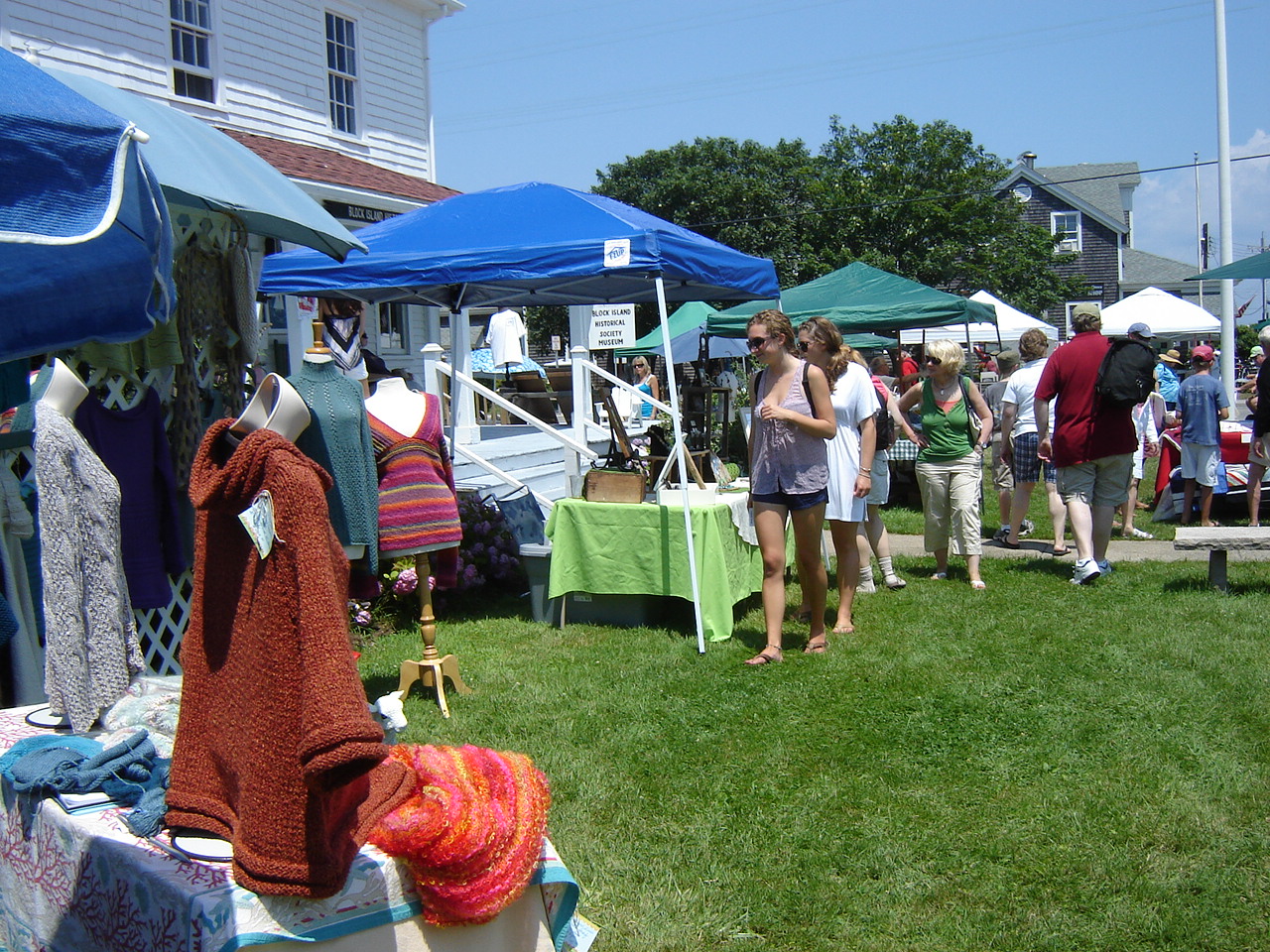
I always like visiting the arts and crafts events on the lawn of the historical society.

Sometimes I come home and tackle my own crafts. The collage cards are generally for birthdays, anniversaries, and sympathy. If I remember, I make Xerox copies for future occasions. I’d be happy to post some readers’ photos of their art or their crafts. E-mail me your photos at suzannesmom@lunaandstella.com.

Read Full Post »

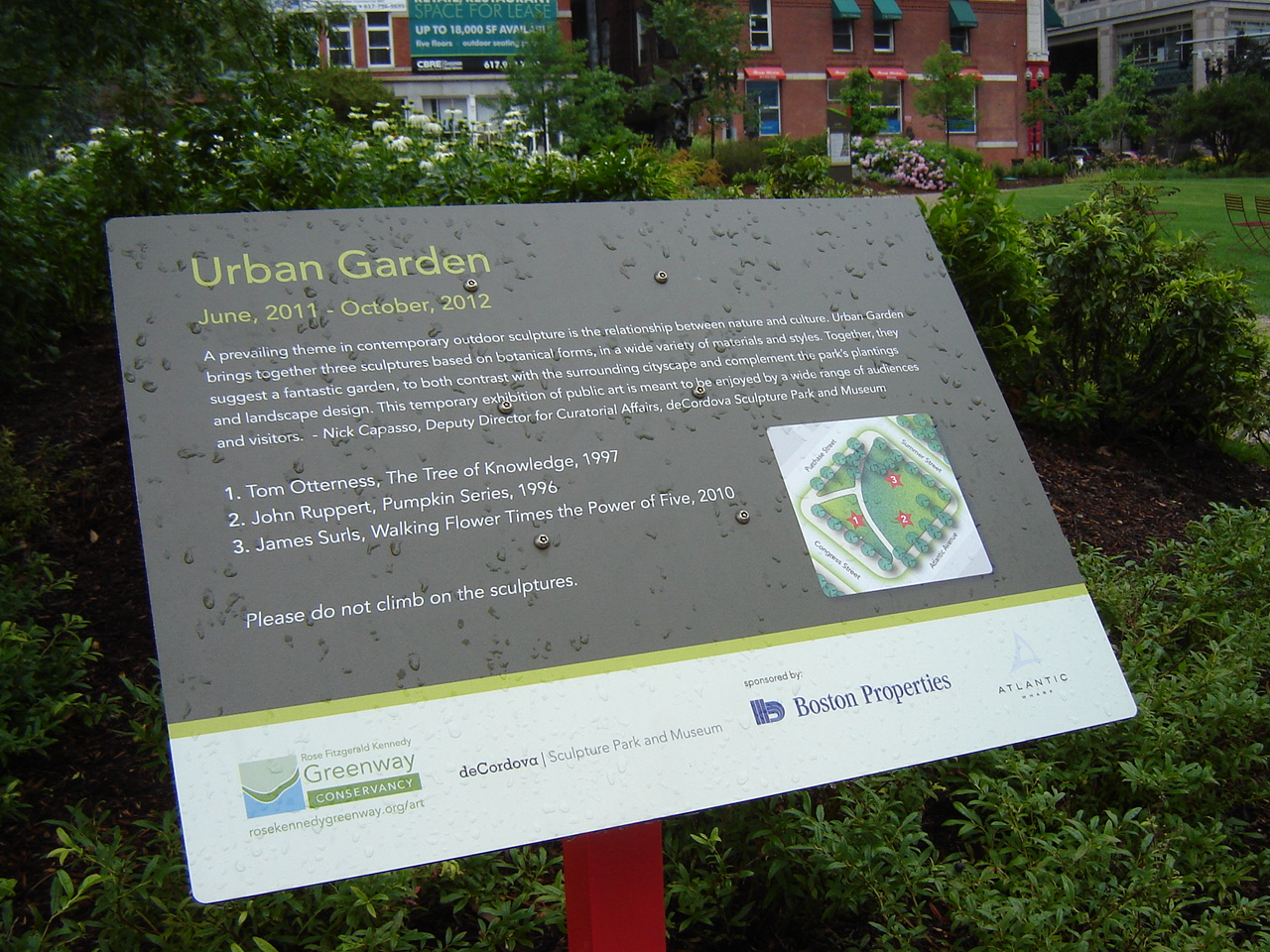
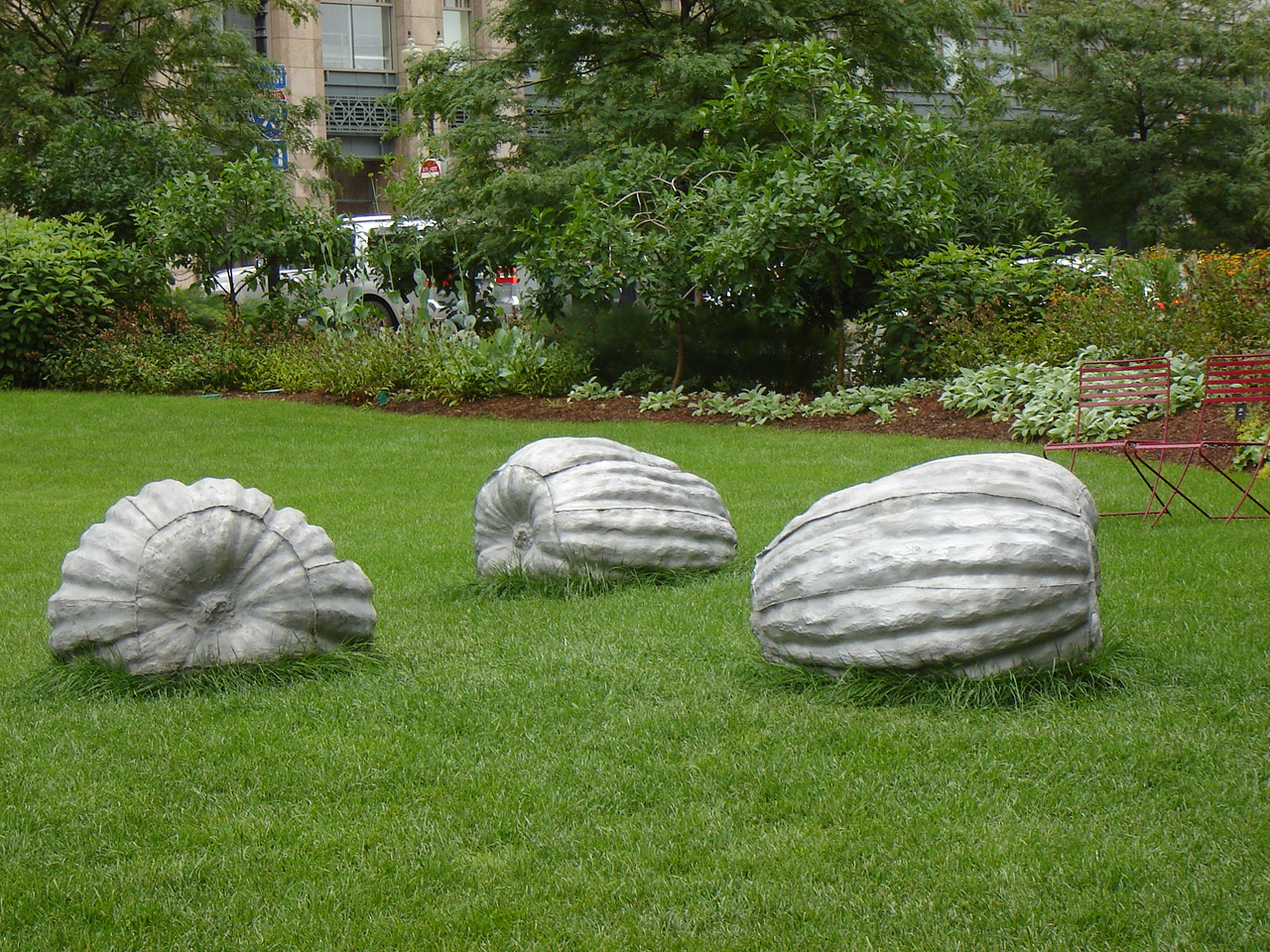
While I was taking my morning walks elsewhere, The Greenway seems to have sprouted sculpture — and in the very spot where mere weeks ago, a sign warned “Grass is Resting” and invited me to hang my art on the rope.

The DeCordova Museum in Lincoln, Mass., is behind the transformation.

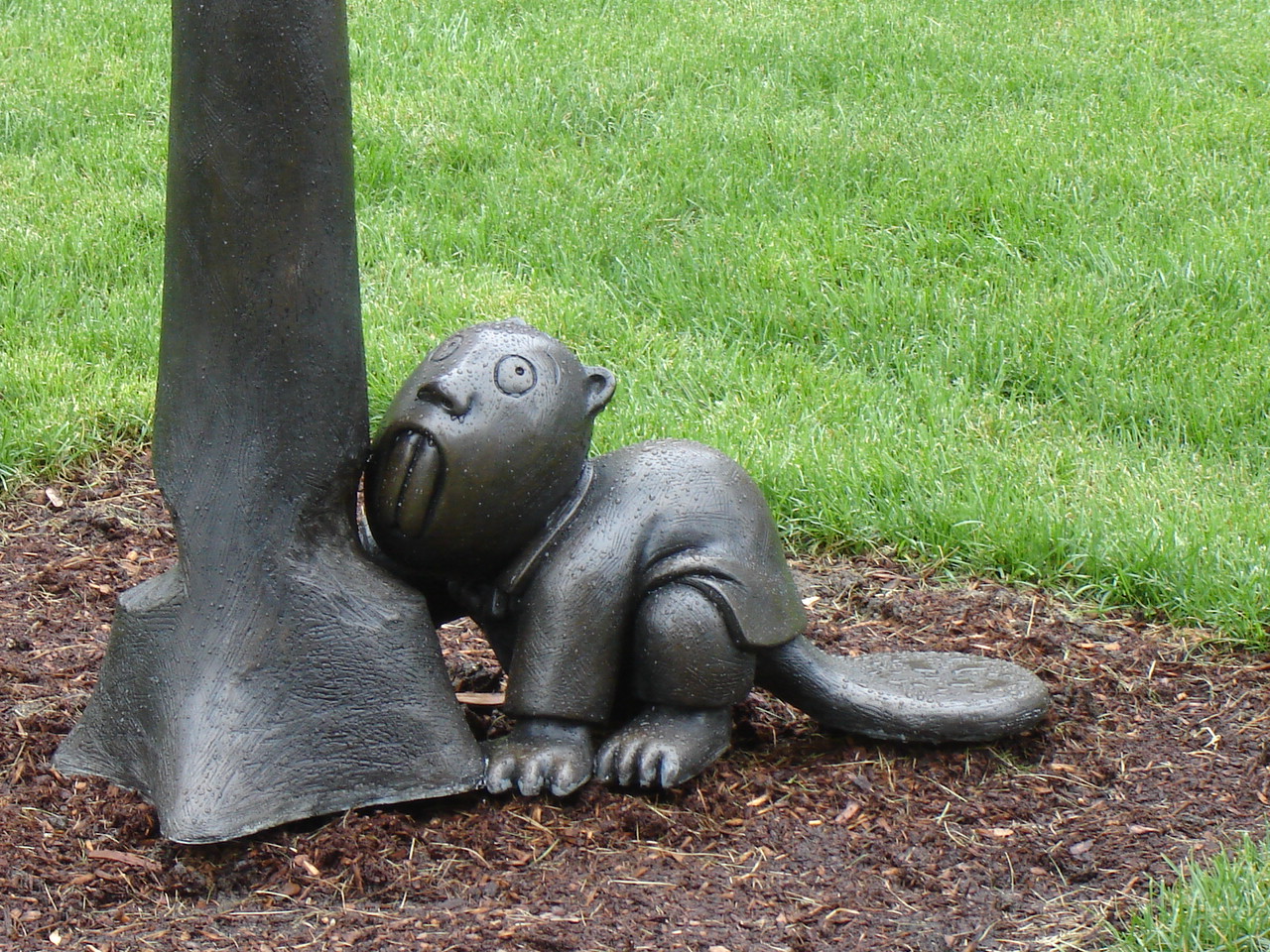
I love that the creator of the toothy beaver and the literary opossum is called Otter-Something. Tom Otterness.

Read Full Post »

Summer concerts on the lawn in front of the library mean lawn chairs and group participation. Toddlers in pajamas gradually get up their courage to dance. Young gymnastic girls do sudden cartwheels and back flips, then walk away casually, pretending not to check if anyone was impressed.

Last Wednesday, the featured band, PanNeubean Steel, consisted of steel drum, electric guitar, drums, and saxophone.

The band played some New Orleans jazz. “The Saints Go Marching In” brought back memories of my brother Will playing his sax every New Year’s Day to family acclaim.

Read Full Post »

Caroline A. and Suzanne met during the senior year of high school, when Caroline left her home in Sweden to spend a semester in the U.S. After graduation, we took Suzanne on a trip to Stockholm. We hit the tourist spots, hung out with Caroline’s family, and helped celebrate her birthday with a pig roast.

Sweden made a big impression on us all, especially Suzanne. Later when she was attending business school in Switzerland, she met Erik, and that was that.

Nowadays I have Swedes as Facebook friends, which forces me to rely a good bit on Google Translate. that can be fun but  puzzling. When Caroline writes —

“Tack så mycket! Nu ska vi bara ta kål på det förbaskade viruset som belägrat min kropp och sen fira lilla mig. :)” —

I can sort of understand Google’s “Thank you very much! Now we just kill the damn virus that besieged my body and then celebrate the little me. :)” — I especially understand the universal emoticon.

With “Finsk midsommarsoppa: häll upp vodka i en blommig sopptallrik,” I barely need Google Translate to tell me it means “Finnish midsummer soup: Pour the vodka into a floral soup plate.”

But more often than not, I find myself skirting the edge of a dark intrigue. Consider “och inte lär de sig. Plattsättaren la ner jobbet direkt då uppdragsgivaren lämnade landet. Nu är det hot som gäller eftersom vädjan inte fungerar,” which means, says Google, “rather, they learn. Flat assembler put down the job immediately when the client left the country. Now is the threat posed by the appeal as not working.” Hmmm. I believe an international crisis is brewing. Hard to say where, though.

Read Full Post »

The first art opening of the season at Jessie Edwards Studio is great not only for the art but for catching up with friends after the long winter.

I greeted David and asked why he hadn’t been at the 350th anniversary festivities, given that his family goes back so far on the island. He said he had been putting in lobster pots that day. He has put in 30 this year. Last Saturday he pulled 11 lobsters, which he doesn’t think is much for 30 pots. His extended family eats them all.

Another friend is writing a biography of his parents, which he intends to self-publish. He hopes the cost doesn’t keep him from getting the words that he wants on his tombstone: “I broke even.”

Given the crowds at openings and all the catching up, you have to be pretty determined to see the art. I nudged my way through temporary gaps and checked out everything.

Kathleen Noonan Lang was showing her island monotypes. See them here. I especially liked her “Sailor’s Delight,” with its rosy evening sky reminiscent of the weather rhyme “Red sky at night, sailor’s delight.”

When my cousin Sally had a show of her monotypes in Connecticut, I asked her to describe her approach. She wrote:

“To make a monotype, you basically create an image on a sheet of plexiglass and run it through a press. There are dozens of techniques but my tools of choice are primarily paper towels and Q-tips; very sophisticated. I roll on a layer of ink on the plate and then push it around with the paper towels and Q-tips, run it through a press and then work on the plate again and print another layer. Often I’ll develop several prints at one time, working on the ghost impression left over on the plate, rolling on a transparent base to raise the viscosity of the remaining ink (as my father would have said), and print it again. That’s the short version. Most of my monotypes have 3-4 layers. It is a very exciting process and there is always an element of surprise as when the paper is pulled from the plate.”

I like that sort of surprise.  It’s kind of like writing a blog post and being surprised by where your train of thought leads you. In playwriting class we are encouraged to surprise ourselves that way.

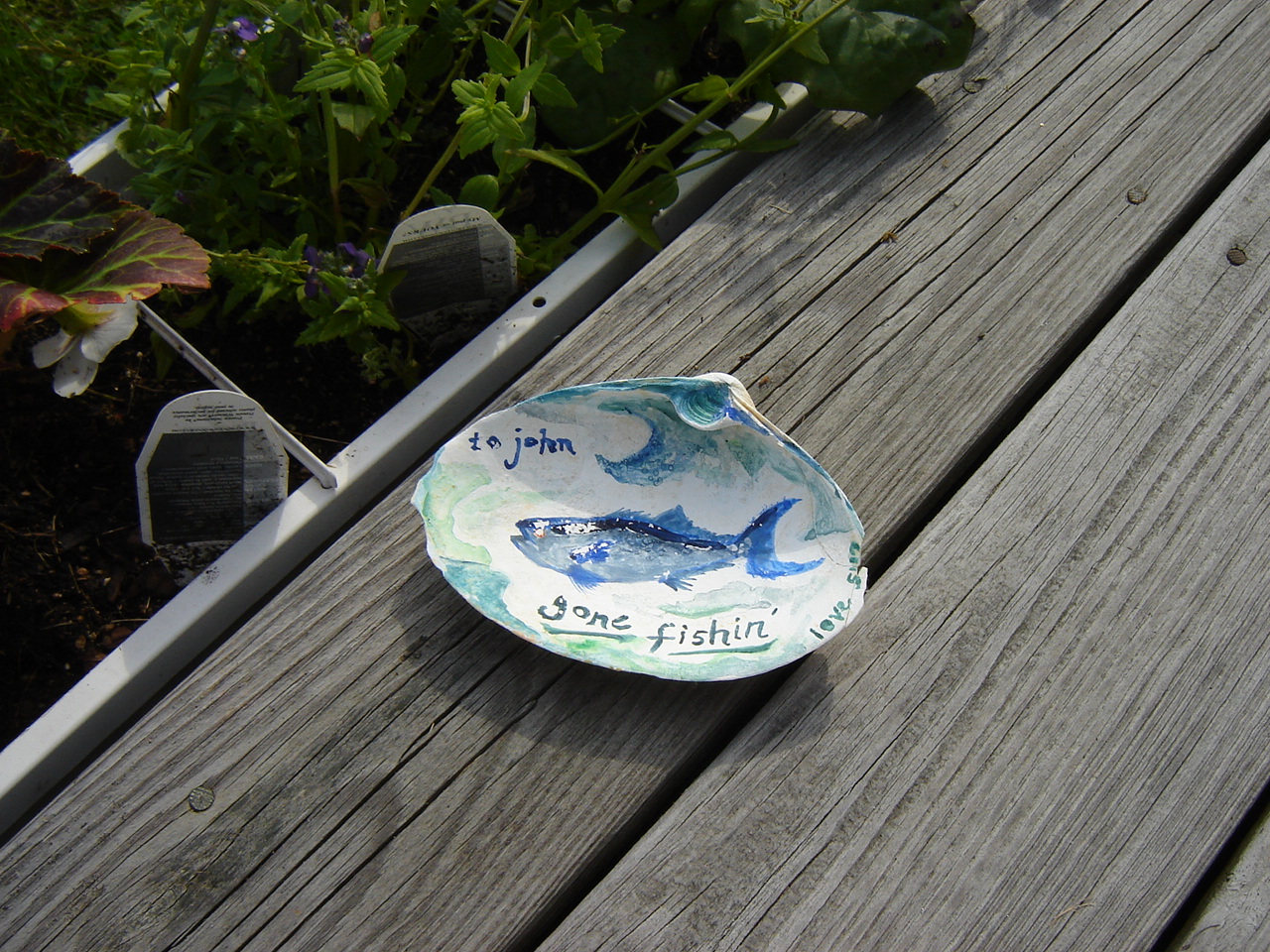
I wanted to include some clay art from Suzanne here, but she says she hasn’t been taking pottery long enough to have anything to display. Her brother said, “How about the shell she painted for my birthday?”

Read Full Post »

« Newer Posts - Older Posts »