Feeds:
Posts
Comments

Archive for September, 2011

Summer is over, and at 5:30 a.m. the morning walk starts out dark.

I think of the song that gambler Sky Masterson sings in Guys and Dolls: “My time of day is the dark time,/ A couple of deals before dawn./ When the street belongs to the cop/ And the janitor with the mop,/ And the grocery clerks are all gone./ When the smell from the rain-washed pavement/ Comes up clean and fresh and cold/ And the streetlamp light fills the gutter with gold …”

Of course, the song is about going to bed late, not getting up early, but as Sir Andrew Aguecheek says in Twelfth Night, “to be abed late is to be up betimes.” In other words, what’s the difference? (Sir Andrew was a role I played with distinction in my all-girls high school. My mother’s comment was she hoped never again to see me in that awful shade of pink.)

In the early morning, I don’t necessarily see streetlamp lights filling the gutter with gold, but they do make shifting oak-leaf shadows on the sidewalk. A porch light shining behind vines trained up ropes is pretty in the dark, too. Window-shopping can be peaceful with no crowds on the sidewalk, and there’s always at least one shop with something in the window I plan to check out on Saturday.

And should I suddenly feel a tune from Guys and Dolls coming on — well, there’s no one around to care if I go a bit flat.

Read Full Post »

Dear Poetry Lovers,

Please send me a haiku of yours to post. You may use the e-mail suzannesmom@lunaandstella.com or put your haiku in Comments. Let me know if you want me to use your first and last name or not.

I’ll start with one of mine.

Struck by lightning bug
Years ago, I know to look
For veiled messages.

Jane is letting me share this one of hers

Dandelions

 A child’s crayon suns,
Galaxies strewn on green skies;
The leaves are bitter.

Here is one Asakiyume wrote on a Halloween in the 1990s. She has probably forgotten.

Leaves salute the sun
Then fade away; the planet
Tilts toward dark, and night.

You can subscribe to A Poem A Day from the Academy of American Poets. I signed up after a tip from Ronnie, and I like the daily fix. It reminds me of book my friend Pam gave me when I moved to Minneapolis for a few years. It, too, was called A Poem A Day, and I liked getting into the habit of a daily read. Later, during a year of cancer ups and downs, a photocopied book of daily readings selected by patients was soothing. It’s out of print, and I’ve yet to find one I like as much for friends going through the same business. If you know a good one, I’m all ears.


Read Full Post »

Asakiyume has alerted me to a great story about an anonymous library patron in Scotland who creates sculpture from old books and deposits them in libraries by stealth. The artist makes reference in his (her?) sculptures to Scottish mystery writer Ian Rankin and dragons and all sorts of literary things. You will flip over the pictures here.

Asakiyume says she likes the quotations that the mystery artist leaves with the sculptures: “I liked ‘Libraries are expensive,’ corrected to ‘Libraries are expansive,’ and also the quote from Robert Owen … (founder of some utopian communities) … ‘No infant has the power of deciding … by what circumstances (they) shall be surrounded.’ ”

The messages remind me of the mysterious tea cups of Anne Kraus, which I described here.

Now although Asakiyume knew I would love the book art, she may not have known that I have a family reputation for stealth projects, like secretly leaving a small Zimbabwean soapstone sculpture of parents and baby in John’s house after Meran gave birth.

Recently, I was telling Erik about a few of my escapades, and he got a look on his face suggesting that he was a little worried about the family he had married into.

When I was on the publicity committee for a local theater producing a musical about George Seurat, I purchased Seurat greeting cards and left them in stores’ card racks around town. They got sold, but the sales staff would have had to wing the price as there was no price on them.

Then there was the year that I sent a series of postcards from different cities under different names to an ice cream shop and in each card suggested a type of frozen dessert the shop should carry. Every card had a different reason why customers might want that dessert.

It worked, and the shop must have made money off the dessert as they stocked it for years afterward.

Photo: ThisCentralStation.com

Read Full Post »

Remember all the talk-show ridicule of the woman who sued McDonald’s and won big bucks for coffee that was too hot? Well, it turns out she was sitting still, she was badly burned, and McDonald’s had failed to correct the scalding temperature in spite of 700 complaints.

Now attorney Susan Saladoff, who believes that the tort-reform posse was defining the tone of the discussion, has made a movie countering the frivolous-lawsuits-run-amok mantra. She argues persuasively that lawsuits like the one in Hot Coffee protect the little guy from corporations run amok.

A review at American Prospect says, “no matter how many times the suit was used in Jay Leno monologues there was nothing funny about it. Liebeck [the complainant] was not careless, but spilled the coffee when she, as a passenger in a parked car, took the lid off the cup. The spill did not cause a trivial injury, but severe burns that required multiple operations and skin grafts to treat. McDonald’s, which served its coffee at 180 degrees [your home coffee maker is at 135 degrees], had received more than 700 complaints from customers, constituting a clear warning, but it nonetheless required its franchises to serve it at that temperature without warning customers.”

Stella Liebeck sued only after the medical bills overwhelmed her. Little of the settlement was left her after costs, and she didn’t live long to enjoy it.

More comments at AndrewSullivan.com.

Read Full Post »

We had already bought tickets for the new version of Porgy and Bess at the American Repertory Theater when Stephen Sondheim weighed in with an angry letter to the NY Times. He had not seen the show, but he apparently resented the tone of an article’s quotes from A.R.T. He may have thought director Diane Paulus and writer Suzan-Lori Parks were implying that they were better than the show’s original creators.

After the opening, Ben Brantley of the NY Times raved about Audra McDonald’s Bess while giving a mostly lukewarm review to everything else. Meanwhile, the student D.J. at Emerson College’s radio station kept reading promos for the show and pronouncing Porgy as “Porjy.” (He will always be Porjy to me now).

By the time our matinee rolled around, the day was almost too beautiful to be in a dark theater for three hours, and our initial anticipation had been reduced to mild curiosity.

So I’m happy to say we really liked A.R.T.’s Porgy — pretty much everything about it.

I admit that I am not intimate with the whole score and therefore was not always able to tell when new material had been inserted. (One line, about saving to send the baby to college, did come across with a loud, anachronistic clunk — but now a blog reader tells me it was in the original!) But the beauty of the songs, the dancing, the characters making the best of no-options, the love story! I cried pretty much the whole way through. And I’m still singing.

The only other Porgy and Bess I’d seen was directed by Bobby McFerrin in Minneapolis. It was long and kind of confusing, but I accepted that that’s the way opera often is. The A.R.T. may have presented a rejiggered story that was not true to the original, but it was a story that I could follow.

As I said to my husband on the way out, “Well, it worked for me.”

He said, “Sondheim should rethink his position.”

P.S. Audra McDonald was breathtaking.

Read Full Post »

Try to praise the mutilated world.

Remember June’s long days,
and wild strawberries, drops of wine, the dew.
The nettles that methodically overgrow
the abandoned homesteads of exiles.
You must praise the mutilated world.
You watched the stylish yachts and ships;
one of them had a long trip ahead of it,
while salty oblivion awaited others.
You’ve seen the refugees heading nowhere,
you’ve heard the executioners sing joyfully.
You should praise the mutilated world.
Remember the moments when we were together
in a white room and the curtain fluttered.
Return in thought to the concert where music flared.
You gathered acorns in the park in autumn
and leaves eddied over the earth’s scars.
Praise the mutilated world
and the gray feather a thrush lost,
and the gentle light that strays and vanishes
and returns.

—Adam Zagajewski (Translated, from the Polish, by Clare Cavanagh.)
Published in the New Yorker, September 24, 2011

Read Full Post »

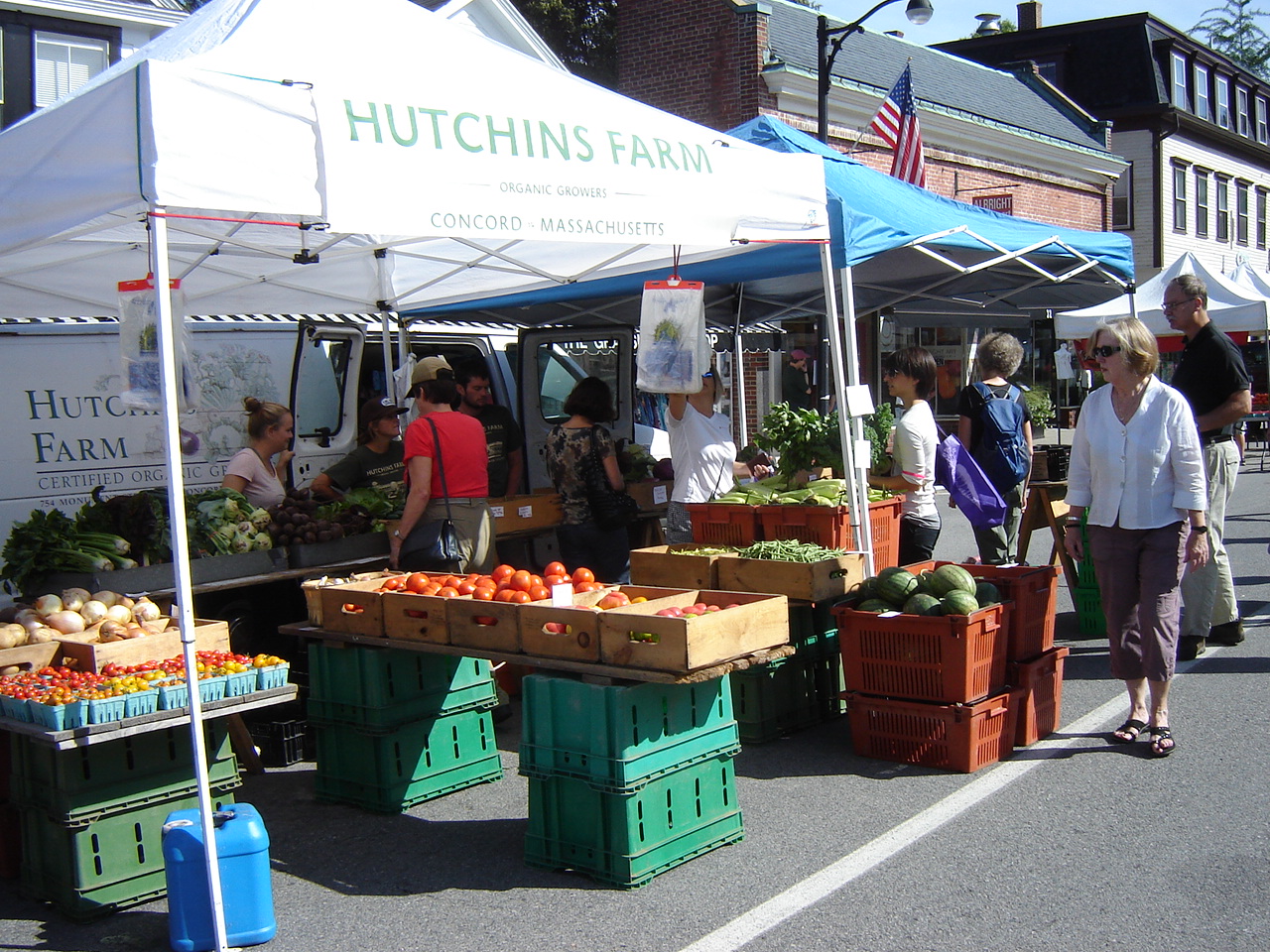
Concord’s main business street, sometimes called the Milldam because it was built over a dam, got blocked to traffic this morning, and farmers set up booths. Concord doesn’t do this often because most farmers around town have their own stands. I bought a small yellow watermelon, corn, lettuce, green beans, and a tomato. Because I was on foot I resisted buying more, but the raspberries looked wonderful as did some seasoned salt, pots of flowers, dried hydrangeas, and homemade soaps.

Among the farms represented were Verrill Farm (where we went for Mothers Day brunch this year),  Pete & Jen’s Backyard Birds, Frank Scimone Farm, and Hutchins Farm (pictured).

Last year we attended the Concord farms’ annual Stone Soup dinner, a benefit organized by the town’s Agricultural Committee — quite elaborate and delicious. A scholarship was awarded that night to a young local farmer as part of the campaign to encourage the next generation to pursue or stay in agriculture. I was surprised to learn that there are 18 farms in Concord. Read more here.

Read Full Post »

In case you just tuned in, this blog was started at the invitation of my daughter, who is the founder of the birthstone-jewelry company Luna & Stella. Sometimes I blog about the jewelry, but Suzanne told me to write about whatever interests me. Already a customer who was previously wary of online purchasing found the blog and wrote Suzanne that it helped her decide that Luna & Stella was good people.

The blog is currently housed at WordPress, which makes life easy for a neophyte like me. One thing that is fun at WordPress is clicking on posts from the other bloggers, posts that are on the Freshly Pressed page or found by clicking on a key word at the Tags page.

Today I got quite interested in an entry from a WordPress blogger in northern England who calls herself Heather Uphillanddowndale. She shows her photographs of a lovely Scottish island and talks about its fight against a major commercial fish farm.

I used to think fish farms made a lot of sense, but lately I have read about possible environmental damage and overcrowding that can spread disease to wild fish.

Heather quotes from a statement by island residents: “Highland Council has recently received an initial application to site a fish farm off the east coast of Eigg, north of Kildonan. The site identified covers an area extending to 20ha (this equates to 28 football pitches) & would consist of 14 x 30m diameter cages which would be serviced by a 10m x 10m permanently sited barge (powered by diesel generator).

“The community has considered this proposal at length. The outcome of the resulting ballot which had an 86% turnout was 97% against the development.

“Eigg lies within the Small Isles National Scenic Area. A large fish farm would have a considerable negative impact on the approach to the island and could also impact negatively on the peace and quiet that visitors seek when they come to the island, as well as on the quality of life of nearby residents.” Read more at Uphilldowndale.

Read Full Post »

At lunch I went across Fort Point Channel with my colleague Lillian to visit the Children’s Museum. We wanted to see the new exhibit called Boston Black.

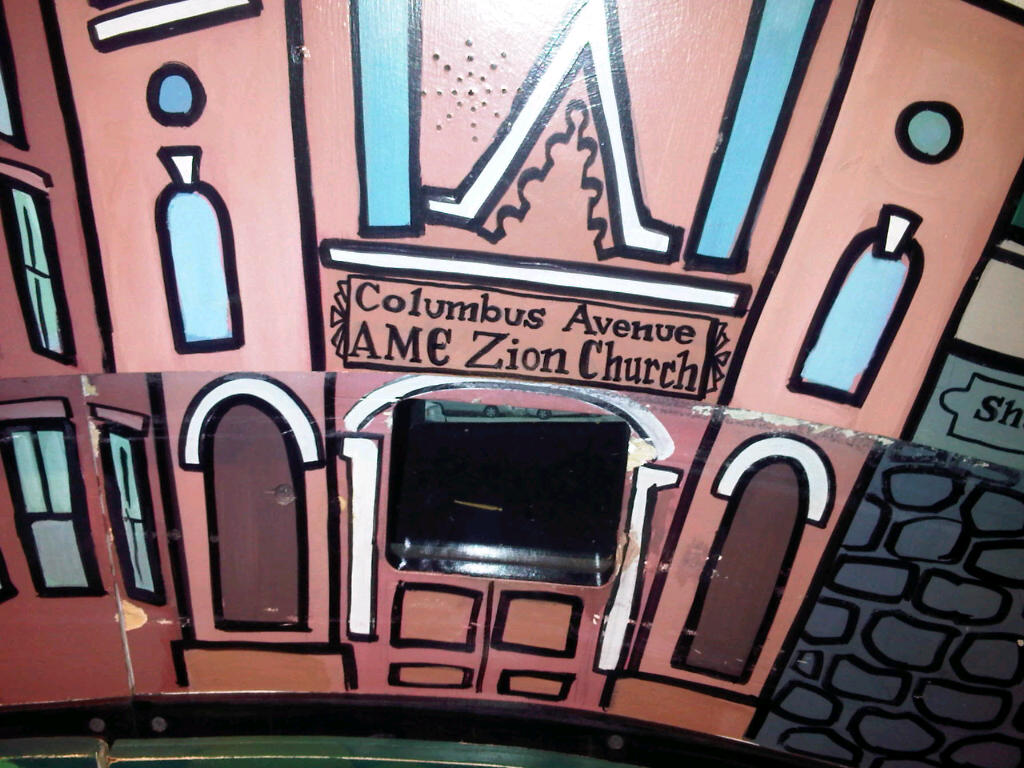
It was very nicely done. Lillian was delighted to discover that her AME Zion church was featured in the history part, complete with stained glass Star of David (her church’s building was once a synagogue).

We played all the games but couldn’t seem to operate one that involved connecting circuits — probably because we are not kids. I definitely could have used a kid to remind me how to use the camera on my mobile phone, but Lillian figured out hers and took a photo of the museum’s rendering of her church. (You can’t see the Star of David in her picture, so have a look here at the actual church.)

In addition to the history section, there was a barber shop and hair salon that you could play in, a section on Boston-area Haitians, one on Cape Verdeans, a grocery store with play fruits and vegetables, a magazine stand, quizzes to help you learn about the different cultures, and so on.

One thing we hadn’t realized was that if you come to the Children’s Museum without a child, they hold onto your driver’s license or other picture I.D., and they give you a special pass to wear around your neck in case parents think you seem sketchy. I know I look disreputable, but Lillian is the soul of respectability. 🙂

Read Full Post »

When Suzanne lived in San Francisco, she told me about a guy in the Tenderloin district who wanted to do something for the homeless people who were his neighbors. He would stop and talk to people, and eventually he decided to hand out new socks, because that was what was needed. Small. Not solving any underlying problems. Just making someone feel noticed.

Recently I did a web search to see if I could figure out who the guy was and write a blog post. I found someone in San Francsico who started doing similar small kindnesses, but I’m not sure it’s the same guy. (If you know, please tell me.)

The person I discovered in my search is the founder of A Good Idea. He and others who have joined him do random things that connect them with strangers in a way that is sometimes greeted with suspicion, sometimes with delight. (It’s San Francisco after all. People are ready to be surprised.) Volunteers may distribute fruit, cookies, hugs, or services.

“Jared Paul’s life changed after he chose meaning over money. He abandoned a successful six-figure sales career and started a nonprofit organization, A Good Idea, in the summer of 2008.

“ ‘In April of 2008, I went through a life transformation: The more money I made, the more stressed I became, the more my passions began to fade, and the more I stopped dreaming,’ says Paul, 33, who had flourished in a variety of sales positions for nearly 10 years.

“Amid dissatisfaction with his job and his personal life, Paul decided to dedicate himself to making a difference. So he reached out to people via Facebook and Craigslist and began an informal discussion group that met at the Red Vic Peace Café in San Francisco’s Haight-Ashbury neighborhood. The meetings led to the birth of A Good Idea (AGI).

“ ‘A Good Idea is a vehicle for social change that connects people in need with people who want to help,’ explains Paul.

“ ‘One of our first events was called Intentional Acts of Kindness, where we would do acts of kindness to complete strangers,’ Paul recalls. ‘When the San Francisco Chronicle decided to do a news piece, we received over 250 e-mails from people who were inspired and wanted to be part of A Good Idea. That’s when things really took off.’ ” Read more.

Read Full Post »

Dr. Paul Farmer, the subject of a great Tracy Kidder book called Mountains Beyond Mountains, has spent many years delivering medical care — and working to alleviate poverty — in remote areas of Haiti. His nonprofit organization, Partners in Health, takes the word “partners” seriously. The teams do not tell the locals what is good for them but makes a point of learning from them and helping them get what they need.

In recent years, Farmer has been in demand in other countries, too. One focus area has been Rwanda. I liked a recent Boston Globe article on the approach to building a Partners in Health hospital there.

“The designers quickly realized that the challenge was not simply to draw up plans, as they had first thought, but rather to understand the spread of airborne disease and design a building that would combat — and in some cases sidestep — the unhealthy conditions common to so many hospitals.

“Learning from health care workers that hospital hallways were known sites of contagion, poorly ventilated, and clogged with patients and visitors, MASS Design decided that the best solution would be to get rid of the hallways. Taking advantage of Rwanda’s temperate climate, they placed the circulation outdoors, designing open verandas running the lengths of the buildings. …

“When it came to building, MASS Design looked at the Partners in Health model of involving local poor communities in health care, and realized that they could apply the same ideas to the construction process. The hospital was built entirely using local labor, providing food and health care for the workers. Unskilled workers received training that would help them get more work; and skilled laborers, notably the Rwandan masons who built the hospital’s exterior from carefully fitted together local volcanic stone, refined their craft and found themselves in demand all over the country. The construction process also beefed up local infrastructure — new roads and a hydroelectric dam — creating more jobs and literally paving the way for future projects.”

To paraphrase what Farmer often says, the biggest challenge to health is poverty. Read more.

Update on the designers from the June 19, 2012, Boston Globe.

Read Full Post »

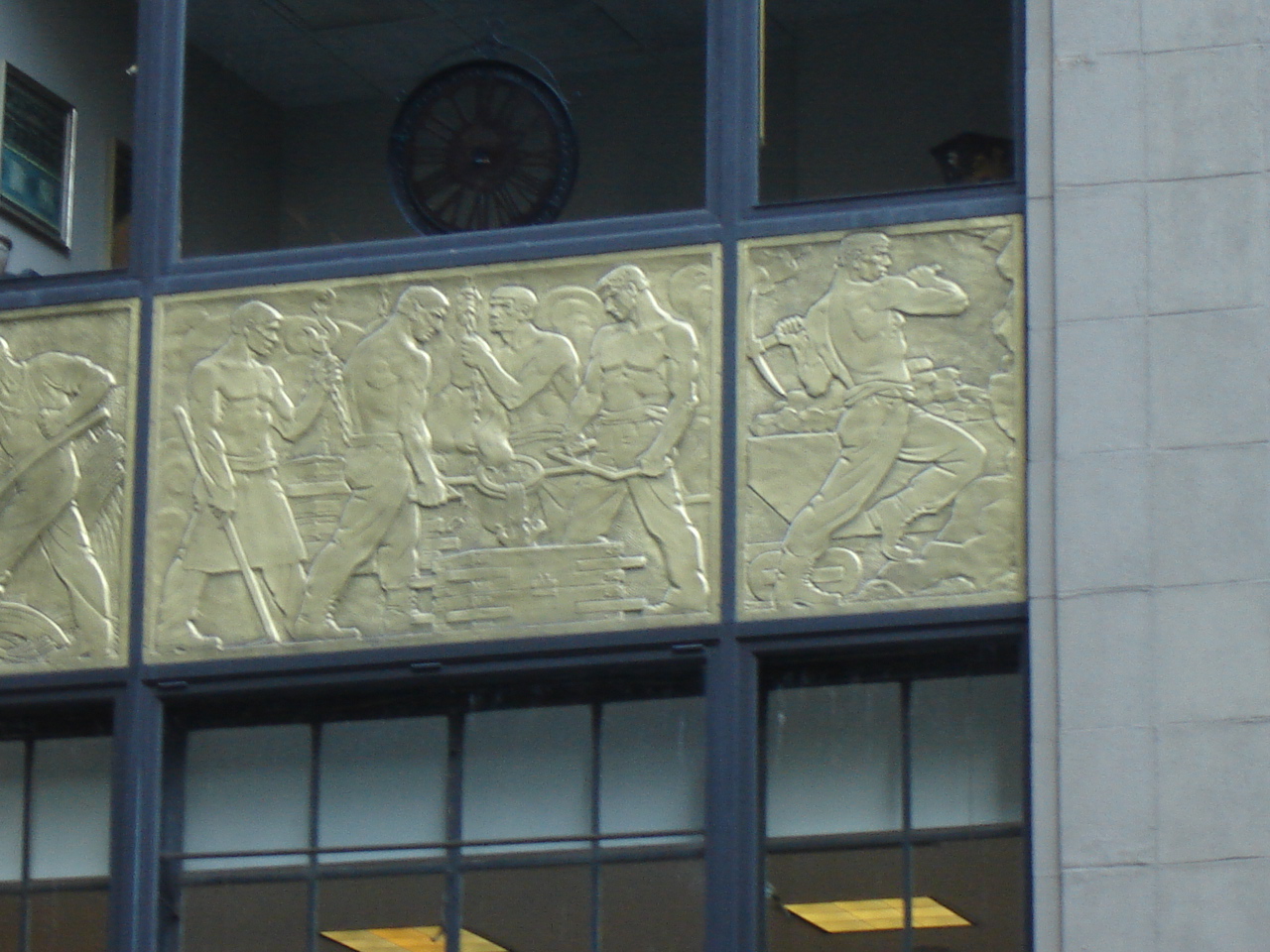
Back before “labor” became a dirty word in the minds of some politicians, “workingmen” were more appreciated.

A corporation might even honor workers in the architecture of a headquarters. (Note the photo taken in Boston’s financial district.)

These days, looking around the subway at the tired bodies heading home at night, I’ve begun to think of almost everyone as the workingman. All but a few folks who are very well off. There is hardly anyone in the middle anymore.

The people slogging back and forth, doing whatever they have to do, are unconscious of a kind of heroic aura that envelops them collectively. You can see it if you look.

Read Full Post »

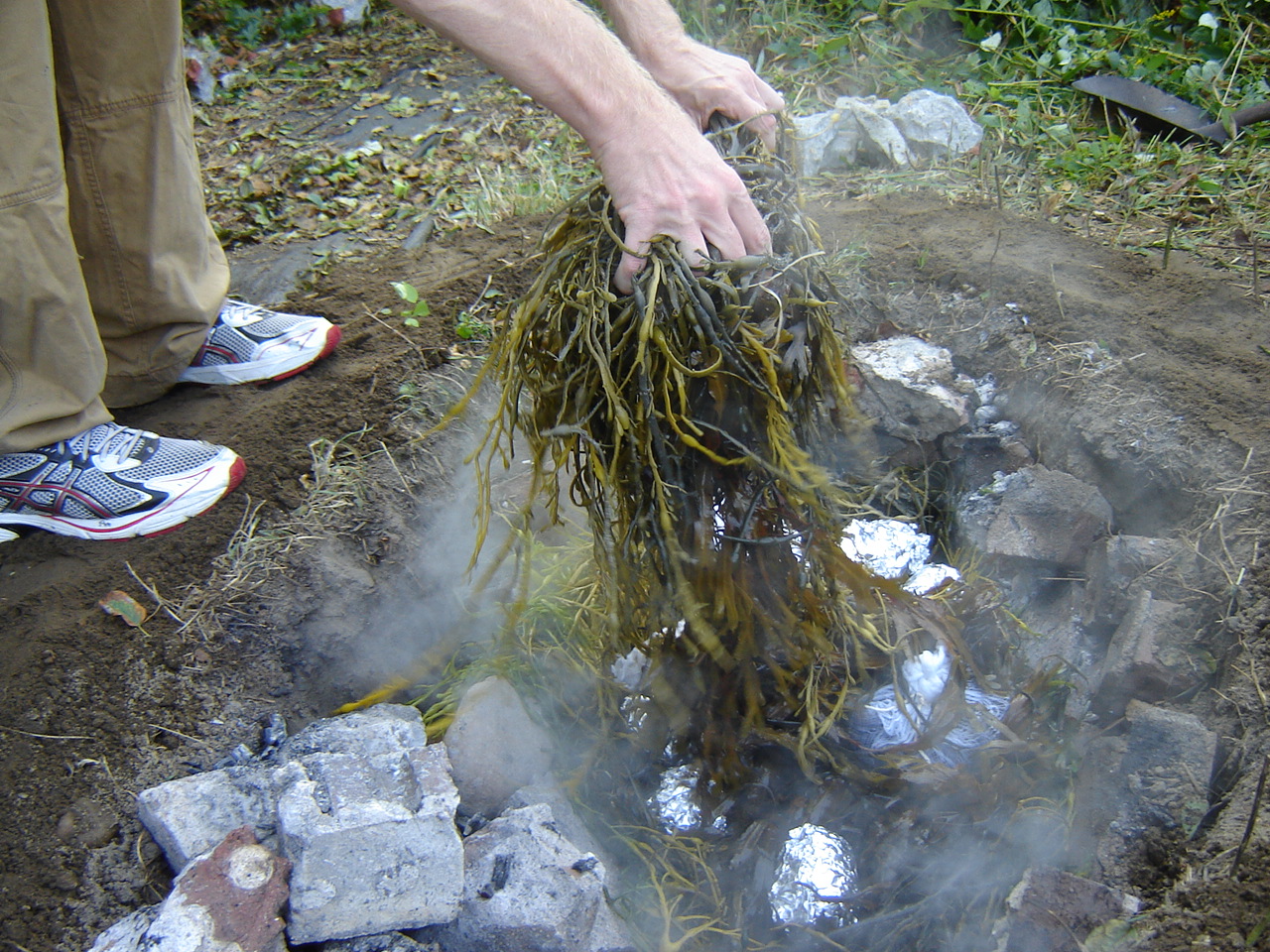
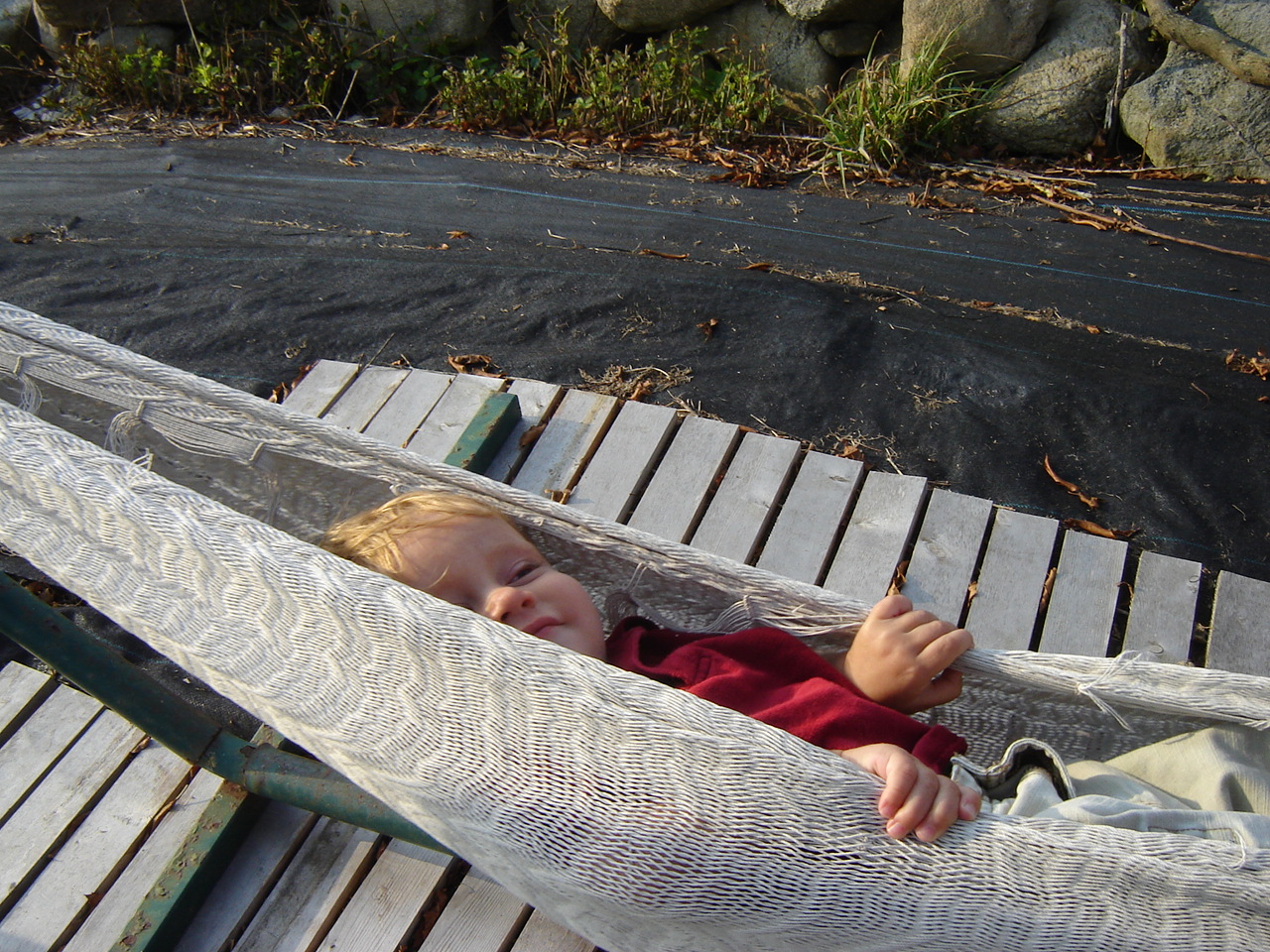
John leads the way for the end-of-summer clambake, rallying Suzanne and Erik to go with him first to collect driftwood, then to swim out to where there is good seaweed on the rocks.

It’s an all-day project ultimately involving six adults and one toddler.

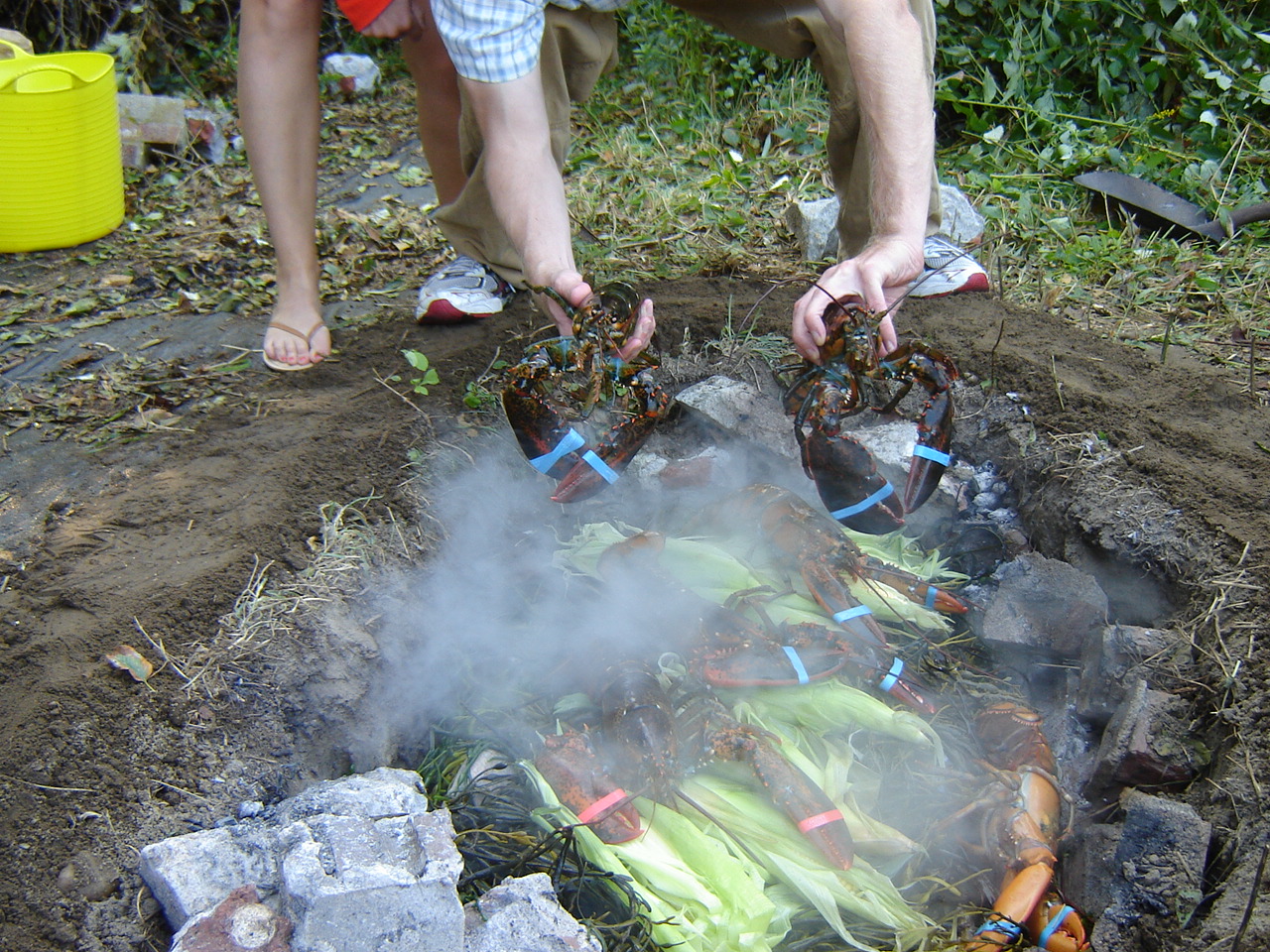
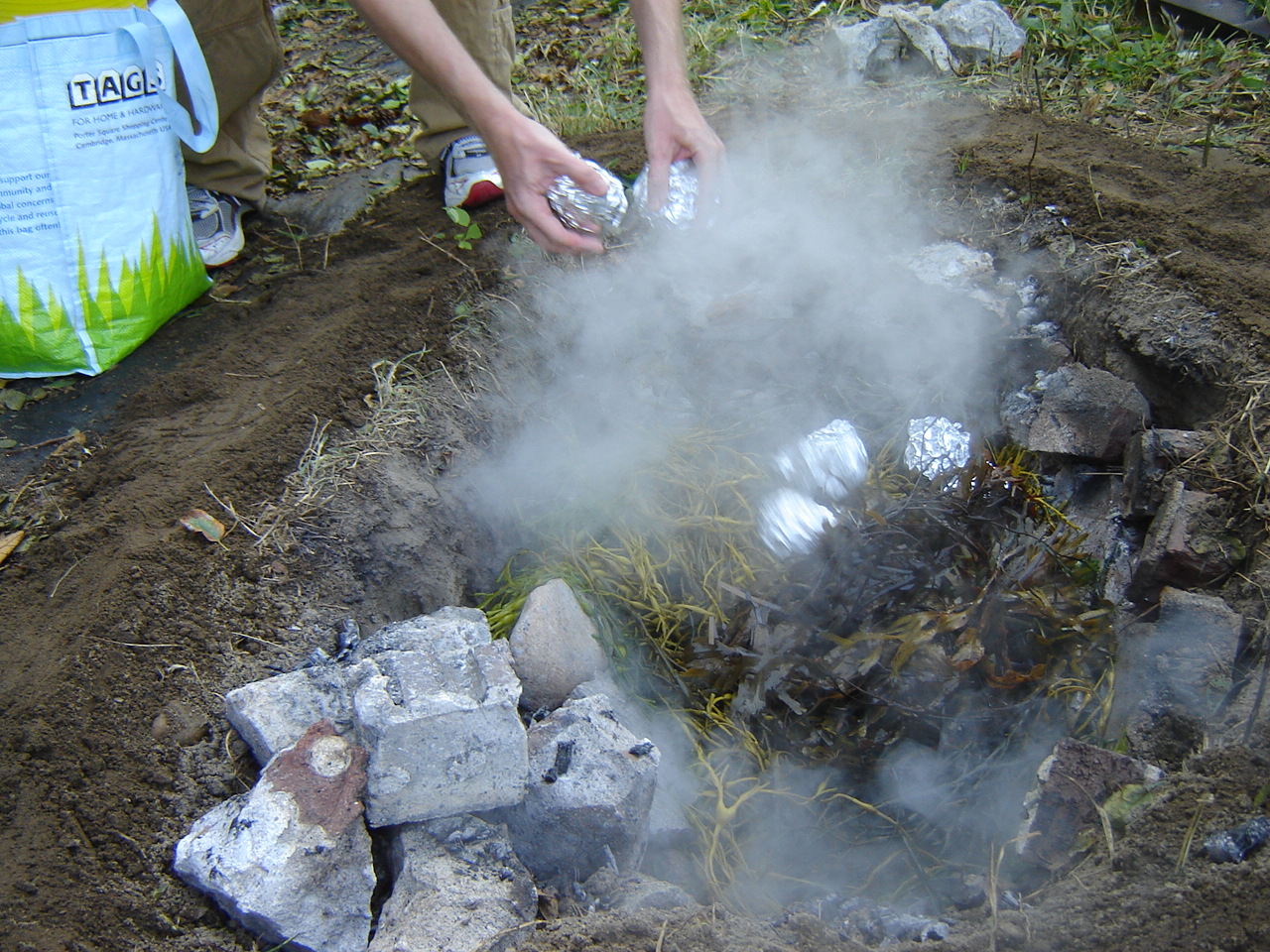
Rocks get placed in a pit, wood gets burned on top, wood coals get shoveled out, lobsters, seaweed, potatoes, corn, clams, mussels in cheesecloth, seawater, and more seaweed get dumped on the very hot rocks, a tarpaulin covers everything and is sealed with more rocks so the steam stays in.

After a couple hours, newspaper gets spread for  a tablecloth, the neighbors arrive, and the tarp is whipped off.

In the kitchen, Meran has made a salad with her garden’s tomatoes, plus spaghetti with fresh clam sauce. Sandra has brought an assortment of her famed homemade cookies. Patrick has brought extra utensils for cracking open lobster claws.

If you want to learn more, do what John does. He searches the Internet on “how to do a clambake” and reads several websites.

Read Full Post »

Here’s an interesting thought for harvest time.

In the NY Times, T. Lynne Pixley writes about Kelly Callahan and other Atlanta residents who forage for food among the many neglected, foreclosed properties in their neighborhoods.

Walking her dog in her neighborhood, Callahan saw “plenty of empty, bank-owned properties for sale.”

She also noticed that the “forlorn yards were peppered with overgrown gardens and big fruit trees, all bulging with the kind of bounty that comes from the high heat and afternoon thunderstorms that have defined Atlanta’s summer. So she began picking. First, there was a load of figs, which she intends to make into jam for a cafe that feeds homeless people. Then, for herself, she got five pounds of tomatoes, two kinds of squash and — the real prize — a Sugar Baby watermelon.” Others have joined in. Read more here.

I was interested to learn about “foraging” in Atlanta because I had recently read about a related activity in Vermont, called “gleaning.” Gleaning is a bit more out in the open. Farmers who are finished harvesting their crops give permission to gleaners, usually volunteers, to pick over what’s left and take it to families in need and to food pantries. One group engaged in this effort is the Addison County Gleaning Program. Read about it here.

It turns out that there is a lot of food that would otherwise go to waste. So it seems good that the food benefits someone.

Read Full Post »

Evolutionary biologist David Sloan Wilson has just published a book recounting his efforts to apply the principals of his discipline to improving urban life.

The book is called The Neighborhood Project: Using Evolution to Improve My City, One Block at a Time, and it sounds cool.

Mark Oppenheimer writes in the NY Times:

“For years the evolutionary biologist David Sloan Wilson paid little attention to Binghamton, N.Y., where he lived and taught. ‘I hadn’t joined the PTA,’ he writes, ‘attended council meetings, given blood, or served turkey to the homeless on Thanksgiving.’ …

Photographer: Jonathan Cohen

“Five years ago Mr. Wilson, the author of two popular books about Darwin, decided it would be fruitful to apply his training to the (human) animals closer to home. With colleagues at Binghamton University, Mr. Wilson founded the Binghamton Neighborhood Project to use evolutionary theory, along with data collection, to improve the quality of life in his struggling city.”

Although the work is still — evolving — the people he works with make interesting reading as do the experiments.

Oppenheinmer says that the “best chapters describe some of the preliminary work Mr. Wilson’s team has done. For example the Project gave a wide cross section of Binghamton schoolchildren the Development Assessment Profile, a survey that measures sociability, citizenship skills and the conditions that promote such traits. Students rated their agreement with statements like ‘I think it is important to help other people’ and ‘I tell the truth even when it is not easy.’

“The project then figured out where the most trusting, pro-social children lived: which neighborhoods, in other words, seemed to be breeding the most social capital. Using the technology on which Google Earth relies, the project created a krig map — a topographical map representing demographic data — for the city. The valleys showed areas with low social capital, the peaks with high.”

The results have implications for where community-building intiatives might have the most impact. Read the whole review here.

Read Full Post »

« Newer Posts - Older Posts »