Feeds:
Posts
Comments

Archive for February, 2013

I am currently reading one of the many delightful Colin Cotterill mysteries about Laos (Slash and Burn). Because the Laotian/American MIA search team seems always to be eating tasteless “astronaut food” provided by the Americans, this story at Andrew Sullivan’s blog the other day caught my attention.

Andrew points to Adam Mann, who writes at Wired, “Several decades from now, an astronaut in a Mars colony might feel a bit hungry. Rather than reach for a vacuum-sealed food packet or cook up some simple greenhouse vegetables in a tiny kitchen, the astronaut would visit a microwave-sized box, punch a few settings, and receive a delicious and nutritious meal tailored to his or her exact tastes. …

“With 3-D printers coming of age, engineers are starting to expand the possible list of materials they might work with. The early work in food has been in making desserts – a Japanese company lets you order your sweetheart a creepy chocolate 3-D model of their head – but some researchers are already thinking of what comes next. The Fab@Home team at Cornell University has developed gel-like substances called hydrocolloids that can be extruded and built up into different shapes. By mixing in flavoring agents, they can produce a range of tastes and textures.”

Don’t you love the word “extrude”? Well, maybe not. But I do because when my husband, my older grandson, and I were waiting for the baby sister to be born a couple weeks ago, we spent an inordinate amount of time extruding Play-Doh snakes from special Play-Doh extruders. (“Don’t be scared, Grandma. It’s not a real snake, Grandma.”)

Come to think of it, I might rather eat a Play-Doh snake than some of this astronaut food.

More from Wired.

More from Andrew Sullivan’s blog.

Photograph: Fab@Home
A deep-fried space shuttle scallop built using Cornell’s Fab@Home 3-D food printer, below.

Photograph: Feb@Home
A 3-D food printer building turkey paste into blocks, below.

Read Full Post »

I don’t know what it is about stories like this, but they really float my boat.

Here is an ordinary woman, a hairdresser who loves hairdressing, who tried to recreate an ancient hairstyle and ended up making a discovery that got published in a scholarly journal. What it took was being openminded, curious, and persistent.

As Abigail Pesta writes in the Wall Street Journal, Janet Stephens tried to re-create on a mannequin a hairdo she had seen on a bust of the Roman empress Julia Domna at the Walters Art Museum in Baltimore.

” ‘I couldn’t get it to hold together,’ she says. Turning to the history books for clues, she learned that scholars widely believed the elaborately teased, towering and braided styles of the day were wigs.

“She didn’t buy that. Through trial and error she found that she could achieve the hairstyle by sewing the braids and bits together, using a needle. She dug deeper into art and fashion history books, looking for references to stitching.

“In 2005, she had a breakthrough. Studying translations of Roman literature, Ms. Stephens says, she realized the Latin term ‘acus’ was probably being misunderstood in the context of hairdressing. Acus has several meanings including a ‘single-prong hairpin’ or ‘needle and thread,’ she says. Translators generally went with ‘hairpin.’

“The single-prong pins couldn’t have held the intricate styles in place. But a needle and thread could. It backed up her hair hypothesis.

“In 2007, she sent her findings to the Journal of Roman Archaeology. ‘It’s amazing how much chutzpah you have when you have no idea what you’re doing,’ she says. ‘I don’t write scholarly material. I’m a hairdresser.’

“John Humphrey, the journal’s editor, was intrigued. ‘I could tell even from the first version that it was a very serious piece of experimental archaeology which no scholar who was not a hairdresser—in other words, no scholar—would have been able to write,’ he says.

“He showed it to an expert, who found the needle-and-thread theory ‘entirely original,’ says Mr. Humphrey, whose own scholarly work has examined arenas for Roman chariot racing.

“Ms. Stephens’ article was edited and published in 2008, under the headline ‘Ancient Roman Hairdressing: On (Hair)Pins and Needles.’ ”

More.

Photographs: Janet Stephens

Read Full Post »

Photograph: James Montague for The New York Times
Outside the Vakar Lajos rink, where the Hungarian name of the Romanian ice hockey team, Hoki Sport Club Csikszereda, is printed on the ice.

I don’t follow ice hockey, but a recent article on ethnic Hungarians playing for the Romanian ice hockey team caught my eye.

I already knew that a chunk of Romania is like a little Hungary because my church and a church in Transylvania (20 percent ethnic Hungarian) have a longstanding relationship. Exchanges back and forth occur nearly every year.

So in flipping past the sports section the other day, I couldn’t ignore an article by James Montague on the irony of Romania, a country that under communism repressed ethnic Hungarians, having so many of them on their national ice hockey team. A feeder team in Miercurea Ciuc, Romania, calls itself Szekely Land, after a former province of the Kingdom of Hungary.

“The Szekely Land, named for a warrior tribe that dates to the Middle Ages, is a Hungarian-dominated area of Romania, covering three counties in the center of the country. The roughly 1.2 million Hungarians represent Romania’s largest ethnic minority, about 6 percent of the country’s population. The fall of the Austro-Hungarian empire after World War I marooned millions of Hungarians in what is now Romania, Slovakia, Ukraine and Serbia. The Szekely found themselves cut off and subject to a policy of assimilation, including heavy restrictions on the use of their language, under the former communist leader Nicolae Ceausescu.”

Sometimes having so many ethnic Hungarians on the Romania team can lead to unhockeylike situations. The “anomaly reached a critical point during a 2011 game between Romania and Hungary in Miercurea Ciuc,” writes Montague. “After the game, almost all of Romania’s players joined with their opponents to sing the Hungarian anthem.

“ ‘Some of the paparazzi caught it, and it was a big scandal,’ said Attila Goga … who has played for the Romanian national team for a decade but holds dual Romanian-Hungarian citizenship. ‘It’s a little bit strange, but I can see that, too. They don’t understand our situation here.’ ” More.

My advice to autocrats: Don’t try to change people’s language. It always ends badly.

Read Full Post »

snow meter height

I don’t know how to use our television, and the radio has only three channels, so I ended up streaming WPRI out of Providence.

I follow WPRI’s Ted Nesi on twitter, and he kept tweeting useful storm tidbits, so I thought I’d try his tv station. Things were a little chaotic there, which felt real. At one point Ted had his mike on accidentally, and I could hear, “I got stuff! Take me, please!”

Overall, Saturday was a quiet day at the Woebegone Chalet. I caught up on old newspapers (new ones had not been delivered for two days). I made guacamole. Put in a laundry. Did some exercises.

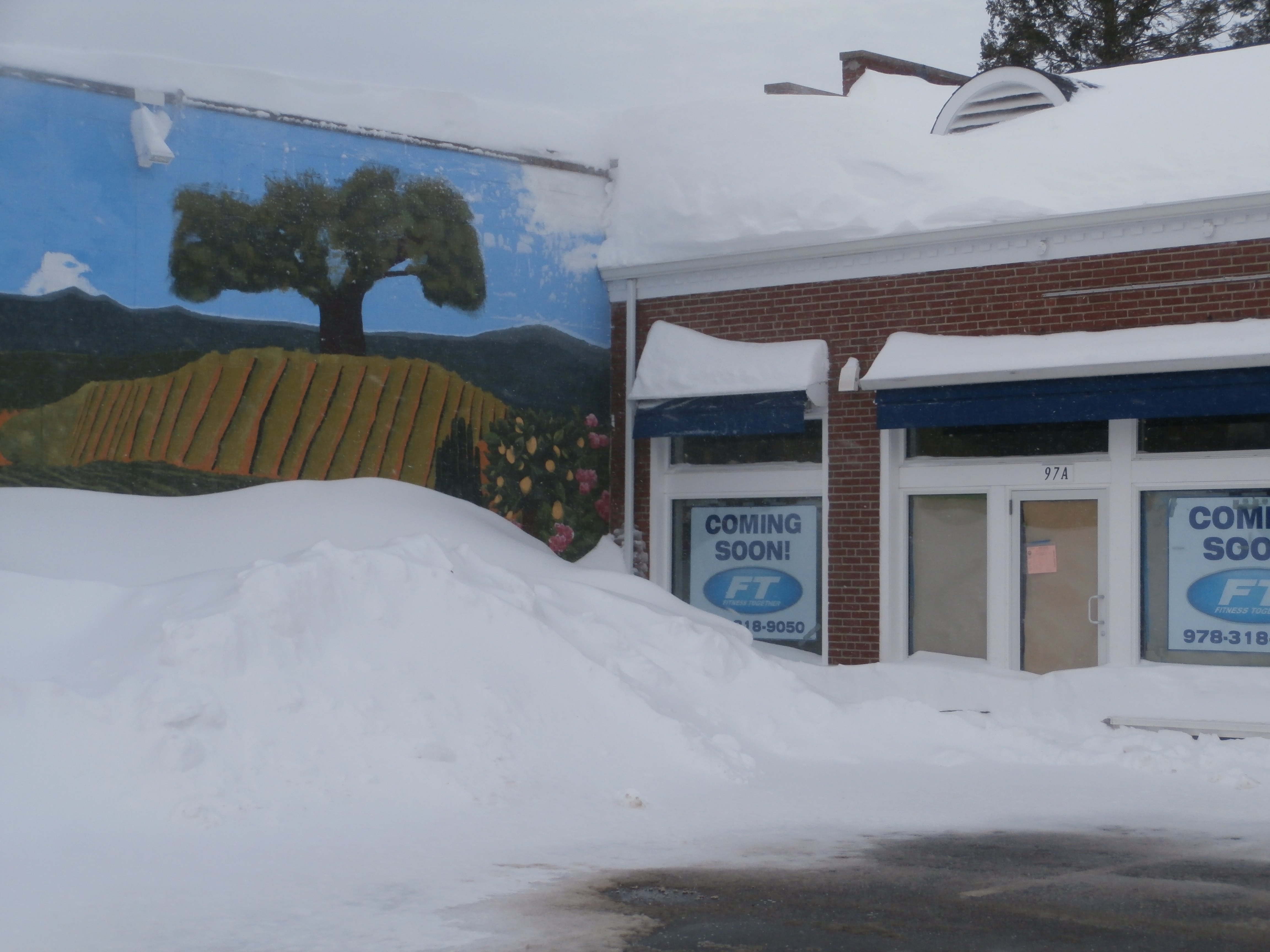
After a while I bundled up and climbed over the front fence, getting my boot stuck and full of snow. I hailed a couple young men from the Academy who were digging out a neighbor’s car. They agreed to shovel my front walk for the price I usually pay for both walks. It was well worth it. I returned from a hike around town (everything closed but Dunkin’ Donuts) to a cleared walk.

long view

coming soon

after

Read Full Post »

Although I’m very lucky to live in a walkable community near public transportation, if everything is closed, there’s not much point going out. At least not until the sidewalk plow guy has been around once. (He really doesn’t like people in the way when he is working.)

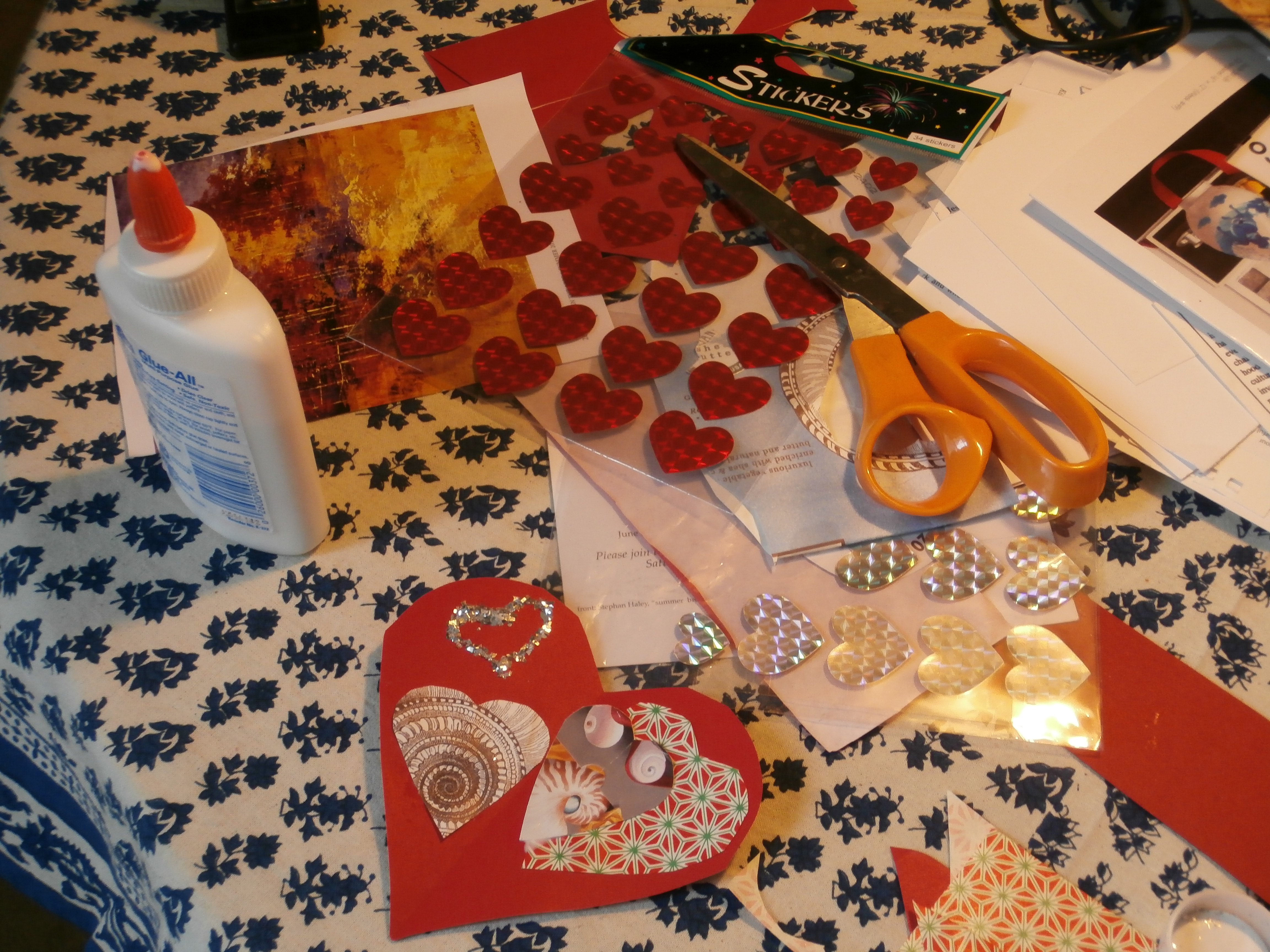
Might as well make Valentines. This one is a work in progress.

Making Valentines

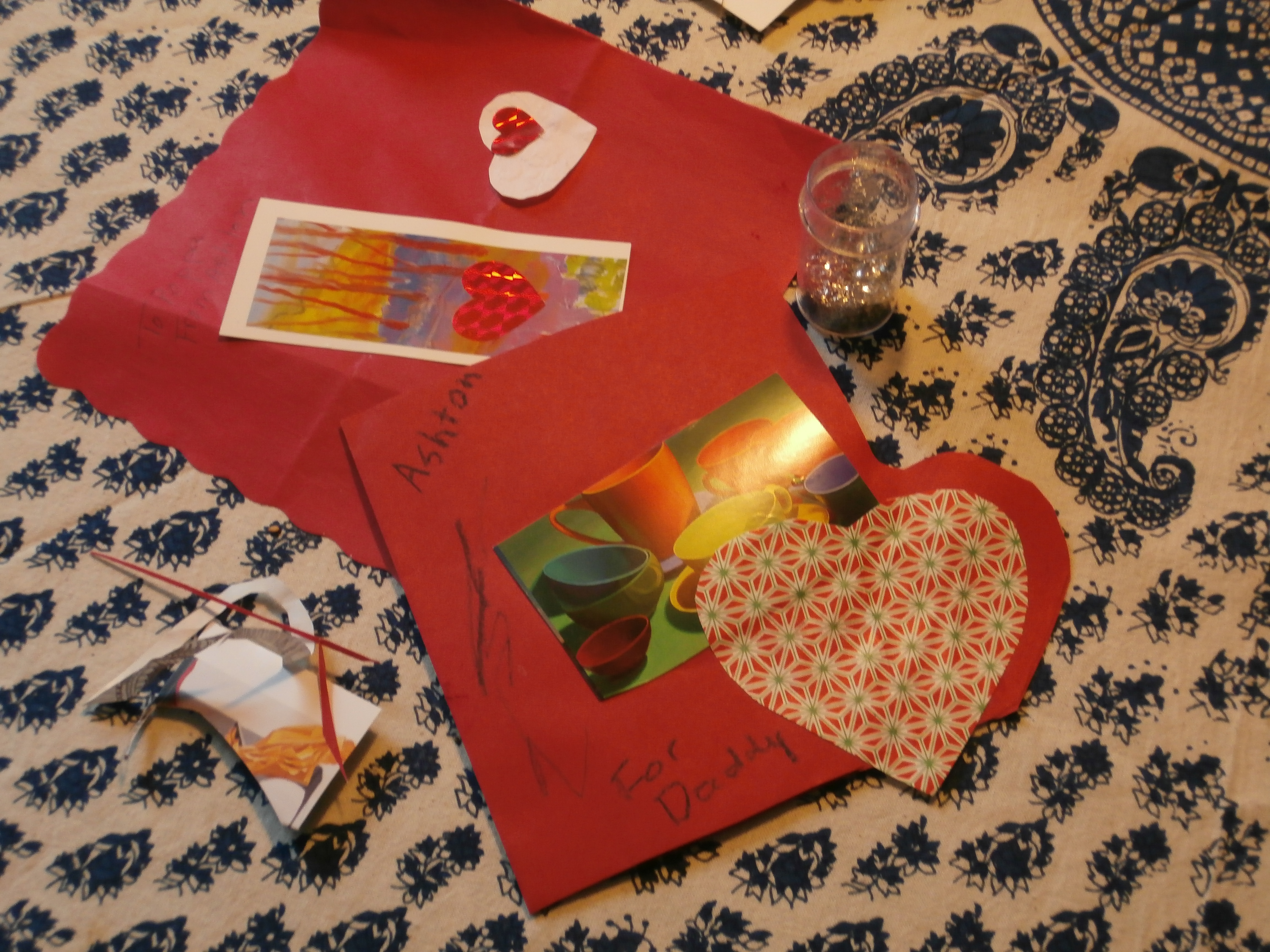
The ones in the picture below were created by Grandson the First last week as he awaited the arrival of a new sister.

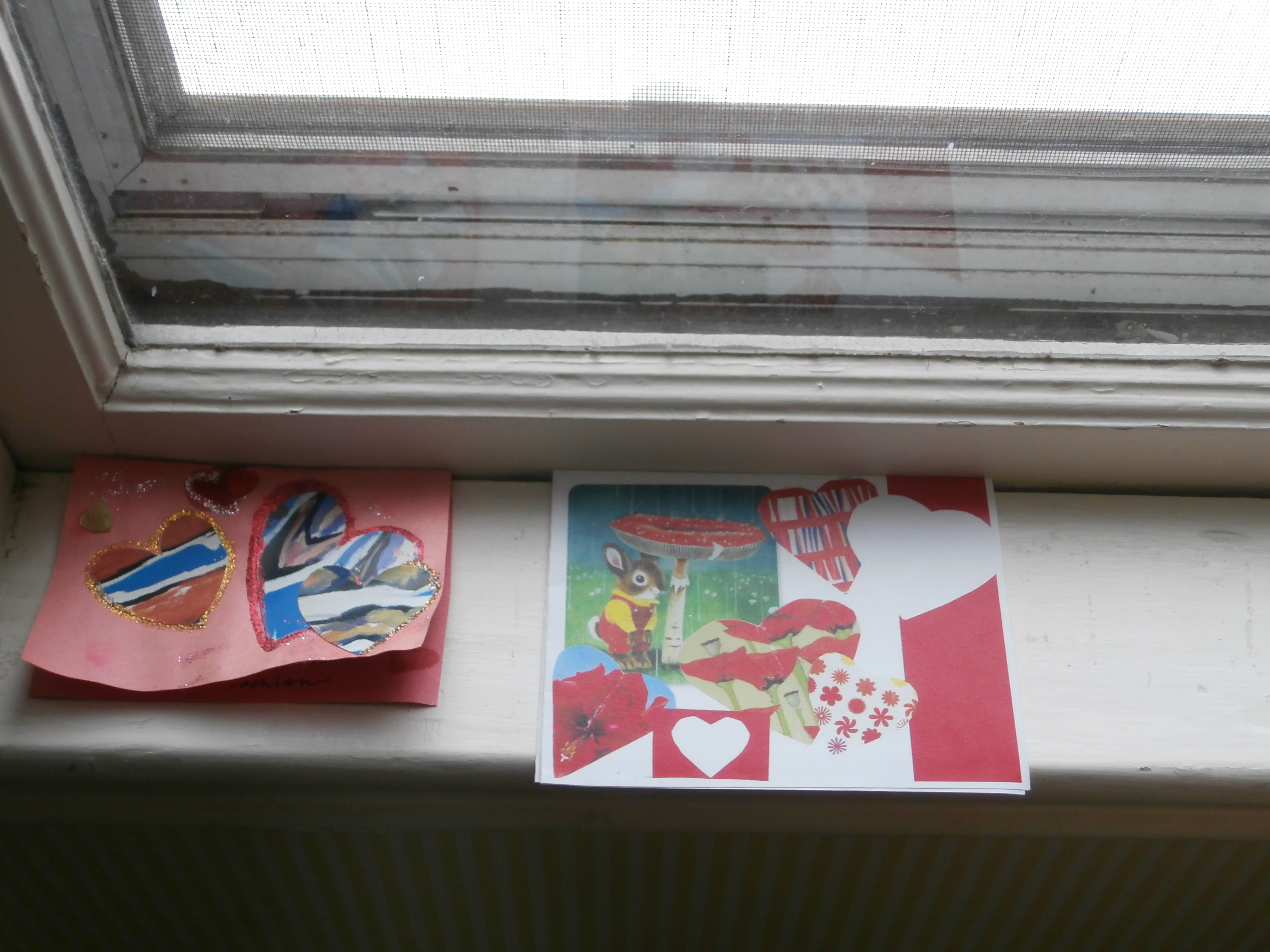
In the picture after that, a Valentine Suzanne made a couple years ago is on the left, and one I made last year is on the right.

arts&crabs_experiment

Valentines of the Past

Read Full Post »

Stop me if I already told you this.

When I was 12 and Joanna Pousette-Dart was 9, we created a Rube Goldberg contraption one weekend, the Amazing Egg Breaking machine. (After demonstrating the ingenious mechanism in science class, I forgot about it — until the teacher pointed out that there was a rotten-egg odor emanating from his supply closet.)

Now Jamie Condliffe at Gizmodo announces that the 2.0 version has arrived. Well, he didn’t exactly say that. I’m using poetic license.

The new version, the Pancake-omatic, not only breaks eggs, using technology very similar to my own (and Joanna’s) innovation, but it also makes pancakes.

“Dreamt up by a team of four design engineers, it took over 200 hours to construct and a further 100 to test. [Joanna and I worked much faster.] The result seems worth the effort, though: from the moment a hen lays an egg sat upon the throne, its journey to the frying pan is both seamless and entertaining.

“Watch as the egg wobbles its way toward a hoist, to be cracked by a knife [WE had a knife!] and whisked up, before finally being deposited into the frying pan where it belongs. The machine will be on display in London’s Design Museum later this month.” More.

Be sure to “like” project sponsor the Happy Egg Company on Facebook, here.


Read Full Post »

I haven’t previously cited a story from the NY Times feature “Deal Book” (a business column about mergers and acquisitions), but then they haven’t previously written about Twinkies.

Yesterday’s history of the ups and downs of the Twinkie by Steven M. Davidoff, an Ohio State University professor, drew me in.

“It was created in 1930 by an executive working at Continental Baking who was looking for a product to sell after strawberry season ended, when the factory line for cream-filled strawberry shortcake sat empty. The yellowish, cream-filled Twinkie was a hit and the company quickly expanded.”

Mind you, I am not one of the heart-broken fans who expected Twinkie extinction after Hostess Brands filed for bankruptcy last year. Even back in elementary school days, my parents regarded some things as junk food, Twinkies among them. I myself craved classmates’ pink snowball cupcakes with the frosting that could stand on its own (literally). Snowballs also were off limits.

Prof. Davidoff tells how the Twinkie and its sister products was passed from acquirer to acquirer more often than an ugly sweater in your company’s Yankee Swap.

In the end, liquidation of Hostess Brands and the outcry from Twinkie fans led to a new sense of its worth. Two private equity firms have agreed to buy it.

More.

Photograph: Politico.com

Read Full Post »

We blogged a while back about tutoring students via distance learning. Kyle Spencer at the NY Times wrote about it here:

“Newly designed software for the tutoring of beginning readers has bridged the gap, allowing volunteers to meet students online from a distance. P.S. 55 is testing the program with students in its four first-grade classes.”

Now it turns out that remote tutoring is not the only kind of remote volunteering possible. In this article by Casey Armstrong at Shareable, we learn more about why “volunteers don’t have to be in the room anymore to physically volunteer.”

“As far as fun volunteering opportunities go, playing with kittens at an animal shelter is probably unequaled. It’s no wonder that the option to do this over the internet is a popular one. The Oregon Humane Society gives volunteers the chance to control robotic arms wielding toys for bored cats waiting to be adopted. This opportunity is not only good for the cats and volunteers, but it’s a great way to encourage donations and adoptions.

“And, if you look beyond the surface, this is more than just a stunt. It proves a concept: Volunteering can be done from anywhere by anyone if you accommodate it with the right technology. … Check out Reach-In.com if you’re interested in setting up your own robot volunteer opportunity.”

Photograph: Librado Romero/The New York Times
Edward Muñoz, a first grader at P.S. 55 in the Bronx, works out tricky words with Jenny Chan, his tutor in Midtown Manhattan.

Read Full Post »

I hope colleagues who saw almost the same post on the blog I contribute to at work don’t mind a repeat. I’m winging it a bit as I hold a two-day-old little girl in my left arm and type on her mom’s Mac with my right.

This post can be taken as reassurance that there are pockets of people here and there working to make the world greener for my grandkids and yours. It originates with Jim Robbins, Yale Environment 360, part of the Guardian Environment Network.

He begins in Seattle.

” ‘The biggest threat to Puget Sound is non-point sources [of pollution],’ says Nancy Ahern, Seattle Public Utilities deputy director.

“Blowhole samples taken from killer whales have revealed fungi, viruses and bacteria living in their respiratory tracts, some of them antibiotic-resistant and once found only on land. Health officials often have to shut down oyster beds because of fecal contamination. Salmon in streams are killed by torrents of dirty storm water.

“To lessen this deluge of diffuse pollution — a problem faced by many regions worldwide — Seattle is looking not at new and expensive sewage treatment infrastructure. Instead it is embracing an innovative solution to storm water runoff called green infrastructure … A growing number of places, from New York City to Sweden, are investing in everything from rooftop gardens to pollution-filtering assemblages of trees to reduce tainted runoff.

“Gray infrastructure is the system of pipes and ditches that channel storm water. Green infrastructure is the harnessing of the natural processes of trees and other vegetation — so-called ecosystem services — to carry out the functions of the built systems. Green infrastructure often intercepts the water before it can run into streets and become polluted and stores the water for gradual release through percolation or evapotranspiration. Trees also clean dirty water through natural filtering functions. …

A 2012 study by American Rivers, ECONorthwest, and other groups examined 479 projects around the country. About a quarter of the projects were more expensive, they concluded, and 31 percent cost the same; more than 44 percent brought the costs down, in some cases substantially. New York City, for example, expects to save $1.5 billion over the next 20 years by using green infrastructure.” I call that having your cake and eating it, too.

More.

Photograph: Mike Di Paola/Getty Images
Plants grow on a rooftop farm in Greenpoint, New York.

Read Full Post »

After Haiti’s devastating earthquake three years ago, money flowed in. Today many funders have retreated, but a 5,000-farmer coffee-growing coop is showing it can manage with guidance and small loans.

Daniel Jensen at Global Envision (a Mercy Corps blog) writes, “Root Capital is providing loans and consulting expertise to COOPCAB, a Haitian coffee co-op that markets its products internationally while investing money in local reforestation efforts that improve its own production. The cooperative, which has expanded six-fold under Root Capital’s guidance, now includes 5,000 members …

“Managing COOPCAB comes with its own set of challenges. Meeting them requires a model that creates local business leaders rather than simply employing foreign relief workers. Root Capital’s Willy Foote explains:

” ‘COOPCAB … is managed by local Haitian farmers with little formal training in financial management and accounting. … As a consequence, we’ve had to innovate and hone our business model in Haiti, slowing our lending in the short term while accelerating and deepening our financial advisory services program.’ …

“Soon, Haitian entrepreneurs may find new opportunities to replicate COOPCAB’s model, as [U.S.] Ambassador [Paul] Altidor has asked Foote to help advise formal policy decisions. Haitian minister of agriculture Thomas Jacques also plans to create a rice commission focused on increasing domestic production.” More.

Consider buying your coffee beans at COOPCAB and giving Haiti a helping hand.

Photograph: coffeeresearch.org

Read Full Post »

This weekend, having spent special time with both grandsons and a brand-new granddaughter, I have been pretty aware of how much promise children hold.

Not just my grandchildren. All children.

But sometimes children who live in poverty need a boost from the rest of us. Kind of like at christenings when everyone in the congregation says they will help the baby learn and grow even though they don’t know the baby’s family and may not see them again. It’s a symbol that people take all children seriously.

At the Chronicle of Philanthropy, Suzanne Perry writes about the Washington, DC, version of the federal Promise Neighborhoods initiative that takes the nation’s responsibility toward children very seriously.

“The D.C. Promise Neighborhood Initiative, one of the country’s premier efforts to lift children out of poverty by offering a comprehensive array of educational and social services, has won a five-year, $25-million federal grant to step up its work.

“The grant, one of just seven of its kind that the Education Department awarded last month, was an especially sweet victory for the Washington project, which is working to turn around the city’s Parkside-Kenilworth neighborhood. Last year, it failed to win a similar award because it missed the application deadline due to technical problems it faced when e-mailing its proposal.

“This time, the group’s leaders left no stone unturned to ensure the application met all of the federal agency’s specifications, says Ayris Scales, the executive director—who now calls the project ‘the comeback kid’ and says she feels like ‘Cinderella at the ball.’

“The Washington effort is among dozens across the country that are following an approach pioneered by Geoffrey Canada, founder of Harlem Children’s Zone, which involves marshaling schools, nonprofits, and other community organizations to help children in troubled neighborhoods from ‘cradle to college.’ ” More.

By the way, I blogged about Geoffrey Canada and the movie on Harlem Children’s Zone, Waiting for Superman, a couple years ago, here.

Photograph: Cliff Owen/AP/File
A three-year-old pre-kindergarten student practices drawing spirals during a class at Powell Elementary School in Washington, DC. The DC Promise Neighborhood Initiative offers ‘cradle to college’ help to children in the nation’s capital.

Read Full Post »

William Wegman is known for photographs of his weimaraners dressed as humans and posing like humans. (See funny video.) Sacha Goldberger, a 44-year-old French photographer, has his own unique subject: his 93-year-old grandmother, dressed as a superhuman and demonstrating how to be one.

Judith Graham writes about the dynamic duo in a New York Times blog post, “The New Old Age: Caregiving, Laced with Humor.”

“Their unusual collaboration began after Frederika retired from her career as a textile consultant at age 80 and fell into a funk.

“ ‘I was very depressed because I lived for working,’ she told me in our Skype conversation.

“Sacha had long dreamed of creating what he calls a ‘Woody Allen-like Web site with a French Jewish humor,’ and he had an inspiration. What if he took one of the pillars of that type of humor, a French man’s relationship with his mother and grandmother, and asked Frederika to play along with some oddball ideas? …

“ ‘It was like a game for us, deciding what crazy thing we were going to do next, how we were going to keep people from being bored,’ said Sacha, who traces his close relationship with his grandmother to age 14, when she taught him how to drive and often picked him up at school. ‘Making pictures was a very good excuse to spend time together.’ …

“People responded enthusiastically, and before long Sacha had cooked up what ended up becoming the most popular character role for Frederika: Super Mamika, outfitted in a body-hugging costume, tights, a motorcycle helmet and a flowing cape.” More.

One of Goldberger’s books is Mamika: My Mighty Little Grandmother. I features a broad array of Mamika’s personae.

Note this Frederika quote: “I like everything that my grandson does.”

That’s how I feel about my grandchildren.

Photograph: Sacha Goldberger

Read Full Post »

Erik passed along this story from the NY Times about a mini computer that outgrew its original purpose of teaching computer science students. Goes to show that it’s customers who tell inventors what the market for an invention is.

“The story of the Raspberry Pi begins in 2006,” writes John Biggs, “when Eben Upton and other faculty members at the University of Cambridge in Britain found that their incoming computer science students were ill-prepared for a high-tech education. While many students in the previous decade were experienced electronics hobbyists by the time they got to college, these freshmen were little more than skilled Web designers. …

“The Raspberry Pi — about 3 inches by 2 inches and less than an inch high — was intended to replace the expensive computers in school science labs. For less than the price of a new keyboard, a teacher could plug in the Pi and connect it to older peripherals that might be lying around. But because Pi initially ran only Linux, a free operating system popular with programmers and hobbyists, students would have a learning curve.

“The Raspberry Pi Foundation began selling the computers in February of last year. They soon could not keep them in stock.

“ ‘We honestly were thinking of this as a 1,000- to 5,000-unit opportunity,’ Mr. Upton said. ‘The thing we didn’t anticipate was this whole other market of technically competent adults who wanted to use it. We’re selling to hobbyists.’

“One Pi owner, Dave Akerman, of Brightwalton, England, even sent a Raspberry Pi to the upper atmosphere, floating it 40,000 meters up using a weather balloon.

“There he was able to take live video, photos and measurements.

“ ‘Now every primary school in the world can take pictures from near space,’ Mr. Upton said. ‘You give people access to this tool and they do great things.’ ”

More.

Photograph: Adafruit.
A Raspberry Pi computer, which is about the size of a credit card, was created to teach computer science students.

Read Full Post »

« Newer Posts