Photo: WedMD.
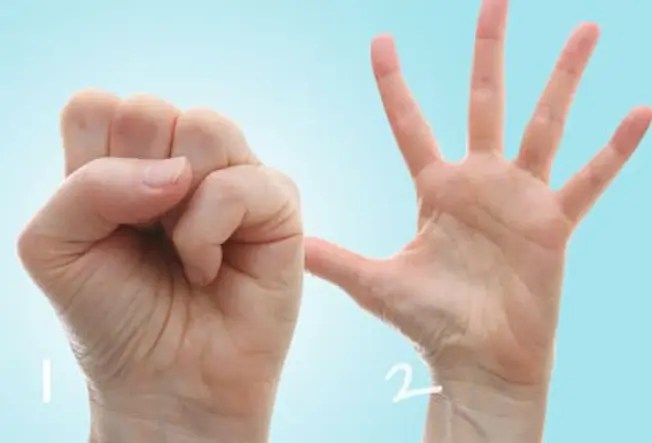
People who let their handwriting go often need small-motor exercises later. Ideas for working on hands with osteoarthritis may be found at WebMD, here.
It’s always something, isn’t it? We like the convenience of keyboarding — not to mention suggested words popping up in text messaging, saving us strokes — but what if there’s a downside? What if our hands lose their versatility?
At the Washington Post, Gina Rich notes that “Writing by hand may feel difficult for many of us as we engage less in fine motor activities and use devices more. …
“Handwriting is a fine motor skill that isn’t innately learned; it needs to be taught and practiced. It also is a skill that benefits us by stimulating our brain: We remember information better when we write it down by hand, research shows.
“But for many of us, handwriting can feel difficult as we turn to smartphones, other devices and even robots for many of our hand tasks.
“And with cursive dropped from Common Core State Standards in 2010 in the United States, children have few opportunities to learn and practice; for some, handwriting has been relegated to an extracurricular activity.
“The problem isn’t only that we’re practicing less. Technology has changed the way we use our hands. Also, the more time we spend on our devices, the greater the probability of problems with our hands and wrists, such as pain, weakness and nerve changes.
“ ‘It’s like going to the gym,’ said Mellissa Prunty, an occupational therapist at Brunel University London and chair of the National Handwriting Association in the United Kingdom. ‘When you write for long periods of time but you don’t do it often, you are going to feel tired and fatigued.’
“The hand-brain connection is stronger when we write something by hand vs. typing it, said Paula Heinricher, an occupational therapist and national presenter for Learning Without Tears, which trains educators in subjects, including handwriting. Although we might be able to take more notes on a keyboard than by hand, ‘there’s also research that shows when you write by hand, there is a deeper brain connection and a deeper understanding, and you retain that information longer,’ she said. …
“The ability to write quickly and legibly also has a critical link with academic performance. A 2013 study found that children who had good handwriting skills in preschool performed better in reading and math in second grade. And in a 2019 study of 141 first-graders in four schools in Italy, children who were taught cursive developed better reading and writing skills compared with a control group. …
“While there is little hard evidence that fewer students are taking notes or completing assignments by hand now compared with years past, children’s use of devices has increased, especially in the pandemic years, parents said.
There’s no benefit to using one part of the hand so extensively, Inal said, but there are risks.
“But devices aren’t the only culprit. In general, we’re not engaging in as many fine motor activities as in the past, said Ritu Goel, a certified hand therapist at the University of Maryland Medical Center.
“With keyless entry, for instance, many of us no longer turn a key to unlock our car or the front door; instead, we push a button or tap out a code. So the lateral pinch, a fine motor motion, ‘is becoming a little less used in day-to-day activity,’ Goel said. …
“With the repetitive pinching motion of texting, ‘only one muscle is doing really hard work,’ said study author Esra Erkol Inal, associate professor of physical therapy and rehabilitation at Reyap Hospital Istanbul. There’s no benefit to using one part of the hand so extensively, Inal said, but there are risks. …
“A study of neurology patients at a Turkish university found that people diagnosed with carpal tunnel syndrome spent more hours per day on their smartphones than those without hand or wrist complaints. …
“Even as we continue to use technology and devices, we can bolster our handwriting muscles with a few strategies.
“Make sure your smartphone isn’t too big. If our smartphone is large relative to our hand, we wind up reaching across it more, which can cause thumb pain, Goel said. You should be able to hold your smartphone comfortably in one hand with a good grasp.
“Use devices mindfully: Her teenage patients scoff, but Goel advises texting with the index finger — not thumbs — while holding the smartphone in the other hand. Give yourself cues to take breaks from scrolling, such as by setting alarms on your phone. And don’t forget posture: When working at a desk, Inal stores her phone in a smartphone stand and strives to keep herself vertical, rather than hunched over.
“Stretch and strengthen: If your hands are cramping, Goel recommends tendon gliding exercises, movements to bend and straighten different joints. You can also perform what’s called a prayer stretch by bringing your palms together with your elbows out and pointing your fingertips upward for a wrist extension. Reverse the exercise with a wrist flexion, directing your fingertips down so the backs of your hands touch. In addition, Goel suggests rolling your hands across therapeutic putty, Play-Doh or a small rolling pin.
“Completing tasks without assistive devices will help strengthen the small stabilizing muscles in your hands. For instance, using a manual can opener engages your gripping and pinching muscles, Kruse said.”
More at the Post, here.

 Suzanne's Mom's Blog
Interesting! I like the play doh, when I join the grands in play , I’ll just tell them it’s good therapy for the hands.😄
LikeLike
Yes. Good for you!
LikeLiked by 2 people
Good reminder that writing by hand benefits the memory! Thank you!
LikeLike
This is making me want to write more neatly and shape the letters carefully!
LikeLiked by 1 person
Yes, indeed! Me, too! : )
LikeLiked by 1 person