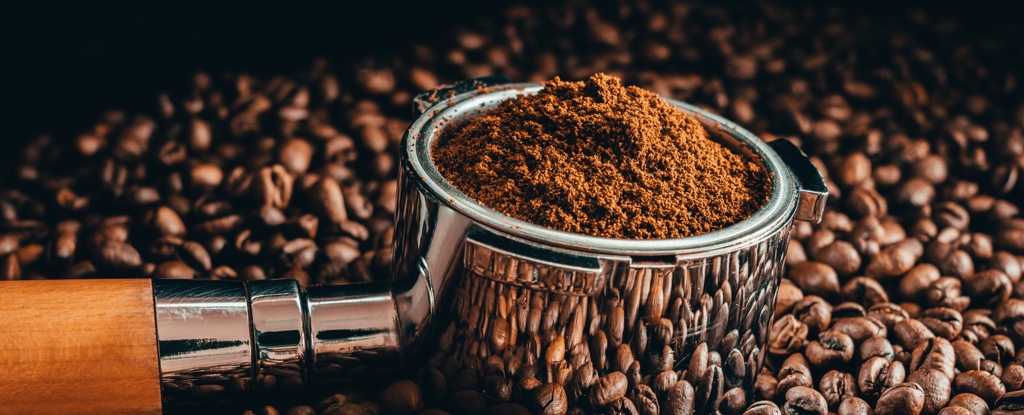
Photo: matusgajdos17/500px.
Australian researchers say concrete could be 30 percent stronger with charred coffee grounds.
Longtime coffee drinkers know that coffee is good for all sorts of things besides waking you up. Coffee grounds are great in compost, for example, and provide useful nutrients for your garden — nitrogen, potassium, and phosphorous.
But coffee grounds for construction projects? At ScienceAlert, Tessa Koumoundouros describes new research showing the possibilities.
“We could be producing concrete that’s 30 percent stronger by processing and adding charred coffee grounds to the mix, researchers in Australia discovered. Their clever recipe could solve multiple problems at the same time.
“Every year the world produces a staggering 10 billion kilograms (22 billion pounds) of coffee waste globally. Most ends up in landfills. ‘The disposal of organic waste poses an environmental challenge as it emits large amounts of greenhouse gases including methane and carbon dioxide, which contribute to climate change,’ explained RMIT University engineer Rajeev Roychand.
“With a booming construction market globally, there’s also an ever increasing demand for resource intensive concrete causing another set of environmental challenges too.
” ‘The ongoing extraction of natural sand around the world – typically taken from river beds and banks – to meet the rapidly growing demands of the construction industry has a big impact on the environment,’ said RMIT engineer Jie Li. … ‘With a circular-economy approach, we could keep organic waste out of landfill and also better preserve our natural resources like sand.’
“Organic products like coffee grounds can’t be added directly to concrete because they leak chemicals that weaken the building material’s strength. So using low energy levels, the team heated coffee waste to over 350 °C (around 660 °F) while depriving it of oxygen.
“This process is called pyrolyzing. It breaks down the organic molecules, resulting in a porous, carbon-rich charcoal called biochar, that can form bonds with and thereby incorporate itself into the cement matrix. …
“The researchers [are now] testing how the hybrid coffee-cement performs under freeze/thaw cycles, water absorption, abrasions and many more stressors. The team is also working on creating biochars from other organic waste sources, including wood, food waste and agricultural waste. …
“Said RMIT engineer Shannon Kilmartin-Lynch, ‘Inspiration for my research, from an Indigenous perspective, involves Caring for Country, ensuring there’s a sustainable life cycle for all materials.’ “
The research was published in the Journal of Cleaner Production.
More at Science Alert, here.

 Suzanne's Mom's Blog
Our coffee grounds go in the compost, but I love this alternative use.
LikeLike
I am never sure if the filters can go in the compost too.
LikeLiked by 1 person
I think they can.
LikeLike
Thanks!
LikeLike
Brilliant! 👍
LikeLike
This is a great experiment. We’ll need more concrete to make port levies.
LikeLiked by 1 person
[…] Coffee Grounds for Construction […]
LikeLike