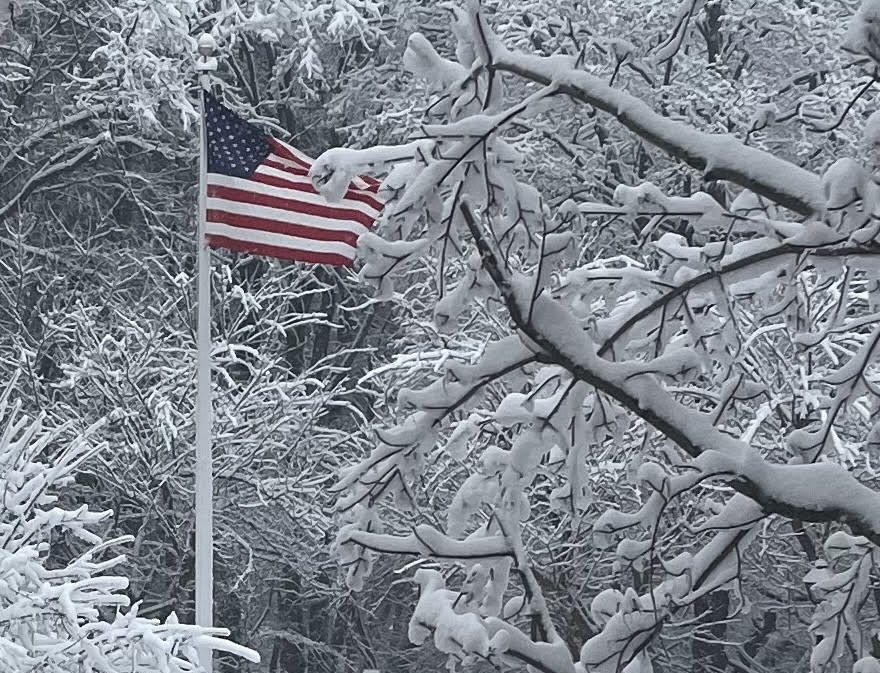
Now is the winter of our discontent.
For some reason, I thought today might be a good day to talk about the women of the French Resistance and the power of flying under the radar.
The Library of Congress research guide on the French Resistance says, “Women had a unique ability to serve as Resistants, in some part due to views among many Nazis that women were harmless and non-threatening. … Women were by default granted much greater latitude in moving around — and when apprehended were much more likely to convince officers or soldiers of their innocence.
“Often overlooked, they served as consummate spies. Often speeding along by bicycle, women devised all manner of ways to hide items in their purses and baskets. They used baby carriages as a sort of camouflage to transport goods. …
“Women were invaluable as messengers and couriers; they carried everything from arms and ammunition to intelligence and Resistance propaganda. They also rescued airmen shot down … and operated what were called ‘escape lines’ that served to usher US and British servicemen into safety. They gathered military intelligence (some of these women even worked with Madames in brothels … where information could be gathered secretly), decoded messages, managed underground publications, ran guns, provided support for strikers, and carried out sabotage of German communications. They [worked] as typists and counterfeiters, and proved themselves brave and extraordinarily wily. …
“Recent scholarship has finally brought women Resistants out from the shadows. Women were often slower than men to write about their experiences, but as decades went on, and in some cases archives opened, more of these stories came to light.
“[One] valuable source of material are the témoignages — statements made by individuals during interviews conducted immediately after the War. Some such interviews were under the auspices of the Comité d’Historie de la Deuxième Guerre Mondiale in Paris. Many of these sources can be found at the Bibliothèque nationale de France or the Bibliothèque Marguerite Durand in Paris. …
“Some accounts of these women and their activities can be found in reports from those U.S. servicemen, which are available in the National Archives, Washington National Records Center in [Maryland]. There are firsthand accounts of downed American airmen who were assisted by Resistants. Many of these accounts talk about being fed, given medical attention and shelter, and even being shepherded to a safehouse. For safety reasons, these women did not usually give their real names, thus they will forever remain anonymous.
“As Margaret L. Rossiter notes in her study, Women in the Resistance, some women that have gained attention for their heroic acts managed to preform them while nonchalantly preforming their day jobs.
“Jeanne Berthomier, who was a civil servant in the Ministry of Public Works in Paris, managed to deliver top-secret information typed on tissue paper to the Alliance chief, Marie Madeleine Fourcade. Mme Paule Letty-Mouroux used her position as a secretary at the Marine de Toulon in order to report the repair status of Axis ships. Mme Marguerite Claeys collected information from agents who posed as customers at the company she owned with her husband — all without his knowledge.
“Simone Michel Lévy used her job in the Postal, Telegraph, and Telephone Service (PTT) to obtain intelligence [that] she managed to send to London under the code name of Emma. These women all took enormous risks and many of them were eventually caught and arrested. …
“Women from a variety of countries, including Britain and the US, served in the French Resistance. Isabel Townsend Pell … was an American socialite who joined the French Resistance during World War II — one of the few women who was part of the Maquis — purportedly due to her good aim. Going by a code name of Fredericka … she was imprisoned twice during the war, and subsequently decorated with the Legion of Honor for her service.
The stories of these women and countless others stand as testaments to the fact that no matter what role you have or where you find yourself, there is often a way to contribute to a larger cause. …
“Eighty years after their Liberation, France continues to commemorate French Resistance fighters and Allied veterans from WWII. … On May 27th, 2024, in the presence of the family of Alice Arteil, a secondary school in Le Mayet-de Montagne, was renamed in honor of French Resistant Alice Arteil. Arteil was one of the only women to command her own Resistance group. Her knowledge of the mountainous and woody terrain was invaluable for the rescue missions and the general activities of the group.” More at LOC, here.
At the website, there are other women, listed alphabetically. I loved reading about Pippa the “knitting spy,” who hid her information within a knitting kit by knotting codes onto silk. Was she thinking about Madame Defarge? What a testament to fiction being as real as real life — and sometimes more influential!
“ ‘En 1940, il n’y avait plus d’hommes. C’étaient des femmes qui ont démarré la Résistance.’
-Germaine Tillion, quoted in Femmes de la Résistance: 1940-1945.”

 Suzanne's Mom's Blog
OMG. Margaret Rossiter is the mother of one of my close friends. I’ve never read her book but it’s been in my house. Now might be a great time to study it. Anyway, nice post et vive la résistance.
LikeLike
If you read it, I hope to see what you think about it on GoodReads.
LikeLiked by 1 person
Women are sadly still underappreciated
LikeLike
But if no one sees you, imagine what a spy you can be!
LikeLiked by 2 people
Fascinating. Thank you for sharing
LikeLiked by 1 person
Yesterday’s image and blog were both timely and reassuring. I hope that large mobilization and resistance networks will develop over the next couple of years. The Pussy March from 2017 will have no effect in today’s political climate.
LikeLike
Each of us will know when we see the right place for us to contribute. It’s a bit murky so far.
LikeLike
So unassuming, yet so important in history!
LikeLike
Not that women shouldn’t sometimes push themselves forward for attention, but “unassuming” can also be powerful.
LikeLiked by 1 person
From Renee: “Your post today about women in the Resistance and their ability to accomplish more than some men could rang so true with me, especially since I just finished a book written by Rose Valland about her efforts during WWII and later defending French art collections.
The translation with notes of her original work, *The Art Front* was just published by the monumentsmenandwomenfnd.org and has now become available on Amazon. …
“Rose Valland looked so very mousey, but she understood German well and quietly documented all of the rapacity and competition among the Nazi officials who were spiriting away looted art, later even household goods, from the Jewish art dealers and later from homes of Jews who had been dislodged and sent to concentration camps. This secret list that she gave to James Rorimer helped the Americans beyond all measure. Her job was helping with the modern art collection at the Jeu de Paume.”
LikeLike
From Hannah: “I have always been intrigued by the French Resistance, doubly so since learning about the heroic role women played in it. I highly recommend recommend Un Village Francais, a series shown on Amazon Prime. Developed and filmed in France, it has subtitles, but I didn’t find them too intrusive, even though I was attempting to follow the French. It is a fictional story set in a fictional village, but the things that happened are very real, and some of the characters are based on real people. An absolutely monumental work. One might have to get Amazon Prime+ to see it if not already subscribed, but it’s worth it.
“There are so many books out now about women in France in the war years. I also recommend A Woman of No Importance The Untold Story of the American Spy Who Helped Win World War !!, by Sonia Purnell. This New York Times Bestseller is totally true. Amazing how the two presentations overlap.”
LikeLike