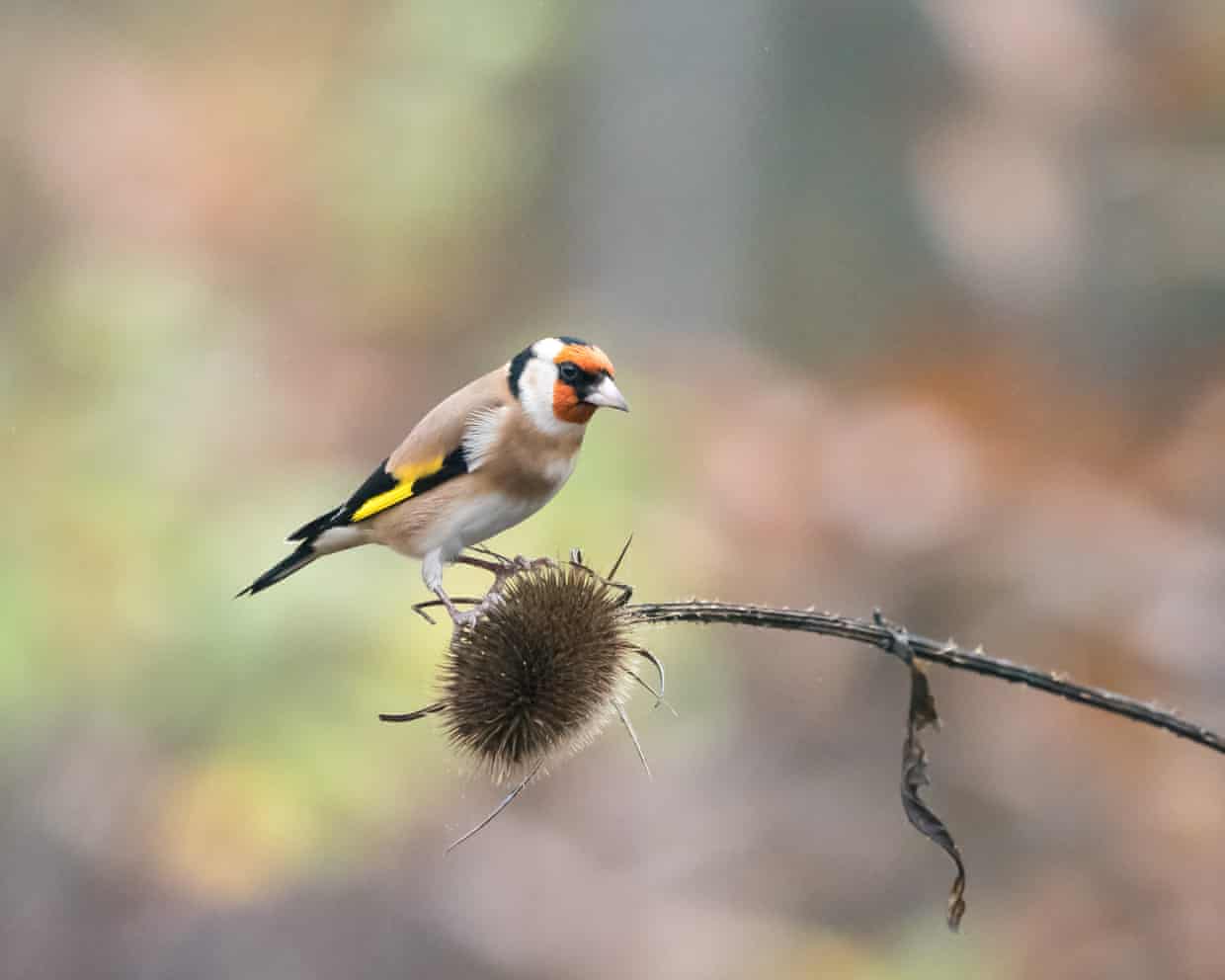
Photo: Suerob/Getty Images/iStockphoto.
The European goldfinch, above, was one of the species most affected by the growing amount of light-polluted areas.
I am not a scientific kind of birdwatcher, but I love trying to identifying the birds around here, sometimes by their song. I’ve learned that one “song” of the red-bellied woodpecker, for instance, sounds a lot like a metal windup toy.
Citizen scientists the world over are contributing to what scientists know about birds. Consider how a recent study was able to use a bird lovers’ website to take our knowledge of avian behavior a step farther.
Hannah Devlin, science correspondent at the Guardian, reports that “urban birds stay up significantly later than their rural counterparts, according to research that highlights the impact of light pollution on wildlife.
“The study, based on recordings submitted by bird enthusiasts to a popular species identification and mapping website, showed that light pollution caused birds to sing for an average of 50 minutes longer each day, with some species waking up an hour earlier and settling down for the evening an hour later.
“ ‘We were shocked by our findings,’ said Dr Brent Pease, an assistant professor of biodiversity conservation at Southern Illinois University Carbondale. ‘Under the brightest night skies, a bird’s day is extended by nearly an hour.’
“Light pollution now affects 23% of Earth’s surface and is rapidly growing in extent and intensity, data suggests. There is already evidence for detrimental effects on human health and concerns that many species are affected, with negative consequences including die-offs of insects and the disruption of migration patterns in bats and sea turtles.
“The latest study used bird recordings submitted to BirdWeather, a citizen science project that allows users to submit recordings from birds in their local area to produce a global live library of birdsong and which uses AI to allow users to identify birds in their gardens. In total the scientists analyzed 2.6m observations of onset (morning) bird vocalization and 1.8m observations of cessation (evening) bird calls, for hundreds of species. This data was combined with global satellite imagery measurements of light pollution. …
“The analysis found that for birds in light-polluted areas, the waking day was extended by 50 minutes on average.
Species with large eyes, relative to their body size, had the strongest response to artificial light.
“ ‘The American robin, Northern mockingbird and European goldfinch all extended their day by more than average,’ said Pease. …
“The impact of a longer day for birds was not yet clear, the researchers said. ‘We know that sleep loss is not great for humans, but birds are different,’ said Pease. ‘They have developed interesting strategies to cope with loss of sleep during migratory periods.’
“A disturbance of natural behavior patterns was of concern, Pease added, although there is evidence, in some species, that artificial lighting may increase foraging and mating time and improve the survival rate of fledglings.
“The findings are published in the journal Science.”
Sounds like this is a case of “more research is needed.” More at the Guardian, here.

 Suzanne's Mom's Blog
Leave a comment. Website address isn't required.