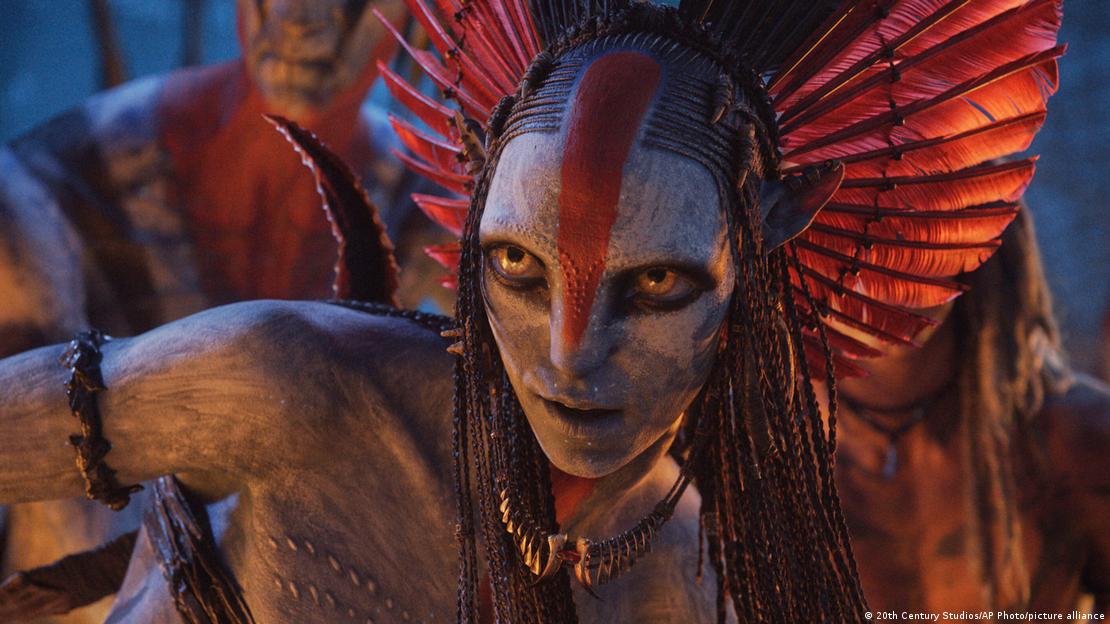
Photo: 20th Century Studios/AP Photo/picture alliance.
Varang (played by Oona Chaplin) is the leader of an aggressive Na’vi clan called the ‘Ash People‘ in Avatar.
Several of us here are interested in languages, including invented languages. I worked on learning Esperanto for a while in the 1980s and still speak it haltingly. That’s why I’ve indulged in a few posts about languages that have been created for shows — like Klingon in Star Trek. (Click here to the read the post “Sweden Opens Klingon Center.)
Elizabeth Grenier writes at DW about a man who got “to invent a new language that is heard by millions.” Linguist Paul Frommer talked to DW about how he developed the Avatar aliens’ language.
” ‘It’s been quite a remarkable event in my life,’ says linguist Paul Frommer, recalling his first encounter with James Cameron. Searching for someone to develop a constructed language for a science-fiction film, the renowned director had sent an email to the linguistics department of the University of Southern California. …
” ‘My life really hasn’t been the same ever since,’ Frommer tells DW ahead of the release of Avatar: Fire and Ash, the third film of the epic franchise, 20 years later.
“Cameron’s premise for the language was that it should sound ‘nice’ — ‘of course, that’s a subjective kind of thing,’ says Frommer. It also had to be easy enough for actors to learn it, as it was clear from the start that there wouldn’t be any electronic manipulation of the characters’ voices. …
“Even though there are different aspects of Na’vi that can be compared to other languages, it can’t be directly linked to any single one. ‘I wanted to make it unusual,’ says Frommer.
“Describing the process of developing the language, Frommer refers to the different ‘modules’ used in linguistics — the building blocks he worked with.
“First of all, at the core of a language are its phonetics and phonology, or its ‘sounds and the sound system,’ he explains. …
“He included, for example, ejective sounds — popping sounds that can be heard in parts of Africa, Asia and Native American languages. He also included unusual combinations of consonants in the language, basically ‘taking familiar sounds, but putting them together in unfamiliar ways.’
“Then, Frommer determined the language’s morphology, which is how words are built. … Even though he was inspired by constructions that also exist in other human languages, he ‘took certain things and put them on steroids.’
“For example, there are five levels of verb conjugation: the present, the immediate past, the distant past, the immediate future and the distant future. Word order is also very flexible in sentences. The function of a word in Na’vi is not determined by its placement in a sentence, but through declension, with six different cases. The German language, by comparison, has four grammatical cases — nominative (subject), accusative (direct object), dative (indirect object) and genitive (possession). [Like Latin.] …
“With each film in the franchise, new colloquialisms and dialects are developed to reflect the way the different Na’vi clans speak. The vocabulary thereby keeps expanding, and Frommer estimates there are now more than 3,000 Na’vi-language words. …
“Fans of Star Trek or J.R.R. Tolkien‘s Lord of the Rings famously demonstrate their enthusiasm for these complex fictional universes by learning Klingon or Elvish, which are also constructed languages — or ‘conlangs.’
“Similarly, there is now a community of Na’vi learners around the world, with a printed dictionary and a wealth of online resources for those who are interested in the language.’ ” More at DW, here.


