Feeds:
Posts
Comments

Posts Tagged ‘star trek’

Star Trek Muppets

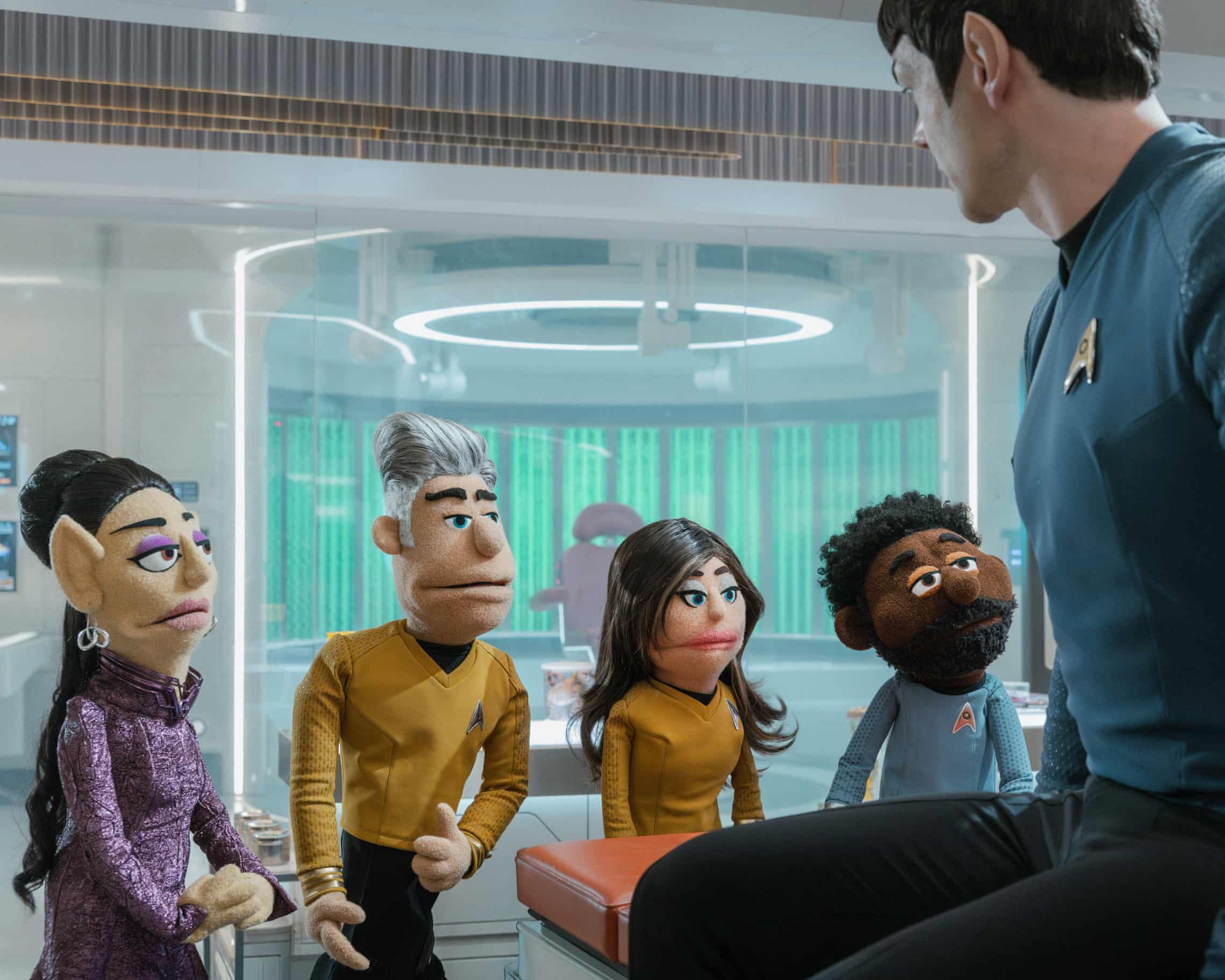
Photo: Jan Thijs/Paramount+.
After 60 years, Star Trek has had a muppet takeover.

I find it reassuring that in dark times, creative people still give us fantasy. And I love how supposed fantasy-haters get drawn in. I know a few grumps (usually guys, but not always) who think fiction in general is a waste of time when you could be learning new facts. Huh! The deeper realities may be beyond skeptics.

Which leads us to the value of science fiction and playing.

Duncan Barrett writes at the Guardian, “When it comes to the latest episode of Star Trek: Strange New Worlds, the life forms in question are less flesh-and-blood and more fabric-and-felt – as the series becomes the latest sci-fi show to embrace the magic of puppetry.

” ‘Level-Five Transporter Accident’ follows in a longstanding Trek tradition that sees crew members undergo unfortunate transformations while beaming up to the ship. This time, the crew suffers an even greater indignity: thanks to a spot of boldly sewing from the legendary Jim Henson’s Creature Shop, the Enterprise team are reconstituted into – quite literally – a bunch of muppets.

“ ‘I thought it would be a big swing for us, but we spent a lot of time discussing how to do it as a Star Trek episode,’ says Strange New Worlds showrunner Henry Alonso Myers. ‘[I] knew if it didn’t feel like Star Trek then it wouldn’t work.’ …

“Despite Star Trek’s six-decade commitment ‘to seek out new life,’ the franchise has remained a puppet-free zone.

“ ‘Star Trek made a big commitment to makeup early on,’ says Dr Chris Nunn, assistant professor of film at the University of Birmingham. ‘So aliens would typically be played by human actors under heavy prosthetic masks, and that trend has continued.’

“So why the unexpected course-correction from a franchise about to enter its seventh decade? The answer, it turns out, is less about the magic of puppetry and more about the tropes of modern TV production.

“ ‘Doing a puppet episode is a TV concept,’ says Myers. ‘One of the things we try to do on Strange New Worlds is go for big swings that haven’t been done before in Star Trek.’ …

“For advice, Myers turned to former Angel showrunner Jeffrey Bell, who worked on the fan-favourite episode Smile Time, which sees its titular vampire, played by David Boreanaz, transformed into a puppet while investigating a sinister Sesame Street-style mystery.

“In Strange New Worlds, Myers flipped the format on its head, keeping Ethan Peck’s Spock as flesh and (green Vulcan) blood, while forcing the rest of the Enterprise crew to become chaotic, muppety versions of themselves.

“ ‘Spock was the obvious character to run into this problem,’ says Myers. ‘Because he’s so logical.’ The episode’s director, Jordan Canning, agrees. ‘Spock was 100% the right choice,’ she laughs. ‘He’s the ultimate straight man.’

“Like the hit Star Wars TV series The Mandalorian, Strange New Worlds uses a giant LED screen known as the Volume rather than building physical stage sets. Sci-fi actors must be particularly adept at playing make-believe, but according to Canning, the puppets made things easier for Peck. …

“ ‘It’s like Ryan Gosling in Project Hail Mary,’ says Nunn. ‘That movie wouldn’t have worked if they’d added the alien in post [production]. The fact that Gosling was reacting live in the moment is what made their relationship feel genuine.’

“For Dawn Dininger, one of five puppeteers who operates Grogu in The Mandalorian, it’s a double-edged sword. ‘The actors always forget that he’s a puppet.’ she says. ‘They just think he’s a baby and start rocking him and playing with him. They never talk to us, even though we’re the ones controlling him. They forget we’re there.’ …

“Dininger was unprepared for the cult status the character would almost instantly accrue. Now, when top Hollywood actors appear opposite the puppet – as Sigourney Weaver recently did – it’s the A-listers who are starstruck.

“ ‘It’s like tagging along with a famous person!’ laughs Dininger. ‘Nobody knows who you are, but they all know him, and they get excited as soon as they see him on set.’ “

More at the Guardian, here.
Read Full Post »

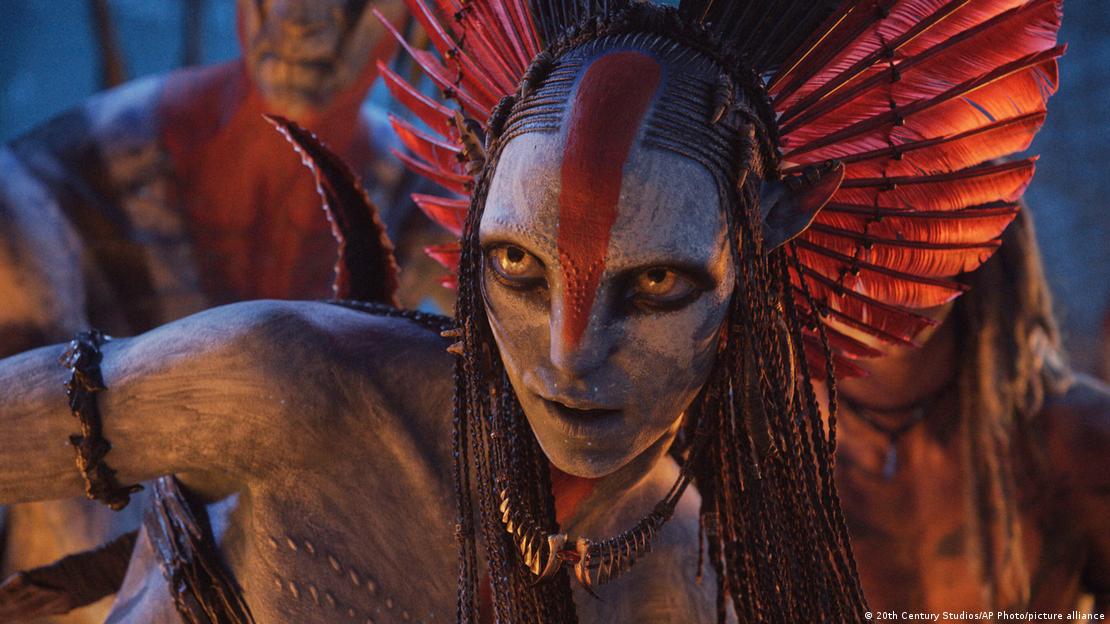
Photo: 20th Century Studios/AP Photo/picture alliance.
Varang (played by Oona Chaplin) is the leader of an aggressive Na’vi clan called the ‘Ash People‘ in Avatar.

Several of us here are interested in languages, including invented languages. I worked on learning Esperanto for a while in the 1980s and still speak it haltingly. That’s why I’ve indulged in a few posts about languages that have been created for shows — like Klingon in Star Trek. (Click here to the read the post “Sweden Opens Klingon Center.)

Elizabeth Grenier writes at DW about a man who got “to invent a new language that is heard by millions.” Linguist Paul Frommer talked to DW about how he developed the Avatar aliens’ language.

” ‘It’s been quite a remarkable event in my life,’ says linguist Paul Frommer, recalling his first encounter with James Cameron. Searching for someone to develop a constructed language for a science-fiction film, the renowned director had sent an email to the linguistics department of the University of Southern California. …

” ‘My life really hasn’t been the same ever since,’ Frommer tells DW ahead of the release of Avatar: Fire and Ash, the third film of the epic franchise, 20 years later.

“Cameron’s premise for the language was that it should sound ‘nice’ — ‘of course, that’s a subjective kind of thing,’ says Frommer. It also had to be easy enough for actors to learn it, as it was clear from the start that there wouldn’t be any electronic manipulation of the characters’ voices. …

“Even though there are different aspects of Na’vi that can be compared to other languages, it can’t be directly linked to any single one. ‘I wanted to make it unusual,’ says Frommer.

“Describing the process of developing the language, Frommer refers to the different ‘modules’ used in linguistics — the building blocks he worked with.

“First of all, at the core of a language are its phonetics and phonology, or its ‘sounds and the sound system,’ he explains. …

“He included, for example, ejective sounds — popping sounds that can be heard in parts of Africa, Asia and Native American languages. He also included unusual combinations of consonants in the language, basically ‘taking familiar sounds, but putting them together in unfamiliar ways.’

“Then, Frommer determined the language’s morphology, which is how words are built. … Even though he was inspired by constructions that also exist in other human languages, he ‘took certain things and put them on steroids.’

“For example, there are five levels of verb conjugation: the present, the immediate past, the distant past, the immediate future and the distant future. Word order is also very flexible in sentences. The function of a word in Na’vi is not determined by its placement in a sentence, but through declension, with six different cases. The German language, by comparison, has four grammatical cases — nominative (subject), accusative (direct object), dative (indirect object) and genitive (possession). [Like Latin.] …

“With each film in the franchise, new colloquialisms and dialects are developed to reflect the way the different Na’vi clans speak. The vocabulary thereby keeps expanding, and Frommer estimates there are now more than 3,000 Na’vi-language words. …

“Fans of Star Trek or J.R.R. Tolkien‘s Lord of the Rings famously demonstrate their enthusiasm for these complex fictional universes by learning Klingon or Elvish, which are also constructed languages — or ‘conlangs.’ 

“Similarly, there is now a community of Na’vi learners around the world, with a printed dictionary and a wealth of online resources for those who are interested in the language.’ ” More at DW, here.

Read Full Post »

Photo: u-theopera
A scene from “u,” the first Klingon opera on Earth.

I was late to the Star Trek party. I didn’t get hooked until the spinoff Deep Space 9, which featured an actor I had performed with as a child (René Auberjonois). But I have friends who are lifetime Trekkies — Asakiyume for one. (She’s a Vulcan.)

Partly because I’m interested in invented languages like Esperanto, I have written before about Klingon, a language created for Star Trek. Today I’m here to tell you about a new Klingon center — in Sweden, if you can believe it.

Lee Roden writes at The Local, “The world’s first ‘Klingon tourist centre’ [opened February 3] in Sweden, in a collaboration between a Stockholm theatre and an organization which calls itself the Klingon Institute of Cultural Exchange.

“The doors of ‘Visit Qo’noS’ [are] open at Turteatern in southern Stockholm … until late March. No stone has been left unturned at what Turteatern’s Theresa Jonasson told The Local is the ‘first Klingon centre in Alpha Quadrant’ (which apparently is the part of the Milky Way where Earth lies, in Star Trek lore).

” ‘The visitors check in at the reception desk, where they will get some tourist information, such as a visitor map of the Klingon capital First City. They will then be invited into the ceremonial presentation hall. The non-hologram live-act presentation is performed by the four Klingon ambassadors Ban’Shee, Mara, Morath and Klag, all from the House of Duras,’ she explained.

” ‘The visitors/audience will be introduced to the Klingon culture and customs and acquire lifesaving tips to apply when interacting with Klingons. There will also be a singalong, dancing, Klingon opera, and scenes from the famous Klingon play Romyo je joloywI’ (better known on Earth as Romeo and Juliet), by Shex’pir.’ …

“Even by science fiction standards, Star Trek fans are known for being a particularly passionate bunch, and the Stockholm theatre has been careful to try to meet their high expectations when it comes to costumes and staging. It has also called upon the help of Klingonska Akademien (The Klingon Academy), an Uppsala-based society with expertise in the Klingon language. …

“The Klingons will be of the more traditional kind [says Jonasson]:

‘The most common question is if the Klingons look like the Klingons in the new Star Trek TV series Discovery, which of course they do not. That series is offensive for Klingons, and should not be mentioned during the presentation.’ …

“For any readers fluent in alien languages, a message from the Klingon Institute of Cultural Exchange in Klingon can even be found here.”

More at the Local, here.

Read Full Post »

I’ve been thinking about a book I read earlier this year, In the Land of Invented Languages: Esperanto Rock Stars, Klingon Poets, Loglan Lovers, and The Mad Dreamers Who Tried to Build A Perfect Language, by Arika Okrent. I thought it was a hoot! Even though some parts were impenetrable to anyone not a linguist like the author, I really enjoyed it. Okrent is a very good writer and knows how to choose and lead up to the funniest aspect of a constructed language — or of the inventor. I learned a ton of random facts, and I thought I knew it all, having a decent knowledge of Esperanto. Turns out, there are more than 900 known invented languages. One that was invented to express a woman’s perspective is Laadan and has words like this: “radiidin, non-holiday, a time allegedly a holiday but actually so much a burden because of work and preparations that it is a dreaded occasion; especially when there are too many guests and none of them help.”

Okrent gets into the wildly varied reasons people invent a language and why natural languages are more flexible. She covers some languages in depth (like Star Trek’s Klingon, invented only for artistic fun). I loved the part about the U.S. Office of Nuclear Waste Isolation asking “semiotician” Thomas Sebeok in the 1980s how to post warnings that would last 10,000 years on waste-storage sites. Sebeok recommended posting signs in all known languages, plus pictures, icons, and all sorts of symbols, and having the keepers every 250 years rethink the warnings based on current messaging. He also recommended creating a spooky mythology around the site that would be passed on from “priest” to “priest” beyond the time they could be expected to know the reason for it. All they would know is the “curse.”

Too many great tidbits to describe here. I laughed all the way through.

*******************************************

Asakiyume writes: Your mention of Thomas Sebeok’s foray into how to convey a warning about nuclear waste sites reminded me of this article, “This Place Is Not a Place of Honor,” by  Alan Bellows, which includes interesting images designed to convey horror and stay-away-itiveness.

The poetry of it–it horrifies viscerally.
This place is a message… and part of a system of messages… pay attention to it!

Sending this message was important to us. We considered ourselves to be a powerful culture.
This place is not a place of honor…no highly esteemed deed is commemorated here… nothing valued is here.
What is here is dangerous and repulsive to us. This message is a warning about danger.
The danger is in a particular location… it increases toward a center… the center of danger is here… of a particular size and shape, and below us.
The danger is still present, in your time, as it was in ours.
The danger is to the body, and it can kill.
The form of the danger is an emanation of energy.
The danger is unleashed only if you substantially disturb this place physically. This place is best shunned and left uninhabited.

Read Full Post »