Feeds:
Posts
Comments

Posts Tagged ‘building’

Photo: African American Design Nexus.
The innovative architect and designer Felecia Davis can make buildings out of wool and fungus.

More on human ingenuity today. At the Washington Post, Elizabeth Evitts Dickinson writes about a woman who is pioneering all-fiber construction materials and “clothes that monitor your health.” And that’s just the beginning.

“Imagine you’re standing in an outdoor pavilion,” Dickinson suggests, “one that’s similar in design to a covered picnic area at a local park or an amphitheater, only instead of support columns made from concrete, wood or stone, this structure is propped up by what appear to be posts of crocheted wool. Above you, a vast expanse of undulating roof is made of the same knitted material. Fungus coats this wool frame, forming the walls and the ceiling, not unlike the way plaster might cover the wood framing of a wall.

“This is the premise of an experimental material known as MycoKnit. ‘We’re trying to make an all-fiber building,’ says designer Felecia Davis, an associate professor of architecture and a lead researcher in the Stuckeman Center for Design Computing at Pennsylvania State University. She is part of an interdisciplinary team testing how knitted materials, such as wool yarn, might function as the framing for a building while a mixture of straw and mycelium fungus embeds itself onto this knitted fabric to create the rest. Mycelium is composed of individual fibers known as hyphae, which, in nature, create vast and intricate networks through soil, producing things like mushrooms. The amazing thing, Davis tells me, is that something as basic as fiber can become both the structure (the wool yarn) and the infill (the fungus).

“Davis and her partners are harnessing mycelium’s fast-growing power by regulating environmental conditions in the lab to encourage the fungus’s expansion on their knitted edifice. With the assistance of a computer algorithm made by one of Davis’s PhD students, the team can virtually assemble and examine the structure stitch-by-stitch in order to predict its shape, before building it and letting the fungus propagate overtop. …

“Davis is now working with her students to create a 12-by-12-by-12-foot MycoKnit prototype that can be fabricated and grown in one place, and then taken on-site to build, like an Ikea kit. She imagines a future where biofabricated materials replace less-sustainable building supplies, many of which wind up in landfills.

“Davis is a triple threat designer: trained as both an architect and an engineer, and with a penchant for technology. In her Penn State lab and through her firm, Felecia Davis Studio, she mixes time-honored craft techniques and humble materials with the high-tech — so that clothing might, for instance, alert the wearer to excess carbon monoxide in the air or signal when an infant stops breathing in their crib. Davis works with textiles, she says, because ‘you can address it at the nano- and micro-scale with tiny particles that you can spin to make a thread or yarn, or you can look at it from the massive scale. A building. A city.’ …

“Davis has always loved experimenting with objects and material. The oldest of three siblings, her earliest collaborator was her sister Audrey (now a neonatologist). As kids in the ’60s and ’70s, they explored the foothills of Altadena, Calif., near their home, gathering fresh bay laurel leaves and other natural materials for projects. With their friends, they fashioned dolls out of flour-based papier-mâché, carving apples for the heads. …

“Davis’s mother volunteered at the Pasadena Art Museum and introduced her children to abstract art and modernism; she was also a docent at the Gamble House in Pasadena, one of the country’s most well-preserved examples of Arts and Crafts design. Davis credits that house, in part, for her early desire to pursue architecture. ‘We would do our homework in the attic while she gave her tours,’ Davis says. ‘That house was mind-blowing.’

“On a recent October day, the SoftLab at Penn State is ‘messy,’ Davis says. … Fabric samples have been stretched and pinned to a corkboard, sharing space next to thin electrical conduits and sketches of networking design. There are clear boxes filled with copper-coated yarn and fabrics twisted with stainless steel that are capable of conducting electricity. Davis is refreshingly agnostic about her sourcing, using a combination of existing craft techniques and materials — from wool to human hair — in combination with the latest in software and hardware, such as the LilyPad Arduino, a microcontroller designed to work with e-textiles.

“A pair of black leggings stretch across the bottom half of a dress form. From a distance, they resemble something a rock star might wear, bedazzled and tricked out with lines of metallic thread, but on closer inspection these accents are electrical threads and processors. The leggings are the result of a partnership with Penn State engineer Conrad Tucker, who wanted to create a way of alerting people with Parkinson’s disease to subtle changes in their walking gait, which can foreshadow the onset of more debilitating symptoms. …

“The leggings were originally an information-gathering experiment, but ‘we’ve circled back on this project now that we have a yarn that is washable,’ she says. ‘We think we can make a simpler version of our leggings.’ Davis sees the potential for other ‘smart’ clothing like

a hospital shirt that frees patients from the tether of wires affixed to machines, allowing them to move freely or, ideally, go home sooner because their clothes, connected to the internet, would be able to communicate critical data to doctors.

“While Davis was earning her master’s in architecture at Princeton University, she ‘noticed how little people talk about the emotional experience of people in [a] space. … You’re in basic response with your environment all the time … You’re meshing with it, which is why it’s so important to think about human emotion in design.’ In this view, the aesthetics of what we design is more than an accessory, but a fundamental need in support of human emotional health. …

“As humans we tend to imbue the materials in our lives with emotional resonance — a child’s security blanket or a favorite sweater — and Davis has wondered whether we could also imbue the materials themselves with emotional feedback capacities. In 2012, she partnered with two other designers to create and install a project called the Textile Mirror at Microsoft Research Lab in Redmond, Calif. In the back of a fabric panel, Nitinol wires, made of a shape-changing nickel-titanium alloy, were activated after a person entered information about their state of mind into a mobile phone. The panel would adjust, shrinking and crumpling to reflect pain or sadness, for instance, and then release. As the textile ‘relaxed,’ it helped those in an agitated state to relax as well. Textiles capable of reflecting emotion have the potential to alert architects, building owners and inhabitants to the effect that specific design and material choices have. We can begin to create emotionally reactive dwellings and objects, as Davis calls them. …

“As someone who believes in the scientific method of showing data and results, Davis recognizes that working with emotions is tricky. It’s nearly impossible to scientifically pin down, precisely, what people are feeling at any given time. ‘This is kind of at the edge of what computation can actually tell you,’ she says. ‘We can’t read people’s minds, and yet we function as a species because we can intuitively read emotions.’ “

More at the Post, here.
Read Full Post »

Photo: Suzanne’s & John’s Mom.
Have you ever wondered how this tradition got started?

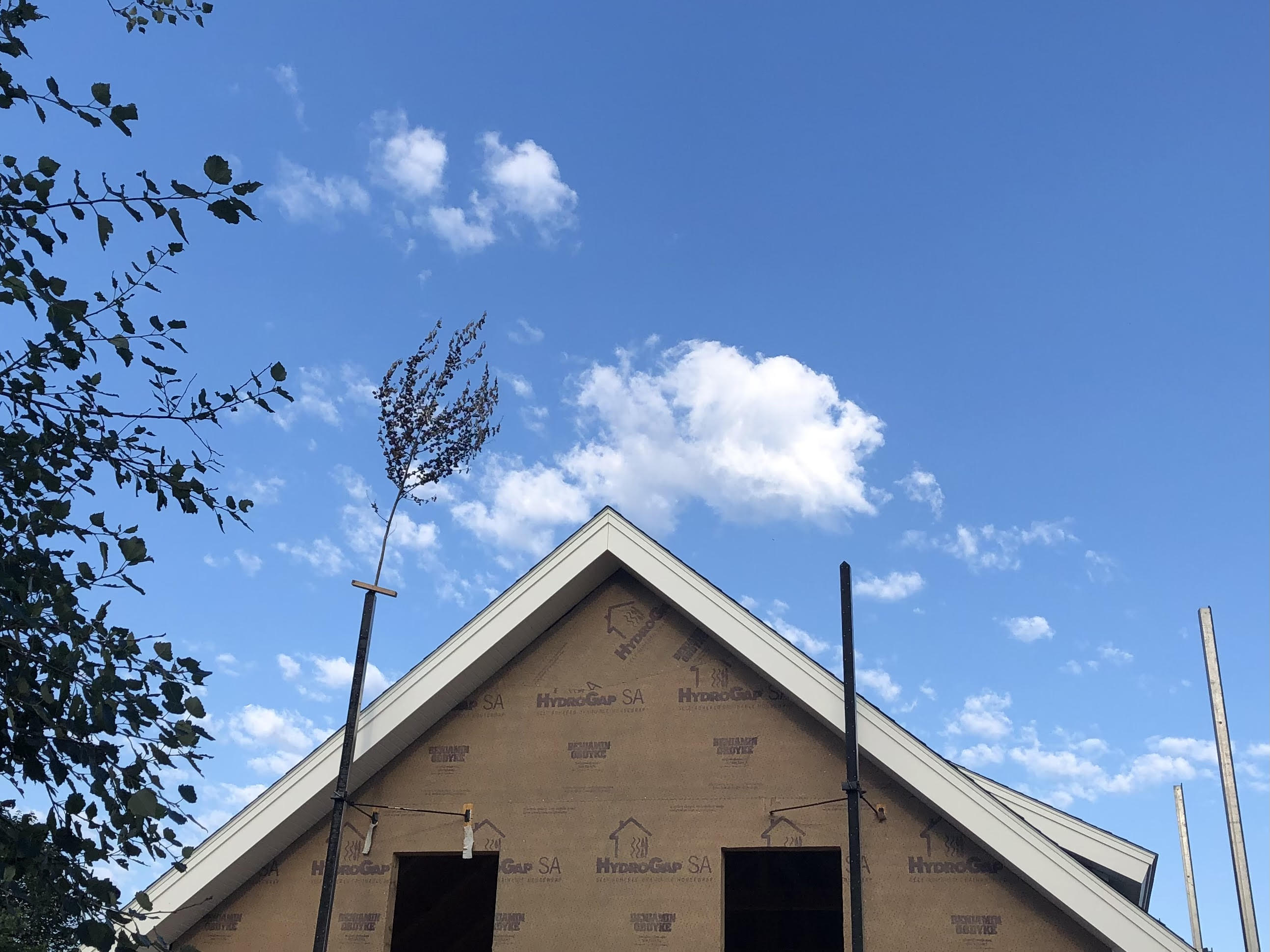
Here is what I was able to find out about the custom of putting a tree on the roof of a building under construction.

Mark Vanhoenacker posted one explanation at Slate in 2013. “The tree is an ancient construction tradition. There are many such rites associated with a new edifice including the laying of foundation stones, the signing of beams, and ribbon-cuttings. But what’s particularly charming about the construction tree is that it isn’t associated with the beginning or the end of construction. Rather, the tree is associated with the raising of a building’s highest beam or structural element.

[The] name of the rite: the topping-out ceremony. It’s a sign that a construction project has reached its literal apogee, its most auspicious point. …

“When a new building reaches its final height, it’s not surprising we’d mark the occasion with a ceremony. But why celebrate with a tree?

“In fact, the first topping-out ceremonies didn’t use trees. In 8th-century Scandinavia sheathes of grain were the plant material of choice. But as topping-out ceremonies spread throughout northern Europe, trees were a natural evolution. …

“The ancient topping-out ceremony has survived mostly intact in this era of high-tech, high-altitude edifices. In the U.S., particularly on large projects, the final beam is often signed, and an American flag may accompany the tree skyward. The purpose of the ceremony — at least for shining skyscrapers — is usually couched in comfortably post-pagan terms: a celebration of a so-far safe construction site, an expression of hope for the secure completion of the structure, and a kind of secular blessing for the building and its future inhabitants.

“But superstition remains a part of the ceremony, especially on smaller projects. Elizabeth Morgan, an architect at Kuhn Riddle in Amherst, Mass., (and a childhood friend) told me that the general understanding among her colleagues is that the greenery may ‘symbolize the hope that the building will be everlasting.’ She also reports a vague sense among construction teams that ‘if you don’t do it, bad things will happen.’

“Her colleague Brad Hutchison noted that ceremonies often involve a pine bough, not a whole tree. He remembers a wintry Friday afternoon ceremony when a pine bough was mounted on the ridge beam of a recently framed roof. … ‘This is New England, so a lot of carpenters are/were sort of New Agey and took the tradition somewhat seriously,’ he said. ‘New-Agey superstition and carpentry/building go well together, I think.’ …

“What about outside of America? The tree tradition reputedly remains strong in much of northern Europe. … In Victoria, Australia, Kate Ulman, a farmer and blogger, recently attended a topping-out ceremony at her parents’ house. Their construction team had never been to a topping out but were familiar with the custom. This being Australia, in addition to a fir branch, they added—what else?—some eucalyptus. And there was cake.

“What about in Hong Kong, where skyscrapers are a revered form of public art, and the resulting skyline dwarfs even that of New York? I contacted Julia Lau, a Hong Kong architect. … Lau told me that despite Hong Kong’s British heritage, Western topping-out ceremonies are rare. The main celebration is Chinese-influenced and takes place at the start of construction, with a roast suckling pig. On the (auspiciously numbered) date of the ceremony, a stakeholder in the building will bow three times while holding three pieces of burning incense — a pleading for a ‘safe and smooth-sailing project,’ says Lau.”

Sandra and I walked by the building in the photo this morning around 6 (hot day). We’d been wondering about the custom. The topping-out here uses a branch from a nearby tree and is not actually attached to the roof but hoisted nearby to look like it. I hope it still brings luck.

More at Slate, here.

Read Full Post »

Photo: Tim Street-Porter.
The view looking across the Los Angeles Music Center Plaza toward the Dorothy Chandler Pavilion, one of four venues to pass a new UL verification program for indoor air quality.

We have learned so much in the past year! Remember when we thought Covid-19 might be like Ebola, when we were advised to wipe down all the groceries with bleach? Gradually we learned that although it might be possible to get the coronavirus from surfaces, the air we were breathing in close quarters was the real danger. Even now, when more people are getting vaccinated every day, spending time in crowded indoor spaces with poor ventilation could extend the life of the scourge.

That is why people who manage buildings, once concerned that they be airtight to keep in heat and air conditioning, are now much more concerned about ventilation. How is the public to know which buildings will be safe to enter?

Jessica Gelt writes at the Los Angeles Times, “The Music Center in downtown Los Angeles [recently announced] that it is the first performing arts organization in the country to receive a UL ‘healthy building’ verification, representing high standards for air quality at four venues — Walt Disney Concert Hall, Dorothy Chandler Pavilion, Mark Taper Forum and Ahmanson Theatre.

“Don’t throw away your mask just yet, though.

“ ‘This isn’t necessarily a COVID program. It’s not about putting up a force field for keeping a building completely safe from COVID. You can’t do that,’ said Sean McCrady, director of assets and sustainability, real estate and properties at UL, the safety science company that issues the Verified Healthy Buildings for Indoor Air Verification Mark, which will be posted at the entrances of Music Center venues.

“McCrady reiterated the scientific consensus that air purification and good ventilation can reduce airborne germs in indoor spaces. In September the Centers for Disease Control and Prevention updated its guidance to say the coronavirus spreads most commonly through the inhalation of droplets and tiny respiratory particles that can remain suspended in the air.

“The UL verification program emphasizes filtration, ventilation and the overall hygiene of air systems and of buildings in general. Buildings are required to use MERV 13 air filters, which remove particles between 1 and 5 microns. The coronavirus is smaller than that, but McCrady said the filter has an 85% efficacy rate and captures much of the particulate matter to which the virus hitches itself. Prior to COVID-19, the industry standard was the lower-performing MERV 8 filter.

“UL verified buildings must bring in fresh air and move it effectively around the space. The Music Center will be facilitating four to six air changes per hour, which is recommended by the American Society of Heating, Refrigerating and Air-Conditioning Engineers.

That means the air volume of a building will be replaced an average of every 10 to 15 minutes. …

“The hygiene of the air filtration and ventilation systems also is crucial. If mold spores or fibers are present, the technology won’t work as it should. … UL also looks at the chemicals used in the cleaning of the space and makes sure that they don’t pollute the air. …

“The Music Center hopes the UL verification will help to maintain the trust of audiences. … If the science surrounding the virus and how to protect against it changes, or if the CDC or more local health officials issues new guidance, the Music Center intends to pivot too. …

“ ‘This is an ongoing process. We will not be stopping when we open our doors,’ ” Music Center COO Howard Sherman told the Times. More here.

Photo: Michelle Chiu
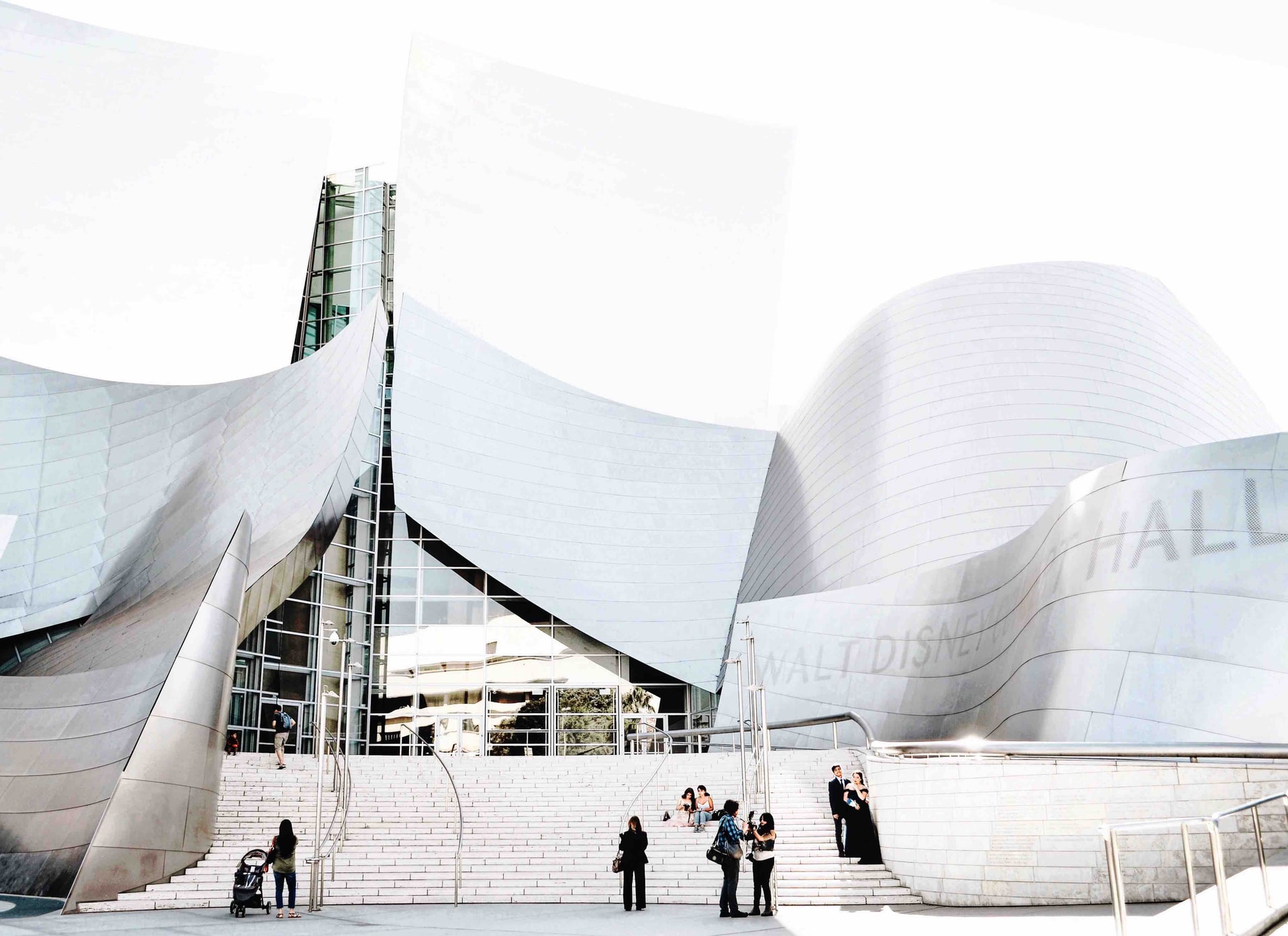
The Walt Disney Concert Hall in Los Angeles has Healthy Building Certification.

Read Full Post »

47538971_303

Photos: Hive Earth
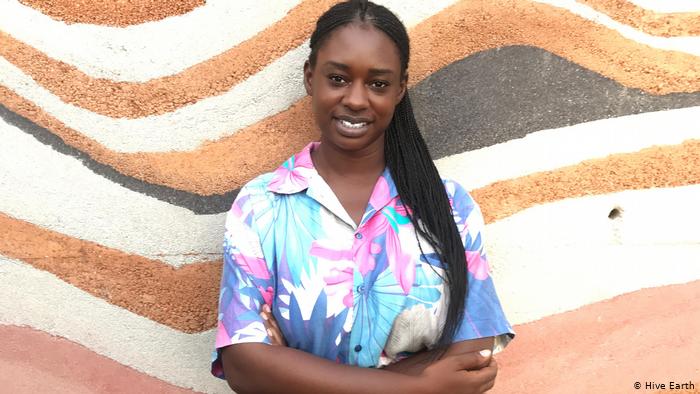
Joelle Eyeson is a co-founder of Hive Earth, which is working to address the housing challenges in Ghana. The company supports using the traditional ‘rammed earth’ technique as much more eco-friendly than cement.

Lately, I’ve seen a number of articles about how cement is bad for the planet. (For example, this story on the mining of sand used in cement.) But what else can we use? We can’t cut down all our remaining trees.

In Ghana, a company interested in sustainable home-building practices is experimenting with modernizing some traditional materials. DW interviewed Joelle Eyeson, co-founder of Hive Earth. Here is the DW interview.

“What are the housing challenges in Ghana right now?
“Joelle Eyeson: There is need for around 2 million new houses in Ghana per year, but most of the building is concentrated in the capital Accra, where land is very expensive. The other issue is that when you build in more rural areas it then becomes expensive to travel to the cities for work. We knew that the majority of people in Ghana have a relatively low wage. We thought it is strange you have workers building these big houses that cost hundreds of thousands of dollars and they could never afford them.

“So our aim is to build houses that our workers and the majority of Ghanaians and West Africans can afford. The prototype that should be ready by the end of the year will cost roughly $5,000 for a one-room house.

“What exactly is the ‘rammed earth’ technique that you use?
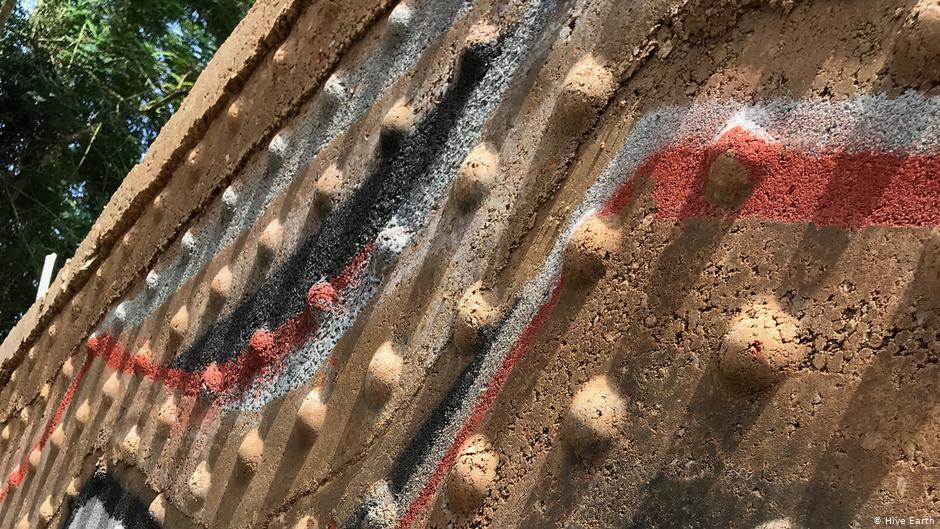
The rammed earth technique is just a mixture of laterite, clay and then granite chippings. We use 5 percent cement to bind it but also do it using lime.

We wanted a way of building without using cement, because it is very toxic; especially in our climate it combines with the heat and humidity and creates a really bad indoor air quality.

“When we discovered the rammed earth technique, we thought it was great because it is basically like the traditional mud house, but updated. It’s a tried and tested technique that’s been around for centuries. Parts of the Great Wall of China were even built with rammed earth.

“In what other ways are the buildings eco-friendly?
“In Ghana it is so hot you usually need air conditioning systems in your home, but these are not always affordable, eco-friendly, or good for your health. We teamed up with some German engineers who gave us the idea of underground cooling systems. We dig around 8 feet or more until we get to the cool air underground. Then we use a solar pump which is constantly bringing the cool air into the home. Then it is only the cost of the solar pump (around $300) which people need to pay and there are no bills. …

“With our foundation we are also planning on doing more workshops with local communities, helping to teach them the skills of building with rammed earth. We are also planning on building eco toilets. … We want to enable people to come and learn about rammed earth, build something that is beautiful, eco-friendly and useful for their own communities.”

More at DW, here.

The rammed-earth building technique uses local materials in Ghana and almost no cement.

47539467_403

Read Full Post »