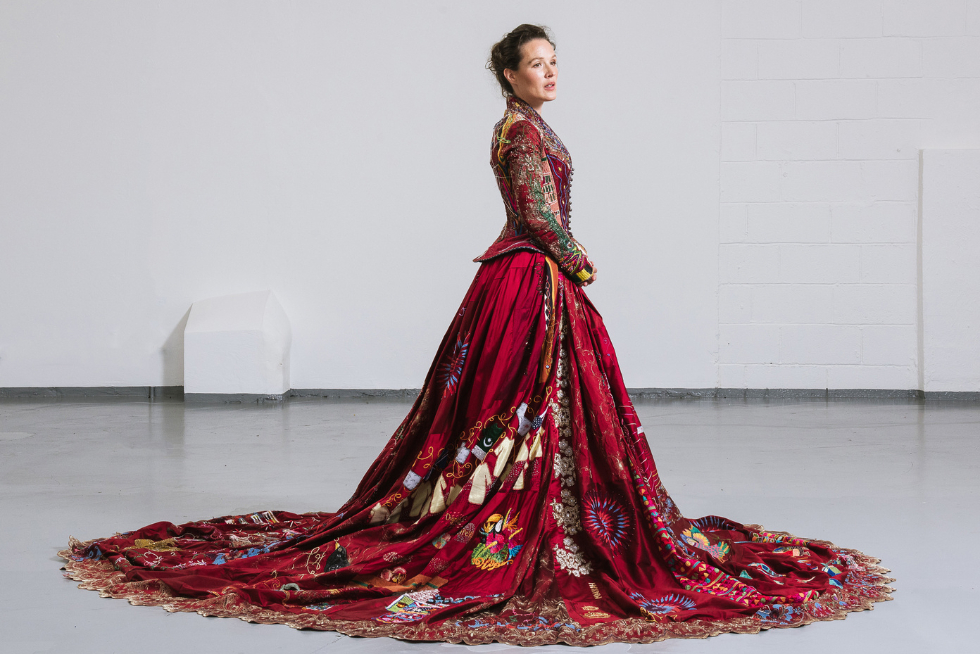
Photo: Fuller Craft Museum. “The Red Dress” is the culmination of 15 years of work by 380 embroiderers from over 50 countries, many of the contributors from impoverished, marginalized groups.
My friend Ann, a textile artist, invited me to pay a visit to the Fuller Craft Museum, a beautiful place in Brockton, Massachusetts. She was especially interested in seeing an embroidered dress that had traveled the world and uplifted many talented but marginalized women, but we got a kick out of all the exhibits.
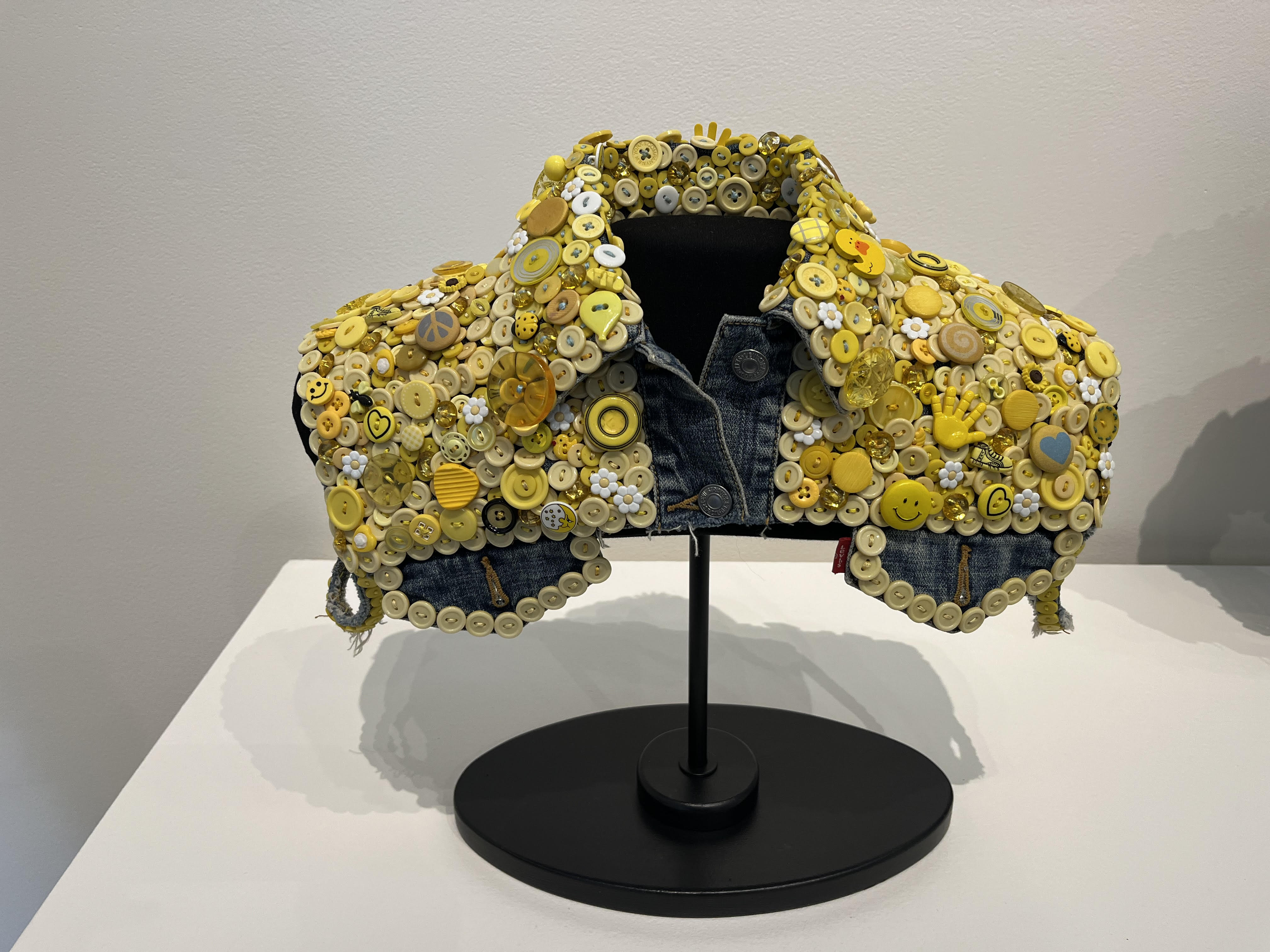
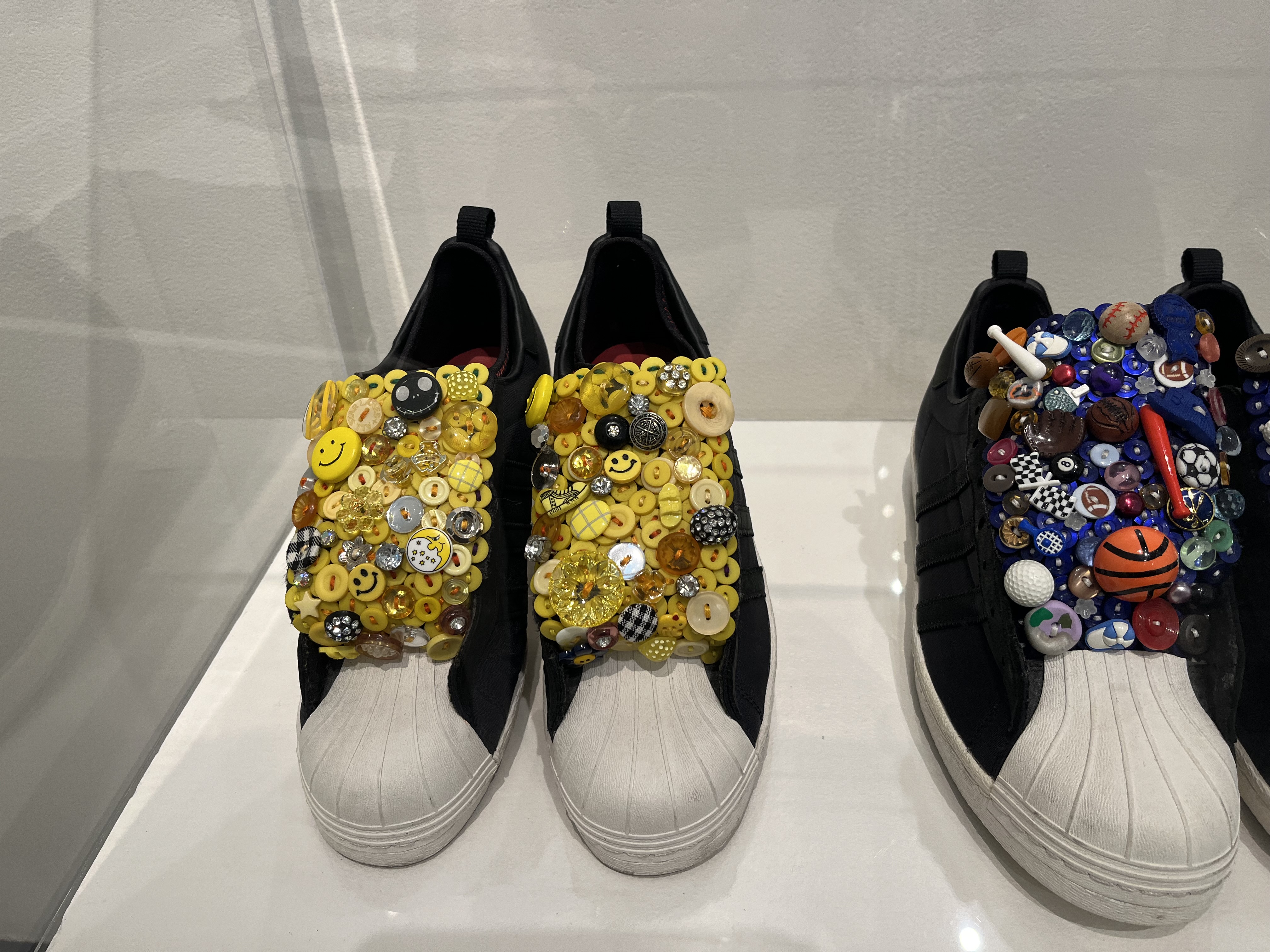
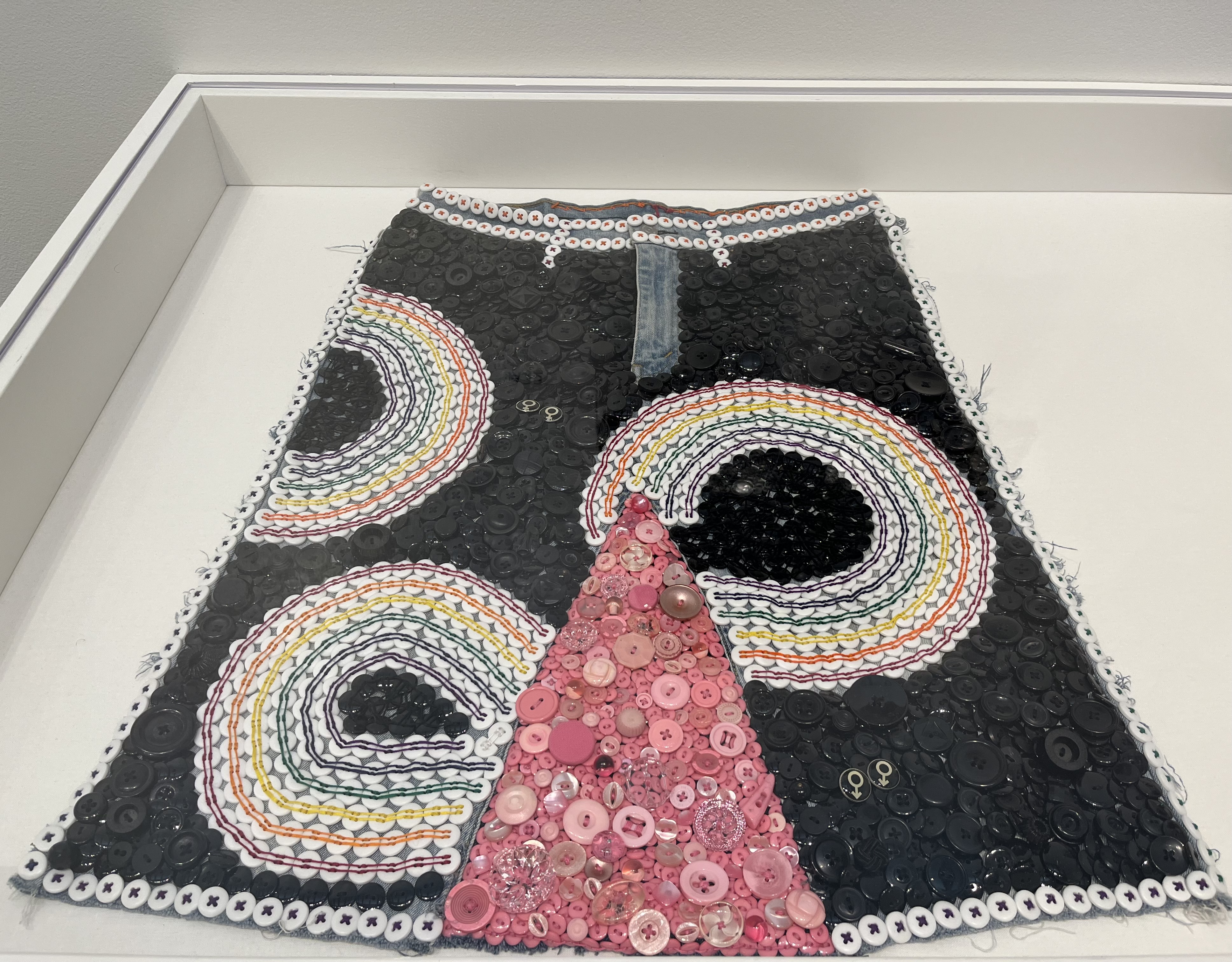
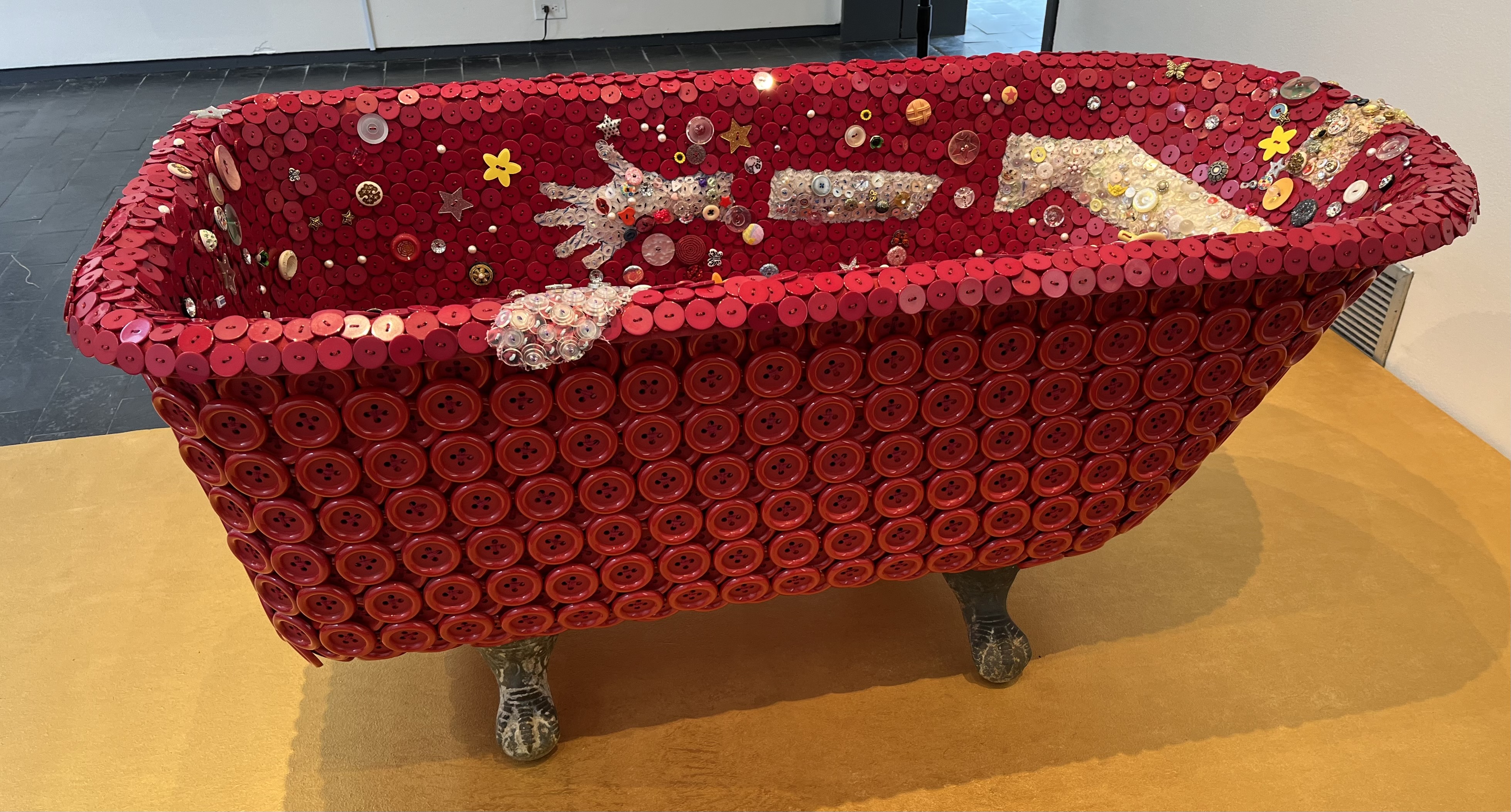
I took photos — quite a few of works by button artist Beau McCall.
The first image below is of McCall’s jeans top and the second of some sneakers — all covered with buttons. The third piece is also covered with buttons, even the black parts. The only button-free place is where the zipper would go.
The button-covered bathtub was particularly arresting. Ann says she wants to find out how McCall sources so many buttons, many of them clearly antique.
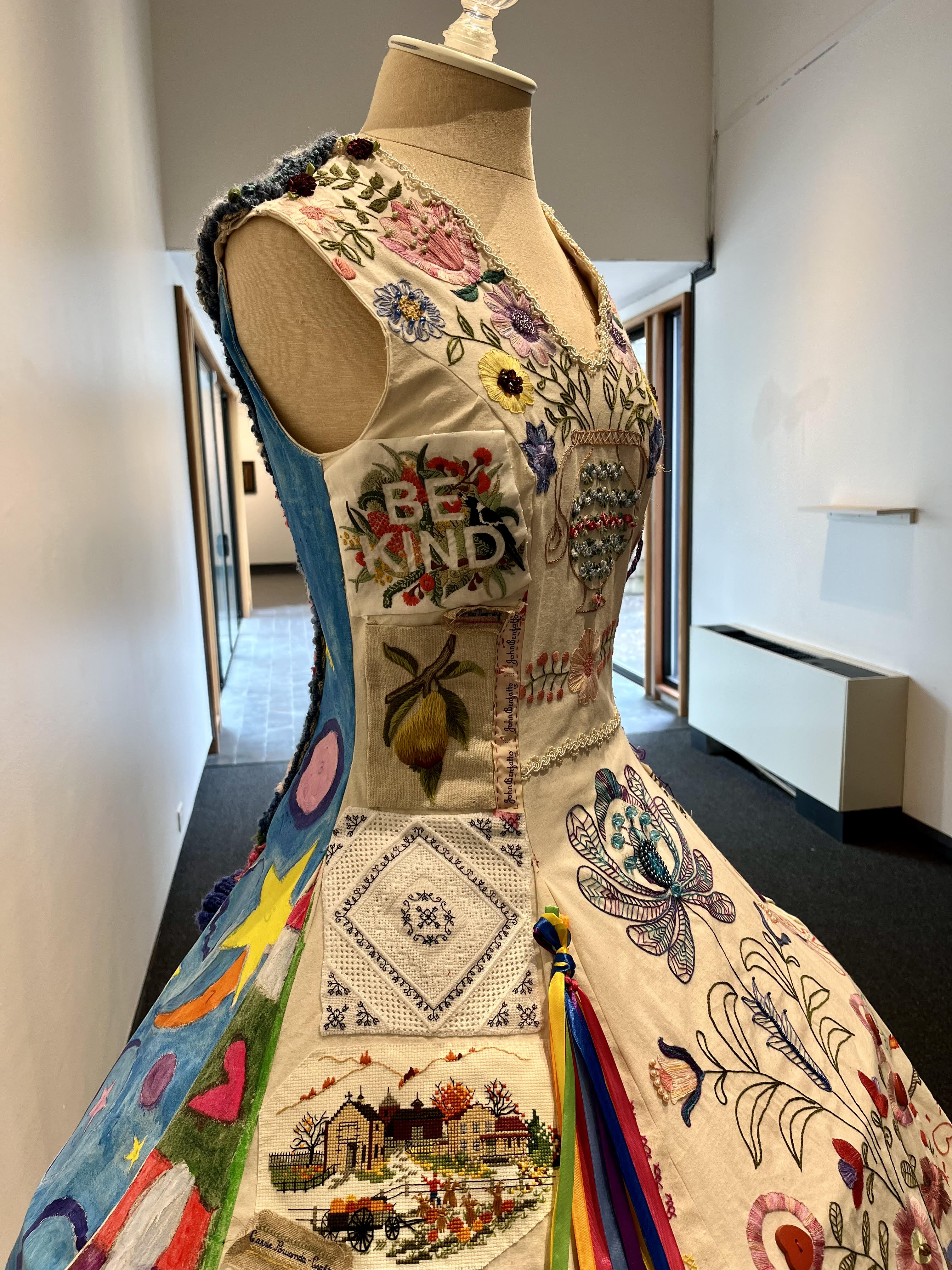
The next photo, of an embroidered dress, features the handicraft of embroiderers of all kinds around New England, a local homage to “The Red Dress.”
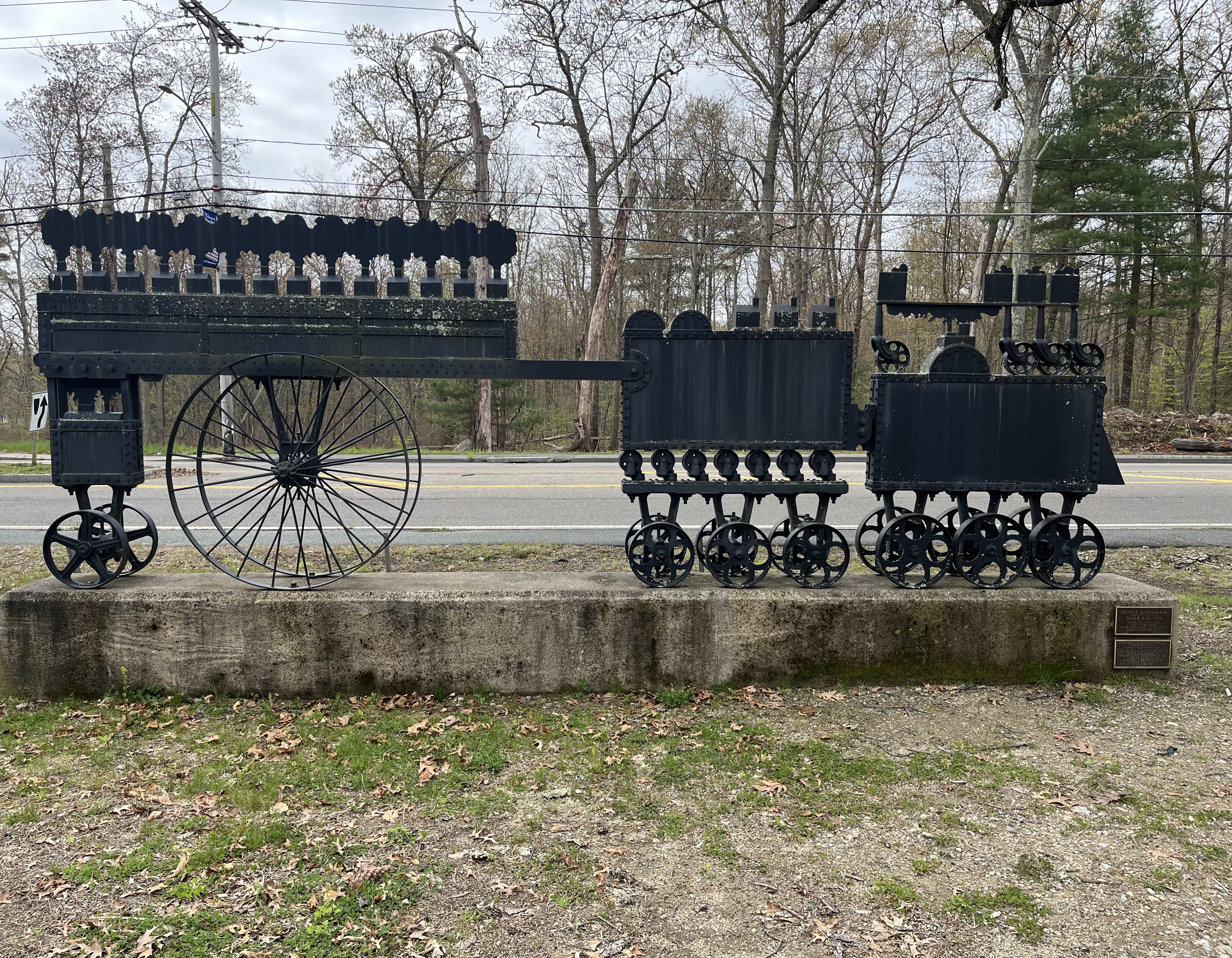
My last shot is of George Greenamyer’s steel train at the entrance to the museum, a hint that the ugly suburban highway where the museum is located has something magical behind the parking lot — a modern building with courtyards and vistas of swans sailing along serene Upper Porter Pond.
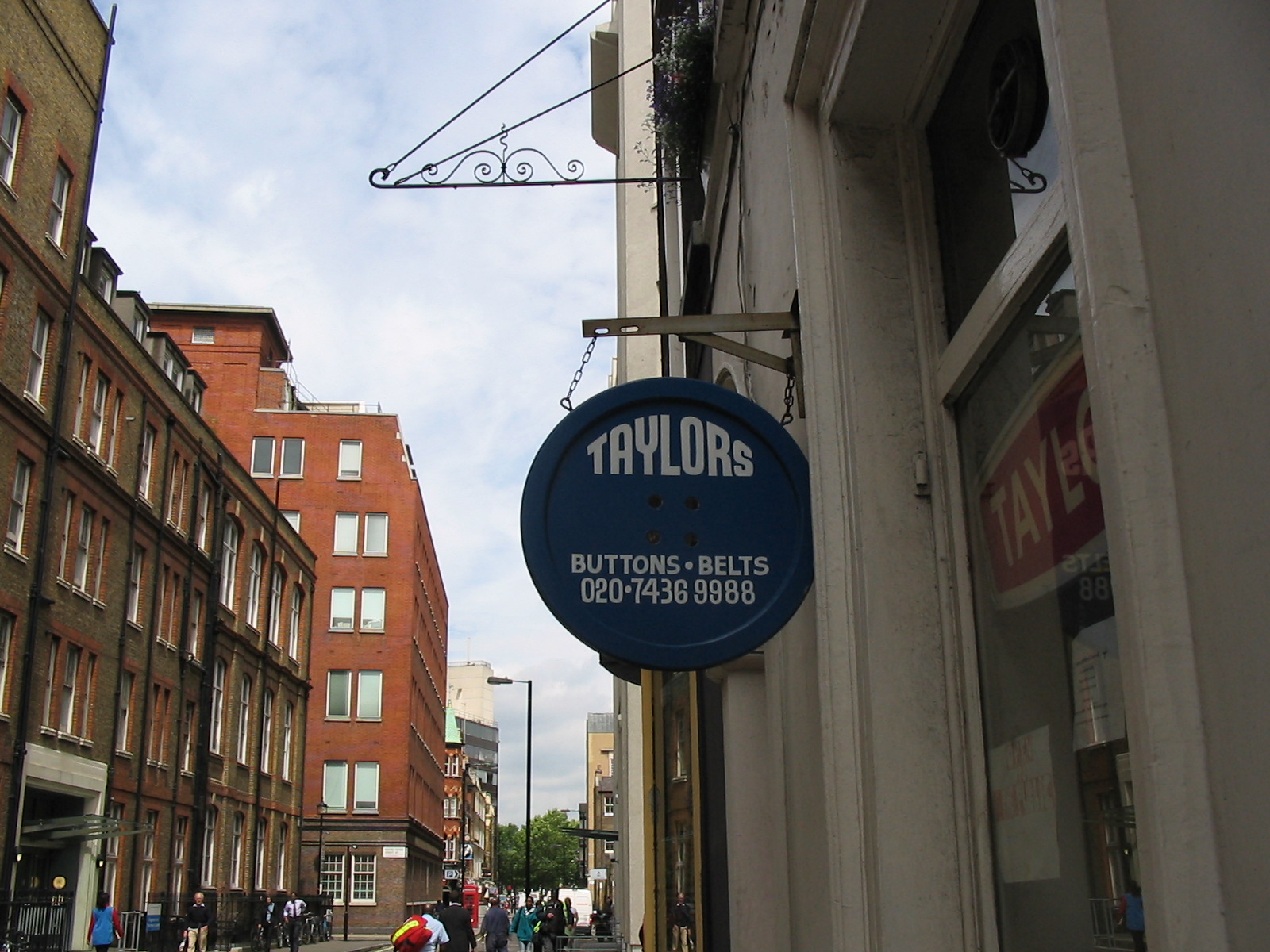
Photo: Taylors Buttons. The Taylors Button Shop has been established in London over 100 years.
A long time ago, a parent family at the Elwanger-Barry Nursery School in Rochester, New York, closed down their button business and donated a lifetime supply of buttons to the school. Poured into an indoor sandbox, the buttons became one of the two favorite play centers of three-year-old Suzanne. The fuzzy box and the button box.
That’s one reason I’m interested in button stories. And when an editor from last year’s Ukraine social-media project (see this post) wrote on Facebook about a 100-year-old button store in London she visited, I had to learn more.
The Gentle Author at Spitalfields Life interviewed Maureen Rose of Taylors Buttons for a bookshop’s blog:
“Taylors Buttons is the only independent button shop in the West End. It’s more than 100 years old and it’s only been owned by two families in that time. It was founded by the original Mr Taylor; then there was Mr Taylor’s son, who retired in his late eighties when he sold it to my husband,” Maureen Rose said.
“I was a war baby. My mother was from Whitechapel and she opened her own millinery business in Fulham at nineteen. She got married when she was twenty-one and ran her business all through the war. As a child, I used to sit in the corner and watch her make hats, but I didn’t take up millinery – something I regret now, as she was very talented and she could have taught me.
“I helped my mother for a while: I did a lot of buying for her in Great Marlborough Street, where there were many millinery wholesalers. There was a big fashion industry in the West End: I used to go to see the collections from houses like Hardy Amies and Norman Hartnell. It was so glamorous. Now it’s all gone.
“My late husband, Leon Rose, first involved me in this business. He started his career in a button factory learning how to make buttons. Then his uncle, who had a factory in Birmingham, got in touch to say, ‘There’s a gentleman in town who’s retiring and you should think about taking over his business.’ So he did.
“My mother went in to help when he needed someone for a couple of hours a day, and then – of course – there was me! I’ve been working here for more than 40 years now and since my husband died in 2007 it has been a one-woman show.
“Every button tells a story and I have no idea how many there are in the shop. Some are more than 100 years old, but most I make to order. You send me the fabric – velvet, leather or whatever – and I’ll make you whatever you want. We used to do only small orders for tailors: two fronts and eight cuff buttons for a suit. Nowadays I do them by the hundred. I don’t think Leon ever believed that was possible.
“Anybody can walk into my shop and order buttons, but I get a lot of orders for theatre, television, film, fashion houses and weddings. I get gentlemen who buy expensive suits that come with cheap buttons: they come here to buy proper horn buttons to replace them.
“My friends ask me why I have not retired, but I enjoy working here. What would I do at home? I’ve seen what happens to my friends who have retired: they lose the plot. I meet nice people in the shop and it’s interesting. I’ll keep going for as long as I can.”
More here. And there’s detailed button information at the Taylors Buttons website, here, where you can also learn that Dickens lived in the building once. Hat tip: Ro.


 Suzanne's Mom's Blog