Feeds:
Posts
Comments

Posts Tagged ‘comfort’

Photo: Tom Pumford/Unsplash.

New research has come out to support something you probably always knew. Sad music can make you feel great.

Oliver Whang says at the New York Times, “This is the paradox of sad music: We generally don’t enjoy being sad in real life, but we do enjoy art that makes us feel that way. Countless scholars since Aristotle have tried to account for it. …

“[Joshua Knobe is] an experimental philosopher and psychologist at Yale University. … In a new study, published in the Journal of Aesthetic Education, he and some colleagues sought to tackle this paradox by asking what sad music is all about.

“Over the years, Dr. Knobe’s research has found that people often form two conceptions of the same thing, one concrete and one abstract. For example, people could be considered artists if they display a concrete set of features, like being technically gifted with a brush. But if they do not exhibit certain abstract values — if, say, they lack creativity, curiosity or passion and simply recreate old masterpieces for quick profit — one could say that, in another sense, they are not artists. Maybe sad songs have a similarly dual nature, thought Dr. Knobe and his former student, Tara Venkatesan, a cognitive scientist and operatic soprano.

“Certainly, research has found that our emotional response to music is multidimensional; you’re not just happy when you listen to a beautiful song, nor simply made sad by a sad one. In 2016, a survey of 363 listeners found that emotional responses to sad songs fell roughly into three categories: grief, including powerful negative feelings like anger, terror and despair; melancholia, a gentle sadness, longing or self-pity; and sweet sorrow, a pleasant pang of consolation or appreciation. Many respondents described a mix of the three. (The researchers called their study ‘Fifty Shades of Blue.’) …

“Some psychologists have examined how certain aspects of music — mode, tempo, rhythm, timbre — relate to the emotions listeners feel. Studies have found that certain forms of song serve nearly universal functions: Across countries and cultures, for instance, lullabies tend to share similar acoustic features that imbue infants and adults alike with a sense of safety.

“ ‘All our lives we’ve learned to map the relationships between our emotions and what we sound like,’ said Tuomas Eerola, a musicologist at Durham University in England and a researcher on the ‘Fifty Shades’ study. …

“Other scientists, including Patrik Juslin, a music psychologist at Uppsala University in Sweden, argue that such findings clarify little about the value of sad music. He wrote in a paper, ‘They simply move the burden of explanation from one level, “Why does the second movement of Beethoven’s Eroica symphony arouse sadness?” to another level, “Why does a slow tempo arouse sadness?” ‘

“Instead, Dr. Juslin and others have proposed that there are cognitive mechanisms through which sadness can be induced in listeners. Unconscious reflexes in the brain stem; the synchronization of rhythm to some internal cadence, such as a heartbeat; conditioned responses to particular sounds; triggered memories; emotional contagion; a reflective evaluation of the music — all seem to play some role. Maybe, because sadness is such an intense emotion, its presence can prompt a positive empathic reaction: Feeling someone’s sadness can move you in some prosocial way.

‘You’re feeling just alone, you feel isolated,’ Dr. Knobe said. ‘And then there’s this experience where you listen to some music, or you pick up a book, and you feel like you’re not so alone.’

“To test that hypothesis, he, Dr. Venkatesan and George Newman, a psychologist at the Rotman School of Management, set up a two-part experiment. In the first part, they gave one of four song descriptions to more than 400 subjects. One description was of a song that ‘conveys deep and complex emotions’ but was also ‘technically very flawed.’ Another described a ‘technically flawless’ song that ‘does not convey deep or complex emotions.’ The third song was described as deeply emotional and technically flawless, and the fourth as technically flawed and unemotional.

“The subjects were asked to indicate, on a seven-point scale, whether their song ’embodies what music is all about.’ … On the whole, subjects reported that deeply emotional but technically flawed songs best reflected the essence of music; emotional expression was a more salient value than technical proficiency.

” ‘In the second part of the experiment, involving 450 new subjects, the researchers gave each participant 72 descriptions of emotional songs, which expressed feelings including ‘contempt,’ ‘narcissism,’ ‘inspiration’ and ‘lustfulness.’ For comparison, they also gave participants prompts that described a conversational interaction in which someone expressed their feelings. (For example: ‘An acquaintance is talking to you about their week and expresses feelings of wistfulness.’) On the whole, the emotions that subjects felt were deeply rooted to ‘what music is all about’ were also those that made people feel more connected to one another in conversation: love, joy, loneliness, sadness, ecstasy, calmness, sorrow.

“Mario Attie-Picker, a philosopher at Loyola University Chicago who helped lead the research, found the results compelling. After considering the data, he proposed a relatively simple idea: Maybe we listen to music not for an emotional reaction — many subjects reported that sad music, albeit artistic, was not particularly enjoyable — but for the sense of connection to others. Applied to the paradox of sad music: Our love of the music is not a direct appreciation of sadness, it’s an appreciation of connection.”

More at the Times, here.

Read Full Post »

Art: Charles M. Schulz.
Like many of us, Snoopy does not look kindly on changes in his routine.

I take comfort in routine, a stable place from which to investigate things that are not routine. I don’t like being away from that stable place very long. Whether that’s all about Covid anxiety or just getting older, I don’t know, but I was glad to read in RealSimple that the wish to get my ducks in a row is not unusual. (Lately, I’d settle for getting one duck in a row.)

Lindsay Tigar writes that mundane routines are actually what’s keeping us sane and healthy.

“Ask any doctor, therapist, or wildly successful entrepreneur, and they’ll swear by the myriad benefits of setting and sticking to a routine. Even if you’re a little more spontaneous, you’ve likely experienced the desire to have a set schedule. Say, after a chaotic holiday season, following a gluttonous vacation, or another stressful period in your life. …

“As humans, our bodies — and more to the point, our minds — crave the comfort and mindlessness that routine offers. How so? Routine requires very little conscious thought, freeing our brain to focus on more complex tasks, according to Samantha Dutton, PhD, a licensed clinical social worker and associate dean and social work program director at the University of Phoenix.

“This makes everyday tasks, like commuting to work, brushing our teeth, taking a shower, and so on, second nature. When we aren’t thinking about those necessities, we can pay more attention to other parts of our lives. ‘If we’ve learned anything from the previous year, the unexpected can happen, and it can cause anxiety,’ Dutton says. ‘Having a routine will lower your anxiety because there’s no conscious thought in the everyday details of life.

When you’re not worried about the daily grind, it can help you have more energy and be adaptable to the unexpected.’ …

“We spoke with experts to identify why we should invest in a routine this year.

Healthy Habits. If you’ve set resolutions for yourself that involve better wellness habits, a routine may be the trick to making them happen. As one academic article published in 2019 found, those in good health tend to engage in highly routine health behaviors. In other words: people who drink enough waterexercise regularly, choose balanced meals, and meditate, do so on a schedule.

” ‘Since humans typically choose options that are easier than others, and since routines become automatic and require little decision-making, this study concluded that developing routines within individuals’ current lifestyles will help increase adherence to health care recommendations,’ explains Joan Davidson, a licensed psychologist, co-director of the San Francisco Bay Area Center for Cognitive Therapy, and assistant professor in the Clinical Science Program at the University of California, Berkeley.

Use of Time. Dutton says while many of us believe we’re great at multitasking, chances are we’re not actually maximizing our time. If you were to track your daily actions, you’d likely find that responding to text messages adds an additional half-hour to one work assignment. Or having dozens of tabs open on your computer is more distracting than beneficial. However, when we create routines and time blocks, we can check off every deliverable because we have reserved our time and mental power. … She says, ‘Remember, we all just get 24 hours in the day. Routines will help you maximize your time and lead to an understanding of how you want to spend your time.’

Goals. There’s a reason why entrepreneurs take the guesswork out of their days: They need their genius going directly toward their business and solving problems. … When we create routines, we break down those goals and aspirations into daily stepping stones, which eventually lead to success. ‘Whatever the goal, developing routines paves the way toward achieving them,’ Davidson says.

Depression. If you’ve ever experienced a bout of depression, or you know someone who has, you likely experienced the withdrawal tendency. As Davidson explains, when we are feeling blue, we tend to pull back from activities and people who bring us joy, which can leave us feeling deprived and sadder. [Planning] ‘consistent, concrete and specific practices, often at designated times and places [builds] structure and routines for developing and practicing new behaviors.’ …

Calming. Dutton says familiarity is comforting. ‘Having a routine can have a calming effect and can set the stage for the day,’ she says. Even when the world is unpredictable with the pandemic hanging over everything, having a set morning routine, for example, will keep you feeling more relaxed and ready for whatever the day throws your way.

“So. It’s human nature to enjoy some tasks and to loathe others. Sadly some of the must-dos you dislike, like folding laundry or filing taxes, have to be completed. But if you can create a routine that also includes activities that make you happy — like yoga, reading, or taking a hot bath — you’ll boost your energy instead of draining it.” More at RealSimple, here.

Sometimes I identify with the Dormouse in “The Dormouse and the Doctor,” by A.A. Milne. To preserve his familiar and comforting routine, the Dormouse just curled up in a ball and closed his eyes.

“The Dormouse turned over to shut out the sight
“Of the endless chrysanthemums (yellow and white).
” ‘How lovely,’ he thought, ‘to be back in a bed
” ‘Of delphiniums (blue) and geraniums (red.)’ “

Read Full Post »

Photo: Lucy’s Love Bus.
Transformation of an old VW bus into one bringing joy to seriously ill children.

July 1 was a sad day for friends of my former boss because despite some promising treatments, it turned out there really was no cure for the type of brain-stem cancer that his beautiful 8-year-old daughter mysteriously contracted.

But I want to tell you about two wonderful organizations that provided many happy moments for this little girl for more than a year. With the help of these nonprofits and the child’s friends and teachers, she was able to have normal, happy times as she became in 19 months — to use her mother’s words — “somehow, both more vulnerable and more amazing at the same time.”

Lucy’s Love Bus is described here. “Lucy Grogan founded Lucy’s Love Bus in 2006, from her hospital bed at Tufts Floating Hospital for Children in Boston. … Thanks to the financial support of folks in her hometown of Amesbury, MA, Lucy had consistent access to integrative therapies such as acupuncture, massage, horseback riding, art, and music therapy.

“Lucy learned that the integrative therapies that were so profoundly helpful to her during treatment were not covered by insurance, and therefore most children with cancer did not have access to them. She decided that when she was ‘done with cancer,’ she would make sure that all children had the same access to the helpful integrative therapies that she took advantage of during treatment.

“Lucy named her organization Lucy’s Love Bus, because she wanted to deliver love, comfort and quality of life to children with cancer. She felt that cure was very important, but recognized that no one was addressing the immediate suffering that she and her friends faced every day. Lucy’s primary concern was to deliver comfort … until a cure.” More.

The Hole in the Wall Gang is described here. “The Hole in the Wall Gang Camp is dedicated to providing ‘a different kind of healing’ to seriously ill children and their families, free of charge. We are a community that celebrates the spirit of childhood, the sound of laughter and the feeling of endless possibility.

“The Hole in the Wall Gang Camp was founded in 1988 by Paul Newman to give every child – no matter their illness – the chance to raise a little hell.’ Including our summer Camp in Ashford, Conn, we run 9 programs that serve more than 20,000 kids and family members throughout the Northeast each year.” More.

My former boss’s two wonderful daughters. So much love here.

June2017-sisters-to-the-end

Read Full Post »

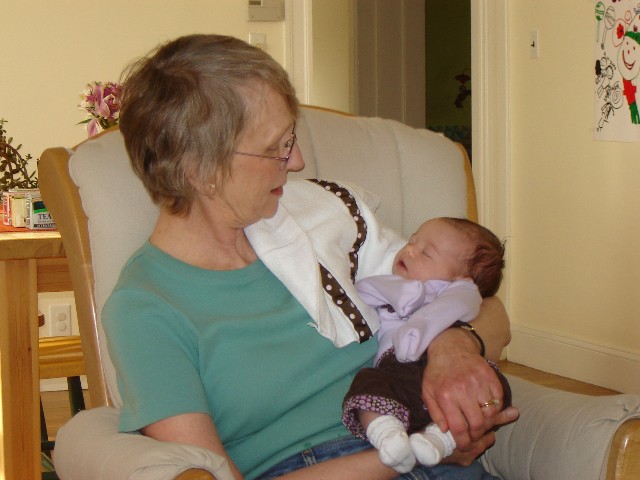
The Science section of the NY Times today featured some research on babies.

Sindya N. Bhanoo explains that “In Parents’ Embrace, Infants’ Heart Rates Drop.”

“New mothers quickly learn that babies quiet down when carried and rocked. Now researchers say that this calming response is actually a coordinated set of reactions, involving the nervous, motor and cardiac systems.

” ‘Dr. Kumi O. Kuroda, a neurobiologist at the Riken Brain Science Institute in Japan, led a team that used electrocardiogram measurements to monitor the heart rates of babies and mice after they were picked up and carried. Their heart rates slowed almost immediately.

“ ‘It’s very difficult for adults to relax so quickly,’ said Dr. Kuroda, whose study appears in the journal Current Biology. ‘I think it’s specific to infant physiology.’

“In the case of the mouse pups, it took only one second for the heart rate to drop. In human babies, it took about three seconds.

“The researchers worked with babies under 6 months; the response was stronger in those 3 months and younger. …

“ ‘Lions sometimes carry cubs by the mouth, and it’s known that these infants look very limp and relaxed, with their eyes closed,’ Dr. Kuroda said. ‘But nobody measured the infant response until now.’ ,,,

” ‘By the way, she added, the mother is not the only one who can have this calming effect.

“We actually also did some preliminary studies with fathers and grandmothers,’ she said. ‘And basically they can have the same effect.’ ”

More.

Worth noting, especially considering that the same Science section of the Times had a story on how people with slower heart rates tend to live longer than peers.

Baby_and_friend030809

Read Full Post »