Feeds:
Posts
Comments

Posts Tagged ‘conflict resolution’

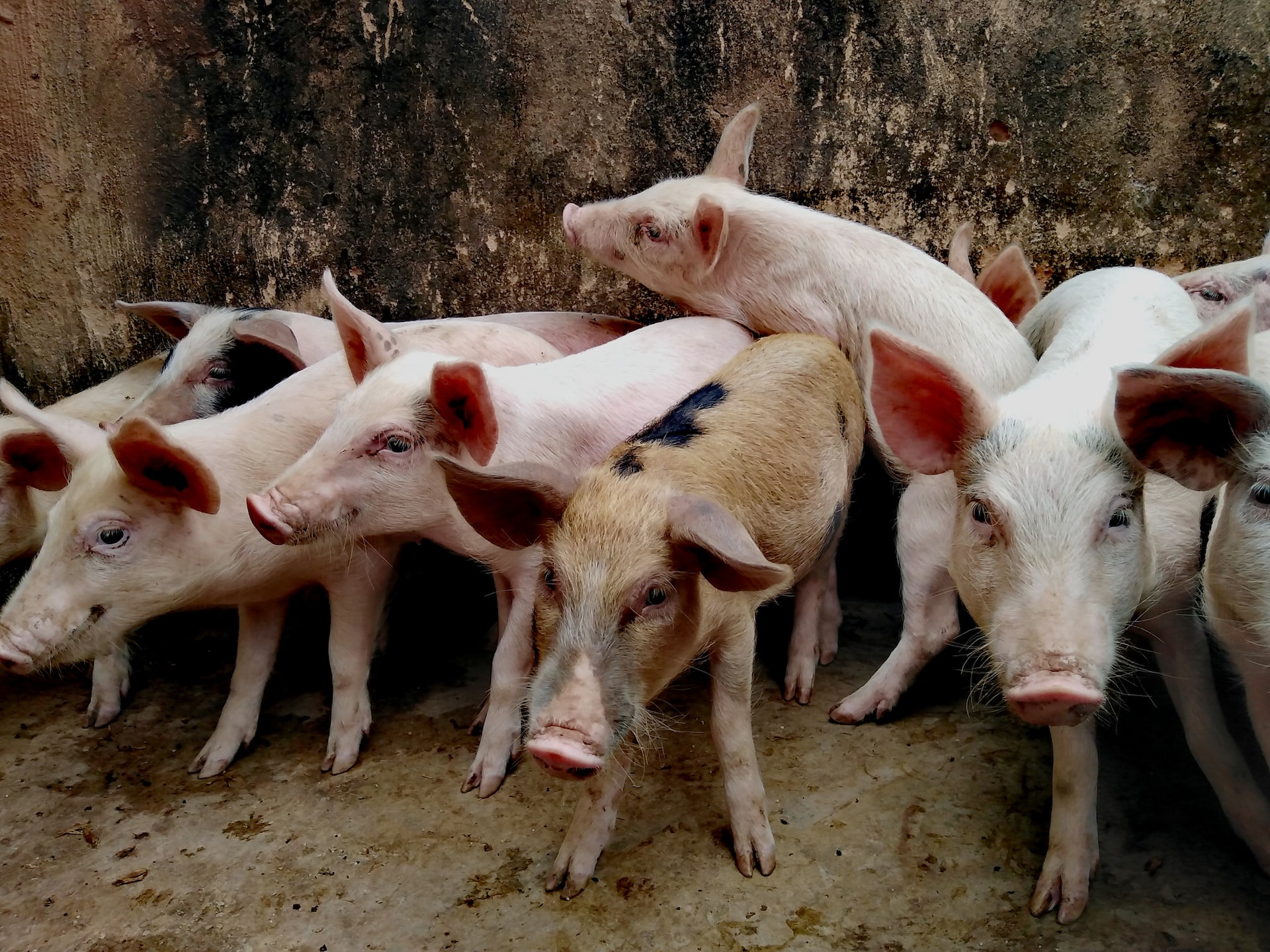
Photo: Emmanuel Eigege via Unsplash.

I love hearing author Sy Montgomery talk about her animal friends in her regular visits to Boston Public Radio. She has helped me be more aware of animals as fellow travelers on the planet, beings with personalities most humans don’t bother to see. Her books have intriguing titles: for example, the one about her pig Christopher Hogwood, The Good Good Pig.

Today’s article fits right in with Montgomery’s stories. It’s about how pigs mediate barnyard brawls.

Leo Sands reports at the Washington Post, “When a fight becomes particularly thorny and drawn out, sometimes it takes the involvement of an empathetic, calming third party to lower the temperature in the room.

“Or, it turns out, the farm.

“New research suggests that pigs — like many humans — are smart enough to recognize a conflict between others and defuse the situation.

“According to a study published [recently], the hoofed mammals appear to have the cognitive ability to watch and empathize when two other pigs fight — and then intervene afterward to reduce the levels of aggression or anxiety — a form of social regulation that can benefit the wider group.

“The study observed that bystander pigs sometimes intervene after a conflict by approaching one of the warring parties and initiating physical contact, by applying the calming touch of their snouts, rubbing either of the parties with their ears or simply sitting up against one of the opponents. Occasionally, a pig also placed its entire head over the body one of the combatants, which was also effective.

“ ‘Pigs are highly social, and they have a very complex and high cognitive capacity to recognize familiar individuals,’ Giada Cordoni, one of the study’s authors at the University of Turin, told the Washington Post.

“When a victim is contacted after a fight, its anxiety levels drop, while aggressors that are approached are less likely to attack the victim — or other members of the group — again.

“Cordoni describes this resolution strategy involving a third pig as a ‘triadic conflict mechanism.’ The study marks the first time it has been observed in the species — having previously been identified only in humans, wolves, primates and birds. …

“Louisa Weinstein, a conflict mediation specialist who works with humans [notes that] ‘when a third person comes in, it’s an opportunity for someone to hear you. In a conflict, the other person isn’t understanding your perspective. The third party is going to at least understand your perspective,’ she said in a telephone interview. ‘The third party contains the conflict and the emotions associated with it. … We automatically regulate and behave better when someone else is there.’

“The Italian researchers spent six months in 2018 observing 104 pigs on a farm near Turin, in northern Italy. The pigs were free to forage throughout a 13-hectare woodland area — an environment that let them move and behave naturally. Researchers collected hours of video data to analyze.

“They found that domestic pigs can take part in a wide array of post-conflict strategies in the minutes after a fight. The two fighting pigs can engage in reconciliation — or a third pig not involved in the conflict can make unsolicited physical contact with the aggressor or the victim, often with its snout. …

“Bystander pigs have the cognitive and empathetic skills to detect emotions like anxiety in other pigs. The physical contact — which is not solicited by either of the antagonistic animals — also suggests that the third pig knows when the moment is right to intervene, as well as how to do it, the researches said.

“Another observation made by the scientists, suggesting a further similarity pigs share with humans, was the influence of family dynamics on how fights played out. Bystander pigs were more likely to intervene with pigs they were closely related to, suggesting they recognized and responded to family ties.”

Do you think there is something we humans need to learn from pigs? More at the Post, here.
Read Full Post »

holbert-harlem_h_0

Photo: Boston University
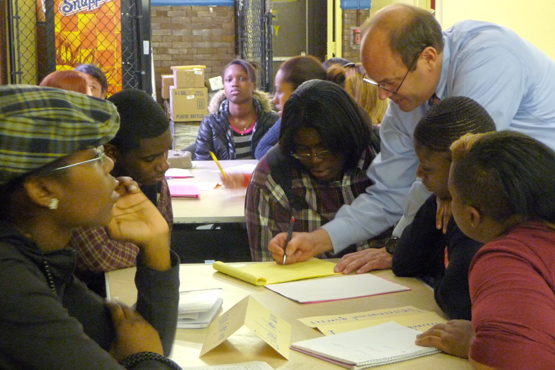
In 2009, Carl Hobert and his Boston University class visited Harlem Renaissance High School to talk conflict resolution with the school’s teens. Recently, he says, he has been researching delivery systems for work in Rwanda.

These are unusual times. For example, when we started getting our groceries brought to the house, we had a surprising conversation with our first delivery man (at a safe six-foot distance, of course). He said he was on leave from Boston University (BU) and was researching delivery systems for his work in Rwanda. He gave us his card (also at a safe distance) and offered to pick up items if the market’s online ordering was overloaded.

I was interested about Rwanda because I know someone else who does work there, and I went online to read about him.

From a BU post about a Global Literacy Institute: “Carl Hobert is a clinical instructor at the Boston University Wheelock College of Education & Human Development. He holds a BA cum laude in French and Political Science from Middlebury College, and an MA in Spanish from Middlebury College. He also holds a Master of Arts in Law and Diplomacy from the Tufts University Fletcher School of Law and Diplomacy. His book, Raising Global IQ: Preparing Our Students for a Shrinking Planet (Beacon Press), came out in 2013.” More here.

There was also this from 2009: “Lively apprentices of what Hobert, a visiting scholar and School of Education lecturer, calls preventive diplomacy, [students] are combining a rigorous, nuanced understanding of current events with the guiding principles of conflict resolution. Like countless dogged young optimists, these students, most majoring in international relations or education, believe a peaceful future is within reach.

“Hobert is the founder and executive director of the nonprofit Axis of Hope Center for International Conflict Management and Prevention, and under its umbrella, the students’ focus to get to that future is not governments but children and teens. …

“Hobert’s homework assignments focus students outward, locally to globally. They need to know in scholarly detail what is happening right now in every conflict zone from Somalia to Honduras by close daily readings of the Boston Globe, the New York Times, the International Herald Tribune, and Foreign Affairs. ..

“As students cultivate a global awareness, they engage in case studies that zoom in on conflicts, designed to illuminate the cornerstones of Hobert’s preventive diplomacy: the power of listening, mutual respect, negotiation, and compromise. …

“Most recently at the Harlem Renaissance High School in New York City, Hobert’s protégés [guided] school groups through the case study workshops refined in their BU class.” More.

And there was a MetroWest newspaper article from 2016: “A local resident says he is preparing to move to Rwanda where he hopes to attract high school students from around the world to an independent school in the African country.

“Carl Hobert, a Boston University professor who lives in Wayland, strives to raise students’ global awareness. He said he tries to teach them about conflict resolution through case studies that emphasize the importance of understanding different perspectives.

“Ultimately, students are ‘learning how to get along,’ said Hobert, who has been tapped to be assistant headmaster as well as director of the upper school at Rwanda’s Green Hills Academy.

“Hobert brings Rwandan experience, including taking youngsters to visit a Rwandan orphanage and bringing his conflict resolution expertise to the country. … The school currently includes Rwandan children and children whose families have moved there to take part in new investment in infrastructure and buildings, Hobert said. …

“His work at Green Hills Academy will include creating a high school boarding program for students from around the world, teaching international conflict resolution and overseeing the creation of a service learning program, according to a press release. …

“Hobert said students will come to a country that was once torn apart by genocide. They’ll see peace and stability and learn ‘that it can be done.’ ” More.

Oh, my, so many noble efforts on hold these days while we deal with the way things are!

Read Full Post »