Feeds:
Posts
Comments

Posts Tagged ‘covid’

Between August 21 and 26, in Karlskrona, Sweden, the Carl International Film Festival will have 30 boat-in screenings.

You already know that drive-in movies are back in style. (Remember this March post?) Today I have a Forbes article describing how the idea of using vehicles for social distancing has expanded in Europe.

Sarah Turner writes, “While many of Europe’s arts festivals have been cancelled this year, including Edinburgh, Bayreuth and Glastonbury, others have turned to 1950s America for inspiration with drive-in performances.

Nowhere more so than Germany, which is, appropriately enough, still the heartland of Europe’s car industry which got on board the trend early with festivals in Leipzig and Dusseldorf, partnering art films with innovative venues.

“The Kunstfest Weimar festival, founded in 1990, encompasses  music, theatre and dance to fine arts and film. One of the three strands to this year’s festival is coronavirus and its impact on both society and individuals. To reflect this, six specifically created productions will be staged at a new venue, the Alte Feuerwache drive-in cinema. …

“In the U.K., various drive-in concepts are also taking shape. In early July the unabashedly feel-good Nightflix festival is part music concert, part film screening with cover bands and classic movies. There are two venues, Colchester in Essex and Newark in Nottinghamshire; options include Abba tribute bands and screenings of Grease, Moulin Rouge and Joker. Around 350 cars will be able to attend each performance, with the modern festival essentials of sourdough pizza and halloumi fries also being on hand.

“The Henley Festival, usually a bastion of black ties and crowd-pleasing performances, is putting on an Alternate Festival between July 9-12 with car-based comedy, theatre and karaoke. After Henley the Car Park Festival will be going on the road, venues include Dudley, Manchester, Northampton and Newbury while film and comedy-based The Drive-In Club will take place at London’s Alexandra Palace.

Live Nation will be putting on drive-in concerts with — among others — Dizzee Rascal and Kaiser Chiefs and the cult musical Six, based on the wives of Henry VIII. …

“In Cornwall, Wavelength magazine will have clifftop drive-in cinema experience at Watergate Bay from late July through to the end of August 2020 alongside a host of on-site socially-distant options including street food, live music, tombola popcorn stands and craft beer bars.

“Held at Trebelsue Farm, with space for over 200 cars and vans, The Wavelength Drive-In Cinema Series will start on Friday 24th, the Cornish-set surf film Blue Juice and continues into late August.

“But it’s Scandinavia that is taking the most innovative approach to the notion of the drive-in festival. Between August 21 and 26, in the Swedish town of Karlskrona, the Carl International Film Festival will have 30 boat-in screenings. Taking place in the Salto Fish Harbour with two LED screens, up to 100 boats will be allowed in, drawing attendees from around 1,600 nearby islands, with food delivered to boats from harbourside restaurants.” More at Forbes, here.

Speaking of social distancing by boat or car, I recently suggested to a friend who can’t go farther than her yard or her car that in winter we should park our cars somewhere six feet apart, open a window, keep the heat running — and continue our weekly visits.

Read Full Post »

Photo: Tanecni Aktuality
Dance master Curtis Foley left Canada for a gig in the Czech Republic. Then Covid-19 struck.

Lockdown in the pandemic has kept a lot of people from going home, sometimes stranding them in surprising places. Today’s story is about camping out for four months in the Czech Republic’s ornate national theater.

Jennifer Stahl writes at Dance Magazine, “When Canadian ballet master Curtis Foley arrived in Ostrava, Czech Republic, in early March, he planned to spend five weeks with the National Moravian-Silesian Ballet, serving as a part-time ballet master. The former Royal Winnipeg Ballet and Les Ballet Grandiva dancer had spent the previous four years as a ballet master at the Polish National Ballet, and had recently gone mostly freelance.

“But five days after he landed in the Czech Republic, COVID-19 sent that country into a state of emergency, with one of the strictest lockdowns in Europe. Most of the foreign artists working with the company swiftly left before the borders closed. But Foley felt a sense of duty to stay. ‘I was supposed to be here to help these dancers for five weeks, and if I were to leave, coming back could be difficult since I don’t have Czech residency and I’m not an EU national,’ he says. So he remained, hunkering down alone inside an apartment on the third floor of the theater.

“With travel remaining complicated, his original five-week stay has ended up lasting for four months.

‘The joke I started with my friends is that I’m the phantom of the opera,’ says Foley. ‘There’s no one else here but me in this massive labyrinth.’

“Although a skeleton crew of administrative and janitorial staff have come in to work during the weekdays, Foley says that starting at 4 pm every Friday, he knows he’ll be on his own until Monday morning.

” ‘It was a novelty at first,’ he says. … ‘Now it just feels like home.’

“Being the only person in the building most of the time has raised logistical questions. ‘During the first few weeks, the company and I were having discussions like, Is it okay to turn off the heat to save money?’ (He said it was.)

“But there’s been more to do than wander the hallways. The dancers took just one week off after the lockdown, then Foley started teaching company class on Zoom. Soon, as the Czech Republic got the virus under control, five people at a time were allowed in the studio (including Foley and an accompanist). Throughout all of June, he’s been able to teach the entire company at once in person again. …

“It’s now been 16 weeks, and with the European Union opening its internal borders, Foley is finally returning to Warsaw, where his boyfriend lives. He admits that he’s a bit anxious to leave.

” ‘This has become my new normal,’ he says. ‘Being there for the dancers has given me the motivation to get through the pandemic, to get out of bed every day and think this isn’t weird.’

“He’s grateful for the intimate relationship he’s built with the dancers while going through this crisis. ‘It typically takes years to create this kind of relationship, but we got to do it really fast,’ he says. Soon enough, he’ll be back — though hopefully not haunting the theater at night all on his own again.” More here.

Did you ever stay overnight in an unlikely place? I did once. I was working for a newspaper chain and there was a blizzard that everyone knew was going to be bad. The other staff left early, but I had decided to bring my sleeping bag and stay over as I had to work in the morning and really dreaded the drive home and back again. It was a little weird, with machines making noises all night, but it was way better than driving.

Read Full Post »

042920ddp20countrystore

Photo: Gareth Henderson
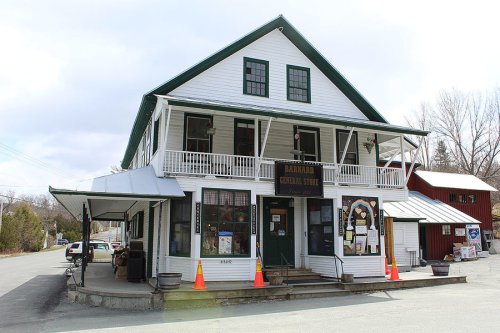
Messages of hope fill a window at the Bernard General Store in Barnard, Vermont.

When you’re feeling down, it’s a sign of health to look for comfort, which actually can be found in many places. Some people find it in phone calls to distant friends. Others find it in reading, music, exercise, or nature; in donating to people worse off or in watching children playing and laughing.

Gareth Henderson writes for the Christian Science Monitor that in Small Town America, some people are finding comfort at the general store.

“As COVID-19 restrictions were tightening in mid-March,” Henderson writes, “Jillian Bradley and Joe Minerva made a big decision: They pledged to keep the doors of the Barnard General Store open, no matter what.

“Now the Barnard store has a grocery home-delivery system supported by volunteers, and they also offer curbside pickup. But it’s been a long haul for the store, in this remote Vermont town of about 900 people, located a half-hour from the nearest grocery establishment.

‘Most days we are working 10 to 12 hours a day, but we are happy to do it for our community,’ Ms. Bradley says. …

“Country stores across the U.S., from New England to the South and the Midwest, are the heartbeat of their communities, often standing in the same spot for generations, growing up with the town.

“Eight years ago, the Barnard store closed for about a year but came roaring back after a community trust with hundreds of local members raised the funds to save the business. It reopened in 2013, with Ms. Bradley and Mr. Minerva as the new owners. The community simply would not let the store fail. …

“These Vermont stores have become essential food hubs. With most country store buildings closed during Vermont’s state of emergency – which was extended beyond May 15 – online ordering and curbside pickup has become the trend. Such is the case a 40-minute drive south at the South Woodstock Country Store, which has been running its curbside operation since early April. Around noon each Friday, co-owner Simi Johnston, donning her mask, puts out brown paper bags with grocery orders, each labeled with the customer’s name for pickup.

“For Ms. Johnston, the main focus is continuing to serve the community while keeping everyone safe. The store closed to the public in late March, two days before the state required restaurants to shut down.

“The entire operation is sanitized, and the store tries not to touch deliveries for 24 hours. The first week of curbside, the store saw 20 orders – which is nothing like being fully open.

“ ‘It’s a huge hit, for sure, but we’re definitely hoping there’ll be a lot of understanding from everyone around that,’ Ms. Johnston says. …

“ ‘The reason we run the country store is because we care about our community,’ she says. ‘Without it, South Woodstock is very different. Closing the doors of the country store, for myself and my staff, was surprisingly emotional.’

“With Vermont’s unemployment rate soaring to more than 20% during the pandemic, many stores are also finding a way to give back, even while they themselves struggle. In Craftsbury, which sits an hour south of the Canadian border in Vermont’s Northeast Kingdom, businesses have joined forces to set up a pop-up food pantry. The Craftsbury General Store put out a call for donations, and they came in fast.

“ ‘There’s been a lot of generosity in that realm,’ says co-owner Kit Basom.

“At the store, the doors are closed to the public, but they’re doing business seven days a week, filling online and phone orders for curbside pickup. The store’s owners have added a third person to help with phones, and everyone is on deck to be a ‘personal shopper.’ …

“The Craftsbury store has also added a ‘virtual tour’ on its website, so customers can browse the shelves digitally. The staff regularly updates an online list of items people can order in bulk – think flour, rice, or pasta.

“ ‘We’re moving a lot more product from our grocery section than we ever did before,’ Ms. Basom says.

“For many here, these stores are a lifeline holding the fabric of the community together. There is growing concern about the warmer months, from May to October, when these small village stores usually make the majority of their annual income. Though it’s been on their minds, Ms. Bradley from the Barnard store says she is confident they will find a way to make it.

“ ‘It’s sink or swim time and there is no way we will let ourselves sink,’ she says.”

More at the Christian Science Monitor, here.

Read Full Post »

APTOPIX Virus Outbreak Germany

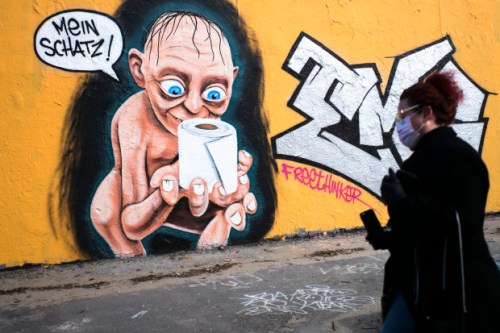
Art: Street artist FreeThinker via the Mercury News
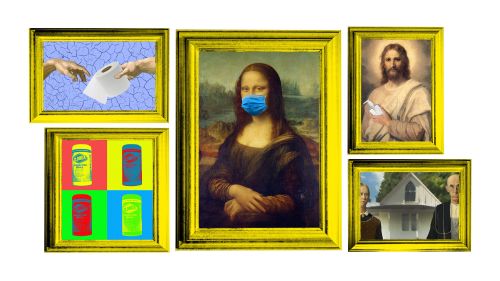
Artists are reflecting our pandemic experience in whatever media they use. Some of the work ends up in the Covid Art Museum, some can be found on the street.

The Covid Art Museum (@covidartmuseum on Instagram) has provided some laughs for me lately. It’s one of the many new links I’ve added to my social media during the pandemic. I first learned about it at a site called OZY.

Dan Peleschuk reported, “With entire populations around the world locked inside, museums everywhere have closed their doors until the deadly coronavirus pandemic passes.

“Not this one. Which actually opened. …

“Three Barcelona-based advertising professionals came up with a bright idea: the Covid Art Museum (CAM), an Instagram account collecting the best COVID-19-related work out there.

“Launched in mid-March, just as Spain was careening into the health crisis, this volunteer effort showcases the creative fruits of mostly European artists who have something to say about how society’s changing before our eyes. …

“After all, ‘we are now in a period of very important reflection on everything,’ says CAM co-founder Irene Llorca, creative art director at marketing agency Honest Barcelona.

“Popular themes include creative pleas for consumers to stay home, as well as playful takes on the newly ubiquitous face masks. And, perhaps unsurprisingly, toilet paper features prominently too. Virtually every art form — photographs, illustrations, installations and much more — makes an appearance in the museum’s quickly growing archive. …

“London-based art director Thomas Ollivier, also known as Tom le French, has turned his attention to a series of photographic manipulations that comment, among other things, on what face masks might tell us about our future. Even after the crisis ends, he says, the objects might find their way into our normal routine. ‘Surely it will start to become like a handbag or an accessory, and obviously brands will step in and create their own version of it,’ he says. …

“For creators, it’s a free platform for their art. For everyone else, Llorca adds, ‘it’s a space that can give them strength and help them realize that they are not alone in this.

‘Maybe they’ll see that artwork by a Spanish person in Bilbao speaks directly about their current situation. It’s a way to connect people virtually.’

“Just like with every other aspect of life these days, it feels pointless to talk about future plans. But at the very least, Llorca says, a digital book might be in the works — plus a physical exhibition, for when it’s all over.” More.

In Angie Kordic’s Widewalls interview with the museum’s founders, Irene Llorca explains more: “From the artworks that we receive through our questionnaire, so far we have counted more than 50 different nationalities. We have also created the hashtag #CovidArtMuseum and many artists are using it. They send the artworks to us and we also look for them.

“The three of us are passionate about art and we follow many artists and art galleries; this has helped us find very interesting works.

“The main filter when choosing the pieces is that they are related to the current moment: the crisis of Covid19. That’s why we don’t close ourselves to any technique, we collect all kinds of art whether it’s illustrations, photographs, paintings, drawings, animations, video, etc. From all the works received or found, a selection is made to publish those that best reflect the current moment.” More.

If you are on Instagram, it’s definitely worth following @covidartmuseum.

Photo: Bored Panda

yorkshire-silly-walks-1-5ea299cbc7ddf__700

Photo: CBC

altered-city-of-ottawa-sign

Image: Ozy

shutterstock1101396713-3

Read Full Post »

« Newer Posts