Feeds:
Posts
Comments

Posts Tagged ‘craft’

Photo: Fahad Shah.
In Srinagar, India, Syed Maqbool Rizvi paints intricate floral patterns on a decorative box made of papier-mâché. The ancient craft is dying out.

In reading about traditional crafts in danger of dying out as its elderly practitioners die, I keep thinking about recent posts on young artists taking crafts in new directions. (Consider the Navajo weaver, here, and the bojagi artist, here.) I wonder if such an evolution can emerge in a politically turbulent place like Kashmir. Ancient decorations now cover more than boxes, but who will take it to the next level? The current popularity belies the unsustainable bottom line for the workers themselves.

Reporting from India for the Christian Science Monitor, Fahad Shah writes, “Papier-mâché dates back hundreds of years in Kashmir. Local folklore credits the 14th century Sufi saint Mir Sayyid Ali Hamadani with bringing the craft to this Himalayan region from Iran, and it flourished under a series of sultans, quickly becoming a symbol of Kashmir’s cultural identity.

“But for a long time, the art form was limited to decorative boxes and other items molded from paper pulp. … These days, the iconic designs popularized by traditional papier-mâché items can be found on bags, leather jackets, and home decor. Artisans apply their intricate designs on unconventional materials like steel, glass, and porcelain, using industrial paints for durability.

“This creative evolution has expanded papier-mâché’s market appeal, with a new generation of clientele emerging – a group that includes interior designers, a local urban bourgeoisie, and international buyers. …

“It’s a relief – of sorts – to the Kashmiri artisans who have watched similar local crafts die out in recent years. To be sure, papier-mâché artisans continue to struggle with low wages and a lack of new talent entering the craft. Yet Hakim Sameer Hamdani, an architectural historian and design director for the Kashmir section of the Indian National Trust for Art and Cultural Heritage, says the industry itself is performing better now compared with 20 or 30 years ago. …

“He says, ‘The internet’s role, especially social media and WhatsApp, in design inspiration and market expansion has further driven demand, allowing artisans to reach global buyers directly and removing middlemen.’

“In Srinagar city, Jammu and Kashmir’s summer capital, papier-mâché art adorns the walls and ceilings of everything from Sufi shrines and mosques to homes and hotels. It can also be spotted in the windows of boutiques, where tourists and locals alike browse ornate bags or leather jackets. Mohammad Ismail, a retired educationist in Srinagar who collects papier-mâché art, says artists are always innovating.

“In papier-mâché, ‘the main focus is the design,’ he says, as he leaves a shop with a newly purchased bag. ‘It is the color and the pattern, whether it is on a glass or paper, that is authentic.’

“Around the world, demand for classic papier-mâché designs – applied to modern products – is growing, says Rahul Dhar, founder of e-commerce platform Treasures of Kashmir. He’s been selling Kashmiri handicrafts since 2020, and in the last few years, interest in papier-mâché jewelry has surged on his platform. …

“For artists, customer enthusiasm doesn’t always translate into prosperity. From his home in a historic neighborhood of Srinagar, Syed Maqbool Rizvi paints intricate floral patterns on a decorative box. His day started at 9 a.m. and will end at midnight. Despite having a loyal customer base that he communicates with via WhatsApp, he only earns the equivalent of about $5 for an entire day’s labor.

“The award-winning, seventh-generation papier-mâché artisan will be the last in his family to master the craft. His children – a son and a daughter – have chosen different paths.  

“ ‘There were many families known for this craft, but their children have moved on,’ Mr. Rizvi says. ‘Everyone looks for private jobs these days – who can afford to sit from morning till night for this kind of work?’  

“Government loans during the pandemic helped, he says, but it’s become almost impossible to make ends meet through papier-mâché alone. 

“Historian Bashir Ahmad Maliyar, whose doctoral thesis examined the evolution of Kashmir’s Mughal-era arts, crafts, and trade, says it will take more aggressive interventions to reverse the decline in active artisans.

“Without policies that ensure fair wages, incentivize arts education, and promote the region’s crafts, ‘papier-mâché will vanish within 10 to 20 years,’ he says. ‘People may still practice it in isolated ways, but once the art dies, reviving it will be difficult.’ ”

More at the Monitor, here.

Read Full Post »

Photo: Walaa Buaidani.
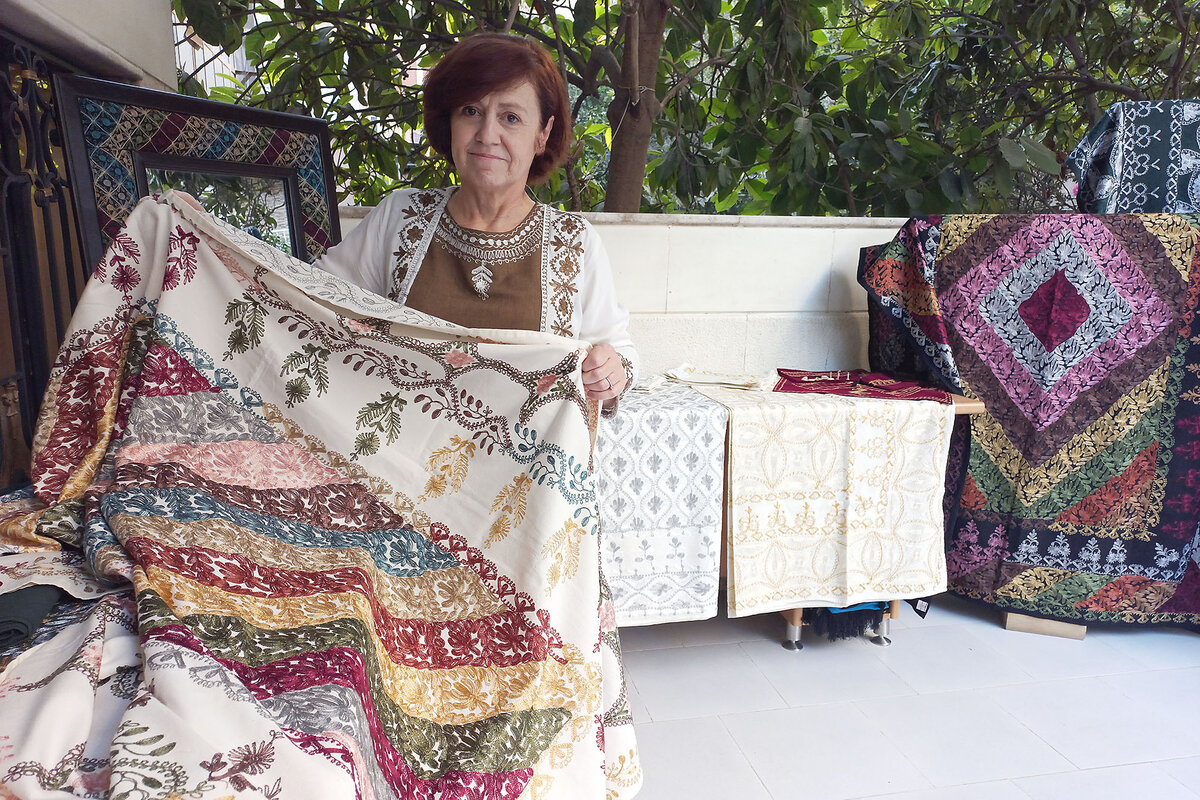
Mona Araghili showcases aghabani embroidery at the Threads of Hope exhibition in Damascus, Syria. Post-Assad, she sees an opportunity for serious investment in traditional crafts.

“Threads of Hope” is a phrase that seems to cover a lot of what is going on in the world. Hopes may be hanging by threads, but every day they can strengthen. In today’s article from the Christian Science Monitor, the words are applied to the reemergence of traditional Syrian embroidery after the fall of the Assad regime.

Dominique Soguel writes, “By the time Ameera al-Hammouri was 10, her hands were dancing across the taut fabric beneath her grandmother’s aghabani embroidery machine. She was too short to sit, so she stood, working the foot pedal to coax floral patterns from metallic thread and her own memory.

“Decades later, in a rundown apartment building on the outskirts of Damascus, her machine now runs on an erratic supply of electricity. The building’s elevator no longer works and many of its windows are broken, but inside the sanctity of Ms. Hammouri’s spotless home, the artistry lives on. ‘Working on the embroidery machine for me is like drawing on paper,’ she says. … ‘Whatever I imagine, I bring to life with my hands.’

“Aghabani embroidery originated in Damascus more than 150 years ago, blending Ottoman, Arabic, and Persian design influences. Traditionally, patterns were hand-printed in Damascus onto fabrics that were then sent to Douma, about 8 miles from the capital, where women embroidered them at home. Their work, displayed on tablecloths and other household items, became a hallmark of Syrian hospitality.

“Today, the survival – indeed, the revival – of this craft tradition rests in the hands of women from Douma, a city synonymous with both resistance and ruin. The women behind these works are not only artisans. They are mothers, widows, and survivors of siege, displacement, and economic collapse.

“Ms. Hammouri herself endured all of it. Her husband and eldest son were arrested in 2012 and never returned. Douma was subjected to a five-year siege, when government forces surrounded the city, cutting it off from food, medicine, and fuel. Ms. Hammouri’s house was destroyed. As the bombs fell, she moved her children from house to house, basement to basement.

“The siege ended in 2018. With no income and no husband, Ms. Hammouri turned to the one thing that had always grounded her: her original aghabani machine, bought in 1988 with money she scraped together by selling her wedding gold and other treasures. It still stands in a corner of her bedroom, alongside a newer model.

“ ‘I talk to this machine,’ confides Ms. Hammouri, who is known in the community as Umm Meriee. ‘It holds my secrets. I’ve cried over it.’

“At first, she worked quietly from home, taking orders from traders who remembered her family’s reputation and bought pieces for export. Over time, she began training other women.

“If Syria’s current political opening brings more trade and tourism, she says, crafts like aghabani could once again become a source of stable income rather than just a means of survival.

“Now, twice a week, her apartment fills with the chatter and laughter of industrious women. … This gathering of women is not a formal enterprise. There is no signboard or registration, no website to market their work. But family reputations endure in a country where word of mouth is the norm.

“ ‘They know my name in the market,’ says Umm Meriee, recalling how she revived ties with shopkeepers in the Al-Hariqa market, in Damascus’ old city, because her aunts and grandmother had put the family name on the map. …

“For Mona al-Masri, a Tuesday regular, embroidery is her identity. … While her colorful pieces earn heartfelt ‘wows’ from her daughters, it is next to impossible to eke a living from this craft. In a good week, working three hours a day in between bouts of housework, Ms. Masri earns just over $6. … Despite the skill and time aghabani requires – a single detailed motif can take hours, and a full tablecloth might take a week or more to complete – handmade aghabani cannot compete with cheaper, machine-made imitations that dominate the local market, such as those imported from China.

“ ‘Right now, aghabani has no future,’ says Ms. Masri. But with government support, she feels that future could ‘be a very bright one.’

“Mona Araghili shares that optimism. … More than a decade ago, Ms. Araghili set up Threads of Hope – Aghabani with little more than a social media page and materials she borrowed from friends. With her college friend Basheera Baghdadi, who had grown up in Douma, she smuggled fabric and thread into the besieged city, using tunnels and roundabout routes through the countryside. …

“Ms. Araghili never shut down her group’s Facebook page, she says. ‘I always hoped that we could restart someday.’ ”

More at the Monitor, here.

Read Full Post »

Illustration: Theodore Low De Vinne (1828-1914) via Wikimedia Commons.
Illustration of a punch (left) and matrix (right) used in type-founding, ca. 1876.

I’ve always loved the way steel-cut letters make a formal invitation look, the way they press into high-quality paper, drawing my attention to the hands of whoever did the typesetting. It’s a dying art to make the letters and even to print with them, and that inspired a filmmaker to look into the masters of the craft.

Carey Dunne writes at Hyperallergic, “In a smoky atelier in Torino, Italy, Giuseppe Branchino works as one of the world’s last punch cutters. Cutting punches, the first step in traditional typesetting, is the meticulous craft of carving letterforms into small steel billets.

“Branchino was the former head of the engraving department of type foundry and printing press manufacturer Nebiolo, founded in Turin in 1852. Along with a few others scattered across the globe, he carries on a centuries-old practice that’s becoming obsolete in the age of digital type.

“In the meditative short film The Last Punchcutter, by Giorgio Affanni and Gabriele Chiapparini, we watch Branchino create a punch. Drinking espresso and smoking a cigarette, he works silently and slowly, carving the letter ‘G’ into a thin block of steel with awls and chisels, peering through a magnifying glass to inspect his handiwork. He spends nearly seven minutes on a single letter.

“The film was created as part of Griffo, the Great Gala of Letters, a multidisciplinary project focusing on the life of Francesco Griffo, a 15th-century Venetian punch cutter and type designer. Born circa 1450 near Bologna, the son of the goldsmith and engraver Cesare Griffo, he went on to work for the house of Aldus Manutius of Venice, the most important publisher of the day. In 1501, for an edition of Virgil (the Aldine Virgil), he created what’s regarded as the first italic typeface. 

“Though his typefaces are still widely used and inspire most contemporary type designers, details of his biography are murky and, as Joseph Blumenthal put it in The Art of the Printed Book 1455–1955, ‘Griffo has never received adequate recognition for his enormous contribution to type design.’ Through videos, texts, and an upcoming exhibition, the Great Gala of Letters project aims to bring Griffo some long overdue recognition on the the 500th anniversary of his death.”

That book is out of print, but nothing stops GoodReaders from reading out-of-print books. Marc Joseph gave Blumenthal book five stars, saying, “Joseph Blumenthal was a fine printer for years at his Spiral Press. One of the great printers of the mid-twentieth century. He was also a typographer, educator, author in all things fine printing and a historian in the history of the printed word.

“Here he brings all of that acumen to bear on the history of the printed book, from 1455 to 1955. … There are multiple plates showing examples of the printing mentioned in the text, so the reader not only reads the facts, but sees them as well.

“This book forms a foundational basis for understanding the history of print. A note must also be made on the production values of this book. It is printed letterpress by the Stinehour Press (which for the size of the book and length is crazy). The tactile feel of the letterpress is amazing and shows the reader what fine press work is all about.

“The plates were printed by the Meridian Gravure Company, another fine printer, particularly of plates, either black and white or in color (black and white here). This hardbound volume was released in 1973 by the co-publishers, the Pierpont Morgan Library and David R. Godine. At the time of writing this review [December 2023], this particular edition can be had for $22.00 in ‘as new’ condition.”

Read Full Post »

Photo: Steve Annear.
In October 2014, the Edgar Allan Poe Foundation of Boston officially unveiled the long-awaited statue of a literary phenomenon known for his dark personality and craft. Note the raven.

Why do generations of fiction readers love the creepy stories of Edgar Allan Poe? I for one, was so infatuated with “The Cask of Amontillado” as a teen that I wrote a theatrical adaptation and talked my high school into letting me cast a couple students to perform it for Halloween.

It was not a success. One of the actors couldn’t remember lines and spent most of the show hiding under a chair.

But we probably didn’t kill anyone’s love for Poe.

Recently at the Washington Post, Louis Bayard reviewed a new Richard Kopley biography of the horror-genre master. He compares the lack of control Poe seemed to have over his daily life with the utter mastery of the craft he essentially defined.

He writes in part, “A long and not always edifying tale of success and setback, temperance and bacchanals, playing out across the Atlantic seaboard and end-stopped by a death no less tragic for being in the cards. It’s exhausting stuff, and the only reason to strap ourselves in once more is the chance to see a genius being born.

“A good thing it happened, too, because if anybody desperately needed to be a genius, it was Poe. Born to indigent actors and orphaned at 2 years old, he was brought into the home of John Allan, a proud Richmond merchant. From the start, Poe’s foster father called the arrangement ‘an experiment,’ which meant that young Edgar was never formally adopted and lived in plain view of Allan’s disapproval. By the time Poe had withdrawn from the University of Virginia and been court-martialed out of West Point, the experiment was over.

“Lacking any other option, he embarked on the then-novel career path of becoming a working writer. …

“To the first editor who would listen to him, Poe declared: ‘I am young — not yet twenty — am a poet — if deep worship of all beauty can make me one — and wish to be so in the more common meaning of the word. I would give the world to embody one half the ideas afloat in my imagination.’ Journal by journal, he managed to carve out a fugitive living as poet, critic and short-story writer. Along the way, he found the family he’d been looking for: a doting aunt and a young cousin, Virginia, whom, according to then-common practice, Poe married when she was 13. The marriage wasn’t immediately consummated, but they remained deeply devoted to each other until her death at the age of 24.

“By then, Poe had become a real, if controversial, figure in the literary hierarchy with tales of grotesquerie like ‘The Fall of the House of Usher,’ ‘William Wilson’ and ‘The Masque of the Red Death.’

“ ‘Poe follows in nobody’s track,’ one admirer wrote. ‘His imagination seems to have a domain of its own to revel in.’ From that ferment, ‘The Raven’ emerged like a hit tune, immediately entering the zeitgeist. …

“Yet his fortunes never materially improved. In the words of one editor, he was ‘unstable as water,’ a gambler and serial debtor and inveterate drunk who fell off every wagon and was fired from every job and antagonized as many people as he befriended. In the wake of his wife’s death, he embarked on a chain of doomed platonic alliances and finished his days violently delirious in a Baltimore medical college. So few mourners showed up at his funeral that the minister dispensed with a eulogy. …

“By adhering [strictly] to chronology, Kopley opens the door to discontinuities, awkward transitions and numbing repetition.

“To his credit, though, he’s a good sight fonder of his exasperating subject than [previous biographer] Silverman was, and he does a fine job of recasting Poe’s alcoholism not as a moral problem but a medical one — ‘a terror equal to some of the terrors in his fiction.’

“Kopley also benefits from the privately held letters of Flora Lapham Mack, stepdaughter to Poe’s closest friend, who proffers such startling visions as Poe kicking up his heels in a Richmond parlor: ‘He would come with a sort of running leap in to the parlor & landing on the toes of his right foot twirl rapidly around for a moment & then he would dance most gracefully & rhythmetically an intricate a[nd] Spanish fandango.’

“Where Kopley really excels is in connecting the life back to the work. I always knew, for instance, that ‘The Cask of Amontillado’ was a revenge fantasy against one of Poe’s literary rivals, but it had never occurred to me that ‘The Tell-Tale Heart’ was a revenge fantasy against John Allan. Nor did I grasp how heavily Poe’s dead brother and mother figure in Poe’s lone novel, The Narrative of Arthur Gordon Pym (a superb book that remains shockingly underread). …

“There’s no disputing Kopley’s central argument: ‘As out of control as Poe’s life could sometimes be, his literary work was utterly in control.’

“That may explain why, despite all evidence to the contrary, I find Poe’s example not cautionary but inspirational. Through all his binges and bankruptcies, through every setback and depressive spell, he kept making art because he knew that’s where the best of him lay.”

More at the Post, here.

Read Full Post »

Photo: Autodesk Instructables.
Building a ship in a bottle. “Hobbies are about doing things: planning, painting, building, contributing an article to your favorite magazine,” writes Alexander Poots at UnHerd.

Niche print magazines seem to survive even after everyone else has gone online. According to an article at UnHerd, that’s especially true of magazines about hobbies.

Alexander Poots writes, “Phil Parker is the editor of Garden Rail magazine. He’s a passionate man — especially on the subject of steam engines. ‘The steam engine is the nearest anybody has come to building a living thing,’ he says. … He talks about the joy of seeing them in action. The smells, the hiss and chuff, the weight of them on the line. It’s a joy that many people want to recreate at home. …

“Layouts in back gardens across Britain range from tiny loops of track to colossal, intricate landscapes. Parker knows a guy whose line crosses Lilliputian bridges and snakes through mountains 10 feet tall. Layouts are much more than models, he says. They really are railways, albeit on a smaller scale than usual. A keen sense of ownership is important: ‘these are their railway lines.’

“Ardent hobbyists are often viewed as eccentric. I think they might be the only normal people left. As a rule, they are active and engaged. They are more interested in making than consuming. They dream and they do. A passive appreciation for steam engines or military history or orchids isn’t enough. Hobbyists want to take part.

“ ‘I grew up fascinated by history, and wargaming helps you make that interest interactive,’ says Daniel Faulconbridge, editor of Wargames Illustrated. ‘It’s not good enough for me that I just read about the Battle of Hastings, I want to collect the figures that represent the troops that fought in the battle, and then paint them and play a game with them.’ …

“Magazines like Garden Rail and Wargames Illustrated are at the heart of the hobby world. The variety is extraordinary. Hornby MagazineAirfix Model WorldThe Orchid ReviewLute News. Monthly publications dedicated to remote control aircraft and koi keeping. Some hobbies have broader appeal than others — the UK has enough carp fishermen to support both Total Carp and CARPology. But even the more niche titles have a readership large enough to keep them viable in a brutal publishing environment. …

“The physical hobby magazine has in fact proved surprisingly durable. Both Faulconbridge and Parker acknowledge that their readers tend to be older, and prefer print media because it’s what they grew up with. There’s also a practical aspect: if you’re following a guide to painting a model Landsknecht, it’s easier to have a paper copy open on the table than faff about with a phone or tablet. …

“Again and again when talking to Parker and Faulconbridge, I am struck by the emphasis on the physical. Hobbies are about doing things: planning, painting, building, contributing an article to your favorite magazine. ‘You come into a hobby and you’re not being encouraged to binge-watch something on the tele — which is a very, very passive activity — you’re being encouraged to have a go at something,’ Parker observes. …

“Hanging out with like-minded people is the best way to have a go. Community is a word that comes up a lot in my chats with the editors. … Parker emphasizes that railway modeling exhibitions are as much social gatherings as they are celebrations of the hobby. As anyone who has worked an allotment knows, shared enthusiasms have a way of collapsing social barriers. Parker remembers one exhibition where he sat around a pub table with ‘a physics professor, a guy who ran his own bus company, a Liberal Democrat councillor, a theatre manager, a bishop and two lawyers. Our common interest was model railways. You find yourself meeting a really wide variety of people.’

“Still, it’s a mistake to think that these groups are purely focused on the hobby itself. Wargames and model railways are often the starting point for other things. Friendships are made, money is raised for charity, and support networks are formed. ‘Men are particularly bad at chatting,’ says Parker. ‘But they will chat about steam engines and they will chat about garden railways, and that chat can then move on to more valuable topics. We run the largest model railway forum in the world, and tucked away on it is a prostate cancer discussion group.’ …

“Hobby magazines survive because they are outgrowths of these communities. Most articles are written by hobbyists, in what Faulconbridge describes as ‘a fanzine approach.’ Neither the editors nor the contributors are in it for the money. They just love it. In a recent thread on X, Stone Age Herbalist observed that the continued success of the hobby magazine can be attributed to a particularly British — and more broadly Northern European — genius for voluntary association. Whether centered around giant vegetables or antique fountain pens, little communities bubble up everywhere. …

“A link between hobbies and productive industry can also be found in the world of railway modeling. Parker tells me that, ‘I’ve just reviewed a loco from a company based in Doncaster, Roundhouse Engineering. You’d be amazed, we do still build steam locomotives in this country! It’s a proper Rolls Royce engine model, beautifully constructed. They do pretty much everything in-house.’ This pride and attention to detail is at the root of what all hobbyists are up to. …

“Hobby magazines are heartening advertisements for that reward. Planning, making, getting things wrong, having a laugh about it.”

More at UnHerd, here.

Are bloggers hobbyists? We seem to check a lot of the boxes in the definition.

Read Full Post »

Photo: Candace Dane Chambers for the New York Times.
Arianne King Comer, an artist, wearing hand-made textiles in her home studio on Wadmalaw Island, S.C. She first learned batiking at Howard University.

I was drawn to this story about about dyeing textiles on the South Carolina mainland and islands after reading Pat Conroy’s amazing memoir The Water Is Wide. That book recounts his 1960s teaching experience among impoverished black children on one of the islands — a sad and moving tale.

I am happy to learn something more upbeat about the islands.

The New York Times says reporter Patricia Leigh Brown “followed South Carolina’s indigo trail from Charleston to Johns Island to St. Helena Island” for this story.

“On a spring morning nearly a decade ago, Leigh Magar was out walking rural Johns Island, off Charleston, S.C., with her ‘snake stick,’ a wooden cane with a jangling Greek goat be. … As she tells it — and she swears this story is true — a beautiful blue dragonfly alighted on her stick and then encircled her, before fluttering toward the woods. She followed it into a thicket of pines, where she discovered a patch of wild blue indigo hidden among the trees.

Magar, a textile artist and dressmaker partial to indigo-dyed jumpers and indigo-stained silk ribbons tucked into her hair, is at the artful forefront of the ‘seed to stitch’ movement — the growing, harvesting and processing of Indigo suffruticosa, a robust plant that flourishes in the tropics and produces a deep, cherished ocean-blue color, one of humankind’s oldest dyes.

“This benign-looking bush is used in designing garments and batiks. It was a major export in 18th-century South Carolina. Like rice and cotton, the lucrative indigo crop was dependent on the skills and labor of enslaved Africans, who tended the plantation fields and extracted the dye in preparation for shipment to England for its burgeoning textile industry.

“Today, the revival of indigo by a diverse group of artists, designers and farmers is hardly confined to South Carolina. … In the United States, the passion for indigo dovetails with a growing appreciation for nontoxic plant-based dyes, including turmeric and marigolds, and the renewed focus on Africa’s role in contemporary fashion, spotlighted by recent museum exhibitions like ‘African Fashion‘ at the Brooklyn Museum and the Portland Art Museum, and by ‘Blue Gold: The Art and Science of Indigo,’ which opened at the Mingei International Museum in San Diego on Sept. 14 [until March 16, 2025]. …

“Fashion designers like Awa Meité van Til, who is based in Bamako, Mali, draw inspiration from her ancestors. In Africa, her grandmother re-dipped her clothes in what the older woman called ‘the blue of life’ when they aged, van Til recalled by email. In Lagos and other major cities, adire, a woven indigo-dyed cloth historically made by the Yoruba, is a fashion staple. …

“Magar was drawn to indigo after a career designing hand-stitched hats and fedoras for Barneys New York from her shabby chic cottage in Charleston. In 2015, she and husband, Johnny Tucker, an architect and artist, moved to a house on Johns Island. …

“Madame Magar, as she is known professionally, became infatuated with the idea of creating art from Mother Nature and began reading histories about Johns Island indigo. At the time, indigo seeds were hard to come by. Then a local botanist told her about a ‘hermit monk’ deep in the woods who not only had seeds but a thriving indigo garden. …

“The ‘hermit’ turned out to be an affable Eastern Orthodox monk named Father John, who lives down a rutted sand road. In his black cassock, he had a slightly bohemian air, with a bountiful silver beard and hair pulled back in a tight bun. …

“Father John is adept at ‘resist techniques,’ in which certain areas of a textile are blocked from receiving the dye, most often by applying molten wax (the process is often called batik). He prefers making a golden paste out of rice bran which he then applies through intricately hand-cut stencils to create patterns on fabric, in a centuries old Japanese technique known as katazome.

“He pulled out a small plastic bag full of tiny brown curlicues — they were indigo seed pods (you could hear them rattling). He demonstrated their alchemy in the yard, in tubs — one dye steeped with dried leaves, and a deeper color, from concentrate, its bubbling iridescent surface resembling a liquid stained-glass window.

“When Father John immersed his stenciled textile into the brew, it turned a distressing pickle green. But as he fished it out and exposed it to the air, it transformed into a breathtaking blue, enhanced by intricate white patterns where the rice paste had been. …

” ‘Every country that does indigo honors ancestors through this magical blue,’ said Arianne King Comer, an artist who first learned batiking at Howard University and has an indigo plant tattoo above her ankle.

“ ‘It aligned me,’ she said of her indigo education, which began in 1992, when she made her first trip to Nigeria on a grant to study with Nike Davies-Okundaye, a celebrated textile artist who has built centers for young people to learn traditional arts and crafts. …

“King Comer’s indigo-dyed tunics and silk scarves, sold on her website, practically spill out of her trailer, many employing shibori, a Japanese technique in which cloth is twisted or folded to create different patterns. … She will stay in her DIY outpost until she is able to build a center honoring historical and cultural crafts techniques, through her nonprofit, IBILE. Her work is part of the permanent collection of the Acres of Ancestry/Black Agrarian Fund, a cooperative that supports efforts to secure and protect Black farmlands.”

More at the Times, here.

Read Full Post »

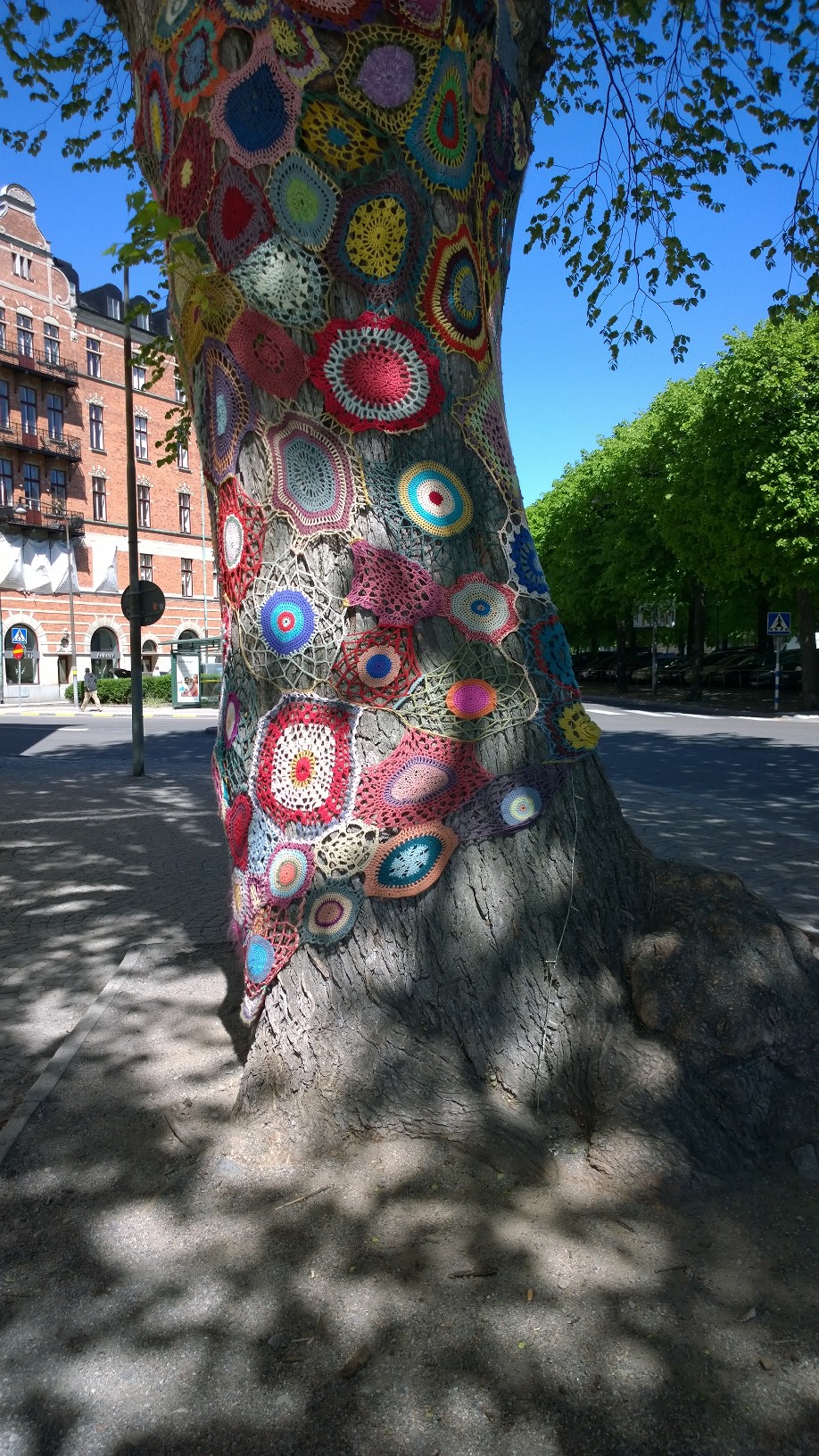
052917--crocheted-tree-Stockholm

Photos: Suzanne and John’s Mom.
Crocheted tree in Stockholm, 2017.

Working with your hands, creating something that is all you — how satisfying that can be! Today’s story is on the latest research showing that that can be good for you and the people around you.

As Nicola Davis wrote at the Guardian, “Winston Churchill had painting, Judi Dench is famous for her rude embroidery and Tom Daley has been known to knit at the Olympics. Now researchers say we could all benefit from creative endeavors and that such pursuits have a bigger influence on life satisfaction than having a job.

“While arts and crafts have long been used to aid mental health, experts said most research has looked at their effect on patients rather than the general population, and tend to look at specific activities.

“However, the researchers have now said such interests could be an important tool for improving public health in general.

“Dr Helen Keyes, a co-author of the research from Anglia Ruskin University, said: ‘It’s quite an affordable, accessible and ultimately popular thing for people to do. And that’s key. You’re not going to be shoving something down people’s throats that they don’t want to do.’

“Writing in the journal Frontiers in Public HealthKeyes and colleagues reported how they analyzed data from more than 7,000 people aged 16 or over who took part in the face-to-face ‘taking part survey’ by the UK Department for Culture, Media and Sport between April 2019 and March 2020.

“As part of the survey participants were asked to rate various aspects of their well-being on 10-point scales, report whether they took part in arts or crafts, and provide demographic details.

“The team found that just over 37% of participants reported taking part in at least one art or craft activity in the past 12 months – ranging from painting to pottery and photography. …

“The results revealed that people who engaged with creating arts and crafting had greater ratings for happiness, life satisfaction and feeling that life was worthwhile than those who did not, even after taking into account other factors known to have an impact – including age, gender, deprivation, poor health, and employment status. …

“Among other results the team found engaging in arts and crafts was associated with an increase in happiness on a par with aging by 20 years (as Keyes notes, well-being goes up slightly with age), while the sense that life was worthwhile was more strongly associated with crafting than being in employment.

“Keyes said [the reults] might reflect that not everybody is in a job they find fulfilling, while people often have a sense of mastery or ‘flow’ when undertaking arts and crafts – experiencing control, achievement and self-expression. …

“Keyes said smaller clinical trials have suggested engaging in arts and crafts can increase well-being. Keyes also acknowledged the increases in well-being associated with creating arts and crafting were very small – on average engaging in such activities was only linked with a 2% higher rating for the feeling that life was worthwhile. But, she said, the results remained meaningful at a population level. …

“Keyes said that backing such activities would offer a simpler route for governments to improve the nation’s well-being than other factors that are known to have a big effect. …

“ ‘But it’s a really quite cheap, easy, accessible thing for us to engage people in.’ ”

What was the last craft you tried your hand at? I made a pottery vase.

More at the Guardian, here. No paywall.

I used to make collage greeting cards.

Read Full Post »

Photo: The Guardian.
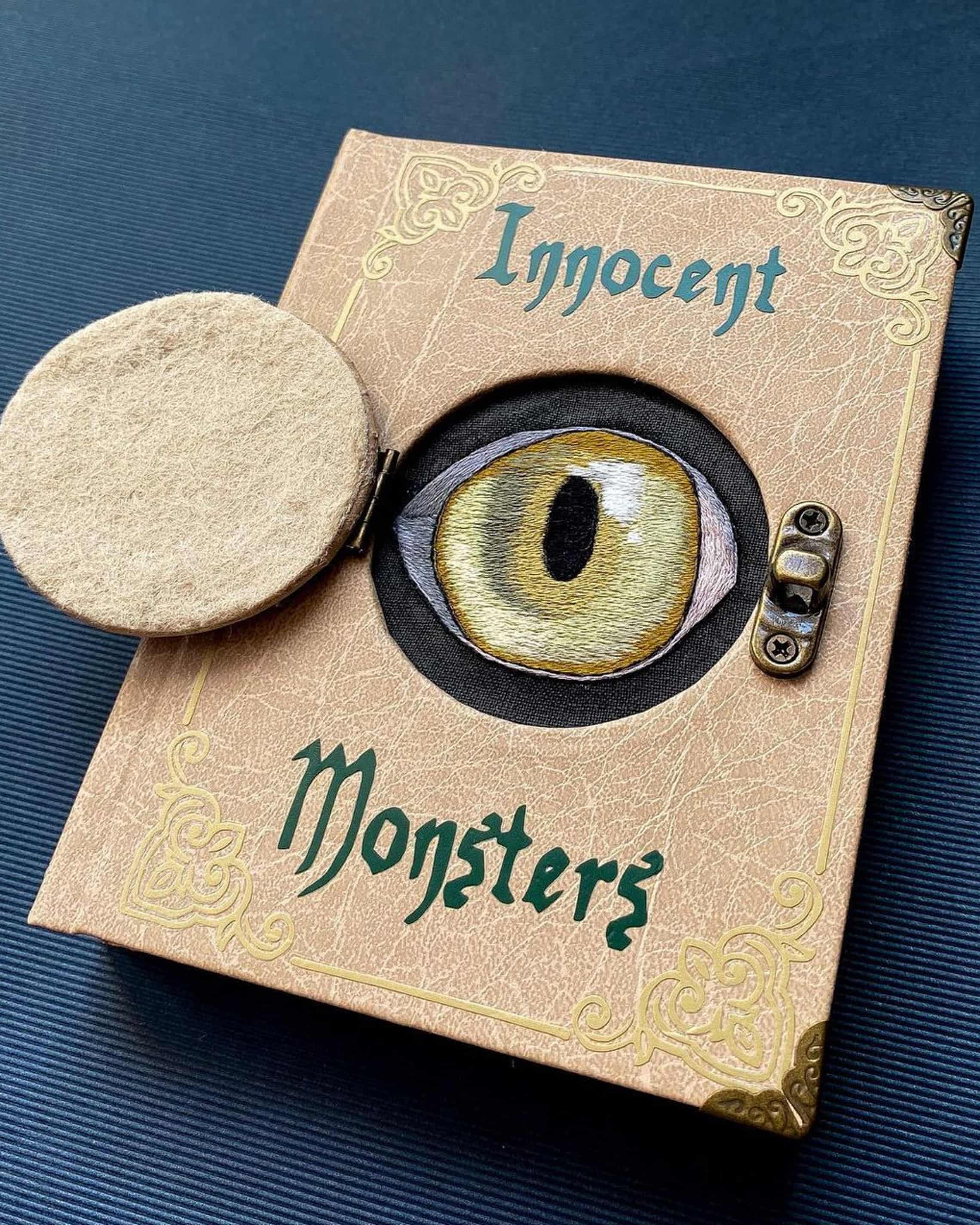
Innocent Monsters is an example of a book bound by Geena of ‘beaudelaireslibrary.’ Bookbinding is attracting interest on TikTok.

TikTok comes in for a lot of criticism these days, not least because people think its Chinese ownership enables the Chinese government to spy on the US. For all I know, that could be a legitimate concern, but some activities on TikTok sure seem innocent. I can’t imagine any government secrets hidden in bookbinding lessons, for example.

David Barrett reports at the Guardian about the curious hobby that has taken hold there.

“The videos often begin with every bibliophile’s nightmare: a person ripping the covers off a book. They are not vandals, however; they are bookbinders, taking part in a growing trend for replacing the covers of favorite works to make unique hardback editions, and posting about their creations on TikTok and Instagram.

“Mylyn McColl, a member of the UK-based Society of Bookbinders, runs their international bookbinding competition. She said: ‘It is great to see people taking on our craft and turning their favourite novels into treasured bindings.’ …

“Emma, 28, posts on social media as The Binary Bookbinder, after discovering the hobby a year ago. ‘I was scrolling through social media and I came across a video of someone doing it and was intrigued,’ she said. …

“After a practice attempt with a few sheets of printer paper and some card-stock, Emma, who lives on the East Coast in the US, graduated to re-binding books from her favorite genre, fantasy. ‘It is deeply satisfying re-binding a book to look like it would belong in the world I’m reading about,’ she said. …

” ‘Overall it is a relaxing hobby, but it still comes with its challenges. I like to use my tech background to integrate 3D printed, laser cut, or electronic parts in the books I rebind and that can be difficult.’ …

“A search for ‘bookbinding’ on TikTok produces more than 60 million results, with high-speed time lapse videos showing a brand new product emerging from a mass-produced paperback. Bookbinding tools and equipment include specialist glues, and vinyl cutters for making silhouettes or cameos on covers, which can cost more than £300 [~$384].

“Emma said interest in bookbinding was being driven in part by BookTok, the TikTok genre that has boosted sales for the publishing industry, and the general increase in reading post-pandemic. … ‘Different parts of the same story will resonate with people, so owning a copy of a book that has your favourite quote, image or symbol from the book on the cover is something special.’

“McColl, of the Society of Bookbinders, said: ‘Historically the society was made up predominantly by older people, often retirees enjoy new free time. But that is changing … on the London committee there are now people in 20s, 30s, 40s.’

“Some bookbinders do it for their own enjoyment, while others sell their creations through platforms like Etsy. Geena, who posts on Instagram as baudelaireslibrary, saw it as an opportunity to give physical form to a genre generally only available online – fan fiction.

“The 33-year-old from Wiltshire said: ‘I started bookbinding nearly a year ago. I had been reading Harry Potter fan fiction for about two years. … I had absolutely previous knowledge on how to create a book – I didn’t know it was possible to do at home without commercial equipment.’

“Geena says bookbinding encompasses ‘four or five hobbies,’ allowing her to use skills from her other pastimes, such as embroidery and crochet. She says, ‘With the rise of screens dominating people’s time, I think that creative hobbies where you use your hands and make something from scratch bring a simple joy that [people] haven’t experienced before. It taps into a part of the brain that can improve mental health, and is a real mood booster.’

“Geena says she has made new friends through the hobby, and is hoping to attend a meet-up of British amateur bookbinders later this year. Emma has attended meet-ups in the US. She said: ‘The community aspect is wonderful, and I’ve really been able to bond with people across the world.’

“Jennifer Büchi of the American Academy of Bookbinding, based in Colorado, said there had been a shift in how people discovered the hobby. …

” ‘We saw a big increase in students who’d started learning to bind books online and through social media after the pandemic. It’s been great for us because there’s a lot more interest in our classes – our introductory courses fill up within hours of being posted. Anything that drives interest in the book ultimately helps more students find us, and more students means more folks carrying the craft forward.’ ”

More at the Guardian, here.

Read Full Post »

Photo: Iain Brown.
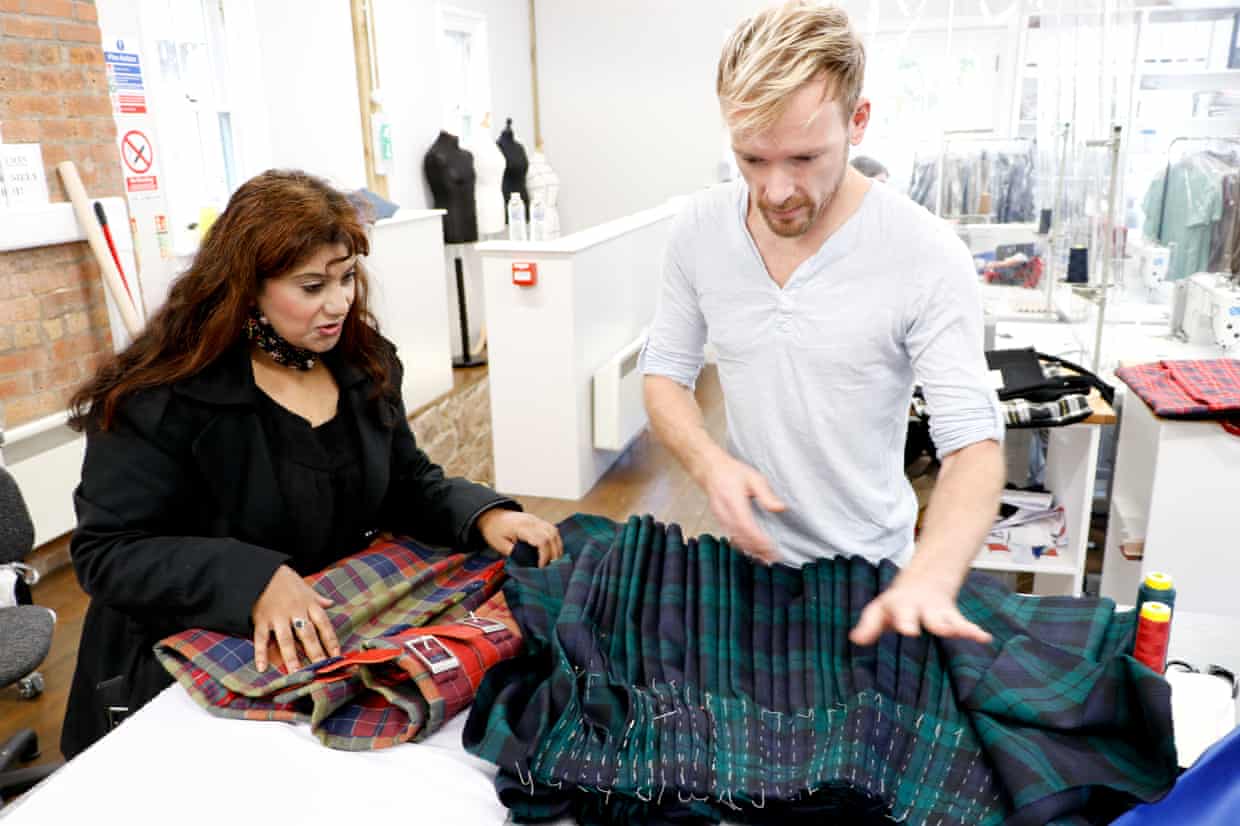
Kilt maker Graeme Bone. A new organization seeks to protect crafts that have fewer and fewer makers.

I don’t think of neon as an ancient craft, but I’m learning that lack of demand for it is endangering its future. It’s right up there with bagpipes.

At the Guardian, Alice Fisher reported recently on efforts to protect and pass along the skills of makers as varied as those who craft neon, kilts, bagpipes, and cricket bats.

“Nick Malyon was seduced by neon lighting at the end of the 1980s while traveling in America,” she writes. …

“ ‘I was introduced to a sign painter and a neon signmaker, and it seemed like an alternative lifestyle to the one I’d left behind. On my return to the UK, I was probably attempting to carry on some American dream by training, but I loved the weird alchemy of illuminating a piece of bent glass tubing – the change from nothing to something.’

“Malyon’s art [was on display in May], during London Craft Week (LCW), at the Vintage Supermarket, a Soho pop-up shop by Merchant & Found that specializes in 20th-century and industrial furniture. His work will represent one of the many endangered crafts on show this year.

“ ‘Over the centuries, crafts have ebbed and flowed; some die out but others grow to replace them,’ says Daniel Carpenter, executive director of Heritage Crafts, the charity that produces the annual red list of endangered skills. ‘But what we’re seeing now is something different – it’s like an extinction-level event.’

“Heritage Crafts’ red list includes gloomy news for British culture. Cricket ball manufacture is extinct in the UK, while cricket bats are on the endangered list alongside kilt- and bagpipe-making. Construction of currach boats and the sporran are also on the critical list.

“Carpenter says that competition from low-wage economies overseas is a key factor. … He says the situation is worse in the UK than in other European countries, but Heritage Crafts has just established a worldwide organization to monitor the situation. ‘There’s less support for training, and government-funded apprenticeships are very hard to access in the UK. They’re not set up for our sector – which is ironic, as apprenticeships were developed by craft guilds in medieval times.’

“Scottish kiltmaker Graeme Bone’s work will appear at LCW’s Craftworks. He retrained with a program offered by the Prince’s Foundation. Previously he was a steelworker: ‘Surprisingly, there are many cross-transferable skills from construction to pattern making – it’s all grids and measurements.’ …

“Rush weaver Felicity Irons, who is also exhibiting at LCW, received a British Empire medal in 2017 for saving the UK’s rush-cutting industry. She was focused on making seating when her rush supplier, Tom Arnold, died. Arnold’s brother was in his 70s and didn’t want to take over the trade, though it had been in his family since the 1500s. He gave Irons a two-hour training session before she took over.

“ ‘But I still get asked if this is my hobby. Though it’s better than it was when I set up – customers would be really rude to me about the prices and I had to stop myself from justifying it. I think it’s staggering that those plants growing in the river are being sent all around the world – our exports are really strong.’

“In June 2024, the UK will ratify Unesco’s Convention for the Safeguarding of the Intangible Cultural Heritage, which means the government commits to protect local crafts, social practices, festive events and rituals. A public register opened in January 2024 for British people to nominate local traditions for our national list. ‘It’s a step forward,’ said Carpenter, ‘but it’s largely symbolic.’ …

“While grants are hard to come by, some awards offer money prizes as well as recognition. The latest winner of the Loewe Foundation Craft prize, an international award, [was] announced in the same week as LCW. [Andrés Anza won.] …

“Abraham Thomas, curator of modern architecture, design and decorative arts at the Metropolitan Museum of Art in New York is one of the Loewe Prize judges this year. He feels some crafts people are adapting to the modern world.

“He says: ‘It’s interesting to note that several artists on this year’s shortlist have subverted traditional techniques and incorporated unexpected, recycled or industrial materials. They appear where other materials might be expected – all with the purpose of challenging craft traditions, legacies and expectations.’”’

“Carpenter also thinks craft is an innate human trait, and the loss of these skills goes beyond being a problem for our manufacturing sector or a waste of talent. ‘We’ve evolved as human beings to be makers,’ he said. ‘So for us to be living 24/7 in the digital world isn’t natural.’ …

“Malyon, though, has resigned himself to the death of his craft in the UK. ‘Since the advent of LED in the 2000s, neon trade worldwide has crashed. Brexit caused a price rise in our materials, all imported from Europe. I’ve never earned much and I work very long hours, but I really enjoy what I do.

“ ‘I just wanted to make neon signs, commercially, for whatever weird reason, so I feel I’ve been lucky. But as far as the UK craft is concerned, I don’t think anyone can stop it from dying.’ ” More at the Guardian, here.

I’m glad to read that someone is still doing work with rushes. A couple of our rush-bottom dining chairs were starting to need attention. Fortunately, the new owners of our house were happy to take them on.

Read Full Post »

Photo: Fuller Craft Museum.
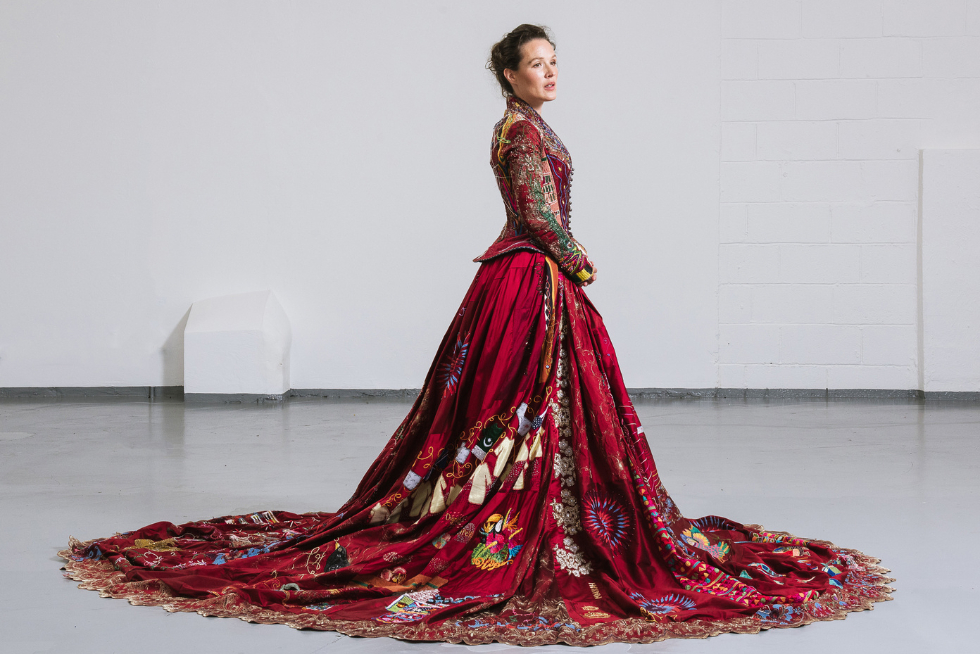
The Red Dress” is the culmination of 15 years of work by 380 embroiderers from over 50 countries, many of the contributors from impoverished, marginalized groups.

My friend Ann, a textile artist, invited me to pay a visit to the Fuller Craft Museum, a beautiful place in Brockton, Massachusetts. She was especially interested in seeing an embroidered dress that had traveled the world and uplifted many talented but marginalized women, but we got a kick out of all the exhibits.

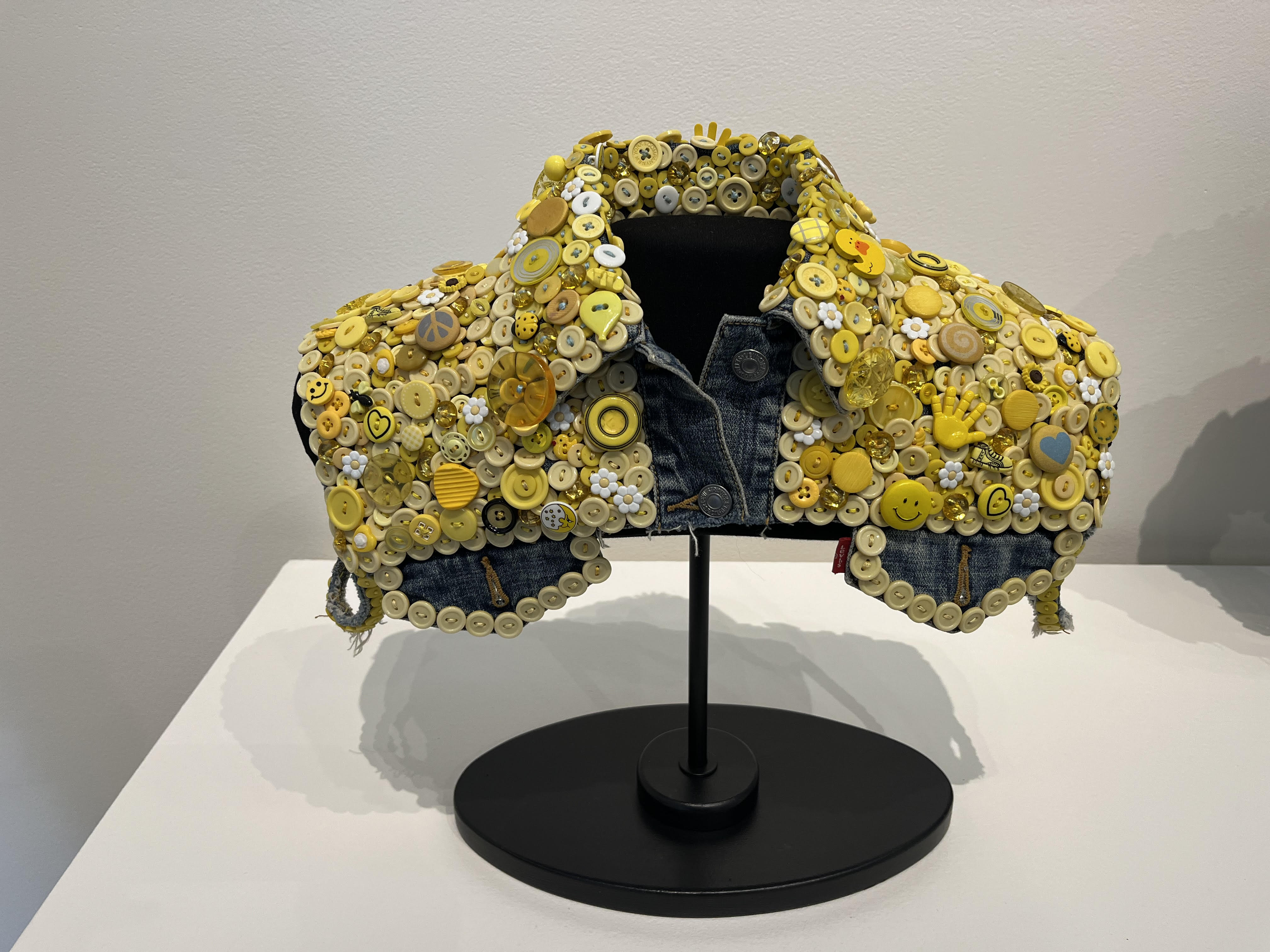
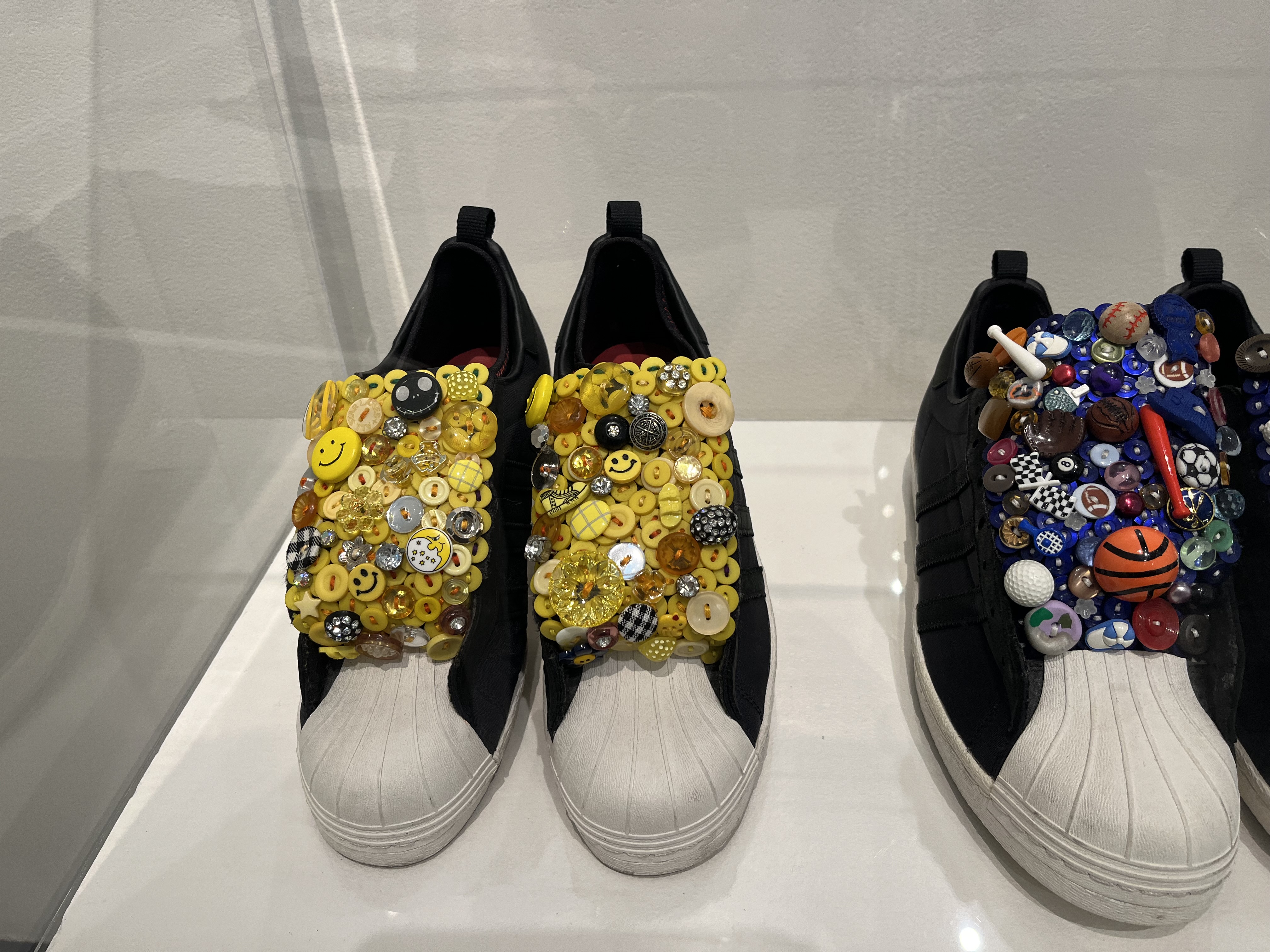
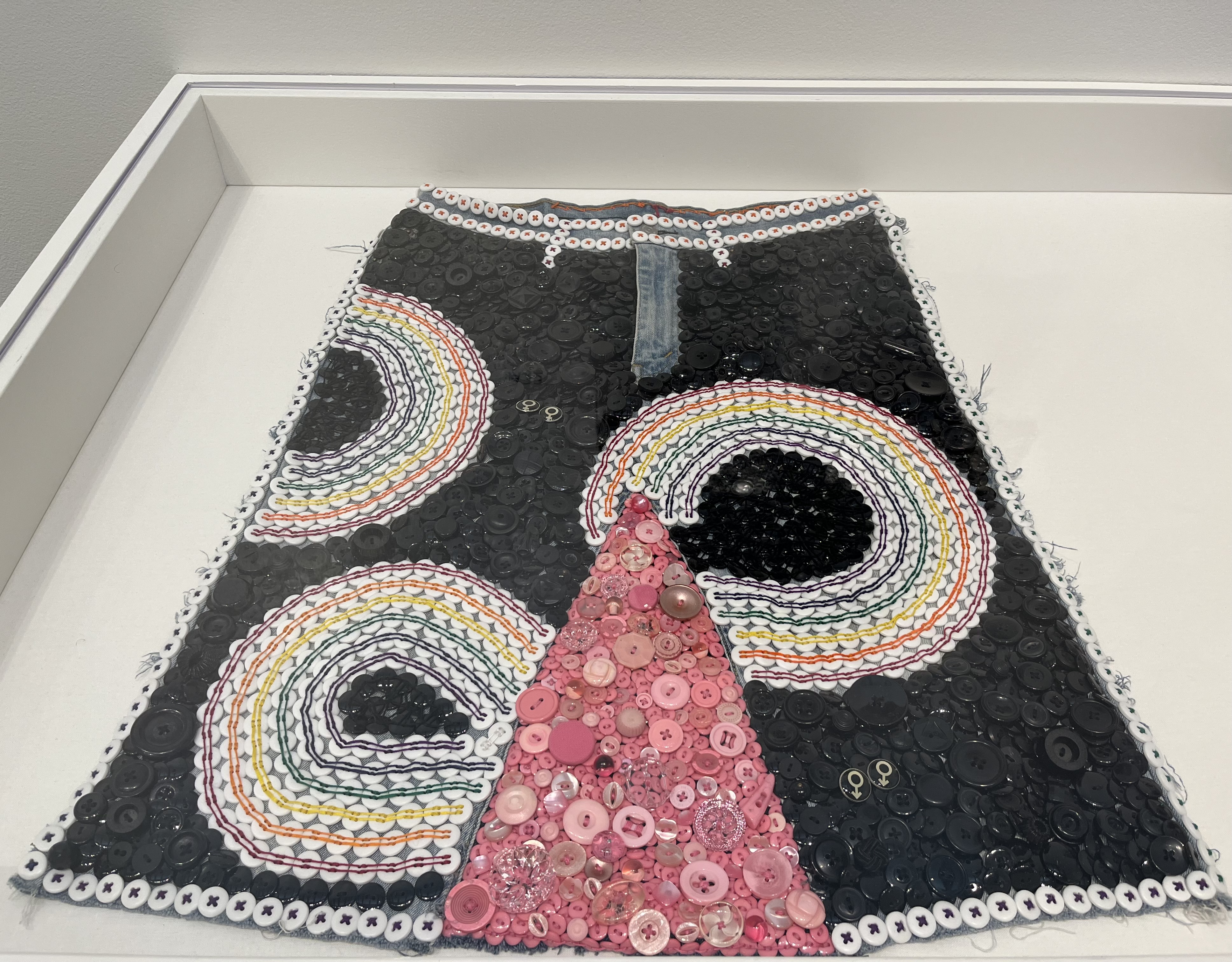
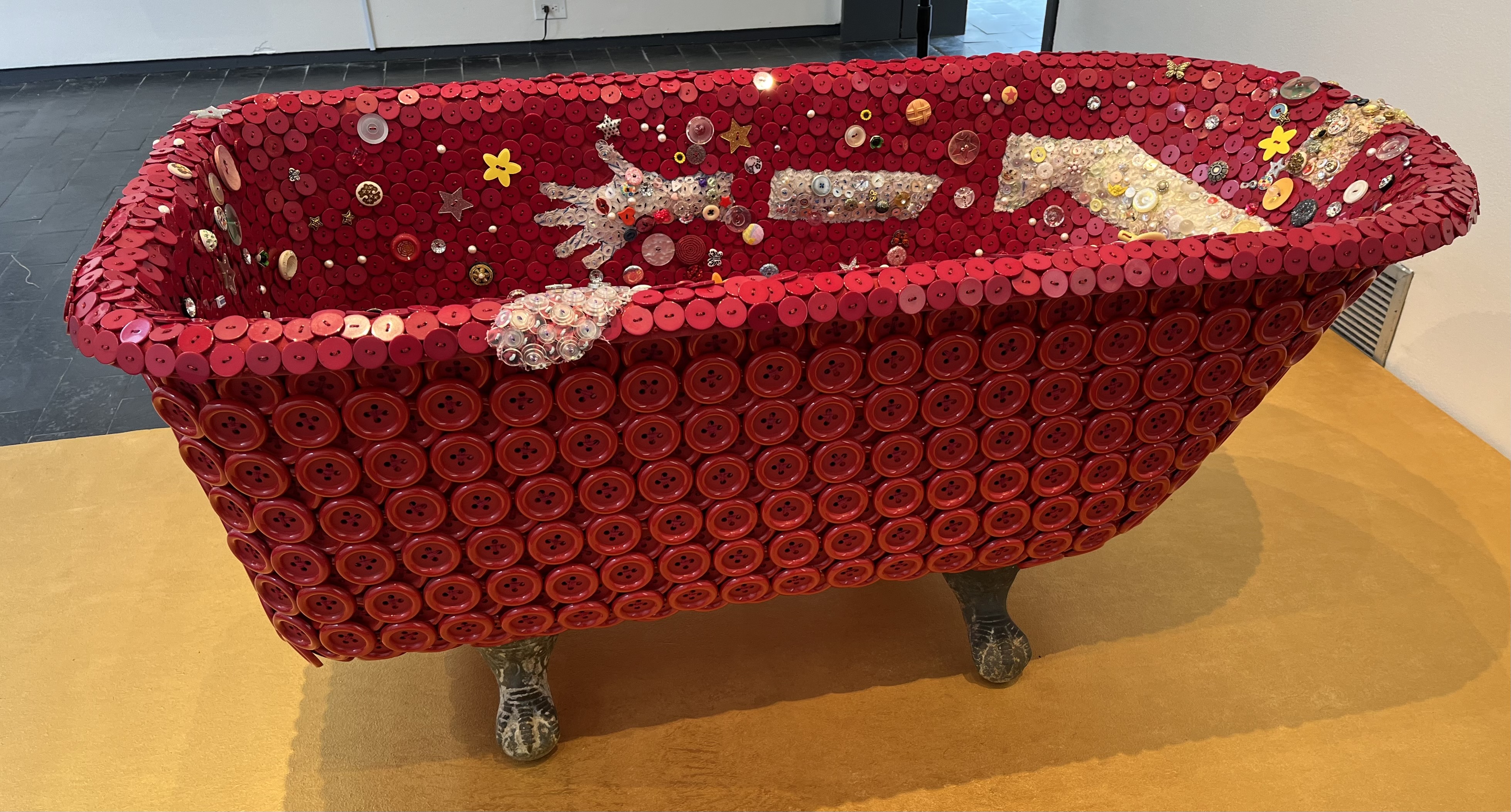
I took photos — quite a few of works by button artist Beau McCall.

The first image below is of McCall’s jeans top and the second of some sneakers — all covered with buttons. The third piece is also covered with buttons, even the black parts. The only button-free place is where the zipper would go.

The button-covered bathtub was particularly arresting. Ann says she wants to find out how McCall sources so many buttons, many of them clearly antique.

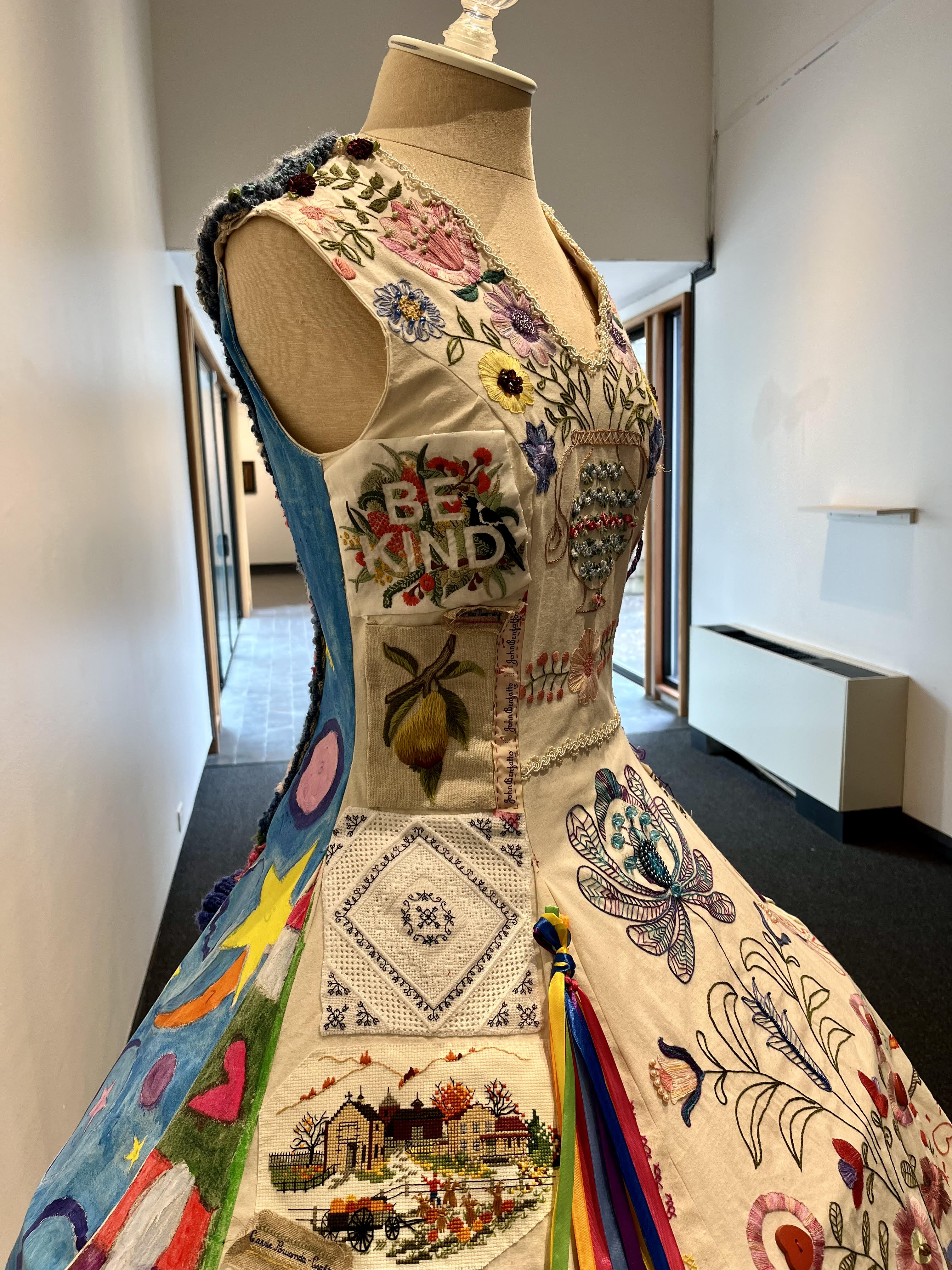
The next photo, of an embroidered dress, features the handicraft of embroiderers of all kinds around New England, a local homage to “The Red Dress.”

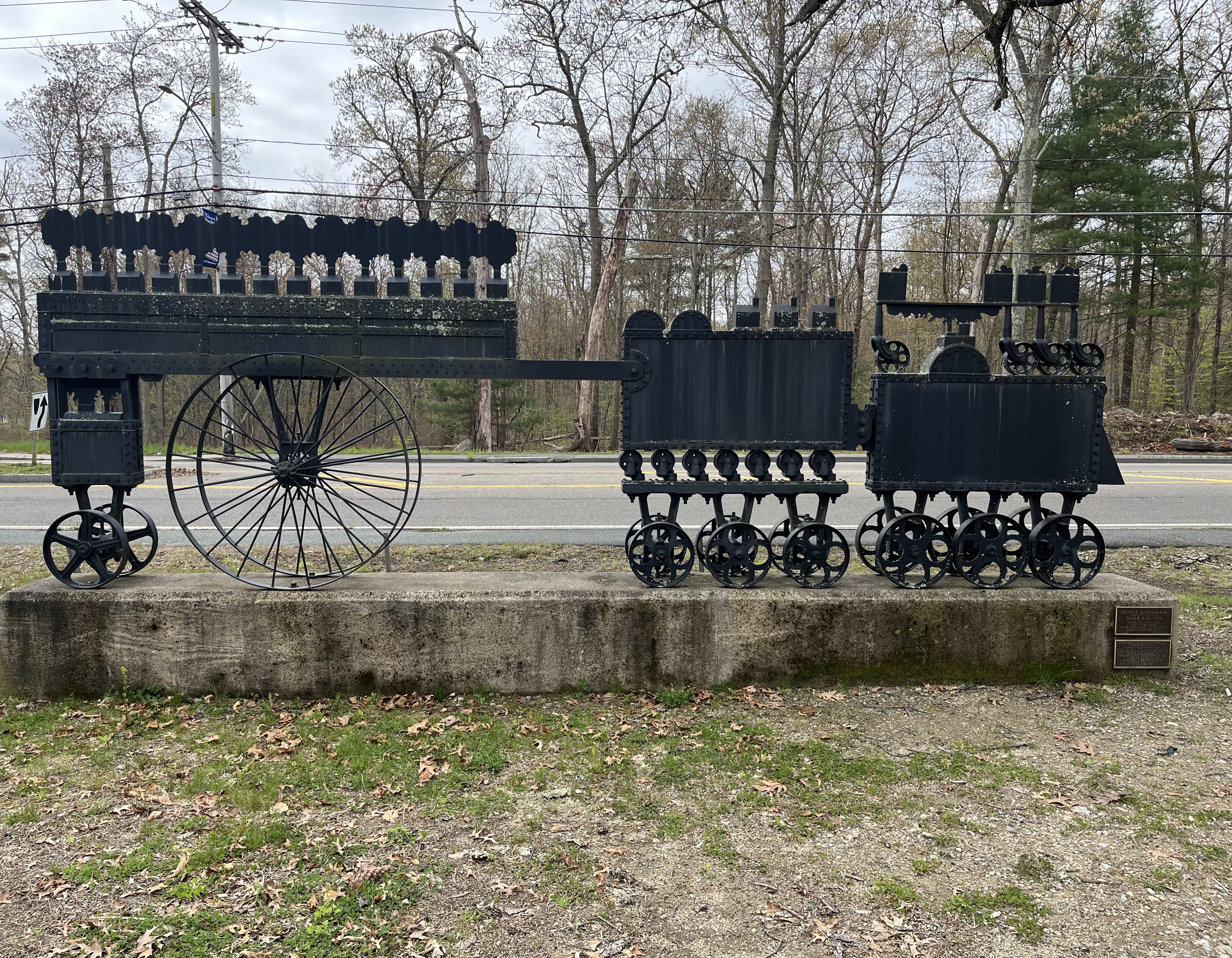
My last shot is of George Greenamyer’s steel train at the entrance to the museum, a hint that the ugly suburban highway where the museum is located has something magical behind the parking lot — a modern building with courtyards and vistas of swans sailing along serene Upper Porter Pond.

More at Fuller Craft, here.

Read Full Post »

Photo: Institute For Figuring.
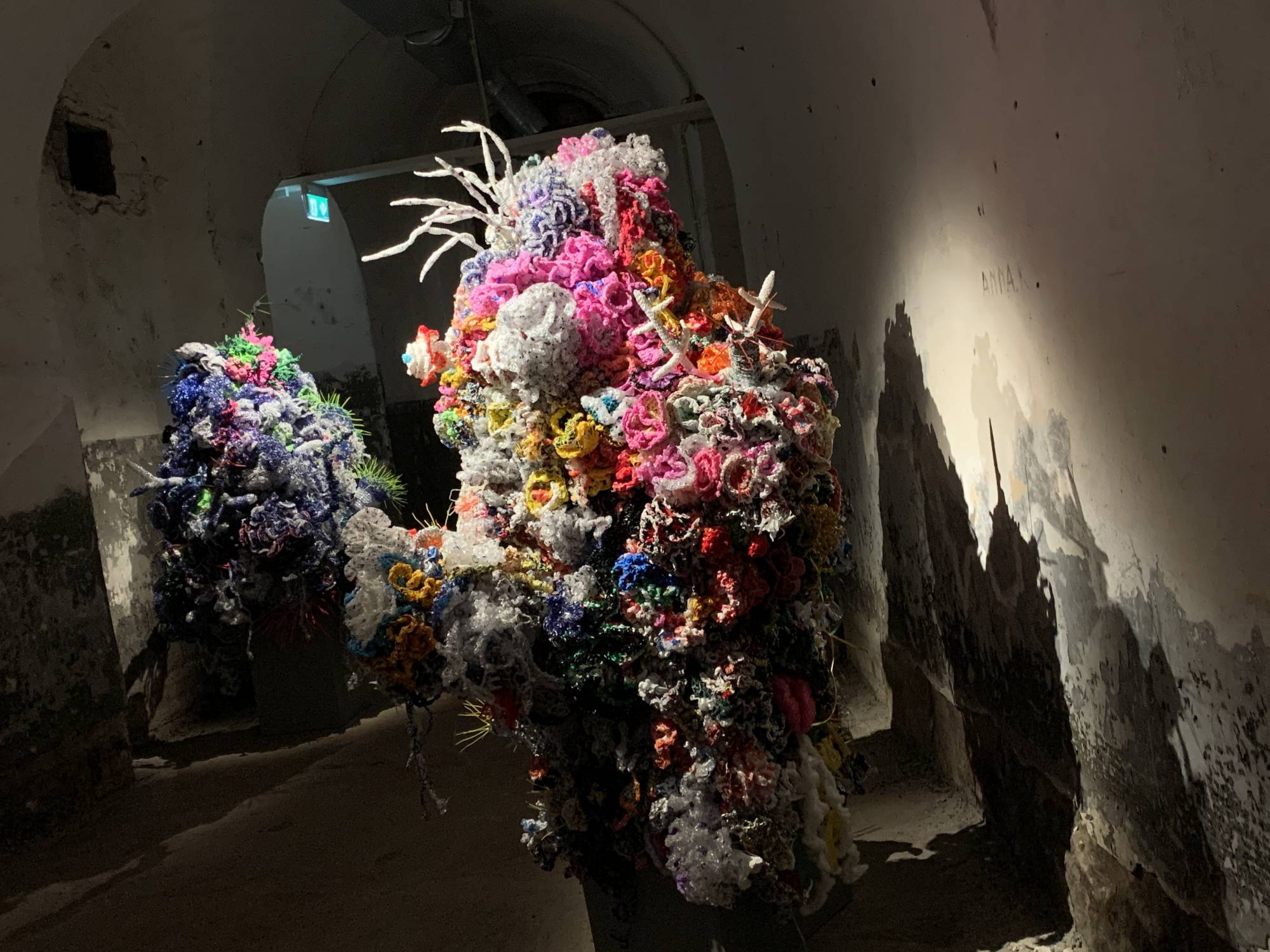
Coral Forest – Helsinki, crocheted from recycled plastic. A collaboration between Christine and Margaret Wertheim and the Helsinki Satellite Reefers, hosted by Helsink Art Museum and Helsinki Biennial 2021.

Remember my post on how crochet art was drawing attention to dying coral reefs? (See it here.) Well, after my friend Kristina told me about seeing some of the new additions to the crochet project, I decided to post a follow-up.

Siobhan Roberts reported at the New York Times in January, “Every year after the full moons in late October and November, Australia’s Great Barrier Reef begins its annual spawning — first the coral species inshore, where waters are warmer, then the offshore corals, the main event. Last year, this natural spectacle coincided with the woolly propagation of two new colonies of the Crochet Coral Reef, a long-running craft-science collaborative artwork now inhabiting the Schlossmuseum in Linz, Austria, and the Carnegie Museum of Art in Pittsburgh.

“To date, nearly 25,000 crocheters (‘reefers’) have created a worldwide archipelago of more than 50 reefs — both a paean to and a plea for these ecosystems, rainforests of the sea, which are threatened by climate change. The project also explores mathematical themes, since many living reef organisms biologically approximate the quirky curvature of hyperbolic geometry. …

“The surface of a sphere displays constant positive curvature; at all points, the surface bends inward toward itself. And a hyperbolic plane exhibits constant negative curvature; at all points, the surface curves away from itself. Reef life thrives on hyperbolism, so to speak; the curvy surface structure of coral maximizes nutrient intake, and nudibranchs propel through water with frilly flanges.

“In the artworks, marine morphologies are modeled — crocheted — with loopy verisimilitude. A bit like Monet’s water lilies, the crochet corals are abstract representations of nature, said Christine Wertheim, an artist and writer now retired from the California Institute of the Arts. Dr. Wertheim is the driving artistic force behind the project, which she created with Margaret Wertheim, her twin sister, a science writer who is in charge of scientific and mathematical components as well as management. …

“Crochet Coral Reef exhibitions typically have two main components: The Wertheims provide an anchor, of sorts, with works from their collection that they have crocheted over the years. They also incorporate pieces by select skilled international contributors. One is a ‘bleached reef,’ evoking corals stressed by increases in ocean temperature; another, a ‘coral forest’ made from yarn and plastic, laments the debris that pollutes reef systems.

“Then in response to an open call, volunteers far and wide crochet a pageant of individual specimens that agglomerate in a ‘satellite reef,’ staged by a local curatorial team with guidance from the Wertheims. … All contributors are credited.

“The largest satellite reef thus far coalesced in 2022 at the Museum Frieder Burda in Baden-Baden, Germany, with some 40,000 coral pieces by about 4,000 contributors. The Wertheims call this the Sistine Chapel of crochet reefs (documented in a splashy exhibition catalog). But the show at the Linz Schlossmuseum, which is dedicated to natural science as well as art and culture, is reminiscent of the work of the painter Giuseppe Arcimboldo, whose collage portraits from depictions of fruits, vegetables and flowers are ‘fantastically heterogeneous, also very funny and clever,’ Ms. Wertheim said.

“The Linz satellite reef unites some 30,000 pieces by 2,000 crocheters. The disparate parts take colorful inspiration from traditional Austrian ‘craftswomanship,’ as the exhibit text puts it, and there is a vast, glittery coral wall that gives a nod to the artist Gustav Klimt. In the Wertheims’ view, however, the crochet coral project is proof that it is not always lone geniuses who create great art, but also communities. In the art world, that is a radical idea, they noted, yet in science big collaborative projects and papers with thousands of authors are not unprecedented. …

“The mathematical dimension of the story intersects (from afar) with research by the applied mathematician Shankar Venkataramani and his students at the University of Arizona. They use idealized models to study hyperbolic surfaces in nature. [The] benefit, he said, is that it helps optimize processes like circulation and nutrient absorption. …

“When Margaret Wertheim, who studied math, physics and computer science at university, learned hyperbolic geometry, she found it ‘a bit bamboozling.’ She took the principles more on faith than understanding. Yet through crocheting models, she said, ‘you really do learn in a very deep way what a hyperbolic structure is, and in a way that I think is very powerfully pedagogical.’ “

More at the Times, here. Gorgeous photos.

See also Crochet Coral Reef, here. As the website notes, “Every crafter who contributes to the project is free to create new species of crochet reef organisms by changing the pattern of stitches or working with novel materials. Over time, a Darwinian landscape of wooly possibility has been brought into being. What started from simple seeds is now an ever-evolving, artifactual, hand-made ‘tree of life.’ “

Read Full Post »

Photo: Botanique Studios & Thomas Barzilay Freund.
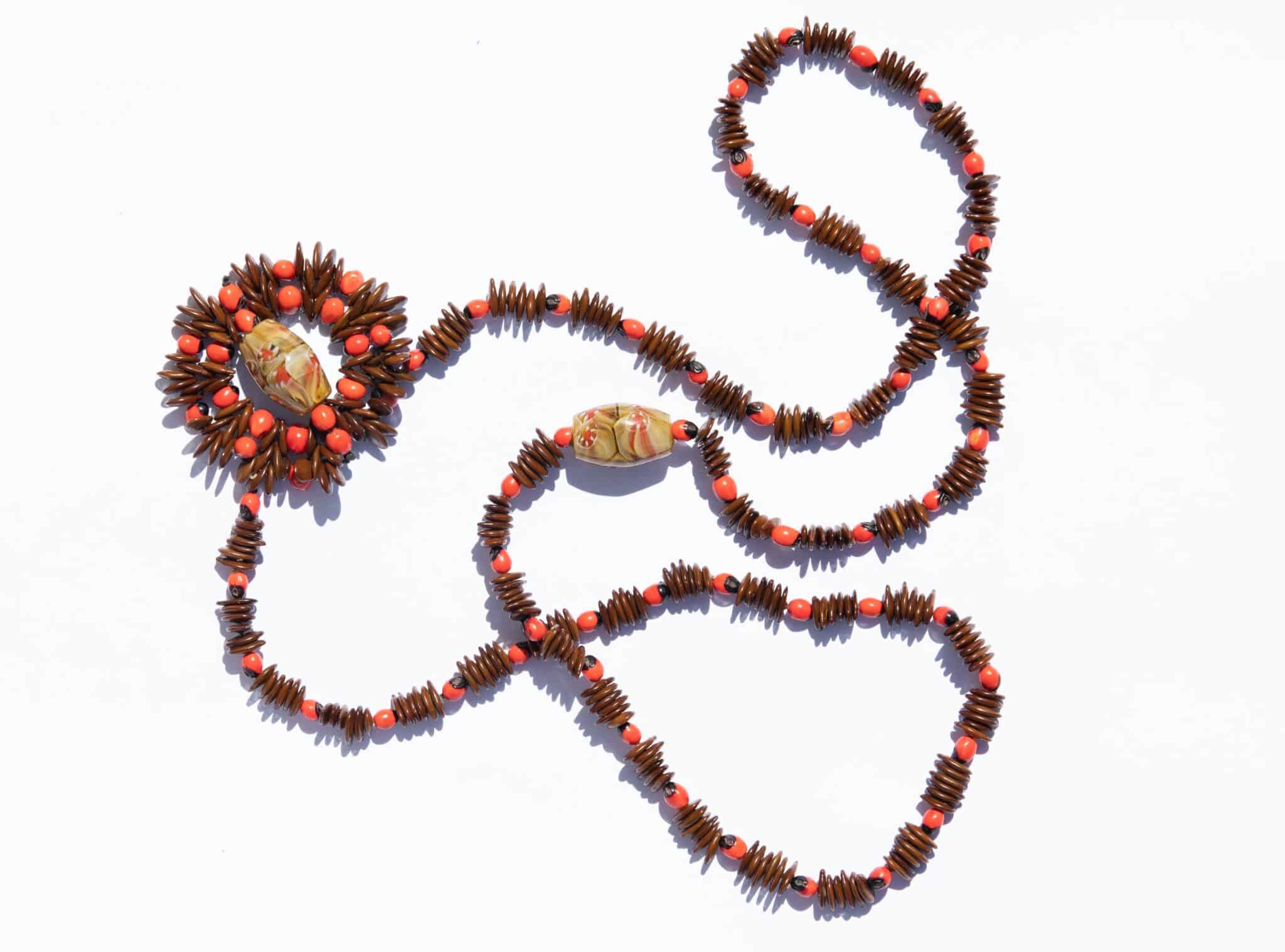
“Louise Edwards has been making jewelry from tamarind seeds for more than 50 years,” the Guardian reports.

Today’s story is bringing back memories. I’d completely forgotten that as a child I had a seed necklace like one of these. I have no idea where my mother got it. Maybe on my parents’ trip to St. Thomas. Did you ever see one?

Sarah Johnson writes at the Guardian, “For a little more than 50 years, Louise Edwards has been collecting tamarind seeds that grow wild on the Caribbean island of Antigua to create earrings, mats and belts.

“Edwards grew up surrounded by women stitching the seeds, but today she is one of only five remaining master artisans on the island, all in their 70s.

“ ‘It’s a dying art,’ she says. ‘We will soon give it up when we can’t see.’

“Practiced for centuries in the twin-island nation of Antigua and Barbuda, home to about 100,000 people, seed work began among enslaved African women forcibly brought to the islands and post emancipation it became a source of income. …

“Anne Jonas, secretary to the governor general of Antigua and Barbuda, with the help of Barbara Paca, the country’s cultural envoy, have applied for funding to expand free workshops to teach seed art.

“In 2017, Jonas founded Botaniqué Studios, dedicated to revitalizing the practice. ‘This is extremely transformative in terms of my appreciation for what we consider to be uniquely Antiguan and Barbudan heritage artisanship,’ says Jonas. …

“Seed work is laborious. Wild tamarind (Leucaena leucocephala) is one of the world’s 100 most invasive species; it grows everywhere, and collecting seeds causes no environmental damage.

“The seeds are boiled in sea water and kept moist, before being strung together by hand – Edwards has lost a number of fingernails during her career due to accidentally stabbing her finger with the needle. Once the seeds dry, they remain hard for decades.

“It takes Edwards an hour to make earrings, but more intricate pieces, such as placemats, can take a week. ‘The young ones don’t want to do it. They say it’s too much work and not enough money for the work they put into it,’ Edwards says.

“But the workshops are a start to renewing interest, says Jonas.

“Denise Walcott, 47, went to her first workshop in June with her 16-year-old daughter. ‘My daughter likes it, and I love it,’ she says. ‘The pieces are beautiful and the designs are so intricate. … This is an Antiguan culture and it should be a way of life for us. It is something that is empowering for us to use as an avenue to go along with our tourism industry.’ …

“As well as the Botaniqué website, Jonas showcases products on social media. Seed work featured as part of Antigua and Barbuda’s offering at the Venice Biennale, one of the world’s longest-running cultural festivals, and is on display at the Frank Walter exhibition at the Garden Museum in London.

“Michelle Donawa, another workshop attendee, learned seed art from her grandmother and is working on a book. ‘It’s something to preserve culture, as well as an educational tool,’ she says. …

“ ‘I think if young people see this, and how you can make something so beautiful that can [also bring in an income], they’d become very interested, especially if they are at home with nothing to do,’ says Walcott. ‘I really hope to see this being produced in Antigua on a larger scale, and exported.’ “

Folks, if you ever despair of humanity, think about how humans make art out of everything they see. More at the Guardian, here. No firewall.

And for a different kind of seed art, see my recent post on the Minnesota State Fair, here.

Photo: Thomas Barzilay Freund.
Botaniqué Studios
 Best of Both Worlds necklace. Style meets sustainability.

Read Full Post »

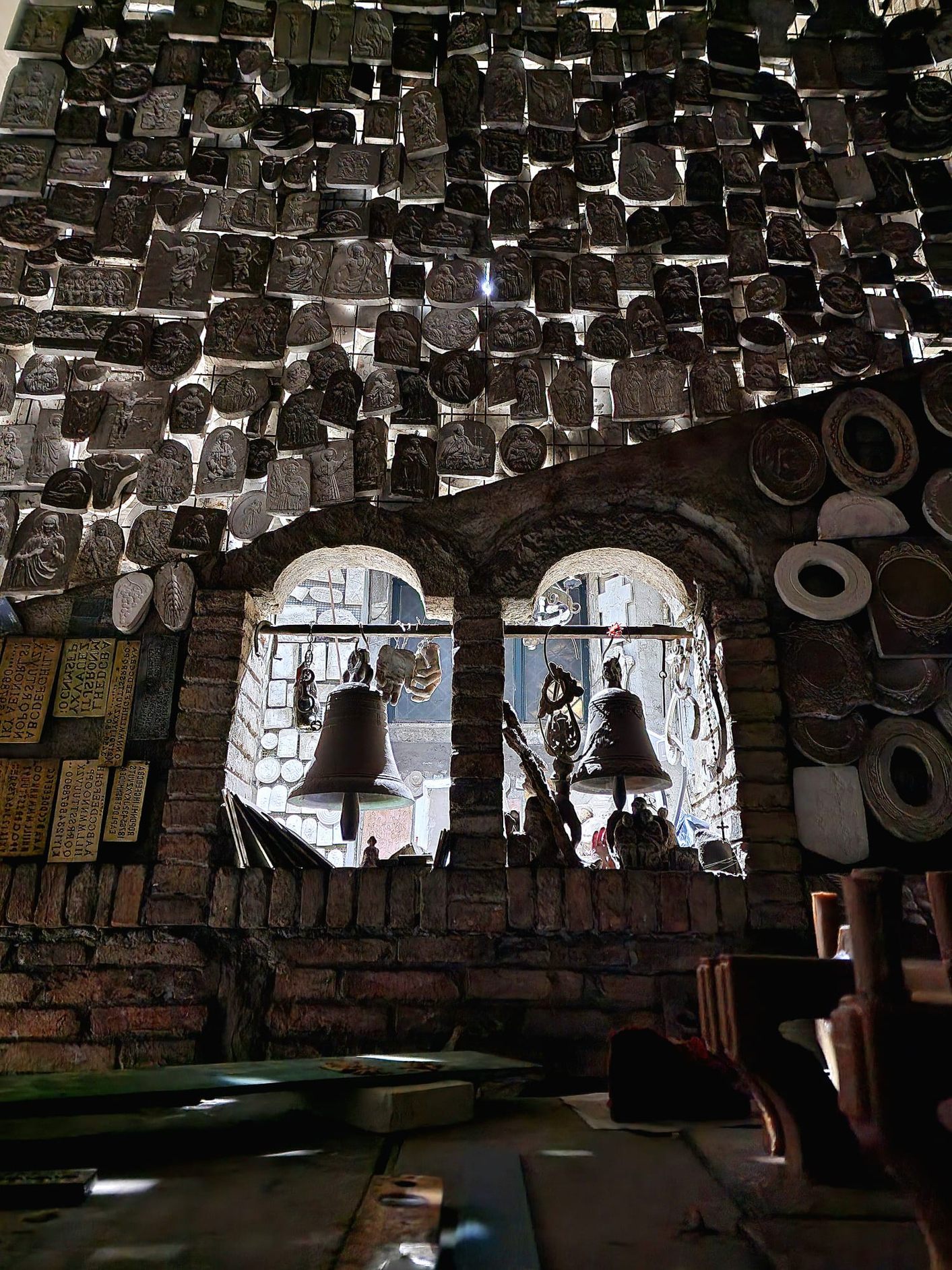
Photo: Pontifical Marinelli Bell Foundry.
One family has been making bronze bells for over 1,000 years in the Molise region of southern Italy. The bells can be seen in the Marinelli Bell Museum. 

My brother the business writer has made a study of companies in America with impressive longevity. For example, the Hollingsworths of Hollingsworth Vose were granted a patent to manufacture paper from manila fibers in 1843, but my brother says they go back to the time of George III.

Be that as it may, the Italian family in today’s story has been in business even longer.

Asia London Palomba writes at Atlas Obscura that Pasquale Marinelli is “a bell artisan in Italy. Pasquale and his brother Armando are the 26th generation of a family who has been crafting handmade bells since the middle ages. Pouring scalding-hot liquid metal into carefully designed molds, the two sweat over glowing embers, working with 10 centuries worth of knowledge in order to spread a medieval chime around the world.

“Naturally, such historical work is done in an ancient town called Agnone. Located in Italy’s isolated and rugged southern region of Molise, the quiet stone village lies squarely in a mountainous valley, where green hills roll into each other like waves and hay barrels freckle the land like drops of gold. It’s here, teetering at the top of a rocky outcrop, where you’ll find the two brothers working in the Pontifical Marinelli Bell Foundry, which, appropriately, is the oldest family-run business in Italy and among the oldest in the world.

“The Marinellis have been handcrafting bronze bells since at least the 11th century, although archaeological findings at nearby Benedictine monasteries suggest the Marinellis’ craft could date as far back as the 9th century.

“ ‘The same techniques and models, everything from A to Z, have been the same for the last 1,000 years,’ notes Armando. ‘Deviating from these methods that have been passed down throughout the generations means shutting the door on 1,000 years of history.’ …

“Their ancestor Nicodemo Marinelli, for whom they have historical documents … is documented to have been crafting bells in an era when the sonorous instrument had a greater, even primary role in society. ‘Bells were the first mass media. They heralded the salient moments of the day: to call people to work, for lunch, to return home from work. They were a way of telling time, of warning people,’ notes Pasquale.

“For almost its entire history, the foundry and its artisans were mobile, moving around to forge bells wherever there was demand. ‘We were like nomads,’ explains Armando, ‘living away from home for months alongside the tratturi, which were like the highways of antiquity.’ …

During World War II, Nazi troops seized many of the family’s historic bells and melted them down to create cannonballs.

“The brothers’ grandfather managed to bury some of the business’ most important bells underground, which were eventually recovered after the war, although Armando suspects there still may be a handful forgotten beneath the town’s earth. …

“A Marinelli bell is made with three cups stacked within each other — think of them as Russian nesting dolls. The first cup, called the ‘soul,’ is the internal part of the bell and is created by laying brick fragments upon each other and wrapping them together with iron string. This is slathered in a thick layer of clay, then wax, and then even more clay to create the second cup, named the ‘false bell,’ which will eventually be destroyed to make way for the bronze product. Smoldering coals are poured inside these two structures to bake the clay and melt the wax from the inside out.

“Hand-drawn wax molds are then cast onto the exterior of the false bell. ‘This is a very important step, because once its realized in bronze, it’ll live on for centuries in a church or a community,’ explains Armando. While almost everyone in the family partakes in the decoration process, this work falls primarily on Ettore Marinelli, Armando’s 31-year-old son and part of the 27th generation of artisans. Also a talented bronze sculptor, he works mainly in the artist’s hall. … ‘I was practically born in the foundry. I was already molding clay at the age of three,’ says Ettore.

“The soul and decorated false bell are then covered in more clay to create the third and final cup, called the ‘mantle.’ Once dry, the mantle, with the wax designs embossed into it, is lifted and the false bell is destroyed by hand with a hammer. A bronze alloy, spiced with a smattering of tin, is heated to 1,200 degrees Celsius (roughly 2,192 Fahrenheit) and poured into the bell mold, now consisting only of the mantle and the soul, while a priest blesses the process with a sprinkling of holy water. When the alloy hardens, the mantle is broken apart with a hammer to release the bronze bell, which is then polished until it shines.”

More at Atlas Obscura, here. No paywall. Lovely photos.

Read Full Post »

Habibi Bazaar

Photo: Bianca Velasquez.
A rug called “Evil Eye,” by Pamela El Gergi.

Today’s story about beautiful craft rugs is reminding me of a college friend who was really into interior decorating. As a hobby. She got so enthusiastic about Scandinavian rya rugs that she began designing and selling her own. Nowadays, when I’m supposed to be replacing rugs with floor coverings that older people won’t trip on, I’m wishing that I had bought one one of her ryas. I could at least hang it on the wall if I was afraid of tripping. Like other crafts, rugs can hold a lot of meaning.

Bianca Velasquez reports at Hyperallergic about Utah-based Lebanese American artist Pamela El Gergi who “modernizes traditional rug-making as a way to stay connected to her heritage.

“A sweeping reclamation of traditional craftsmanship is taking place around the world,” Velasquez says, “with artists forming communities around their uses of stained glass, jewelry, beading, and textiles. Seemingly unapproachable crafts (because of restricted access to supplies or apprenticeship), such as rug-making and stained glass, have benefited from modernized and simplified techniques and technologies that make practicing these trades more accessible, creating a surge of independent creators who work at their own pace and through their own lens. …

“Among the new voices is Lebanese rug maker Pamela El Gergi, who creates her works under her business name Habibi Bazaar.

“Having relocated to Salt Lake City, Utah, from Beirut, Lebanon, in 2018, El Gergi felt an urge to keep an open connection to her hometown, which she found through the traditional craft of rug-making. … ‘Habibi Bazaar uses my own personal style, which is Oriental rugs, evil eyes (Nazar), patterns that you would see in churches and mosques in Lebanon,’ she told Hyperallergic in an interview.

“And while she applies her voice and background to rug-making in the US, El Gergi creates a new dialogue within traditional rug-making in Lebanon. ‘I’ve taken these vintage, older styles of Oriental rugs, and now I’m trying to make them more centered around Lebanese culture,’ she said. ‘We don’t have much Lebanese representation within Oriental rugs.’ …

“After finalizing her design, El Gergi projects and traces the outline onto her canvas, then uses the tufting gun to apply the yarn accordingly. After applying the carpet glue and backing to the other side of the fabric, she moves on to the final step. ‘I spend hours on each rug, shaving it properly and carving out the designs (or “sculpting” the rug). I finish it all with vacuuming, lint rolling, and doing one last quality check,’ she said.

“El Gergi is currently working on a rug collection in collaboration with her peer Samantha Nader who has created seven Oriental designs based on El Gergi’s concepts. ‘What makes this collection significant to me is the specific flower that is included in the design. This flower is printed on Lebanese coffee cups, and when you drink Arabic coffee, the grounds are collected at the bottom,’ El Gergi said. ‘Then you flip the cup over, and you let the grounds fall along the sides. After letting it sit for five minutes, it reveals a pattern that tells your fortune.’ …

“El Gergi’s pieces tend to use this medium to shed light on her experience as a Lebanese woman, as well as pay homage to and honor the cultural symbolism that has been passed down through her family for generations. 

“Creating cultural ties between Lebanon and the US does not stop at rug-making for El Gergi. Habibi Bazaar also kicked off a pronoun shirt campaign in collaboration with Mexican artist Alethia Lunares, who designed the t-shirt graphic. … She produced three different shirts saying ‘She, Her, Habibi,’ ‘They, Them, Habibi,’ and ‘He, Him, Habibi.’ El Gergi’s decision to include the term ‘Habibi,’ which translates into a non-gendered way of saying ‘my love,’ allows her to incorporate a little bit of her culture into the campaign.

“This year, Habibi Bazaar has been accepted to the 14th Annual Craft Lake City DIY Festival Utah’s ‘largest local-centric art, music, science, and technology festival.’ Not only has she been accepted as a vendor, she was also chosen to be sponsored through the Craft Lake City Artisan Scholarship Mentor Program, allowing her to be mentored by a more tenured local business owner through the entire process of tabling at a large event. 

‘[Her booth] will include her rugs, pottery, stickers, wall hanging, mirrors, and more. … Most importantly, El Gergi hopes to continue finding contemporary ways to pass down traditional Lebanese crafts to future generations.”

More at Hyperallergic, here.

Read Full Post »

Piñatas as Art

Photo: Henry Gass/Christian Science Monitor.
Piñata sculptor Alfonso Hernandez in his garage studio in Dallas. He is one of a growing group of piñata makers hoping to transform the industry and get recognition for the piñata as an art form.

When you think of piñatas, what do you picture? Kids’ birthday parties? Long cudgels? Here’s an article about people who want you to know that piñatas can be a serious art form.

Henry Gass asks at the Christian Science Monitor, “Would you take a sledgehammer to the David? A flamethrower to the Mona Lisa? A shredder to the latest Banksy? (Actually, scratch that last one.)

“Why then, some people are beginning to ask, would you want to pulverize a piñata? Alfonso Hernandez, for one, wants you to lower the bat and take off the blindfold and appreciate the artistry of a form that dates back hundreds of years.

“The Dallas-based artist has crafted life-size piñata sculptures of Mexican singer Vicente Fernández and Jack Skellington from The Nightmare Before Christmas. He wants the public to help turn an industry into art.

“ ‘Piñata makers never treated it like an art form,’ he says. ‘They’re taught to make it fast. It doesn’t matter what it looks like, just hurry up because they’re going to break it.’

“Unsatisfied with the generic mass production that has characterized their discipline for decades, piñata makers are pushing the artistic limits of the party pieces. These piñatas, bigger and more detailed, are made out of wood, foam, wire, and clay, and sculpted to look like beloved icons and life-size low-riders. Some move, some are political, and some even talk. Rihanna is a fan, as are, increasingly, art galleries.

“For generations, the real cost of bargain piñatas has typically been borne by the piñata makers themselves working long, arduous hours for less than minimum wage. By proving that piñatas can be more than just clubbable party pieces, people like Mr. Hernandez hope they can both create art and bring a wider respect and dignity to a craft long viewed as cheap and disposable.

“ ‘It’s been an underappreciated art form,’ says Emily Zaiden, director and lead curator of the Craft in America Center in Los Angeles. ‘Piñatas are so accessible. They speak to everybody,’ she adds. But there’s also a flip side. Piñatas ‘can be about appropriation, can be about, I think, the trivialization of a cultural tradition.’

“A new generation of Hispanic artists, she continues, ‘see how much metaphorical potential piñatas have, and how deeply it reflects their identities.’ …

“There are lots of questions around where piñatas come from. They may have emerged in Europe, or China, or the Aztec era – or in all three independently. There are few preserved, written historical records on the origins of piñatas – another sign of how underappreciated the craft has been, Ms. Zaiden believes.

“ ‘A lot of this work probably hasn’t been collected or preserved in ways that other types of art have been,’ she says. ‘It’s all speculation and oral history really,’ she adds, ‘but that goes hand in hand with the idea that these are ephemeral objects.’

“For centuries, piñatas were used for religious ceremonies in Mexico. Typically built to resemble a seven-pointed star, symbolizing the seven deadly sins, they would decorate homes – and be smashed – during the Christmas season.

“Their religious significance faded over time, and they became the popular children’s birthday party feature. But as the piñata industry commercialized, quality and craftsmanship became secondary to quantity.

“Yesenia Prieto grew up in that world. A third-generation piñata maker, she watched her mother and grandmother create in her grandmother’s house in south central Los Angeles, and when she was 19 she started helping herself. It was a constant struggle to survive, she says.

“ ‘I was tired of seeing how poor we were,’ she adds. ‘My grandma was about to lose her house. And we just needed to make more money. We needed to survive.’

“She describes a week in the life of a typical piñata maker. A four-person crew makes about 60 units out of paper, water, and glue a week. Selling wholesale, they make $600 and split it between the four of them. That’s about $150 for a full week of work. …

“ ‘What you’re seeing is an art form having to be mass produced and rushed because they’re getting sweatshop wages,’ she adds. …

“In 2012, Ms. Prieto went independent from her family, and independent from the mainstream piñata industry. She founded Piñata Design Studio and set to making custom, complex pieces that reflect the artistic potential of the craft.

“They’ve created pterodactyls and stormtroopers. They’ve made a giant Nike sneaker, and an 8-foot-tall donkey for the 2019 Coachella music festival. They made a piñata of singer Rihanna for her birthday. …

“But the need to hustle hasn’t abated, according to Ms. Prieto. They work longer on their piñatas than most makers do – up to 16 hours in some cases – but still struggle to sell them for more than $1 an hour. They’ve been leveraging the internet and social media – posting pictures of pieces as they’re being made, to illustrate the labor that’s involved – and they’re slowly raising their price point. …

“She’s also now reaching out to other piñata makers about forming a co-op. By working together, she hopes, piñata makers can get paid fairly, at least. Artistic quality could also improve. And as people see elaborate, custom piñatas more often, she believes, demand will grow, and pay will grow with it. …

“ ‘There is a shift taking place,’ she adds. She’s seeing piñatas in galleries more often. But ‘there’s [still] a need for us to push hard to survive.’ ”

More at the Monitor, here.

Read Full Post »

Older Posts »