Feeds:
Posts
Comments

Posts Tagged ‘dinosaur’

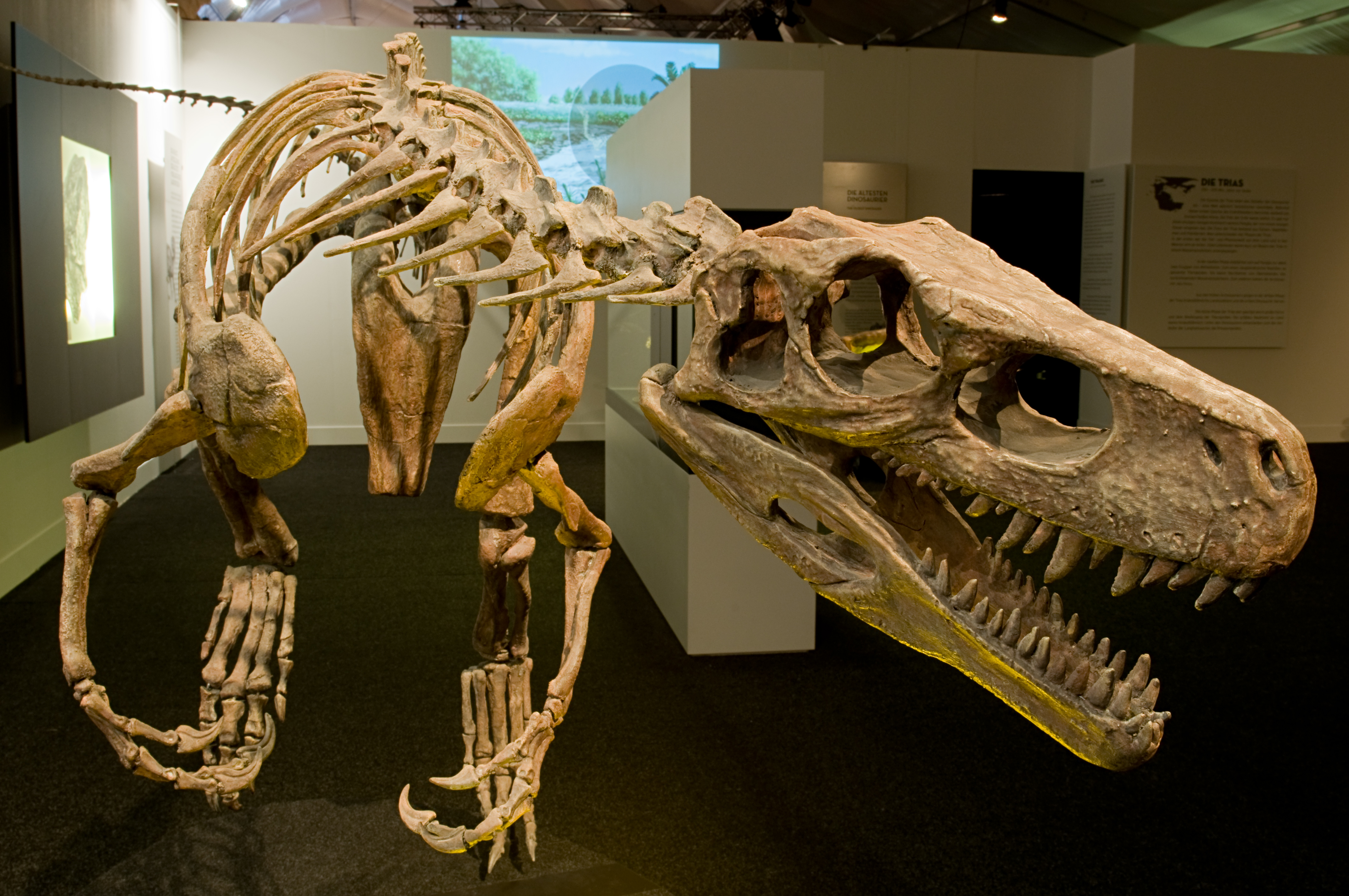
Photo: Eva K. via Wikimedia.
Herrerasaurus skeleton replica at a special exhibition of the Naturmuseum Senckenberg in Frankfurt am Main, the largest museum of natural history in Germany.

As we take in the horrendous flooding of two major hurricanes in the US this month, it’s hard to imagine that heavy rains and floods ever do anything beneficial. But last May in Brazil they added to human knowledge of dinosaurs, and that could be useful.

Eléonore Hughes wrote at the Associated Press, “A team of Brazilian scientists has discovered a fossilized skeleton of what they believe is one of the world’s oldest dinosaurs after heavy rains in the southern state of Rio Grande do Sul accelerated the natural process of erosion.

“The fossil found next to a reservoir in the municipality of Sao Joao do Polesine is [the oldest yet] according to paleontologist Rodrigo Temp Müller, who led the team from the Federal University of Santa Maria that found the bones in May. The claims have not been verified by other scientists or published in a scientific journal [as of this writing].

“The researcher believes the dinosaur lived during the Triassic period, when all continents were part of a single land mass called Pangaea. Dinosaurs are thought to have first evolved at that time.

“The apex predator discovered in Rio Grande do Sul belongs to the group known as Herrerasauridae — a family of dinosaurs that used to wander across lands that now make up present-day Brazil and Argentina, according to a fact sheet about the discovery shared with the Associated Press.

“The size of the bones reveals that the dinosaur would have reached around 2.5 meters (8.2 feet) in length, according to the document. …

‘Initially it seemed like just a few isolated bones, but as we exposed the material, we were able to see that we had an almost complete skeleton,’ Müller said. …

“Researchers will now try to determine whether the fossil belongs to an already known species or a new kind. That work is expected to take several months, as the process is meticulous to ensure no damaged is caused.

“Fossils are more likely to appear after rains, as water exposes the materials by removing the sediment that covers them, in a phenomenon known as weathering.

“Rio Grande do Sul saw record amounts of rainfall earlier this year. That caused devastating floods in May that killed at least 182 people, according to a toll published by the state’s civil defense on July 8. …

“Müller said that more fossils are appearing because of the heavy rains, which has launched a race against time to rescue the materials before they are ruined.

“In the field, his team observed ‘a leg bone and a pelvis bone in the pelvic region that were already being destroyed due to the rain,’ he said.”

More at APNews, here. If you’re keen on dinosaurs, check out the paleontologist’s diary of the excavation, here.
Read Full Post »

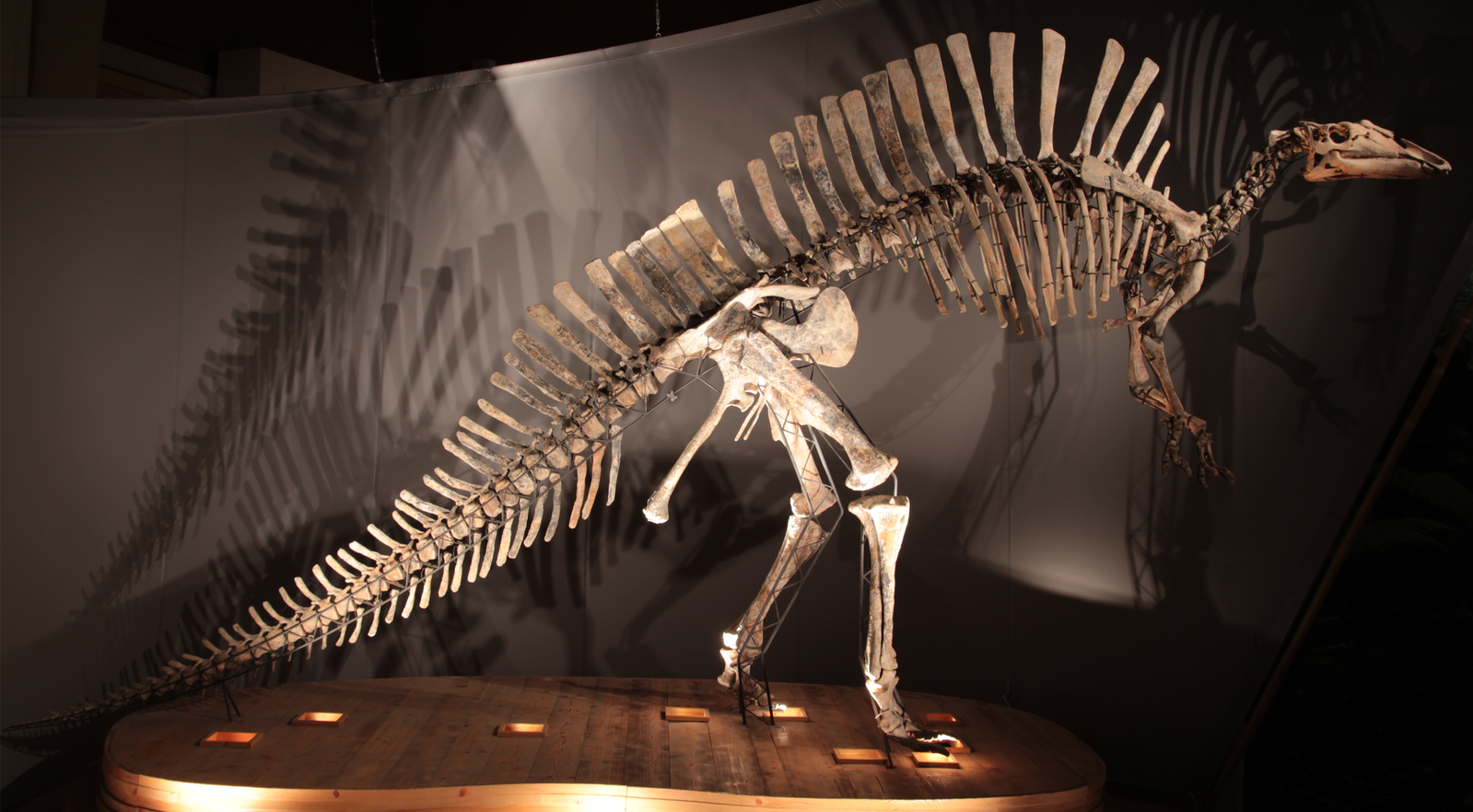
Photo: Filippo Bertozzo​​, Fabio Marco Dalla Vecchia​, Matteo Fabbri via Wikimedia Commons.
Ouranosaurus bones are among the many wonders found in Niger. For scale, the right femur is about a yard long.

Niger turns out to be a treasure trove for paleontology and archaeology, and as Nick Roll reports at the Christian Science Monitor, the country is working to develop enough local experts to deal with the riches. It’s not so farfetched in a place where nomads are already texting researchers about archaeological finds.

“Goats, cows, and pedestrians wander by the two unassuming shipping containers along a street in Niger’s riverside capital without a second thought. But inside lie nearly 50 tons of dinosaur bones wrapped in plaster – potentially some of the most significant paleontological finds this landlocked West African country, and even the continent, has ever known.

“There are fossils from perhaps as many as 100 different species, some of them from ancient animals never seen before. 

“ ‘Small animals, mammals, flying reptiles, turtles’ as well as a 40-foot crocodile and ‘a dozen large dinosaurs that are new, including huge 60-footers, says American paleontologist Paul Sereno.

“Getting them to the capital was years in the making – and their journey isn’t over. The initial discoveries were made in 2018 and 2019, in the vast expanse of the Sahara Desert. It would take time and funding for a proper dig, though, so the paleontologists covered them up and buried them, hoping the winds wouldn’t expose them to curious nomads or dangerous smugglers. 

“Then COVID-19 hit, shutting everything down until finally, last fall, Professor Sereno could return to unearth the fossils again.  

“ ‘Niger is going to tell Africa’s story during the dinosaur era,’ he says. …

“The bones, soon to be shipped to Dr. Sereno’s lab at the University of Chicago for research, represent paleontology’s latest win against the harsh desert environment of Niger, which is home not only to fossils but also to soaring temperatures, shifting dunes, and various armed groups.

“But Chicago won’t be the bones’ final resting place. The fossils are earmarked to be eventually returned to Niger, where the kernels of a formal paleontology sector are being planted in a country that contains some of the richest paleontological finds in Africa but boasts no paleontologists of its own, or even academic programs dedicated to the field. 

“ ‘Each time, we see that we find new dinosaurs, new fossils that permit us to say that the soil is rich – unlike other countries, and other continents,’ says Boubé Adamou, an archaeologist at the Institute for Research in Human Sciences who, as one of Niger’s foremost experts on excavations, helped lead this most recent expedition. …

“In a convoy speeding through the desert last fall, the team of about 20 found themselves massively outnumbered by scores of armed men riding in machine gun-mounted trucks. Those were just their guards, determined to keep this modern-day Saharan caravan safe from smugglers or bandits roving the dunes. …

“The team, composed of researchers and students from the United States, Niger, and Europe, went to three dig sites over three months. By the time they finished in December, they had unearthed everything from an Ouranosaurus with a 25-foot-long, bony ‘sail’ across the length of its back to the 6-foot thigh bone of a long-necked sauropod. …

“The vast expanses of Niger were [once] anything but dry, as rivers, wetlands, and lakes stretched across what researchers called the Green Sahara, home at one point to dinosaurs, and later, ancient human civilizations with embalming techniques that predate the Egyptians – relics of which were also found on the fall expedition. …

“It’s easy to see why Niger remains off the beaten path for paleontologists, despite its riches. As one of the poorest nations on Earth, it combines rough infrastructure with harsh desert conditions.

“But even if the Green Sahara is a thing of the past, the desert today is anything but desolate. Local nomads who’ve long mastered the difficult terrain have become key to conducting paleontology there, spotting bones and leading expeditions through otherwise unnavigable desert expanses. While the pandemic held Dr. Sereno’s team at bay, nomads kept a watchful eye on the carefully buried treasures, texting him updates. …

“Niger Heritage is a project drawn up by Dr. Sereno, Mr. Adamou, and coterie of international and Nigerien researchers and government officials. It envisions two museums [with] the capacity to not just display the fossils but also, for the first time, conduct homegrown research. …

“Niger’s first paleontologists, it is hoped, might be in undergraduate courses right now. With the right guidance and funding – to do Ph.D. programs outside the country – they could start correcting the lopsided nature of paleontology, where resources and opportunities are concentrated in rich countries.”

More at the Monitor, here. No firewall. Subscriptions encouraged.

Read Full Post »

Photo: Tadek Kurpaski.
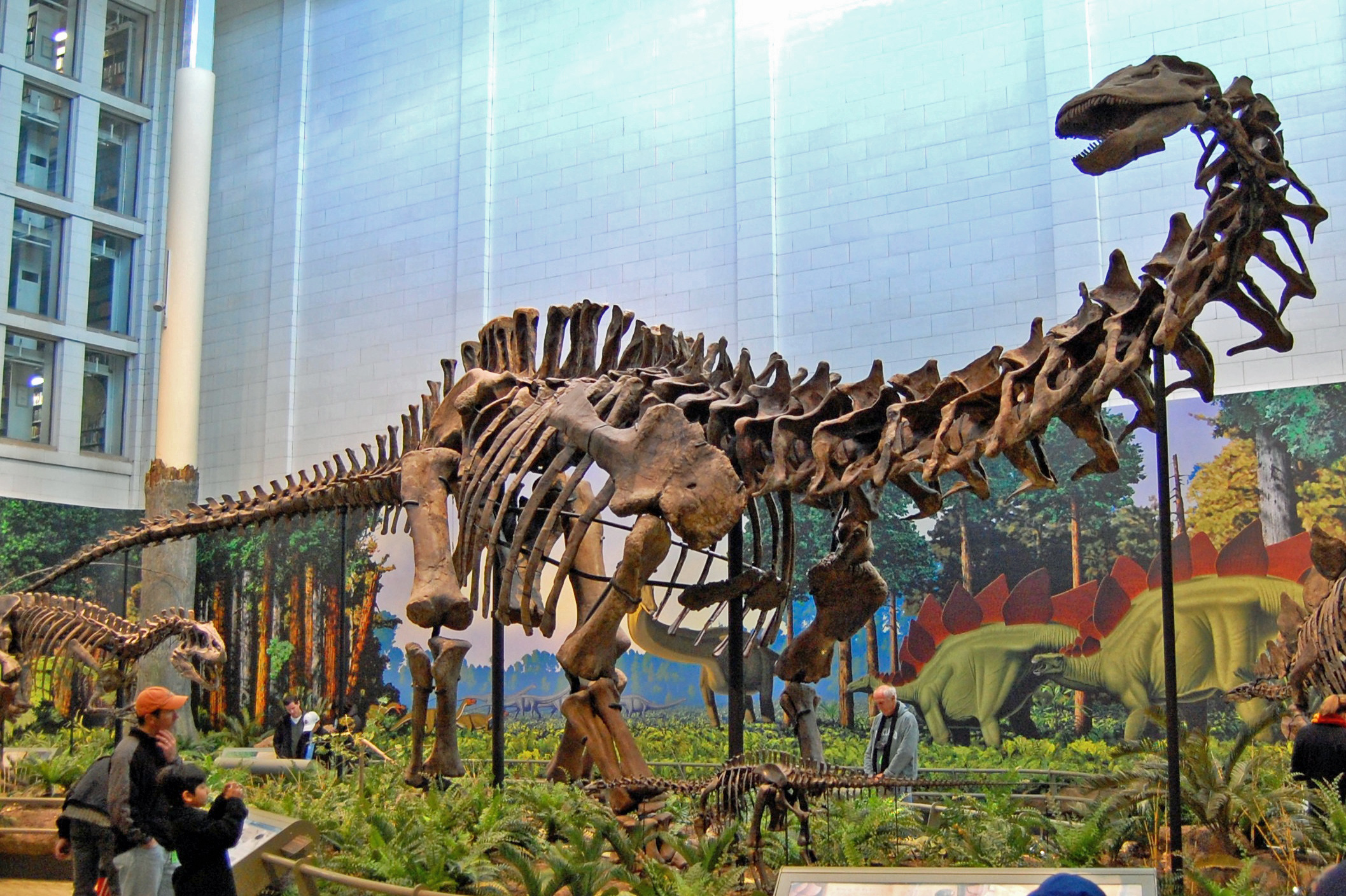
A sauropod at the Carnegie Museum in Pittsburgh, Pennsylvania.

Who doesn’t love a dinosaur — at least, now that dinosaurs are extinct? Wouldn’t it be fun to discover evidence of one like the people in today’s story? At the Washington Post, Dave Kindy reports that In recent years, a number of major dinosaur finds have occurred by happenstance.

“A diner sitting in the outdoor courtyard of a small restaurant in China’s Sichuan province happened to look down at the ground and spot something unusual. It appeared to be a dinosaur footprint.

“[In July], Chinese paleontologists confirmed that the diner was right. The depressions had in fact been left by two dinosaurs. …

“Using a 3D scanner, scientists determined that the tracks were made by sauropods — large herbivorous dinosaurs with long necks and four legs. According to Lida Xing, a paleontologist at China University of Geosciences who led the team investigating the site, these footprints were probably made by the species Titanosauriformes. The footprints are about 22 inches long on average, and the dinosaurs probably measured about 26 feet long and weighed more than 2,000 pounds, Xing told the Washington Post.

“While not an everyday occurrence, the discovery of dinosaur footprints happens on occasion in China — just not in urban environments.

“ ‘Sauropod tracks are not rare in Sichuan Basin … but they are very [rarely] found in restaurants in downtown,’ Xing said in an email. …

“But this wasn’t the first accidental discovery of dinosaur remnants in recent years. Take, for example, the case of Mark McMenamin, who was walking across the campus of the University of Massachusetts at Amherst last year. He and his wife collected stones at a construction site, then later noticed one of them appeared to be a fossil. It was, in fact, the elbow bone of a 30-foot-long predatory dinosaur known as a neotheropod. …

“Then there was the discovery of a well-preserved dinosaur ‘corpse,’ unearthed by miners in Canada. While excavating at the Suncor Millennium Mine in Alberta in 2011, they stumbled upon the fossilized remains of a Nodosaurus, a heavily armored creature. … Displayed for the first time in 2017, it is considered one of the best-preserved dinosaur fossils ever found.

So complete are the remains that scientists at the Royal Tyrrell Museum in Alberta were able to examine the contents of its stomach, including twigs, leaves, mosses, pollen and spores.

“Last year, archaeologist Marie Woods was looking for clams on the beach in Yorkshire, England, when she spotted something unusual: the [footprint] of a species of theropod. A dinosaur similar to a Tyrannosaurus rex, this ancient reptile also stood on two legs and was carnivorous. It was the largest footprint of its kind ever found in that part of England, reported the Good News Network. …

“In 2011, paleontologists in China encountered a big rock with a fish fossil on the surface. They hauled it back to the lab, where it sat for about a year, according to New Scientist. Then the researchers decided to crack it open.

“To their amazement, they discovered inside the remains of a mother ichthyosaur [giving] birth to three babies. One was already out of the womb, another was halfway out, and the third was waiting for its chance.

“This fossil find altered the view of when dinosaurs began having live births. … Ichthyosaurs, which evolved from land-based creatures, proved that dinosaurs had moved on from egg-laying much earlier than previously believed.

“ ‘This land-style of giving birth is only possible if they inherited it from their land ancestors,’ one of the researchers told Live Science. ‘They wouldn’t do it if live birth evolved in water.’

“Back at the restaurant in Sichuan province, [the] owner was anxious that news of the primordial find would impact her business serving homestyle meals based on local cuisine. However, she has since embraced the media hype.

“ ‘She was initially concerned that she would attract a lot of curious people and affect the restaurant’s traditional customers,’ Xing wrote. ‘But now she understands the change and is ready to roll out some dinosaur track-themed treats.’ ”

I love the names of dinosaurs and how children can recite many of them at a very young age — their first introduction to ancient Greek. When John was five, he would chant dinosaur names to baby Suzanne to make her laugh. She thought they sounded funny.

More at the Post, here.

Read Full Post »

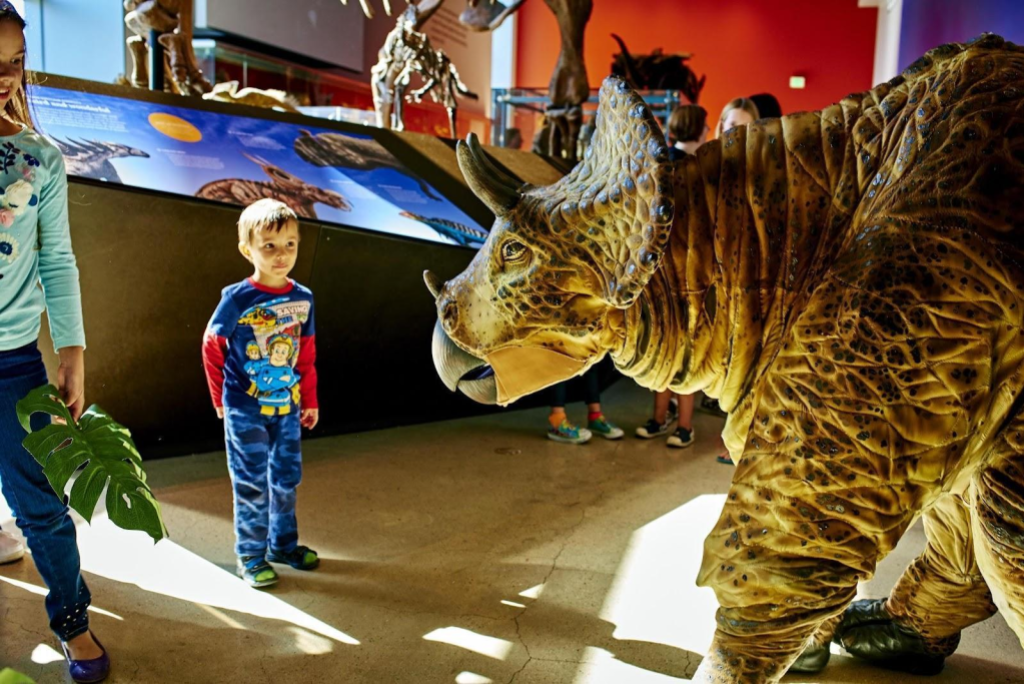
Photo: American Alliance of Museums.
A young visitor is captivated by Dakota, Natural History Museum of Los Angeles County’s full-suit Triceratops puppet.

When Suzanne was a few months old, John was learning about dinosaurs, and we got into a kind of chanting routine reeling off all the fancy names we knew. Baby Suzanne seemed to think they were hilarious. If she was fussy, dinosaur names would distract her and make her laugh.

Dinosaurs and their names have always enchanted small children. To up the enchantment, a museum in Los Angeles has begun experimenting with bringing dinosaurs to life. Sort of.

Ilana Gustafson writes at the American Alliance of Museums blog, “The anticipation of an imminent transformative journey is palpable in the diorama hall at the Natural History Museum of Los Angeles County (NHMLAC), where a Dinosaur Encounter is about to begin.

“During the show, the audience cheers as a young guest, decked out in a bedazzled dinosaur shirt, is called onstage to feed the juvenile Triceratops known as Dakota. … The audience falls into a quiet anticipation as Dakota’s feet shuffle impatiently, her beak opening and closing, indicating that she’s hungry. The child onstage gets closer to the dinosaur, leaf in hand, and reaches their arm out nervously toward her beak. Slowly Dakota approaches. …

“Dakota opens her mouth and suddenly clamps it closed with the leaf in its clutches and excitedly wiggles her tail. The audience cheers as the child onstage, grinning from ear to ear, watches a dinosaur playfully eat a leaf right at their feet. The host of the show thanks the young visitor. …

“The full-suit Triceratops puppet, created by the fabulous puppeteers at Erth, is made of aluminum and plastic boning, foam, and lycra painted with acrylic, and contains an internal speaker and other mechanisms. Inside is a puppeteer … holding the sixty-five pounds of the weight of the puppet on their back, using largely their shoulders and core strength to maneuver it. Many technical elements need to come together to bring the dinosaur to life, but when they all unify in a performance, the audience forgets to focus on the mechanisms at work. …

“This act of relating to the characters on stage is another thing that make theater so powerful. In a study published in the Journal of Experimental Social Psychology, researchers discovered that watching theater can lead to increased empathy, the ability to understand the feelings of others. … I would make the argument that this empathy toward the dinosaur increases intellectual curiosity about these creatures, paleontology, and other related studies. …

“The father of a dedicated fan shared with us in an email the love his son had developed for our puppet, and in turn for the Natural History Museum.

‘Lev didn’t just watch T-Rex and Triceratops. Lev became T-Rex and Triceratops. After each show, Lev would show us his improvisational reproduction of the show we had just watched. He insisted upon silence while he delivered his performance, mirroring and perfectly mimicking the T-Rex right down to lifting his legs, bending over with retracted arms, and delivering his ferocious ‘roar’ while bobbing his head back and forth seeking his prey.’ …

“The designs of the full-suit Triceratops and T. rex puppets were informed by the museum’s paleontologists, including Dr. Luis Chiappe, Senior VP of Research and Collections, who advised the fabricators on how best to merge entertainment with science. The physical characteristics of our juvenile Triceratops and T. rex puppets were based on our paleontological collections and research. The museum’s scientists were keen to have some of the current research on dinosaurs reflected in these creatures. After a performance with our T. rex puppet, known as Hunter, we often get the question from a visitor (young and adult alike), ‘What’s that fluffy stuff all over his body?’ This opens up a conversation about proto-feathers, and how scientists have been able to make the connection between theropod dinosaurs and modern-day birds. …

“The experts at NHMLAC see the value these puppets have in garnering interest and support for their research. Dr. Nathan Smith, Curator at NHMLAC’s Dinosaur Institute, says … ‘The puppets are a truly unique way where we can envision these species as living animals, but also allow visitors to interact with them.’ “

More at the American Alliance of Museums blog, here. If you missed the giant puppet at the San Diego Zoo, you can read about it here. And here‘s a post from last fall on the one that strode across Europe.

Read Full Post »

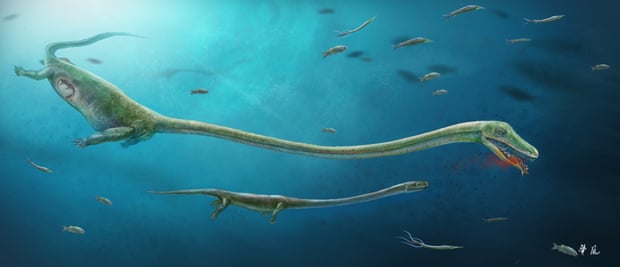
Photo: Dinghua Yang/AFP/Getty Images
This pregnant Dinocephalosaurus, a long-necked marine reptile, didn’t lay eggs but instead gave birth to live young 245m years ago.

After uncovering new evidence, surprised scientists are revising a long-held understanding of the pre-dinosaur Dinocephalosaurus.

According to a Reuters story at the Guardian, “An extraordinary fossil unearthed in southwestern China shows a pregnant long-necked marine reptile that lived millions of years before the dinosaurs with its developing embryo, indicating the creature gave birth to live babies rather than laying eggs.

“Scientists said [in February that] the fossil of the unusual fish-eating reptile called Dinocephalosaurus, which lived about 245m years ago during the Triassic Period, changes the understanding of the evolution of vertebrate reproductive systems.

“Mammals and some reptiles including certain snakes and lizards are viviparous, meaning they give birth to live young.

“Dinocephalosaurus is the first member of a broad vertebrate group called archosauromorphs that includes birds, crocodilians, dinosaurs and extinct flying reptiles known as pterosaurs known to give birth this way, paleontologist Jun Liu of China’s Hefei University of Technology said. …

“ ‘I think you’d be amazed to see it, with its tiny head and long snaky neck,’ said University of Bristol paleontologist Mike Benton, who also participated in the research published in the journal Nature Communications.

“Its body plan was similar to plesiosaurs, long-necked marine reptiles akin to Scotland’s mythical Loch Ness Monster that thrived later during the dinosaur age, though they were not closely related.

“Not laying eggs provided advantages to Dinocephalosaurus, the researchers said. It indicated the creature was fully marine, not having to leave the ocean to lay eggs on land like sea turtles, exposing the eggs or hatchlings to land predators.” More here.

I admire scientists for continuously revisiting accepted wisdom when they find new data. The only complaint I have about the story concerns the Loch Ness Monster, an old friend of mine. Should one really call it mythical? Perhaps the data just haven’t floated to the surface yet.

Read Full Post »