Feeds:
Posts
Comments

Posts Tagged ‘dream’

Photo: David Matos via Unsplash.

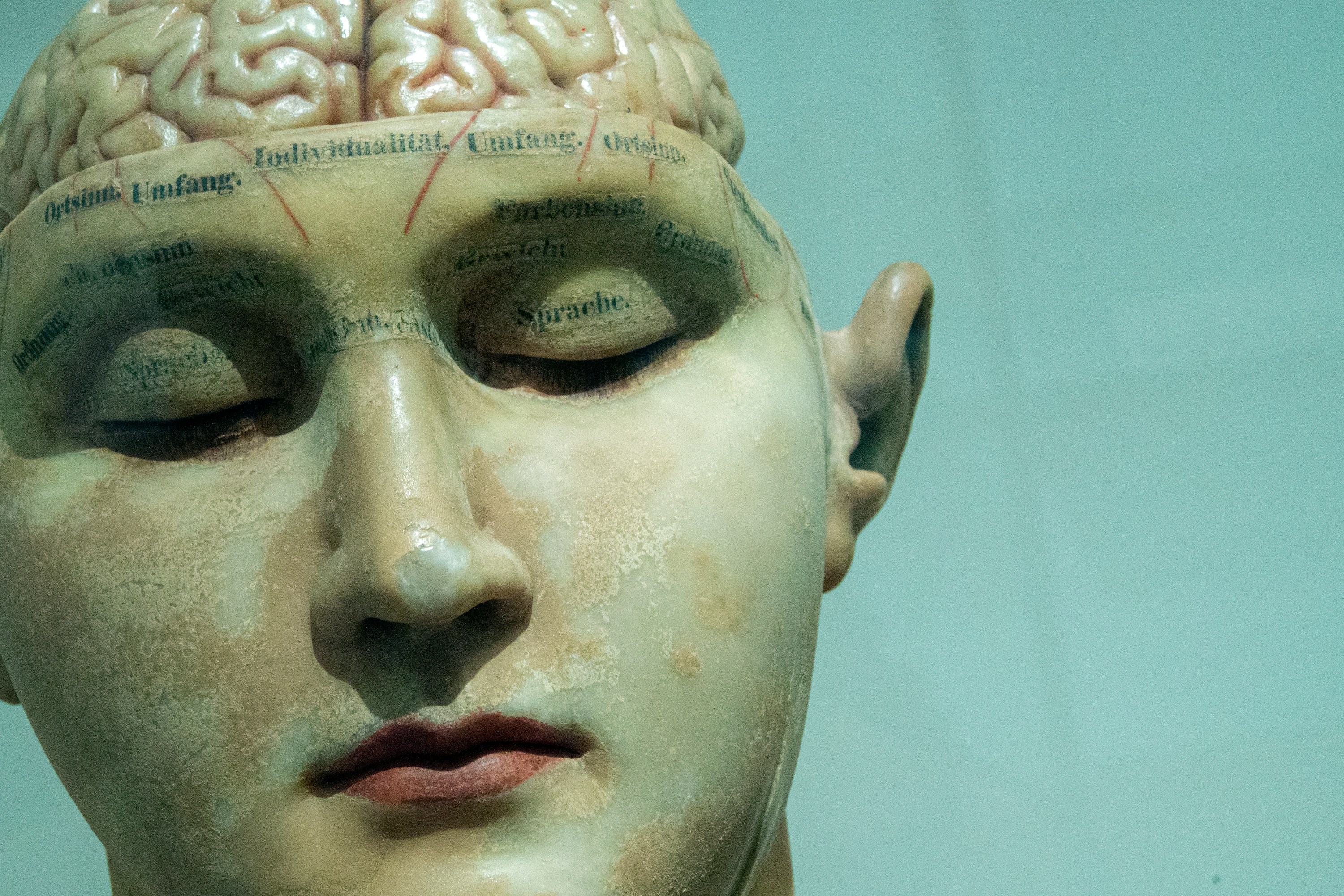
I take naps pretty regularly. Not just because I am tired but because my brain needs a rest. And I’m a big believer in letting the sleeping, unconscious brain sort out things that have me going around in circles when awake. That’s why I was impressed with the presidential candidate who wanted to “sleep on it” before choosing a running mate. To me, that was really smart. Often when you “sleep on it,” vibes you have unconsciously picked up when awake become more clear to you.

Now let’s look at some research on letting your brain take rests.

Jamie Friedlander Serrano writes at the Washington Post, “Downtime is a necessary part of life. Science shows it helps us to be healthier, more focused, more productive and more creative. Yet, somehow, we often lose sight of this.

“ ‘Downtime is important for our health and our body, but also for our minds,’ says Elissa Epel, a professor in the psychiatry department at the School of Medicine at the University of California at San Francisco.

“Epel and others acknowledge that many of us feel as though we’re wasting time if we aren’t getting things done, but research points to the costs of always being ‘on’ and the importance of giving our brains a break. Our brains aren’t built to handle constant activity.

“Even the briefest moments of idle time, or pauses, are important, says Robert Poynton, author of Do Pause: You Are Not a To-Do List.

“Short pauses — whether you take a few breaths before entering a room or walk through the woods for 10 minutes — can lead to necessary self-reflection.

“ ‘I think we feel that we need to be getting on with things,’ says Poynton, who is an associate fellow at the University of Oxford in England. But ‘if we’re always getting on with things, we haven’t taken any time to decide or examine whether what we’re getting on with is the most interesting, important, fruitful, delightful, pleasurable or healthy thing.’ …

“Well-established research has shown that low-level daily stress can create such intense wear and tear on our body’s physiological systems that we see accelerated aging in our cells, says Epel, who co-wrote the book The Telomere Effect. Epel added: ‘Mindfulness-based interventions can slow biological aging by interrupting chronic stress, giving us freedom to deal with difficult situations without the wear and tear — and giving our bodies a break.’ …

“One small study published in the journal Cognition found that those who took short breaks had better focus on a task when compared with those who didn’t take a break. [And a 2022 meta-analysis published in the journal PLOS One looked at how ‘micro-breaks’ can affect well-being. The review found that breaks as short as 10 minutes can boost vigor and reduce fatigue. …

“In 2021, when many Americans were working remotely all the time, Microsoft conducted a study that followed two groups of people: The first had back-to-back Zoom meetings, and the other group took 10-minute meditation breaks between meetings. Microsoft monitored brain activity of 14 participants in the study using an electroencephalogram (EEG).

“In the first group, ‘what you see is a brain that’s filled with cortisol and adrenaline,’ says Celeste Headlee, a journalist and author of Do Nothing: How to Break Away From Overworking, Overdoing, and Underliving. ‘It’s tired, it’s stressed, it’s probably more irritable, and it’s probably less compassionate.’ The other group? ‘You can see in brilliant color what a difference [the breaks] make,’ she says. ‘Those are brains that are relaxed.’ …

“New research has begun showing the negative effects our cellphones can have on our health. Smartphone addiction (which [James Danckert, a professor of cognitive neuroscience at the University of Waterloo in Ontario, Canada, and co-author of Out of My Skull: The Psychology of Boredom] says afflicts 4 to 8 percent of people) is becoming increasingly common worldwide.

“It has been linked to physical health problems, such as digital eyestrain and cervical disc degeneration, as well as anxiety and depression. Some recent research also suggests it can affect the structure of our brains: Two studies found smartphone addiction was correlated with lower white matter integrity and lower gray matter volume in the brain. …

“Most Americans think of downtime as something that is extra or indulgent — a treat that has to be earned only after we’ve done all of our productive tasks, says Amber Childs, a psychologist and associate professor at Yale School of Medicine’s Department of Psychiatry. But research would suggest the opposite: Downtime is a basic human need.”

More at the Post, here.

Read Full Post »

As readers know from my post on Shagufa Habibi, I am one of a group of people who believe in this young Afghan immigrant and her dream to end child marriages, first by gaining relevant skills. It doesn’t matter that the dream seems impossibly big. After all, when people believe in you, big things do happen. Young Greta Thunberg may not have ended global warming, but you know she won’t stop until there are serious changes.

Today’s story is about a young man from a poor family in Lake Charles, Louisiana, who had people who believed in him.

As Kellie B. Gormly wrote at the Washington Post, “Russell J. Ledet spent four years patrolling the doctors’ parking lot at Baton Rouge General Medical Center, where, as a security guard, he watched people in white coats come and go from the building. He fantasized about what his life could be.

“In a moment of bravery one day, Ledet was walking with a doctor and asked: ‘Hey, do you think I could shadow you?’ To Ledet’s surprise, the doctor, a surgical resident, replied: ‘Yeah, why not?’ Ledet recalled.

“Whenever Ledet had free time over the next several months, he was in the operating room and visiting patients with Patrick Greiffenstein.

“ ‘It just so happened, God put me in the right place at the right time, and it worked,’ said Ledet, 34, of Gretna, La.

“Now, seven years after he was a security guard at Baton Rouge General Medical Center, Ledet is assigned to the hospital as a medical student. He is doing his pediatrics rotation at the Louisiana hospital and is in his third year at Tulane University School of Medicine. …

“He sometimes runs into people he used to work with when he was a guard. Once when he was recently in the emergency room, one of them yelled out: ‘You did it! You actually did it!’

“Ledet grew up in Lake Charles, La., with a single mother who worked as a certified nursing assistant. They relied on food stamps to eat. After high school, Ledet joined the Navy and was stationed in Washington, D.C., from 2004 to 2007. He entered the Reserves, and his wife — Mallory Alice Brown-Ledet, whom he met in high school — persuaded him to go to college while she worked at a bank. They moved back to Louisiana in 2009, and Ledet enrolled in Southern University and A&M College in Baton Rouge.

“Ledet initially thought he would become a social worker, like the ones who had helped his family when he was a child. But one day, his chemistry professor told him that based on his performance in class, he should major in biology or chemistry. Ledet took on both sciences as a double major. That same year, he started the security-guard job to help support his family — which included a new baby, Maleah. …

“The doctor whom Ledet shadowed 10 years ago — now is a trauma surgeon at University Medical Center in New Orleans. … ‘It’s hard not to like him right away,’ said Greiffenstein, explaining why, in part, he said yes when Ledet asked to shadow him. He said Ledet’s path to becoming a doctor has been ‘remarkable.’

“Ledet graduated from college in 2013 and … moved east with his family to attend New York University, where he earned a PhD in molecular oncology in 2018. … His research on prostate cancer earned recognition, but Ledet fondly recalled his shadowing days in Baton Rouge and felt called to the clinical, hands-on work of a physician. …

“About an hour after his second daughter, Mahlina, was born, Ledet got an email from Tulane University in New Orleans: a full scholarship to medical school. …

“Over the summer, Ledet started his third-year rotations, after indicating his location preference for Baton Rouge General Medical Center. He was thrilled when he got it. …

“He plans to open a clinic in New Orleans offering mental health services for marginalized communities. And to be a better business owner, Ledet managed to squeeze in one more project: He is working on an MBA while in medical school. …

“ ‘I’m just grateful, man,’ he said. ‘I’m grateful I made it here. I’m grateful that I didn’t give up. I’m grateful that people believed in me.’ ”

Read more here.

There are just some people who if they say they are going to do a thing, then you know it’s going to happen.

Read Full Post »

Sy Montgomery had a lovely story in the Boston Globe about studies investigating  animals’ dreams. I zeroed in on the beautiful little zebra finch.

“What do birds dream about?” Montgomery asks.

“Singing.

“University of Chicago professor Daniel Margoliash conducted experiments on zebra finches. Like all birds, zebra finches aren’t born knowing their songs; they learn them, and young birds spend much of their days learning and rehearsing the song of their species. …

“The researcher was able to determine the individual notes based on the firing pattern of the neurons. While the birds were asleep, their neurons fired in the same order — as if they were singing in their dreams.”

At American Scientist, Michael Szpir titles a related article “To Sleep, Perchance to Sing.”

“It turns out that single neurons in the forebrain song system of the sleeping birds display a pattern of activity that’s only seen in the waking bird when it sings. [Amish S.] Dave and Margoliash think that this neuronal activity is part of the learning process — the birds are rehearsing in their sleep by dreaming about singing.

“Since the awake male zebra finch will sing when a female is presented, it seems natural to ask whether the male finch has an image in mind when he sings in his sleep. Margoliash won’t speculate, but if human males are any indication we might imagine they dream of fetching female finches. It’s either that or bird seed.

“You can hear the song of the awake zebra finch at: http://www.williams.edu:803/Biology/ZFinch/zfsong.html.” More.

Read what other critters dream about at the Globe, here.

Photo: Nigel Mann

Read Full Post »