Feeds:
Posts
Comments

Posts Tagged ‘ethical’

Photo: Museum of Fine Arts, Boston.
Descendants of potter David Drake, seen at the Museum of Fine Arts with one of the artist’s works

If we are in a hurry for the many evils we see to be defeated, we’re likely be disappointed. But in time, even a foundering ship can right itself. The growth of initiatives to return artifacts stolen in the past is an example.

Jori Finkel writes at CNN that in a “likely precedent-setting agreement, the Museum of Fine Arts (MFA) Boston has agreed to return two works from 1857 by the Black potter David Drake, who made his ambitious jars while enslaved, to his present-day descendants.

“By the terms of the contract, one of those vessels will remain on loan to the museum for at least two years, according to the lawyer George Fatheree, who is representing Drake’s descendants. The other vessel — a masterpiece known as the ‘Poem Jar’ — has been purchased back by the museum from the heirs for an undisclosed sum. Now the work comes with ‘a certificate of ethical ownership.’

“ ‘In achieving this resolution, the MFA recognizes that Drake was deprived of his creations involuntarily and without compensation,’ a museum spokesperson said in a statement. ‘This marks the first time that the museum has resolved an ownership claim for works of art that were wrongfully taken under the conditions of slavery in the 19th-century US.’ …

‘Ethan Lasser, chair of the art of Americas at the MFA, said the museum has learned from its work restituting Nazi-looted art. ‘We’ve become very expert in Holocaust restitution. We’re dealing with (repatriation) issues in our African collections and Native American collections,’ he said over the phone. …

“He considers Drake’s work an example of ‘stolen property,’ too, ‘since the artist is always the first owner of his work and he never got to make the call about where it went or what he was paid for it.’

“Born enslaved around 1800 in Edgefield, South Carolina, a region known for its rich clay, Drake (who was also known as Dave the Potter) was one of relatively few African American potters to sign his work. He also dared — despite punitive anti-literacy laws for enslaved people in the state — to etch short sayings or poems on the jars, making them powerful acts of resistance. Some inscriptions boast of the jar’s intended contents or enormous capacity; others remark more poignantly on his own life or working conditions.

“The ‘Poem Jar,’ which the MFA originally bought in 1997 from a dealer in South Carolina, features a couplet that hints at Drake’s financial exploitation. The inscription reads: ‘I made this Jar = for cash/Though its called Lucre trash.’ Currently in a gallery for self-taught and outsider art at the museum, it will assume a more prominent spot at the entrance of the Art of Americas wing once renovated in June 2026. …

“Another jar made the same year, 1857, has a particularly wrenching inscription in light of Drake’s forced separation from a woman believed to be his wife and her two sons. That vessel, at the Greenville County Museum of Art in South Carolina, reads: ‘I wonder where is all my relation.’

“One of Drake’s great-great-great-great grandsons, the children’s book author and producer Yaba Baker, said he feels the restitution process offers one answer to that question. ‘It’s been exciting, overwhelming and feels full circle,’ he said in a video call. He praised the MFA for ‘showing integrity and leadership’ in ‘allowing us to connect to Dave’s legacy,’ noting that ‘to go from being slaves to having a family of engineers and doctors and people in executive positions is a testament to Dave’s legacy in a different way.’

‘These descendants began talking about getting involved in Drake’s legacy in 2022, upon the opening of ‘Hear Me Now: The Black Potters of Old Edgefield, South Carolina,’ an exhibition jointly organized by the MFA and the Metropolitan Museum of Art in New York. The family soon hired Fatheree, fresh from his win in the Bruce’s Beach land reparation case. Earlier this year they established the David Drake Legacy Trust, governed by five of the oldest heirs.

“So far there are about 15 family members involved, according to Fatheree, but they have created a website so that other descendants of Drake can be identified and join the efforts — what Fatheree calls ‘a big tent approach.’ …

“There are thought to be around 250 pots by Drake still in existence, and over the past five years the market for his work has exploded, driven mainly by American museums competing for pieces in the hopes of telling a more complex story about the history of slavery in the US. Several have paid six figures for his work, and in 2021 the Crystal Bridges Museum of American Art in Arkansas paid a record-setting $1.56 million for a 25-gallon stoneware jar at auction.

“Other museums that own Drake’s work include the Met, the Philadelphia Art Museum, the De Young Museum in San Francisco, the Art Institute of Chicago, Harvard Art Museums, the St Louis Art Museum and the Smithsonian American Art Museum in Washington, DC, as well as smaller venues in the American South.

“Fatheree confirmed he has begun to reach out to some of these other art institutions on behalf of the family. ‘Our approach has been one of collaboration and invitation. I am not a litigator; we did not go to the museum and file a lawsuit (or) threaten to sue them. But our hope and frankly our expectation is that other institutions’ — and private collectors of Drake’s work, he added — ‘will follow the Boston museum’s lead here.’ ”

More at CNN, here.
Read Full Post »

5e77f0c66de30.image_

Photo: Union Leader
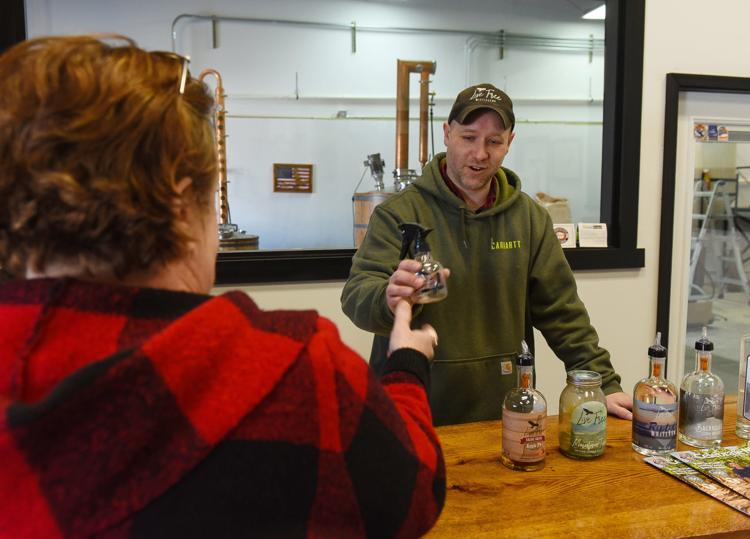
A sanitizer customer hands a small bottle to Andre Marcoux, owner of Live Free Distillery in Manchester, NH. All kinds of businesses are stepping up to join the Covid-19 war.

A sense of helplessness pervades our lives now, so whenever anyone is able to actually do something, it’s a great feeling.

On Thursday our family learned that the folks at Klear Vu Home Textiles of Fall River (friends of Suzanne) and an official in Massachusetts state government (friend of John) were able to put together a deal to alleviate one critical shortage. Klear Vu is now pivoting from products like seat cushions to face masks. Congrats to all concerned!

Meanwhile, New England distilleries are stepping up to make hand sanitizer. Alcohol is alcohol, after all. And war is war.

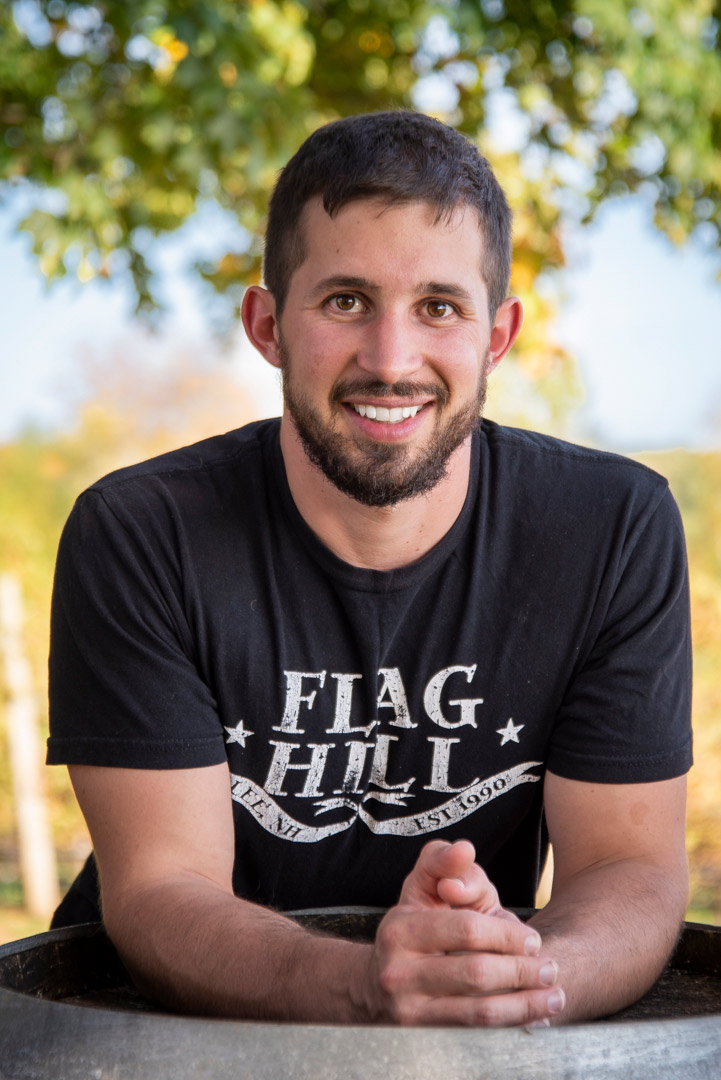
The first distillery I read about was Flag Hill in New Hampshire. Paul Briand at Seacoast reported, “Brian Ferguson at Flag Hill Distillery and Winery is trying to figure out a way through the personal and economic challenges of a society laying low because of the coronavirus.

“Almost daily, he assesses how best to not only keep the business afloat but be a responsible member of a community at-large that is uncertain – even frightened – about what lay ahead. For the latter concern, he’s switched from the production of spirits, such as bourbon, at his distillery to make hand sanitizer full time, primarily for first responders in municipalities around the Granite State.

“As far as the future of the business at Flag Hill is concerned, he and his staff are trying to position the winery to remain on solid footing as a wedding and event venue once the pandemic crisis passes.

” ‘It’s extremely hard to plan,’ said Ferguson. ‘There’s no right answer. No one’s ever written a book on how to do this, all the pros and cons.

‘Every single day we just try to make the best possible decisions we can, answering the questions: It is moral? Is it ethical? Is it smart? Can it be accomplished? If we can answer all those questions, we can make the decision to move in that direction.’ …

“The tools, process and ingredients were pretty much on-site already, according to Ferguson. What it needed to ramp up production was regulatory permission (which distilleries received from the Food and Drug Administration last week). And he needed some logistical help, which he got from Matt Mayberry, an expeditor for Carlisle One Media. …

“ ‘He started connecting the dots between where we were with having supply, but not really knowing where the demand was,’ said Ferguson.

“Creating the hand sanitizer is a process akin to creating bourbon, rum, gin, or vodka: A distillery and lots of neutral grain spirit. Ferguson had that. All he needed was the other ingredients to make the sanitizer – glycerin and hydrogen peroxide. … He can produce 55 gallons of sanitizer a day. …

“While the sanitizer to the municipalities is done at no cost, he makes the 750 milliliter bottles [about 1-1/2 pints] available for consumer sale at $15 each. He’s taking orders by phone [603-659-2949]. More.

At the Union Leader, Shawne K Wickham writes about more distilleries.

“Andre Marcoux opened Live Free Distillery in a Manchester industrial park 18 months ago. The Manchester native’s day job is computer-aided design, but he spends his weekends making and selling craft liquor.

“Until recently, the stainless steel stills wrapped in red oak at Live Free had been turning out products such as his popular dill-pickle vodka. But on Saturday, Marcoux switched production entirely over to hand sanitizer, using a formula put out by the World Health Organization. The alcohol trickling from the still is now being mixed with hydrogen peroxide and glycerol.

‘It’s a giant chemistry set,’ Marcoux said, pointing to the stills he hand-crafted himself. ‘Turning grain into the water of life.’ …

“Every distiller he knows in New Hampshire is making hand sanitizer to meet the need, Marcoux said. ‘We’re all just trying to help out,” he said.” More.

And here’s an article in the Boston Globe about Industrious Spirit Company and Dirty Water Distillery. (I’m loving the titles of these New England distillers!)

“On Monday,” writes Jenna Pelletier, “Industrious Spirit Company tasting room manager Liam Maloney spent hours tossing small bottles of house-made hand sanitizer out of a window at the Providence, R.I., distillery.

“Simultaneously in Plymouth, Dirty Water Distilling was fielding an ‘overwhelming’ number of sanitizer requests from first responders. And in Everett, the owners of Short Path Distillery were waiting for more supplies to arrive so they could whip up another batch. …

“ ‘We thought, nobody’s able to get it, so let’s start offering it,’ said Brenton MacKechnie, head distiller at Dirty Water Distilling. …

“According to the Distilled Spirits Council of the United States, more than 300 distilleries in the country, including at least six in Massachusetts, six in New Hampshire, two in Rhode Island, four in Connecticut, and seven in Vermont are now producing hand sanitizer — something many of them said they never expected to be doing.” Hooray for flexibility!

In a different kind of initiative from Scotland, an opera company, noted here, is lending set-hauling trucks to Tesco to smooth out the supermarket’s supply chain deliveries.

Got other examples of repurposing for the war effort? Please put it in Comments.

Brian Ferguson, proprietor of Flag Hill in New Hampshire. The distiller and wine maker is helping the “plague effort” by focusing on hand sanitizer as long as necessary. Make a list of companies behaving ethically in the crisis and try to give them your business when this is over, OK?8839-brian-1080

8839-brian-1080

Read Full Post »

Liz Maw is the CEO of Net Impact, which has 300 chapters worldwide guiding students and professionals who aim to align their worklife with their values and make positive change.

A high school classmate of mine posted an article about her daughter’s nonprofit on Facebook recently, and since I’m interested in this sort of thing, I looked it up.

Net Impact is an organization of 100,000 members in 300 global chapters that “take on social challenges, protect the environment and orient businesses and products toward the greater good.” It provides students and professionals with guidance to align their jobs with their values.

From the website: “Liz Maw joined Net Impact as CEO in 2004. During her tenure, Net Impact has tripled its chapter network to more than 300, formed partnerships with over 50 global corporations, and developed multiple new programs that engage students and professionals in sustainability. …

“In 2011, Liz was named one of the 100 most influential people in business ethics by Ethisphere. Liz is also a Board Member of the World Environment Center.

“Prior to leading Net Impact, Liz’s professional experience included strategic consulting to nonprofits with the Bridgespan Group, as well as fundraising and direct marketing for nonprofit organizations.”

I liked this explanation of what the nonprofit is all about. Sounds good to me. “Net Impact mobilizes new generations to use their skills and careers to drive transformational social and environmental change.

“Many people want to make a difference, but turning good intentions into tangible impact can be hard.

“Net Impact is an accelerator. Our programs — delivered from our headquarters, as well as globally through our student and professional chapters — give our members the skills, experiences and connections that will allow them to have the greatest impact. …

“Our emerging leaders take on social challenges, protect the environment, invent new products and orient business toward the greater good. In short, we help our members turn their passions into a lifetime of world-changing action. …

“We believe that the business sector is a critical part of driving social and environmental change, and thus engage with a variety of big and small companies on our events and programs.”

Net Imapct’s next Path to Purpose conference is October 26-28 in Atlanta. More on that here.

Read Full Post »

On the whole, I believe in having zoos, but I do realize most of the animals would rather not be there.

So I was interested in a zoo concept that was tweeted this week by @SmallerCitiesU. It’s an article about a plan for a zoo in Denmark.

At Good magazine, Caroline Pham asks, “Is there an ethical way to publicly display captive animals? Danish architecture firm BIG (Bjarke Ingels Group) is on a mission to answer that question with a hefty redesign of Denmark’s Givskud Zoo. …

“Their recently revealed plans for what has been dubbed ‘Zootopia’ attempt to mesh nature with inventive design in a 1,200,000 square meter park imagined under advisement from the zoo staff. Manmade buildings would hide within the constructed natural environments and animal habitats would mimic ones found in the wild as much as possible.

“Renderings showcase a circular central plaza with an ascending ramp-like border where visitors can enjoy panoramic views of the entire park, which features varying natural environments (that seem to be fairly open-air) connected by a four-kilometer hiking trail. …

“The project is currently in progress, with the first phase set for completion in 2019.” More here.

Photo:  Bjarke Ingels Group

Read Full Post »