Feeds:
Posts
Comments

Posts Tagged ‘father’

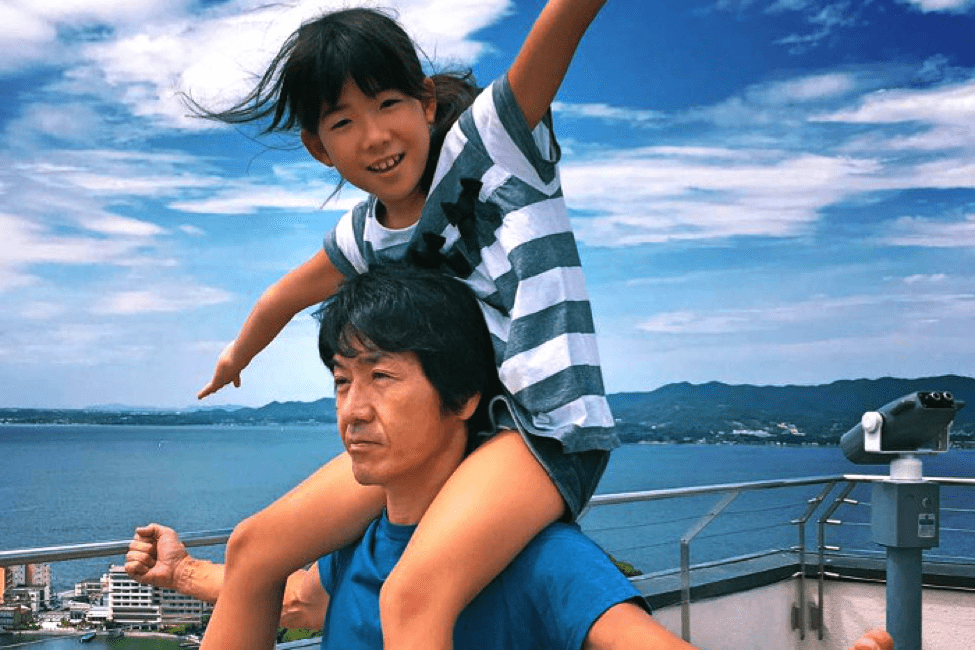
Photo:  Ken Yoshida at CarterJMRN.
Gen Z Japanese men are leading a cultural change that the government is fully supporting.

When my husband worked in Rochester, New York, we knew several coupes from Fuji Xerox who settled there for a period of years. I remember the laughs my friend Yuriko had over the effects of a different culture on Japanese men. She couldn’t get over the memory of a Japanese husband in a laundromat doing his own laundry. That would not happen at home in the 1970s.

Other cultural changes have been taking place since then.

Patrick Winn reported at Public Radio International’s The World about fatherhood in Japan, where traditionally, dads were not engaged with the daily lives of their children.

Winn writes, “Yuko Kuroda and her husband, Takashi Kuroda, live in a modest, two-story home in Tokyo’s outskirts. Both in their early 40s, Yuko Kuroda works at a daycare center, while Takashi Kuroda has a white-collar job. …

“In contemporary Japan, roughly one-third of women under the age of 50 do not have children. Couples who choose to raise kids usually stop at one. …

“Takashi Kuroda, his face streaked with black marker, just emerged from a rolling-on-the-floor play session with his son and daughter, aged 3 and 6, on a Sunday afternoon. The children drew whiskers on his cheeks while shouting, ‘Neko! Neko!’ (Japanese for ‘cat’). 

“ ‘I really recommend this lifestyle,’ he said. ‘Raising five kids is fun.’ …

“Officials warn that if the birth rate doesn’t rise, Japan could become unrecognizable in decades to come: less affluent, less vibrant and less powerful.

“What currently is deterring couples from raising children is being associated with overwork and sky-high housing prices. 

“But one of the major factors concerns dads ‘doing too little around the house,’ according to Mary Brinton, a Harvard University sociologist who has studied Japanese demographics for decades and has even advised Japanese officials.

“Traditionally, when Japanese couples have children, ‘women do most the housework and child care,’ Brinton said, and for working moms, the idea of holding down what is essentially a second, unpaid full-time job is ‘not very attractive.’ …

“Among the world’s high-income countries, including the US, fathers average more than two hours of daily housework and child care. In Japan, the average is only about 40 minutes. 

“But what erased Yuko Kuroda’s reluctance in raising five kids was that Takashi Kuroda wasn’t afraid to wipe a butt or wash a dish. 

“ ‘If one of the kids falls ill, he’ll immediately ask for a day off from work,’ she said. …

“Takashi Kuroda believes raising Japan’s birth rate requires a revolution in fatherhood. More than a decade ago, the government launched a social engineering campaign urging fathers to become ikumen, a Japanese word that loosely translates to ‘super dads.’ 

“Through public service announcements, namely posters, websites and online videos, Japan promoted this ideal of fatherhood. The ikumen eagerly burp babies, change diapers and walk toddlers to the park. …

“Fathering Japan, a nonprofit organization, contracted with the government to promote an ‘ikumen boom’ and teach fathers, through in-person classes, how to care for kids and do chores. 

“Manabu Tsukagoshi, a director with the group, believes it has successfully shifted fathers’ mindsets across Japan. But workplace culture is much harder to change. 

“Plenty of dads now want to live as ikumen, Tsukagoshi said, but — especially in white-collar jobs — they might toil for old-fashioned bosses who pressure workers to stay late and, after hours, bond over beer and sake. 

“Japan’s paternity-leave policies are now among the best in the world, but too many fathers fear taking time off work and risking the disapproval of their bosses or colleagues.

“ ‘I’m actually a bit ashamed of our Japanese men,’ Tsukagoshi said. ‘As employees, we have rights, but men hesitate to break from the norm. If other guys in the office aren’t taking paternity leave, they won’t feel keen to be the first.’

“But Takashi Kuroda is hopeful. He believes the revolution in fatherhood — in which dads stand up to corporations and put family first — is on the horizon. 

“Fifteen years ago, the rate of fathers taking paternity leave was almost zero. Only in recent years, it’s edged up to roughly 15% while by the decade’s end, Japan’s government hopes to up the rate to 85%.

“[Takashi Kuroda] credits Gen Z fathers for helping redefine what it means to be an attentive dad, unlike their own fathers, who often stuck with a corporation their entire working lives.

“ ‘Younger Japanese dads don’t feel like they have to belong to one company. So, they’re not so terrified of their bosses … and will stand up for themselves,’ he said.

“The COVID-19 pandemic, which saw more parents working at home, spurred a higher number of fathers to refocus on family, Takashi Kuroda said. He’s among the fathers who not only demanded paternity leave but took an entire year off for his third child, also insisting on remote work. …

“By late afternoon, Yuko Kuroda read to her children from a storybook while Takashi Kuroda was in the kitchen, elbows deep in dirty dishes. The sink was full of bowls used for breakfast, and water-logged noodles swirled around the drain. He looked silly — the cat whiskers remaining on his face — as he radiated joy.

“ ‘I’m very, very, very happy,’ he said.

“When asked if he’d be happy to have a sixth child, he answered maybe, as Yuko Kuroda popped in to end the questioning.

“ ‘No way,’ she said. ‘Our car only seats seven people. This is it.’ ”

More at The World, here. Lovely pictures. No firewall.
Read Full Post »

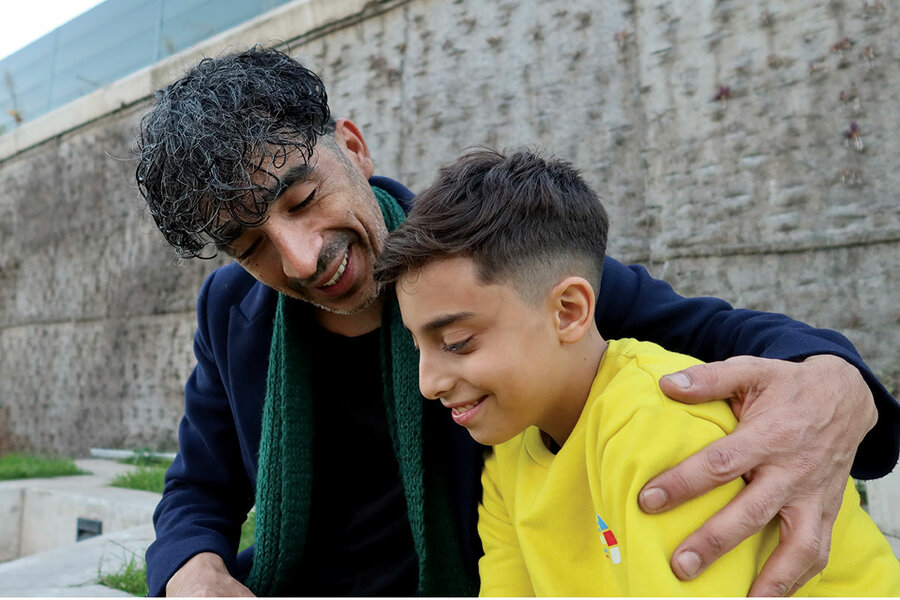
Photo: Erika Page.
Julio Franchi and Ian Cháves in Buenos Aries, Argentina. The two met in a square four years ago and are now father and son.

Who can resist a story like this at this time of year? I had just finished reading Nothing to See Here, a fanciful novel about parenting someone else’s children, when I read today’s entry by Julio Franchi, written up by Christian Science Monitor staff writer Erika Page.

Fiction and reality are closer than you think.

“At the time,” Franchi reports, “my only thought was to help. I just followed my instinct. Only now am I realizing what it means to be a father. 

“It was 2019. I would meet up with a group of neighbors and our dogs at the square around 10 o’clock at night. We were always the same people. One night a little boy appeared. 

“He was just there, playing with a stick, and you could tell he was alone. He looked abandoned. It was 11 o’clock, 12 o’clock at night. That was late for a 7-year-old. I asked him what his name was, what he was doing there. We got along right away. The next day he came back. 

“From then on he was always there, with his broken sneakers and clothes that weren’t his size. 

“We asked, and he wasn’t going to school. The first thing that occurred to us was to buy him some sneakers. We pooled money between the 10 of us neighbors. 

“I kept trying to connect the dots. I asked where he lived, and he said, ‘that way.’ The next day I walked him to the corner. There were a few squatter houses left in the neighborhood – his was one of them. I went with him one day with the excuse of the new shoes. I didn’t want his mom to think I was meddling. When she came out I realized because of her state that she was dealing with an addiction. But she was receptive to help.

“We found him a local school. That was already a lot. He could eat there and not spend so much time on the street. He would come to my apartment for an afternoon snack, or he’d go to one of the neighbors’ homes. This continued into 2020. We saw each other several times a week. …

“Then the pandemic hit, and the pandemic was really strict here. You couldn’t go anywhere. Six months passed, and I didn’t hear anything from him. When the quarantine began to relax … his mom called to say she was going to be hospitalized. She couldn’t take care of Ian. 

“She wanted to know if I could. I obviously said yes. She never called to ask for Ian back. 

“She clearly loves her son. In her right mind, she’s great. Very fun, very cheerful. But the addiction leads her to lie endlessly. She can sleep for days. Later I learned that Ian had to get her out of places where he was forced to see really ugly situations. Within her chaos, though, she is always looking for the best for him. …

“I’m always thinking about myself, always caught up in my own world. I never thought I would be ready to be a father. When I realized she was handing him over to me, I didn’t think about my life. It’s never crossed my mind even a little bit to wonder what I’ve gotten myself into. I live alone in Buenos Aires; he is my family.

Ian came to pull me out of myself, out of my ego. 

“People who know me can’t believe I get up at 6 a.m. and take him to school. I used to go to bed at 7 in the morning or later. I’ve discovered the morning. I’ve discovered what it means to miss someone. The most important things in my life happen without me expecting them. 

“My relationship with my own father marked me. There are things that have been difficult for me to forgive, moments of violence from another generation. But he never threw in the towel. He always wanted to change. Now I see what it means to be a model for Ian. I can’t hit the brakes and say, ‘I’m not going to raise you for a while. I’m going to spend my time screwing everything up and doing things wrong, so don’t watch me.’ He’s going to watch anyway. 

“Fatherhood is like a giant mirror in which I see all my flaws. The virtues, too, although they aren’t as numerous. It forces me to try to be better, even if I don’t succeed all the time. When I get angry, and I realize five minutes later I’ve made a mistake, I apologize right then. No matter how much I feel like screaming like a madman, I say, ‘Look, what I just said was wrong. I’m sorry.’ …

“When I told Ian the whole truth about what was happening to his mom – what it’s like to be an addict – everything became clearer to him. He began to understand that his mom had a problem. It wasn’t that she didn’t love him. It was essential for him to understand that. …

“When I met him, knowing where he came from, the first thing I imagined was that I was going to bring him things, offer him experiences, buy him stuff. Not that I have any money. I’m a musician. I was better off than him, but just by a bit. But later I realized that in reality what I was going to give him were limits. That’s what he needed. That’s really being a parent. 

“At first we explained things to people about our relationship. Then at one point we said, ‘OK, that’s it, we’re father and son.’ I told him, ‘Just watch, now that we say it, we’re going to start hearing that we look alike.’ Two days later, a woman stopped us and said, ‘You’re identical!’ Ian just started to laugh.”

More at the Monitor, here. No firewall.

Read Full Post »

merlin_172735011_9aa26fba-ff92-4896-827c-9acb6bb9db2c-jumbo

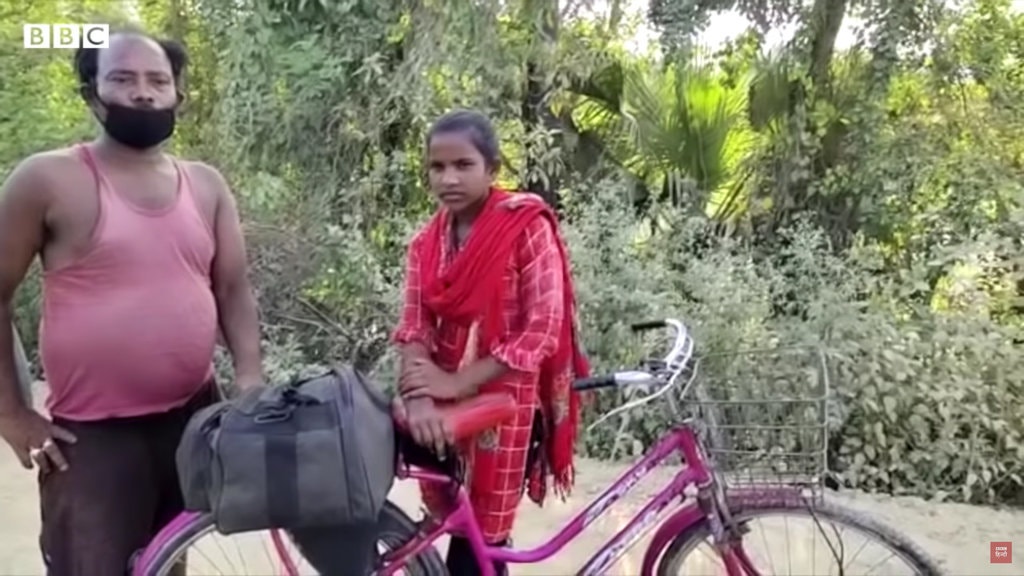
Still image from video: BBC Hindi
This is Jyoti Kumari, a 15-year-old who cycled more than 700 miles from New Delhi to her village, transporting her injured father, a migrant laborer, on her bike.

Some kids take on a lot of responsibility really fast. That was the case of a girl from a poor family in India who told her mother she would bring her injured father home even if she had to bike halfway across India. There are many such children who never get a media spotlight, but for those that do, good things may follow.

As Jeffrey Gettleman and Suhasini Raj reported at the New York Times, “She was a 15-year-old with a simple mission: bring papa home. Jyoti Kumari and her dad had nearly no money, no transport, and their village was halfway across India. And her dad, an out-of-work migrant laborer, was injured and could barely walk.

“So Jyoti told her dad: Let me take you home. He thought the idea was crazy but went along with it. She then jumped on a $20 purple bike bought with the last of their savings. With her dad perched on the rear, she pedaled from the outskirts of New Delhi to their home village, 700 miles away.

‘Don’t worry, mummy,’ she reassured her mother along the way, using borrowed cellphones. ‘I will get Papa home good.’

“During the past two months under India’s coronavirus lockdown, millions of migrant laborers and their families have poured out of India’s cities, desperate and penniless, as they try to get back to their native villages where they can rely on family networks to survive. Many haven’t made it. …

“But amid all this pain and sadness now emerges a tale of devotion and straight-up grit. The Indian press has seized upon this feel-good story. … And a few days ago, the story got even better.

“While resting up in her village, Jyoti received a call from the Cycling Federation of India. Convinced she had the right stuff, Onkar Singh, the federation’s chairman, invited her to New Delhi for a tryout with the national team. …

“Reached by phone on Friday in her village of Sirhulli, in Bihar, one of India’s poorest states, Jyoti said in a scratchy voice barely above a whisper, because she still sounded exhausted: ‘I’m elated, I really want to go.’ …

“Her father, Mohan Paswan, a rickshaw driver from a lower rung of India’s caste system, was injured in a traffic accident in January and was running out of money even before the lockdown. … Jyoti came out from their village in Bihar to care for Mr. Paswan. She had dropped out of school a year ago because the family didn’t have enough money. Things got even worse after the lockdown, with their landlord threatening to kick them out and then cutting off their electricity.

“When Jyoti came up with the escape plan, her father shook his head.

“ ‘I said, “Look, daughter, it’s not four or five kilometers that you will drag me from here. It’s 12-, 13-hundred kilometers. How will we go?’’ ‘ he said in a video broadcast by the BBC’s Hindi service.

“The two bought a simple girl’s bike for the equivalent of about $20. On May 8, they set off, Jyoti at the handlebars, dad sitting pillion on back. Jyoti was pretty confident on a bike, having ridden a lot in her village.

“Many days they had little food. They slept at gas stations. They lived off the generosity of strangers. Jyoti said that except for one short lift on a truck, she pedaled nearly 100 miles a day. It wasn’t easy. Her father is big, and he was carrying a bag. …

“After they arrived in their village last weekend, her father went into a quarantine center. … Jyoti’s mother convinced village elders to let her quarantine at home. .. Then, a few days later, on Thursday morning, she got The Call.”

Read more at the New York Timeshere.


Read Full Post »

I  noticed the Eric Carle picture book Mister Seahorse at Suzanne and Erik’s house today, and it got me thinking about seahorses as fathers.

Did you know seahorse fathers carry the babies from conception to birth, not the mothers?

According to Wikipedia, “The male seahorse is equipped with a pouch on the ventral, or front-facing, side of the tail. When mating, the female seahorse deposits up to 1,500 eggs in the male’s pouch. The male carries the eggs for 9 to 45 days until the seahorses emerge fully developed, but very small. Once the young are released into the water, the male’s role is done and he offers no further care.”

It’s kind of the reverse of today’s devoted fathers. With no direct role in giving birth to babies, they sure do get involved in the daily care and feeding. Grandfathers, too. My husband babysits regularly, and can handle most anything, including diapers.

For more on seahorses, and how to protect them, check out the Sea Horse Trust, here. And if you’re up for a refresher on how increased carbon dioxide in the atmosphere is endangering sea creatures with spines, including the pygmy seahorse, reread my review of the climate-change movie Revolution, here.

Art: Eric Carle

Read Full Post »

OK, here’s one I bet you don’t know about. Like a couple super fathers I know, the sandgrouse father is devote to parenting. But when the fathers I know give thirsty children some water, it is likely to arrive in a bottle or sippy cup. The sandgrouse papa delivers water in his feathers.

Rick Wright and Mary McCann report at Public Radio International’s Living on Earth, “Sandgrouse – pointy-tailed relatives of pigeons – live in some of the most parched environments on earth. To satisfy the thirst of newly hatched chicks, male sandgrouse bring water back to the nest by carrying it in their feathers. It sounds incredible, and for decades, scientists thought it was just a myth. But it’s not. In the cool of the desert morning, the male flies up to twenty miles to a shallow water hole, then wades in up to his belly.

“The water is collected by ‘rocking.’ The bird shifts its body side to side and repeatedly shakes the belly feathers in the water; fill-up can take as long as fifteen minutes. Thanks to coiled hairlike extensions on the feathers of the underparts, a sandgrouse can soak up and transport 25 milliliters of liquid. That’s close to two tablespoons.

“Once the male has flown back across the desert with his life-giving cargo, the sandgrouse chicks crowd around him and use their bills like tiny squeegees, ‘milking’ their father’s belly feathers for water they so desperately need.”

Listen here.

Photo: Ian White, Flickr CC
The Feathers of Burchell’s Sandgrouse carry water for miles back to the nest.

Read Full Post »

It says here, at Pacific Standard, that learning a second language translates into clearer thinking. No surprises there, but good to have evidence.

In Providence this week, a certain baby I know is showing an affinity for more than one language. His mother thinks he finds his father’s Swedish soothing, especially when sung in a low voice.

While the baby is tuning in to Swedish and English, his parents are studying a language called Basic Baby. It’s the world’s oldest language. In its simplest form, it involves crying: “You’re doing this wrong — try a different tack.” Or silence: “You’re doing this right.” At higher levels, it gets more complex. For example, you may be doing something right, but there is still crying: “This digestive business feels totally weird.”

Basic Baby is not too hard to learn if you (a) pay attention, (b) realize that you will figure it out eventually. It was your own first language. If you are  rusty, maybe you just need to bone up a bit.

Read Full Post »

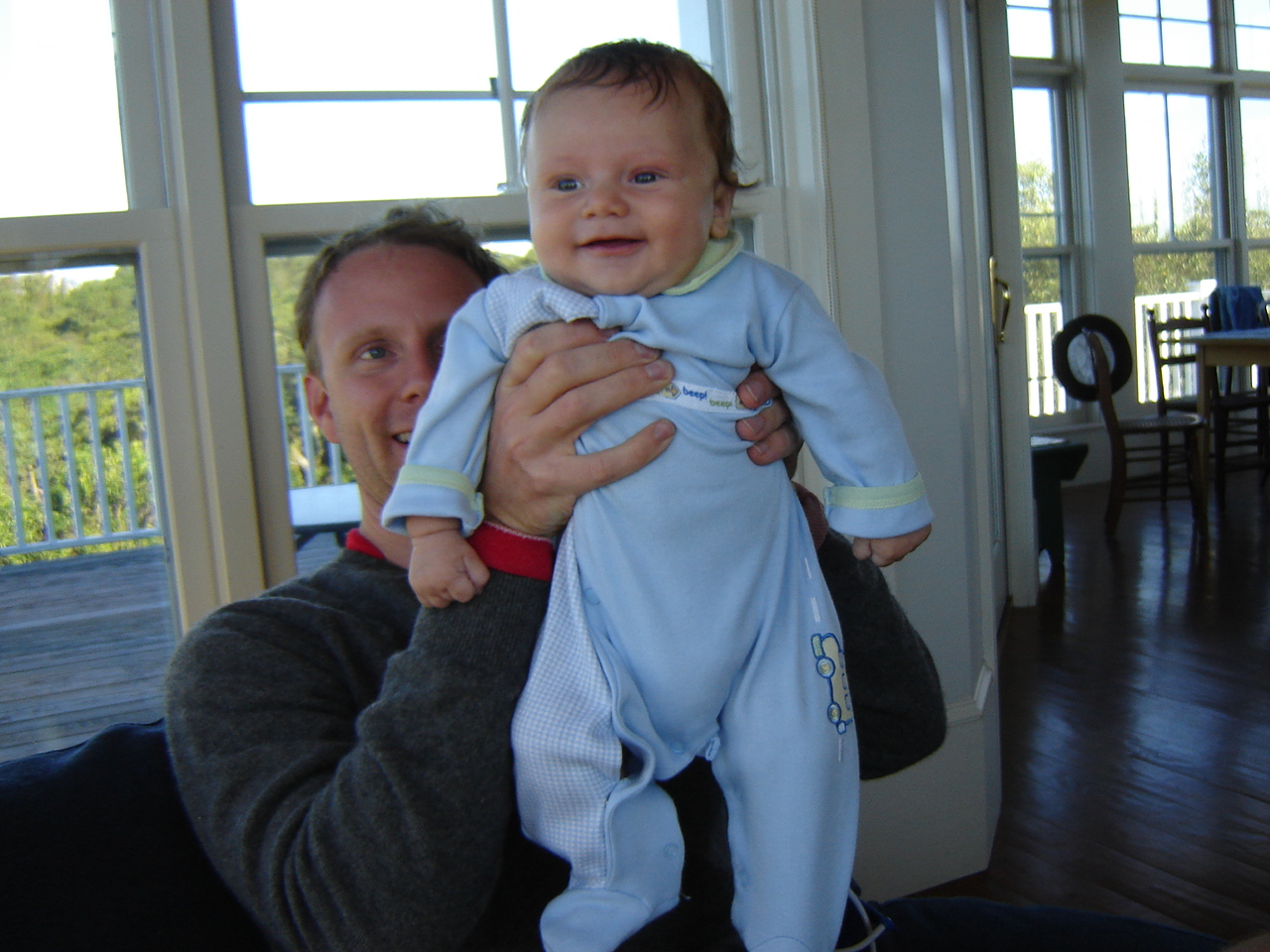
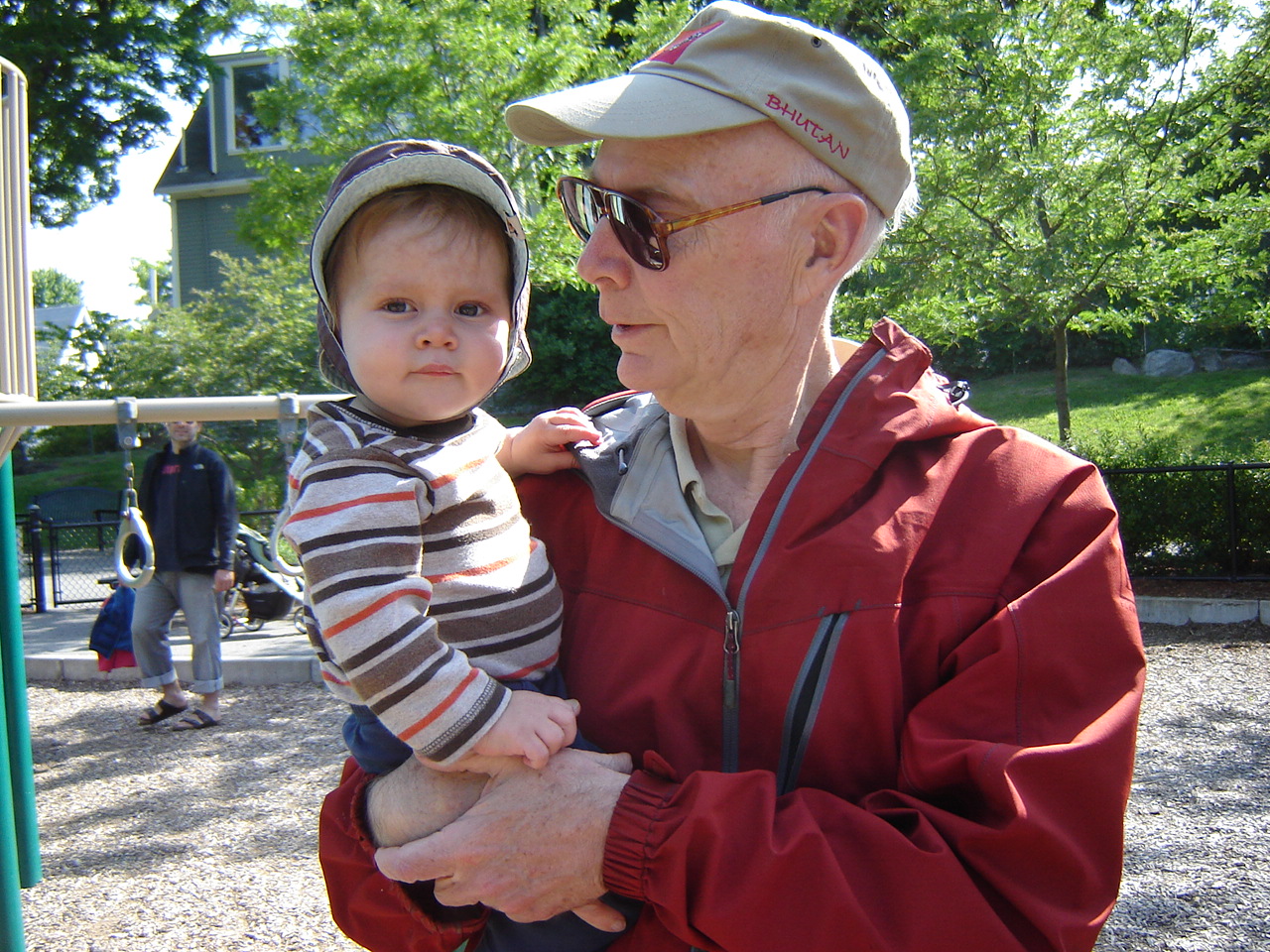
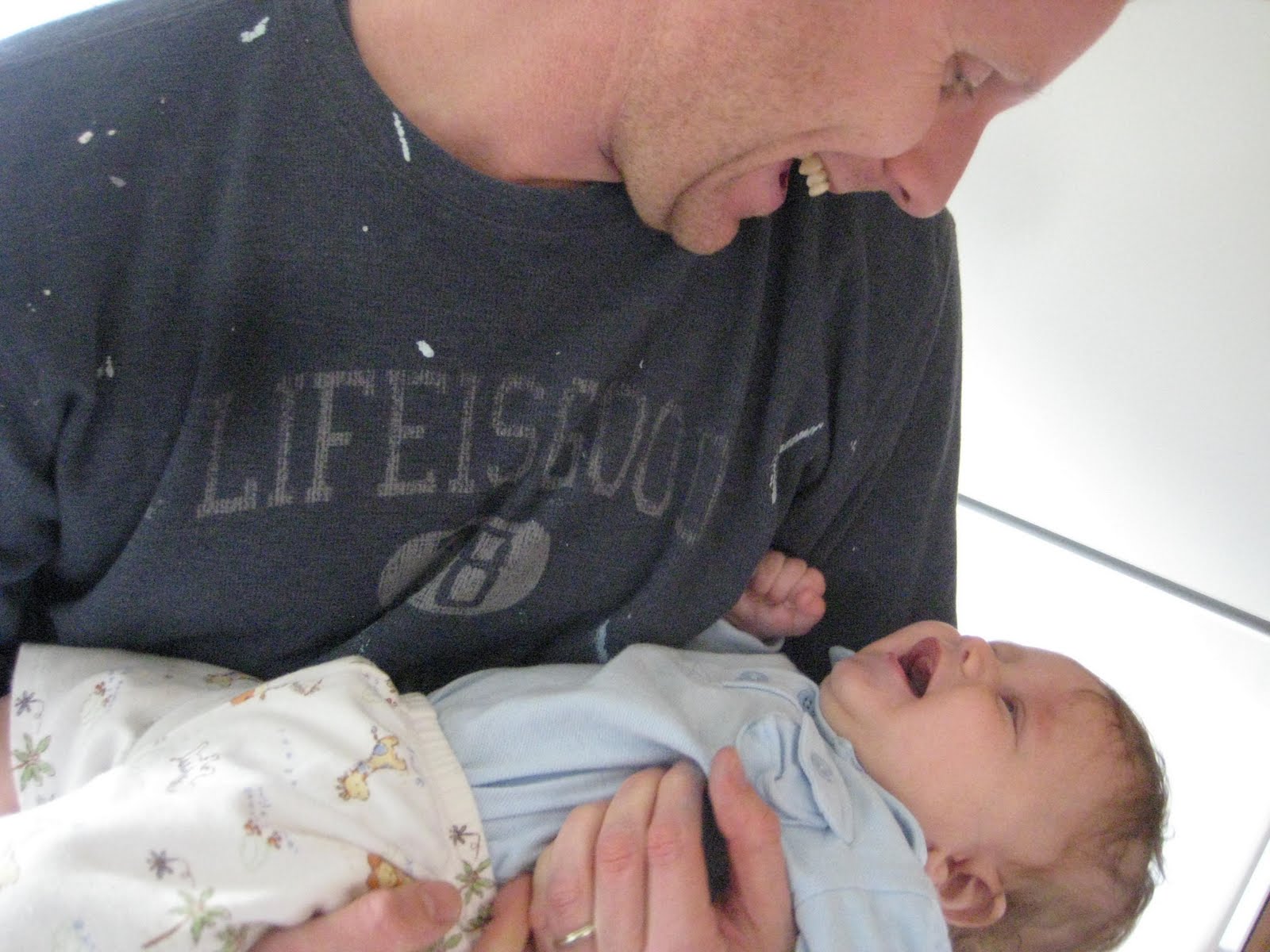
One of the most fun things about being a mom, I think, is seeing your grownup child developing into a really great parent. Here is proud papa John when our grandson was only a few months old. And here is John’s dad, a proud grandpa, yesterday.

And while we are on the subject of fathers, I don’t mind telling you that Suzanne’s company, Luna & Stella, has just added an intriguing gift for men — cufflinks designed to hold birthstones of your choice, a bit like a locket. You can get the cufflinks with birthstones of the dad’s loved ones, or you can get them empty and ready for your own mementos. Here’s what they look like.  I could picture small treasures from children in them or a miniature fishing fly for a fisherman or baseball memorabilia — whatever the imagination suggests.

Send comments to suzannesmom@lunaandstella.com. I will post your comment in an entry.

Read Full Post »