Feeds:
Posts
Comments

Posts Tagged ‘Fiona’

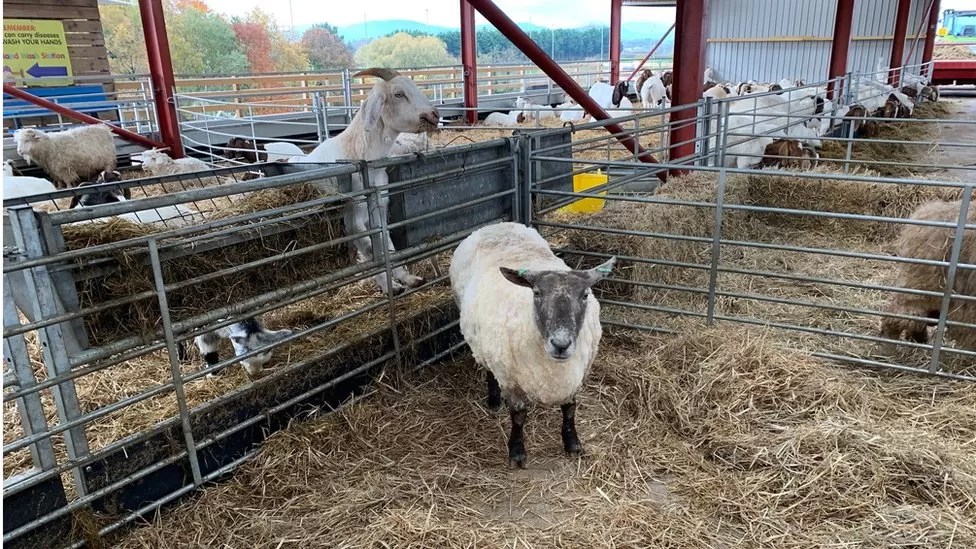
Photo: BBC.
Fiona was called the loneliest sheep, but having been rescued from another winter alone at the bottom of a cliff, she can now look forward to having friends.

You may have seen this story, but I couldn’t resist sharing it anyway. A sheep in Scotland had gotten herself into such an inaccessible spot that the Scottish equivalent of the ASPCA had given up the idea of rescuing her before winter. She was going to spend winter alone. Again. Then local sheep shearers decided that it just wouldn’t do.

Fiona needed first to lose 10% of her weight and become a bit easier to carry. Fortunately, shearers can make that happen.

Giancarlo Rinaldi reported at the BBC, “The sheep described as the loneliest in Britain is said to be settling in well to her new home. The ewe, now named Fiona, was rescued on Saturday after being stranded for more than two years at the foot of cliffs in the Scottish Highlands. …

“She arrived at Dalscone Farm ‘under cover of darkness’ on Sunday and is said to be in good condition.

“The sheep’s plight hit the headlines last month after a kayaker photographed her still trapped at the foot of a steep cliff at the Cromarty Firth, two years after a previous sighting. She was dubbed ‘Britain’s loneliest sheep’ and an online petition to rescue her attracted thousands of signatures.

“Plans to move her to the farm park in southern Scotland provoked a ‘peaceful, non-violent demonstration’ at the site amid concerns she would become a ‘spectacle.’

“Farmer Ben Best of Dalscone Farm said it had been a ‘stressful’ couple of days to get the sheep to Dumfries. [But] ‘she has settled in absolutely brilliantly. She has been eating, drinking. We couldn’t be happier with how she has settled in. …

” ‘Everything is transparent what we do – we are known worldwide for our animal care,’ he said. The farm section of the visitor attraction is currently closed to the public but it posts regular live updates on its Facebook page.

“Saturday’s rescue operation was led by professional shearer Cammy Wilson. He told BBC Radio’s Good Morning Scotland program, ‘I have never worked with a sheep as calm as she is. She has essentially had unlimited grass to eat for two years and she is what we would describe as fat in the sheep world.’ …

“Fiona weighed in at [200 lbs] without her wool, and the wool itself weighed [20 lbs].

“Mr Wilson said the wool was quite poor quality, but it was hoped it could eventually be made into something and used in a raffle for charity.

“He also explained the cinematic inspiration behind the sheep’s name. ‘I came up with the name Fiona because, several years ago now, the world was taken by storm by a sheep called Shrek in New Zealand who had been living alone in a cave,’ Mr Wilson said. ‘I thought Shrek is the male version of this situation so it has to be Fiona. It is also a good Scottish name.’ …

“He said they had waited until the ‘coast was clear’ to take the sheep to the farm park on Sunday night where he was confident she would be well looked after.

“Mr Wilson added: ‘She will live out the rest of her life down there at Dalscone, probably being better looked after than I will be.’ “

Yesterday, I heard rescue leader Cammy Wilson tell Marco Werman at PRI’s The World about being very nervous shearing Fiona at the bottom of the cliff because he knew that people around the world would end up seeing his skill on Facebook.

More at the BBC, here. And you can listen to the Wilson interview at PRI’s The World, here. Wilson’s delight is infectious.
Read Full Post »

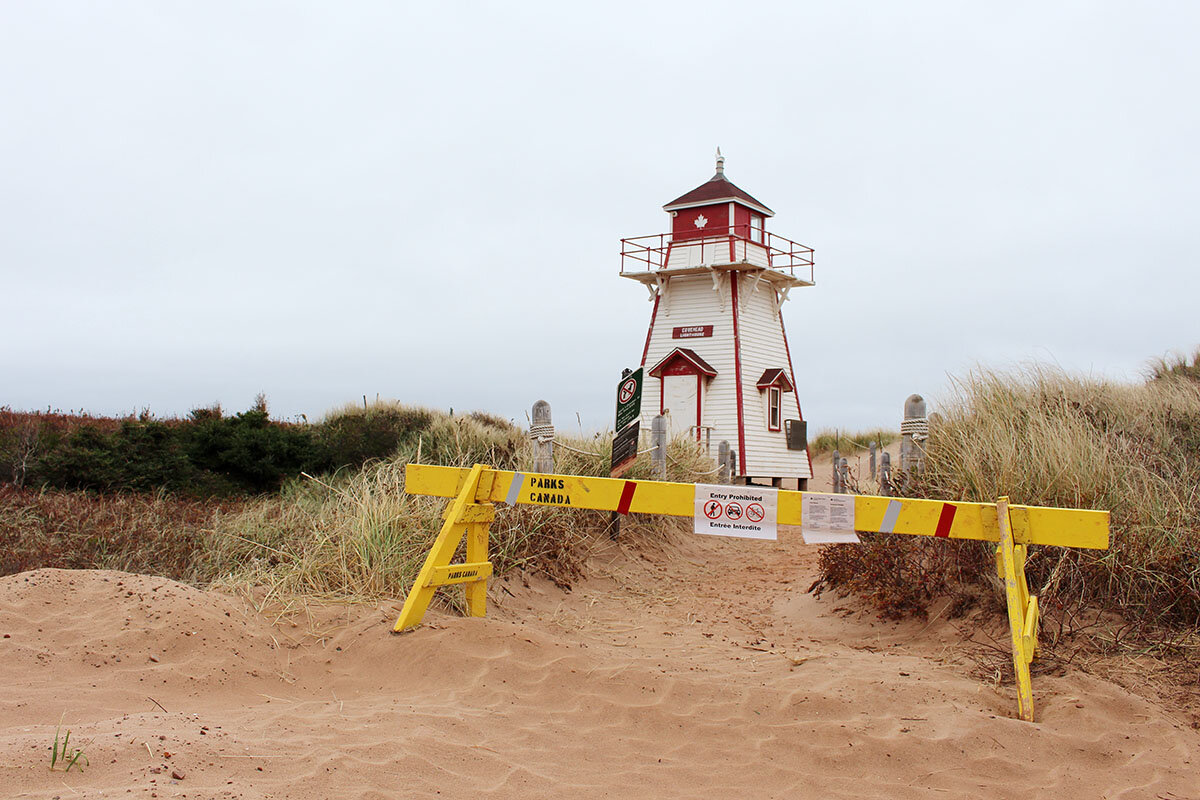
Photo: Moira Donovan.
“Hurricane Fiona carved out sections of coastline,” says the
Monitor, “and caused dunes to disappear on Prince Edward Island, where beaches like this one remained closed weeks later.”

There’s nothing like a new experience to make you see things differently. At the Christian Science Monitor, Moira Donovan reports that the severity of a recent hurricane on Canada’s Prince Edward Island is forcing people “to grapple with how climate change is rewriting people’s relationship with the sea.”

She writes, “Robbie Moore spent a week preparing his oyster farm as Hurricane Fiona barreled toward Prince Edward Island in late September. But that didn’t spare it from the impact.

“On Sept. 24, Fiona roared across Atlantic Canada, leaving catastrophe in its wake, including two deaths. Prince Edward Island recorded 92 mph winds, and on the North Shore, where Mr. Moore’s farm is located, the storm ripped up trees, reduced wharves to splinters, and flooded structures. By the time he could get to his farm to assess the damage several days later, he found some sections had vanished, and this year’s oyster crop had been tossed into the treeline, 30 feet from the high-water mark.

“Still, he counts himself relatively fortunate. Some people lost everything, and as much as people had prepared, there was no way to prepare for the damage Fiona caused. ‘There’s a lot of people very discouraged right now,’ he says.

“The recovery is expected to take years. But given what Fiona has shown about the growing threat posed by hurricanes, the more transformative effect could be still to come. As hurricanes become a more regular, immediate danger up and down North America’s Eastern Seaboard, Atlantic Canada – like regions from the Gulf Coast to Florida to New England – is beginning to grapple with how climate change is rewriting people’s relationship with the sea.

“While Atlantic Canada is no stranger to volatile weather, Fiona marked a departure.

Past storms, such as Hurricane Dorian in 2019, had weakened before they made landfall. But Fiona retained much of its strength, making it the most powerful storm to ever hit Canada.

“University of Prince Edward Island climatologist Adam Fenech says that while Fiona was unprecedented, the storm was not unanticipated, given projections of stronger storms in the Atlantic hurricane season. ‘All the things that we’ve been talking about for 30 years are all coming true,’ he says.

“Despite that consensus, Dr. Fenech has spent years playing Cassandra to an at-times skeptical public. Half a dozen years ago, when Dr. Fenech was invited to give a talk about coastal erosion at a cottage development on Prince Edward Island’s North Shore, he warned that many of the properties could disappear in a big storm. Residents were unconvinced. …

“When Fiona hit, 12 cottages in that development were swept off their footings; several were swallowed wholesale by the ocean. In other places, people’s year-round homes were destroyed.

“But in a region where communities have deep ties to the coast, housing isn’t the only concern. Atlantic Canada is the site of Canada’s most lucrative fisheries, operating out of nearly 200 small harbors dotting the coastline – nearly three-quarters of which were affected by Fiona in some way.

“For many harbors, the destruction caused by Fiona will mean an expensive rebuild. But some people are saying the reconstruction should look different.

“When Fiona hit Newfoundland’s southwest coast, Shawn Bath was a day’s drive away; as the scale of the damage came to light, he loaded his truck, hitched his boat, and headed across the province.

“There, he found … shorelines littered with debris. In many places, wharves and fishing stages had been smashed like toothpicks, scattering fishing gear into the water. Mr. Bath and his crew – who run a marine debris cleanup project called the Clean Harbours Initiative – made their way to a small community called Burnt Islands, and got to work. …

” ‘It’s overwhelming,’ says Mr. Bath. ‘Pictures don’t do it justice.’ And he’s worried that there are more than a thousand fishing nets drifting along the bottom of affected harbors. … In the long term, Mr. Bath says the way harbors are laid out needs to be rethought. Fishing infrastructure has traditionally been placed close to the water because that’s where it made the most sense to be. But that calculus has changed.

“ ‘There’s no point in rebuilding and filling all these stages with nets again, if two years down the road the same thing happens,’ he says. ‘Keeping fishing gear on the water’s edge is no longer a reasonable thing to do.’ …

“For Prince Edward Island musician Tara MacLean, who grew up playing in the dunes, the shock of seeing a beloved landscape suddenly vanish was indescribable. …

“Ms. MacLean says the sorrow for what’s been lost should serve as a wake-up call on the risk that climate change poses to the region. But it’s that emotional connection to the water that could also make changing the relationship to it difficult, and when things return to normal, the allure of living close to the water may return, too.”

More at the Monitor, here. No firewall.

Read Full Post »