Feeds:
Posts
Comments

Posts Tagged ‘Gen Z’

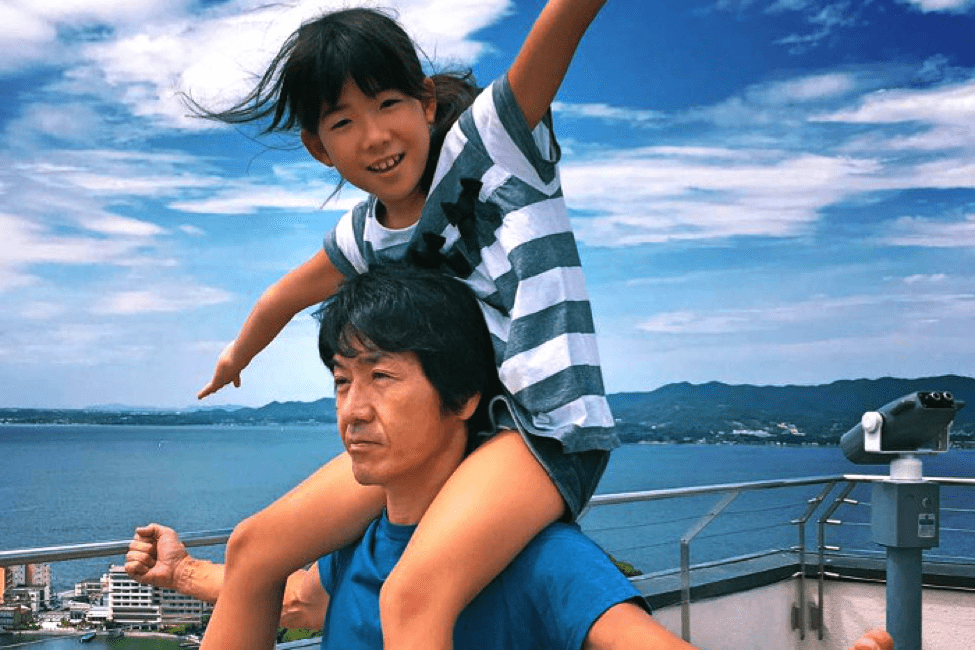
Photo:  Ken Yoshida at CarterJMRN.
Gen Z Japanese men are leading a cultural change that the government is fully supporting.

When my husband worked in Rochester, New York, we knew several coupes from Fuji Xerox who settled there for a period of years. I remember the laughs my friend Yuriko had over the effects of a different culture on Japanese men. She couldn’t get over the memory of a Japanese husband in a laundromat doing his own laundry. That would not happen at home in the 1970s.

Other cultural changes have been taking place since then.

Patrick Winn reported at Public Radio International’s The World about fatherhood in Japan, where traditionally, dads were not engaged with the daily lives of their children.

Winn writes, “Yuko Kuroda and her husband, Takashi Kuroda, live in a modest, two-story home in Tokyo’s outskirts. Both in their early 40s, Yuko Kuroda works at a daycare center, while Takashi Kuroda has a white-collar job. …

“In contemporary Japan, roughly one-third of women under the age of 50 do not have children. Couples who choose to raise kids usually stop at one. …

“Takashi Kuroda, his face streaked with black marker, just emerged from a rolling-on-the-floor play session with his son and daughter, aged 3 and 6, on a Sunday afternoon. The children drew whiskers on his cheeks while shouting, ‘Neko! Neko!’ (Japanese for ‘cat’). 

“ ‘I really recommend this lifestyle,’ he said. ‘Raising five kids is fun.’ …

“Officials warn that if the birth rate doesn’t rise, Japan could become unrecognizable in decades to come: less affluent, less vibrant and less powerful.

“What currently is deterring couples from raising children is being associated with overwork and sky-high housing prices. 

“But one of the major factors concerns dads ‘doing too little around the house,’ according to Mary Brinton, a Harvard University sociologist who has studied Japanese demographics for decades and has even advised Japanese officials.

“Traditionally, when Japanese couples have children, ‘women do most the housework and child care,’ Brinton said, and for working moms, the idea of holding down what is essentially a second, unpaid full-time job is ‘not very attractive.’ …

“Among the world’s high-income countries, including the US, fathers average more than two hours of daily housework and child care. In Japan, the average is only about 40 minutes. 

“But what erased Yuko Kuroda’s reluctance in raising five kids was that Takashi Kuroda wasn’t afraid to wipe a butt or wash a dish. 

“ ‘If one of the kids falls ill, he’ll immediately ask for a day off from work,’ she said. …

“Takashi Kuroda believes raising Japan’s birth rate requires a revolution in fatherhood. More than a decade ago, the government launched a social engineering campaign urging fathers to become ikumen, a Japanese word that loosely translates to ‘super dads.’ 

“Through public service announcements, namely posters, websites and online videos, Japan promoted this ideal of fatherhood. The ikumen eagerly burp babies, change diapers and walk toddlers to the park. …

“Fathering Japan, a nonprofit organization, contracted with the government to promote an ‘ikumen boom’ and teach fathers, through in-person classes, how to care for kids and do chores. 

“Manabu Tsukagoshi, a director with the group, believes it has successfully shifted fathers’ mindsets across Japan. But workplace culture is much harder to change. 

“Plenty of dads now want to live as ikumen, Tsukagoshi said, but — especially in white-collar jobs — they might toil for old-fashioned bosses who pressure workers to stay late and, after hours, bond over beer and sake. 

“Japan’s paternity-leave policies are now among the best in the world, but too many fathers fear taking time off work and risking the disapproval of their bosses or colleagues.

“ ‘I’m actually a bit ashamed of our Japanese men,’ Tsukagoshi said. ‘As employees, we have rights, but men hesitate to break from the norm. If other guys in the office aren’t taking paternity leave, they won’t feel keen to be the first.’

“But Takashi Kuroda is hopeful. He believes the revolution in fatherhood — in which dads stand up to corporations and put family first — is on the horizon. 

“Fifteen years ago, the rate of fathers taking paternity leave was almost zero. Only in recent years, it’s edged up to roughly 15% while by the decade’s end, Japan’s government hopes to up the rate to 85%.

“[Takashi Kuroda] credits Gen Z fathers for helping redefine what it means to be an attentive dad, unlike their own fathers, who often stuck with a corporation their entire working lives.

“ ‘Younger Japanese dads don’t feel like they have to belong to one company. So, they’re not so terrified of their bosses … and will stand up for themselves,’ he said.

“The COVID-19 pandemic, which saw more parents working at home, spurred a higher number of fathers to refocus on family, Takashi Kuroda said. He’s among the fathers who not only demanded paternity leave but took an entire year off for his third child, also insisting on remote work. …

“By late afternoon, Yuko Kuroda read to her children from a storybook while Takashi Kuroda was in the kitchen, elbows deep in dirty dishes. The sink was full of bowls used for breakfast, and water-logged noodles swirled around the drain. He looked silly — the cat whiskers remaining on his face — as he radiated joy.

“ ‘I’m very, very, very happy,’ he said.

“When asked if he’d be happy to have a sixth child, he answered maybe, as Yuko Kuroda popped in to end the questioning.

“ ‘No way,’ she said. ‘Our car only seats seven people. This is it.’ ”

More at The World, here. Lovely pictures. No firewall.
Read Full Post »

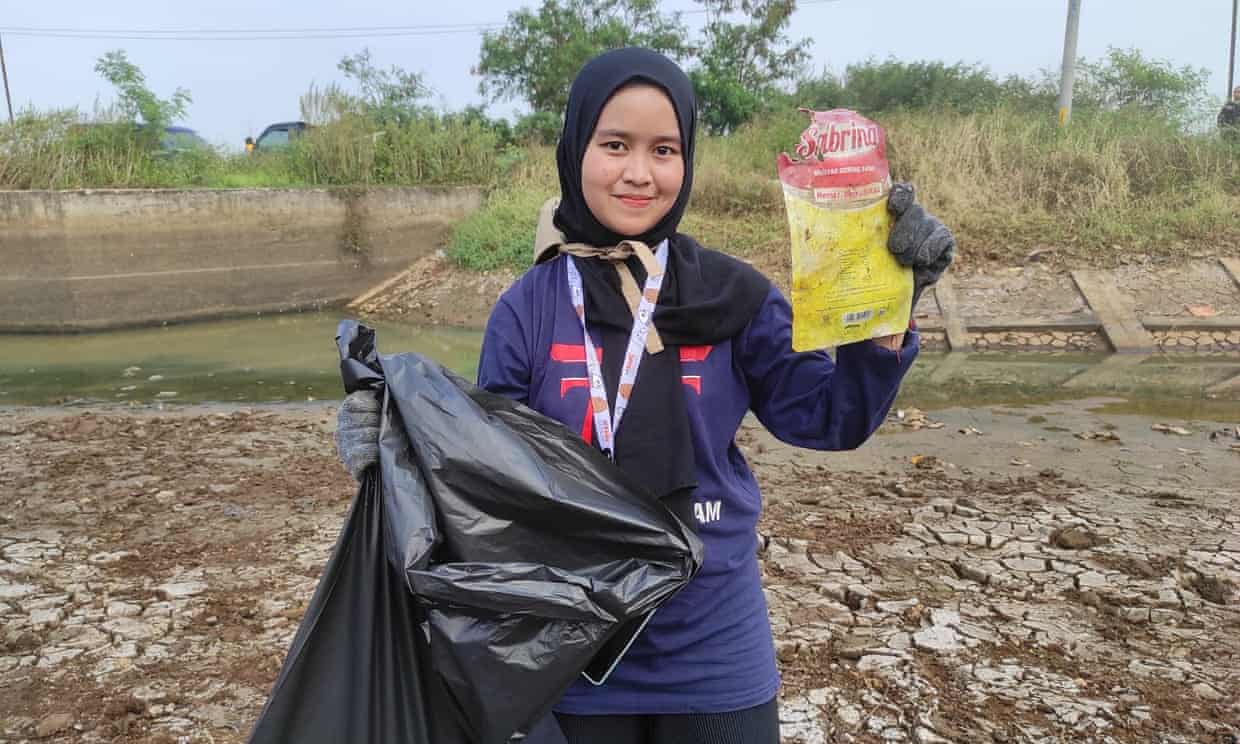
Photo: The Guardian.
Resti Khairunnisa, 22, is a follower of Pandawara on TikTok. She joins other followers in collecting plastic waste from the Bandung dam in Indonesia. 

The young people will save us all. They certainly shouldn’t have to, but it restores our faith in humanity when we see them taking “arms against a sea of troubles” and not wasting time blaming those of us who deserve blame.

What is the secret of their strength? Perhaps not knowing what’s “impossible” enables people to do it anyway.

Guardian reporter Ardila Syakriah has this story from Indonesia.

“They started as flood victims, now they are touted as local heroes for cleaning up the rivers and beaches of Indonesia’s third largest city, Bandung in West Java, amassing over 9 million followers on TikTok and Instagram in the process and influencing others across the country to join the fight against pollution.

“The Pandawara group is five men in their early twenties and was formed in 2022 after flooding caused by rivers clogged with rubbish damaged their homes. … On TikTok, their profile – @pandawaragroup – contains over 100 short videos of their river and beach clean ups, earning them millions of views and totalling over 100 million likes.

“ ‘We have a team of river hunters who identifies rivers with urgent trash issues, where flooding can happen after rainfall,’ Pandawara member Gilang Rahma told the Guardian.

“The Greater Bandung area where they live produces 2,000 tons of waste each day, 10 to 20% of which doesn’t make it to landfill and often ends up in rivers. The vast mountain of waste produced in the region has exceeded landfill capacity by 800%, according to West Java official Prima Mayaningtyas. …

“Pandawara began modestly in 2022, cleaning up rivers around their neighborhood, protected by rubber hand gloves and boots. As they became full-time online celebrities-slash-activists, they were invited to meet government officials and receive partnership deals. As their popularity grew, so did their cleanups, which spread to other islands in Indonesia. 

TikTok went as far as to deem some videos as sensitive content because the sight of decaying rubbish might be considered disturbing by some viewers. …

“ ‘Sometimes when we call for volunteers, thousands would sign up but we could only select dozens due to limited space. At other times we don’t limit the number. These are for when we can’t clean up by ourselves,’ Gilang said, adding that the group hoped to use the social media platform to raise gen Z’s awareness of pollution.

“Pandawara’s latest call saw 600 people, including local government staff and officials, join the clean up of 17 tons of waste from the Bugel dam in Bandung regency, which is connected to West Java’s longest river, on 27 July.

“One of them was 22-year-old Resti Khairunnisa, who went straight to volunteering after finishing a night shift. Resti, who lives nearby the dam, said she had been inspired by Pandawara’s videos and would not hesitate to jump in even with limited protective gear.

“ ‘I haven’t slept at all. I’ve been concerned about waste pollution, but this is my first time taking action,’ she said after three hours of cleaning up, her sandals fully covered by mud.

“Another volunteer, 21-year-old university student Imam Ahmad Fadhil, himself a victim of floods, said he had been following Pandawara since before they became famous and lauded the group’s consistency. But he maintained that community-based initiatives were not enough.

“ ‘Some people know littering is wrong, but there is no waste facility in their village, nor do they have the tools to transport the waste, so they are left with no other options,’ he said.

“West Java official Prima Mayaningtyas acknowledged the need to improve waste management and people’s behaviors amid growing waste volumes, as the government looks to complete the construction of its estimated [$265 million] waste to energy plants by 2030.”

More at the Guardian, here.

Read Full Post »

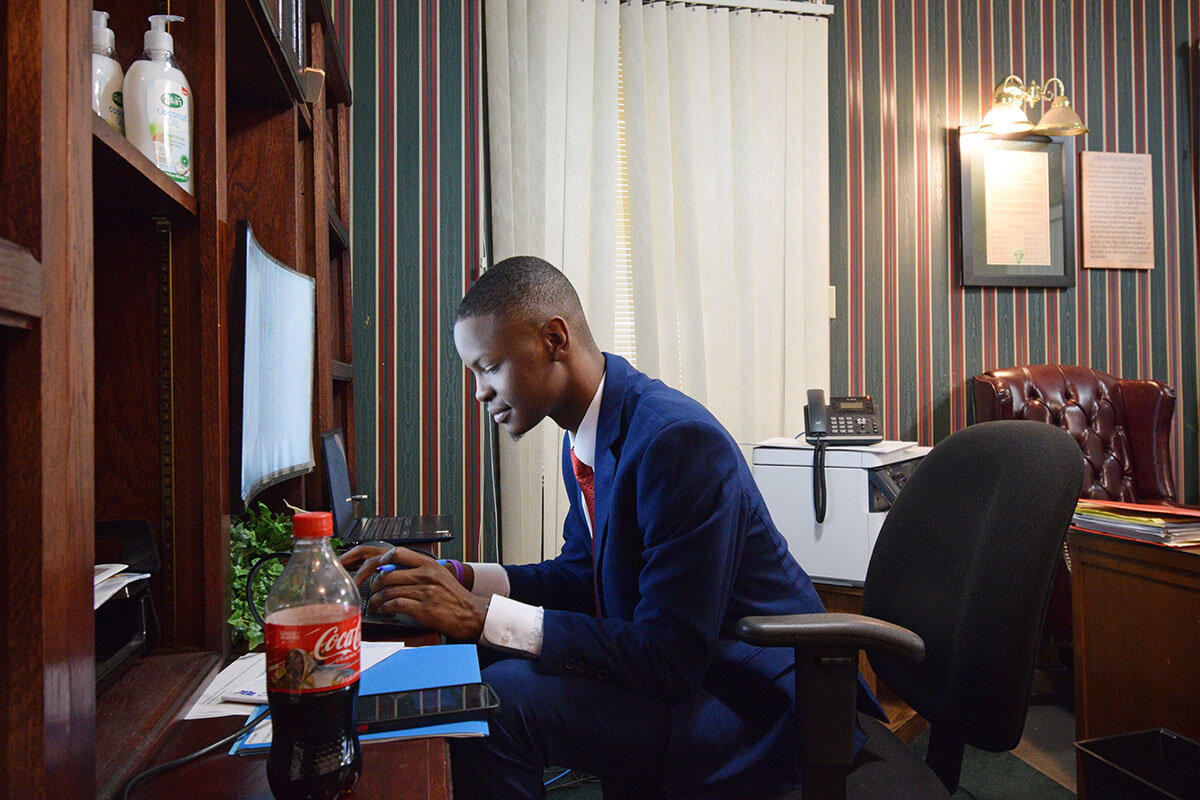
Photo: Sophie Hills/Christian Science Monitor.
Mayor Jaylen Smith prepares for his first City Council meeting in Earle, Arkansas, on Jan. 24, 2023.

Have you noticed how many Gen Z people (born roughly 1997 to 2012) have been running for office? I think it’s a great sign of commitment to a better world — and probably disappointment with what older folks have done to the world.

Here is a teen who just became a mayor in Arkansas.

Sophie Hills reported in January at the Christian Science Monitor, “Many teenagers consider their wardrobes a statement of their identity. For 18-year-old Jaylen Smith, that means a suit instead of jeans and a backpack. Today, the new mayor of Earle, Arkansas, has dressed with special care: a navy two-piece suit, crisp white shirt, and brown dress boots. His tie is red. 

“Tonight, he will call the City Council to order for the first time as mayor. He’s also heading into Memphis – 30 miles away – to buy his own car, a Nissan Altima. …

“If he’s nervous about his big speech, it doesn’t show. … He works with his door open to the street, an invitation to his town. 

“Whether he’s in his office, on the road, or stopping at a parking lot to pick up chicken salad – and pause for a selfie with the guy selling it  – Mr. Smith is always on the phone. Dialing a number, he talks to a woman whose house just burned down. ‘Is there anything we can do for you?’ he asks. He listens to her response, nodding, and promises he’ll call the Red Cross. …

“Mr. Smith is the youngest Black mayor in the country, according to the U.S. Conference of Mayors. He won in a runoff election, pledging to staff police 24 hours a day, tear down derelict buildings, and bring back the supermarket that closed down a few years back. …

“Mr. Smith graduated from Earle High School in 2022. Instead of packing for college and leaving, he spent the rest of the year campaigning door to door and shadowing mayors around the state.

“Perhaps more notable than Mr. Smith’s age is his choice not to leave Earle. As he tells Christopher Conway, his former high school counselor, ‘I always wanted to change my community before moving on to my next phase of life,’ he says. …

“Earle, Arkansas, population 1,800, may seem frozen in time by a lack of money and a declining population. The sense of community buy-in and optimism is clear in the halls of the elementary and high schools, and the well-attended City Council meeting – with an agenda including reports from the police chief and the water and sanitation department, and a debate about zoning. 

“Tucked on the side of Highway 64, Earle boasts three dollar stores and two schools, and a small grocery store that’s been around since 1945. The number of abandoned buildings suggest that Earle has seen better days – that Mayor Smith is pledging to revive. 

“Earle rose out of the post-Civil War timber boom that gave life to so many other small towns dotted along Southern railroads. Today, the town is majority Black. But its painful history includes lynchings and a race riot over school conditions, not to mention its namesake, landowner Josiah Francis Earle, who was active in the Ku Klux Klan.

“Eugene Richards, a photographer, writer, and filmmaker, found himself in Earle in the late 1960s as a member of Volunteers in Service to America. At the time, Earle was separated into white and Black, he says, ‘divided by the classic railroad tracks.’

“Mr. Richards and several VISTA volunteers helped start a paper, Many Voices, which reported on Black political action and the Ku Klux Klan. He was friends with the Rev. Ezra Greer and his wife, Jackie Greer, civil rights activists who led a march protesting segregated schools in 1970. When the marchers were confronted by an angry white crowd, five Black marchers were wounded. … Mr. Richards says, ‘Time went on and things slowly changed.’

“Mr. Richards, who compiled photos and interviews for a 2020 book about the town, says that while the violence of segregation may be in the past, Earle faces new challenges. ‘There’s a weariness – the town is going down very fast,’ he says.

“As student government president for his last three years at Earle High School, Mr. Smith implemented tutoring programs and an advocacy committee for students with learning disabilities. He was also a student advocate for special education students, and dealt with his own learning disability while in school. Those activities taught him how to get resources from the state, he says. After a visit to Washington, D.C., for a mayoral conference, he’s optimistic about receiving more federal grants as well. …

“Between learning the ropes of public office and taking a college course online as he pursues his degree – one class at a time for now – Mr. Smith doesn’t have much free time.

“His phone rings again. This is the part of the job he doesn’t like: being pressured for favors. In this case, he stands his ground over the open clerk position. Every applicant has to turn in an application, he says firmly. …

“Off the phone, he runs down his goals as mayor. He wants to improve public safety, including fully staffing the police department, currently at two full-time and four part-time officers; set up public transportation; and tear down those abandoned houses.

“He’s already spoken with a local business that has agreed to help demolish houses, and he’s confident he’ll find resources to achieve the rest of his goals. ‘They’re there,’ he says. …

“While Mr. Smith, a Democrat, aspires to higher office, he says he isn’t focused on party politics. He attends local Democratic and Republican party meetings to ‘see how they both do,’ he says.

“Mr. Smith opens an envelope and a check falls out of the card inside. He dusts chip dust from his fingers and makes another call: ‘What do I need to do with checks that come in the mail?’

“ ‘I can’t accept money as an elected official,’ he explains after. ‘But I can donate it to the city.’

“Donald Russell, a retired truck driver, was skeptical when Mr. Smith announced his campaign. But after getting to know him, he has ‘high hopes.’ And Mr. Smith ‘has a lot of community support,’ he says. …

“Thirty minutes before the council meeting, Mr. Smith stands up, puts on his suit jacket, locks the door, and crosses the street to the council chamber. People trickle in after him – one asks to take a photo together. Every seat is full, and residents are standing at the back. Mr. Smith opens the meeting, occasionally leaning over to check next steps and procedure with his more experienced companions. Then he stands to deliver his speech, announcing his goals to fully staff all police shifts and institute a neighborhood watch program.

“He ends with a quote from the Bible to nods, murmurs of approval, and applause from the room: ‘Let us not weary in doing well, for a new season we shall reap.’ ”

More at the Monitor, here. No firewall.

Read Full Post »

Photo: Time magazine, 2020.
At 15, scientist Gitanjali Rao made history with a device to detect lead in drinking water. ‘You don’t need a PhD to make a difference,’ she says.

More kids are getting into science these days, and I think their enthusiasm is going to benefit us all.

Anne Branigin reports at the Lily, “Gitanjali Rao just finished her final exam of the year and, like any other teenager, is eager to begin her summer.

“The 15-year-old is, in many ways, not your typical teen. She landed on the cover of Time magazine in 2020 as its inaugural ‘Kid of the Year’ for her scientific achievements, which include building a device, Tethys, that detects lead in drinking water.

“But Rao doesn’t see herself as exceptional. In fact, when she was younger, she didn’t even see herself as ‘the science type.’ She was driven, instead, by trying to find solutions to problems in her community. Once she discovered science and technology could be a means of finding those solutions, there was no turning back.

‘Using science and technology as social change became something that was intuitive to me and something that I wanted to keep doing,’ she said. …

“Rao says her passion for STEM has shaped her days and her goals — she is working on creating a global network of young innovators to tackle global problems. It also fuels her relentless optimism for the future and all its possibilities. …

“Anne Branigin: I’m curious what a normal day looks like for you during a very not-normal year.

“Gitanjali Rao: A normal day obviously involves being your normal high school student, just, you know, maintaining a social life, still doing homework every single day, studying for exams. But then there’s this added layer of my research and innovations. A lot of my work has been focused on running my innovation workshops for students all over the globe, which is also taking up a little bit — a lot of my energy and time trying to maintain that sort of situation as well. And also just being, even remotely, in the public eye obviously comes with its own perks, but also disadvantages of being able to manage that as well. …

“I love helping people. I love using science and technology to do that. So that priority always comes first. … I don’t do eight things at a time. I might do eight things in a day, but not eight things at a time because I know what I need to focus on. I know how to prioritize my work. …

“Anne Branigin: On the subject of your generation, there’s a recent study showing that interest in STEM is at an all-time high among young people.

“Gitanjali Rao: It honestly makes me really happy to see younger generations engaging in science. Today’s kids are tomorrow’s innovators and they [will] make the world better, stronger and more sustainable in the future. …

“Anne Branigin: What do you think makes your generation’s approach to science unique?

“Gitanjali Rao: So a question that I commonly get is, what is one word to describe your generation? And I like to say, hotheaded — but in a good way. Our generation, if we put our mind to something, we want to get it done. That’s how I have been. That’s how a lot of my friends have been. …

“Anne Branigin: In the past, we haven’t always seen people of color and women and other members of marginalized communities really be the drivers of this technology. I’m curious how you’ve been thinking about equity and how those conversations have come up with your peers.

“Gitanjali Rao: My generation is destined to be innovators more than any generation that came before. And we’re the first generation to grow up as natural innovators because of how we live, where we live and what we have access to from a technology standpoint.

“Where I want to see that equity change is in education. Access to resources is something that obviously people have faced across the world. It’s an issue still to this day. It’s the 21st century, and we’re still talking about girls and women struggling to get education. But what it’s important to recognize is that a lot of times, the ideas start in the bare minimum.

“With my device, Tethys, to detect lead in drinking water, I started with a cardboard box and a couple of drawings on a piece of paper. And honestly, what that turned into was not looking at what resources I had, but dreaming big and then thinking back to reality.

“So equity is something that we need to work together to make a difference. But until then, it’s about using what we have on hand. Most of the innovators that I talk to online don’t have their driver’s license. I don’t have my driver’s license. But at the same time, it gives me this opportunity to be like, ‘Okay, with the resources that I have on hand, without having money to spend, what can I do?’ “

More at the Lily, here.

Read Full Post »