Feeds:
Posts
Comments

Posts Tagged ‘glacier’

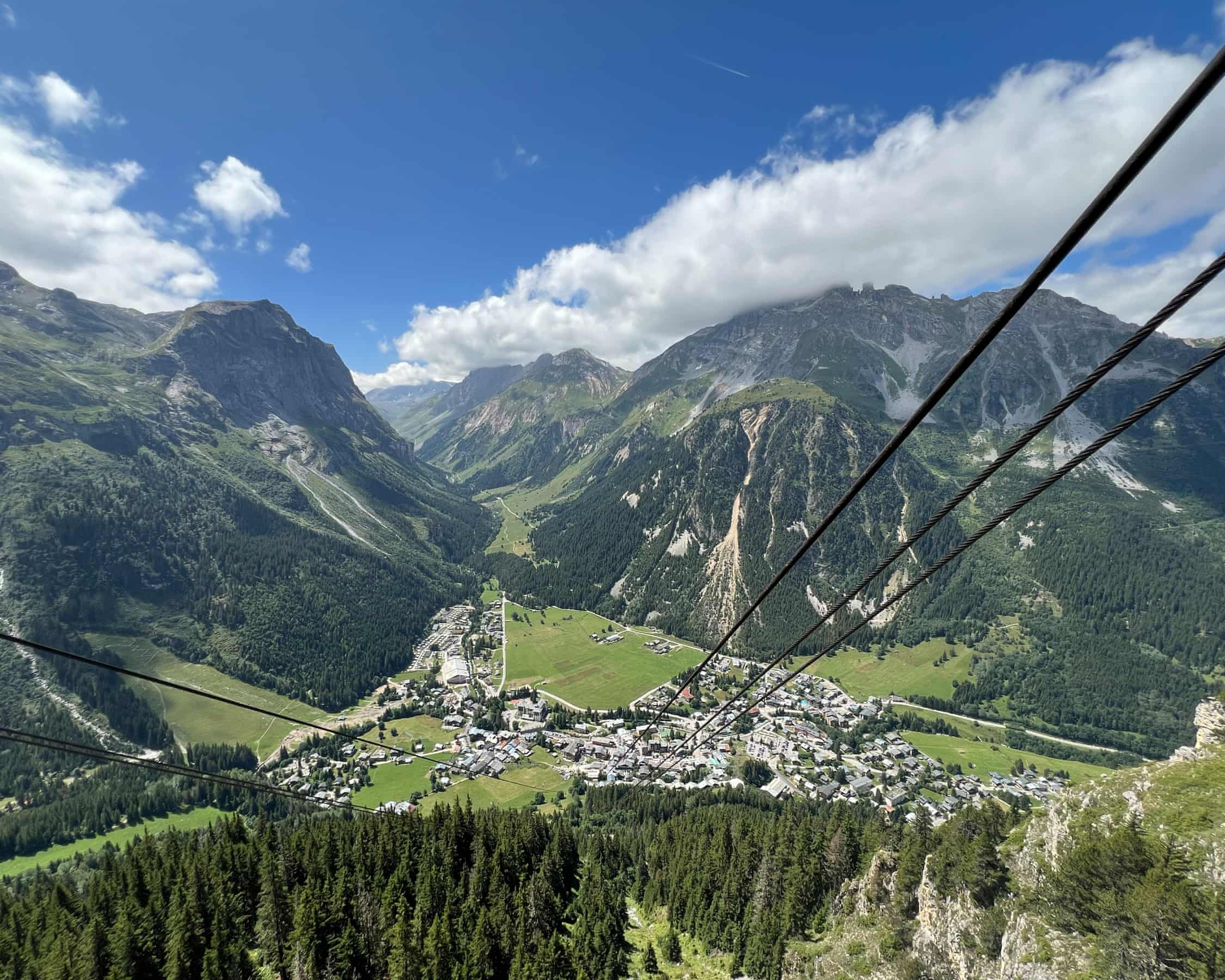
Photo: Kim Willsher/The Guardian.
Pralognan-la-Vanoise in the French Alps is in danger from global warming. An engineering operation to prevent catastrophic flooding will cost about €400,000 ($465,000). 

As discouraging as it is to read another story about global warming, one has to feel a little hopeful that human ingenuity keeps tackling its effects.

Kim Willsher reports at the Guardian about how engineering is fighting back in France. I leave it to you to decide whether putting humans first or the glacier first would be best.

The villagers of Pralognan-la-Vanoise in the French Alps know well the perils posed by the mountains that encircle them. Avalanches, rockfalls, mudslides, sudden crevices and torrents of water are within the living memory of most villagers, and every day the climate emergency throws up new dangers.

“Less than a year ago, an enormous lake formed by a melting glacier was discovered high above Pralognan that experts feared could inundate the village with more than 60,000 cubic metres [15,850,000+ gallons] of icy water. …

“As used to natural hazards as local people are high up in the Alps, they are not, however, an idle threat. The Swiss village of Blatten was wiped out by a rock and ice avalanche in May and last year a mountain lake swollen by heavy rainfall caused torrential flooding in La Bérarde in the Isère, forcing inhabitants to flee the hamlet. They have not returned.

“Today, an engineering operation is under way to prevent such a catastrophic scenario in Pralognan. Three workers have been helicoptered to the Grand Marchet glacier at an altitude of 2,900 metres [1.8 miles] to gouge a [narrow] ‘overflow channel’ in the ice. …

“ ‘The aim is to help the water find its way down the mountain gradually and avoid a rapid emptying of the lake,’ said David Binet, the director of the mountain land restoration service (RTM) for the northern Alps, part of the national forestry commission tasked with identifying and preventing natural hazards.

“ ‘What causes the problems and damage with torrents in the mountains is not the water but the stones, gravel, sand and even large rocks it brings down with it.’

“The glacier blocks the lake from spilling down the mountain but it is shrinking at a rate of 2 to 3 metres [6.6 to 9.8 feet] a year. There is also the risk that that the warmer waters of the lake could form a channel gush from underneath.

“Binet said his agency was examining 300 of the estimated 600 lakes in the Alps and Pyrenees one by one for such hazards. The Pralognan operation will cost about €400,000 [$465,000)]. …

“The idea of taking mechanical shovels to glaciers already shrinking at an alarming rate was deemed the least environmentally damaging option. Olivier Gagliardini, a glacier expert at Grenoble University, described it as ‘unfortunate, but necessary.’

“Martine Blanc, the mayor of Pralognan, said … ‘We asked ourselves could it wait but on the principle that prevention is better than cure we decided to go ahead,’ she said. ‘We decided to anticipate events rather than suffer them. Nature is nature and there’s no such thing as zero risk.’ …

“Local shopkeepers say the number of tourists and hikers this summer is down, possibly because the campsite is closed, but Silvere Bonnet, the director of the tourist office, said he had had very few calls from potential visitors concerned about the lake. …

“On a sunny day, the giant rock faces etched with shimmering cascades that rise almost vertically have a benevolent beauty. An hour later in a rapid change of atmosphere, the peaks are cloaked in dark clouds and loom intimidatingly.

“ ‘They can appear rather menacing at first to visitors because they are so sheer,’ [Bernard Vion, a 66-year-old Alpine guide who has watched the expanse of water grow and the mountain change over his lifetime] said. The 66-year-old knows these mountains ‘like his pocket,’ as the French say. He made his first high-altitude climb aged eight with his father, also a guide. Both his grandfathers were Alpinists.

“Vion first spotted what he describes as ‘a puddle’ of water on the Grand Marchet glacier in 2019. Every year since he has watched it grow; it now measures almost 2.5 acres. …

“ ‘We are on the frontline of climate change here. We know it is happening,’ he said.

“Blanc agreed. … ‘People here are used to natural hazards. We’re used to avalanches, falling rocks, torrential floods and mudslides because we’ve seen them and lived with them since we were young. Local people understand there are things we can control and then those we cannot.’ ”

More at the Guardian, here.
Read Full Post »

Photo: Achille Jouberton at the Pamir Project.
Swiss scientists are tackling the mysteries of ice in countries that can be dangerous to work in.

Today Levi Bridges at the great international radio show The World brings you the latest on glaciers in Kyrgyzstan and Tajikistan, countries that could be more important to us than we realize as we wallow in the anxieties of our own places, those bits of Earth we imagine are the only important ones.

“On a sunny summer day two years ago,” Bridges reports, “a massive chunk of ice broke off from a glacier on a mountain in the Central Asian country of Kyrgyzstan.  An avalanche quickly raced down the mountain toward a group of hikers below, which one man caught on film.

“The hikers braced themselves for impact as the cascade of snow and ice poured down the mountain toward them. Miraculously, the group survived with only several people receiving minor injuries

“The event highlighted the challenges facing the world’s glaciers. This year, the UN declared that climate change reached record levels in 2023. And glaciers, which hold most of the Earth’s freshwater, are melting at an unprecedented rate. 

“But some glaciers located in mountainous parts of Central Asia aren’t melting and, in some cases, are actually growing. This cold, arid region, known as the Third Pole, is one of the only places in the world outside the interior of Antarctica where ice has so far been relatively unaffected by the climatic changes associated with rising temperatures.

“Even during the summer it remains so cold in parts of Tajikistan that ice on a glacier’s surface can turn into a gaseous state instead of melting through a process known as sublimation. That can cause spectacular ice formations on a glacier’s surface that look like inverted icicles or ice pyramids, according to Evan Miles, a glaciologist at the Swiss Federal Research Institute who studies Tajikistan’s glaciers. …

“Miles is the scientific coordinator for a team of Swiss and international scientists who have formed a research group known as the Pamir Project that hopes to discover what makes some of the region’s glaciers so unique. Each summer, they travel to isolated locations in Tajikistan’s mountains to study glaciers.  Scientists must spend days trekking up to altitudes sometimes as high as 15,000 feet just to visit their research sites, carrying in supplies and scientific equipment by donkey. 

“Miles said the remote locations the team visits in Tajikistan pose different challenges than research sites he has visited on Mount Everest where there are established trails and usually other people nearby.

“ ‘In Tajikistan, there’s nobody — there’s no helicopter that’s going to come rescue you if something goes wrong,’ he said. 

“But understanding these glaciers is worth the risk because millions of people in Asia depend on them as a water source.

“Scientists believe these glaciers aren’t melting because water is evaporating from vast, irrigated farmland in nearby Pakistan, China and Uzbekistan. An increase in atmospheric moisture drives changes in weather patterns, so more snow gets dumped on Tajikistan’s glaciers and helps their size remain stable. 

“These mountains are just one of many unsolved mysteries glaciologists are working on. It can be difficult for scientists to predict how much ice most glaciers will lose — and when — because there are still basic unanswered questions, like how much snowfall many mountains get. …

“Scientists who are part of the Pamir Project have [teamed up] with historians and geographers who are searching for Soviet documents that contain earlier data about Tajikistan’s glaciers. Some members are also conducting oral histories with locals in Tajikistan’s mountains.

“Sofia Gavrilova, a researcher at the Leibniz Institute for Regional Geography in Germany that’s helping with the initiative, met a Tajik schoolteacher as part of her oral history work who kept dated records of changes in the level of a local river.

“ ‘This is really very valuable, large-scale data that you cannot necessarily capture any other way,’ Gavrilova said. …

“Although some of Tajikistan’s glaciers remain stable for the moment, scientists predict that they, too, will eventually start to melt and get smaller. Researchers believe it will prove very difficult to stop that process after it starts.

“ ‘Let’s say that we actually manage to withdraw carbon from the atmosphere effectively by 2050, there’s still actually going to be quite some time, probably 20 to 30 years, that the glaciers will continue shrinking and losing mass,’ said Miles, of the Pamir Project.

“He stressed that every effort we make to stop global warming — even by lowering the Earth’s temperature by just a tenth of a degree — can help save the world’s glaciers in the long run.”

More at The World, here. There’s no paywall, and you might enjoy some delightful pictures of the local people in that part of Asia.

Read Full Post »

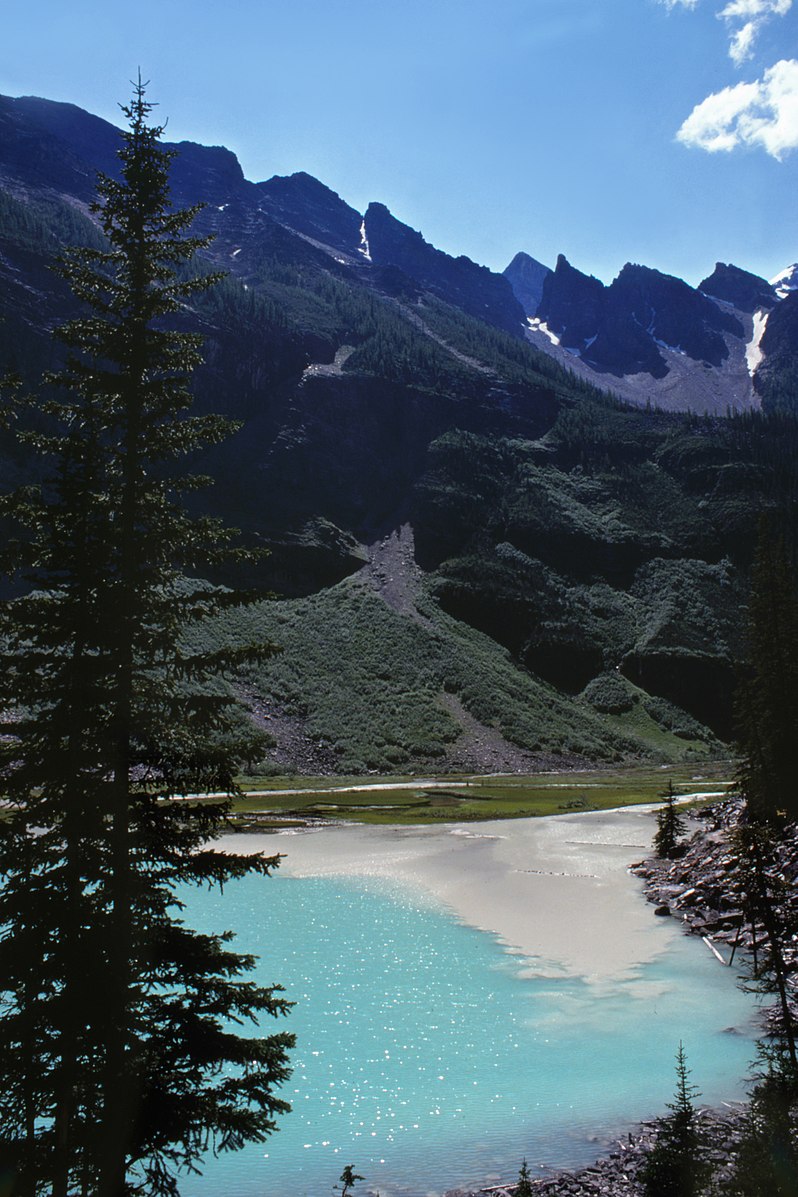
 Photo: WikiPedant/ Wikimedia.
An example of “glacial rock flour” pours into Lake Louise, Alberta, Canada. 

Here’s a new-to-me theory: a discharge from our melting glaciers may be able to soak up some of the unwanted carbon in the atmosphere.

Dino Grandoni writes at the Washington Post, “Minik Rosing grew up around the fine mud flowing from Greenland’s glaciers. It wasn’t until much later, when his own daughter had grown up and was in her mid-20s, that he realized how special it is.

“During a family vacation in rural Greenland, where there was no electricity, she was fishing ice out of a milky-blue fjord for a gin and tonic when that mud gripped her feet so tightly that she had to abandon one of her boots.

“As temperatures rise, meltwater is flushing out millions of tons of this stuff: ultrafine powder ground down by the island’s melting glaciers. Geologists have a culinary-sounding name for the microscopic particles: ‘rock flour.’

“The loss of his daughter’s boot got Rosing thinking. Maybe those tiny grains of rock could be used to trap something much bigger: the carbon emissions that are altering the frozen landscape and way of life on the island.

“ ‘Greenland has been seen as the example and the horror story of climate change, and never been portrayed as a part of the solution,’ said Rosing, a geology professor at the University of Copenhagen in Denmark who was born in Greenland.

“As global emissions continue to rocket, he is part of a growing group of scientists looking for ways to suck carbon right out of the sky, an example of a sometime contentious suite of technologies called geoengineering. …

“Give it enough time and most of the carbon dioxide that humanity is pumping into the air will be taken back by the planet. CO2 dissolves in rainwater and reacts with rocks to form carbon-containing compounds that lock the gas out of the atmosphere. That naturally occurring process, called ‘chemical weathering,’ literally petrifies the air.

“The problem — at least for us humans — is that chemical weathering takes millennia to work its carbon-absorbing magic. Humanity doesn’t have that kind of time: The U.N. Intergovernmental Panel on Climate Change says society needs to drastically reduce CO2 emissions by the end of the decade. The situation has gotten so bad that the panel of scientists says we need to develop ways of pulling carbon from the air to avert catastrophe.

“So what if we could speed things up? What if, Minik Rosing and other scientists wonder, we exposed more carbon-absorbing rocks to the carbon-laden air? They call that technique ‘enhanced weathering.’

“Most enhanced-weathering proposals involve pulverizing tons of basalt or other rocks and spreading them across the land. But all that crushing would consume an enormous amount of energy that might result in more greenhouse-gas emissions. That’s where rock flour comes in.

“Glaciers flow over the bedrock like a slow-moving river. Over centuries, the tremendous weight of the ice grinds the rock underneath into a fine powder only a few ten-thousandths of a centimeter, or microns, in diameter — finer than most sand found on a beach. …

“The fineness of the grains is the flour’s advantage. It gives the substance an enormous surface area to expose to the air, making it an attractive candidate for enhanced weathering. …

“To test how well rock flour stashes carbon, Rosing and [Christiana Dietzen, a soil scientist working with Rosing] hauled about 200 tons of the stuff from Greenland for experiments.

“The material packed a one-two punch, according to a pair of papers the researchers published last year: Not only did it suck up carbon when spread over farm fields in southern Denmark, but it also enriched the soil with nutrients and increased the yield of corn and potatoes in the first year of application.

“The researchers estimate that, given enough time, spreading rock flour on all agricultural land in Denmark would suck up a quantity of carbon approximately equal to the annual emissions of that country (or of Hong Kong or Syria). Preliminary results show longer-lasting crop yields in nutrient-poor soil in Ghana.”

More at the Post, here.

Read Full Post »

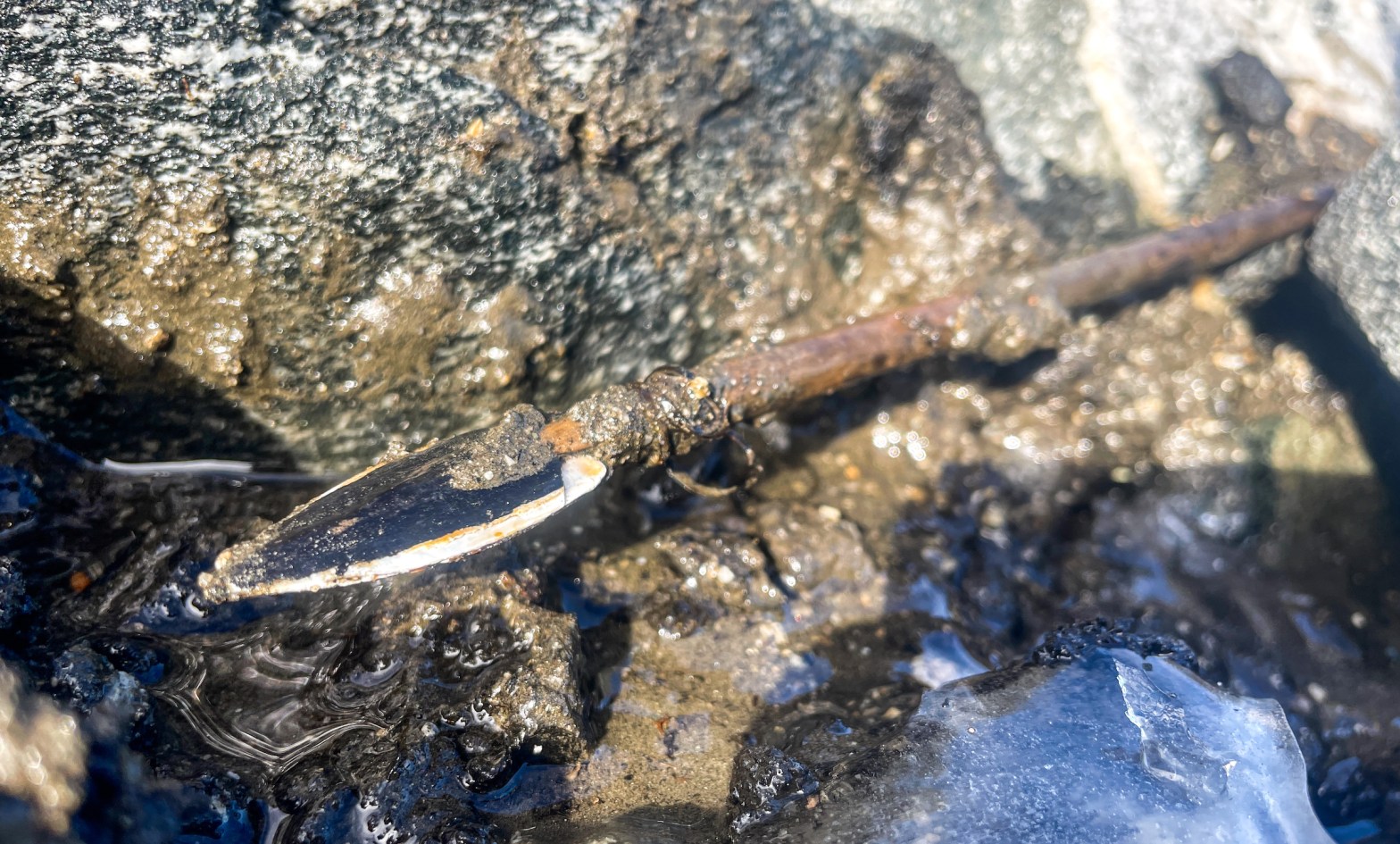
Photo: Espen Finstad/Secrets of the Ice.
Melting glaciers are revealing older and older artifacts. Archaeologists discovered the arrow above in Norway’s Jotunheimen Mountains. Made out of freshwater pearl mussel, it’s one of the best preserved findings so far.

I hesitate to say that anything about climate change has an upside, but we might as well enjoy the things that keep being revealed — at least until we reach the more important goal of controlling global warming.

At Hyperallergic, Maya Pontone reports on melting glaciers in Norway and the latest Bronze Age discoveries.

“Archaeologists trekking through the Jotunheimen Mountains in Norway’s Innlandet County,” Pontone writes, “came across a remarkable find — an intact shell arrow dating back to the Early Bronze Age. Fastened with an arrowhead made of freshwater pearl mussel, the well-preserved hunting tool dates back 3,600 years and is one of eight shell arrows that have emerged from melting ice in Norway in recent years.

“On September 13, archaeologist Espen Finstad and his research team came across the artifact while checking a site as part of a routine monitoring job they typically run at the end of the field season. While the discovery of the ancient weapon was an unprecedented surprise that day, it is just one of hundreds that the Secrets of the Ice glacial archaeology team has uncovered over the past decade due to climate change.

“ ‘The glaciers and ice patches are retreating and releasing artifacts that have been frozen in time by the ice,’ Lars Holger Pilø, co-director of the archaeology program, told Hyperallergic. …

“The archaeologists have been continuously rescuing artifacts from Innlandet’s glaciers and ice patches since the fall of 2006, when the first ‘big melt‘ hit the Jotunheimen Mountains, located northwest of Oslo. [It’s the] home of the mythological jötnar, the rock and frost giants in Norse folklore. …

“ ‘Now the artifacts are exposed and deteriorating fast, so we are in a race against time to find and rescue the artifacts,’ Pilø said.

“So far, the Secrets of the Ice research team has mapped 66 ice sites and recovered approximately 4,000 finds including hunting gear and tools, textile remnants, transportation equipment, and clothing materials. The team has also found biological specimens such as antlers, bones, and dung.

“ ‘Arrows with shell arrowheads only became known in Europe when they started melting out of the ice in Norway,’ Pilø explained about the recent discovery. …

“As global warming transforms Norway’s mountainous landscape, Finstad, Pilø and their fellow glacier archaeologists are rushing to collect the exposed artifacts, which continue to get older as the ice continues to melt.

‘Most of the ice here in Norway will be gone in this century,’ Pilø said. ‘You can say that we are melting back in time.’

“Just last week, the team recovered another arrow, this one with an intact quartzite arrowhead, that is ‘probably 3000 to 3500 years old,’ according to Pilø. The team also found an iron horse bit with remnants of a leather bridle, a Medieval horseshoe, a Viking age knife, and an arrowhead for a crossbow bolt this month.

“ ‘The finds are incredible, but the reason they are melting out is sad,’ Pilø said, explaining how the ice melt will lead to drastic changes in Norway’s landscape, local wildlife, agriculture, tourism, and hydro-electrical power plants dependent on glacial water.

“ ‘It will be a very different world,’ he lamented.”

Feel free to revisit my February post about amateur archaeologists in Norway — the three buddies who under cover of darkness have found hundreds of previously unknown rock-carving sites. Click here.

More from Hyperallergic, here.

Read Full Post »

Photo: Aaron Ufumeli/EPA.
Author Tsitsi Dangarembga has joined the Future Library, offering a work that won’t be read for 100 years. 

There are many ways artists can highlight how global warming is hurting the planet. Katie Paterson, for example, once created an installation that allowed people to listen in on the sound of glaciers melting. Now she has come up with the idea of a Future Library in hopes that it will still exist in 100 years so that people can read the works of the celebrated authors who have joined the project.

Alison Flood reports on one such author at the Guardian. “Tsitsi Dangarembga made the Booker shortlist for her most recent novel, This Mournable Body, the story of a girl trying to make a life in post-colonial Zimbabwe which was praised as ‘magnificent’ and ‘sublime.’ Her next work, however, is likely to receive fewer accolades: it will not be revealed to the world until 2114.

“The Zimbabwean writer is the eighth author selected for the Future Library project, an organic artwork dreamed up by the Scottish artist Katie Paterson. It began in 2014 with the planting of 1,000 Norwegian spruces in a patch of forest outside Oslo. Paterson is asking one writer a year to contribute a manuscript to the project – ‘the length of the piece is entirely for the author to decide’ – with Margaret Atwood, Ocean Vuong and Karl Ove Knausgård already signed up. The works, unseen by anyone but the writers themselves, will be kept in a room lined with wood from the forest in the Deichman library in Oslo. One hundred years after Future Library was launched, in 2114, the trees will be felled, and the manuscripts printed for the first time.

“The artwork ‘perfectly expresses my yearning for a human culture that centres the earth’s sustainability,’ said Dangarembga. ‘I share with many other dwellers of our beautiful planet a deep sense of concern for our home’s wellbeing.’ …

“The author, whose acclaimed debut Nervous Conditions (1988) was the first novel written in English by a black woman from Zimbabwe, said she was already “settling on the story” she would tell. She was not worried about the fact that she will never know how her writing is received.

‘I’m always my first audience. … A lot of my life has been writing into the void. So I’m used to writing into the void.’

“Paterson said that Future Library was ‘honoured’ to include Dangarembga. … ‘Tsitsi Dangarembga’s words have shaped the world. Praised for her ability to capture and communicate vital truths, the Zimbabwean novelist is admired worldwide as a voice of hope,’ said Paterson. ‘She examines oppression, discrimination, and systemic racism, through writing that is brave and unforgettable.’ …

” ‘I don’t think of myself in those terms,’ Dangarembga said. ‘So it’s really a great honour, I’m very pleased about it.’

Nervous Conditions, to which This Mournable Body is a sequel, was named by the BBC as one of the 100 books that shaped the world. Currently in Harare, the Zimbabwean author is working on a piece of non-fiction, and a speculative young adult novel. She is also awaiting a trial date after she was arrested during anti-corruption protests in Harare last year, and charged with intention to incite public violence. Authors and free speech organisations have called for the charges to be dropped, describing them as an outrage.”

More at the Guardian, here.

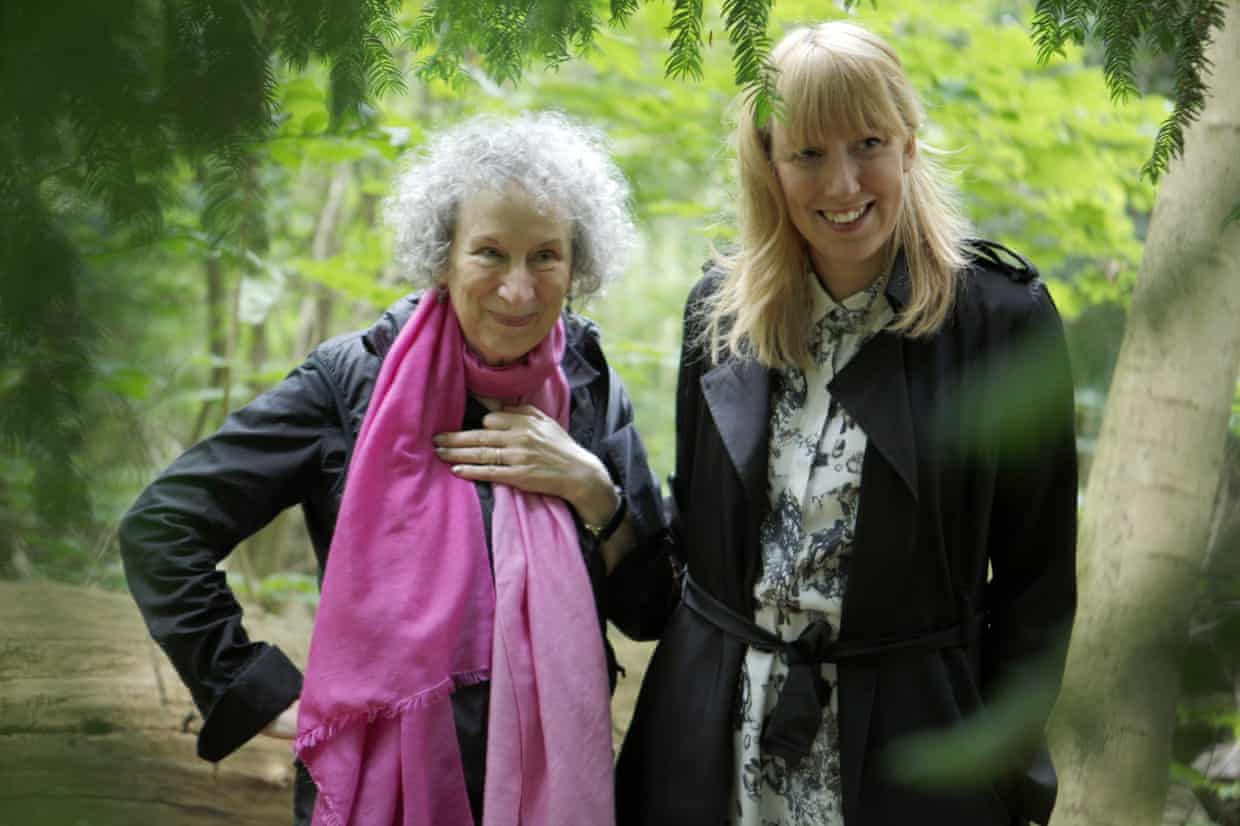
Photo: Giorgia Polizzi.
Novelist Margaret Atwood with artist Katie Paterson at the inauguration of the Future Library forest in Norway. 

Read Full Post »

At Public Radio International’s “The World,” David Leveille has a story on research at Ellesmere Island in northern Canada.  There, University of Alberta biologist Catherine La Farge is finding that some frozen plants are able to begin growing again after 400 years on ice.

“Cold as it may be during the winter,” writes Leveille, “it’s a part of the world where glaciers are melting and ice sheets are breaking up due to climate change.

“One glacier there is called the Tear Drop glacier. As it has melted, some interesting plant life was exposed.”

La Farge’s results, published in the Proceedings of the National Academy of Sciences “suggest that bryophytes, representing the earliest lineages of land plants, may be far more resilient than previously thought, and likely contribute to the establishment, colonization, and maintenance of polar ecosystems.” Who knows what else is under the glacier and about to be thawed out.

More.

Photo: Catherine La Farge
In vitro culture of Aulacomnium turgidum regenerated from emergent Little Ice Age plants beneath the Tear Drop Glacier, Sverdrup Pass, Ellesmere Island, Nunavut.


Read Full Post »