Feeds:
Posts
Comments

Posts Tagged ‘gypsy’

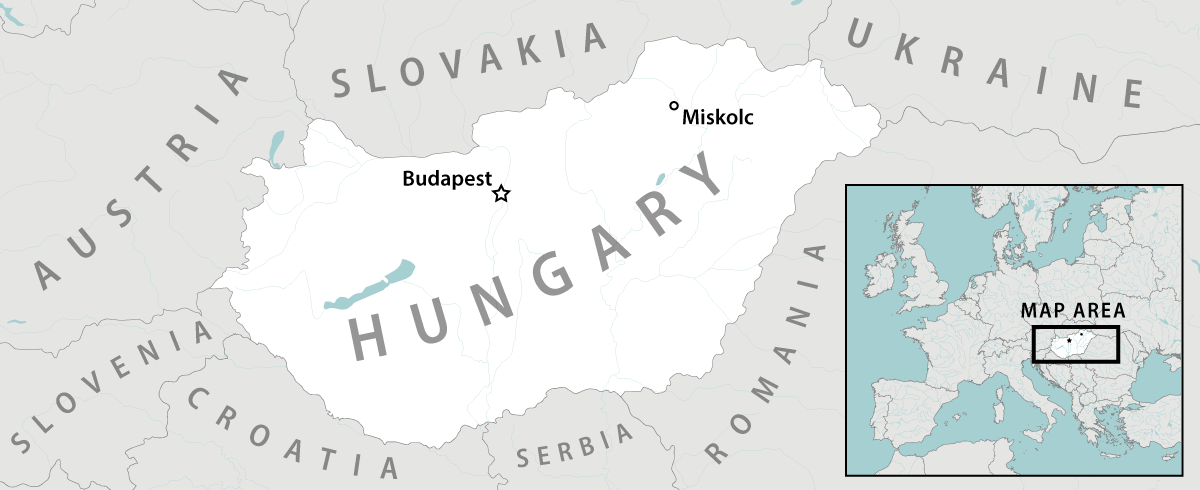
Map: Jacob Turcotte/CSM Staff.
Map showing the location of the Roma school that borrows from Buddhism.

Oppressed people have many things in common even when they live on opposite sides of the world. So the wonder is that they don’t learn from each other more often, as the Roma in today’s article have learned from the “untouchables” of India.

Marc Loustau has the story at the Christian Science Monitor.

In Miskolc, Hungary, “Classes begin with a gong, not a bell, at the Dr. Ambedkar School. Each morning, 125 students in grades nine through 12, all from the local Romani community, enter the school grounds beneath a brass plaque embossed in both Hungarian and Hindi. The text marks the life of the school’s namesake, Bhimrao Ramji Ambedkar, India’s first post-independence minister for law and justice.

“The inscription finishes by invoking the school’s religious mission: ‘[Dr. Ambedkar] is a Buddhist saint,’ it reads.

“Dr. Ambedkar never set foot in Hungary, much less in the provincial northwestern city of Miskolc where the school was established in 2006. But members of Hungary’s Roma community learned about Dr. Ambedkar’s transformative work, in which he helped outlaw India’s caste system last century and improved the lives of his fellow Dalits in India. And they recognized a kindred spirit.

“The Dr. Ambedkar School is working to empower intellectual and political leaders from within Hungary’s Roma community, based on the Indian social reformer’s example. And while his neo-Buddhist worldview may seem like an odd bedfellow for Roma activism, the two are finding remarkable synchronicity among the school’s students.

“ ‘The role of the school is more than that of an educational institution, but rather a community institution that treats students with respect and dignity, providing a sense of hope and respect to Roma who are otherwise treated as outcasts by the mainstream society,’ says Jekatyerina Dunajeva, a political scientist with Central European University’s Romani Studies Program. ‘What permeates the culture of the school is a keen awareness of justice, fairness, and opposition to oppression.’

“Dr. Ambedkar was a leader in India’s independence movement in the 1930s as well as a member of the country’s oppressed Dalit group. In 1956, he founded the neo-Buddhist movement, also known as Ambedkarite Buddhism, which looked at Buddhism as a vehicle for social reform. In particular, neo-Buddhism turned into a means for Dalits – who face rampant discrimination at the bottom of Hinduism’s caste ladder – to leave the system that was oppressing them.

“Romani activist János Orsós learned about neo-Buddhism in the late 1990s by reading a biography of Dr. Ambedkar.

Then in 2005, he traveled to India, from which the Roma ethnic minority originally emigrated nearly 1,000 years ago. There he saw that both members of the Roma community and Indian Dalits struggle with problems like racism, discrimination, and segregation.

“In his memoir about finding Buddhism, Mr. Orsós noted he was most impressed by his visits to Dalit Buddhists’ schools.

“ ‘The Dalit people run these institutions themselves, not white people,’ he wrote, ‘I saw people like me take their destiny into their own hands through Buddhism and that is what I wanted to do.’

“Hungary’s educational system is highly segregated. Many Romani children attend Roma-only schools that are often underfunded and staffed by poorly trained teachers who do not understand Roma’s distinctive culture and history. Today, 60% of Romani children drop out of school, compared with 8.9% of the general population.

“Mr. Orsós believed that his Roma community could be empowered and emboldened by Ambedkarite Buddhism’s basic principles: educate, agitate, organize. So he founded the Dr. Ambedkar School in 2006.

“The school draws its 125 students from Miskolc, which has a population of around 161,000, and its surrounding villages, of which around 58,000 are Romani, according to Hungary’s 2012 census. Teachers prepare students for Hungary’s national graduation exams in areas like mathematics, literature, and history. But students also learn lessons drawn from Dr. Ambedkar’s life of activism.

“ ‘I would call myself an activist, too,’ student János Kun says. Like Dr. Ambedkar, Mr. Kun has grown up in extreme poverty and struggles against racism.

“ ‘There are eight of us in my family,’ the 20-year-old says. ‘Six of us children live in one room.’ His parents have only a sixth grade education, and he will be the first of his family to graduate from high school. He is the eldest child and helps care for his younger siblings in a house without running water.

“Romanis and the Dalits are the same, Mr. Kun says, down to their social status. ‘We are a caste,’ he declares. ‘We are at the very bottom level of society. But I’m not embarrassed to be poor.’ …

“The biggest threat to the school’s future [is the government’s] ‘work-based society’ program. Under this scheme, the government lowered the mandated school attendance age from 18 to 16, and expanded government work programs to provide employment to young people. [Prime Minister Viktor Orbán] has promoted the idea that those who aren’t succeeding in school should be diverted into the workplace where they can practice practical trades.

“But the work-based society program creates problematic incentives for Romani students, who are already struggling against discrimination in hostile school environments, to leave and seek out an easy and immediate paycheck.”

Find out why at the Monitor, here. No paywall.
Read Full Post »

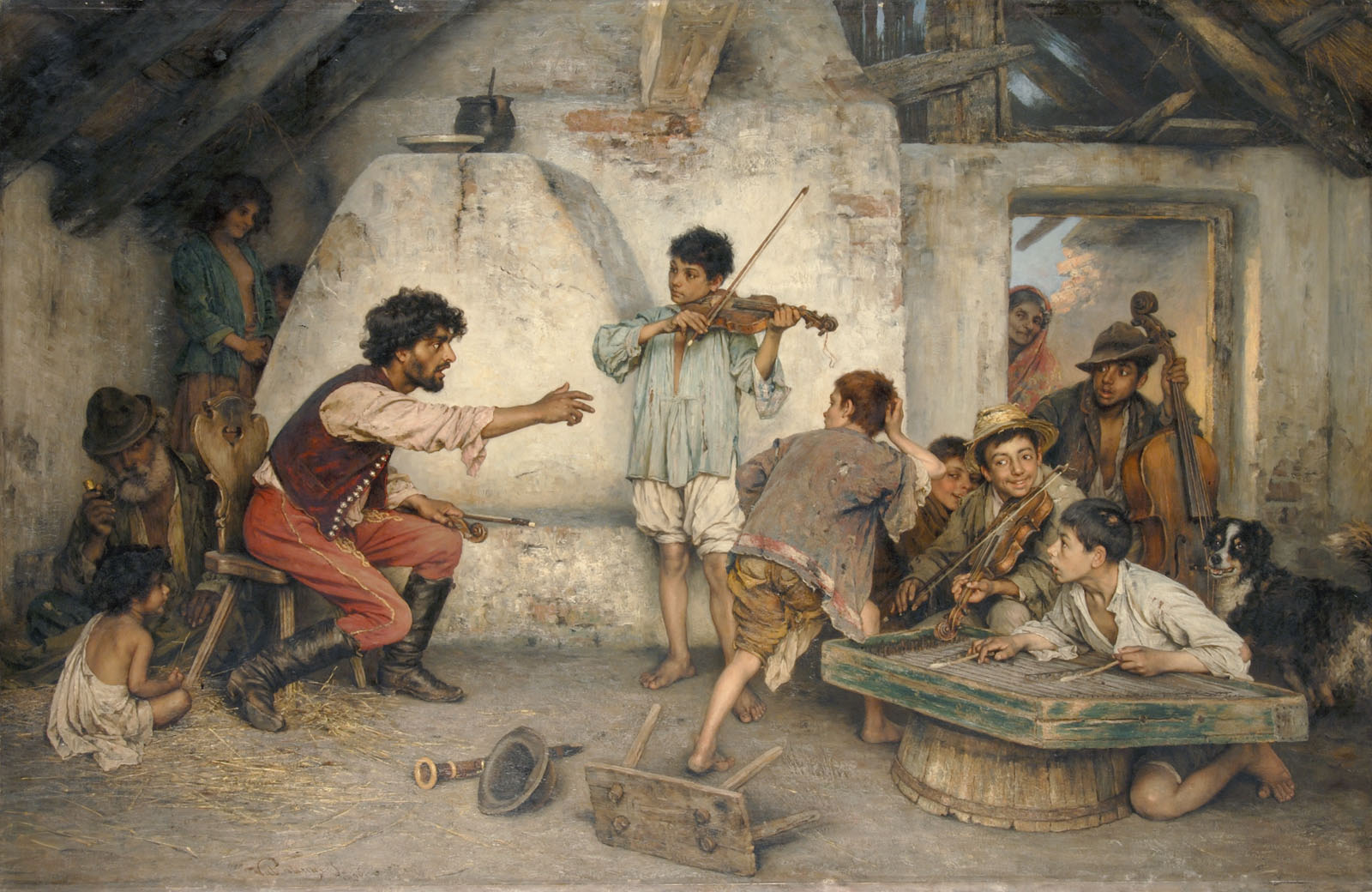
Art: Valentiny János.
János depicts Romani people in Hungary in the old days. Today a new radio show in Hungary highlights the many sides of of these people, especially Roma women.

Revisiting the notion that no group is a monolith, I take a look today at Hungarian Roma women. Persecuted throughout history in the many countries where they traveled, Roma (“travelers,” “gypsies”) have an especially tough time in Hungary, according to many observers. That’s why a new radio show featuring Roma women has been especially important for sharing Roma lives with non-Roma listeners.

Orla Barry writes about it for Public Radio International (PRI): “Szandi Minzari knows she’s different from most Roma women in Hungary. The divorced, single mother is one of the leading broadcasters on Radio Dikh, a radio station in Budapest, whose presenters are all Roma. 

“The station began broadcasting in February 2022 with the aim of raising the profile of Hungary’s large Roma community, as well as upending some of the negative stereotypes that still exist about the group.

“[In September], the European Parliament issued a statement saying that Hungary is no longer a fully functioning democracy. EU lawmakers laid out a long list of fundamental rights they believe are under threat, including the electoral system, judiciary independence and the protection of minorities. The Roma are Hungary’s largest ethnic minority.

“Minzari’s weekly radio show ‘Zsa Shej,’ which means ‘Let’s go, girls,’ in the Romani language, tries to cover subjects that are usually taboo in the Roma community, including those pertaining to relationships, menstruation and family issues. …

“Her co-host, Melanie Nagy, is also a divorcee and a single mother. Divorce is really uncommon among Roma, Minzari said, adding that many Roma women often stay in abusive relationships out of fear of poverty or shame. 

“One of Minzari’s friends, who was recently divorced, has now been ostracized by her family, she said. …

“Listeners of Radio Dikh, which is the Romani word ‘to see,’ are both Roma and non-Roma. The station’s motto is ‘about Roma, not just for Roma.’ The shows feature music and literature by Roma artists.

“Minzari’s father comes from a long line of traditional musicians, although he doesn’t play an instrument. He runs his own construction company, employing mainly Roma workers.

“Minzari describes herself as half-Roma, half-Hungarian because her mother is not Roma. When her parents first got together more than 35 years ago, there was a lot of hand wringing in her father’s family, Minzari said. …

“Minzari is proud of her Roma roots, but she still remembers being singled out in school by her teacher and labeled cigány, meaning ‘gypsy.’

“That was 23 years ago. Segregation of Roma children continues in Hungarian schools to this day. 

“In 2020, the country’s Supreme Court ordered an elementary school in Gyongyospata to pay compensation to Roma families for ‘unlawful segregation and substandard education.’ Before the ruling, Hungarian Prime Minister Viktor Orbán suggested the school should refuse to pay out any money if ordered. Instead, he suggested it was the Roma children who had created a threatening environment in the school, which led non-Roma parents to take their children to a school in a neighboring town.

“Bernard Rorke, the advocacy and research manager with the European Roma Rights Center in Budapest, has been campaigning against school segregation in Hungary since 2000. 

“Conditions for Roma have deteriorated since Viktor Orbán returned to power in 2010, Rorke said. 

“ ‘The European Commission initiated infringement proceedings against Hungary for school segregation more than five years ago and more recent EU reports have noted that segregation in Hungarian schools has actually worsened,’ he said. ‘But the Orbán government has done nothing to address it.’

“But not everyone agrees. István Forgács, who is Roma and a regular commentator on Hungarian TV, believes that segregation in schools comes down to demographics. 

“ ‘The Roma have more children than non-Roma,’ he said, ‘and the high number of Roma kids in certain schools is mostly because of this difference.’

“Forgács said he believes Orbán has been doing a good job as prime minister over the last 12 years and has ‘helped the Roma socially integrate.’

“ ‘This government has helped people to have more income, both Roma and non-Roma. It has helped Roma to have more jobs and also to get closer to the non-Roma community,’ Forgács said.

“But Rorke, with the European Roma Rights Center, said unemployment remains a big issue among Roma in Hungary, and those who have a job are often paid far less than the minimum wage. …

“During the migrant crisis in 2015, when over 1 million people fled to Europe, mainly from Syria and Afghanistan, Hungary refused most asylum requests. Hungary’s Justice Minister László Trócsányi said the country was unable to take in migrants because it already had its hands full dealing with its own Roma population. …

“Roma commentator Forgács said he wasn’t offended by the remarks and that the Orbán government just wanted to point out that it has its own challenges providing for its own people. 

“Orbán’s name is rarely heard on Radio Dikh — Minzari said she shies away from politics. In Hungary, the majority of the country’s news media is government-controlled or owned by Orbán allies. 

“Péter Erdélyi, director of the independent news outlet 444.hu in Budapest said … ‘There are lots of very difficult issues that people need to talk about in Hungarian media, but they won’t because they know that, as soon as there is even a remote whiff of criticism of government policies, there could be all sorts of problems around funding and licenses and whatnot. There’s an understanding that you are allowed to keep doing what you do, if you do not engage in politics,’ Erdélyi said.

“Minzari said the only criticism she has received about her show, so far, has come from members of the Roma community who disagree with her views. Non-Roma listeners have been hugely supportive, she said. ‘And even if people do complain, at least we’ve got them talking,’ Minzari said.”

More at the World, here. The World is on at 3 pm weekdays where I live, but you can get it anywhere and at different times. You are going to hear stories there that you are unlikely to hear anywhere else. It really does connect you with the world.

Read Full Post »

Roma families (also called gypsies, tinkers or travelers) have a hard life in Europe. Recently, Elisabetta Povoledo wrote at the New York Times about some Roma women who are hoping to build a better life for their families by starting food businesses.

“On a muggy July evening, a handful of Italian hipsters milled around a food stand at an alternative music festival in Rome, trying to decipher some of the exotic offerings: mici, sarmale and dolma.

“These Balkan delicacies — barbecued meatballs, cabbage wraps and stuffed peppers — are the basic ingredients of an entrepreneurial scheme cooked up by a group of Roma women looking to better their lives and leave the overcrowded and insalubrious camp in Rome where they currently live.

“They call themselves the Gipsy Queens.

“ ‘Cooking? I’ve been cooking practically since I was born,’ said one of the chefs, Florentina Darmas, 33, a mother of three, who is originally from Romania. …

“Nowadays she is trying to break down some of the barriers faced by her traditionally marginalized group using the universal language of food. …

“ ‘We realized there was unexpressed potential in the community, especially on the part of women,’ said Mariangela De Blasi, a social worker with Arci Solidarietà Onlus, a Rome-based nonprofit organization that works with marginalized people and manages the burgeoning catering business. …

“If their entrepreneurial plans pan out, the Gipsy Queens hope to buy a food truck or rent a kitchen on a more permanent basis — foundations for steady work that will bring in rent money.

“ ‘Getting out [of the camp] is my first priority,’ said Hanifa Hokic, 31, a divorced mother of five children between 8 and 12 years old, who is originally from Bosnia. …

“Maria Miclescu, a 20-year-old mother of two, agreed that to give her children ‘a better future,’ she had to leave. Her husband is trying to establish a small-appliance repair business …

“The oldest member of the group, Mihaela Miclescu, 49, who is a grandmother, was happy to join the Gipsy Queens.

‘I wanted to show Italians that we are not bad people, that we want to work, not to beg.’

More here.

Photo: Gianni Cipriano for the New York Times
Maria Miclescu, left, and Codruca Balteanu at a food stand run by the Gipsy Queens during a music festival in Rome. 

Read Full Post »

I am a huge fan of Tyne Daly, the actress. I enjoyed her on the TV series “Cagney and Lacy,” was blown away by her Mama Rose in the musical “Gypsy,” and am not at all surprised by Ben Brantley’s July 8, 2011, glowing review of her portrayal of Maria Callas in “Master Class.”

He writes, “Ms. Daly transforms that script into one of the most haunting portraits I’ve seen of life after stardom.”

But I was not always a fan. No way. Not when Tyne was taking all the ingenue roles at the Jr. Antrim Players in Suffern and a cute guy I knew was always drooling about “Time for Tyne.”

Nope. Starting with Gilbert & Sullivan’s “HMS Pinafore,” in which I was crummy ol’ Cousin Hebe, Tyne snared all the lead roles. We girls in wallflower parts would hiss to one another with resentful envy, “Of course, she comes from a theater family,” and  “Her father is James Daly,” and “The whole family does summer stock.” We didn’t like to admit that Tyne was also very comfortable and capable on the stage, had a sweet voice, and was pretty.

Fortunately we grew up and learned to give credit where credit is due.

Read Full Post »