Feeds:
Posts
Comments

Posts Tagged ‘hairdresser’

Ashifa Kassam reports at the Guardian that the town of Norman Wells in Canada’s far north is in need of a hairdresser.

“After two years of having to use sheep shears and scissors, Norman Wells is going public with their plight …

“Wanted: one hairdresser. Must be willing to withstand temperatures that can drop as low as -50°C (-58F) and be able to rectify years of DIY trims and amateur styling.

“After two years of making do without a hairdresser, the isolated northern Canadian town of Norman Wells in the Northwest Territories – population 800 – is going public with their plight …

“ ‘It’s been a long struggle for us,’ said Nicky Richards, the economic development officer leading the recruitment effort for this town that sits near the southern edge of the Arctic Circle. ‘We just don’t have anyone.’ …

“Many residents have had to turn to family members to cut their hair or attempt to do it themselves. ‘We’re trying to figure out ways to maintain ourselves,’ said Richards, who regularly gives the same buzz cut to her husband, a friend and her boss. ‘I’m not a hairdresser by any set of means, but I do have a set of clippers and that’s what I use,’ she told the Guardian. …

“Over the decades, several hairdressers have come and gone from Norman Wells, leaving behind a workspace in a local inn outfitted with chairs, mirrors and a sink. It’s currently available for lease, meaning any entrepreneurial hairstylist need only bring their tools and products. As the town serves as a hub for several surrounding communities, the potential clients number in the few thousand.

“The recruitment effort will hopefully get people thinking about the varied business opportunities available in Canada’s north,’ said Susan Colbeck, who works at the local branch of the Canadian Imperial Bank of Commerce, while also solving a longstanding grievance. ‘We definitely need someone. Anyone who came here would be loved so much.’ ”

More here.

Photo: Alamy
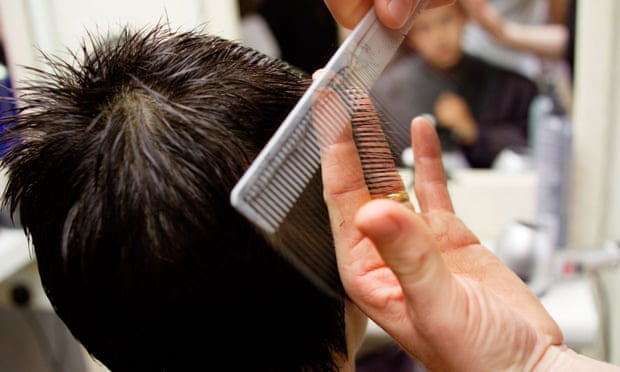
Many Norman Wells residents have had to turn to family members to cut their hair or attempt to do it themselves.
Read Full Post »

I don’t know what it is about stories like this, but they really float my boat.

Here is an ordinary woman, a hairdresser who loves hairdressing, who tried to recreate an ancient hairstyle and ended up making a discovery that got published in a scholarly journal. What it took was being openminded, curious, and persistent.

As Abigail Pesta writes in the Wall Street Journal, Janet Stephens tried to re-create on a mannequin a hairdo she had seen on a bust of the Roman empress Julia Domna at the Walters Art Museum in Baltimore.

” ‘I couldn’t get it to hold together,’ she says. Turning to the history books for clues, she learned that scholars widely believed the elaborately teased, towering and braided styles of the day were wigs.

“She didn’t buy that. Through trial and error she found that she could achieve the hairstyle by sewing the braids and bits together, using a needle. She dug deeper into art and fashion history books, looking for references to stitching.

“In 2005, she had a breakthrough. Studying translations of Roman literature, Ms. Stephens says, she realized the Latin term ‘acus’ was probably being misunderstood in the context of hairdressing. Acus has several meanings including a ‘single-prong hairpin’ or ‘needle and thread,’ she says. Translators generally went with ‘hairpin.’

“The single-prong pins couldn’t have held the intricate styles in place. But a needle and thread could. It backed up her hair hypothesis.

“In 2007, she sent her findings to the Journal of Roman Archaeology. ‘It’s amazing how much chutzpah you have when you have no idea what you’re doing,’ she says. ‘I don’t write scholarly material. I’m a hairdresser.’

“John Humphrey, the journal’s editor, was intrigued. ‘I could tell even from the first version that it was a very serious piece of experimental archaeology which no scholar who was not a hairdresser—in other words, no scholar—would have been able to write,’ he says.

“He showed it to an expert, who found the needle-and-thread theory ‘entirely original,’ says Mr. Humphrey, whose own scholarly work has examined arenas for Roman chariot racing.

“Ms. Stephens’ article was edited and published in 2008, under the headline ‘Ancient Roman Hairdressing: On (Hair)Pins and Needles.’ ”

More.

Photographs: Janet Stephens

Read Full Post »