Feeds:
Posts
Comments

Posts Tagged ‘hands’

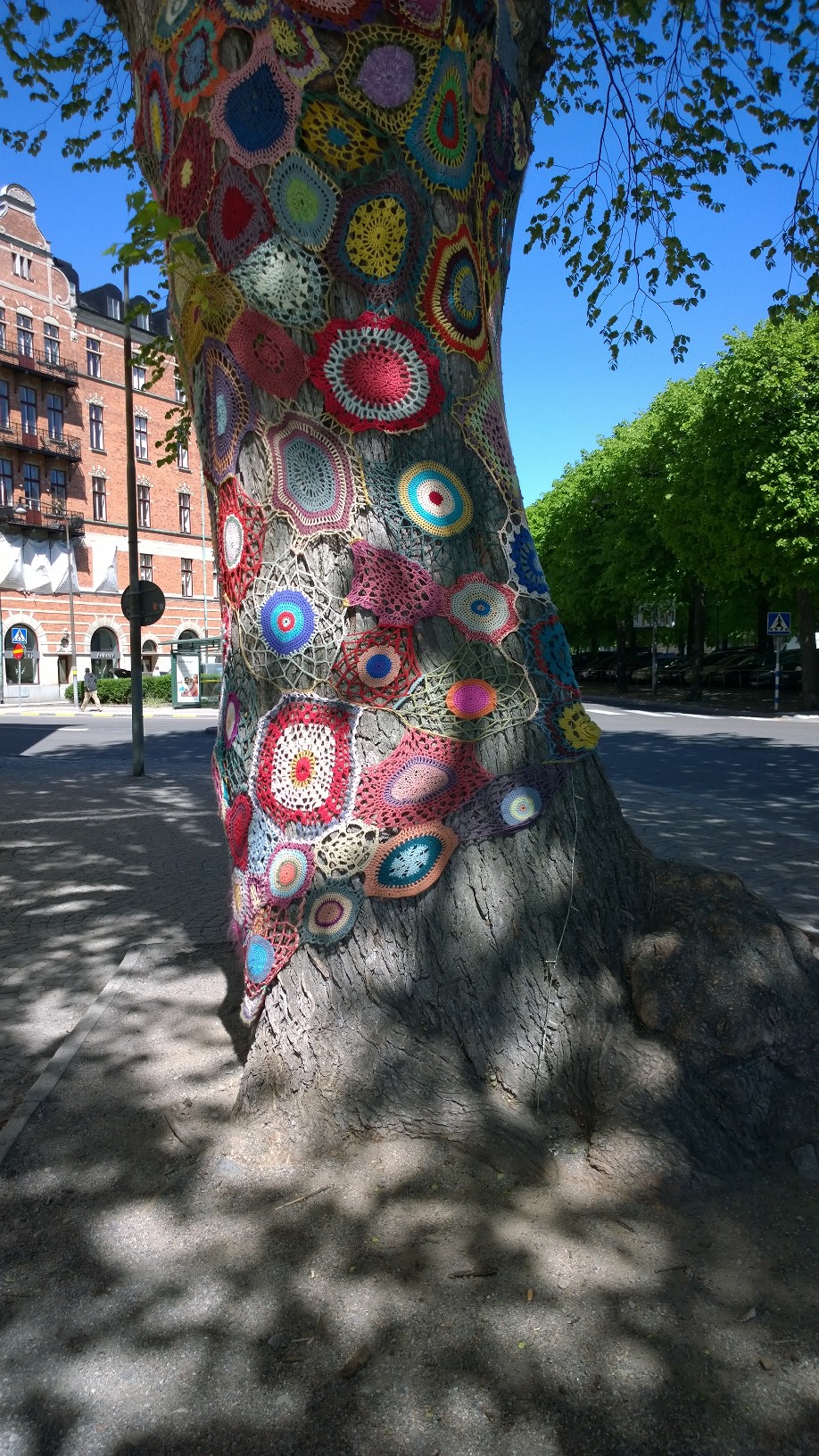
052917--crocheted-tree-Stockholm

Photos: Suzanne and John’s Mom.
Crocheted tree in Stockholm, 2017.

Working with your hands, creating something that is all you — how satisfying that can be! Today’s story is on the latest research showing that that can be good for you and the people around you.

As Nicola Davis wrote at the Guardian, “Winston Churchill had painting, Judi Dench is famous for her rude embroidery and Tom Daley has been known to knit at the Olympics. Now researchers say we could all benefit from creative endeavors and that such pursuits have a bigger influence on life satisfaction than having a job.

“While arts and crafts have long been used to aid mental health, experts said most research has looked at their effect on patients rather than the general population, and tend to look at specific activities.

“However, the researchers have now said such interests could be an important tool for improving public health in general.

“Dr Helen Keyes, a co-author of the research from Anglia Ruskin University, said: ‘It’s quite an affordable, accessible and ultimately popular thing for people to do. And that’s key. You’re not going to be shoving something down people’s throats that they don’t want to do.’

“Writing in the journal Frontiers in Public HealthKeyes and colleagues reported how they analyzed data from more than 7,000 people aged 16 or over who took part in the face-to-face ‘taking part survey’ by the UK Department for Culture, Media and Sport between April 2019 and March 2020.

“As part of the survey participants were asked to rate various aspects of their well-being on 10-point scales, report whether they took part in arts or crafts, and provide demographic details.

“The team found that just over 37% of participants reported taking part in at least one art or craft activity in the past 12 months – ranging from painting to pottery and photography. …

“The results revealed that people who engaged with creating arts and crafting had greater ratings for happiness, life satisfaction and feeling that life was worthwhile than those who did not, even after taking into account other factors known to have an impact – including age, gender, deprivation, poor health, and employment status. …

“Among other results the team found engaging in arts and crafts was associated with an increase in happiness on a par with aging by 20 years (as Keyes notes, well-being goes up slightly with age), while the sense that life was worthwhile was more strongly associated with crafting than being in employment.

“Keyes said [the reults] might reflect that not everybody is in a job they find fulfilling, while people often have a sense of mastery or ‘flow’ when undertaking arts and crafts – experiencing control, achievement and self-expression. …

“Keyes said smaller clinical trials have suggested engaging in arts and crafts can increase well-being. Keyes also acknowledged the increases in well-being associated with creating arts and crafting were very small – on average engaging in such activities was only linked with a 2% higher rating for the feeling that life was worthwhile. But, she said, the results remained meaningful at a population level. …

“Keyes said that backing such activities would offer a simpler route for governments to improve the nation’s well-being than other factors that are known to have a big effect. …

“ ‘But it’s a really quite cheap, easy, accessible thing for us to engage people in.’ ”

What was the last craft you tried your hand at? I made a pottery vase.

More at the Guardian, here. No paywall.

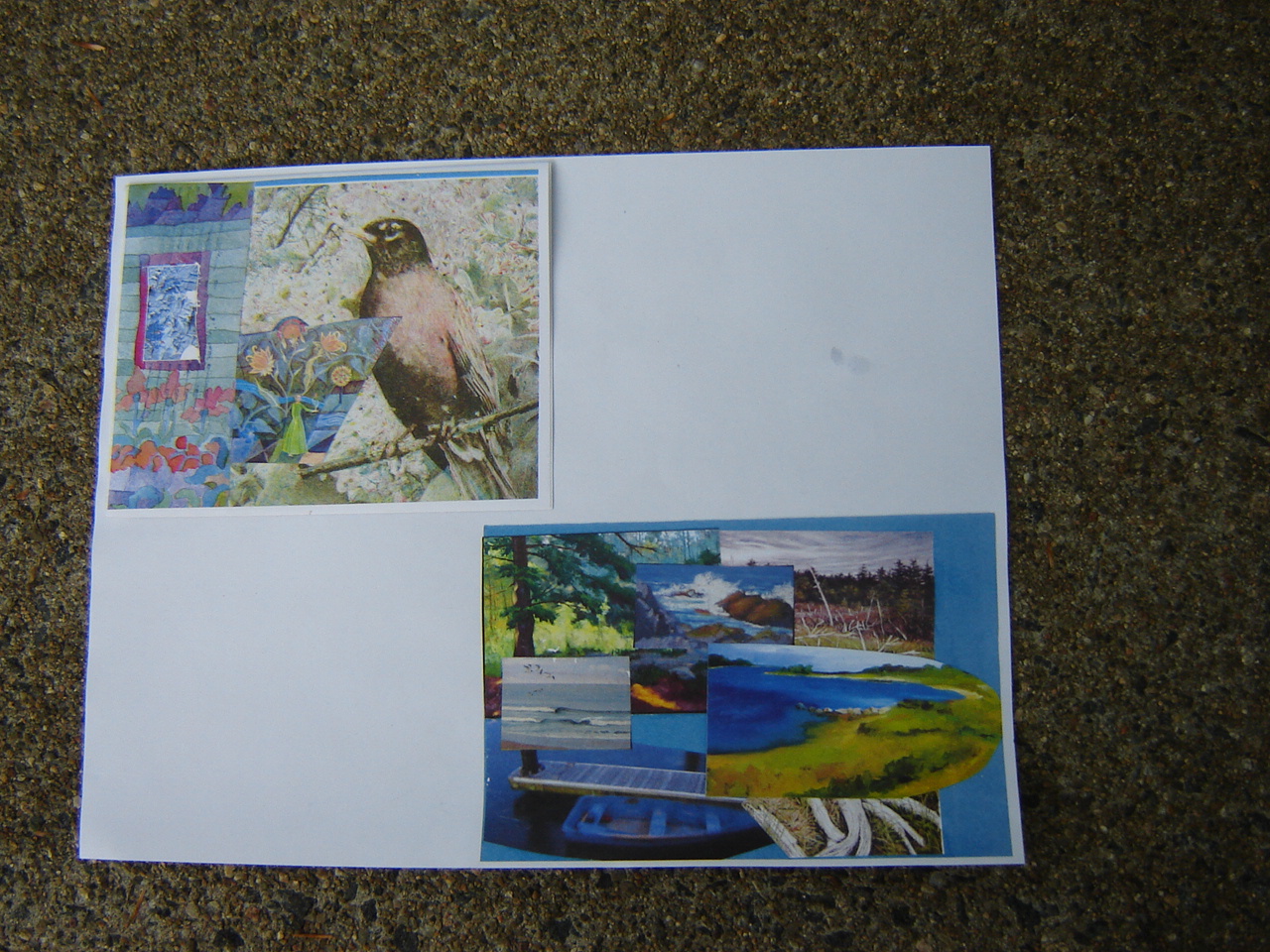
I used to make collage greeting cards.
Read Full Post »

maxresdefault

You already know that certain gestures mean different things in different languages. It can get confusing. Now there’s a dictionary to help you out, François Caradec’s Dictionary of Gestures.

At the Times Literary Supplement, Thea Lenarduzzi writes, “Caradec’s Dictionary, newly translated into English by Chris Clarke, lists some 850 gestures that ‘successively address each part of the body, from top to bottom, from scalp to toe by way of the upper limbs’, and may be used as well as or instead of speech. They are numbered and ordered in a taxonomy running from 1.01 (‘to nod one’s head vertically up and down, back to front, one or several times: acquiescence’) to 37.12 (‘to kick an adversary in the rear end: aggression’), and accompanied by Philippe Cousin’s illustrations.  The majority of them are what the psychologist David McNeill has called ‘imagistic’, by which parts of the body are arranged to figure an imagined object or action. …

“Adam Kendon calls [this type of non-verbal expression] ‘visible action as utterance’ in his seminal Gesture (2004) – as a sub-category of body language more broadly, which comprises both conscious (that is, learnt) and unconscious (instinctive) movements.

“As social anthropologists have shown, though, the line between the two is sometimes fuzzy – learnt behaviour can become automatic, as a number of Caradec’s entries confirm. For example: grasping one’s throat when choking (which the American Red Cross lists as the universal gesture for choking); gritting one’s teeth (‘Vigor. Resistance.’); or yawning, hand in front of the mouth (‘bored’). We are in the realm of gesture when the movement is a deliberately crafted expression (note the Latin root, gerere, to bear or wear, which suggests that a gesture is ‘put on’, like a costume); otherwise, where the mind has wandered, body language may betray feelings you had not intended to make public. There can also be a question about sincerity. An action executed for show, in the knowledge that it will not translate to anything concrete – a politician, say, fraternizing with factory workers – is ‘merely a gesture’. …

“While certain aspects of body language may indeed overcome language barriers, the same cannot be said for many of the gestures Caradec catalogues. One culture’s gesture for something may resemble another culture’s gesture for something else: an Italian might bring her fingertips together and repeatedly move the wrist backwards and forwards to ask her interlocutor, informally, what, precisely, he thinks he is doing/saying/looking at. Do this in a busy bar in Leeds, though, and it is likely to communicate another matter entirely.” More here.

I’m thinking that fiction writers who use characters from different cultures would be wise to study this book to get the gestures right.


Read Full Post »

Photo: Kensy Cooperrider
A man in the village of Gua, Papua New Guinea, points while describing a representation of Yupno history. Recent research confirms the long-held hunch that every culture uses hands in communicating.

Esperanto was meant to be a bridge between native languages, and I still believe in its potential. But three cheers for languages that don’t need bridges at all.

Blogger KerryCan mentioned one universal yesterday: music. Today’s post is about the nearly universal language of gestures — “nearly” because some gestures have wildly different meanings depending upon the culture.

Kensy Cooperrider writes at Aeon, “In the spring of 1528, the Spanish explorer Álvar Núñez Cabeza de Vaca made landfall on what is now the gulf coast of Florida. Over the next eight years, as he and a small party traversed thousands of miles, they found themselves in a new-world Babel, moving from ‘one strange tongue to another’. In their many encounters with native peoples, their own tongue, Spanish, proved of little use. But their hands served them well. ‘You would have thought, from the questions and answers in signs,’ de Vaca later recounted, ‘that they spoke our language and we theirs.’

“De Vaca is not the first or last explorer to claim successful communication with indigenous peoples through gesture. Similar reports abound. … Sometimes, the messages conveyed were surprisingly sophisticated. If you stay until morning, we will feed you. In that direction, there are goats and pigs of all sizes. The people in that direction eat human flesh. 

“The parties in these exchanges could not have known it at the time, but they were following the advice of Joseph Marie Degérando, a French philosopher with an anthropological bent. In 1800, he wrote a treatise offering practical advice for would-be explorers and ‘philosophical travellers’. …

“Degérando’s proposals swam with the tide of much of Western thinking. The notion that gesture is a natural mode of expression – one that transcends the contrivances of culture – is a very old one. In 95 CE, the Roman rhetorician Quintilian wrote that ‘though the peoples and nations of the earth speak a multitude of tongues, they share in common the universal language of the hands’. …

“[When] Europeans were impressed by the universality of gesture, they were mostly impressed by the strength of their own intuitions. They had not actually been to ‘all regions of the habitable world’. They had no photographs, videos or other visual documents to consult. …

“In the past 50 years, however, much has changed. Technical limitations have evaporated. Video-recording technologies are now cheap, portable and easy to use; video files can be readily stored, swapped and posted online in massive databases. …

“In every group yet studied, the hands at least occasionally stir and take flight as people talk. We are certainly capable of communicating without these aerialist accompaniments, but our hands tend toward motion.

“A second preliminary point is that evidently not all gestures are universal. Most, perhaps all, human communities harbour a storehouse of hand gestures with fixed meanings, which are often called ‘emblems’. Examples of emblems in the English-speaking world include the shhh gesture (an index finger held vertical across the mouth), the peace sign (an outward-facing V made with the index and middle fingers), and the thumbs up. Notoriously, such gestures can lead to confusion or worse. Another emblem, the okay gesture, made by forming a ring with the thumb and index finger, is perfectly benign in the US but a provocation elsewhere.

“Emblems might be what many think of when they first think of gestures, but in the United States and perhaps most other places they are only rarely put to use. (Try to recall the last time you shhh-ed someone, or gave a thumbs up.) What people produce much more often are gestures for ‘yes’ and ‘no’; points to people, places and things; gestures that sketch objects, actions and represent abstract ideas through visual metaphors. These are the real workhorses of gestural expression. And, as it turns out, a case can be made that these workhorses are broadly similar the world over.”

More here. It’s a thoughtful article, and I will only add that if you help immigrants learn English, as I do, the shhh gesture and the thumbs up appear frequently. In fact, teachers and students pantomime pretty much anything that is not easily accessible using Google Translate.

Read Full Post »