Feeds:
Posts
Comments

Posts Tagged ‘handwriting’

Photo: North Wind Picture Archives/Alamy.
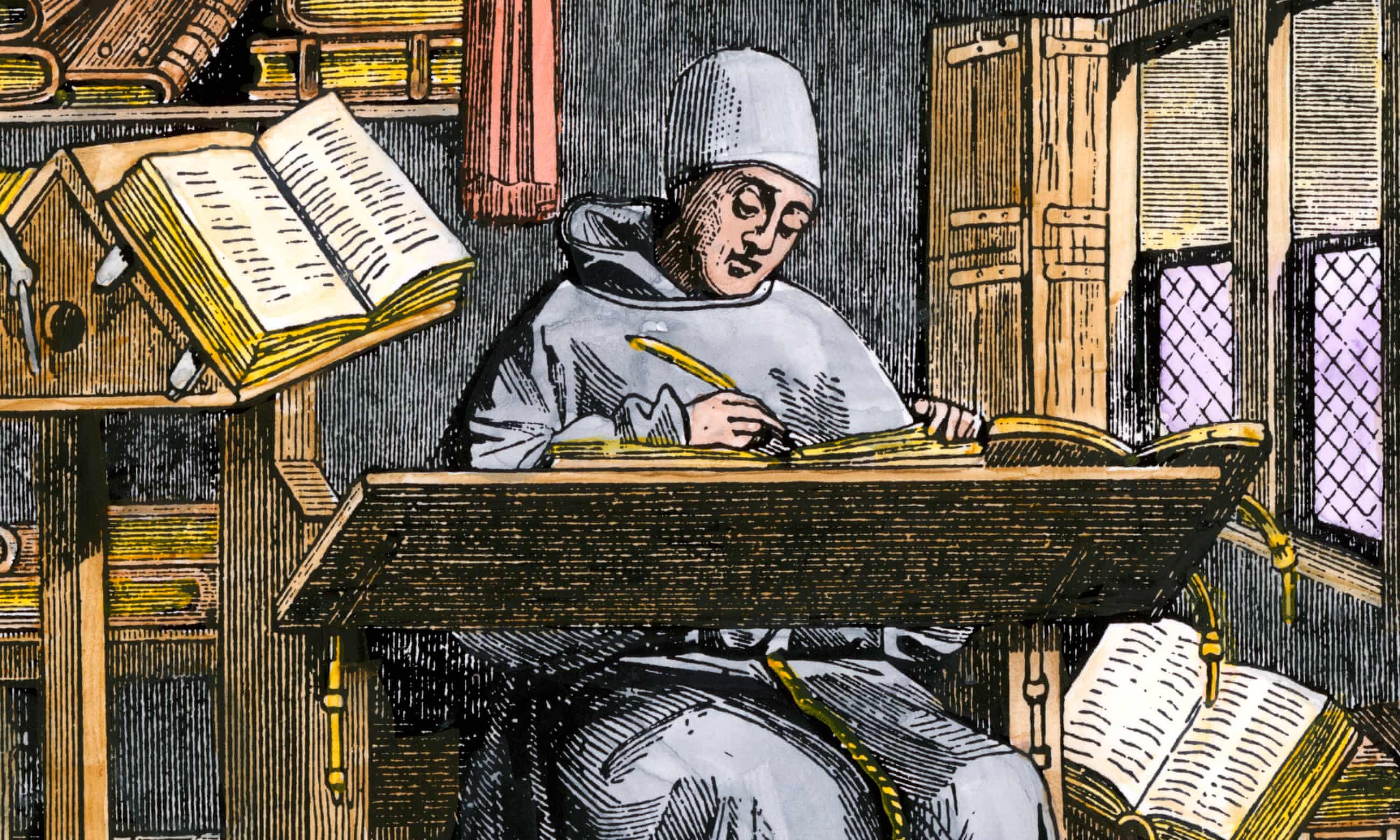
A monk writing by hand.

When I mentioned that string teachers have found that beginning students no longer have the finger strength for pressing down strings, Erik wondered what they had been doing in the old days that made their fingers stronger.

One thing they had been doing was writing by hand, not just swiping. Turns out we’ve lost something important.

Additionally, as Christine Rosen says at the Guardian, “In the process we are in danger of losing cognitive skills, sensory experience – and a connection to history.”

She beings by citing the autopen, “a device that stores a person’s signature, replicating it as needed using a mechanical arm that holds a real pen.

“Like many technologies, this rudimentary robotic signature-maker has always provoked ambivalence. We invest signatures with meaning, particularly when the signer is well known. … Fans of singer Bob Dylan expressed ire when they discovered that the limited edition of his book The Philosophy of Modern Song, which cost nearly $600 and came with an official certificate ‘attesting to its having been individually signed by Dylan,’ in fact had made unlimited use of an autopen. Dylan … acknowledged that: ‘using a machine was an error in judgment and I want to rectify it immediately.’

“Our mixed feelings about machine-made signatures make plain our broader relationship to handwriting: it offers a glimpse of individuality. Any time spent doing archival research is a humbling lesson in the challenges and rewards of deciphering the handwritten word. You come to know your long-dead subjects through the quirks of their handwriting; one man’s script becomes spidery and small when he writes something emotionally charged, while another’s pristine pages suggest the diligence of a medieval monk. The calligraphist Bernard Maisner argues that calligraphy, and handwriting more broadly, is ‘not meant to reproduce something over and over again. It’s meant to show the humanity, the responsiveness and variation within.’

“But handwriting is disappearing. A high-school student who took the preliminary SAT used for college admittance in the US confessed to the Wall Street Journal that ‘audible gasps broke out in the room’ when students learned they would have to write a one-sentence statement that all the work is the student’s own, in cursive, or joined-up handwriting. …

“The Common Core State Standards for education in the US, which outline the skills students are expected to achieve at each grade level, no longer require students to learn cursive writing. Finland removed cursive writing from its schools in 2016, and Switzerland, among other countries, has also reduced instruction in cursive handwriting. One assessment claimed that more than 33% of students struggle to achieve competency in basic handwriting, meaning the ability to write legibly the letters of the alphabet (in both upper and lower case). …

“Schoolchildren are not the only ones who can no longer write or read cursive. Fewer and fewer of us put pen to paper to record our thoughts, correspond with friends, or even to jot down a grocery list. Instead of begging a celebrity for an autograph, we request a selfie. Many people no longer have the skill to do more than scrawl their name in an illegible script, and those who do will see that skill atrophy as they rely more on computers and smartphones.

“A newspaper in Toronto recorded the lament of a pastry instructor who realized that many of his culinary students couldn’t properly pipe an inscription in icing on a cake – their cursive writing was too shaky and indistinct to begin with. …

“The skill has deteriorated gradually, and many of us don’t notice our own loss until we’re asked to handwrite something and find ourselves bumbling as we put pen to paper.

“Some people still write in script for special occasions (a condolence letter, an elaborately calligraphed wedding invitation) or dash off a bastardized cursive on the rare occasions when they write a cheque, but apart from teachers, few people insist on a continued place for handwriting in everyday life.

“But we lose something when handwriting disappears. We lose measurable cognitive skills, and we also lose the pleasure of using our hands and a writing implement in a process that for thousands of years has allowed humans to make our thoughts visible to one another. We lose the sensory experience of ink and paper and the visual pleasure of the handwritten word. We lose the ability to read the words of the dead.

“We are far more likely to use our hands to type or swipe. We communicate more but with less physical effort. …

“In 2000, physicians at Cedars-Sinai hospital in Los Angeles took a remedial handwriting course. ‘Many of our physicians don’t write legibly,’ the chief of the medical staff explained to Science Daily. And unlike many professions, doctors’ bad writing can have serious consequences, including medical errors and even death; a woman in Texas won a $450,000 award after her husband took the wrong prescription medicine and died. The pharmacist had misread the doctor’s poorly handwritten instructions. Even though many medical records are now stored on computers, physicians still spend a lot of their time writing notes on charts or writing prescriptions by hand.

“Clarity in handwriting isn’t merely an aid to communication. In some significant way, writing by hand, unlike tracing a letter or typing it, primes the brain for learning to read. Psychologists Pam Mueller and Daniel Oppenheimer compared students taking class notes by hand or on a laptop computer to test whether the medium mattered for student performance. Earlier studies of laptop use in the classroom had focused on how distracting computer use was for students. Not surprisingly, the answer was very distracting, and not just for the notetaker but for nearby peers as well.

“Mueller and Oppenheimer instead studied how laptop use affected the learning process for students who used them. They found that ‘even when laptops are used solely to take notes, they may still be impairing learning because their use results in shallower processing.’ In three different experiments, their research concluded that students who used laptop computers performed worse on conceptual questions in comparison with students who took notes by hand. … We retain information better when we write by hand because the slower pace of writing forces us to summarize as we write, as opposed to the greater speed of transcribing on a keyboard. …

“Researchers worry that abandoning the pen for the keyboard will lead to any number of unforeseen negative consequences. ‘The digitization of writing entails radical transformations of the very act of writing at a sensorimotor, physical level and the (potentially far-reaching) implications of such transformations are far from properly understood,’ notes Anne Mangen, who studies how technology transforms literacy. …

“It is popular to assume that we have replaced one old-fashioned, inefficient tool (handwriting) with a more convenient and efficient alternative (keyboarding). But like the decline of face-to-face interactions, we are not accounting for what we lose in this tradeoff for efficiency, and for the unrecoverable ways of learning and knowing, particularly for children. A child who has mastered the keyboard but grows into an adult who still struggles to sign his own name is not an example of progress.

As a physical act, writing requires dexterity in the hands and fingers as well as the forearms.

“The labor of writing by hand is also part of the pleasure of the experience, argues the novelist Mary Gordon. ‘I believe that the labor has virtue, because of its very physicality.’ “

Very interesting piece. Read more at the Guardian, here.
Read Full Post »

Photo: WedMD.
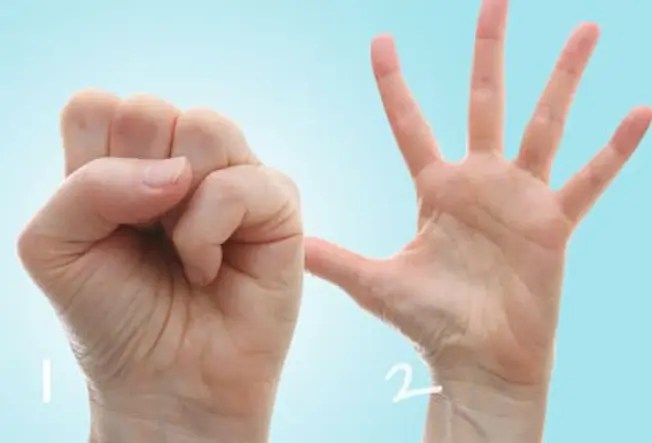
People who let their handwriting go often need small-motor exercises later. Ideas for working on hands with osteoarthritis may be found at WebMD, here.

It’s always something, isn’t it? We like the convenience of keyboarding — not to mention suggested words popping up in text messaging, saving us strokes — but what if there’s a downside? What if our hands lose their versatility?

At the Washington Post, Gina Rich notes that “Writing by hand may feel difficult for many of us as we engage less in fine motor activities and use devices more. …

“Handwriting is a fine motor skill that isn’t innately learned; it needs to be taught and practiced. It also is a skill that benefits us by stimulating our brain: We remember information better when we write it down by hand, research shows.

“But for many of us, handwriting can feel difficult as we turn to smartphones, other devices and even robots for many of our hand tasks.

“And with cursive dropped from Common Core State Standards in 2010 in the United States, children have few opportunities to learn and practice; for some, handwriting has been relegated to an extracurricular activity.

“The problem isn’t only that we’re practicing less. Technology has changed the way we use our hands. Also, the more time we spend on our devices, the greater the probability of problems with our hands and wrists, such as pain, weakness and nerve changes.

“ ‘It’s like going to the gym,’ said Mellissa Prunty, an occupational therapist at Brunel University London and chair of the National Handwriting Association in the United Kingdom. ‘When you write for long periods of time but you don’t do it often, you are going to feel tired and fatigued.’

“The hand-brain connection is stronger when we write something by hand vs. typing it, said Paula Heinricher, an occupational therapist and national presenter for Learning Without Tears, which trains educators in subjects, including handwriting. Although we might be able to take more notes on a keyboard than by hand, ‘there’s also research that shows when you write by hand, there is a deeper brain connection and a deeper understanding, and you retain that information longer,’ she said. …

“The ability to write quickly and legibly also has a critical link with academic performance. A 2013 study found that children who had good handwriting skills in preschool performed better in reading and math in second grade. And in a 2019 study of 141 first-graders in four schools in Italy, children who were taught cursive developed better reading and writing skills compared with a control group. …

“While there is little hard evidence that fewer students are taking notes or completing assignments by hand now compared with years past, children’s use of devices has increased, especially in the pandemic years, parents said.

There’s no benefit to using one part of the hand so extensively, Inal said, but there are risks.

“But devices aren’t the only culprit. In general, we’re not engaging in as many fine motor activities as in the past, said Ritu Goel, a certified hand therapist at the University of Maryland Medical Center.

“With keyless entry, for instance, many of us no longer turn a key to unlock our car or the front door; instead, we push a button or tap out a code. So the lateral pinch, a fine motor motion, ‘is becoming a little less used in day-to-day activity,’ Goel said. …

“With the repetitive pinching motion of texting, ‘only one muscle is doing really hard work,’ said study author Esra Erkol Inal, associate professor of physical therapy and rehabilitation at Reyap Hospital Istanbul. There’s no benefit to using one part of the hand so extensively, Inal said, but there are risks. …

“A study of neurology patients at a Turkish university found that people diagnosed with carpal tunnel syndrome spent more hours per day on their smartphones than those without hand or wrist complaints. …

“Even as we continue to use technology and devices, we can bolster our handwriting muscles with a few strategies.

Make sure your smartphone isn’t too big. If our smartphone is large relative to our hand, we wind up reaching across it more, which can cause thumb pain, Goel said. You should be able to hold your smartphone comfortably in one hand with a good grasp.

Use devices mindfully: Her teenage patients scoff, but Goel advises texting with the index finger — not thumbs — while holding the smartphone in the other hand. Give yourself cues to take breaks from scrolling, such as by setting alarms on your phone. And don’t forget posture: When working at a desk, Inal stores her phone in a smartphone stand and strives to keep herself vertical, rather than hunched over.

Stretch and strengthen: If your hands are cramping, Goel recommends tendon gliding exercises, movements to bend and straighten different joints. You can also perform what’s called a prayer stretch by bringing your palms together with your elbows out and pointing your fingertips upward for a wrist extension. Reverse the exercise with a wrist flexion, directing your fingertips down so the backs of your hands touch. In addition, Goel suggests rolling your hands across therapeutic putty, Play-Doh or a small rolling pin.

“Completing tasks without assistive devices will help strengthen the small stabilizing muscles in your hands. For instance, using a manual can opener engages your gripping and pinching muscles, Kruse said.”

More at the Post, here.

Read Full Post »

1019

Photo: Culture Club/Getty Images
Detail from CW Quinnell’s portrait of 17th century poet John Milton.

Never doubt the ability of a motivated academic researcher plodding along in dusty library carrels to uncover miracles. I credit the intense focus of youth, imagination, and the thrill of the chase.

Alison Flood writes at The Guardian, “Almost 400 years after the first folio of Shakespeare was published in 1623, scholars believe they have identified the early owner of one copy of the text, who made hundreds of insightful annotations throughout: John Milton.

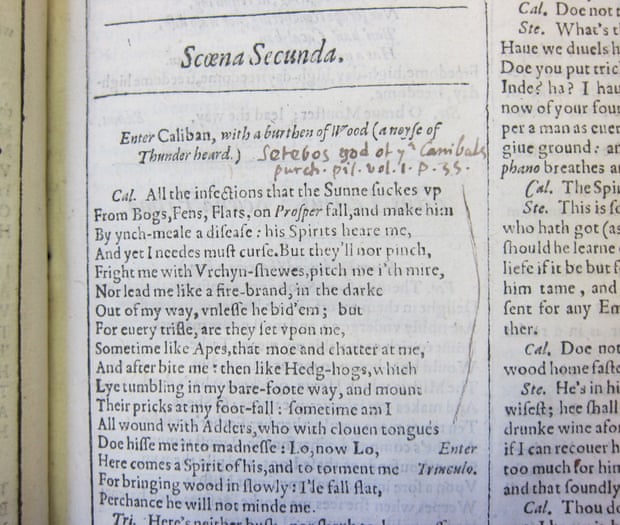
“The astonishing find, which academics say could be one of the most important literary discoveries of modern times, was made by Cambridge University fellow Jason Scott-Warren when he was reading an article about the anonymous annotator by Pennsylvania State University English professor Claire Bourne. Bourne’s study of this copy, which has been housed in the Free Library of Philadelphia since 1944, dated the annotator to the mid-17th century. … She also provided many images of the handwritten notes, which struck Scott-Warren as looking oddly similar to Milton’s hand.

“ ‘But I always think “I recognise that handwriting,” ‘ Scott-Warren said, ‘[and] normally I’m wrong. This time I thought: “The case is getting stronger and stronger.” ‘

As evidence stacked up, he said he became ‘quite trembly … You’re gathering evidence with your heart in your mouth.’ …

“Scott-Warren has made a detailed comparison of the annotator’s handwriting with the Paradise Lost poet’s. He also believes that the work the annotator did to improve the text of the folio – suggesting corrections and supplying additional material such as the prologue to Romeo and Juliet, along with cross-references to other works – is similar to work Milton did in other books that survive from his library, including his copy of Boccaccio’s Life of Dante.

“The scholar tentatively suggested in a blogpost that he might have identified John Milton’s copy of the Shakespeare First Folio of 1623, admitting that, ‘in this as in other cases, there’s usually a lot of wishful thinking, plus copious spinning of the evidence to make it seem plausible, and elision of anything that doesn’t seem to fit.’

“But he soon found that other scholars were agreeing with him. ‘Not only does this hand look like Milton’s, but it behaves like Milton’s writing elsewhere does, doing exactly the things Milton does when he annotates books, and using exactly the same marks,’ said Dr Will Poole at New College Oxford. … ‘This may be one of the most important literary discoveries of modern times.’ …

“One highlighted section in The Tempest is the song: ‘Come unto these yellow sands, / And then take hands: / Courtsied when you have and kiss’d / The wild waves whist.’ The unusual rhyme, of ‘kiss’d’ and ‘whist,’ is echoed in Milton’s On the Morning of Christ’s Nativity: ‘The winds with wonder whist, / Smoothly the waters kist.’

“ ‘We would already have known about that allusion, they are the only two writers who used that rhyme, but you can see him marking it in the text and responding to it,’ said Scott-Warren. ‘It gives you a sense of his sensitivity and alertness to Shakespeare.’ ” More here.

(Looking for a comment from blogger Laurie Graves, a devoted Shakespeare fan.)

Photo: The Guardian
Milton’s annotated first folio of Shakespeare, recently discovered in the Free Library of Philadelphia Library by a Cambridge University fellow. “He said he became ‘quite trembly … You’re gathering evidence with your heart in your mouth.’ ”

1135

Read Full Post »

Photo: Beinecke Flickr Laboratory/CC BY 2.0
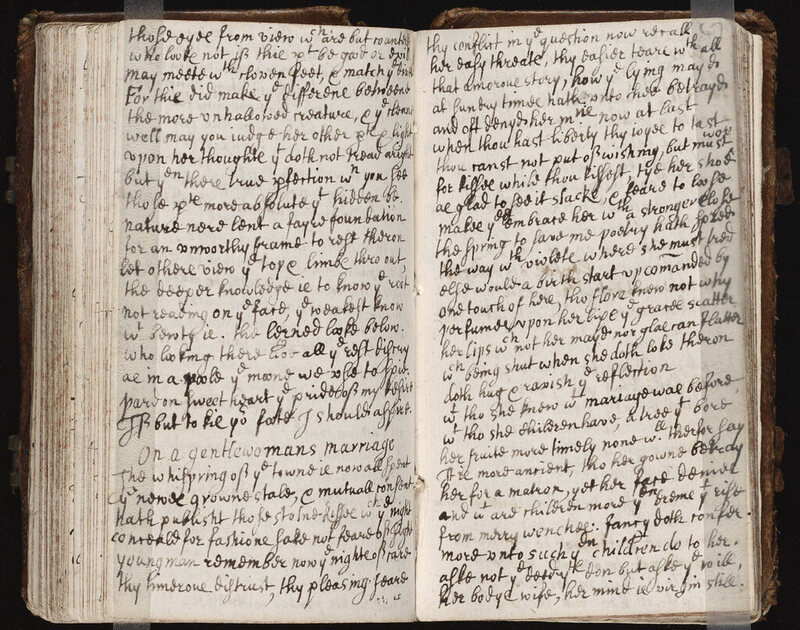
A 17th century “commonplace” book. Linda Watson, a transcriber on the Isle of Man, can decipher pretty much any document.

One of the great things about word processors (well, typewriters, too) is that people with terrible handwriting can make themselves understood. The secretary who used to be the only person in the company who could read the boss’s handwriting can now spend time on more valuable work.

But documents written out long ago still need to be deciphered, often for legal purposes. Enter transcriber Linda Watson on the Isle of Man (a British Crown dependency in the Irish Sea). Watson has built an unusual talent into a business employing transcribers in an array of languages.

Sarah Laskow writes at Atlas Obscura, “On any given day, from her home on the Isle of Man, Linda Watson might be reading a handwritten letter from one Confederate soldier to another, or a list of convicts transported to Australia. Or perhaps she is reading a will, a brief from a long-forgotten legal case, an original Jane Austen manuscript. Whatever is in them, these documents made their way to her because they have one thing in common: They’re close to impossible to read. …

“The problem is not only that our ancestors’ handwriting was sometimes very bad, but also that they used abbreviations, old conventions, and styles of lettering that have fallen out of use. Understanding them takes both patience and skill. ‘I see the job as a cross between a crossword puzzle and a jigsaw puzzle,’ says Watson.

“She fell into this line of work about a decade ago, when a cousin asked for help deciphering a family will and she discovered that she has a talent for interpreting the strange, scrawling writing of the past. … Since then she’s had a steady stream of projects from amateur genealogists, grad students struggling with their long-sought primary source material, and libraries. The British Library had the company transcribe not just Austen’s work, but also manuscripts from the Brontës, William Wordsworth, Percy Bysshe Shelley, Samuel Taylor Coleridge, John Donne, and other luminaries.

“ ‘You can actually see how they have changed their manuscript — how Jane Austen changed Pride and Prejudice as she’s writing it,’ says Watson. …

“Most of the documents that people need to understand, though, are wills and legal papers, which have their own pleasures. ‘The inventories I love,’ she says. ‘It’s like someone comes to the front door and says, come on in to my house and have a look around.’ … A woman described each piece of her wardrobe, down to her second-best red flannel petticoat, and specified which great-niece or -nephew should receive each item. …

“Older scripts — court hand, for instance, which was used by lawyers and clerks beginning in the medieval period (and eventually became stylized into illegibility) — have long, narrow strokes and letters jammed together to save space, making it a challenge to find where one word ends and another begins. Some styles of writing lean heavily on space-saving abbreviations: An extra flourish on a letter ‘p’ can turn it into a ‘per’ or ‘par,’ a ‘pro’ or ‘pre,’ depending on the exact position of the extra line. …

“Since she first started specializing in old documents, Watson has expanded beyond things written in English. She now has a stable of collaborators who can tackle manuscripts in Latin, German, Spanish, and more. She can only remember two instances that left her and her colleagues stumped. One was a Tibetan manuscript, and she couldn’t find anyone who knew the alphabet. The other was in such bad shape that she had to admit defeat.

“In the business of reading old documents, Watson has few competitors. … ‘I’ve seen some documents done by the software, and they just make you laugh. I think I’m safe in my job for a good while yet.’ ”

More at Atlas Obscura, here.

4/27/18. I just learned anyone who can read handwriting can join a transcribe-a-thon. There are events for transcribing the papers of Frederick Douglass, among others. Here is one the Massachusetts Historical Society is holding to get the voluminous diaries of John Quincy Adams online: https://www.masshist.org/calendar/event?event=2248.

Read Full Post »

Schools are not putting as much emphasis on handwriting as they used to, given the growing use of electronic devices, and that can be a good thing in some ways. (As a teacher, I was bored witless checking penmanship workbooks.)

But guess what. The Law of Unintended Consequences is rearing its head.

Maria Konnikova writes at the NY Times, “Psychologists and neuroscientists say it is far too soon to declare handwriting a relic of the past. New evidence suggests that the links between handwriting and broader educational development run deep.

“Children not only learn to read more quickly when they first learn to write by hand, but they also remain better able to generate ideas and retain information. In other words, it’s not just what we write that matters — but how. …

“A 2012 study [published in Trends in Neuroscience and Education] led by Karin James, a psychologist at Indiana University, lent support to that view. Children who had not yet learned to read and write were presented with a letter or a shape on an index card and asked to reproduce it in one of three ways: trace the image on a page with a dotted outline, draw it on a blank white sheet, or type it on a computer. They were then placed in a brain scanner and shown the image again. …

“When children had drawn a letter freehand, they exhibited increased activity in three areas of the brain that are activated in adults when they read and write … By contrast, children who typed or traced the letter or shape showed no such effect. ” More here.

Konnikova reports that even doubters of the study’s significance wonder if the act of writing by hand makes you think more.

Photo: Karin James
Samples of handwriting by young children.

Read Full Post »