Feeds:
Posts
Comments

Posts Tagged ‘heat island’

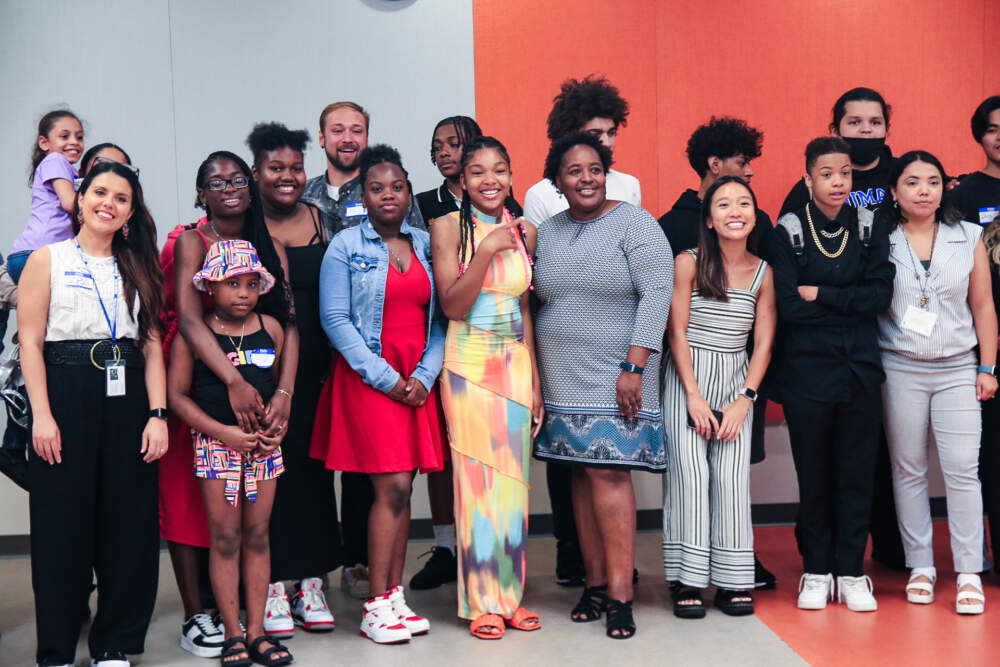
Photo: Emily Piper-Vallillo/WBUR.
Program mentor Meshell Whyte with students who participated in the 2023 UMass Boston Summer Program in Urban Planning.

Today’s story is not only about addressing troubling effects of climate change in cities but also about encouraging young people in the communities most affected to be part of finding solutions.

Emily Piper-Vallillo reports at WBUR, “Boston students recently wrapped up a month-long study of extreme heat in Roxbury, exploring ways to mitigate the crisis and its impact on residents through the field of urban planning.

“Nearly 30 high school students participated in the University of Massachusetts Boston Summer Program in Urban Planning, which concluded [in July] with a presentation at Roxbury Community College. …

“The program introduces students of color from environmental justice communities like Roxbury and Dorchester to careers in urban planning and design. It’s part of a larger effort to diversify the field of urban planning, which remains overwhelmingly white.

“ ‘Only 5.2% of Boston’s planners are non-white, in a city where just in the city alone, 28% of our population is African American,’ said Ken Reardon, co-founder of the program and chair of UMass Boston’s Department of Urban Planning and Community Development. …

“Built as a working class community at a time when extreme heat was not as common as it is today, Roxbury has densely packed buildings with few trees, according to the students’ presentation. Many spaces are exposed to direct sun. Slides and swings in neighborhood playgrounds were constructed with heat-absorbing materials, making them unusable when temperatures rise.

“In fact, the students found that air temperatures in Roxbury are, on average, 10 degrees warmer than at Boston’s Logan Airport.

“They made this discovery by collecting 135 temperature readings across 38 Roxbury locations to identify the hottest spaces. Readings ranged from 83 to 102 degrees Fahrenheit, with the highest temperatures collected on sidewalks and at bus stops.

“Collecting data was grueling, said Blue Hills Regional Technical student Aidan Luciano. He and his peers hit the streets with remote sensors recording the humidity and heat index during the month of July — when temperatures sometimes rose above 100 degrees.

“ ‘[But] it’s going to pay off in the end because we are going to be helping other people,’ Luciano said. ,,,

“One group designed a new cooling children’s playground on RCC’s campus. Scheduled to open in 2025, the playground will replace a parking lot near the historic Dudley House site. After further community input, the final design will incorporate many ideas from the students themselves, said Ruben Flores, special projects manager at Roxbury Community College.

“Flores was particularly impressed by the inclusion of splash pads and water misters to reduce the temperature of the playground.

“Participating students received college credit from UMass Boston and were paid around $15 an hour.

“Paying students was an important part of making this opportunity accessible to low-income students of color who are less likely to be able to afford unpaid internships, Reardon said.

“Beyond collecting temperature data, students sought to understand how Roxbury residents experience extreme heat, said TechBoston student Neicka Mathias.

“Over the course of July, students interviewed nearly 100 Roxbury residents about coping with rising temperatures. The most common suggestion for improvement they heard was to increase the number of water sources throughout the neighborhood.

“Students also worked with residents to identify public spaces in Roxbury where heat mitigation solutions are most needed. These include areas where  people frequently wait for public transit or line up outside favorite local restaurants. …

“ ‘Give a chance to these communities of color that are outside the spaces where decisions have been made and they will show you great work,’ Flores said.”

More at WBUR, here. No firewall.
Read Full Post »

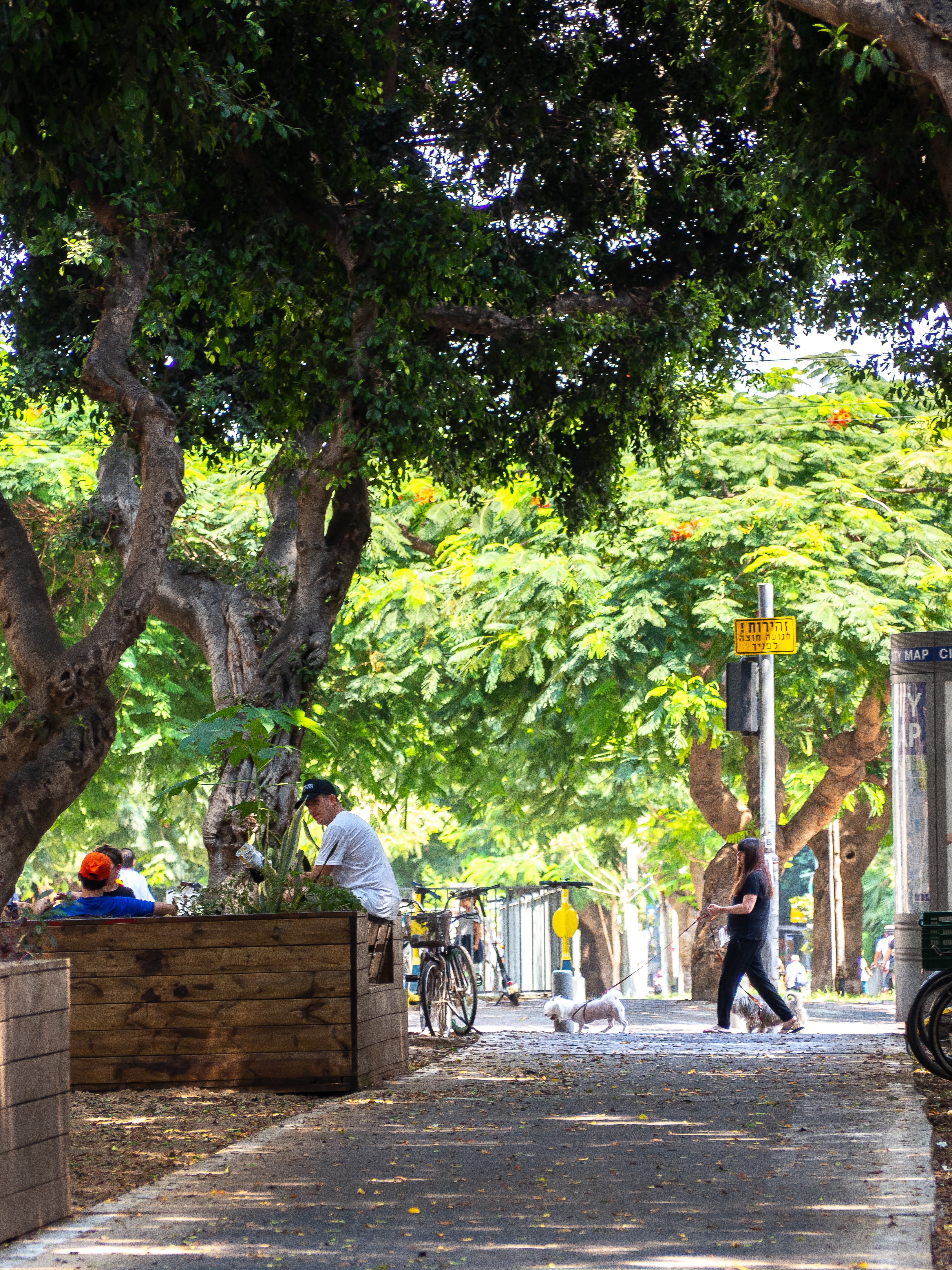
Photo: Yoav Aziz/Unsplash.
Urban trees on Rothschild Boulevard, Tel Aviv, Israel.

If you search this blog on “urban trees,” you will see many posts showing how trees in cities are beneficial both for the environment and human health. I never tire of new research on this topic. Today’s research comes from medical journal the Lancet via Forbes magazine.

Robert Hart reports, “Planting more trees in cities could cut the number of people dying from high temperatures in summer, according to a study published in the Lancet medical journal … a strategy that could help mitigate the effects of climate change as it continues to drive temperatures upwards.

“Cities experience much warmer temperatures than the rural areas surrounding them—a phenomenon known as the urban heat island effect—a result of vegetation and green spaces being replaced with structures like roads and buildings that absorb heat.

“The effect is particularly problematic in summer, when temperatures can soar to dangerous levels and more people die of heat-related causes, but can be tackled by planting more trees, researchers suggest.

“An analysis of mortality data from some 57 million people living in 93 European cities in the summer of 2015—the most recent year for which data is available — revealed that 6,700 deaths could be attributed to the hotter urban environment.

“The researchers estimated nearly 40% of these deaths could have been prevented if urban tree cover were increased up to 30% (the average was 15%).

“The researchers said their study … is the first to estimate the burden associated with urban heat islands and the first to estimate how increasing tree coverage, which helps reduce temperature, could combat this.

“Study co-author Mark Nieuwenhuijsen, director of urban planning, environment and health at the Barcelona Institute for Global Health, said the findings should encourage city planners and policymakers to include green spaces in their developments, particularly as we already know green spaces have other health benefits like ‘reducing cardiovascular disease, dementia and poor mental health’ and improve cognitive function.

“The research identifies a way for city planners to combat the impact of rising temperatures, wrote Kristie Ebi, a professor for health and the environment at the University of Washington, in a linked comment. Such action is especially important as climate change continues to drive temperatures upwards and it must be combined with other initiatives like modifying infrastructure to reduce heat, added Ebi, who was not involved in the research. …

“Heat has a profound impact on our health. Extreme heat is responsible for hundreds of thousands of deaths around the world every year, according to the World Health Organization, and is associated with an increased risk of conditions including heart diseasediabetes and obesity. Heat also exacerbates mental health conditions, hampers cognitive functioning and makes us more aggressive.

“Climate change, which experts say is indisputably linked to human use of fossil fuels, is set to drive temperatures higher and a slew of countries around the world have broken heat records over the last few years. This is expected to continue and extreme weather events, including flooding and major storms are set to increase in both severity and frequency as a result. Beyond the direct impact, this can help other diseases spread through water and expand the range of animals that carry them.” More at Forbes.

This 2017 post mentions John’s work with the Arlington Tree Committee to get sidewalk trees to homeowners. Another post, from 2018, says lack of trees increases depression. This 2019 post is on trees in Paris. I also wrote a 2020 entry about preserving the tree canopy in Baltimore, here.

And those are just a few angles I’ve covered. The other day on Mastodon, someone wrote that trees make her incredibly happy. I guess I am not the only one.

Read Full Post »

Photo: Shahzad Qureshi
Shahzad Qureshi, founder of Urban Forest, in Karachi, Pakistan.

Today most people have come to realize the importance of trees for everything from reducing global warming to improving life in neighborhoods. The Amazon rain forest (currently in grave danger from Brazil’s government) is known to cool the planet by soaking up carbon in the atmosphere, and urban forests give city residents a chance to cool off — and calm down.

Sometimes it takes a tragedy, but around the world, more people are feeling they better do something themselves to protect trees.

Anna Kusmer reports at PRI’s The World, “Extreme heat often hovers over Karachi, Pakistan’s largest city, creating insufferable conditions for its 16 million inhabitants. But each time Karachi resident Shahzad Qureshi transforms a barren patch of land into a dense, urban forest, he helps his city adapt to extreme urban heat that has become inevitable under climate change. Over the last four years, Qureshi’s organization, Urban Forest, has planted 14 urban forests in parks, schools, people’s yards and outside of a mosque.

“Qureshi’s quest to plant urban forests started in 2015, when temperatures reached over 120 degrees Fahrenheit in Karachi. About 2,000 people in the region died from dehydration and heatstroke. It was devastating.

‘It was just too hot,’ Qureshi said. …’ And one of the things everybody was talking about is that there’s not enough green cover.’

“Around that time, Qureshi saw a TED Talk that changed his life. He listened to a man named Shubhendu Sharma sharing a method to quickly grow dense urban forests. Qureshi was amazed. …

“Qureshi decided to learn Sharma’s technique and bring it to Karachi, joining a growing global community of urban foresters who want to help their cities adapt to extreme urban heat events created by rapid climate change. …

“Sharma’s organization Afforestt has now helped plant 150 mini-forests in 13 countries.

“ ‘So, there is a quite strong global community right now,’ Sharma said. ‘I am very keen on taking this method to every single country of the world.’

“Sharma’s special technique is known as the Miyawaki method. It involves the close placement of a variety of trees with different growing speeds and light requirements to prevent competition for the same resources. The approach specifically uses native species, allowing trees to thrive in their original climates and environments while supporting native bird and insect populations.

“ ‘Most of the city is roads and buildings and built-up urban area,’ said Nadeem Mirbahar, an ecologist with the Swiss International Union for Conservation of Nature Commission (IUCN) on Ecosystem Management, based in Karachi. His organization did a survey and found that only 7% of Karachi had green cover.

“This contributes to an ‘urban heat island’ effect, Mirbahar said. The phenomenon causes cities to be significantly hotter than the surrounding countryside. He thinks Karachi should strive for at least 25% green cover to avoid catastrophic heat events in the future.

“Qureshi’s oldest urban forest is four years old and already has towering, 35-foot-tall Acacia trees full of big, thorny branches and birds’ nests.

“ ‘I have seen bird species in this park, which I have not seen in my life,’ he said. ‘It’s a habitat for them.’ …

“Policymakers in Pakistan have started to look at planting trees as a solution to the urban heat threat, said Umer Akhlaq Malik, a policy analyst at the United Nations Development Program (UNDP) in Pakistan.

“In 2016, the government launched a plan to plant hundreds of millions of trees as part of a project called ‘the Billion Tree Tsunami,’ in response to the fact that the country had fallen to a mere 2% forest cover.

“Malik said … ‘To take it to scale, you need more practitioners who invest their time and energy into this.’

“Malik said the biggest barriers are cost and space. Each forest can cost hundreds of thousands of dollars to establish.

“But Qureshi remains hopeful that the project can scale up. He is working with the UNDP to form a coalition that aims to bring urban forests to every park in the city. He thinks Karachi could look fundamentally different.”

More at PRI, here.

Read Full Post »

a514c2fcd

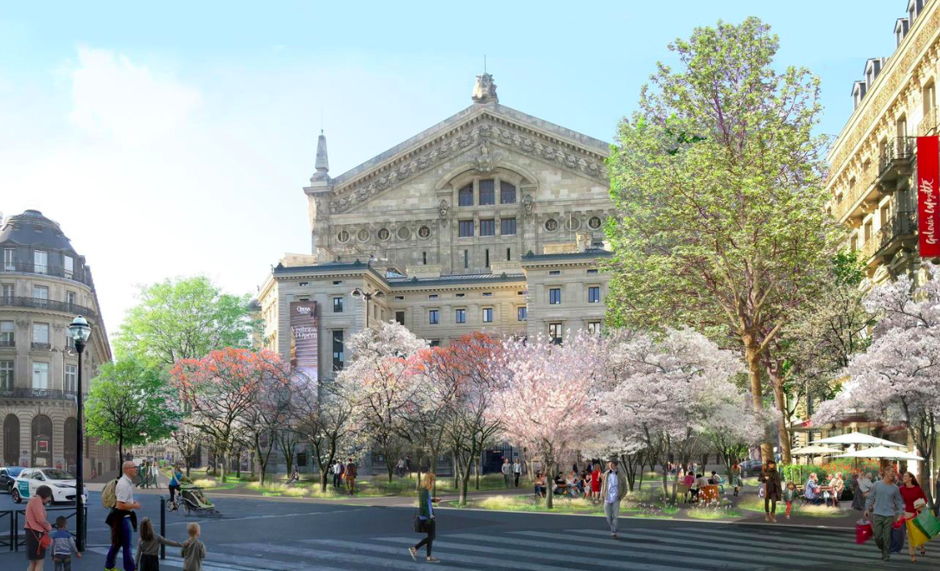
Photo: Ville de Paris/Apur/Céline Orsingher
The trees in this rendering of Paris’s Opera Garnier would take the place of an existing bus-parking area. Big ideas are necessary if the city is to meet its ambitious greening goals, part of the international Paris Agreement to tackle global warming.

A January article by Feargus O’Sullivan at CityLab, showed artist renderings like the one above as part of a plan to bring more trees into Paris. The announcement came before Notre Dame burned, so I hope plans are still going forward. Here is the concept.

“Some of Paris’s most treasured landmarks are set to host the city’s new ‘urban forests,’ ” writes O’Sullivan.

“Thickets of trees will soon appear in what today are pockets of concrete next to landmark locations, including the Hôtel de Ville, Paris’s city hall; the Opera Garnier, Paris’s main opera house; the Gare de Lyon; and along the Seine quayside.

“The new plantings are part of a plan to create ‘islands of freshness’—green spaces that moderate the city’s heat island effect. It also falls into an overall drive to convert Paris’s surface ‘from mineral to vegetal,’ introducing soil into architectural set-piece locations that have been kept bare historically. As a result, the plan will not just increase greenery, but may also provoke some modest rethinking of the way Paris frames its architectural heritage. …

“[Such plans] are necessary if Paris is to meet its ambitious greening goals. By 2030, city hall wants to have 50 percent of the city covered by fully porous, planted areas, a category that can include anything from new parkland to green roofs. ..

“The city imagines turning the square in front of city hall into a pine grove, while future springtimes will see the opera house’s back elevation emerge from a sea of cherry blossom. The paved plaza at the side of the Gare de Lyon will become a woodland garden, while one of the two former car lanes running along the now pedestrianized Seine quays will be taken over by grass and shrubs.

“Such plans will require more than sticking saplings in the ground. Creating the new opera house cherry orchard will mean displacing a current parking lot used by tourist buses, a process that the city plans to repeat elsewhere. …

“Intriguingly, the urban forest plans are a slightly different take on the classic Parisian aesthetic. Sites like the areas around the opera and Hôtel de Ville don’t need beautifying — they are already grand, charismatic showcases for the elaborate, even fanciful historic buildings that they host.

“In the past, however, they have been left bare, or at most … fringed with small lines of trees that have been rigorously pruned and trained until they form a narrow, wall-like rampart. …

“Given how charming the designs appear, this seems unlikely to be controversial, but it does suggest a more rustic, quasi-natural approach to greenery than has previously been the rule in Paris.”

There is more information here. And maybe when blogger A Pierman Sister returns to Paris, we will get an eye-witness account of the city’s progress on its plans.


Read Full Post »