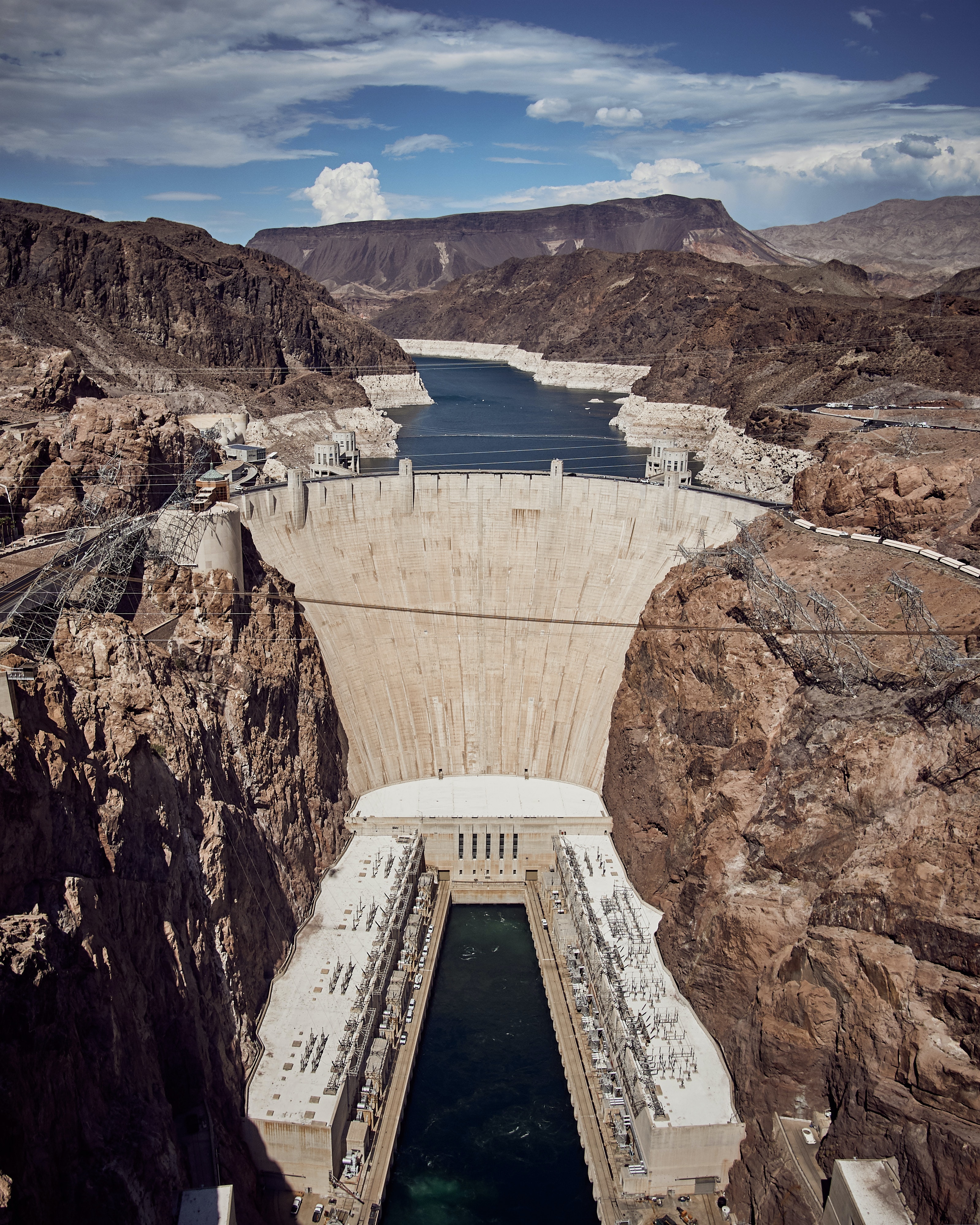
The Hoover Dam on the Colorado River, on the border between Arizona and Nevada, is one of the 2,400 hydroelectric plants that produce energy in the United States.
I toyed with calling this post “The Farmer and the Cowman Should Be Friends,” from a song in Oklahoma, but I didn’t think anyone besides Will would get it. I just wanted to convey the idea that when opposing sides negotiate in good faith, it’s possible to come to mutually satisfactory agreements. In the case of the energy-sector and environmental adversaries in today’s story, it took a couple of years.
Brad Plumer at the New York Times begins by saying, “The industry that operates America’s hydroelectric dams and several environmental groups announced an unusual agreement [in 2020] to work together to get more clean energy from hydropower while reducing the environmental harm from dams, in a sign that the threat of climate change is spurring both sides to rethink their decades-long battle over a large but contentious source of renewable power.
“The United States generated about 7 percent of its electricity [in 2019] from hydropower, mainly from large dams built decades ago, such as the Hoover Dam, which uses flowing water from the Colorado River to power turbines. But while these facilities don’t emit planet-warming carbon dioxide, the dams themselves have often proved ecologically devastating, choking off America’s once-wild rivers and killing fish populations.
“So, over the past 50 years, conservation groups have rallied to block any large new dams from being built, while proposals to upgrade older hydropower facilities or construct new water-powered energy-storage projects have often been bogged down in lengthy regulatory disputes over environmental safeguards.
“The new agreement signals a desire to de-escalate this long-running war. In a joint statement, industry groups and environmentalists said they would collaborate on a set of specific policy measures that could help generate more renewable electricity from dams already in place, while retrofitting many of the nation’s 90,000 existing dams to be safer and less ecologically damaging.
“The two sides also said they would work together to accelerate the removal of older dams that are no longer needed, in order to improve the health of rivers. More than 1,000 dams nationwide have already been torn down in recent decades.
“The statement, the result of two years of quiet negotiations, was signed by the National Hydropower Association, an industry trade group, as well as environmental groups including American Rivers, the World Wildlife Fund and the Union of Concerned Scientists. Another influential organization, The Nature Conservancy, listed itself as a ‘participant,’ signaling that it was not prepared to sign the full statement but would stay engaged in the ongoing dialogue over hydropower policies.
“Bob Irvin, the president of American Rivers, which has long highlighted the harm that dams cause to the nation’s waterways, said that growing concern over global warming had caused some environmentalists to reassess their longstanding opposition to hydropower.
“ ‘The climate crisis has become a lot more acute and we recognize that we need to generate carbon-free energy whenever and wherever we can,’ Mr. Irvin said. ‘And we do see that hydropower has a role to play there.’
“Mr. Irvin emphasized that his group would still oppose any effort to build new dams on rivers. But that still left plenty of room for compromise.” More at the Times, here.
Devon Ryan has an update from the Stanford Woods Institute for the Environment, where the work of compromise took place: “Key ideas and proposals from an agreement between the hydropower industry and environmental community, facilitated through a Stanford Woods Institute for the Environment Uncommon Dialogue, have been included in the $1 trillion infrastructure package adopted by the U.S. Senate.
“President Biden signed the infrastructure bill, ‘Infrastructure Investment and Jobs Act,’ into law on November 15, 2021, which included over $2.3 billion for the ‘3Rs’ dam infrastructure priorities set by agreements that came out of the Uncommon Dialogue led by Dan Reicher and hosted by the Stanford Woods Institute for the Environment.
In the fall of 2020, [amid] one of the most divisive periods in American history, the hydropower and river conservation communities, traditionally at odds, reached an agreement to work together to address the nation’s more than 90,000 dams.
“The momentous agreement was the result of a two-and-a-half-year Uncommon Dialogue, an ongoing process organized by the Stanford Woods Institute for the Environment that brings public and private sector leaders and researchers together to develop practical solutions to pressing sustainability challenges.
“Now, key ideas from that pact and a subsequent detailed proposal are incorporated into the bipartisan Senate infrastructure bill, including $2.3 billion for the ‘3Rs’ of U.S. dams: Rehabilitation for safety, Retrofit for power and Removal for conservation.”
More at Stanford, here.
/cdn0.vox-cdn.com/uploads/chorus_asset/file/7064023/Screen%20Shot%202016-09-08%20at%209.32.45%20AM.png)

 Suzanne's Mom's Blog