Feeds:
Posts
Comments

Posts Tagged ‘illustration’

Art: Norman Rockwell.
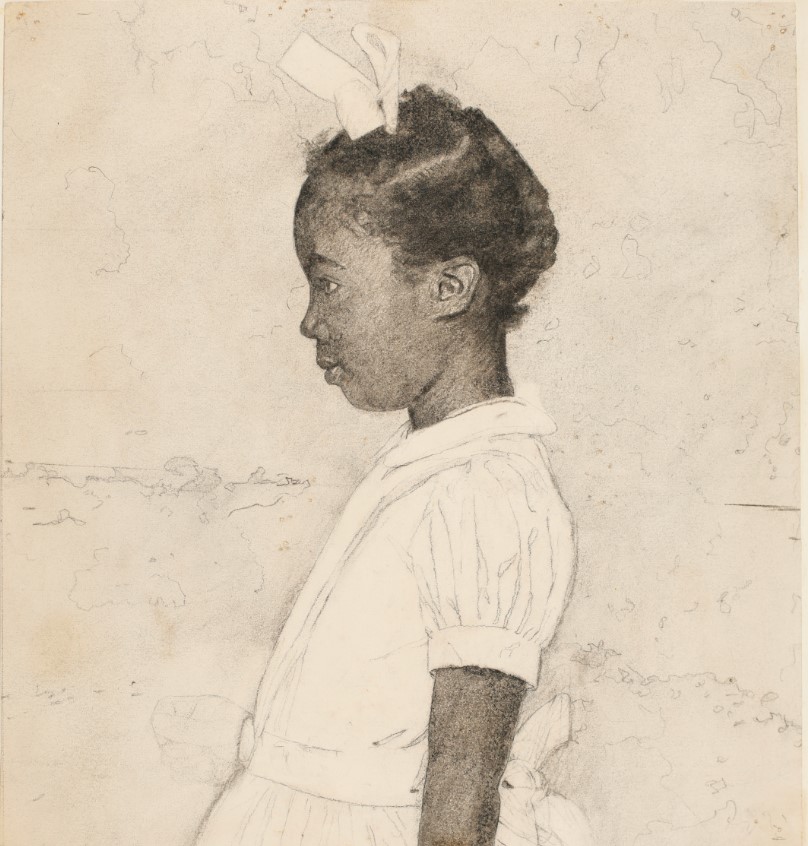
Study for “The Problem We All Live With” (1963), Wolff pencil and charcoal on paper, Norman Rockwell Museum Collection, from Lynda Gunn, Norman Rockwell model for “The Problem We All Live With,” a tribute to a brave little American, Ruby Bridges.

When I was growing up, Norman Rockwell art was everywhere, not just on the covers of the Saturday Evening Post. I think that, partly because it was so available, it was undervalued by art snobs. Abstract Expressionism was the only thing for serious artists, supposedly. But the public at large loved Rockwell’s storytelling, and in recent years the snobs have begun to notice the skill underlying those stories.

Lauren Moya Ford writes at Hyperallergic that the new Norman Rockwell: Drawings, 1911–1976 is the first book dedicated to the artist’s prolific but largely private drawing practice.

“Norman Rockwell produced nearly 3,000 images for publication over his six-decade-long career, but he made many more drawings and sketches that have never been seen,” she reports. “For the artist and illustrator known for depicting charming views of daily American life, putting pencil or charcoal to paper was more than just a quick, problem solving process.

‘Drawing is a complete expression of my idea in line and tone,’ he wrote in 1948, adding that ‘sometimes I feel that making this sketch is the most creative part of making a picture.’

Norman Rockwell: Drawings, 1911–1976 (Abbeville Press, 2022) by Stephanie Haboush Plunkett and Jesse M. Kowalski … sheds light on the artist’s personal and professional drawings, including his preparatory sketches for advertisements, books, and magazine covers, as well as his illustrated letters, travel sketchbooks, cartoons, and caricatures. Rockwell has long been celebrated for his technical expertise, light humor, and meticulous attention to detail, traits that come through perhaps most strongly in his drawings. …

“Born in New York City in 1894, Rockwell grew up watching his father and maternal grandfather draw and paint in their free time. At age 16, he left high school to study art, first at New York’s National Academy School, and later at the Art Students League, where he excelled in figure drawing. At only 19 years old, he was appointed Art Director at Boys Life magazine, and in 1916, he began his 47-year tenure at the Saturday Evening Post, where he produced more than 300 magazine covers that reached — and delighted — millions of Americans.

“Despite ongoing project deadlines, Rockwell remained a methodical craftsman. Each finished piece could take as many as 15 steps and countless sketches to complete, and his preparatory drawings are often so impressively executed that they could easily be finished works, though they were never shown publicly. The book explains that Rockwell’s fastidiousness owes itself at least in part to his love of the Old Master, and he referenced and sometimes imitated Raphael, Leonardo, Dürer, Vermeer, and others in his work. For example, Rockwell’s ‘Rosie the Riveter’ (1943) takes the same pose as Michelangelo’s ‘Prophet Isaiah’ (c. 1511) from the Sistine Chapel, and in ‘The Art Critic’ (1955), his son poses as a young gallery-goer admiring a Rubens-esque portrait, modeled by the artist’s wife.

“Rockwell used live models and real props to create his work during the first decades of his career. Later he incorporated photography, though this didn’t necessarily make his process any less elaborate. Ever the perfectionist, Rockwell sometimes took more than 100 shots of the individual models and elements he planned to draw at different angles and positions. But the rapid technology allowed Rockwell to use more animated poses and expressions, and to incorporate people, places, and things from outside of his studio. …

“One of Rockwell’s most famous pieces is ‘The Problem We All Live With’ (1963), his tribute to the bravery of Ruby Bridges. It was the artist’s first image for Look magazine, a publication that Rockwell began working for after being frustrated by the Post’s policy against depicting people of color, except in subservient roles. Rockwell was a life member of the NAACP. At Look, ‘his hands were no longer tied, and he felt free to create artwork that underscored his personal beliefs and called attention to the civil rights issues of the day,’ Louis Henry Mitchell writes in his foreword.

“The image was so timely and powerful that one Look reader wrote, ‘The truth is pretty hard to take until we get it from a Norman Rockwell.’ Although Rockwell has sometimes been criticized for his whimsical, even idealized portrayals of American life, this book reveals him to be a tireless worker whose drawings carried much more skill, substance, and conviction than previously recognized.”

More at Hyperallergic, here. No firewall. Terrific pictures.

For a treat, try to get to the Norman Rockwell Museum (“The Home for American Illustration”) in Stockbridge, Massachusetts. Right now they have a special exhibit on Hilary Knight, featuring Eloise, among other works. And of course, there are guided tours of the museum’s extensive Rockwell collection.
Read Full Post »

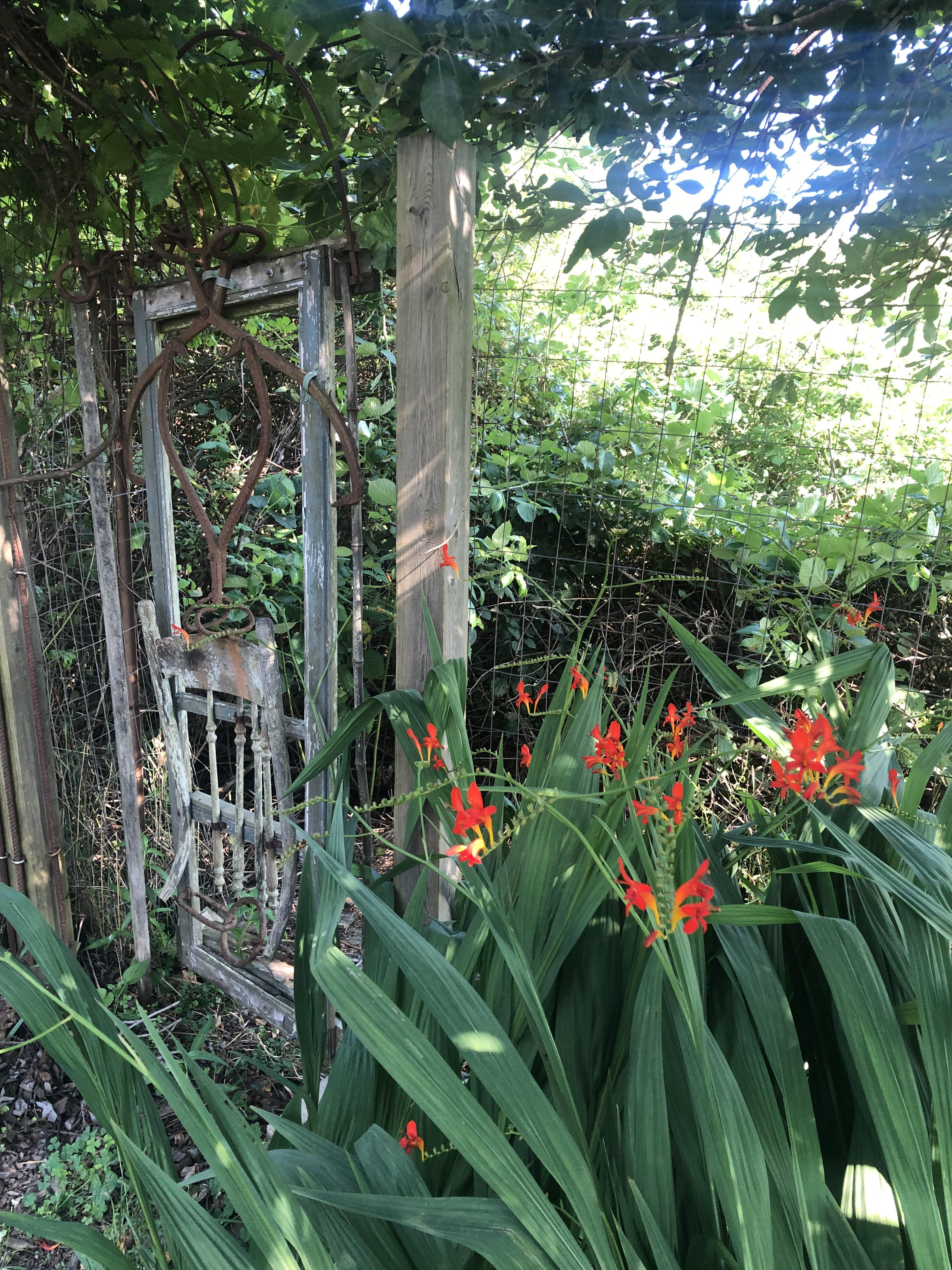
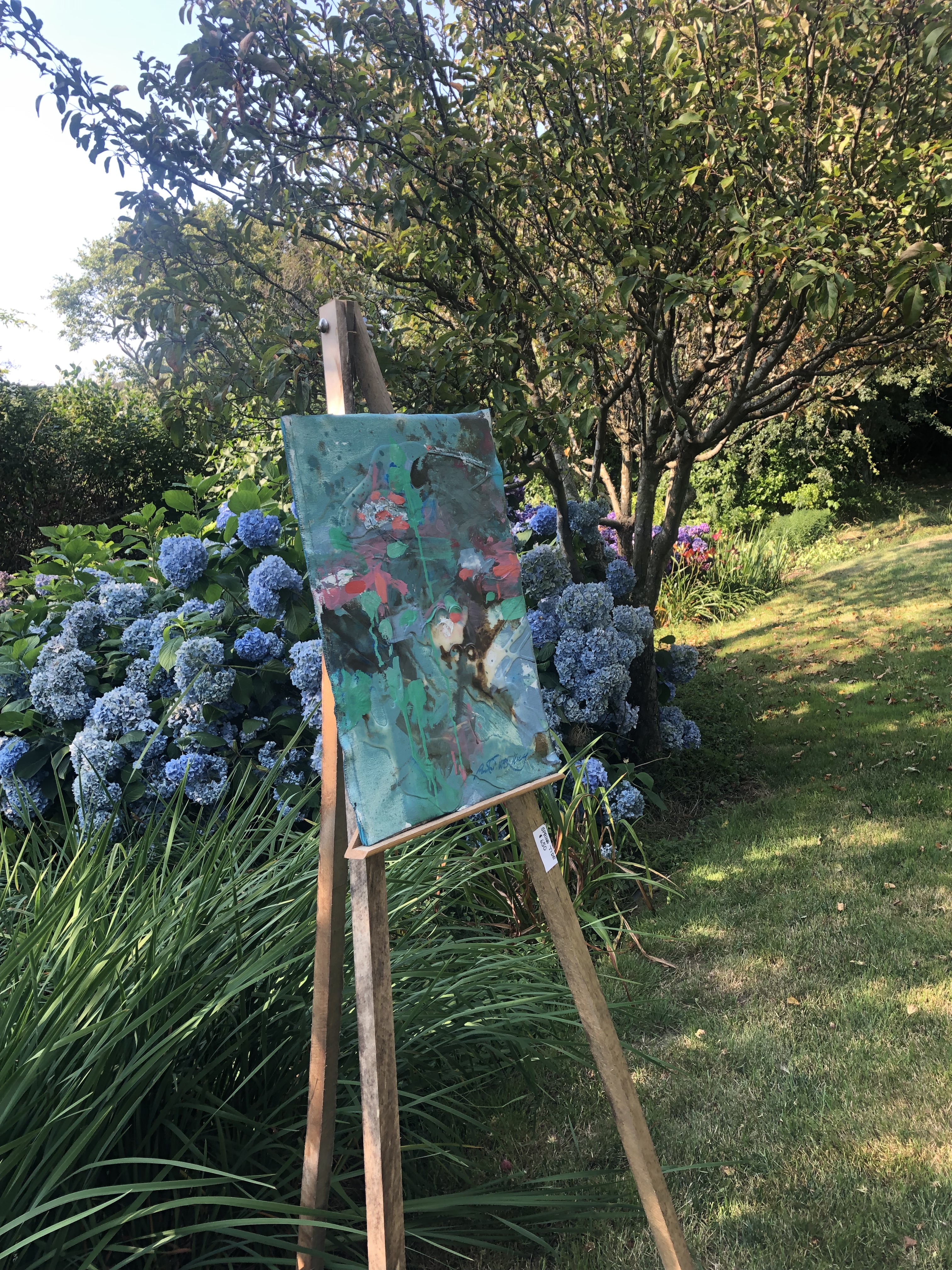
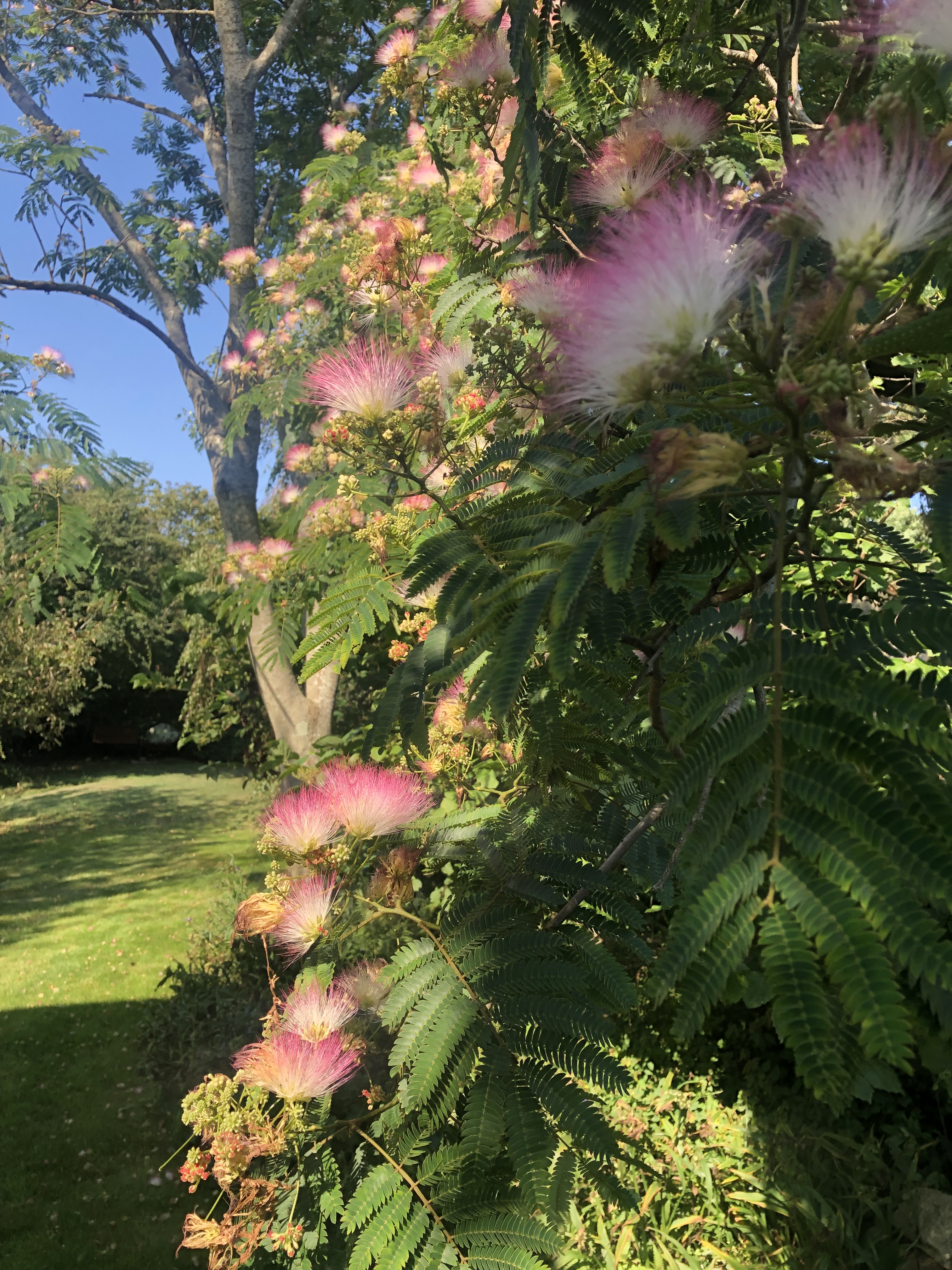
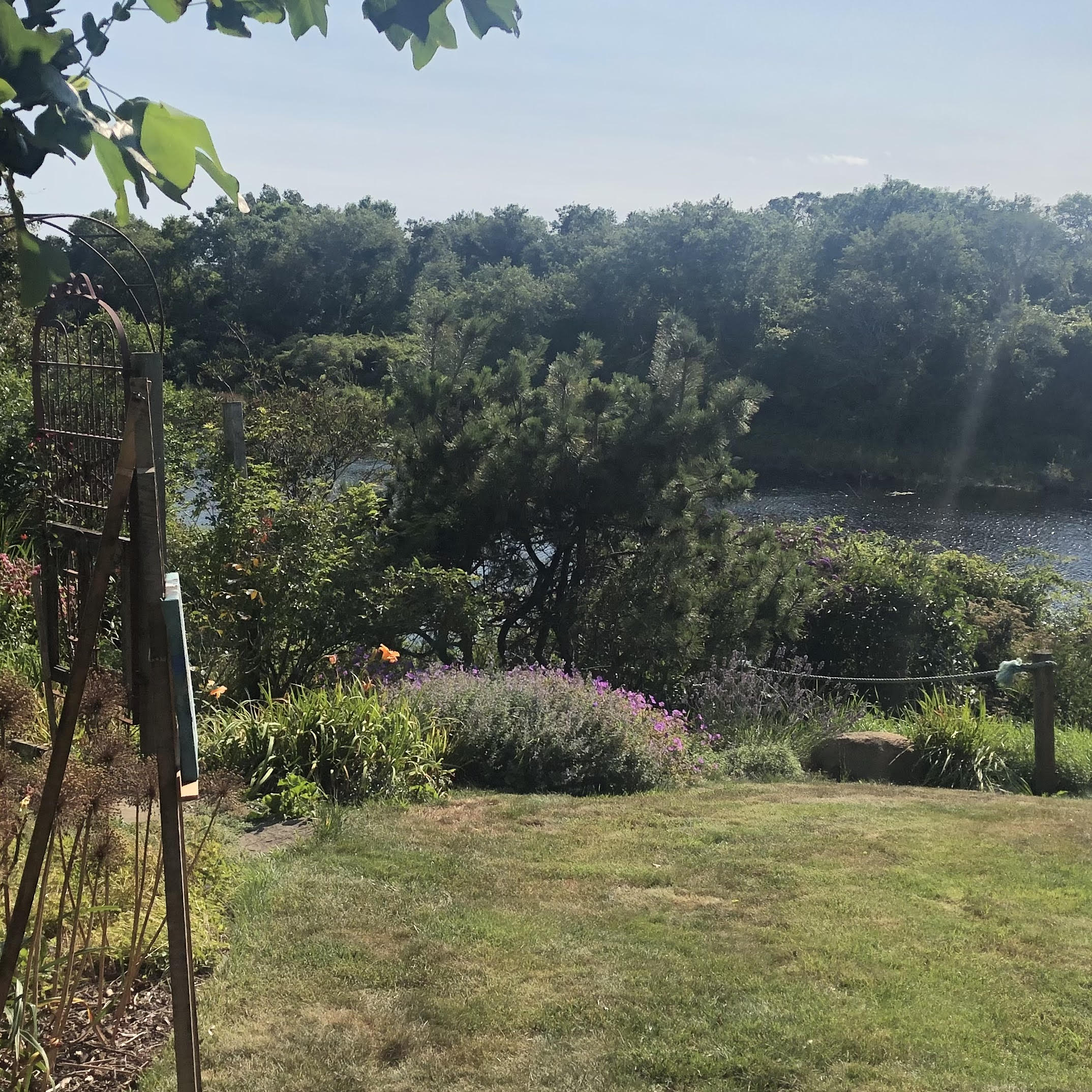
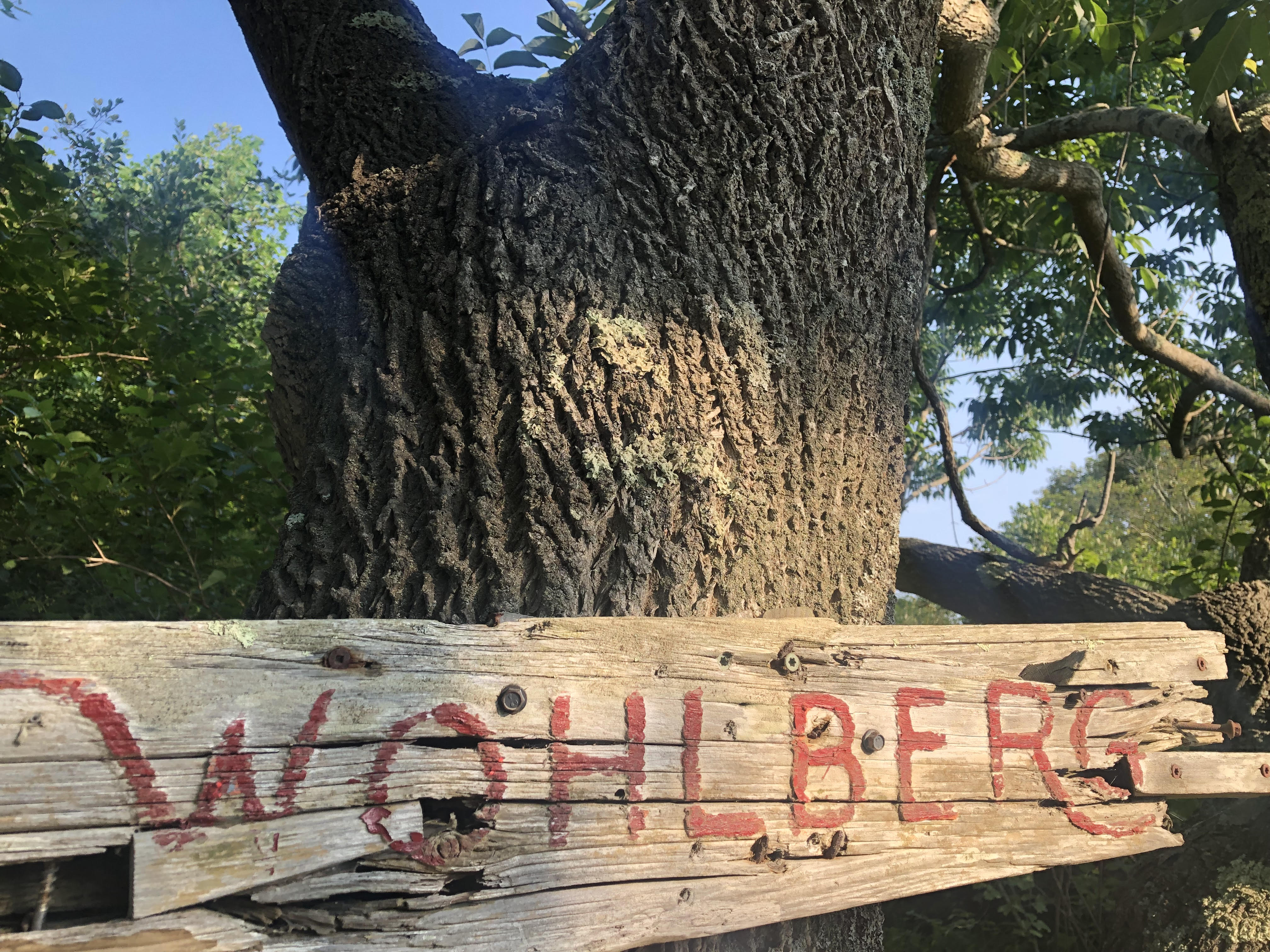
After decades as a commercial artist doing illustrations and portraits, Ben Wohlberg has “retired” to focus on abstract painting and gardening with his wife, Catherine. Once a year, they open to the public the grounds of their lovely summer home located on a shady dirt road. And what a treat that is!

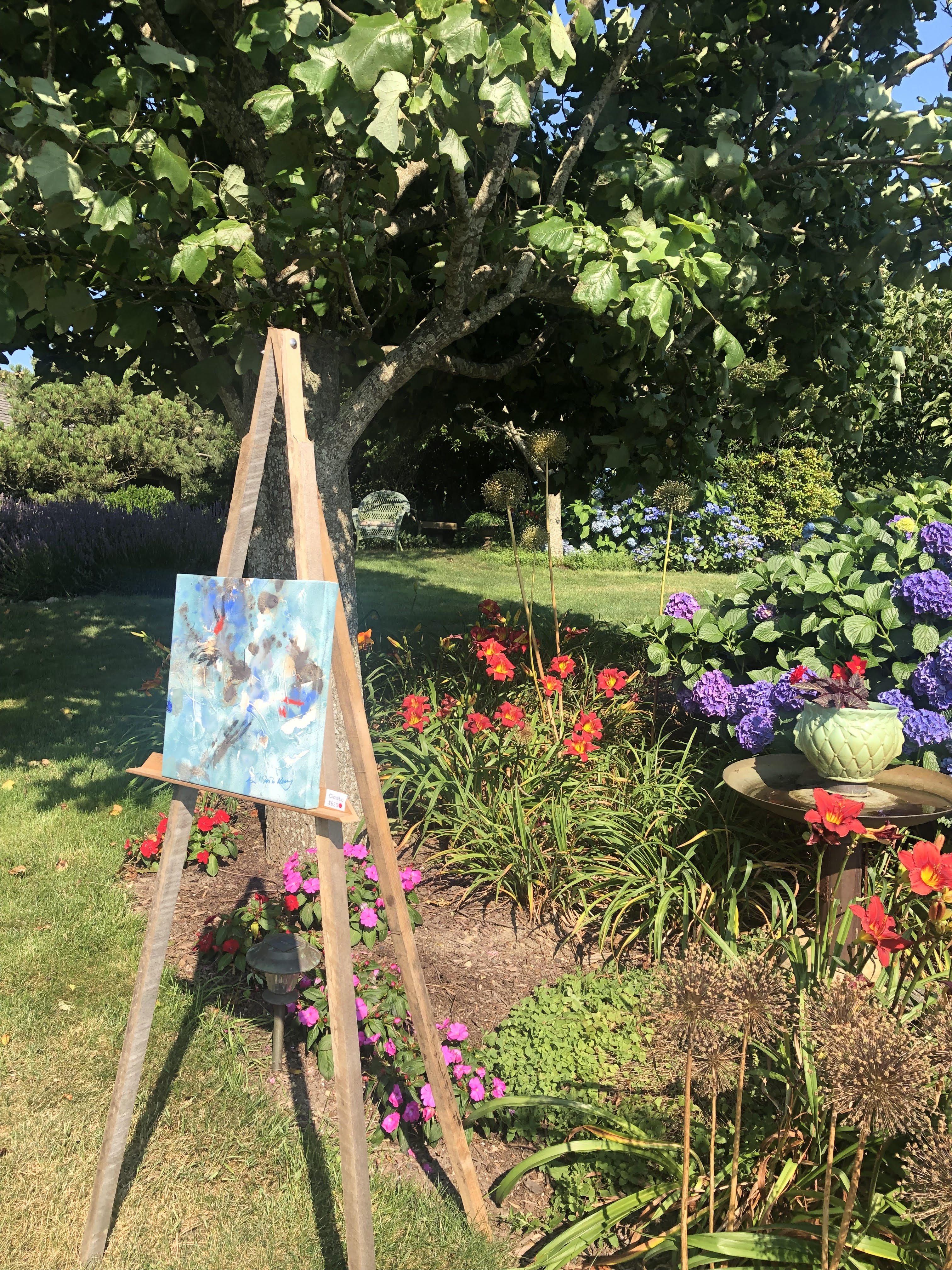
I love the colors of the abstract paintings, which speak to me of the water, sky, flowers, butterflies, and mist that surround the couple on the island they love. In the blues of one with a flight of rose color lifting the upper right corner, I sense a bird flying in a studio window and swooping past a mirror that captures the feeling of its freedom rather than its photograph.

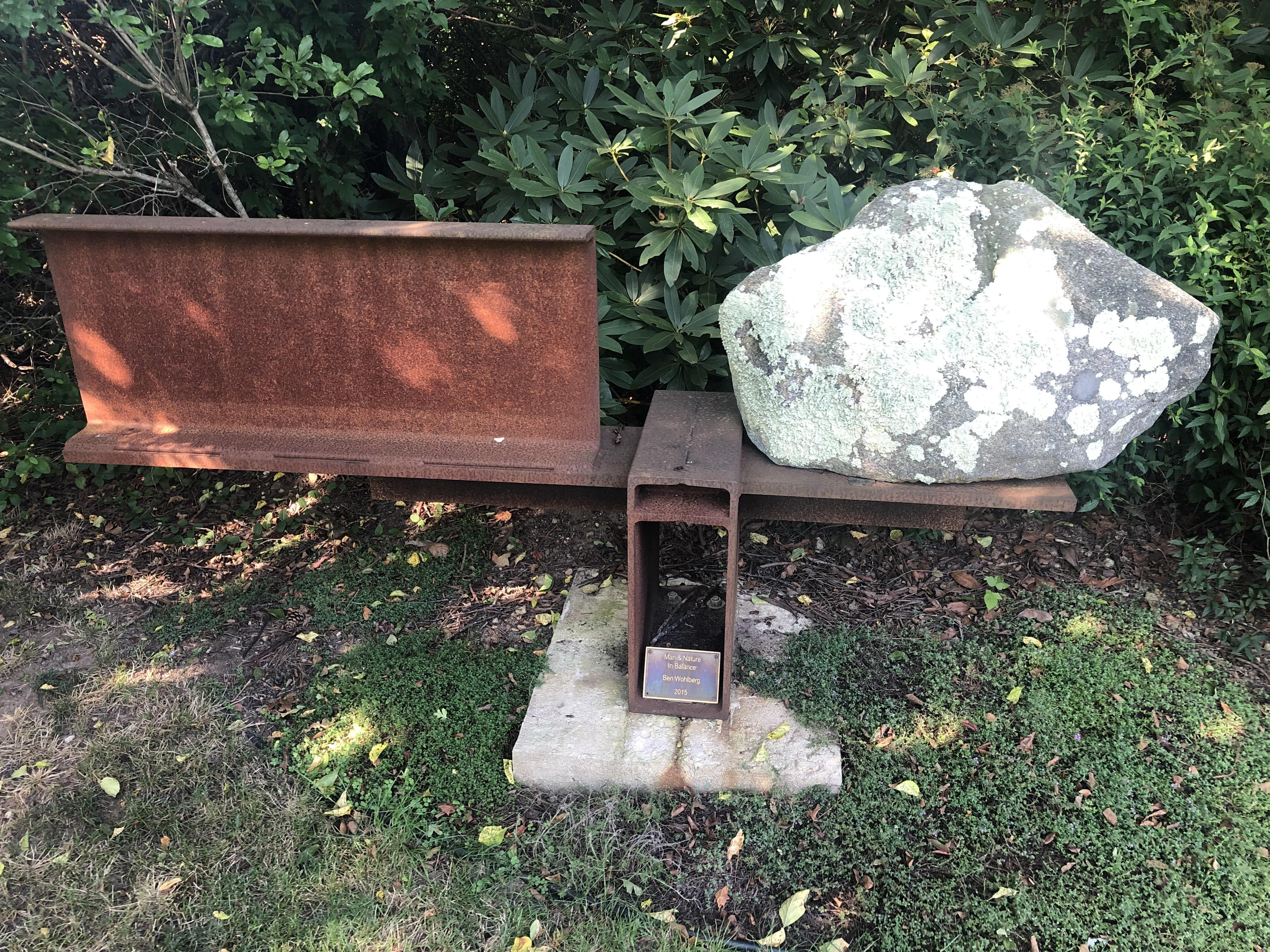
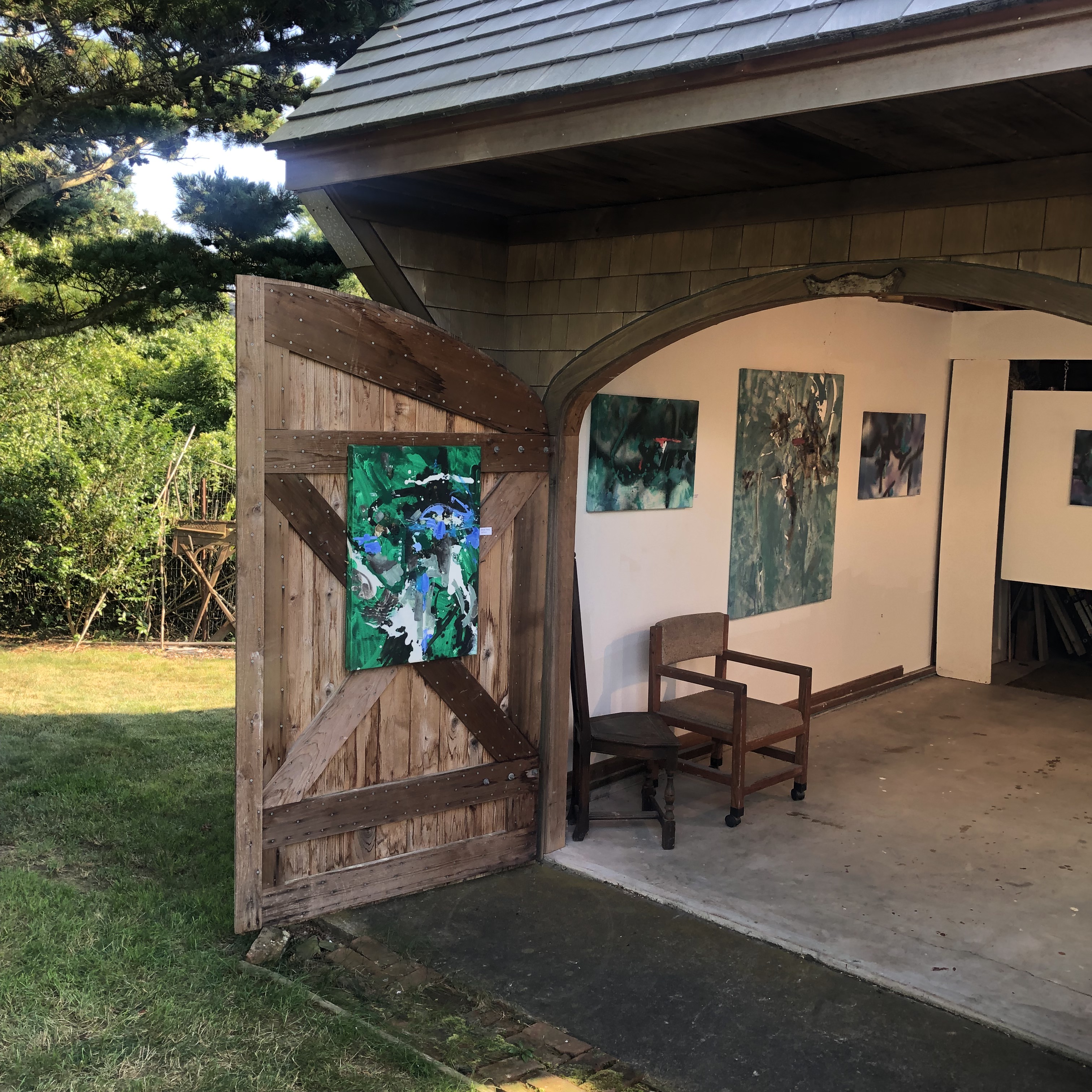
Seeing these paintings on easels around the grounds brings something extra to both. Note the “galrage” below (gallery in a garage) and the sculpture called “Man and Nature in Balance.”

More at Wohlberg’s website and in a video that features two islands the painter loves.

Read Full Post »

050616-NCWyeth-at-Concord-Museum


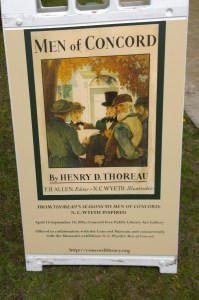
If you can get to the N.C. Wyeth exhibit at the Concord Museum by September 18, I think it will be worth your while.

You’re familiar with the family of painters, the Wyeths, right? Best known are Nathaniel C., his son Andrew, and Andrew’s son, Jamie. Perhaps you have been to the Brandywine Museum in Chadd’s Ford, Pennsylvania, which got its start with generations of Wyeth art.

N.C. fell in love with Henry D. Thoreau‘s writing in 1909, made several pilgrimages to Concord, and eventually conceived of a book that he would illustrate , calling it Men of Concord: And Some Others as Portrayed in the Journal of Henry David Thoreau.

The Concord Museum and the Concord Library are each hosting exhibits related to the book, but if you like N.C.’s art, the museum exhibit is the one to see. It’s small but informative and lovely to look at.

N.C. was known for heroic illustrations of classics like Treasure Island, and his characters’ facial expressions and body postures always tell a story. That might be too literal for some art lovers, but I like it. I like the looks on the faces of three men Thoreau described in his journal as “slimy.” I like the watchful, coiled bodies of the muskrat hunters on the river, and the youthful innocence of N.C.’s Thoreau — a quality I have never associated with the writer.

One fanciful painting with bluebirds in a bubble of light like angels over Thoreau’s head seems like hagiography. It’s not my favorite work here, but it’s an intriguing summary of the writer’s interests. And people do make a religion out of Thoreau and Transcendentalism, so maybe it’s not surprising. The whole Concord gang — including Bronson Alcott and Ralph Waldo Emerson — is in the show, minus most of the brilliant women, of course.

One thing I learned was that N.C. had his pencil sketches converted into glass slides, and then he projected them onto the Renaissance board he favored so he could work directly on the enlarged sketch.

More on the museum website.

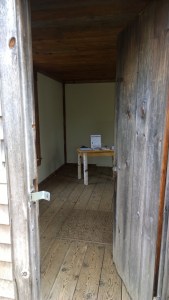
The hut is a replica of the cabin Thoreau stayed in at Walden Pond and is located on the grounds of the museum.

050616-Thoreau-replica-cabin

050616-Wyeth-and-Thoreau-at-Library


Read Full Post »

Maria Popova at Brain Pickings finds the most wonderful books to blog about. In a recent post she extolled the wonders of fairy tale illustrations by Kay Rasmus Nielsen.

I was surprised to learn that’s a man’s name in Denmark. Wikipedia says, “Kay Nielsen was born in Copenhagen into an artistic family; both of his parents were actors – Nielsen’s father, Martinus Nielsen, was the director of Dagmarteater and his mother, Oda Nielsen, was one of the most celebrated actresses of her time, both at the Royal Danish Theater and at the Dagmarteater.

“Kay … received his first English commission from Hodder and Stoughton to illustrate a collection of fairy tales, providing 24 colour plates and more than 15 monotone illustrations for In Powder and Crinoline, Fairy Tales Retold by Sir Arthur Quiller-Couch in 1913. In the same year, Nielsen was also commissioned by The Illustrated London News to produce a set of four illustrations to accompany the tales of Charles Perrault; Nielsen’s illustrations for ‘Sleeping Beauty’, ‘Puss in Boots’, ‘Cinderella’ and ‘Bluebeard’ were published in the 1913 Christmas Edition.”

This is from Maria Popova: “As a lover of illustrated fairy tales and having just returned from Sweden, I was delighted to discover, thanks to the relentlessly wonderful 50 Watts, East of the Sun and West of the Moon: Old Tales from the North … illustrated by Danish artist Kay Rasmus Nielsen (1886-1957), whose work you might recall from [my list of] the all-time greatest illustrations of Brothers Grimm and the fantastic visual history of Arabian Nights. Originally published in 1914, this magnificent tome of 15 stories was recently reissued by Calla Editions, the same Dover imprint that revived Harry Clarke’s magnificent illustrations for Edgar Allan Poe, and features 25 color illustrations, along with a slew of black-and-white ones, in Nielsen’s singular style of haunting whimsy.”

There are more than 20 amazing Nielson illustrations here, at Brain Pickings.

Art: Kay Rasmus Nielsen
The North Wind went over the sea.

Read Full Post »


Art: Salvador Dali

I was swept away by theater at age 10 as the understudy for Alice in Binny Rabinowitz’s adaptation of Alice in Wonderland. Ever since, I’ve been a fan of the little girl who was so clear-eyed about the unreasonableness of grownups.

So imagine my delight at Maria Popova’s essay on the many different ways the story has been illustrated, including by Salvador Dali.

“In the century and a half since Sir John Tenniel’s original illustrations, the Carroll classic has sprouted everything from a pop-up book adaptation to a witty cookbook to a quantum physics allegory, and hundreds of artists around the world have reimagined it with remarkable creative vision. …

“In 1969, Salvador Dalí was commissioned by New York’s Maecenas Press-Random House to illustrate a special edition of the Carroll classic, consisting of12 heliogravures — one for each chapter of the book and an original signed etching in four colors as the frontispiece. Distributed as the publisher’s book of the month, the volume went on to become one of the most sought-after Dalí suites of all time.”

See a splendid array at Brainpickings, here.

Art: Lisbeth Zwerger 

Read Full Post »

I love children’s illustrated books like those of the Petershams. Eve M. Kahn wrote an article about the couple in the NY Times “Antiques” column prior to the opening of a retrospective at the Woodstock Artists Association and Museum.

“Maud and Miska Petersham, married book illustrators in Woodstock, N.Y., sat across from each other as they worked. From the 1920s to the ’50s, they ran a prolific studio at their handmade stone house. They took on classic stories like ‘Heidi’ and ‘Rip van Winkle,’ along with nonfiction about rayon and wool that is now obscure, and Queen Marie of Romania’s fairy tale starring a magic doll.

“Children and teachers sent fan mail. ‘It has gone through the school like wildfire,’ a Utah schoolteacher wrote to the Petershams in 1941, praising the couple’s alphabet book with patriotic pictures.

“The Petersham archive survives in the hands of family members and the University of Southern Mississippi’s library. The historian Lawrence Webster mined the material for a book, “Under the North Light: The Life and Work of Maud and Miska Petersham” (WoodstockArts). …

“Miska Petersham grew up in Hungary. Around 1912, shortly before he moved to New York, he Americanized his original name, Mihaly Petrezselyem. …

“The Petershams’ house on Glasco Turnpike [in Woodstock], with floor-to-ceiling windows that illuminated their drafting tables, is largely unchanged and has been on the market for about $440,000,” a short sale.

More. (Scroll down.) The show, “Inspired by the North Light,” runs through December 31.

Photograph from Lawrence Webster shows one of Maud and Miska Petersham’s illustrations for the children’s book “The Poppy Seed Cakes.”

Read Full Post »

I went to the Concord Library today to hear children’s book author and illustrator Ed Emberley give a charming talk to a crew of little kids sitting on a rug.

Emberley used an easel and colored chalks to demonstrate simple ways to create pictures. It was clear that he was used to talking to young children and loved making them laugh. The kids responded gleefully. Grownups did, too.

Several fans asked him — and his wife and collaborator, Barbara — to sign books they had brought along. One woman told me that her kids, now grown, still knew all the words to the Emberleys’ book Drummer Hoff, winner of the 1968 Caldecott Award for  illustration.

I took home a worksheet with Emberley’s drawing tips so I can do more-interesting doodles in long meetings at work.

Read Full Post »