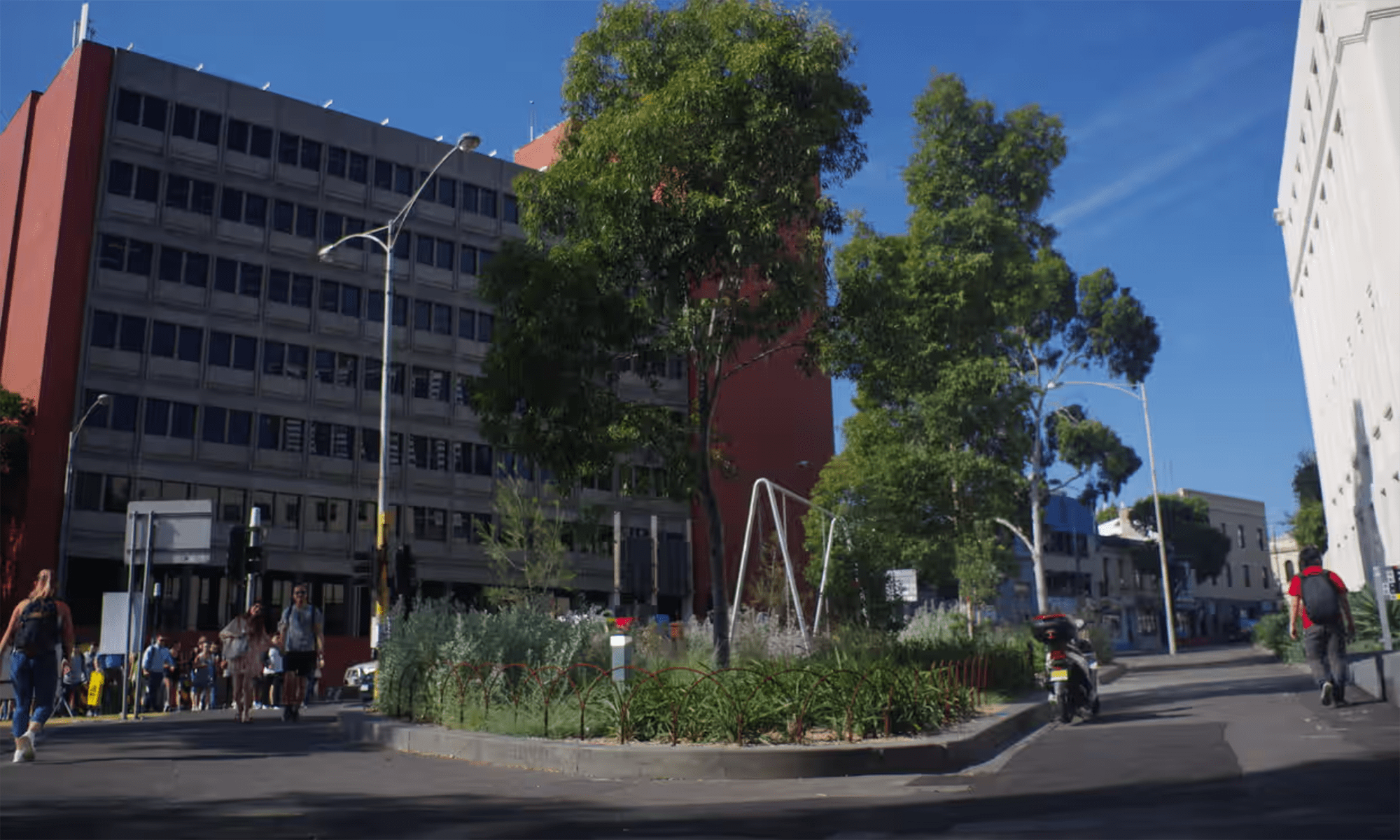
Photo: Mata, et al, CC BY 4.0.
Entomology Today says, “City insects need native plants just like country insects do. A new study, conducted in a small greenspace in Melbourne, Australia, found that an increase in the diversity and complexity of plant communities leads to a large increase in insect biodiversity, a greater probability of attracting insects, and a higher number of ecological interactions between plants and insects.”
My friend Jean Devine, founder of Biodiversity Builders and Devine Native Plantings, works with young people to plant native species that nurture beneficial insects. Between her and University of Texas Prof. Alex Wild, @alexwild, I have been learning a lot about bugs and how essential to life they can be. I even work hard to understand some of Alex’s posts, of which the following is not unusual: “A genomic study of a small group of tiger beetles shows that convergent color evolution had misled past morphological taxonomists.” Ha!
Meanwhile, under the title “Every Little Bit Helps,” Entomology Today advises those responsible for plantings in cities thus: “By increasing the diversity of native plants in urban areas, researchers from the University of Melbourne have seen a seven-fold increase in the number of insect species in just three years, confirming the ecological benefits of urban greening projects. The findings were published [in August] in the British Ecological Society journal, Ecological Solutions and Evidence.
“The study, conducted in a small greenspace in Melbourne, Australia, found that an increase in the diversity and complexity of plant communities leads to a large increase in insect biodiversity, a greater probability of attracting insects, and a higher number of ecological interactions between plants and insects.
“Bringing nature into cities has been shown to deliver a host of benefits, from well-being to increased biodiversity and climate change mitigation. Being able to quantify the benefits of greening projects like rooftop gardens or urban wildflower meadows has become a sharp focus for people creating and funding them.
However, prior to this study, little evidence had been documented on how specific greening actions can mitigate the detrimental effects of urbanization through boosting the numbers of indigenous insect species that have become rare or ceased to exist in a particular area.
“ ‘Our findings provide crucial evidence that supports best practice in greenspace design and contributes to re-invigorate policies aimed at mitigating the negative impacts of urbanization on people and other species,’ says Luis Mata, Ph.D., researcher at the University of Melbourne’s School of Agriculture, Food and Ecosystem Sciences, lead research scientist at Cesar Australia, and lead author of the study.
“Prior to the beginning of the study in April 2016, the research team’s chosen greenspace was limited in vegetation: simply a grass lawn and two trees. Across April, the site was substantially transformed through weeding, the addition of new topsoil, soil decompaction and fertilization, organic mulching, and the addition of 12 indigenous plant species.
“Across the four-year length of the study, the researchers conducted 14 insect surveys using entomological nets to sample each plant species for ants, bees, wasps, beetles and more. Overall, 94 insect species were identified, 91 of which were indigenous to Victoria, Australia.
“ ‘Most importantly, the indigenous insect species we documented spanned a diverse array of functional groups: detritivores that recycle nutrients, herbivores that provide food for reptiles and birds, predators and parasitoids that keep pest species in check,’ Mata says.
“The 12 plant species planted at the beginning of the study were found to support an estimated 4.9 times more insect species after only one year than the original two plant species that previously existed in the greenspace where the research took place. …
“ ‘An increase in the diversity and complexity of the plant community led to, after only three years, a large increase in insect species richness, a greater probability of occurrence of insects within the greenspace, and a higher number and diversity of interactions between insects and plant species,’ Mata says. …
“ ‘I’d love to see many more urban greenspaces transformed into habitats for indigenous species,’ Mata says. ‘We hope that our study will serve as a catalyst for a new way to demonstrate how urban greening may effect positive ecological changes.’ ”
More at Entomology Today, here. No firewall.

 Suzanne's Mom's Blog