Feeds:
Posts
Comments

Posts Tagged ‘infant’

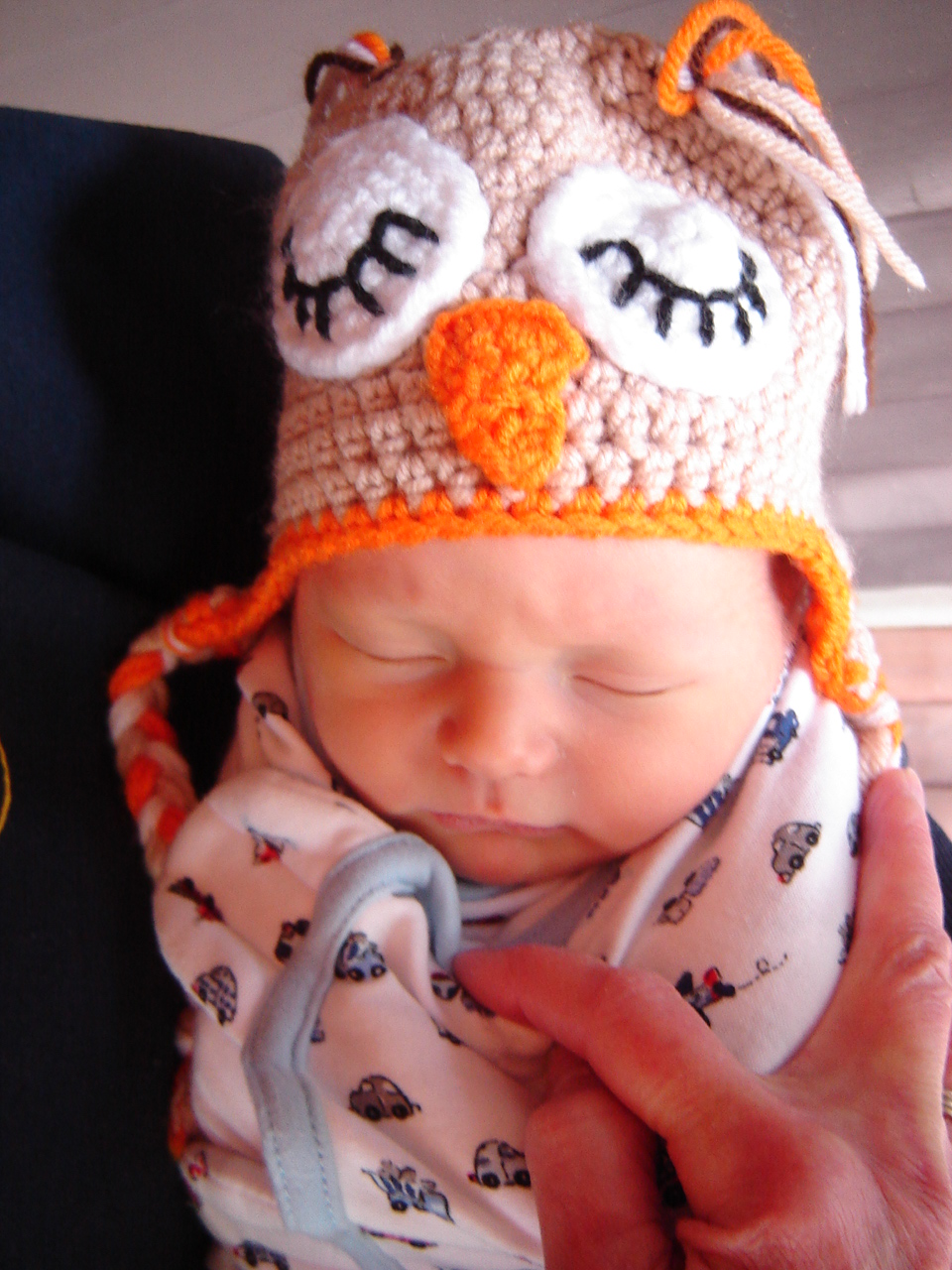
I was reminded of a recent science article this morning. Erik was speaking Swedish to my one-year-old grandson, and John said he shows the three-year-old foreign-language cartoons because it’s a great age to get an ear for them.

I recalled something interesting in the NY Times. Tim Requarth and Meehan Crist wrote, “Babies learn to speak months after they begin to understand language. As they are learning to talk, they babble …

“But when babies babble, what are they actually doing? And why does it take them so long to begin speaking?

“Insights into these mysteries of human language acquisition are now coming from a surprising source: songbirds.

“Researchers who focus on infant language and those who specialize in birdsong have teamed up in a new study suggesting that learning the transitions between syllables — from “da” to “do” and “do” to “da” — is the crucial bottleneck between babbling and speaking. …

“The lead author, Dina Lipkind, a psychology researcher at Hunter College in Manhattan [said], “What we’re showing is that babbling is not only to learn sounds, but also to learn transitions between sounds.” …

“At first, however, the scientists behind these findings weren’t studying human infants at all. They were studying birds.

“ ‘When I got into this, I never believed we were going to learn about human speech,’ said Ofer Tchernichovski, a birdsong researcher at Hunter and the senior author of the study, published [in] the journal Nature. …

“Dr. Tchernichovski and Gary Marcus, who studies infant language learning at New York University and who helped design the study, discussed the results. Could the difficulty learning transitions in songbirds hold true for human infants?

“By analyzing an existing data set of recordings of infant babbling, they found that as babies introduce a new syllable into their repertory, they first tend to repeat it (‘do-do-do’). Then, like the birds, they begin appending it to the beginning or end of syllable strings (‘do-da-da’ or ‘da-da-do’), eventually inserting it between other syllables (‘da-doda’).” More.

Photo: Iva Ljubicic
A juvenile zebra finch, right, perched next to a plastic model, which helps the bird learn to sing. Researchers have discovered that babies learn to babble much as birds learn to sing.

Read Full Post »

“Elizabeth S. Spelke,” writes Natalie Angier in today’s NY Times, is a “professor of psychology and a pre-eminent researcher of the basic ingredient list from which all human knowledge is constructed.” She studies babies  to learn how much knowledge humans start out with. And perhaps not surprising, she finds that babies are intensely focused on … other people.

“Dr. Spelke studies babies not because they’re cute but because they’re root. ‘I’ve always been fascinated by questions about human cognition and the organization of the human mind,’ she said, ‘and why we’re good at some tasks and bad at others.’

“But the adult mind is far too complicated … ‘too stuffed full of facts’ to make sense of it. In her view, the best way to determine what, if anything, humans are born knowing, is to go straight to the source, and consult the recently born. …

“Dr. Spelke is a pioneer in the use of the infant gaze as a key to the infant mind — that is, identifying the inherent expectations of babies as young as a week or two by measuring how long they stare at a scene in which those presumptions are upended or unmet. …

” ‘Why did it take me 30 years to start studying this? … All this time I’ve been giving infants objects to hold, or spinning them around in a room to see how they navigate, when what they really wanted to do was engage with other people!’ ”

Read more.

Read Full Post »

It says here, at Pacific Standard, that learning a second language translates into clearer thinking. No surprises there, but good to have evidence.

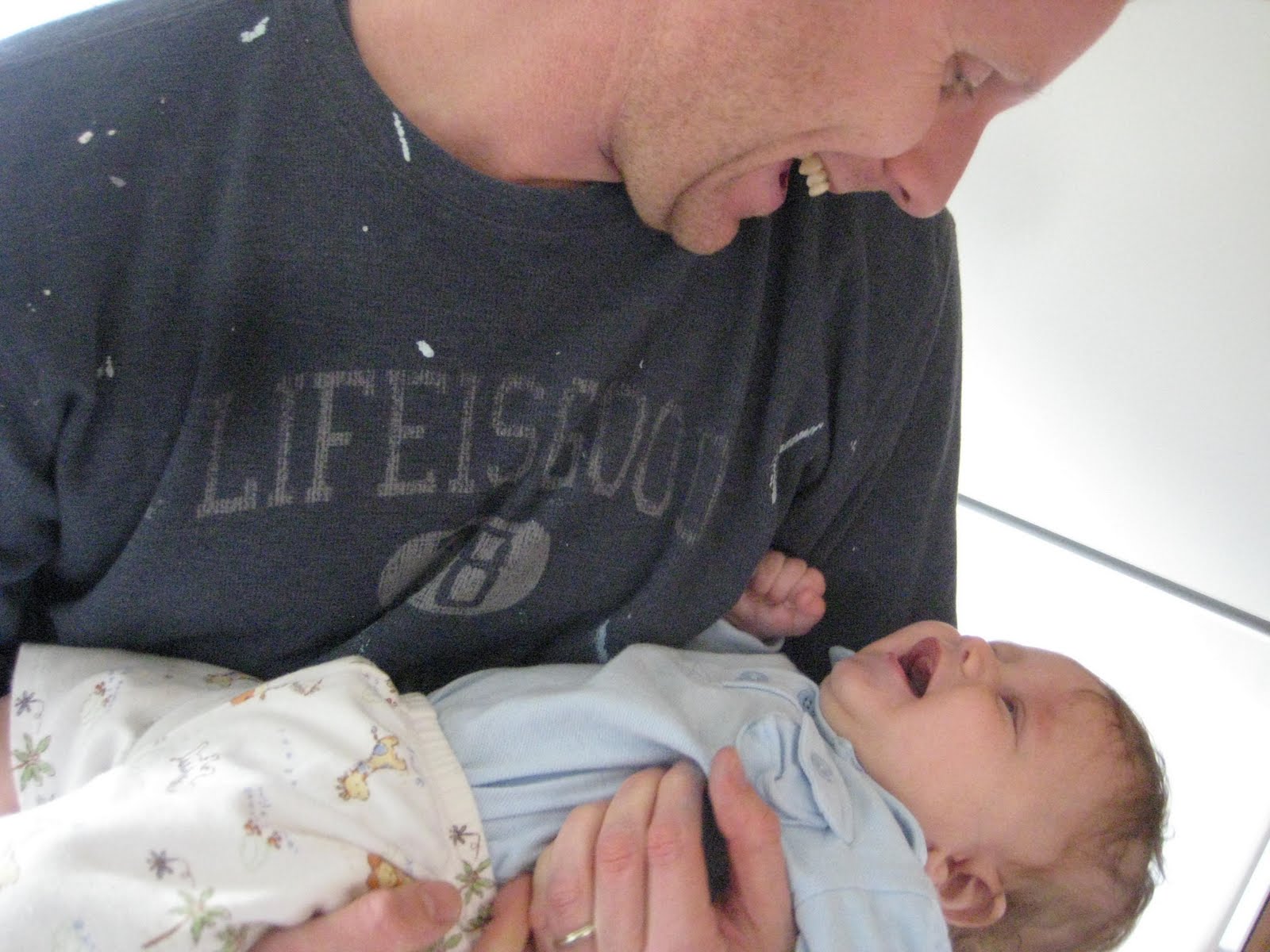
In Providence this week, a certain baby I know is showing an affinity for more than one language. His mother thinks he finds his father’s Swedish soothing, especially when sung in a low voice.

While the baby is tuning in to Swedish and English, his parents are studying a language called Basic Baby. It’s the world’s oldest language. In its simplest form, it involves crying: “You’re doing this wrong — try a different tack.” Or silence: “You’re doing this right.” At higher levels, it gets more complex. For example, you may be doing something right, but there is still crying: “This digestive business feels totally weird.”

Basic Baby is not too hard to learn if you (a) pay attention, (b) realize that you will figure it out eventually. It was your own first language. If you are  rusty, maybe you just need to bone up a bit.

Read Full Post »

Here is a business that is in the business of innovating to solve problems in poor countries.

The latest initiative at Design that Matters has been to find a low-cost way to treat babies in the developing world who have jaundice. This week the group tested Firefly, an easily transportable phototherapy bassinet specially designed for Vietnam. The doctors in Vietnam were ecstatic.

“Currently infants born with jaundice in Vietnam will first travel to a district hospital in their search for treatment, which are usually not equipped with the proper tools to treat any newborn health issues and are referred on to a provincial or national hospital. Due to this lack of equipment at the rural and district level, infants’ conditions worsen as they travel for multiple days, risking the development of permanent brain damage. …

“In response, Design that Matters (DtM), the East Meets West Foundation (EMW) and Vietnamese manufacturer MTTS have launched a collaboration to develop a new infant care device that will treat newborn jaundice during the critical first days of life.” Read more about Firefly here.

“Design that Matters (DtM), a 501c3 nonprofit based in Cambridge, Massachusetts, creates new products that allow social enterprises in developing countries to offer improved services and scale more quickly. DtM has built a collaborative design process through which hundreds of volunteers in academia and industry donate their skills and expertise to the creation of breakthrough products for communities in need. Our goal is to deliver a better quality of service, and a better quality of life, to millions of beneficiaries through products designed for our clients.”

John’s company, Optics for Hire played a role.


Read Full Post »