Feeds:
Posts
Comments

Posts Tagged ‘lemon’

Photo: Kelly Sikkema via Unsplash.
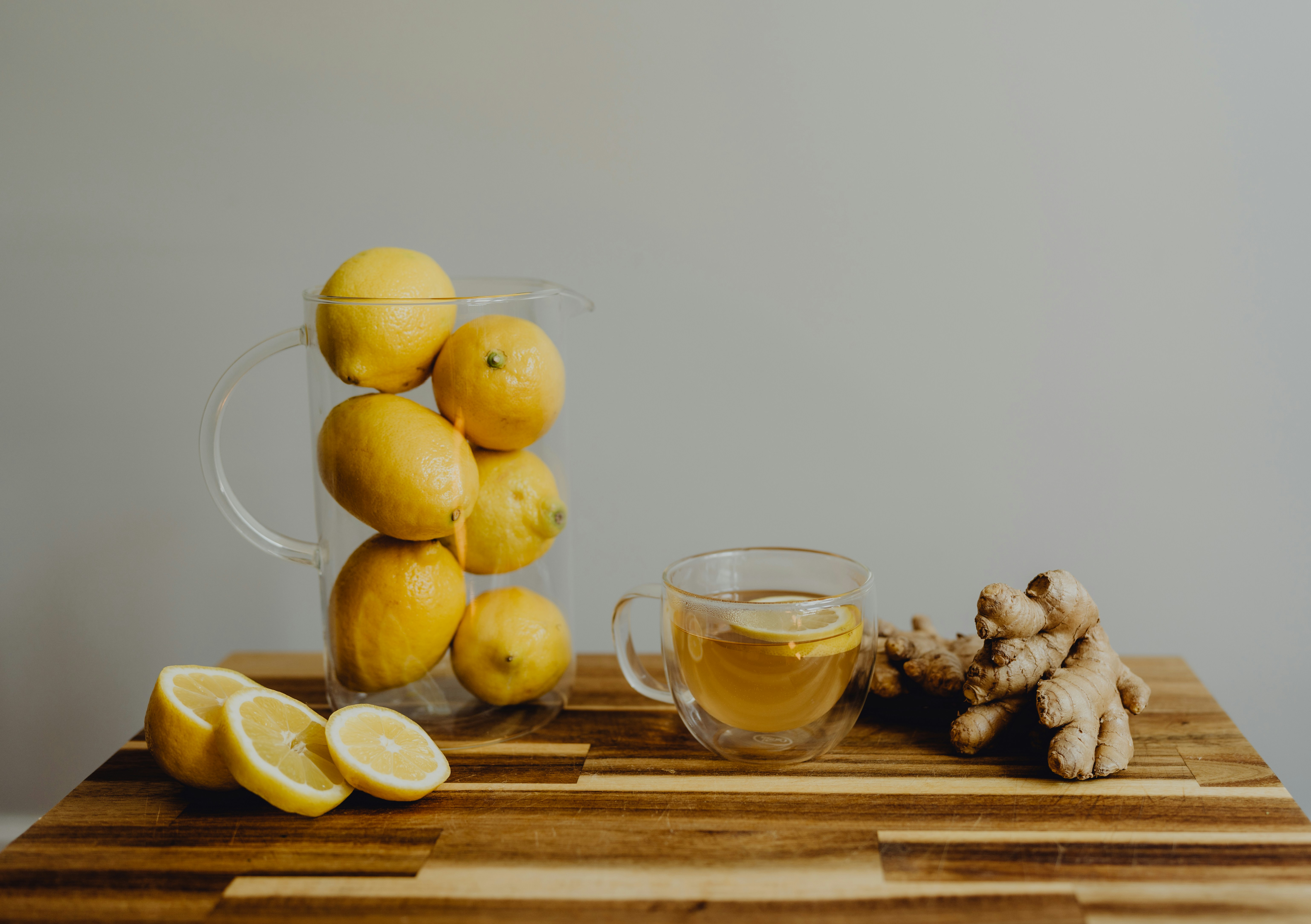
It’s amazing how many cultures use lemon and ginger tea to treat colds.

I have volunteered as an English as a Second Language (ESL) assistant for about eight years. Recently Teacher Allissa’s assignment for her students was to write about the home remedies their families use. These are adult students from countries as diverse as Turkey, the Dominican Republic, Afghanistan, Peru, China, Haiti, Cambodia, Guatemala …

Note the cold remedy mentioned most.

“When my children have a fever, I put them in the bathtub with warm water, salt and vinegar. It’s so good to lower the fever.”

“When someone is sick, I boil chamomile tea for them. I also make lentil soup or chicken soup.”

“In my country, when a person is sick, l give them some tea, some vegetable oil, soup and cinnamon tea.”

“I treated the children’s colds with tea with raspberry and lemon, and also tea with ginger, honey and lemon. For colds and viruses, the best noodle soup in chicken broth is served with a garlic yogurt mixture. Tasty and healthy for cough. In my country, Azerbaijan, many herbs grow in the mountains for various diseases.”

“Lemon tea is good for cough.”

“In China, we always think ginger tea can help people keep away colds.”

“Lemon tea is helpful to keep your immune system strong. Lemon contains vitamin C. Make sure to wear a hat, gloves, and a scarf if you’re going outside to stay comfortable.”

“I remember when I was in Haiti and had a sore throat, my mother used to boil ginger and lemon tea. Then when it was ready, she put honey in it. Then she gave me the tea to drink, and after a while I felt better.”

“Lemon is good for the people who are sick. For example, if they have a sore throat or are losing their voice. I make a lemon syrup with hot water and salt and keep it for one year. If you keep it more then a year, it’s no good. When you are sick, boil it with the water and drink it. The next day you will feel better.”

“When I have a cold, I prefer to drink lemon tea with honey. It is very useful for sore throat and runny nose. I also take anise tea for any stomach disorders.”

“I remember when I was a little girl and my mother would put limes with salt on my wrists and feet to help lower down my body temperature when I was sick. I’m really grateful that she taught me this because I now use this method to help cure my kids when they’re sick.”

“Lemon tea is very good for your body, especially when you have a fever and sore throat. When I have a fever, I drink it and it helps me. I advise you always to drink lemon tea.”

“Mint is a relaxing plant. When I have a stomach ache, I make mint with lemon tea. Oregano is the best herb with a roast chicken. Lavender is a miracle plant for me. It’s for detoxing, good sleep and headaches.”

“We treat colds with hot tea with ginger, lemon and honey. Prepare hot chicken broth soup with noodles and add garlic.”

“In Peru when we are sick with cough and fever, we drink hot water, a fresh eucalyptus leaf and also chamomile and a small piece of ginger, and we sweeten it with honey. We also rub our chest and back with Vicks VapoRub, and at night before sleeping, we place a slice of onion under the soles of our feet and put on our socks. The next day we take out the slice of onion, and the onion is all black and it is thrown in the trash, because it has already absorbed part of the cold. The onion strengthens our immune system. You can also place half an onion on top of the nightstand. The smell of the onion absorbs the flu viruses that are in our bedroom; it also serves to relieve asthma and helps the respiratory tract.”

I shared the onion idea with my 12-year-old granddaughter when she had flu last week. She didn’t try it.

Please share your own home remedies.
Read Full Post »

112217-prepping-for-cranberry-sauce

112217-prepping-for-cranberry-sauce


For a few years now, I have sent readers to the “From Scratch Club” to get the best-ever cranberry sauce. Alas, the club seems to have dispersed and is no longer maintaining a website. Fortunately, I printed out the recipe and will share it here. Enjoy!

Maple, Citrus & Ginger Cranberry Preserves
Makes about two pints

12 ounces whole cranberries
3 clementines or 1 very large orange, peeled and cut in small chunks
½ lemon, juice and zest
½ tart apple, in small chunks
¾ cup maple syrup
½ teaspoon freshly grated ginger root
a pinch of sea salt
(optional: a crank of freshly ground pepper)

1. Bring cranberries & maple syrup to a low boil. Keep a close eye on the mixture so the syrup doesn’t burn. You want the fruit to break down, and you can use a potato masher after 5-8 minutes to speed things up.

2. Once you have a rolling boil, add apple chunks, lemon juice & zest and clementines. Stir. Apples need to get soft but not mushy.

3. Add sea salt & ginger. Cook a bit more and use the potato masher to make sure all berries have popped.

If you end up using this, do let me know.

Read Full Post »


Both my kids are entrepreneurs. They got their start in business with a lemonade stand, as my grandson is doing in the photo.

His customers don’t know how lucky they are. Lemon peels in the trash may be protecting them from bubonic plague. Doubt me? Well, have you heard of anyone getting plague in an area of New England where lemonade is sold?

Well, there you go.

Consider a recent article by Tom Nealon in the Boston Globe.

He writes, “I’d like to tell a story of what lemonade was doing in Paris 349 summers ago. Lemons have been used for making drinks since before the Ancient Egyptians, are often used to detoxify, and to soothe a sore throat, but that year, the fate of Paris may have hinged on one of its lesser known properties.

“In 1668, the bubonic plague, dormant for a decade, returned to France and was threatening Paris. It had been reported in Normandy and Picardy, in Soissons, Amiens, and then, terrifyingly, just downstream of the capital along the Seine, in Rouen. … Panic-stricken Parisian public health officials imposed quarantines and embargoes in the hope of mitigating inevitable disaster — but the dreaded pestilence never struck.

“The plague that loomed over Paris was the midpoint of a 17th-century European epidemic that would go on to decimate Vienna (80,000 dead in 1679), Prague (80,000 dead in 1681) and Malta (11,000 dead in 1675). The body count in Amiens would end up topping 30,000, and almost no city in France was spared – except for Paris, which, miraculously, survived almost completely unscathed.”

By chance, lemonade was extremely popular that year.

“The limonene contained in lemons (and other citrus fruits) is a natural insecticide and insect repellent. The most effective part of the lemon is the limonene-rich peel. Indeed, after centuries of discovery of chemical insect repellents, the US Environmental Protection Agency still lists 15 insecticides in which limonene is the chief active ingredient, including both general bug sprays and products for pet flea and tick control. The French were piling lemon peels in the best possible place to disrupt the flea-rat-human-rat chain [that caused the spread of plague]: the trash. …

“Paris emerged alive — and refreshed.” More here.

I don’t really think we should count on lemonade to protect us from plague. But lemonade in a backpack isn’t a bad idea for a lemonade-stand spinoff. Time tested. You could take it to the beach.

Image: Staeske Rebers
Limonadiers were French vendors who sold lemonade from tanks on their backs.

Read Full Post »

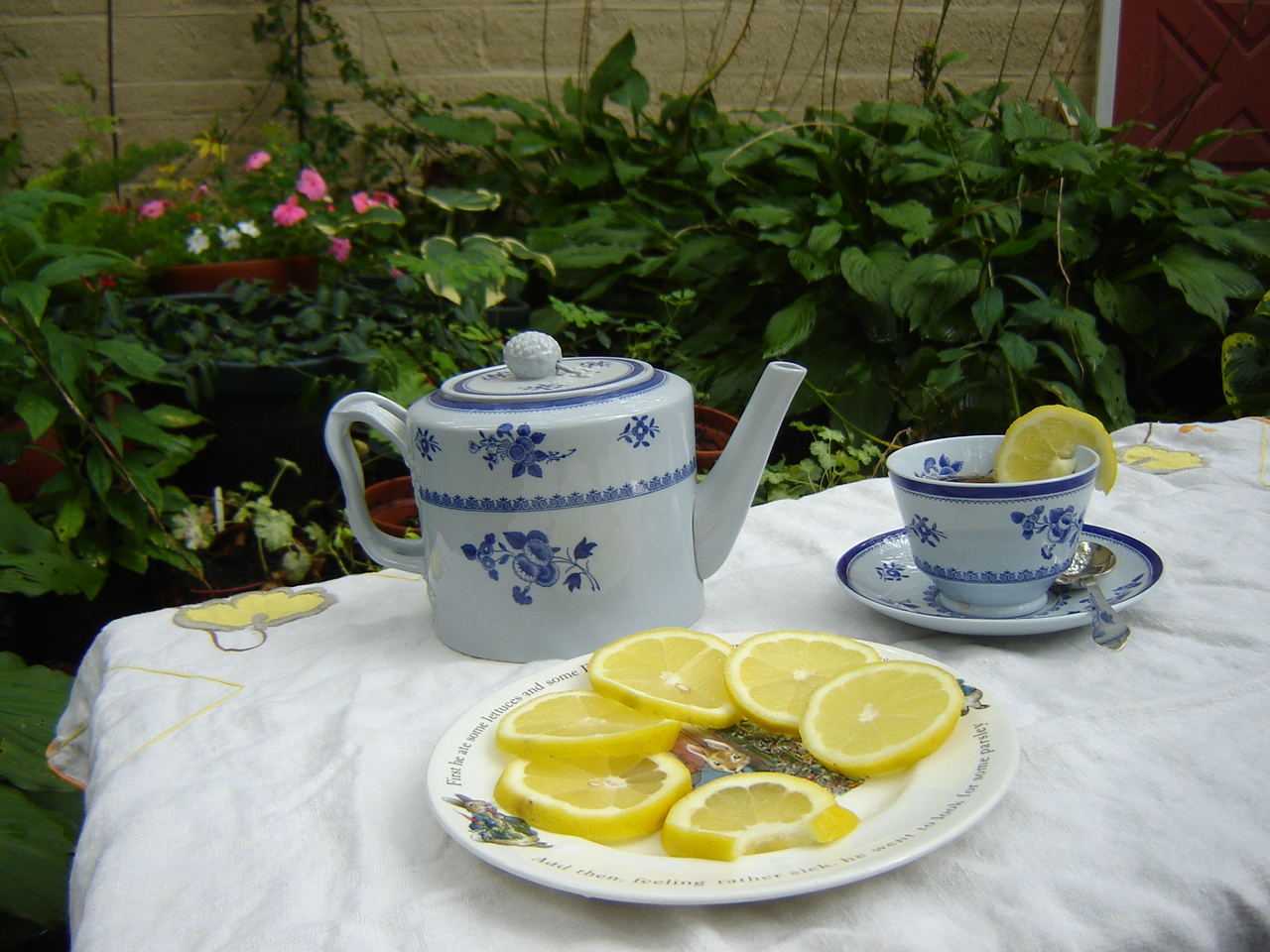
My grandmother Mabel (called Garkie by my family as the result of a gross parental misinterpretation of my infantile diction) sometimes gave tea parties. In one tea-party story, my toddler self ate all the lemons, and Garkie had to keep going to the kitchen to get more for the ladies — my mother apologizing, and Garkie saying, “No, no. I have plenty more.”

A love of citrus is an inherited trait in my family. And since it runs in my daughter-in-law’s family, too, my grandson is doubly blessed, you might say. (I’m eating the lemons in my tea as I write.)

Read Full Post »