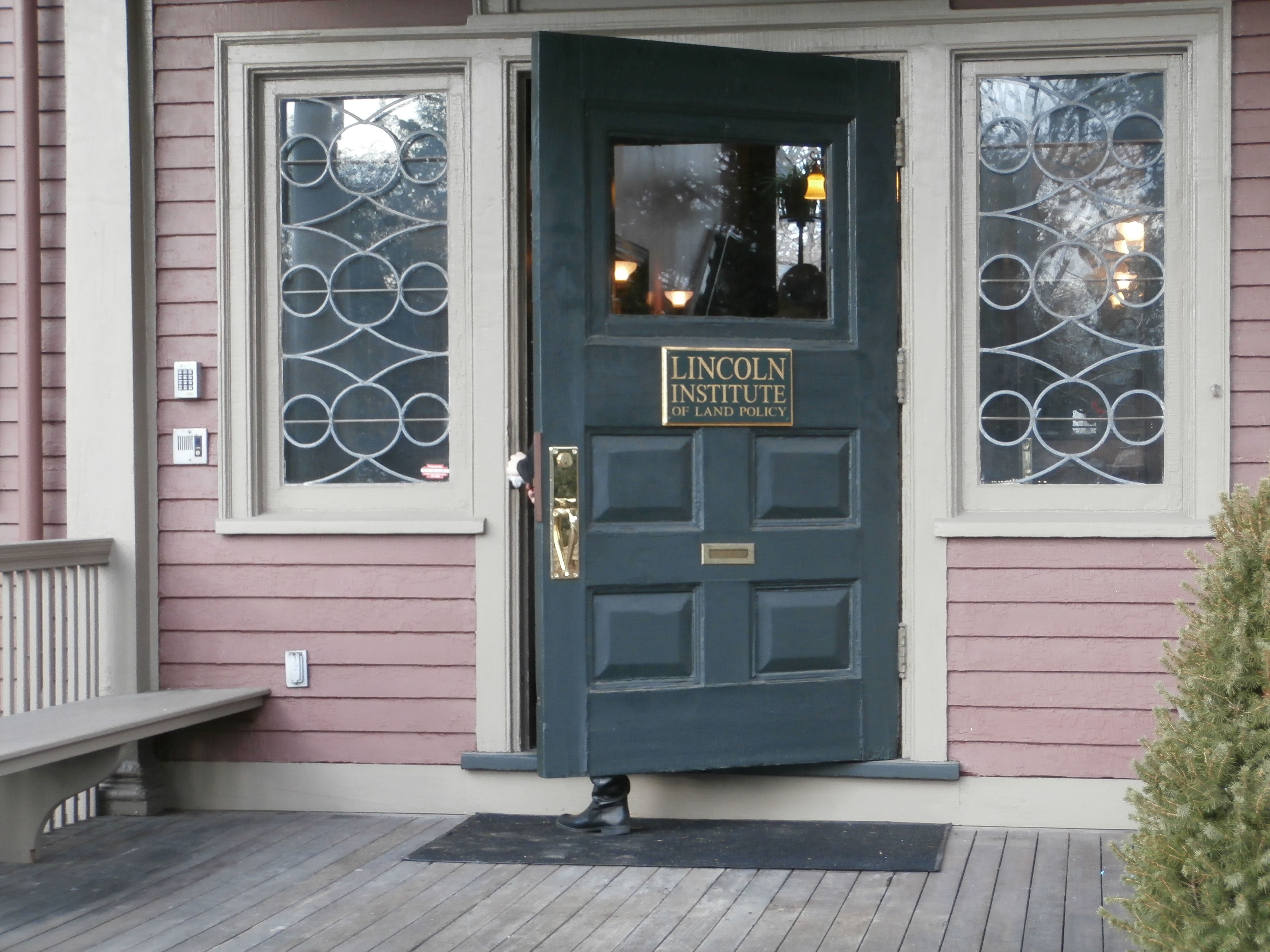
Because the lecture was on walkable communities, I walked to the Lincoln Institute of Land Policy today.
Julie Campoli was scheduled to talk about her book Made for Walking: Density and Neighborhood Form.
From the Institute’s website: “In this era of high energy prices, economic uncertainty, and demographic change, an increasing number of Americans are showing an interest in urban living as an alternative to the traditional automobile-dependent suburb. Many people are also concerned about reducing their annual vehicle miles traveled as a way to lower greenhouse gas emissions affecting climate change. …
“Researchers delving into the question of how urban form affects travel behavior identify specific characteristics of place that boost walking and transit use while reducing [vehicle miles traveled]. In the 1990s some pinpointed diversity (of land uses), density, and design as the key elements … After a decade of successive studies on the topic, these ‘three Ds’ were joined by two others deemed equally important—distance to transit and destination accessibility … Added to the list is another key player: parking.”
Campoli talked about all five elements, showed great pictures, and shared intriguing stories from successful communities. More.
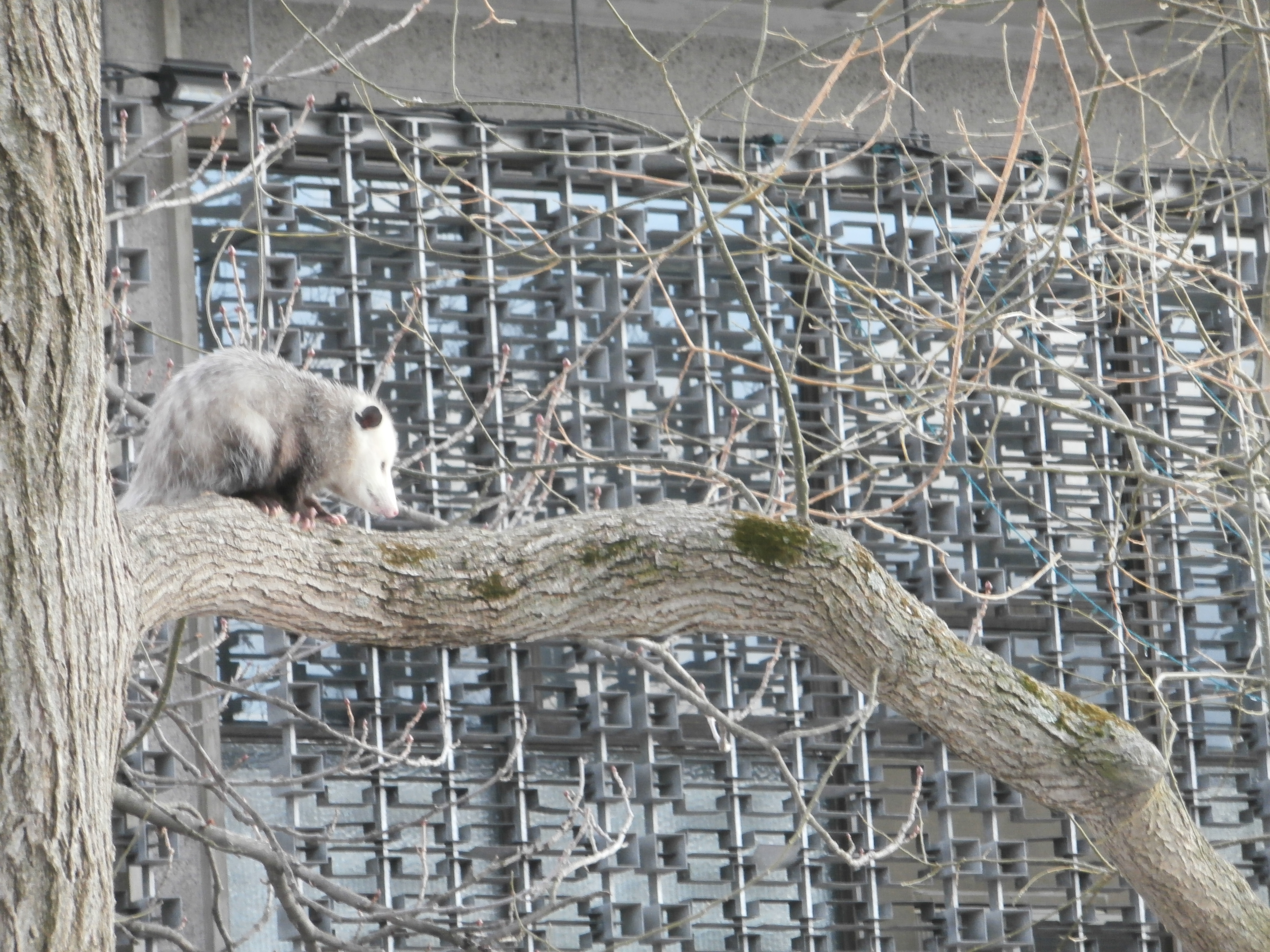
By the way, if I had gone by car to the lecture instead of on foot, I would most assuredly have missed the possum, one of the more contemplative creatures in Cambridge today. He was still on his branch when I walked back after the presentation. But he had turned around.
 .
.

 Suzanne's Mom's Blog