Feeds:
Posts
Comments

Posts Tagged ‘magpie’

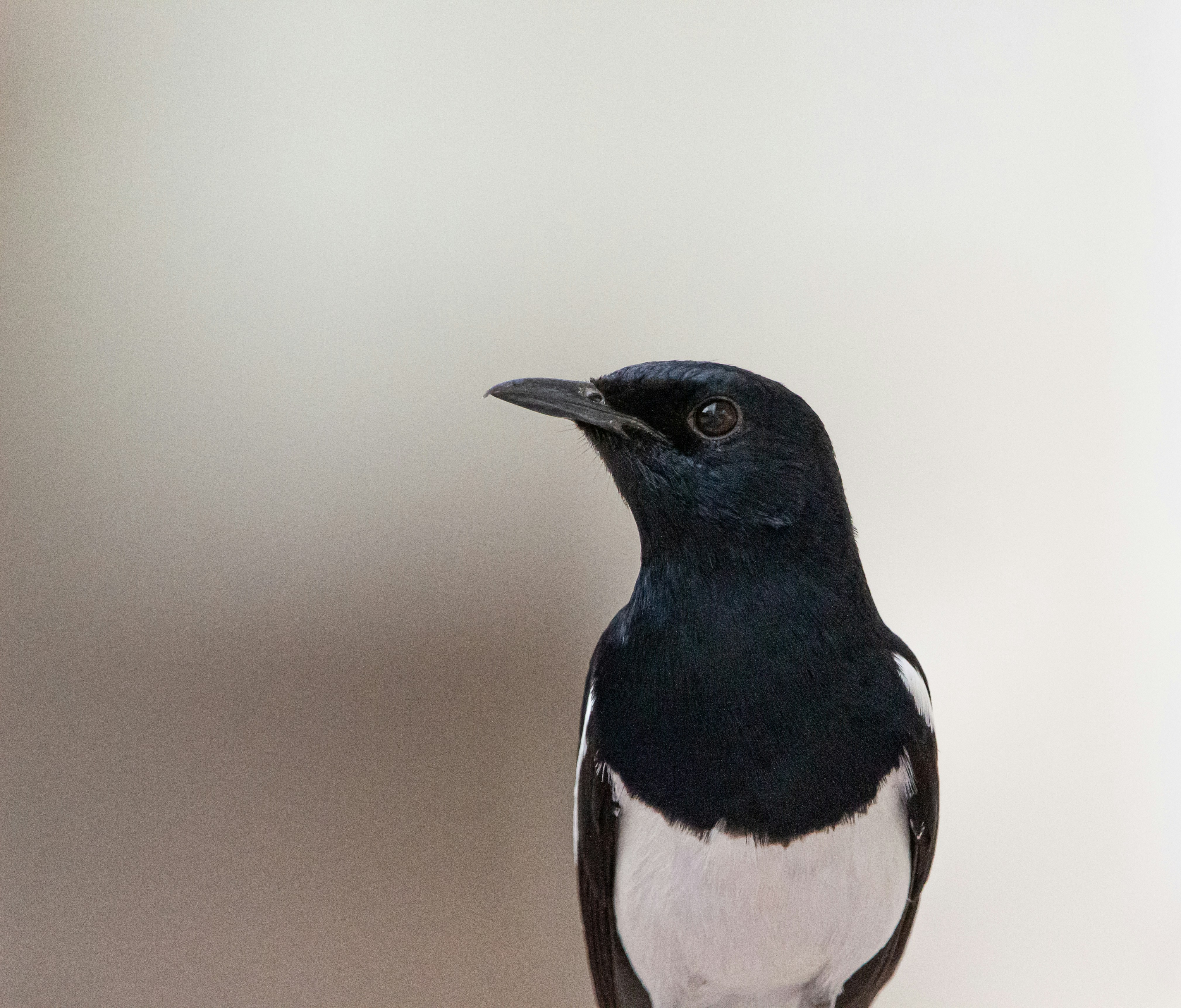
Photo: Vivek Doshi/Unsplash.
A magpie. Magpies in Australia are part of the Artamidae family. 

Covid may have made us more nervous about the interaction between humans and wild animals, but who can resist all the adorable videos suggesting it can work? Here’s what happened when a magpie in Australia got a bit too much attention on social media.

Annabelle Timsit writes at the Washington Post, “Peggy and Molly are typical best friends. They hang out. Play. Sunbathe. But in one important way, they are an unusual pair: Peggy is a dog, and Molly is a magpie.

“A couple in Queensland, Australia, rescued Molly in 2020 after she fell from a nest. The magpie bonded with their Staffordshire terrier, Peggy, and became somewhat of a social media celebrity.

“Through their Instagram account @peggyandmolly, the couple, Juliette Wells and Reece Mortensen, chronicle the dog and magpie’s daily adventures for 813,000 followers. …

“But Peggy and Molly’s rising popularity also attracted the attention of wildlife authorities. The Department of Environment, Science and Innovation (DESI) successfully demanded that Molly be surrendered into its care after receiving complaints from members of the public, saying that Wells and Mortensen did not have the proper permits to look after a wild bird.

“Now, Peggy and Molly could soon be reunited — after fans called for Molly to be sent back, and Queensland Premier Steven Miles said Tuesday that Wells and Mortensen can ‘secure the appropriate license’ to care for the magpie. … The update from Miles, who is the head of government in the northeastern Australian state, comes after Wells and Mortensen mounted a public campaign to regain care of Molly. …

“After the public outcry, Miles had said that wildlife authorities stood ‘ready to train Molly’s parents to be wildlife caregivers, to get them the right certification, so Molly can be reunited with her family.’ …

“Peggy and Molly are the latest animals to get caught up in tensions between pet owners and wildlife authorities. Social media videos of animals exhibiting unusual or humanlike behavior are growing in popularity, but experts say many wild animals are not meant to live in domesticated settings, and they have warned about risks to the animals and their owners because of the spread of disease.

“Wells said she was walking outside in the fall of 2020 when she came across a baby magpie that had fallen from its nest. She rescued it from ‘certain death,’ she said, and brought the magpie home.

“ ‘Peggy needed something to nurture and Molly needed nurturing,’ says a website about their story, and the duo became ‘besties.’

“About a year later, Peggy had five puppies. Molly ‘became very close to all’ of them, and ‘now has an incredible bond’ with one of them, named Ruby, according to the website.

“In the past 3½ years, near-daily videos posted on the @peggyandmolly Instagram account have shown Molly, Peggy and Ruby sharing toys and napping next to each other in the sun — and suggest that the magpie even learned to imitate Peggy and Ruby’s bark. In another video, Molly puts a wing over its friend on a dog bed. …

“Australian authorities have warned the public that some magpies can be ‘aggressive towards people’ when defending their nests, particularly during what’s known as ‘magpie swooping season,’ typically between July and November. Videos of Australians being chased by magpies have gone viral, and the Queensland government has warned the public to ‘stay safe from swooping magpies.’ ”

Molly the Magpie returned home on April 15, according to @SevenJMiles on the bird site.

More at the Post, here.

PS. If you see two Blue-Throated Piping Guans on the loose (Monster and Chip), they escaped from Roger Williams Park Zoo in Providence during a recent storm. Read here.
Read Full Post »

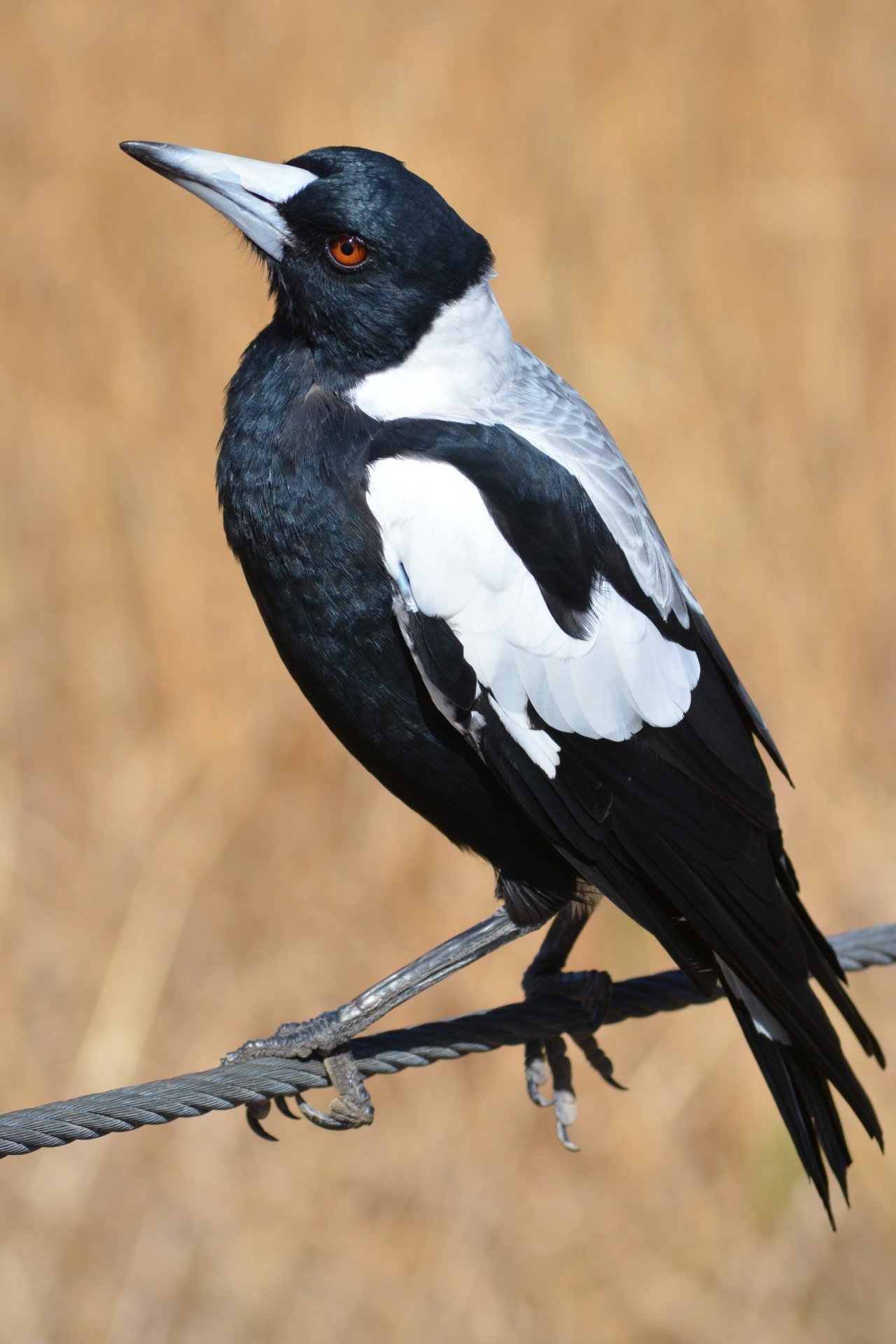
Photo: Australian Museum.
The Australian Magpie is a clever songbird that inhabits nearly 90 percent of mainland Australia.

Today’s article by Anthony Ham at the New York Times is reminding me of the children’s book Mrs. Frisby and the Rats of NIMH, in which a determined mouse helps lab rats escape from scientists using them for experiments.

He writes, “The Australian magpie is one of the cleverest birds on earth. It has a beautiful song of extraordinary complexity. It can recognize and remember up to 30 different human faces.

“But Australians know magpies best for their penchant for mischief. … Magpies’ latest mischief has been to outwit the scientists who would study them. Scientists showed in a study published [in] the journal Australian Field Ornithology just how clever magpies really are and, in the process, revealed a highly unusual example in nature of birds helping one another without any apparent tangible benefit to themselves.

“In 2019, Dominique Potvin, an animal ecologist at University of the Sunshine Coast in Australia, set out to study magpie social behavior. She and her team spent around six months perfecting a harness that would carry miniature tracking devices in a way that was unintrusive for magpies. They believed it would be nearly impossible for magpies to remove the harnesses from their own bodies.

“Dr. Potvin and her team attached the tracking devices and the birds flew off, showing no signs of obvious distress. Then everything began to unravel.

“ ‘The first tracker was off half an hour after we put it on,’ she said. ‘We were literally packing up our gear and watching it happen.’

“In a remarkable act of cooperation, the magpie wearing the tracker remained still while the other magpie worked at the harness with its beak. Within 20 minutes, the helping magpie had found the only weak point — a single clasp, barely a millimeter long — and snipped it with its beak. …

The scientists took six months to reach this point. Within three days, the magpies had removed all five devices.

“ ‘At first it was heartbreaking,’ Dr. Potvin said, ‘but we didn’t realize how special it was. We went back to the literature and asked ourselves, “What did we miss?” But there was nothing because this was actually new behavior.’

“The only similar example of what Dr. Potvin described as ‘altruistic rescue behavior’ — where birds help other birds without receiving tangible benefits in return — was when Seychelles warblers helped other members of their social group escape from sticky seed clusters in which they had become entangled.

“The magpies’ behavior was, Dr. Potvin said, ‘a special combination of helping but also problem solving, of being really social and having this cognitive ability to solve puzzles.’ …

“The Australian magpie is a large black-and-white perching songbird, or passerine, that inhabits nearly 90 percent of mainland Australia. … Remarkably, magpies can recognize the faces of as many as 30 people, which is the average number who live within a magpie’s territory, which is the average number who live within a magpie’s territory. ‘Very rarely do magpies attack more than one or two people,’ said Darryl Jones, a magpie expert at Griffith University. ‘It’s the same individual people that they attack each time.’

“And magpies have long memories: One of Dr. Jones’s research assistants was attacked upon his return after 15 years away from one bird’s territory. …

“If more than 30 people pass through a bird’s territory, ‘they actually start stereotyping people,’ [Sean Dooley, the public affairs manager of Birdlife Australia] said. ‘People who resemble 10-year-old boys are much more likely to be swooped, because those are the kids who are more likely to be throwing sticks and stones, shouting and chasing and running at magpies.’

“Dr. Jones calls the magpies’ ‘gorgeous, glorious caroling song’ another example of their intelligence.

“With more than 300 separate elements, he said, ‘it’s unbelievably complex. In order to remember and repeat a song of that complexity every single morning without error, you have to have a big brain.’

“Dr. Potvin and her team have shelved their original study. But they can’t help but ponder a bigger question: ‘What else are magpies capable of?’ ”

More at the Times, here.

Read Full Post »