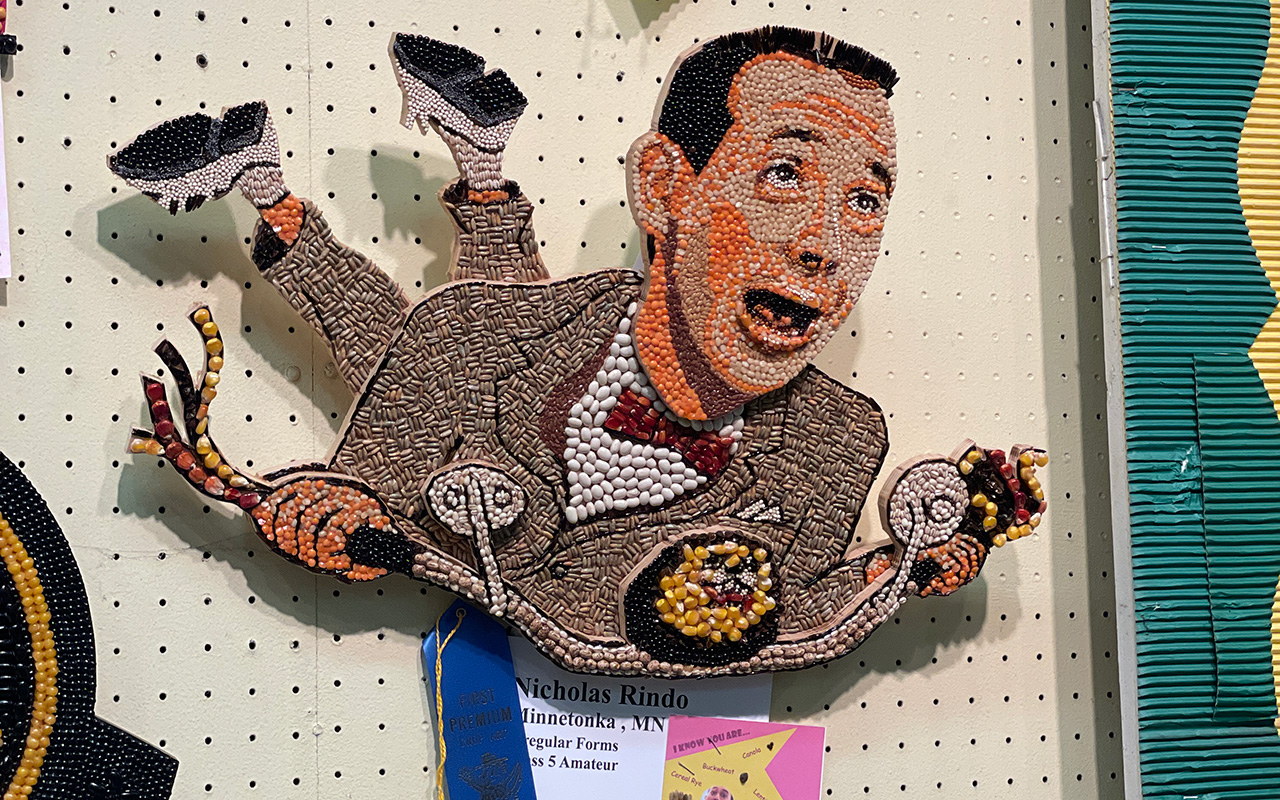
Photo: Isabella Segalovich/Hyperallergic.
Nicholas Rindo’s “I know you are…” (2023), is made from cereal rye, buckwheat, flax, pearled barley, poppy, quinoa, rainbow flint corn, sweet lupine, red millet, viking corn, wild rice, navy beans, lentils.
What is your favorite exhibit at state fairs? One of mine is seed art. It looks like it would be fun to try.
Isabella Segalovich of the art magazine Hyperallergic went to the Minnesota State Fair and has this report on the seed art of 2023.
“The longest line at the second biggest state fair in the United States wasn’t for the prize cows, roller coaster rides, or various deep-fried foods served on a stick: It was for the seed art.
“The wait was worth it. Past scores of vintage seed sacks and neatly stacked corn cobs vying for Best of Show ribbons, visitors craned their necks to marvel at the bounty of intricate mosaics made completely out of seeds at the Minnesota State Fair, which ran from August 24 to September 4. While the vast majority of participating crop artists were Minnesotans, the country’s only state fair seed art competition has also graciously expanded its dozens of categories to include out-of-state competitors, as long as they stick to one rule:
Every seed must be grown in Minnesota.
“I was struck not just by this craft’s painstaking nature but also by the diversity of its subject matter, which ranges from impressive portraits and still lifes to timely pop culture references and biting political commentary. This year’s show included tributes to lost luminaries (Judy Heumann, Paul Reubens aka Pee Wee Herman), hot pink Barbie memorabilia, OceanGate (‘the little sub that couldn’t’), excitement over Minnesota’s marijuana legalization, displays of support for trans youth and adults, clap backs to Ron DeSantis (‘Minnesota, where woke goes to bloom!’), and lots and lots of yacht-smashing orcas.
“This year there were over 400 submissions of crop art, which covered both seed art and the adjacent (also delightful) scarecrow competition.
“ ‘It has grown tremendously from the very beginning,’ said Ron Kelsey, superintendent of farm crops at the fair, who was 24 when seed art first bloomed in 1965. …
“During those first years, most artists arranged seeds into natural scenes, like flowers and landscapes, until hairstylist Lillian Colton changed the game by introducing seed art portraiture. Her hyperrealistic mosaics of figures like Abraham Lincoln, Ernest Hemingway, and Barbra Streisand raised the bar for crop artists at the fair.
“Today, artist Liz Schreiber sits where Colton once did at the demonstration table, meticulously placing tiny quinoa and flax seeds to create a bullfrog. Schreiber is the artist behind this year’s commemorative fair poster, an incredibly detailed and boldly designed amalgamation of iconography that Minnesota fairgoers hold dear. ‘It’s very meditative,’ Schreiber told MPR News. ‘It’s kind of like doing a puzzle.’
“ ‘A crop art picture can take dozens and, in many cases, hundreds of hours to complete,’ said Joel Alter, a former political researcher and seed art newcomer who won a second premium ribbon this year. Many find that time passes quickly, as they enjoy the thrilling and addictive process. ‘Some people get started with it and they can’t stop,’ ” said Kelsey.”
More at Hyperallergic, here. There’s no paywall but subscriptions are encouraged.


 Suzanne's Mom's Blog