Feeds:
Posts
Comments

Posts Tagged ‘monsoon’

Photo: Marvin Joseph/The Washington Post.
Until Jagadish Shukla, meteorologists generally believed that predicting the weather beyond 10 days was a hopeless pursuit. He wanted to help farmers anticipate monsoons.

Did you ever read Erik Larson’s Isaac’s Storm, a book about a devastating hurricane in Texas before there was good weather prediction? That was the first time I heard about the “butterfly effect,” tiny changes in weather conditions with powerful results.

A researcher interested in chaos theory asked himself what could happen with more butterflies than one.

Anusha Mathur writes at the Washington Post, “Standing in his home office in Rockville, Maryland, meteorologist Jagadish Shukla gestured at the high-resolution satellite map of India hung on the wall. It shows every groove of his home country’s geological landscape in vivid detail. …

“ ‘The trick is how to find predictable components in a chaotic system,’ Shukla told me. …

“He’s come a long way from his childhood village in northern India, where he spent his summers playing outside and praying for rain.

“The most anticipated season of each year was the annual monsoon, he writes in his memoir, A Billion Butterflies: A Life in Climate and Chaos Theory. Monsoons follow India’s hottest period and last for months, providing both relief from the sun and fertility for the land.

“But the monsoon also can be a source of suffering. Some years the rain brings intense flooding, while in others there’s too little for a good harvest — or worst of all, drought and famine. …

In 1970, 26-year-old Shukla arrived in Boston to pursue a doctorate at MIT.  “His goal: find a way to predict the Indian monsoon’s seasonal impact.

“At the time, weather forecasters relied heavily on ‘initial conditions’ — how volatile factors such as temperature, pressure, wind or jet stream today might affect the weather tomorrow. As a result, meteorologists generally believed that predicting the weather beyond 10 days was a hopeless pursuit.

“Soon after arriving at MIT, Shukla learned about the ‘butterfly effect,’ coined by renowned meteorologist Edward Lorenz. Lorenz observed that even the tiniest changes in initial weather conditions — something as small as a butterfly flapping its wings — could make an entire system chaotic over time.

” ‘The idea is that if you change just one decimal point in your initial condition, you will get a different forecast after 10 days,’ Shukla said.

“Lorenz’s work made many scientists skeptical about whether seasonal predictability was worth focusing time [on]. But Shukla’s felt sure that — at least for the monsoon — there was knowledge to be gleaned from the chaos. …

“Then came the breakthrough. While daily weather is driven by volatile initial conditions, seasonal averages are shaped by something else, ‘boundary conditions’ such as ocean temperature, soil moisture, snow cover and vegetation. And these boundary conditions are a source of predictability. …

“Said David Straus, a climate dynamics professor at George Mason University who worked with Shukla, ‘Shukla had a really outsize role in saying, ‘Look, all these little pieces of evidence in the past are there, we can use them together.” ‘ …

“Shukla’s team ran simulations in which they dramatically changed the initial conditions — the metaphoric flutter of billions of Lorenz’s butterflies — while keeping the boundary conditions fixed. Despite the day-to-day instability, the seasonal outcomes remained consistent. It was the origin of the phrase ‘predictability in the midst of chaos,’ which became the title of Shukla’s bellwether paper, published in the journal Science in 1998. …

“As Shukla deepened his work on dynamic seasonal prediction, a new scientific field was emerging: climate change. Throughout the 1970s and ’80s, Shukla’s colleagues repeatedly asked if he would turn his attention to global warming. …

“He ‘wasn’t convinced yet’ about global warming. He worried the claim of human-induced climate change was too bold, too early.

“Finally, in 2004, he accepted an invitation to serve on the United Nation’s Intergovernmental Panel on Climate Change (IPCC) to work on its fourth comprehensive assessment of the climate. …

“In the bombshell IPCC report, published in 2007, Shukla and his fellow scientists declared that the ‘warming of the climate system is unequivocal’ and identified ‘discernible human influences.’ That year, the panel received the Nobel Peace Prize for its work, along with former vice president Al Gore, with Shukla sharing in the honor.

“ ‘I cannot accept something simply on faith and belief,’ Shukla said. ‘The reason 2007 got the Peace Prize was because it was the first time our model said, “Oh, it’s now beyond the uncertainty.” ‘ “

Read at the Washington Post, here, how climate-denying members of the US House put Shukla under an intense and vicious investigation in 2015. Despite the misery of that period, he says, “It’s a small price to pay to defend the integrity of climate science. … If we don’t defend it, who will?”
Read Full Post »

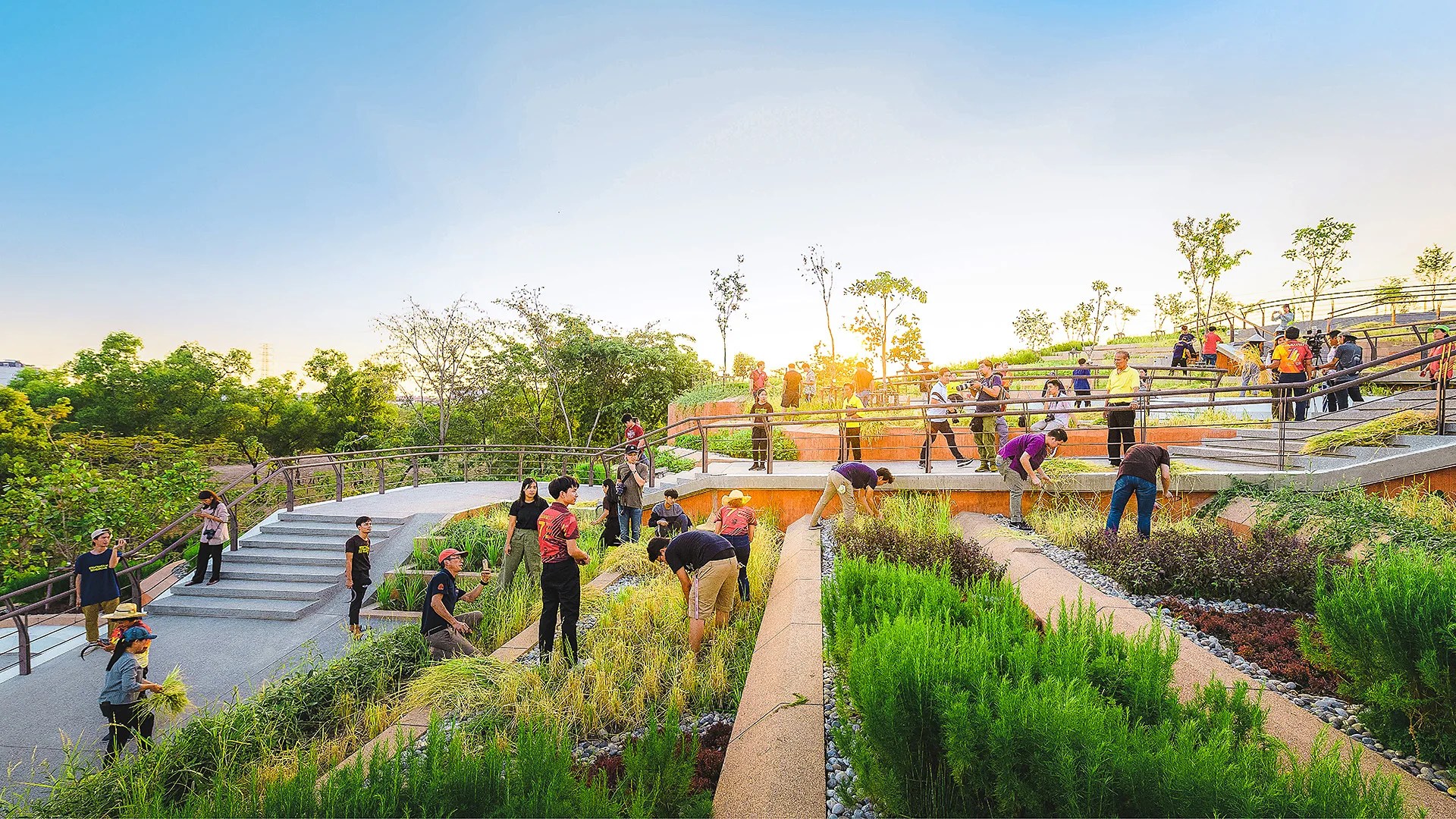
Photo: Panoramic Studio/Landprocess.
Thammasat University’s rooftop farm features cascades of rice paddy-style terraces used to grow organic crops.

Here in the US, we are all preoccupied with floods because we’re in the midst of an extreme hurricane season. So it seems strange to think of places where a certain amount of flooding is desired — rice paddies.

Xiaoying You at the BBC writes about what can be learned from ancient techniques for controlling rice-paddy flooding.

“One of Kotchakorn Voraakhom’s most memorable moments growing up in Bangkok in the 1980s was playing in floodwaters in a small boat built by her father in front of her home.

” ‘I was so happy that I didn’t need to go to school because we didn’t know how to get to it,’ recalls Voraakhom, a landscape architect based in the Thai capital.

“But nearly 30 years later, flooding turned from a fun childhood recollection to a devastating experience. In 2011, Voraakhom and her family – along with millions of others in Bangkok – found themselves ‘displaced and homeless‘ when floods plowed through swathes of Thailand and poured into the metropolis. …

“The disaster deeply shook Voraakhom, who believed it was time to use her expertise to do something for her hometown. She founded her own landscape architecture firm, Landprocess, which over the past decade has designed parks, rooftop gardens and public spaces in and around the low-lying city to help its people increase their resilience to flooding.

“Perhaps her most intriguing design so far has been an enormous nature-laden university roof inspired by rice terraces, a traditional form of agriculture that has been practiced in Asia for some 5,000 years. …

“The university roof designed by Voraakhom is part of a wider trend in Asia that is seeing architects seek inspiration from the region’s rice terraces and other agricultural heritages to help urban communities reduce waterlogging and flooding. …

‘The answers to the future of climate change, many of them are actually in the past,’ says Voraakhom.

“At Thammasat University, north of Bangkok, tiers of small paddy fields cascade down from the top of the building along Voraakhom’s green roof, allowing the campus to collect rainwater and grow food.

“There are four ponds around the building to catch and hold the water flowing down. On dry days, this water is pumped back up using the clean energy generated by the solar panels on the roof and used to irrigate the rooftop paddy fields. …

“Compared to a design made of concrete, the green roof can slow down runoff – excess rainwater that flows to the ground, a big problem for Bangkok – by about 20 times, according to estimates from Voraakhom. It can also lower the temperature inside the building by 2-4C (3.6-5.4F) during Bangkok’s notoriously hot summer, she says.

“Rice terraces are layer upon layer of paddy fields usually created by smallholder farmers along the sides of hills and mountains to maximize the use of land. They can be found in many Asian countries. …

“While their shapes and sizes may vary, all rice terraces are built to follow natural contor lines, which means each layer has equal elevation above sea level. This feat enables them to collect and hold rain and use it to nurture the soil and crops. Some rice terraces, such as those of the Hani people in southern China, overlook rivers, allowing the tiered soil to reduce, decelerate and purify excess rainwater washing down from the top of the mountain before it flows into the valley.

“Such indigenous know-how, passed down by generations of small-scale farmers, can hugely benefit Asian cities when it comes to handling rainstorms, according to Yu Kongjian, a professor of landscape architecture at Peking University in Beijing and the brains behind China’s ‘sponge city’ concept

“Chinese cities – as well as many others in Asia – have a monsoon climate, which is characterized by rainy summers and drier winters. … Huge downpours mean their flood-control measures need to be based on localized ways of adaptation tested and proven over thousands of years, he argues.

“Rice terraces are one of the pillars of Yu’s spongy city theory, which urges cities to turn to soil and greenery – not steel or cement – to solve flooding and excess rainfall problems. According to him, rainwater should be absorbed and retained at the source, slowed down in its flow and then adapted to where it ends up. Rice terraces deal with mitigating floods at the source, Yu says. …

“The Yanweizhou park, for example, completed in 2014 in Jinhua, Yu’s hometown, has a rice-terrace-like bank planted with grasses that can adapt to an underwater environment. The spongy feature is capable of reducing the park’s yearly maximum flood level by up to 63%, compared with a concrete one, a 2019 paper found.

“Such designs can also filter floodwater, which is often contaminated by sewage, chemicals and other pollutants. Another of Yu’s projects, Shanghai Houtan Park, is situated on a piece of once highly polluted land that used to house a landfill site for industrial waste. Since its establishment in 2009, each hectare of the park, which also features Yu’s terracing element, is capable of purifying 800 tons of heavily polluted water per day.”

Read about related flooding projects at the BBC, here. Fascinating photos.

Read Full Post »

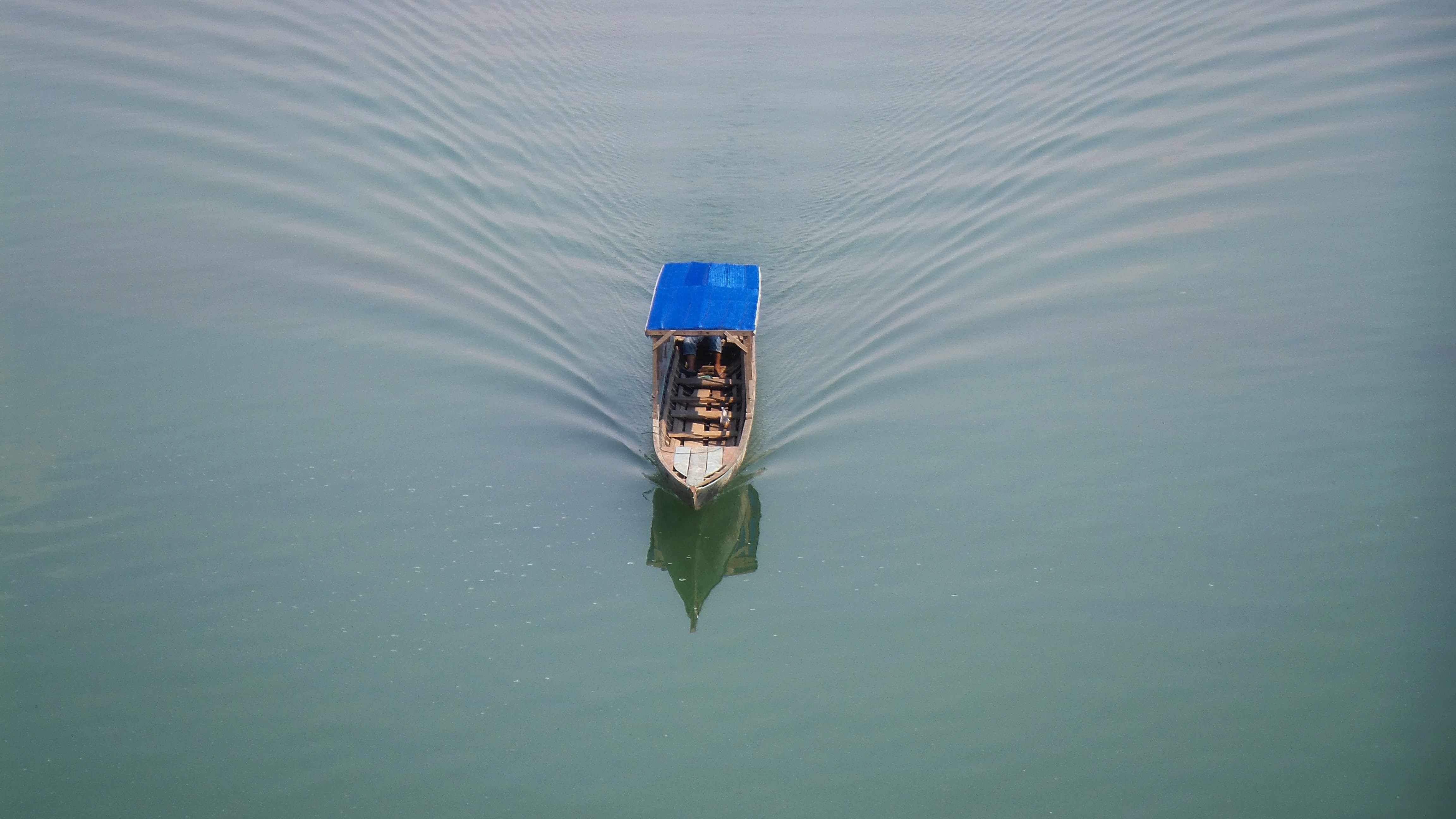
Photo: Hannah Wright via Unsplash.
The Mekong River, where it passes through Cambodia.

You would think that because I was around in the 1960s, mention of the Mekong River would bring to mind only Vietnam War scenes from television. I do think of those but also of Colin Cotterrill’s Dr. Siri Paiboun mystery series, where the river is a character all its own, and where Laotian characters may cross secretly to Cambodia, Thailand, or Vietnam.

So naturally, research on the river’s improving quality caught my eye.

Stefan Lovgren has a report at YaleEnvironment360. “Among the many ailments plaguing Southeast Asia’s Mekong River, ‘hungry water’ stands out with particular clarity. In recent dry seasons, the Mekong has in places turned a pristine blue as upstream dams rob it of the nutritious particles that normally color the river a healthy mud brown. It’s a phenomenon that can be highly destructive, with the sediment-starved water eating away at unbuffered river banks — hence the ‘hungry’ epithet — and causing harmful erosion.

“It also encapsulates the troubled state of the Mekong, a river that may look healthy on the surface but has grown increasingly sick from a wide range of problems, including dam building, overfishing, deforestation, plastic pollution, and the insidious impacts of a changing climate. During El Niño-induced droughts in recent years, things got so bad that some people suggested the Mekong River was approaching an ecological tipping point beyond which it could not recover.

But events in the past year suggest such doomsday predictions may be premature, especially in Cambodia, which sits at the heart of the Mekong basin.

“Thanks to the last monsoon season, which delivered above-average rainfall to the region, and authorities cracking down on illegal fishing, fish stocks have increased. Fishers along the Mekong have discovered giant fish thought to have disappeared, and the Cambodian government, which has a mixed environmental record, has stepped up conservation efforts.

“Among them is a new government-backed proposal that seeks to turn a particularly bio-rich stretch of the river in northern Cambodia into a UNESCO World Heritage Site. Such a designation, reserved for sites of great scientific or cultural significance, means this part of the river should, at least on paper, enjoy protection from various forms of development, including dam building. …

“ ‘The Mekong is not dead,’ says Sudeep Chandra, director of the Global Water Center at the University of Nevada, Reno, who leads the USAID-funded Wonders of the Mekong research project. ‘We’ve seen huge environmental pressures causing the Mekong to dry up and fisheries to almost collapse. And yet we also see the incredible resilience of this river in the face of those threats.’

“Originating in the Tibetan highlands and winding its way through six countries before disgorging into the South China Sea, the 2,700-mile-long Mekong River is home to the world’s largest inland fishery, with about 1,000 species of fish. Many of the 70 million people living in the basin rely on the river for their livelihoods, whether that is farming, fishing, or other occupations.

” ‘A case could be made that the Mekong is the world’s most important river,’ says Chandra.

“The river’s extraordinary productivity is linked to a giant flood pulse that, in the wet season, can raise water levels 40 feet. With the increase comes sediment that’s essential to agriculture as well as vast numbers of young fish, which are swept into Cambodia’s vital Tonle Sap Lake and other floodplains where they feed and grow.

“But the river’s natural flow regime has been increasingly disrupted by dams, especially those that China began building in the early 1990s in the Upper Mekong and which the country has operated with little regard for downstream impacts. 

“A subsequent frenzy of dam building in Laos and elsewhere, mostly on tributaries to the Mekong, has greatly exacerbated the problem, with dams blocking fish from completing their natural migrations. Already under extreme pressure from overfishing, some fish populations have plummeted, especially large species like the critically endangered Mekong giant catfish, which can grow to 10 feet in length and more than 600 pounds, but is now on the brink of extinction.

“With climate change intensifying, monsoon rains have become more unpredictable. During droughts in 2019 and 2020, the flow of water from the Mekong into Tonle Sap, the largest lake in Southeast Asia, dried up. …

“Mass deaths of fish due to shallow and oxygen-poor water were reported in the lake, and many of the hundreds of thousands of fishers operating on the lake were forced to abandon their work. On the Tonle Sap River, which connects the Mekong and the lake, two thirds of the 60-something commercial ‘dai’ operators working stationary nets, which in years past could each catch several tons of fish in just an hour, had to shut down. …

“However, the river system caught a break with the most recent monsoon season, which runs roughly from June to November, delivering greater than average rainfall to the lower basin and the Tonle Sap Lake region. Although China continued to hold back water to counter its persisting drought, water levels in Tonle Sap rose more than one meter above recent-year averages. With the lake expanding into seasonally flooded forests, which provide excellent feeding grounds for fish, fish populations appear to have been boosted. …

“On a recent visit to the lake, Ngor noticed an increase in medium- and large-size carps, including Jullien’s golden carp, also known as the isok barb, a critically endangered species. There were spottings of other rare fish too, like the Laotian shad and clown featherback, along with increases of more common fish, like the climbing perch and snakehead. Several wallagos, a catfish that can grow up to 8 feet long, could be seen jumping from the open water.

More at YaleEnvironment360, here. No firewall.

Read Full Post »