Feeds:
Posts
Comments

Posts Tagged ‘mood’

Since ancient times, people have found all sorts of ways to get themselves on an even keel when they are feeling down. I’m the last person to say folk remedies can cure real depression, but I am interested in the many ways people lift their spirits.

At the New York Times, Christina Caron writes about people who use art.

“When Dr. Frank Clark was in medical school studying to be a psychiatrist, he decided to write his first poem.

“ ‘All that chatter that is in my head, everything that I’ve been feeling, I can now just put it on paper and my pen can do the talking,’ he said, recalling his thoughts at the time.

“Back then, he was struggling with depression and had been relying on a number of things to keep it at bay, including running, therapy, medication and his faith.

“ ‘I had to find something else to fill the void,’ he said. It turned out that poetry was the missing piece in his ‘wellness puzzle.’

“But there’s a ‘really robust body of evidence’ that suggests that creating art, as well as activities like attending a concert or visiting a museum, can benefit mental health, said Jill Sonke, research director of the University of Florida Center for Arts in Medicine. …

“Dr. James S. Gordon, a psychiatrist and the founder of The Center for Mind-Body Medicine, pioneered something called the ‘three drawing technique.’ It is featured in the new book Your Brain on Art: How the Arts Transform Us. …

“If you are one of the many people who have turned to adult coloring books, it may not come as a surprise that research suggests this activity can help ease anxiety.

“Coloring within the lines — of an intricate pattern, for example — appears to be especially effective. One study that evaluated college students, and another that assessed older adults, found that spending 20 minutes coloring a mandala (a complex geometric design) was more helpful at reducing anxiety than free-form coloring for the same length of time.

“Susan Albers, a clinical psychologist at the Cleveland Clinic and the author of 50 Ways to Soothe Yourself Without Food, described coloring as a ‘mini mental vacation.’ When we focus on the texture of the paper and choose the colors that please us, it becomes easier to tune out distractions and stay in the moment, she said.

“ ‘It’s a great form of meditation for people who hate meditation.’

“Listening to music, playing an instrument or singing can all be beneficial, research shows.

“A 2022 study, for example, surveyed more than 650 people in four age groups and asked them to rank the artistic activities that helped them ‘feel better’ during the 2020 pandemic lockdowns. The youngest participants, ages 18 to 24, overwhelmingly rated musical activities as most effective. Across all age groups, ‘singing’ was ranked among the top activities. …

“[Susan Magsamen, an assistant professor of neurology at the Johns Hopkins University School of Medicine and a co-author of the book] noted that music can be effective at reducing stress because things like rhythm and repetitive lyrics and chords engage multiple regions of the brain.

“ ‘I sing in the shower,’ Ms. Magsamen said. ‘I sing at the top of my lungs to the radio.’

“Dr. Clark has continued to write poetry since graduating from medical school and offered some tips for those interested in trying.

“First, banish any thoughts that you aren’t creative enough. … Start with a simple haiku, Dr. Clark suggested. Haikus consist of just three lines — the first and last lines have five syllables and the middle has seven.”

That’s not all there is to a haiku, of course, but it can really get you going with poems. I used it with sixth grade students a lot when I was teaching, not for mental health, but it sure lifted spirits.

More at the Times, here.

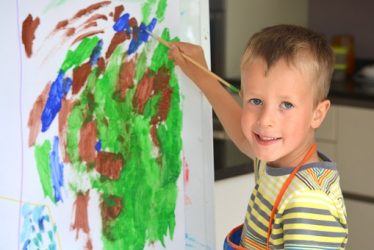
Photo: Making art can make you happy. More here.
Read Full Post »

original-4628652-3

Image: Teachers Pay Teachers.
Why we doodle.

I keep a list of potential posts, but since the pandemic, many of them feel out of date. There’s one, for example, that I’ll put up when things return to normal, but if I tell you now about a rug market in Morocco run by women, how do I know that it’s currently operating?

Fortunately, there are some topics that work for both normal times and times of isolation. Today we consider what the act of making art can do for the brain.

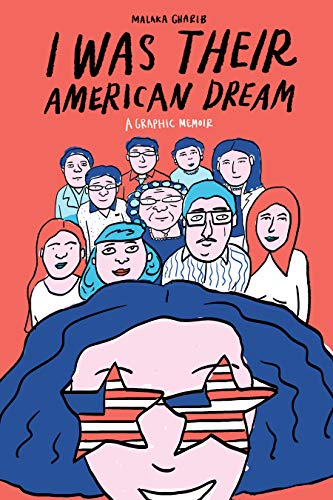
“A lot of my free time is spent doodling,” writes Malaka Gharib. “I’m a journalist on NPR’s science desk by day. But all the time in between, I am an artist — specifically, a cartoonist. I draw in between tasks. I sketch at the coffee shop before work. And I like challenging myself to complete a zine — a little magazine — on my 20-minute bus commute.

“I do these things partly because it’s fun and entertaining. But I suspect there’s something deeper going on. Because when I create, I feel like it clears my head. It helps me make sense of my emotions. And somehow it makes me feel calmer and more relaxed.

“That made me wonder: What is going on in my brain when I draw? Why does it feel so nice? … It turns out there’s a lot happening in our minds and bodies when we make art.

” ‘Creativity in and of itself is important for remaining healthy, remaining connected to yourself and connected to the world,’ says Christianne Strang, a professor of neuroscience at the University of Alabama Birmingham and the former president of the American Art Therapy Association. …

” ‘Anything that engages your creative mind — the ability to make connections between unrelated things and imagine new ways to communicate — is good for you,’ says Girija Kaimal. She is a professor at Drexel University and a researcher in art therapy, leading art sessions with members of the military suffering from traumatic brain injury and caregivers of cancer patients. But she’s a big believer that art is for everybody — and no matter what your skill level, it’s something you should try to do on a regular basis. Here’s why. …

“Art’s ability to flex our imaginations may be one of the reasons why we’ve been making art since we were cave-dwellers, says Kaimal. It might serve an evolutionary purpose. She has a theory that art-making helps us navigate problems that might arise in the future. …

Her theory builds off of an idea developed in the last few years — that our brain is a predictive machine. The brain uses ‘information to make predictions about we might do next — and more importantly what we need to do next to survive and thrive. …

” ‘So what our brain is doing every day, every moment, consciously and unconsciously, is trying to imagine what is going to come and preparing yourself to face that. … This act of imagination is actually an act of survival,’ she says. ‘It is preparing us to imagine possibilities and hopefully survive those possibilities.’ …

“For a lot of people, making art can be nerve-wracking. What are you going to make? What kind of materials should you use? What if you can’t execute it? What if it … sucks?

“Studies show that despite those fears, ‘engaging in any sort of visual expression results in the reward pathway in the brain being activated,’ says Kaimal. ‘Which means that you feel good and it’s perceived as a pleasurable experience.’

“She and a team of researchers discovered this in a 2017 paper published in the journal The Arts in Psychotherapy. They measured blood flow to the brain’s reward center, the medial prefrontal cortex, in 26 participants as they completed three art activities: coloring in a mandala, doodling and drawing freely on a blank sheet of paper. …

“Although the research in the field of art therapy is emerging, there’s evidence that making art can lower stress and anxiety. In a 2016 paper in the Journal of the American Art Therapy Association, Kaimal and a group of researchers measured cortisol levels of 39 healthy adults. Cortisol is a hormone that helps the body respond to stress.

“They found that 45 minutes of creating art in a studio setting with an art therapist significantly lowered cortisol levels.

The paper also showed that there were no differences in health outcomes between people who identify as experienced artists and people who don’t. So that means that no matter your skill level, you’ll be able to feel all the good things that come with making art. …

“Ultimately, says Kaimal, making art should induce what the scientific community calls ‘flow’ — the wonderful thing that happens when you’re in the zone. ‘It’s that sense of losing yourself, losing all awareness. You’re so in the moment and fully present that you forget all sense of time and space,’ she says.

“And what’s happening in your brain when you’re in flow state? ‘It activates several networks including relaxed reflective state, focused attention to task and sense of pleasure,’ she says. …

“A number of studies have shown that coloring inside a shape — specifically a pre-drawn geometric mandala design — is more effective in boosting mood than coloring on a blank paper or even coloring inside a square shape. And one 2012 study published in Journal of the American Art Therapy Association showed that coloring inside a mandala reduces anxiety to a greater degree compared to coloring in a plaid design or a plain sheet of paper.

“Strang says there’s no one medium or art activity that’s ‘better’ than another. ‘Some days you want to may go home and paint. Other days you might want to sketch,’ she says.”

More at NPR, here.

The NPR reporter in today’s post wrote this book.

51yhizuzlyl

Read Full Post »

A New York Times blog called “Well” recently had a post on the value of a walk at lunch.

Gretchen Reynolds wrote, “A new study finds that even gentle lunchtime strolls can perceptibly — and immediately — buoy people’s moods and ability to handle stress at work.

“It is not news, of course, that walking is healthy and that people who walk or otherwise exercise regularly tend to be more calm, alert and happy than people who are inactive. But many past studies of the effects of walking and other exercise on mood have focused on somewhat long-term, gradual outcomes, looking at how weeks or months of exercise change people emotionally.”

For a new study “published in the Scandinavian Journal of Medicine and Science in Sports … researchers at the University of Birmingham and other universities began by recruiting sedentary office workers at the university.

“A common problem with studies of the effect of exercise on mood, [researcher Cecilie] Thogersen-Ntoumani said, is that they rely on recall. People are asked to remember hours or days after the fact how exercise made them feel.” So participants were given a special app to record how they felt in the moment.

“On the afternoons after a lunchtime stroll, walkers said they felt considerably more enthusiastic, less tense, and generally more relaxed and able to cope than on afternoons when they hadn’t walked and even compared with their own moods from a morning before a walk.” More here.

Makes perfect sense to me. But until we get rid of some of our ice, my own lunchtime walks are indoors in South Station — under the disconcerting fish eye of the suspicious security guard.

Photo: Getty Images
I love the cobblestones here. But where I am at lunchtime may not get down to cobblestones for many, many weeks.

Read Full Post »