Feeds:
Posts
Comments

Posts Tagged ‘moon’

Photo: Parks Australia via AP.
A road closed sign next to red crabs during their annual migration on Christmas Island, Australia, in October 2025.

I’m belatedly checking in on this year’s red crab migration. It happens annually on Australia’s Christmas Island, which, according to Wikipedia, “derives its name from its discovery on Christmas Day 1643 by Captain William Mynors.” I have reports from both Public Radio International’s The World and People magazine.

From AP’s Rod McGuirk via The World: “Tens of millions of red crabs are making their way to the ocean as part of their annual migration on Christmas Island, where a much smaller human population uses leaf blowers and garden rakes to help them on their way.

“Christmas Island National Park acting manager Alexia Jankowski [said] there were up to 200 million of the endemic crabs, also known as Gecarcoidea natalis, on the tiny Australian island territory in the Indian Ocean. Up to 100 million were expected to make their way from their forest burrows to the shoreline where they breed.

“The start of the Southern Hemisphere summer rains [triggered] the annual odyssey.

“The crabs seek shade in the middle of the day, Jankowski said, but early mornings and late afternoons bring about a vast, slow march that sees them move to the coast over roads and gardens. …

“ ‘Some people might think they’re a nuisance, but most of us think they’re a bit of a privilege to experience. They’re indiscriminate. So, whatever they need to get over to get to the shore they will go over it. So if you leave your front door open, you’re going to come home and have a whole bunch of red crabs in your living room. Some people if they need to drive their car out of the driveway in the morning, they’ve got to rake themselves out or they’re not going to be able to leave the house without injuring crabs,’ she added.

“On the shores, the male crabs excavate burrows where the females spend two weeks laying and incubating eggs. The females are all expected to release their spawn into the ocean at high tide. … The young spend a month riding the ocean currents as tiny larvae before returning to Christmas Island as small crabs.

“ ‘When they’re little babies only about half the size of your fingernail, we can’t rake them, because you’d crush them. So, instead, we use leaf blowers,’ Jankowski said.”

At People, Rachel Raposas adds, “The mass migration heavily impacts regular human activity across Christmas Island.

Footage captured by ABC shows a small road completely overrun by red crabs, slowly but surely all heading in the same direction towards the sea. During the migration, no space is off limits to the crabs, ABC reported, including busy streets and people’s homes. …

“Alexia Jankowski, Christmas Island National Park’s acting manager, told ABC [that] many residents try to avoid driving during the early morning and late afternoons to give the crabs ‘freedom’ during this important time.

“The migration is kicked off by the island’s first rainfall of the wet season, which is usually in October or November but can be as late as January, per the National Park’s site.

“The crabs’ migration is dictated by the moon and the tides, according to the park. The crabs consistently spawn eggs ‘before dawn on a receding high-tide during the last quarter of the moon,’ which the creatures somehow interpret each year.”

Isn’t amazing how critters know when and where to migrate or spawn? Read up on this at AP via The World, here, and at People, here. The pictures of crabs crawling over everything might creep out the uninitiated, but on Christmas Island, most folks love and protect their crustacean neighbors.
Read Full Post »

Photo: Suzanne and John’s Mom.
The total lunar eclipse begins in Massachusetts, November 8, 2022.

It was cold between 4 and 5 a.m., but I had my winter clothes over my bathrobe. Other than my husband, no one else was outside.

Today is special for two reasons. It’s election day, which is the reason that matters most to me. But there was also a total lunar eclipse, an event that can put all human anxieties in perspective.

I am always up early anyway, and I enjoyed watching the earth’s shadow pass gradually over the moon. I watched until the eclipse was total but couldn’t watch the shadow move away because the moon had descended too low.

I loved how you could still see the moon faintly glowing even in the total eclipse. And I thought about how a total lunar eclipse will not occur again for another three years. Where will I be then?

Shannon Hall reported for the New York Times about what to expect when watching the eclipse.

“During the early hours on Tuesday, darkness will slip across the face of the moon before it turns a deep blood red. … Anyone awake in the United States will have a front-row seat as the sun, the Earth and the moon line up, causing the moon to pass through Earth’s shadow in the last total lunar eclipse until 2025.

“ ‘To me, the most significant thing about a lunar eclipse is that it gives you a sense of three-dimensional geometry that you rarely get in space — one orb passing through the shadow of another,’ said Bruce Betts, the chief scientist at the Planetary Society. …

“In North America, observers on the West Coast will get the best view. At 12:02 a.m. Pacific time, the moon will enter the outer part of Earth’s shadow and dim ever so slightly. But the total phase of the eclipse — the true star of the show — won’t begin until 2:16 a.m. That phase is called totality, when the moon enters the darkest part of Earth’s shadow and shines a deep blood-red hue. Totality will last for roughly 90 minutes until 3:41 a.m., and by 5:56 a.m. the moon will have returned to its well-known silvery hue. …

“Viewers on the East Coast, on the other hand, will have to set their alarms early. Although they won’t be able to watch the entire eclipse, they can catch totality, which will run from 5:16 a.m. …

“No matter where you are and which phase of the eclipse is happening, it is safe to watch with your unaided eyes.

“It may come as a surprise that the moon doesn’t simply darken as it enters Earth’s shadow. That’s because moonlight is usually just reflected sunlight. And while most of that sunlight is blocked during a lunar eclipse, some of it wraps around the edges of our planet — the edges that are experiencing sunrise and sunset at that moment. That filters out the shorter, bluer wavelengths and allows only redder, longer wavelengths to hit the moon. …

“ ‘For many cultures, the disappearance of the moon was seen as a time of danger, chaos,’ said Shanil Virani, an astronomer at George Washington University. The Inca, for example, believed that a jaguar attacked the moon during an eclipse. The Mesopotamians saw it as an assault on their king. In ancient Hindu mythology, a demon swallowed the moon.

“But not all lunar eclipses result in the deep red that led to the ‘blood moon’ nickname. Just as the intensity of a sunrise or a sunset can vary from day to day, so can the colors of an eclipse. It’s mostly dependent on particles in our planet’s atmosphere. Wildfire smoke or volcanic dust can deepen the red hues of a sunset, and they can also affect the eclipsed moon’s hue. …

“The color of the moon can therefore reveal signatures from our own atmosphere — a trick that could be used for future observations of planets around distant stars.

“Astronomers don’t typically observe exoplanets directly. Instead, they look for transits, or telltale blips when a planet crosses in front of its parent star. During such a time, starlight is filtered through the exoplanet’s atmosphere in the same way that, during a lunar eclipse, sunlight passes through Earth’s atmosphere before it hits the moon. …

“Manisha Shrestha, an astronomer at the University of Arizona, has another idea in mind. She plans to observe the lunar eclipse on Tuesday from the Bok Telescope at Kitt Peak National Observatory in Arizona with the hope of spotting not only certain chemicals within our atmosphere, but also their distribution.

“This technique has never been performed on exoplanets before and could mean that future detections won’t simply reveal whether an exoplanet has clouds, but whether those clouds smother the world in a thick layer or whether they are slightly uneven, as clouds on Earth are. If those clouds were both uneven and composed of water vapor, that exoplanet just might be Earth 2.0. …

“ ‘From the cosmic perspective, our problems are temporary things — things that are passing fancies of the human species,’ [Andrew Fraknoi, an astronomer at the University of San Francisco] said. ‘The eclipse connects you to cycles and rhythms that are much older.’ ”

Yes. I could feel that.

More at the Times, here. For eclipse information without a firewall, see National Public Radio, here.

Read Full Post »

032919-Moon-by-Joseph-Wheelwright

I’m headed off to New York soon to spend some time with my sister. Regular readers know she was diagnosed with a bad cancer last summer, but she is stable with ongoing treatment and living a normal life. I hope to get good pictures on my travels, but in the meantime, here are scenes from my own backyard.

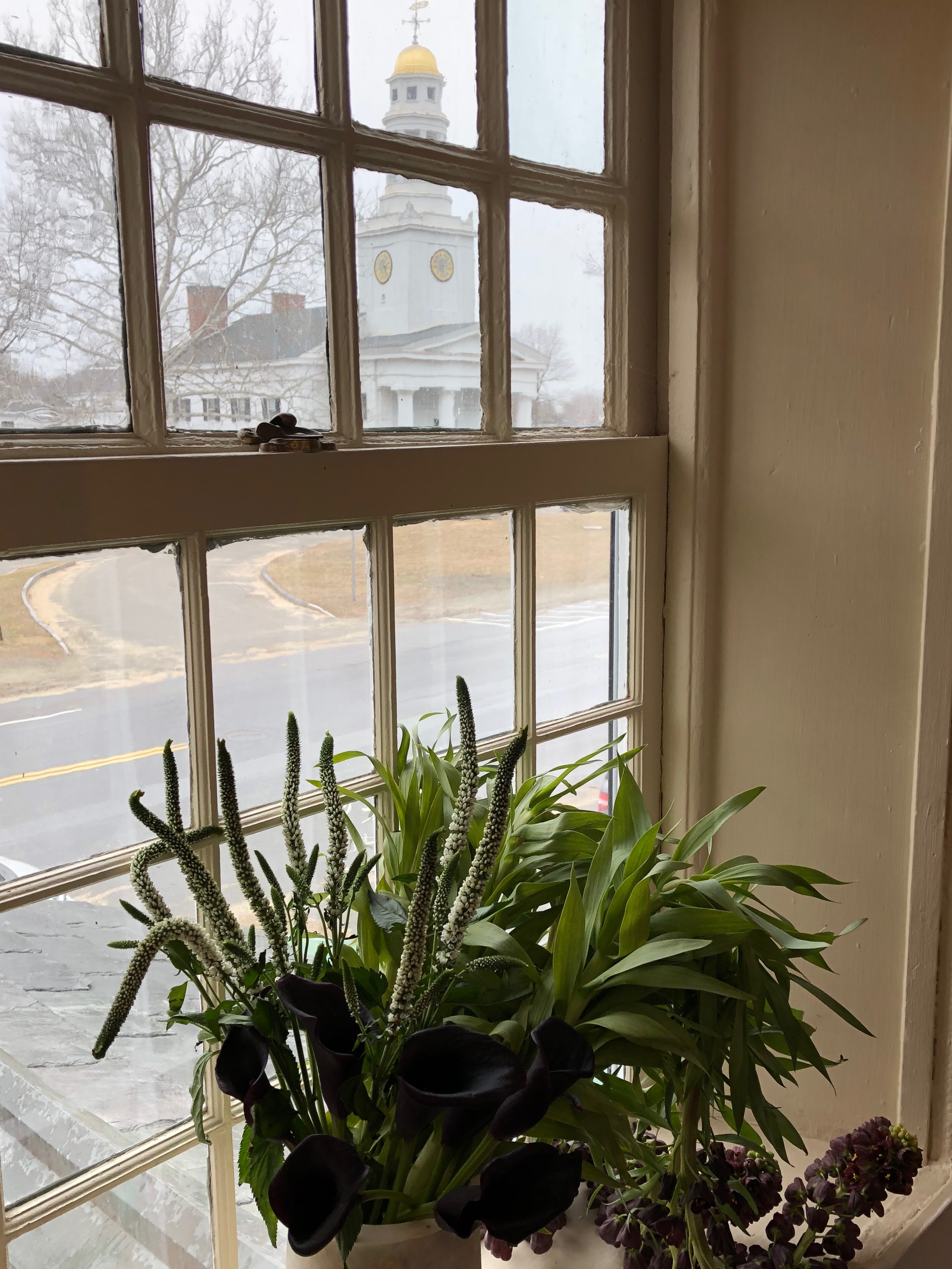
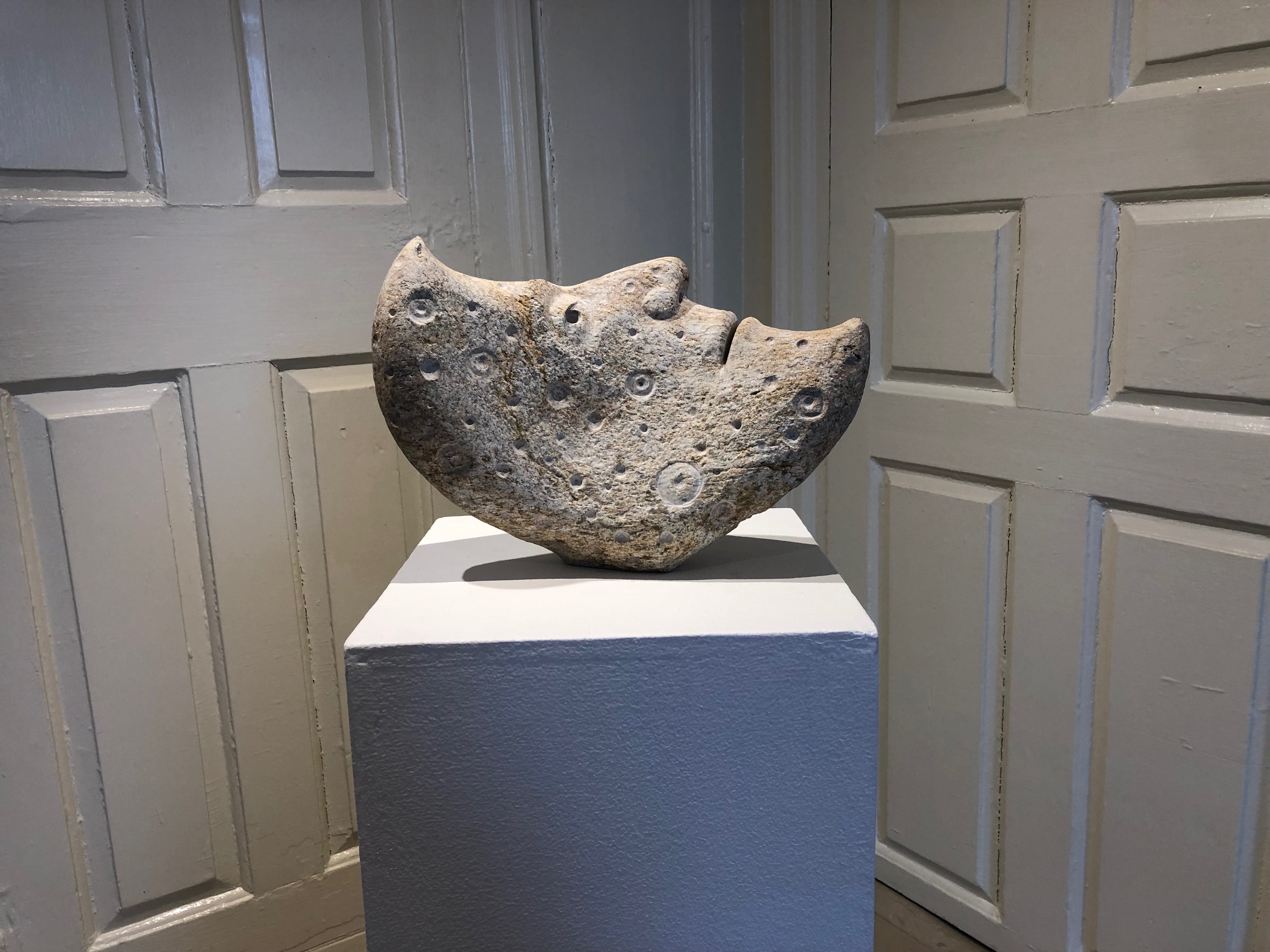
The first is from an art exhibit called “The Moon: Eternal Pearl.”  I particularly liked this Joseph Wheelright sculpture. The gallery itself (once a stop on the underground railroad) is always pleasant to visit, especially right after an opening reception when there are flowers everywhere. I liked how the gold dome of the UU church shows up beyond one flower arrangement.

When the gallery isn’t open, you can still enjoy the curious outdoor sculptures, like this elephant and ostrich.

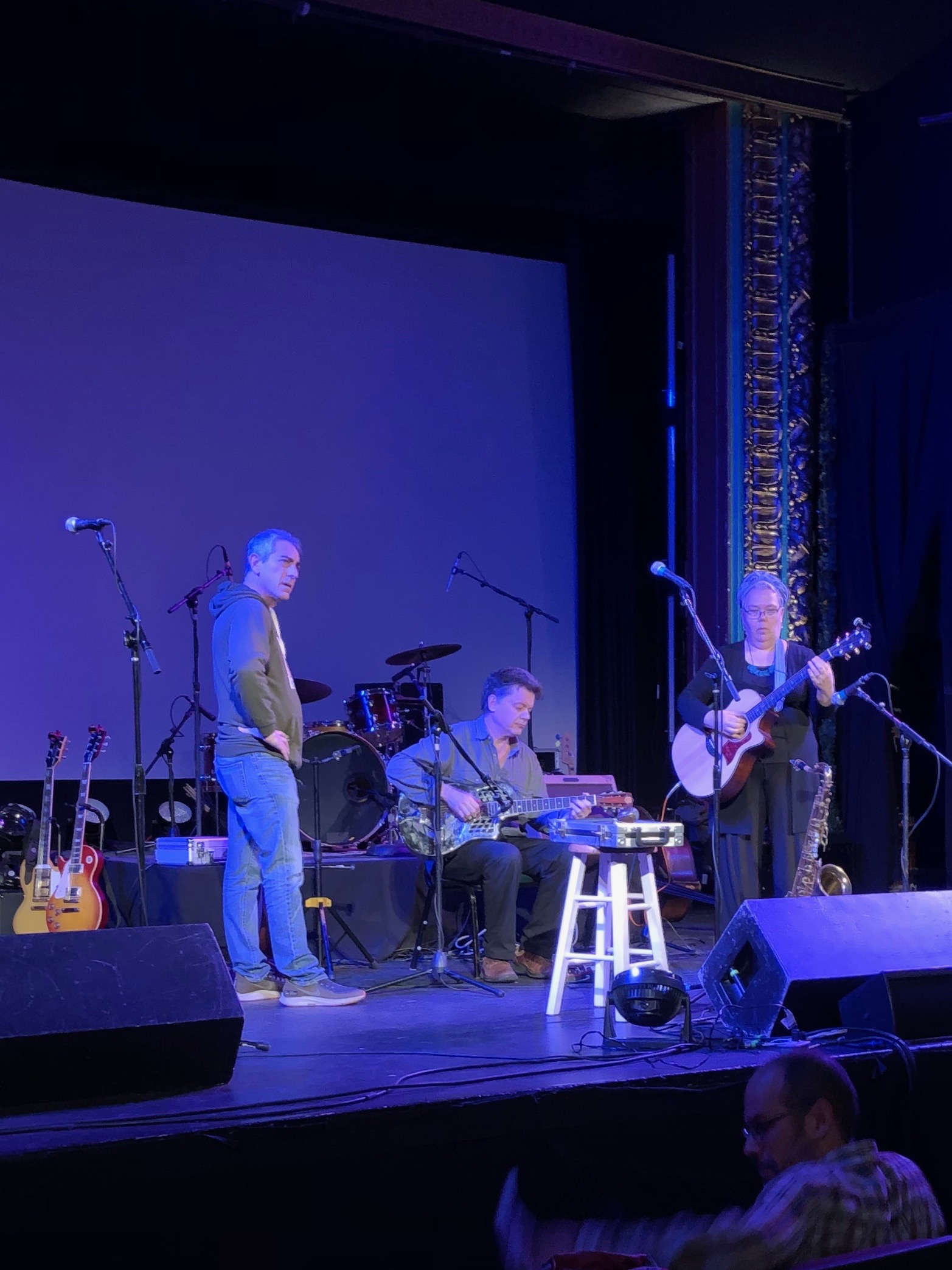
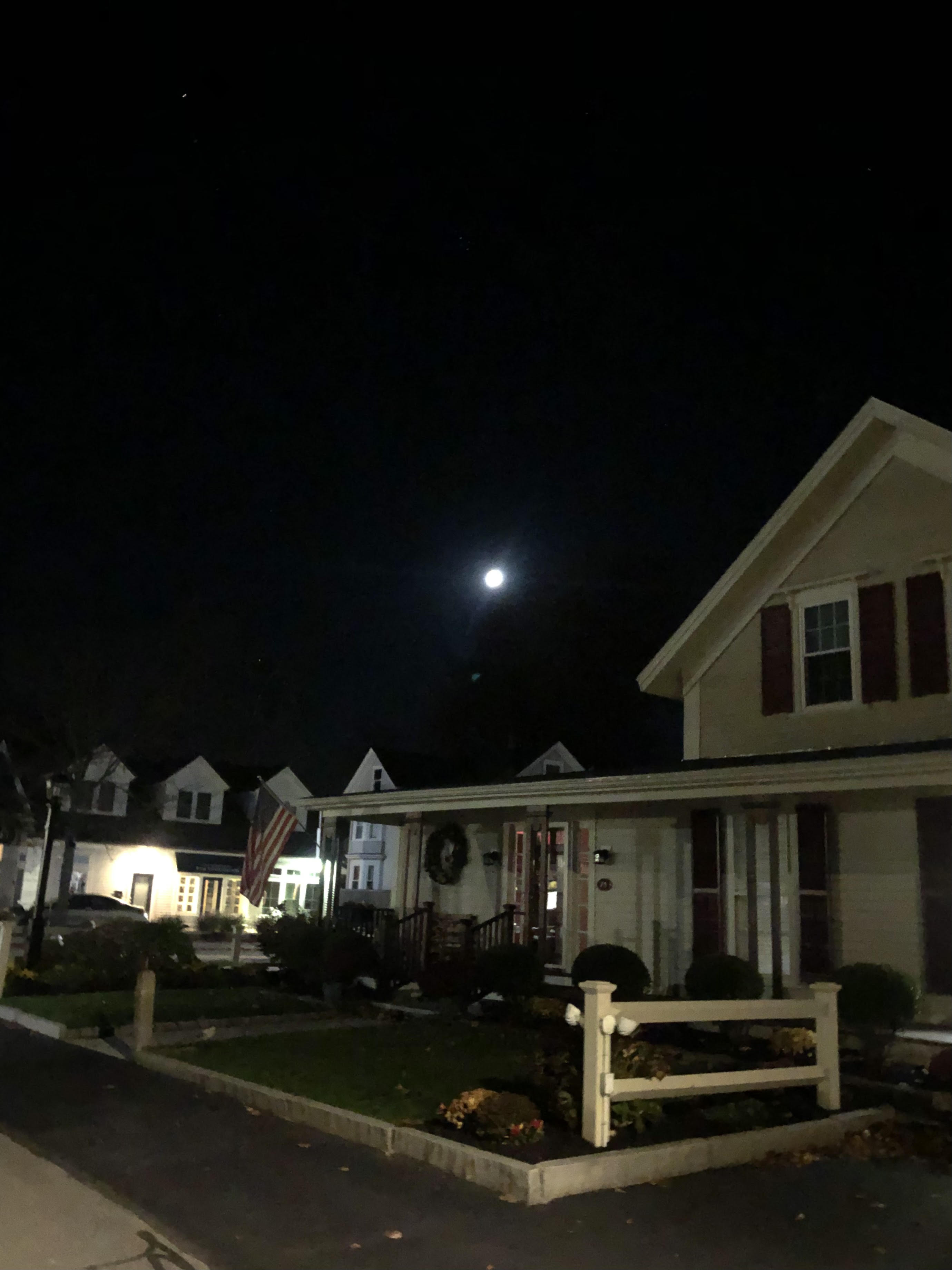
The blue photo is from a blues concert I attended recently. The musicians are actually just doing a sound check here. The next three pictures are from my walks around town, including my walk on a new piece of the Bruce Freeman bike trail on a former railroad bed, which technically isn’t open yet but is so enticing that lots of people are using it. The trail has been taking decades to complete because of lawsuits by abutters. They will soon find out it is an asset, in my opinion.

I’m not sure if I posted the library’s children’s-book quilt already, but I want to be sure that quilting friends see it.

032919-art-opening-bouquet

032919-First-Parish-Church-Concord

033019-elephant-in-the-yard

033019-ostrich-at-Concord-Art

033119-sound-check-for-blues-concert

040319-leaves-and-shadows

032919-treehouse-next-door

032919-detritus-on-the-trail

040319-child-book-quilt-Concord-MA

Read Full Post »