Feeds:
Posts
Comments

Posts Tagged ‘new research’

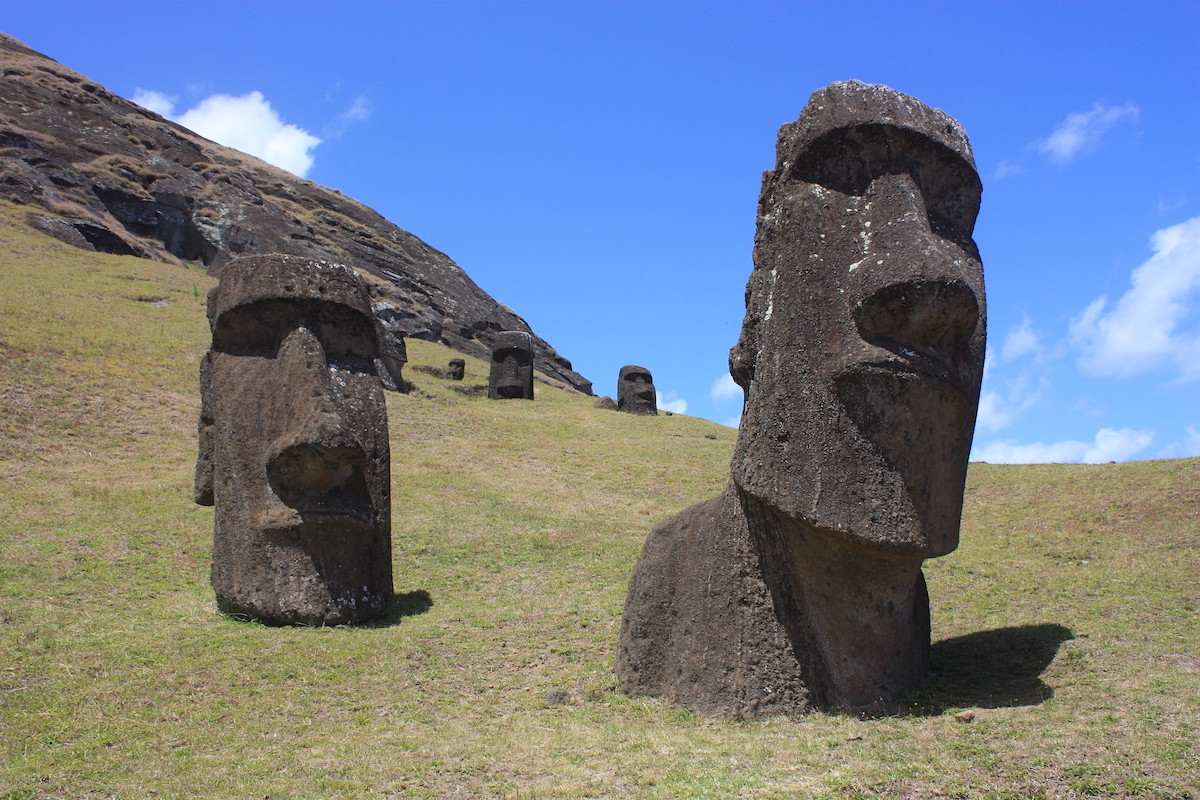
Photo: Arian Zwegers/Flickr.
The monumental statues of Easter Island. 

Imagine all the work that has gone into figuring out how dead civilizations died! Even now it often feels like guesswork. But I like how new research provides new details on how people lived.

Consider this report at YaleEnvironment360.

“A new study casts doubt on the narrative often told about Easter Island, of an ancient society that plundered its forests to the point of collapse. Researchers have found fresh evidence for another [story] that the islanders learned to live within the bounds set by nature.

“When Europeans first arrived to the remote South Pacific island in 1722, they found hundreds of massive statues, evidence of considerable manpower, but only around 3,000 people, too few to easily explain the monuments. Historians inferred that the Polynesians who settled Easter Island must have seen their population grow to a large and unsustainable level, at which point they destroyed their forests, exhausted their soils, and hunted seabirds to oblivion before seeing their own numbers collapse.

“But in recent years a competing narrative has taken hold. It posits that the population never exploded, but that instead a small number of people learned to sustain themselves on the arid and relatively barren island. Researchers found evidence for this view in the remains of ‘rock gardens,’ where islanders grew sweet potatoes, their staple crop.

“To protect crops from sea winds and supply minerals to the soil, islanders grew potatoes among densely packed rocks. It has been difficult to determine, however, how much of the island was composed of rock gardens, which would indicate how many people farming sustained. Prior research found that rock gardens potentially covered more than 12 percent of Easter Island, which, scientists estimate, could have supported as many as 25,000 people.

“For the new study, researchers aimed to improve on previous inventories of rock gardens by studying gardens on the ground and then training artificial intelligence to identify them in satellite imagery. To better distinguish between rock gardens and rocky outcroppings, they also gathered satellite data on the levels of moisture and nitrogen in the soil, markers of cultivation.

“With this additional data, researchers determined that rock gardens covered less that 0.5 percent of the island. Accounting for other potential sources of food, such as fish, bananas, taro, and sugar cane, they estimated that Easter Island would have supported around 3,000 people, the number first recorded by Europeans. The findings were published in Science Advances.

“ ‘The population could never have been as big as some of the previous estimates,’ said lead author Dylan Davis, a postdoctoral researcher at Columbia University. ‘The lesson is the opposite of the collapse theory. People were able to be very resilient in the face of limited resources by modifying the environment in a way that helped.’

“History will show that the islanders did ultimately face collapse, but after Europeans arrived.” Europeans, alas, brought disease and slavery. No wonder the population died out!

More at YaleEnvironment360, here.
Read Full Post »

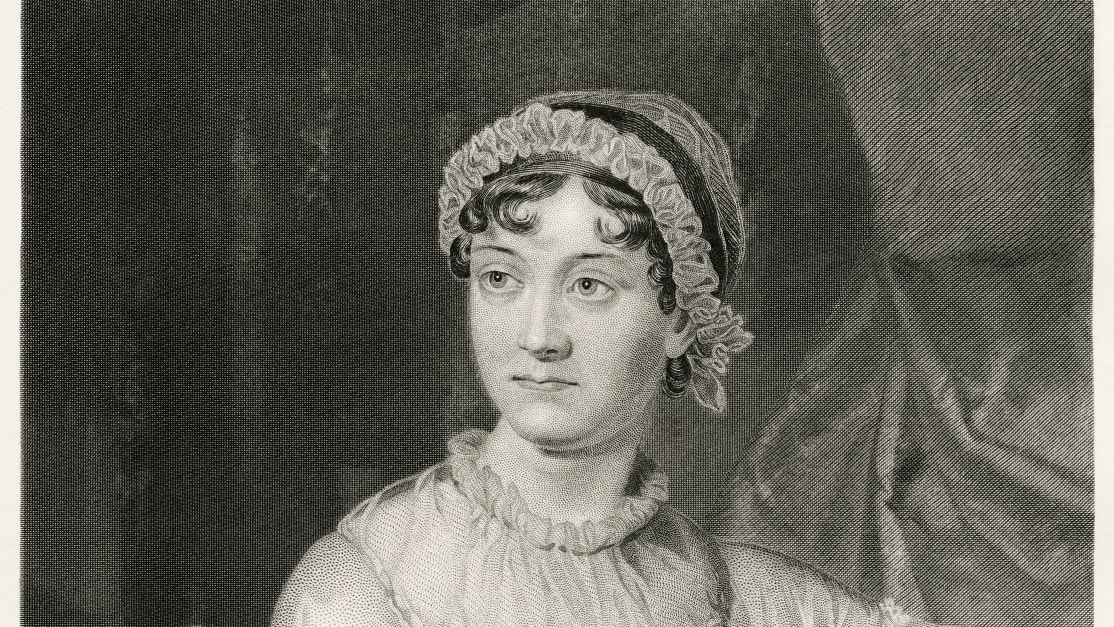
Photo: Glasshouse Vintage/Getty.
Although Jane Austen’s family had ties to an Antigua property that used slaves, new research hints that the 19th century novelist may have held abolitionist views like her favorite brother.

Just when you think there’s nothing new to be learned about the life of a famous author, someone decides to try a different kind of search. In today’s article, a scholar who already knew quite a bit about Jane Austen’s brother Henry searched for “the Rev H.T. Austen,” the name he used after her death.

Scottie Andrew writes at CNN, “Austen’s personal values — namely, whether she supported slavery — have been debated by literary enthusiasts and experts who read her work like a cipher. A new discovery adds a new wrinkle to the Pride and Prejudice author’s personal lore: Her dear brother Henry was sent as a delegate to the World Anti-Slavery Convention in 1840.

“While it’s common knowledge among ‘Janeites’ — the nickname for Austen’s proudest and most passionate readers — that the author’s brothers privately held abolitionist views, Henry is the first of her six brothers to ‘have participated publicly in anti-slavery activism,’ said Devoney Looser, a preeminent Austen scholar and professor at Arizona State University, who uncovered the record of Henry’s attendance.

“It’s further evidence, she said, that Austen herself might have believed in the abolition of slavery. Looser shared her findings in the Times Literary Supplement, a UK literary review. However, the discovery does not apply to the entire Austen family’s views, Looser says. Austen’s father had ties to a family that ran an Antiguan sugar plantation, and Austen herself never publicly expressed abolitionist views, as far as researchers know. …

‘We’ve wanted to slot her family, and her, as one or the other,’ Looser told CNN of the debate over the Austen family’s attitudes toward and participation in slavery. ‘The uncomfortable truth that my research confirms is that, over the course of 80 years, her family was both.’ …

“Just 161 of her letters exist today, Looser said, but one of them mentions her love of the work of Thomas Clarkson, an abolitionist author. …

“Based on her findings, which Looser said she uncovered in digitized newspapers and church records, Henry was selected as one of two delegates from his town. Looser said it indicates that ‘he would have been a known supporter of, and even a local leader, in favor of abolition.’ The point of the convention, attended by 500 leaders in abolition, was to create a platform for anti-slavery measures around the world and support formerly enslaved Black people who’d been recently freed in the British colonies, Looser said.

“As a delegate, Henry would have debated anti-slavery policies with his peers, most of whom were White men (a handful of Black men served as delegates, and the eight women present weren’t allowed to sit with the men, Looser said). His broader history of activism remains unknown, as none of his letters seem to have survived, but Looser said he was a pastor known for being an ‘excellent public speaker.’

“Henry’s attendance is the first example of public support for abolition among the family, Looser said, and contrasts with his father’s ties to slavery. The Rev. George Austen was close to a man whose family ran a sugar plantation in Antigua and was named a co-trustee for the man’s fortune, Looser said. While her research does not support claims that the senior Austen was directly involved in managing the plantation, he did have a hand in managing the wealth of a man who owed his fortune to enslaved people.

“Though Austen’s work is central to the Western literary canon, for much of the 20th century, experts believed her novels were devoid of politics and nods to controversial subject matter like race and slavery, said Nicole Wright, an associate professor of English at the University of Colorado, Boulder, and an expert in themes of social justice in British literature from Austen’s era. But Austen’s novels aren’t just about fancy balls and complicated courtships.

“More recent scholarship suggests that her novels made subtle references to the evils of slavery. Take the ‘silence’ that inspired many an academic work: A moment in Mansfield Park when heroine Fanny Price questions her uncle about the slave trade and is met with ‘dead silence.’ For many years, that moment was viewed by some critics as complicity. Some Austen scholars today think it might have been a criticism of English society’s discomfort in discussing slavery, Wright said.” More at CNN, here.

You might also be interested in an April New York Times article that reports, “As part of the discussion over racism that followed the police killing of George Floyd in Minneapolis last year, museums have asserted solidarity with the Black Lives Matter movement and begun to rethink and recast how they portray history. Among them is a museum dedicated to the writer Jane Austen in the English village of Chawton.”

Read Full Post »