Feeds:
Posts
Comments

Posts Tagged ‘Niger’

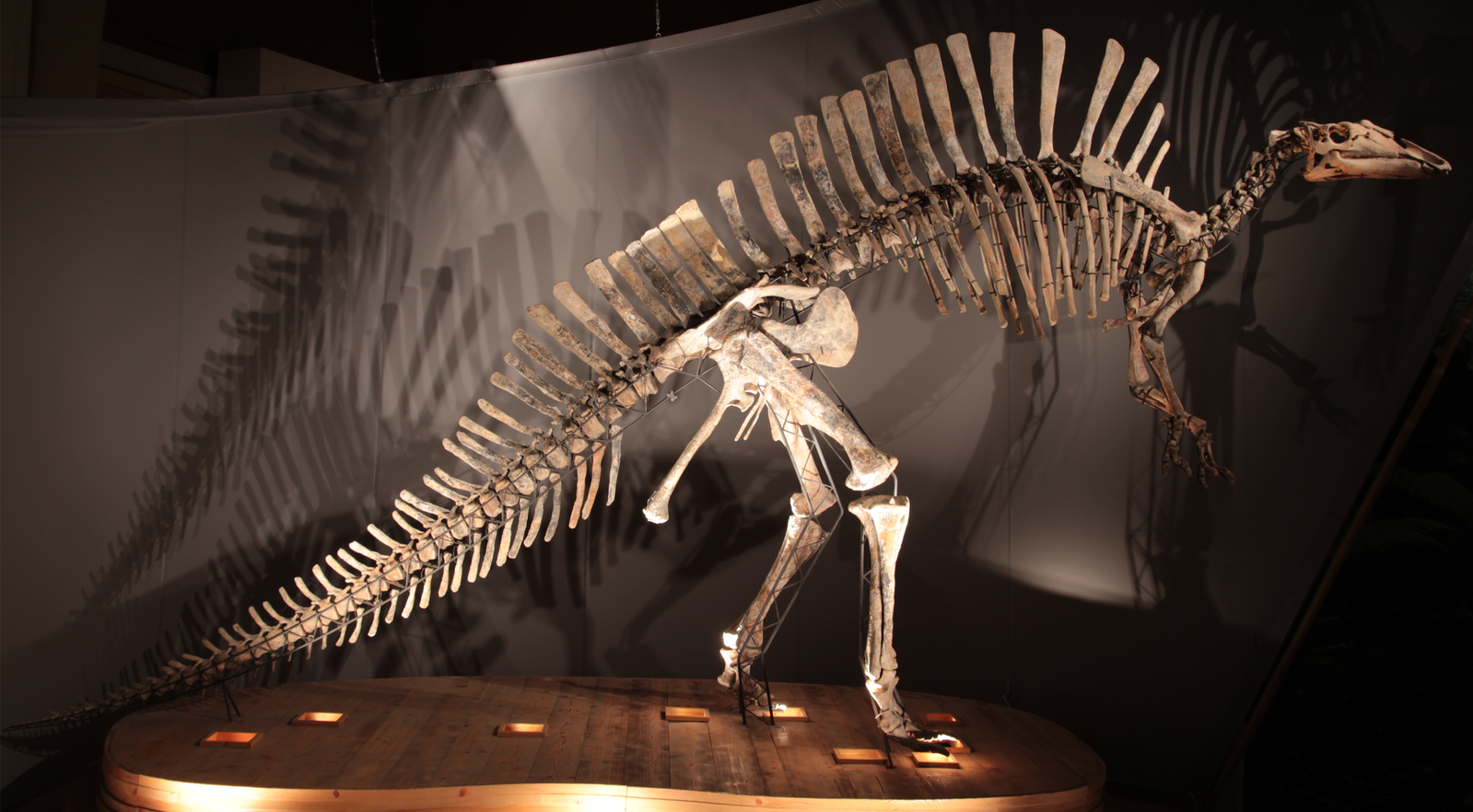
Photo: Filippo Bertozzo​​, Fabio Marco Dalla Vecchia​, Matteo Fabbri via Wikimedia Commons.
Ouranosaurus bones are among the many wonders found in Niger. For scale, the right femur is about a yard long.

Niger turns out to be a treasure trove for paleontology and archaeology, and as Nick Roll reports at the Christian Science Monitor, the country is working to develop enough local experts to deal with the riches. It’s not so farfetched in a place where nomads are already texting researchers about archaeological finds.

“Goats, cows, and pedestrians wander by the two unassuming shipping containers along a street in Niger’s riverside capital without a second thought. But inside lie nearly 50 tons of dinosaur bones wrapped in plaster – potentially some of the most significant paleontological finds this landlocked West African country, and even the continent, has ever known.

“There are fossils from perhaps as many as 100 different species, some of them from ancient animals never seen before. 

“ ‘Small animals, mammals, flying reptiles, turtles’ as well as a 40-foot crocodile and ‘a dozen large dinosaurs that are new, including huge 60-footers, says American paleontologist Paul Sereno.

“Getting them to the capital was years in the making – and their journey isn’t over. The initial discoveries were made in 2018 and 2019, in the vast expanse of the Sahara Desert. It would take time and funding for a proper dig, though, so the paleontologists covered them up and buried them, hoping the winds wouldn’t expose them to curious nomads or dangerous smugglers. 

“Then COVID-19 hit, shutting everything down until finally, last fall, Professor Sereno could return to unearth the fossils again.  

“ ‘Niger is going to tell Africa’s story during the dinosaur era,’ he says. …

“The bones, soon to be shipped to Dr. Sereno’s lab at the University of Chicago for research, represent paleontology’s latest win against the harsh desert environment of Niger, which is home not only to fossils but also to soaring temperatures, shifting dunes, and various armed groups.

“But Chicago won’t be the bones’ final resting place. The fossils are earmarked to be eventually returned to Niger, where the kernels of a formal paleontology sector are being planted in a country that contains some of the richest paleontological finds in Africa but boasts no paleontologists of its own, or even academic programs dedicated to the field. 

“ ‘Each time, we see that we find new dinosaurs, new fossils that permit us to say that the soil is rich – unlike other countries, and other continents,’ says Boubé Adamou, an archaeologist at the Institute for Research in Human Sciences who, as one of Niger’s foremost experts on excavations, helped lead this most recent expedition. …

“In a convoy speeding through the desert last fall, the team of about 20 found themselves massively outnumbered by scores of armed men riding in machine gun-mounted trucks. Those were just their guards, determined to keep this modern-day Saharan caravan safe from smugglers or bandits roving the dunes. …

“The team, composed of researchers and students from the United States, Niger, and Europe, went to three dig sites over three months. By the time they finished in December, they had unearthed everything from an Ouranosaurus with a 25-foot-long, bony ‘sail’ across the length of its back to the 6-foot thigh bone of a long-necked sauropod. …

“The vast expanses of Niger were [once] anything but dry, as rivers, wetlands, and lakes stretched across what researchers called the Green Sahara, home at one point to dinosaurs, and later, ancient human civilizations with embalming techniques that predate the Egyptians – relics of which were also found on the fall expedition. …

“It’s easy to see why Niger remains off the beaten path for paleontologists, despite its riches. As one of the poorest nations on Earth, it combines rough infrastructure with harsh desert conditions.

“But even if the Green Sahara is a thing of the past, the desert today is anything but desolate. Local nomads who’ve long mastered the difficult terrain have become key to conducting paleontology there, spotting bones and leading expeditions through otherwise unnavigable desert expanses. While the pandemic held Dr. Sereno’s team at bay, nomads kept a watchful eye on the carefully buried treasures, texting him updates. …

“Niger Heritage is a project drawn up by Dr. Sereno, Mr. Adamou, and coterie of international and Nigerien researchers and government officials. It envisions two museums [with] the capacity to not just display the fossils but also, for the first time, conduct homegrown research. …

“Niger’s first paleontologists, it is hoped, might be in undergraduate courses right now. With the right guidance and funding – to do Ph.D. programs outside the country – they could start correcting the lopsided nature of paleontology, where resources and opportunities are concentrated in rich countries.”

More at the Monitor, here. No firewall. Subscriptions encouraged.
Read Full Post »

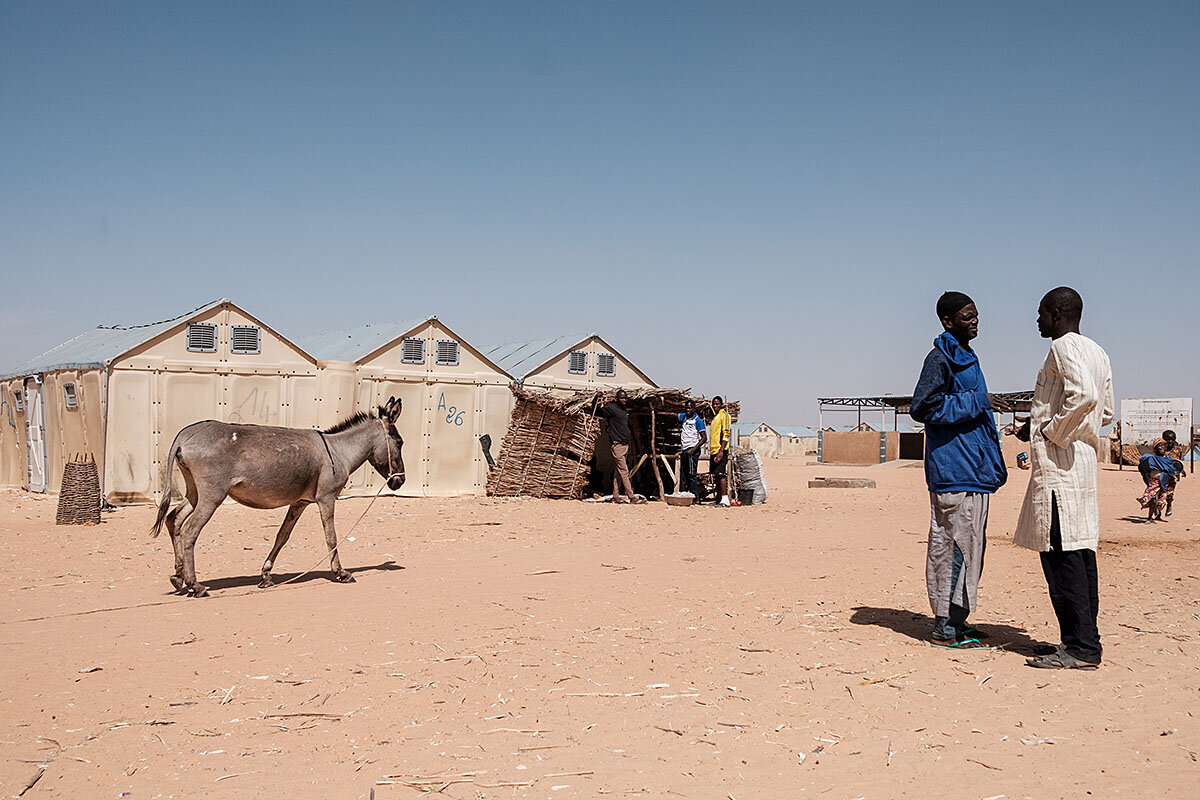
Photo: Guy Peterson/Special to the Christian Science Monitor.
In Niger, the poorest of the poor are protecting refugees on the run.

When I was chatting with blogger Will McMillan after one of his recent concerts, he said he noticed that at my blog, I seemed to seek out stories to cheer people up. I said, “To cheer me up, too.”

A great source for such stories is the internationally focused Christian Science Monitor (CSM). The news site is not unrealistic about the world’s challenges, but it looks for the good people and positive developments it knows are out there.

Here’s a CSM story by Nick Roll set in an impoverished part of Africa.

“Yacouba Aboubacar has an unusual way to measure the welcome he received as a refugee in Niger. 

“His razor blade.

“It takes a certain amount of trust, after all, to let a stranger cut your hair – and a good deal more to allow him to circumcise your baby. But since Mr. Aboubacar fled here from neighboring Nigeria in December, he has found his services as a barber and circumciser constantly in demand.

“Some of that work comes from other refugees, with whom he lives in a sea of white tents huddled on the edge of this small village. But much of it comes from the locals who inhabit the mud-brick houses in town. …

“Mr. Aboubacar is one of some 200,000 Nigerians who have fled rising violence in recent years to seek refuge in neighboring Niger. Chadakori’s population has doubled to 16,000 since 2020 – a refugee intake on a scale almost unimaginable in the West. Yet the response from Chadakori and other villages like it has largely not been one of resentment or rejection. Instead, in one of the world’s poorest countries – beset by its own problems with violent extremism – locals have made visitors feel welcome, even when there is little to share. 

‘Your guest is your god,’ says Laouan Magagi, Niger’s minister of humanitarian action and catastrophe management, reciting a popular local proverb.

“Mr. Magagi, whose grandfather was an immigrant from Nigeria, responds with a firm ‘non‘ when asked if Niger would ever impose a cap on the number of refugees it receives. Despite conflicts in some areas of neighboring Nigeria and Mali stretching back more than a decade, ‘Niger is an open country,’ he says. ‘Niger stands for humanity.’

“Niger and Nigeria have long been deeply interlinked. They share a 1,000-mile border – much of it porous. Trade, languages, and culture straddle this colonial-era divide. Still, Niger is not an obvious place to host refugees, no matter how much they share in common with locals. 

“At $590, Niger’s GDP per capita ranks the 10th lowest in the world. On the United Nations Human Development Index, Niger has long jostled for last place, and now it sits only above Chad and South Sudan. Meanwhile, climate change has made farming in the semiarid country even more unpredictable, and some 3 million people are expected to face hunger in the next six months, according to the nonprofit Save the Children.

“But in welcoming refugees, Niger is not an outlier. About 86% of the world’s refugees live in low- and middle-income countries, and nearly 70% are in a country that neighbors the one they fled from.

“ ‘A lot of people disagreed’ at first, saying ‘we should not accept them,’ says Achirour Arzika, Chadakori’s traditional chief, recalling the day three years ago when a government delegation came to ask the residents if refugees could be resettled here. But he held firm, and others soon warmed to the idea. ‘It could happen to us also,’ he says. ‘So we agreed, and we gave a place where we could host them.’ 

“Besides, he adds matter-of-factly, ‘this is … international law,’ referencing Niger’s adherence to the 1951 United Nations Refugee Convention.

“Conflict between armed groups and the military have also displaced more than 350,000 Nigerians. … In northwest Nigeria, where Mr. Aboubacar is from, criminal groups stage regular armed robberies and kidnappings. It’s a campaign of terror born of poverty, joblessness, poor governance, and fights over the region’s dwindling land. 

“One evening last December, he was sitting outside with friends drinking tea in his village in Sokoto state, near Nigeria’s northern border. … After the attack, Mr. Aboubacar and the rest of his village fled north, over the border. He soon found himself in Chadakori, where ‘we were really received well,’ he says. 

“Integration isn’t always so smooth. Different official languages – French in Niger, English in Nigeria – are used in government as well as education. Refugee students must now make the switch to French, and government forms need translation.

“ ‘It’s a very welcoming country. … It’s just that the resources are very limited,’ says Ilaria Manunza, Niger country director for Save the Children, which runs child protection and other youth services in the country’s refugee camps. And the population of refugees, she notes, is constantly in flux. ‘They tend to go back when the situation is a little bit calmer, and they flee [again] when attacks increase.’ …

“Four years ago, Anas Habibou led a group of about 350 Nigerian refugees trekking through Niger, seeking somewhere to settle. Some villages offered help, but ‘many villages refused,’ says Mr. Habibou. Today, he is the traditional chief for 5,500 Nigerian refugees who have settled next to the town of Dan Daji Makaou, 22 miles away from Chadakori, where they outnumber the local population by a factor of four or five. ‘We are safe here,’ he says. ‘Even before NGOs brought anything, the head of the village and his people contributed personally.’

“Yacouba Saidou, a prominent Dan Dadji Makaou elder, says that other village leaders in the region warned him that trouble stalked refugees. They told him that the violence that caused Nigerians to flee could strike next on their doorstep. But his town’s experience, he says, has been the opposite. Refugees have been a boon to the local economy, working as farm laborers and brick makers, and spending their earnings in local markets. ‘It has turned into something beneficial to us,’ he says.”

More at the Monitor, here. No firewall.

Read Full Post »