Feeds:
Posts
Comments

Posts Tagged ‘old growth’

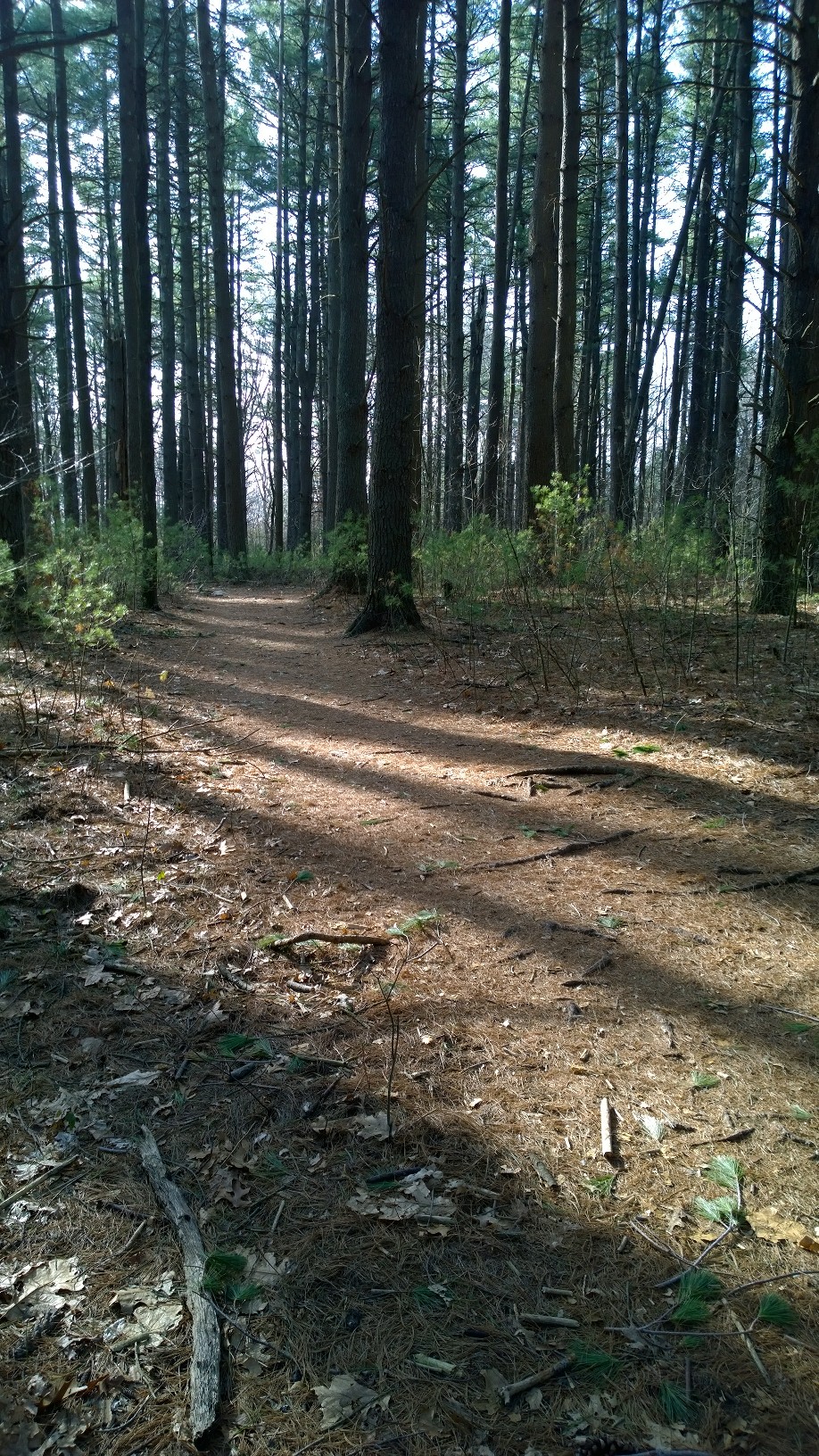
041217-shadows-stripe-forest-floor

Photo: Suzanne and John’s Mom.
Some living things benefit the planet more the older they get.

Those of us who were enthusiastic about planting zillions of trees to store carbon have been learning that the trees need to be part of a healthy ecosystem to do the most good. A collaboration among hundreds of forest ecologists offers keys to what works.

Patrick Greenfield writes at the Guardian, “Forest conservation and restoration could make a major contribution to tackling the climate crisis as long as greenhouse gas emissions are slashed, according to a study.

“By allowing existing trees to grow old in healthy ecosystems and restoring degraded areas, scientists say 226 gigatonnes of carbon could be sequestered, equivalent to nearly 50 years of US emissions for 2022.

But they caution that mass monoculture tree-planting and offsetting will not help forests realize their potential. …

“The research, published [in November] in the journal Nature as part of a collaboration between hundreds of leading forest ecologists, estimates that outside of urban agricultural areas in regions with low human footprints where forests naturally exist, they could draw down large amounts of carbon.

“About 61% of the potential could be realized by protecting standing forests, allowing them to mature into old growth ecosystems like Białowieża forest in Poland [check out the new Polish administration’s environmentalism] and Belarus or California’s sequoia groves, which survived for thousands of years. The remaining 39% could be achieved by restoring fragmented forests and areas that have already been cleared.

“Amid greenwashing concerns around nature’s role in climate crisis mitigation, the researchers underlined the importance of biodiversity helping forests reach their carbon drawdown potential, warning that planting huge numbers of single species would not help and urgent cuts to fossil fuel emissions were needed.

“Rising numbers of forest fires and higher temperatures due to the climate crisis would be likely to reduce the potential, they said. ‘Most of the world’s forests are highly degraded. In fact, many people have never been in one of the few old growth forests that remain on Earth,’ said Lidong Mo, a lead author of the study. ‘To restore global biodiversity, ending deforestation must be a top priority.’

“At Cop26 in 2021, world leaders pledged to halt and reverse deforestation by the end of this decade, although data shows that countries are currently off track. Brazil, Colombia and Indonesia are among nations making progress, however. The researchers said meeting this target, along with making good on UN climate and biodiversity agreements, was crucial to forests reaching their full potential.

“ ‘Conserving forests, ending deforestation and empowering people who live in association with those forests has the power to capture 61% of our potential. That’s huge. It’s potentially reframing forest conservation. It’s no longer avoided emissions, it’s massive carbon drawdown, too,’ said Tom Crowther, the head of the Crowther Lab at ETH Zurich. …

“ ‘It can be achieved by millions of local communities, Indigenous communities, farmers and foresters who promote biodiversity. It could be agroforestry for cacao, coffee or banana, natural regeneration, rewilding or creating habitat corridors. They’re successful when nature becomes the economic choice.’ …

“The research follows a controversial 2019 paper on the potential of forests to mitigate the climate crisis, which was also co-authored by Crowther, that provoked intense scientific debate among forest ecologists. … Several scientists felt that potential for nature to help meet climate goals had been overstated and the paper advocated for the creation of mass tree-planting, driving greenwashing concerns.

“Simon Lewis, a professor of Global Change Science at University College London who was a leading critic of the 2019 paper, said the new estimate was much more reasonable and conservative.

“There is a lot of spin and bluster about what trees can do for the environment. To cut through this always ask: what is the amount of carbon taken up by a hectare of land, and over what time period, he said. … ‘There is still only a finite amount of land to dedicate to forests, and ability of trees to sequester carbon is limited. The reality is that we need to slash fossil fuel emissions, end deforestation, and restore ecosystems to stabilize the climate in line with the Paris agreement.’

“Crowther acknowledged that he had been overzealous in the messaging around the 2019 paper. … ‘The fact that it was so much carbon I think gave people the idea that [the study] was suggesting that tree planting could be an alternative to cutting emissions, which categorically cannot be.’ ”

More at the Guardian, here.
Read Full Post »

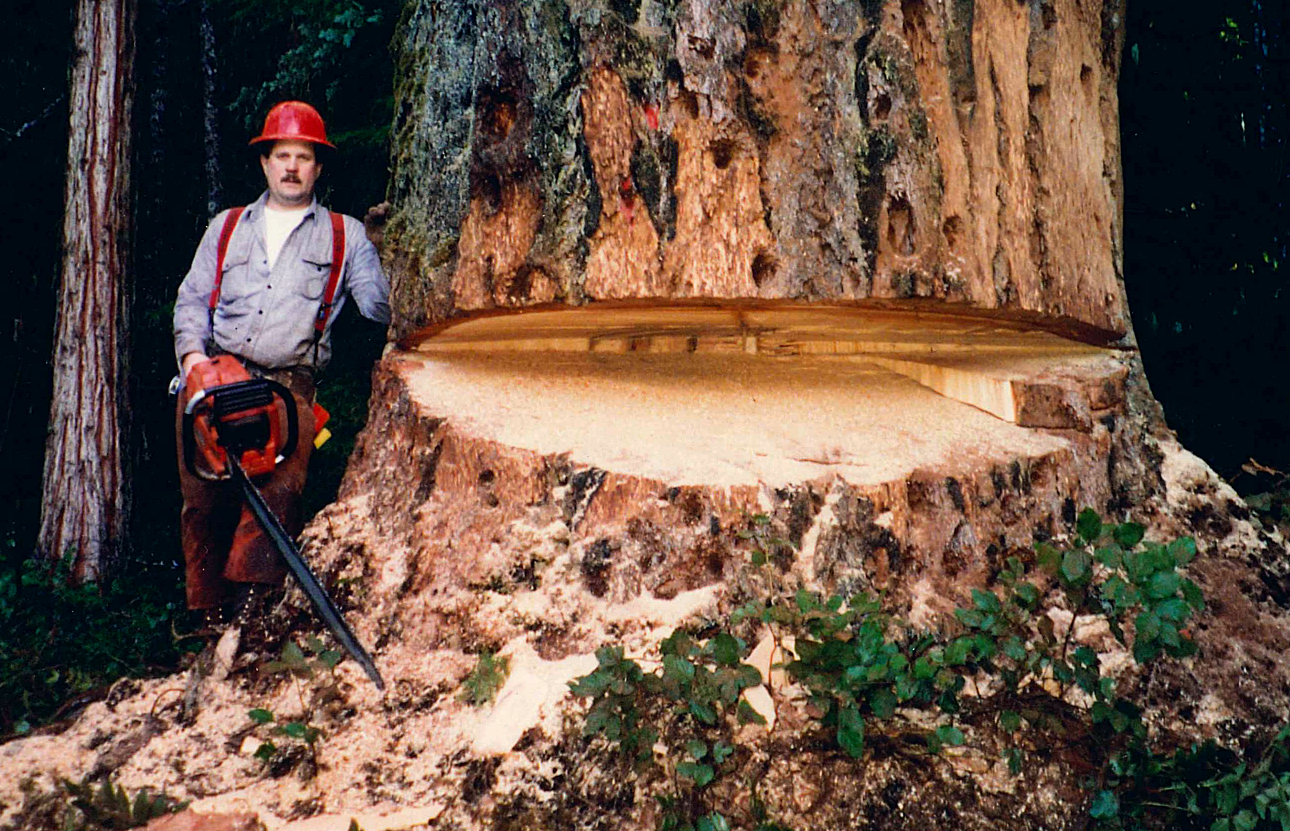
Photo: TimberWars podcast.
When the environment wins, logging families and their communities suffer. We need to find ways to meet the needs of both.

Until I heard a report from the investigative radio show Reveal, I didn’t understand the full import of the 1980s fight to save the northern spotted owl, a fight that pitted logging livelihoods against a bird.

Apparently, it was never really about the owl — or at least not primarily about the owl. It was about old-growth forests and the habitats they provide for an array of species.

Activists at the time were concerned that there were no laws protecting ancient trees. But there were laws protecting birds and animals. Getting the northern spotted owl listed as threatened or endangered, activists thought, could save a whole ecosystem.

The TimberWars podcast, here, offers “the behind-the-scenes story of how a small group of activists and scientists turned the fight over ancient trees and the spotted owl into one of the biggest environmental conflicts of the 20th century.”

From Reveal: “In the 1980s and ’90s, loggers and environmental activists faced off over the future of old-growth forests in the Pacific Northwest. In this episode, Reveal partners with the podcast series Timber Wars from Oregon Public Broadcasting. Reporter Aaron Scott explores that definitive moment in the history of the land – and the consequences that reverberate today. 

“We begin with an event that became known as the Easter Massacre, in which a stand of old-growth trees in Oregon’s Willamette National Forest was cut down despite protests that attracted national media attention. 

“The Easter Massacre helped galvanize the environmental movement. Protests intensified in the forests, but environmentalists kept losing in the courtroom because there aren’t many laws to protect ecosystems. There are, however, laws to protect animals. 

“We explore how a small team bet it all on the northern spotted owl in a high-stakes strategy that involved the science of fruit flies and secret meetings at lobster shacks. While environmentalists ultimately succeeded in locking down millions of acres of forests, that success turned what had been bipartisan environmental laws, like the Endangered Species Act, into cultural wedges. 

“We end with how this conflict affected one timber town and how this fight that started decades ago continues to rage on. With the rise of climate change and the threat of intensifying wildfires, battles over the role of forests take on even greater significance.”

The Oregonian, here, published an update in March of this year. “Environmental groups have filed a lawsuit seeking to preserve protections for 3.4 million acres of northern spotted owl habitat from the US-Canada border to northern California, the latest salvo in a legal battle over logging in federal old-growth forests that are key nesting grounds for the imperiled species.

“The U.S. Fish and Wildlife Service cut the amount of protected federal old-growth forest by one-third in the final days of [the last] administration. … President Joe Biden’s administration has since temporarily delayed putting those new rules into effect in order to review the decision. …

“ ‘We didn’t want to leave any room for error,’ said Susan Jane Brown of the Western Environmental Law Center, a plaintiff in the lawsuit filed Tuesday in Portland, Oregon. Brown estimated there are fewer than 2,000 breeding pairs of the owls left in the wild, but no one is sure. …

“Timber interests, including the American Forest Resource Council, filed a lawsuit earlier this month challenging the delay in implementing the new, reduced habitat protections and say the forest in question isn’t used by the northern spotted owls.

“The existing protections on logging in federal old-growth forests in the US West have cost Pacific Northwest communities that rely on the timber industry over $1 billion and devastated rural communities by eliminating hundreds of jobs, the group says. …

“The Fish and Wildlife Service agreed in a settlement with the timber industry to reevaluate the spotted owls’ protected territory following a 2018 U.S. Supreme Court decision involving a different federally protected species. …

“For decades, the federal government has been trying to save the northern spotted owl, a native bird that sparked an intense battle over logging across Washington, Oregon and California. Old-growth Douglas firs, many 100 to 200 years old, that are preferred by the owl are also of great value to loggers.

“After the owl was listed under the Endangered Species Act, earning it a Time magazine cover, U.S. officials halted logging on millions of acres of old-growth forests on federal lands to protect the bird’s habitat. But the population kept declining, and it faces other threats from competition from the barred owl and climate change.”

Read more at the Oregonian, here.

Read Full Post »