
Feeds:
Posts
Comments

Posts Tagged ‘pain’

Photo: Laura Chouette/Unsplash.
A study by McGill University in Montreal, Canada, asked participants to listen to different types of music and rate how it affected their pain levels.

The other day on the radio I heard a doctor talk about treating pain in the age of the opioid crisis. His ideas sounded risky and seemed based on a study of one — himself. Having been in recovery from opioid addiction for 15 years, he found he could handle a lot of opioids when he broke his leg. He didn’t get addicted again.

Can every recovering addict do that? Seems like there ought to be better ways. So far, opioids are the only thing that works for severe pain. Today’s story talks about a way to reduce suffering, but only a little.

Nicola Davis writes at the Guardian, “If you are heading to the dentist, you may want to turn up a rousing Adele ballad. Researchers say our preferred tunes can not only prove to be powerful painkillers, but that moving music may be particularly potent.

“Music has long been found to relieve pain, with recent research suggesting the effect may even occur in babies and other studies revealing that people’s preferred tunes could have a stronger painkilling effect than the relaxing music selected for them.

“Now, researchers say there is evidence that the emotional responses generated by the music also matter.

“ ‘We can approximate that favorite music reduced pain by about one point on a 10-point scale, which is at least as strong as an over-the-counter painkiller like Advil [ibuprofen] under the same conditions. Moving music may have an even stronger effect,’ said Darius Valevicius, the first author of the research from McGill University in Montreal, Canada.

Writing in the journal Frontiers in Pain Research, Valevicius and colleagues report how they asked 63 healthy participants to attend the Roy pain laboratory on the McGill campus, where researchers used a probe device to heat an area on their left arm – a sensation akin to a hot cup of coffee being held against the skin.

“While undergoing the process, the participants [listened] to two of their favorite tracks, relaxing music selected for them, scrambled music, or silence.

“As the music, sound or silence continued, the participants were asked to rate the intensity and unpleasantness of the pain. …

“When the auditory period ended, participants were asked to rate the music’s pleasantness, their emotional arousal, and the number of ‘chills’ they experienced – a phenomenon linked to sudden emotions or heightened attention, that can be felt as tingling, shivers or goosebumps.

“The results reveal participants rated the pain as less intense by about four points on a 100-point scale, and less unpleasant by about nine points, when listening to their favorite tracks compared with silence or scrambled sound. Relaxing music selected for them did not produce such an effect. …

“Further work revealed music that produced more chills was associated with lower pain intensity and pain unpleasantness, with lower scores for the latter also associated with music rated more pleasant.

“ ‘The difference in effect on pain intensity implies two mechanisms – chills may have a physiological sensory-gating effect, blocking ascending pain signals, while pleasantness may affect the emotional value of pain without affecting the sensation, so more at a cognitive-emotional level involving prefrontal brain areas,’ said Valevicius, although he cautioned more work is needed to test these ideas. …

“The researchers say it is not yet known if moving music would have a similar chill-creating effect in those who do not favor it, or if people who favor such music are simply more prone to musical chills.

“What’s more, they say the size of the study might mean some relationships cannot be detected, while the relaxing music may not have been played for long enough for an effect to have been seen.”

More at the Guardian, here. No paywall. Guardian readers voluntarily donate to support the news.
Read Full Post »

gambia-nurse-pain-10_custom-3d2b99335c97e843f60a5ac013127f1a04155e51-s700-c85

Photo: Samantha Reinders for NPR
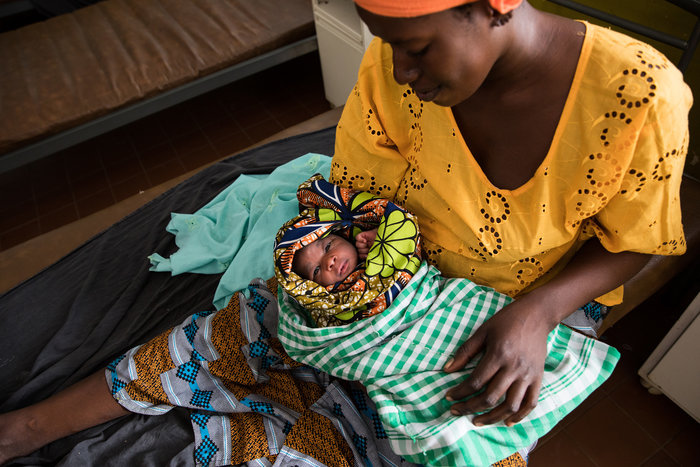
Midwives at the Brufut Minor Health Center in Gambia don’t administer pain medication during childbirth because, in their view, most of the time it’s “not needed.” A recent NPR feature shows that the scarcity of opioid pain medication in Africa is not such a bad thing.

Here in the land of plenty, we have an opioid crisis that started when patients got hooked on legitimately prescribed medications. But in Gambia, where “luxuries” like opioids are scarce, doing without seems to lead to better outcomes.

Jason Beaubien at National Public Radio (NPR) interviews a Gambian nurse determined to care for patients without leaning on pain medications like opioids.

“Growing up in the Gambia in West Africa, Nabia Drammeh always knew she wanted to be a nurse. ‘My auntie was a nurse,’ she says. ‘I used to go to the clinic and see the way she works. I told her, “I really want to be a nurse in the future!” So I’ve loved this job since when I was a child.’ …

“She now works at the Brufut health clinic just outside the Gambian capital of Banjul. It’s a modest government clinic housed in a cluster of single-story cement buildings.

” ‘The cases we see here are mostly malaria cases, pneumonia cases, ear problems,’ she says. Drammeh and her colleagues at the clinic also treat a lot of urinary tract infections. They stitch up cuts from minor car crashes. They deal with sick kids and fractures from farming accidents. One constant among most of the cases, Drammeh says, is pain.

” ‘Eighty to 90 percent of patients that come here already have pain’ she says. Patients arrive with back pain, muscle pain, stomach pain. … ‘Most of the cases that come here are in pain either physically or psychologically,’ she says.

“So you might think that Drammeh would want to dole out powerful opioid-based medications that have been shown to provide incredible reductions in pain. But she doesn’t. And it’s not just because she doesn’t have any opioids.

‘When taking care of the pain you don’t only deal with drugs,’ Drammeh says with a hint of indignation. ‘Drugs are last when it comes to nursing.’

“The Gambia is one of the poorest countries in the world. Even doctors at the main teaching hospital in Banjul, the capital, don’t have regular access to opioids or other powerful pain meds. …

“But Drammeh says this lack of painkillers is not a problem. Her goal as a nurse isn’t to exterminate that pain. The pain is a clue to help her find the real underlying problem. Instead of drugs Drammeh uses her ‘nursing skills’ to address a patient’s pain.

” ‘First of all we have to receive the patient well,’ she says. ‘Show the person that he or she is welcome [at the clinic].’

“And then she lets them know that a solution to their pain exists. A burning urinary tract infection — there’s medicine for that. A pounding headache? could be a sign of malaria and a dose of malaria pills will do the trick. …

“Just convincing a patient that their particular health problem can be treated will cause their pain to go down, she says. But first, Drammeh insists, you have to connect with the patient and win their trust.

” ‘Tell the patient that this thing is normal, that we have many patients that come here with that problem or even more serious cases than that problem,’ she says. ‘But they were treated and they’ve gone home.’

“What she doesn’t do is rush to quell the patient’s pain with drugs. …

“[Midwife Rohey Jallow also] sees her role as comforting the patient, letting the woman know that pain is normal in childbirth and that she will get through it. …

“Drammeh explains how a woman had come in earlier in the day complaining of lower back pain. The patient seemed uncomfortable to be talking in the open courtyard. …

” ‘So I told her, if you want I can take you privately so I can know what the problem really is.’ They slipped off to an empty part of the ward. It turns out the woman with back pain also had hemorrhoids and had been constipated for weeks. Drammeh told the woman that she must deal with the constipation immediately. She advised her to add more fruit to her diet and gave her laxatives and some hemorrhoid cream.

” ‘I made her understand that these are the medicines that can take care of you.’ …

” ‘That is the best way of managing pain.’ ”

More at NPR, here.

Read Full Post »