Feeds:
Posts
Comments

Posts Tagged ‘Proceedings of the National Academy of Sciences’

It’s amazing what mysterious creatures scientists find in the fossil records of life on our planet. Jonathan Webb describes one such creature at the BBC.

“A 430 million-year-old sea creature apparently dragged its offspring around on strings like kites — a baffling habit not seen anywhere else in the animal kingdom.

“Scientists who discovered the fossil have dubbed it the ‘kite runner.’ Ten capsules tethered to its back appear to contain juvenile progeny, all at different stages of development.

“Reported in the journal PNAS, the many-legged, eyeless, 1 centimeter [fossil] was dug up from a site in Herefordshire before being taken to Oxford and computerised. This process involved grinding away the specimen, slice by slice, and photographing each of those sections to assemble a 3D reconstruction. …

” ‘You take its anatomy, code it into a data set and then run probabilistic methods on it, which will tell you how likely it is that something evolved in a particular way,’ [David Legg, a palaeontologist from the Oxford University Museum of Natural History,] explained. …

” ‘Nothing is known today that attaches the young by threads to its upper surface,’ said co-author Derek Briggs, from Yale University. …

“It was the variety of shapes seen among the 10 tethered babies that Dr Legg found most convincing. ‘We see them develop and begin to resemble the adult form more and more, as they get bigger,’ he said. ‘I’m definitely convinced that that’s what they were.’ ”

More at the BBC, here.

Photo: D Briggs/D Siveter/ Sutton/D Legg
This tiny, eyeless fossil creature, unrelated to any living species, carried babies in capsules tethered to its back.
Read Full Post »

John-E-tughole

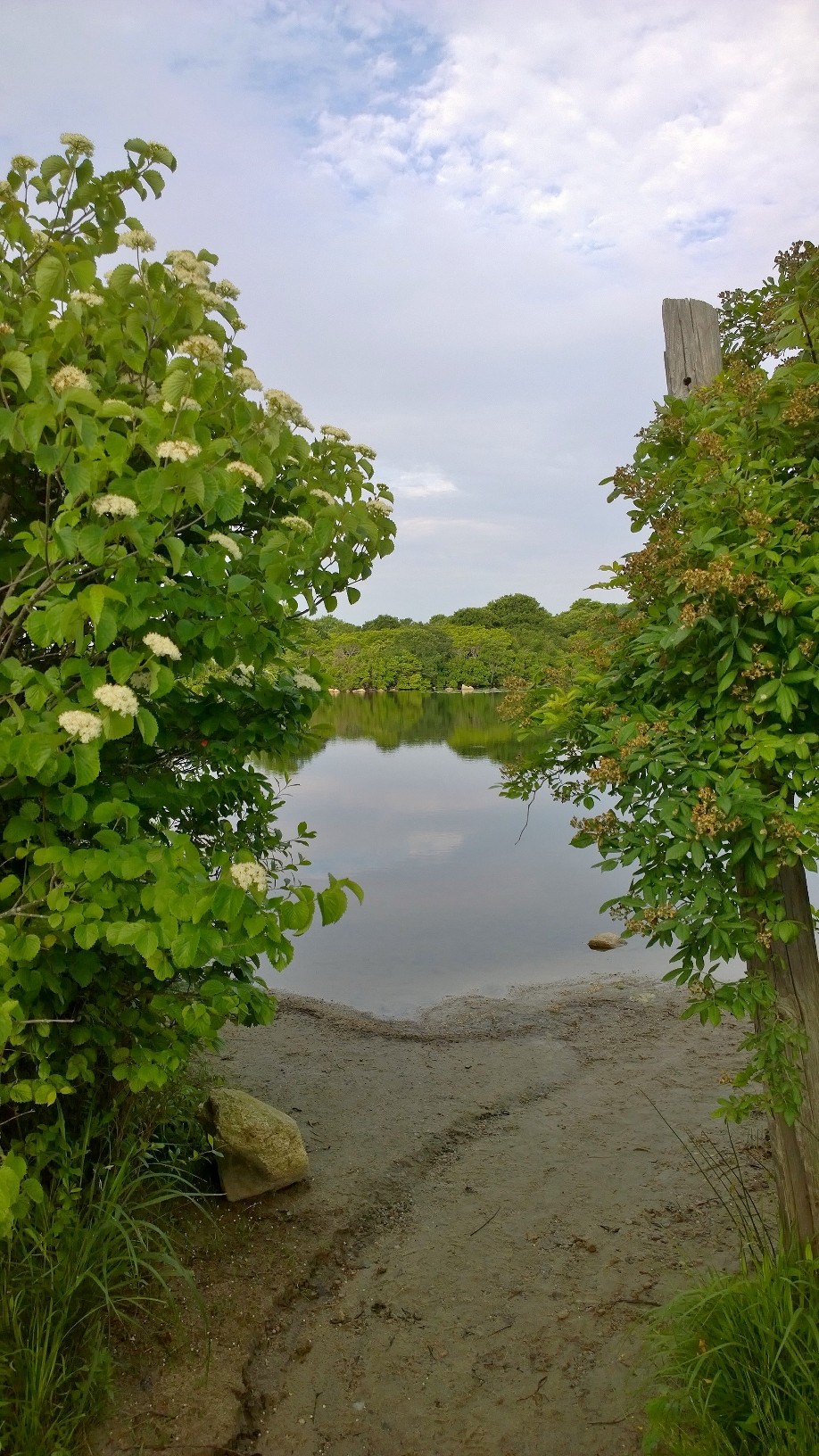
An article by Gretchen Reynolds at the New York Times “Well” blog details new research on the stress-reducing effects of walking in nature.

Reynolds writes, “City dwellers [have] a higher risk for anxiety, depression and other mental illnesses than people living outside urban centers …

“Various studies have found that urban dwellers with little access to green spaces have a higher incidence of psychological problems than people living near parks and that city dwellers who visit natural environments have lower levels of stress hormones immediately afterward than people who have not recently been outside.

“But just how a visit to a park or other green space might alter mood has been unclear. Does experiencing nature actually change our brains in some way that affects our emotional health? That possibility intrigued Gregory Bratman, a graduate student at the Emmett Interdisciplinary Program in Environment and Resources at Stanford University.

In his “new study, which was published last week in Proceedings of the National Academy of Sciences, Mr. Bratman and his collaborators decided to closely scrutinize what effect a walk might have on a person’s tendency to brood. … Such rumination [is] strongly associated with increased activity in a portion of the brain known as the subgenual prefrontal cortex.”

The results: “As might have been expected, walking along the highway had not soothed people’s minds. Blood flow to their subgenual prefrontal cortex was still high and their broodiness scores were unchanged. But the volunteers who had strolled along the quiet, tree-lined paths showed slight but meaningful improvements in their mental health, according to their scores on the questionnaire. They were not dwelling on the negative aspects of their lives as much as they had been before the walk.” More here.

As we used to chant to our overexcited dog when we picked her up after a grooming, “I’m calm, you’re calm.”

Try out this Derek Wolcott poem for your walk in the woods. It is read on SoundCloud by my husband’s college classmate, Jon Kabat-Zinn.

Read Full Post »