Feeds:
Posts
Comments

Posts Tagged ‘recognition’

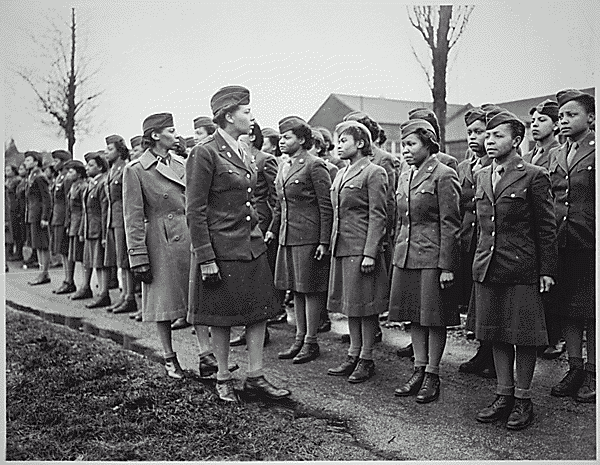
Photo: The Unwritten Record.
African American Women in the military during WW II.

November 11 is Veterans Day in the US. Veterans come in all shapes and sizes and they all deserve recognition. The African American veterans above served in the military in World War II.

A veteran from more recent times was honored in this reminiscence at the Washington Post. Lauren Koshere, a volunteer with Veterans Affairs’ My Life, My Story program and a food service worker at William S. Middleton Memorial Veterans Hospital in Madison, Wisconsin, shared some poignant memories.

“Final Salutes don’t come with much notice, maybe five minutes. But even those of us in chronically understaffed departments can attend. I join a river of co-workers flowing toward Ward 1B: nurses in turquoise scrubs, doctors in white coats, executives in business suits, police in uniform and me in a hairnet and black polyester polo — ‘VA Food Service’ embroidered over the heart — but without my usual stainless-steel tray cart.

“Most of us working in Veterans Affairs hospitals are not veterans. But the nurse standing across from me, in a hall lined with people, must be a veteran: She knows exactly how to stand with respect for a memorial service. I try to copy her posture, feet shoulders-width apart, hands joined behind my back.

“No one speaks. Then the quiet is broken by a single resonant tone. Five seconds of silence. Then another tone. A nurse carrying a brass singing bowl and wooden mallet appears from the hospice unit. She strikes the bowl again. Behind her, another nurse escorts a morgue cart draped in an American flag.

“I think of a hospice patient I’ve been bringing meals to for weeks. He was born in the late 1940s. Every day, his thin form lies at the same angle under a faded Green Bay Packers blanket.

“Until a hot day in July, we had never spoken — I suspected he couldn’t — but he always nodded and made eye contact when I set down his dinner tray. On this day, I pointed to a cup of chocolate ice cream he had ordered. ‘It’s a good day for ice cream.’

“He surprised me by replying, ‘Every day is a good day for ice cream.’

“The gurney comes into full view, and I now see a black baseball cap with a yellow, red and green Vietnam veterans badge resting on the flag.

“When the procession stops, people remove their hats. Veterans salute, and hold it, while the rest of us raise our hands to our hearts. The first notes of a ‘Taps’ recording fill the hallway, and we are locked in stillness. …

“My vision blurs as the song continues, and I wonder how many other funerals are being remembered in this hallway. I hear soft, deep sighs and a few sniffles. …

“As the flag-draped gurney passes on its way to the morgue, I realize it isn’t every day that I’m this close to the sharply defined red, white and blue. Working with veterans reminds me of what millions have invested for the idea of that flag. But it also reminds me of what that flag has asked, has taken. …

“Joseph Campbell said, ‘Affirmation is difficult. We always affirm with conditions.’ But ‘affirming it the way it is — that’s the hard thing, and that is what rituals are about.’

“To affirm unconditionally. To affirm the way it is. Ritual asks us to suspend our noise and our opinions and our egos. For a few moments of sacred silence, we affirm, creating the space where ritual works its power: weaving the personal to the anonymous, the individual to the universal, the known to the unknown.

“During a Final Salute, the deceased veteran’s identity is not disclosed. … The Final Salute on this day has gathered strangers in honor of a stranger. I don’t know whose loved one walks behind the gurney. I don’t know who lies under the Vietnam veterans hat, the American flag. But I did know a veteran who liked the Packers and chocolate ice cream.

“I never saw him again.”

More at the Post, here.

Read Full Post »

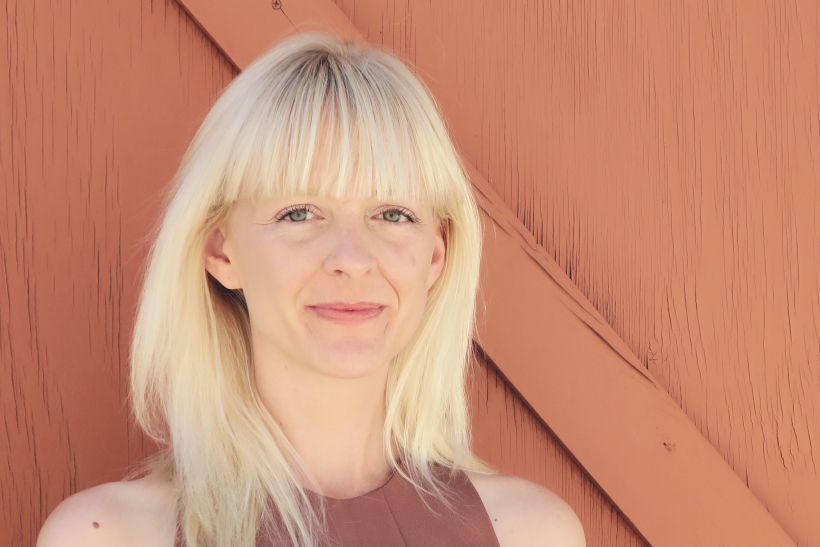
Photo: Jennifer Croft via the First News.
The translator Jennifer Croft will no longer work with publishers who don’t put her name on the cover.

There’s a book by French-to-English translator Kate Briggs called This Little Art. Briggs and others have been opening my eyes lately to the notion that translators are almost on the level of the author they translate. They write a new version of the book. It’s an art.

Alexandra Alter wrote an interesting story at the New York Times about another translator, Jennifer Croft. She knows her worth.

“When Jennifer Croft talks about translating the Polish novelist Olga Tokarczuk’s novel Flights, she sometimes affectionately refers to the book as ‘our love child.’

“ ‘It’s Olga’s, but also it has all of these elements that are mine, these stylistic elements and these decisions that I made,’ she said in a recent interview.

Flights was a labor of love for Croft, who spent a decade trying to find a publisher for it. It was finally released by Fitzcarraldo Editions in Britain in 2017 and Riverhead in the United States in 2018, and was celebrated as a masterpiece. The novel won the International Booker Prize and became a finalist for the National Book Award for translated literature, helping Tokarczuk, who was later awarded the Nobel Prize, gain a much larger global audience.

“But Croft also felt a twinge of disappointment that after devoting years to the project, her name wasn’t on the book’s cover. Last summer, she decided to make a bold demand:

“ ‘I’m not translating any more books without my name on the cover,’ she wrote on Twitter. ‘Not only is it disrespectful to me, but it is also a disservice to the reader, who should know who chose the words they’re going to read.’

“Her statement drew wide support in the literary world. Croft published an open letter with the novelist Mark Haddon, calling on publishers to credit translators on covers. The letter has drawn nearly 2,600 signatures. … Her campaign prompted some publishers, among them Pan Macmillan in Britain and the independent European press Lolli Editions, to begin naming all translators on book covers.

“Croft’s latest published translation is Tokarczuk’s The Books of Jacob, a 900-plus page historical novel about an 18th-century Eastern European cult leader named Jacob Frank, whose story unfolds through diary entries, poetry, letters and prophecies. …

“This time, Croft’s name appears on the cover. Riverhead added her after she and Tokarczuk requested it. Croft is also being paid royalties for The Books of Jacob, which she didn’t receive for Flights. (Translators, who typically receive a flat, one-time translation fee, don’t automatically get a share of royalties from most publishers.) …

“ ‘She is incredibly linguistically gifted,’ Tokarczuk said in an email. ‘Jenny does not focus on language at all, but on what is underneath the language and what the language is trying to express. So she explains the author’s intention, not just the words standing in a row one by one.’ …

“For Croft, the campaign to bring greater recognition to translators isn’t just a plea for attention and credit, though it’s partly that. Croft also believes that highlighting translators’ names will bring more transparency to the process and help readers evaluate their work, the same way they might assess an audiobook narration for not just the content but for the performance.

“Translation isn’t just a technical skill, but a creative act, she argues. ‘We should receive credit, but also have to take responsibility for the work we have done,’ she said. …

“That work often entails much more than rendering sentences and syntax from one language to another. Translators also find themselves in the role of literary scout, agent and publicist. Many are constantly reading in the languages they’re fluent in to find new authors and books, then pitch them to publishers. When English-language versions come out, translators are often called upon to facilitate interviews and join authors on book tours and manage their social media accounts in English.

“Translated literature accounts for just a fraction of titles published in the United States. Despite the success of books by international stars like Elena Ferrante, Haruki Murakami and Karl Ove Knausgaard, many publishers still worry that American readers are put off by translations. …

That belief has become something of a self-fulfilling prophecy. Since 2010, fewer than 9,000 English-language translations of fiction and poetry have been published, and in 2021, just 413 translations were released, according to a database of English-language translations that is compiled and maintained by Chad W. Post, the publisher of Open Letter Books, and is available on Publishers Weekly’s website. …

“An even smaller number of titles feature translators on the cover. Less than half of the English-language translations released in 2021 had translators’ names on the covers, Publishers Weekly reported last fall.”

More at the Times, here.

Read Full Post »

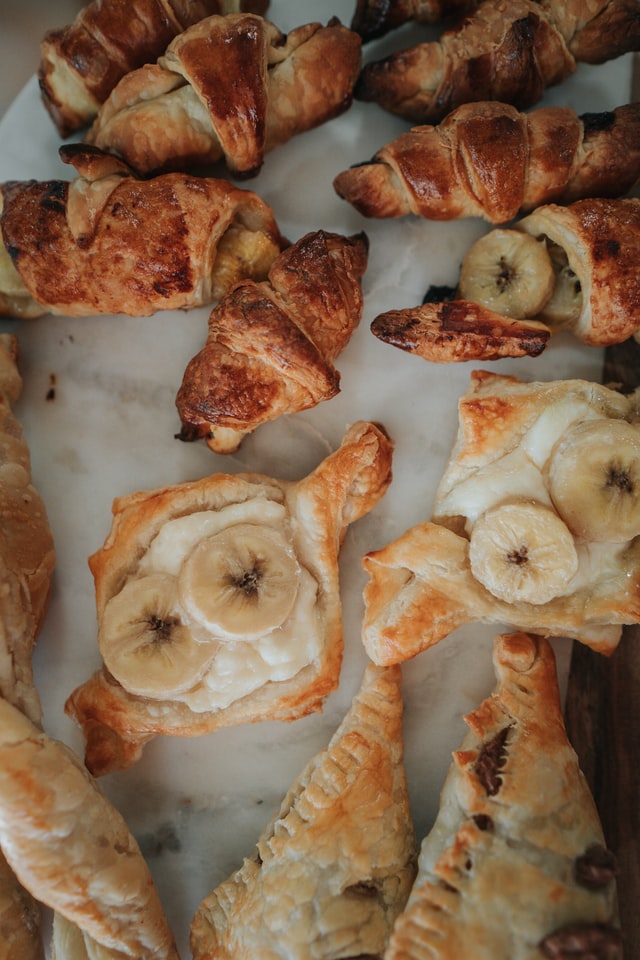
Photo: Dex Ezekiel/ Unsplash.
A physician in Japan realized that artificial intelligence [A.I.] that could differentiate pastries might also be helpful in medicine.

I love accidental discoveries. In today’s story, a Japanese doctor was amazed at how precisely artificial intelligence could distinguish one pastry from another — and he had a lightbulb moment.

James Somers reports at the New Yorker, “A.I. researchers used to think that, without some kind of model of how the world worked and all that was in it, a computer might never be able to distinguish the parts of complex scenes. The field of ‘computer vision’ was a zoo of algorithms that made do in the meantime. The prospect of seeing like a human was a distant dream.

“All this changed in 2012, when Alex Krizhevsky, a graduate student in computer science, released AlexNet, a program that approached image recognition using a technique called deep learning. AlexNet was a neural network, ‘deep’ because its simulated neurons were arranged in many layers. As the network was shown new images, it guessed what was in them; inevitably, it was wrong, but after each guess it was made to adjust the connections between its layers of neurons, until it learned to output a label matching the one that researchers provided.”

Somers recounts that on a visit to Japan, he saw a bakery scanner identify a pastry with extraordinary precision and wanted to learn more. His curiosity took him to Hisashi Kambe, who once “developed SUPER TEX-SIM, a program that allowed textile manufacturers to simulate the design process, with interactive yarn and color editors. … A series of breaks led to a distribution deal with Mitsubishi’s fabric division, [and in 1985] Kambe formally incorporated as BRAIN Co., Ltd.

“For twenty years, BRAIN took on projects that revolved, in various ways, around seeing. … Then, in 2007, BRAIN was approached by a restaurant chain that had decided to spin off a line of bakeries. …

“The checkout process was difficult and error-prone—the cashier would fumble at the register, handling each item individually—and also unsanitary and slow. Lines in pastry shops grew longer and longer. The restaurant chain turned to BRAIN for help. Could they automate the checkout process? …

“By 2013, they had built a device that could take a picture of pastries sitting on a backlight, analyze their visual features, and distinguish a ham corn from a carbonara sandwich. …

“In early 2017, a doctor at the Louis Pasteur Center for Medical Research, in Kyoto, saw a television segment about the BakeryScan. He realized that cancer cells, under a microscope, looked kind of like bread. He contacted BRAIN, and the company agreed to begin developing a version of BakeryScan for pathologists. …

BRAIN began adapting BakeryScan to other domains and calling the core technology AI-Scan. AI-Scan algorithms have since been used to distinguish pills in hospitals, to count the number of people in an eighteenth-century ukiyo-e woodblock print, and to label the charms and amulets for sale in shrines. One company has used it to automatically detect incorrectly wired bolts in jet-engine parts.”

More in the long article at the New Yorker, here.

Read Full Post »