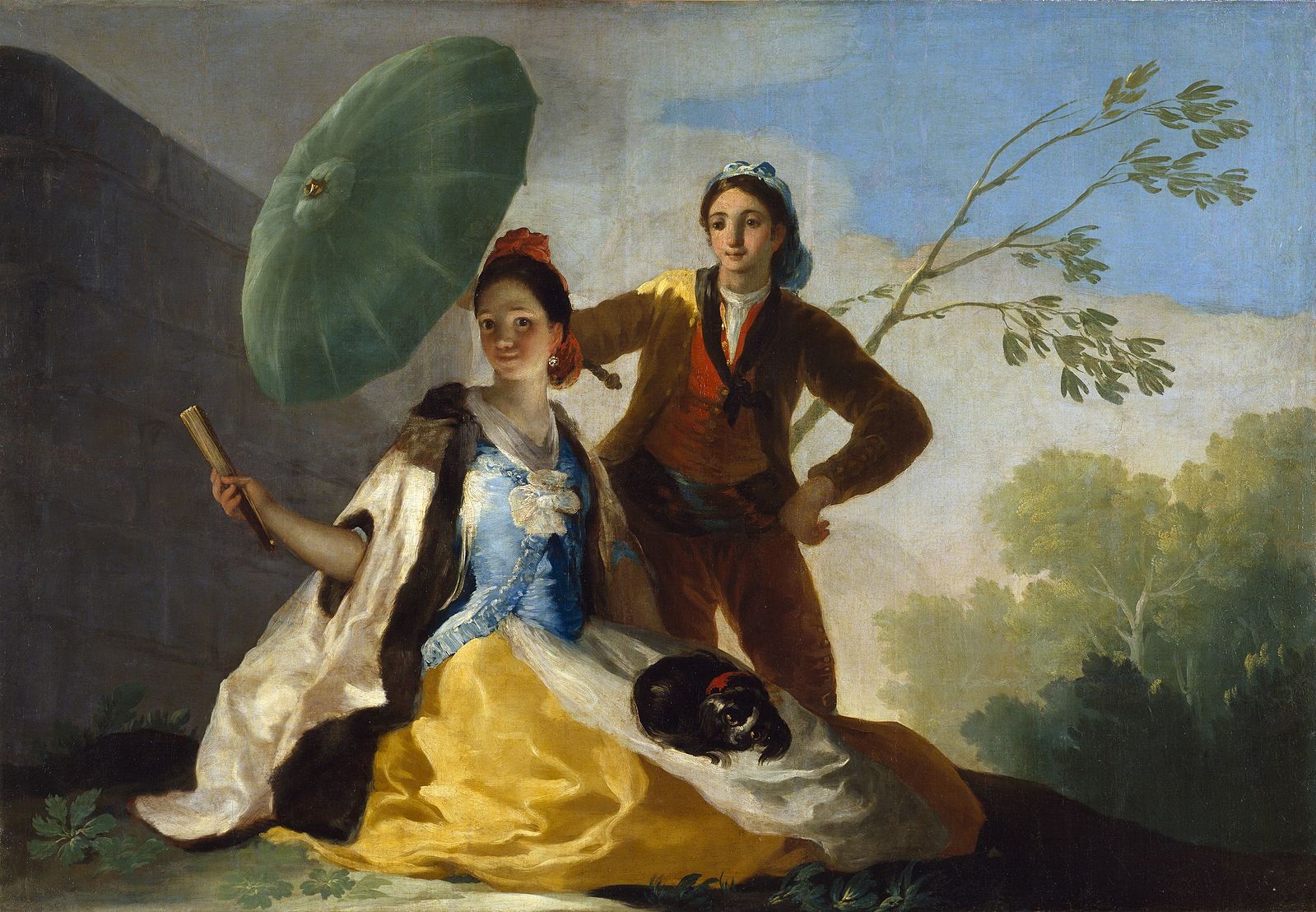
Art: Francisco Goya via Museo del Prado.
The Parasol (also known as El Quitasol) is one of a series of oil on linen paintings made by Francisco Goya. This series was made in order to be transformed into tapestries that would be hung on the walls of the Royal Palace in Madrid.
Companies that last over many generations know how to evolve with the times. There are a few in the US but more in other parts of the world. In Spain, for example, a factory that once converted pieces by the painter Francisco Goya into tapestries for his clients still plays a role in art and design.
Irene Yagüe writes at the Associated Press (AP), “Spain’s Royal Tapestry Factory has been decorating the walls and floors of palaces and institutions for more than 300 years. Located on a quiet, leafy street in central Madrid, its artisans work with painstaking focus on tapestries, carpets and heraldic banners, combining the long wisdom of the craft with new techniques.
“The factory was opened in 1721 by Spain’s King Felipe V. He brought in Catholic craftsmen from Flanders, which had been part of Spain’s empire, to get it started. Threads and wool of all colors, bobbins, tools and spinning wheels are everywhere. Some of the original wooden machines are still in use.
“The general director, Alejandro Klecker de Elizalde, is proud of the factory’s sustainable nature. ‘Here the only products we work with are silk, wool, jute, cotton, linen,’ he said. ‘And these small leftovers that we create, the water from the dyes, or the small pieces of wool, everything is recycled, everything has a double, a second use.’ …
“The factory recently received one of its biggest orders, 32 tapestries for the Palace of Dresden in Germany — worth more than 1 million euros and providing work for up to five years, according to Klecker de Elizalde. …
“Creating a tapestry is a delicate process that takes several weeks or months of work for each square meter. A tapestry begins with ‘cartoons,’ or drawings on sheets of paper or canvas that are later traced onto vertical thread systems called warps, which are then woven over.
“One of the factory’s most illustrious cartoonists was master painter Francisco Goya, who began working there in 1780. Some of the tapestries he designed now hang in the nearby Prado Museum and Madrid’s Royal Collections Gallery.”
Just for fun, see if you recognize any companies on the list of the world’s oldest companies, here. There’s one called Adam & Eve, which you’d expect to be old! It’s a pub in England, founded 1249.
More at AP, here. No paywall. Wonderful pictures!

 Suzanne's Mom's Blog