Feeds:
Posts
Comments

Posts Tagged ‘scientific’

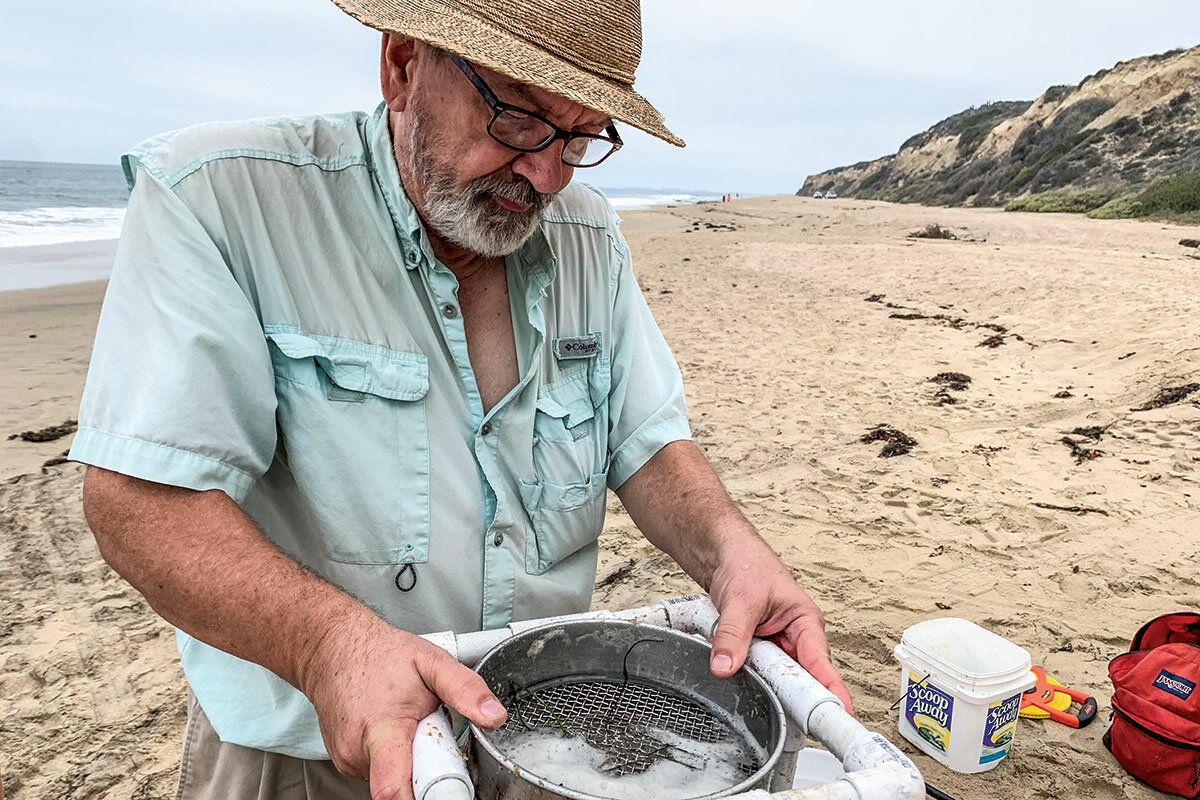
Photo: Clara Germani/The Christian Science Monitor.
Dr. Mark McReynolds sifts collected sand through a sieve that brings microplastics to the surface.

Everywhere, lately, we read about microplastics showing up in places they are not wanted — on beaches, in lungs, in our food, in used diapers. Rather than succumb to despair, we can follow the lead of the scientists in today’s story. Measure first, then work on a fix.

Clara Germani reports at the Christian Science Monitor from Crystal Cove State Park, California, a “3-mile stretch of sand and tide pools beneath a fortress of 80-foot bluffs, [and a] California tourism poster if there ever was one. Nothing disturbs the pristine, sunny view, except – once you’re aware of them – the nurdles.

“But you have to look close – on-your-hands-and-knees close – to see one. And once you do, you see another and another – so many that you may not think of this, or any beach, the same way again.

“Mark McReynolds is trying to bring into focus these tiny preproduction plastic pellets that manufacturers melt down to mold everything from car bumpers to toothpaste caps. They’ve been escaping factories, container ships, trains, trucks – and public notice – for decades.

“Dr. McReynolds is an environmental scientist with the Christian conservation nonprofit A Rocha International who’d never heard of nurdles three years ago. He’s now joined a global movement studying their trail into the environment. Some – like the Great Nurdle Hunt and the Nurdle Patrol – map nurdles through informal online reporting by citizen scientists around the globe.

” ‘Knowledge opens your eyes. You don’t see plastic bags blowing around [on this beach] because people pick them up,’ says Dr. McReynolds. ‘But, they’re not picking up the stuff that’s 3 millimeters [because] they don’t even know it’s there.’

“The 2- to 3-millimeter, multicolored orbs are a subset of microplastics ­– plastic particles less than 5 millimeters in size. Nurdles accumulate where water inevitably takes them, and they’ve been found on shorelines of every continent.

“Establishing a baseline count of the presence of nurdles – and, more broadly, any microplastics – is the focus of Dr. McReynolds’ scientific study here. Charting the count, noting tide, current, and weather conditions will show if amounts are increasing, and perhaps at what rate and why. That knowledge, he says, can inform solutions to plastic pollution such as regulation of their use.

“Aided by citizen science volunteers – and his wife, Karen McReynolds, an associate professor of science at Hope International University who offers access to a lab and student help – he conducts a complex monthly microplastic sampling and a twice-annual nurdle hunt.  

“Microplastics research and cleanups have ‘exploded’ in the past decade due to new ‘understanding of the apparent health and ecosystem risks,’ says Erica Cirino, whose book Thicker than Water: The Quest for Solutions to the Plastic Crisis is a tale of adventure chasing microplastics around the globe.

“In her travels she’s been struck by how unifying the plastic problem can be for people from diverse groups – from faith-based organizations to surfers and fishers, conservatives to liberals. They don’t all know what to do about it, she says, but ‘a very concrete thing like a [nurdle] hunt or getting your hands dirty is one of the best ways to get people involved.’

” ‘What are you doing? Picking up trash?’ queries a steady stream of beach walkers whenever Dr. McReynolds’ crew trundles onto the beach. …

“[Dr. McReynolds] explains the science of nurdles and microplastics to the curious while keeping an eye on volunteers troweling sand into 5-gallon buckets. Each bucket of sand can yield anywhere from no plastics to as much as 300 pieces to be analyzed in the lab. It sounds small, but the randomized samples can be extrapolated to the rest of the beach. …

“One recent morning he told some beach walkers how nurdles are believed to absorb toxic chemicals, and – because they resemble fish eggs – are eaten by fish and birds and enter the food chain. Almost on cue, a bold seagull hopped up to a laminated photo of nurdles and hungrily pecked at it.

“A scarlet macaw expert by training, and an ordained Mennonite pastor who holds outdoor church services in the nearby San Gabriel Mountains, Dr. McReynolds is an unpaid director of A Rocha’s Southern California operations – which means he’s as much a volunteer as his citizen scientist recruits.

“And it can be a lonely devotion, says his wife Karen, who notes that he possesses ‘bulldog grab-it-and-do-not-let-go’ tendencies to bridge science and faith. His A Rocha colleague, Bob Sluka, says it’s Mr. McReynolds’ ‘pastoral heart’ that drives the Crystal Cove microplastics survey and its potential to spur people ‘to recognize things they are doing in their own life as consumers and change their behavior.’ ” More at the Monitor, here.

As in my recent post about saving salamanders, most often, when people learn they are hurting the environment unawares, they do something about it.
Read Full Post »

idea_kate-holt-10706364576_463ab61e34_b

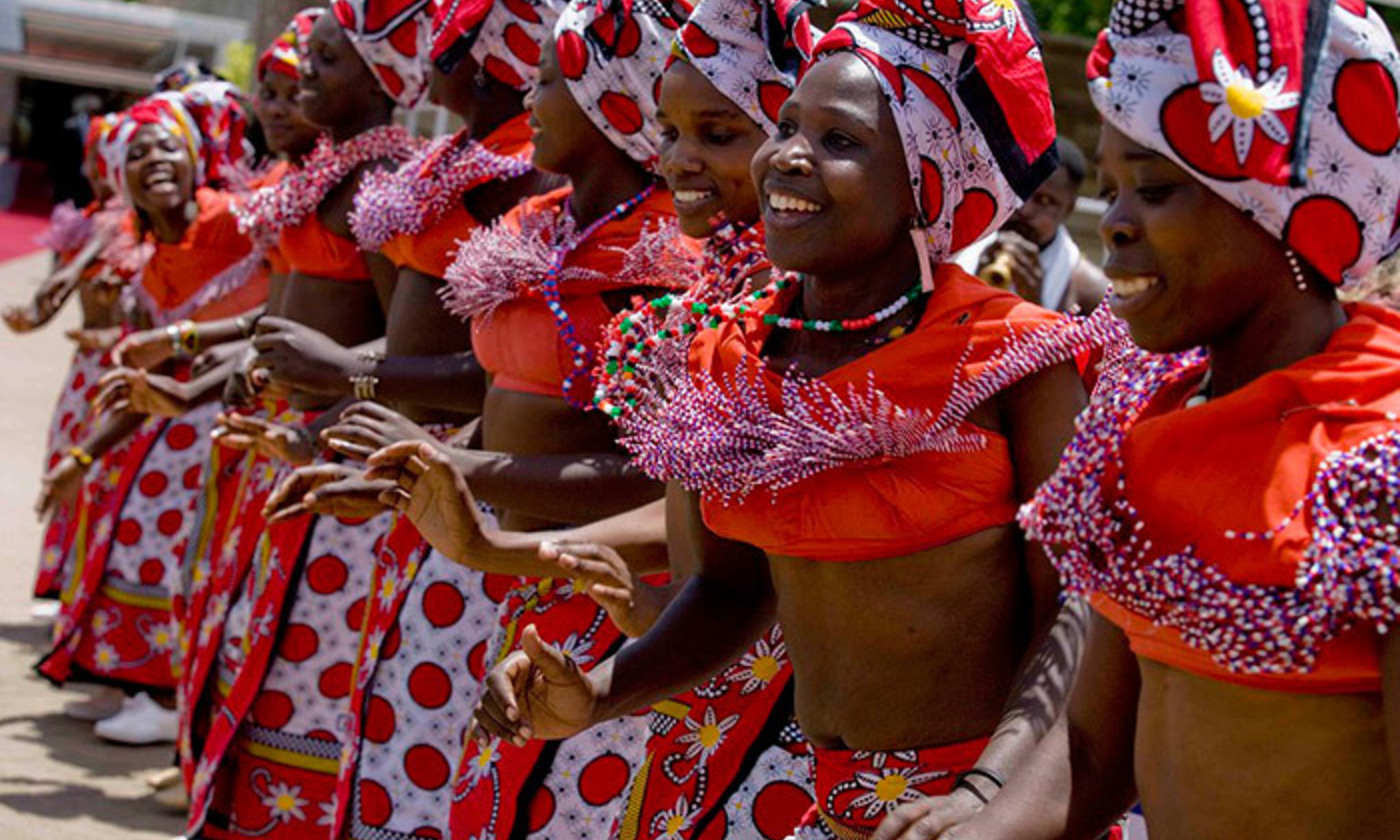
Photo: Kate Holt/Flickr
The joy on the faces of these performers in Kenya illustrates a universal truth: people love to dance. And it turns out, dancing informs our development in significant ways.

There’s something about being human that inclines one to dancing. Not necessarily ballet or hip hop or ballroom dancing, but dancelike movement that is part of everyday lives. The research on this may surprise you.

Kimerer LaMothe writes at Aeon, “Dancing is a human universal, but why? … What if humans are the primates whose capacity to dance (shared by some birds and mammals) was the signature strategy enabling the evolution of a distinctively large and interconnected brain, empathic heart and ecological adaptability? And what if dancing plays this role for humans not just in prehistoric times, but continuing into the present? …

“Researchers are discovering the vital role played by bodily movement not only in the evolution of the human species, but in the present-day social and psychological development of healthy individuals. Moreover, it is not just bodily movement itself that registers as vital in these cases, but a threefold capacity: to notice and recreate movement patterns; to remember and share movement patterns; and to mobilise these movement patterns as a means for sensing and responding to whatever appears. This threefold capacity is what every dance technique or tradition exercises and educates.

“According to the New York University neuroscientist Rodolfo Llinás, writing in the book I of the Vortex (2001), bodily movement builds brains. A brain takes shape as it records patterns of neuromuscular coordination, and then remembers the outcomes in terms of pain or pleasure, emotional tags that help it assess whether to mobilise that movement again, and if so, how.

“In so far as bodily movements build the brain, every movement a human makes matters. Each repetition of a movement deepens and strengthens the pattern of mind-body coordination that making that movement requires; and the repetition also defines avenues along which future attention and energy flow. Every movement made and remembered shapes how an organism grows – what it senses and how it responds. …

“Humans have a unique capacity to notice, recreate and remember patterns of movement. More abundant in the human brain than any other mammalian brain, mirror neurons fire when a person notices a movement, recreating the pattern of neuromuscular coordination needed to make that movement. In this way, humans can learn to recreate the movement of others – not only other humans, but also trees and giraffes, predators and prey, fire, rivers and the Sun. As the neuroscientist V S Ramachandran writes in his book The Tell-Tale Brain (2011), mirror neurons ‘appear to be the evolutionary key to our attainment of full-fledged culture’ by allowing humans ‘to adopt each other’s point of view and empathise with one another.’

“Nevertheless, the term ‘mirror’ is misleading; it hides the agency of bodily movement. A brain does not provide a passive reflection. As eyes register movement, what a person sees is informed by the sensory awareness that his previous movements have helped him develop. He responds along the trajectories of attention that these previous movements have created. From this perspective, dance is a human capacity, not just one possible activity among others. …

“In this light, every dance technique or tradition appears as a stream of knowledge – an ever-evolving collection of movement patterns discovered and remembered for how well they hone the human capacity for movement-making. Most of all, dancing provides humans with the opportunity to learn how their movements matter. They can become aware of how the movements they make are training them – or not – to cultivate the sensory awareness required to empathise across species and with the Earth itself. In this regard, dance remains a vital art. From the perspective of bodily becoming, humans cannot not dance.”

This Aeon article came from the website Arts Journal, which brings together arts stories from around the world. Read more at Aeon, here.

fe3196d4677e1f7438618fa78f777e18

Read Full Post »


There’s a website called “The Conversation” that reported recently on scientific research into how the words for color are used in different languages.

Ted Gibson and Bevil R. Conway wrote, “People with standard vision can see millions of distinct colors. But human language categorizes these into a small set of words. In an industrialized culture, most people get by with 11 color words: black, white, red, green, yellow, blue, brown, orange, pink, purple and gray. …

“Maybe if you’re an artist or an interior designer, you know specific meanings for as many as 50 or 100 different words for colors – like turquoise, amber, indigo or taupe. But this is still a tiny fraction of the colors that we can distinguish.

“Interestingly, the ways that languages categorize color vary widely. Nonindustrialized cultures typically have far fewer words for colors than industrialized cultures. … The Papua-New Guinean language Berinmo has only five, and the Bolivian Amazonian language Tsimane’ has only three words that everyone knows, corresponding to black, white and red.

“The goal of our project was to understand why cultures vary so much in their color word usage. …

“In English, it turns out that people can convey the warm colors – reds, oranges and yellows – more efficiently (with fewer guesses) than the cool colors – blues and greens. …

“We found that this generalization is true in every language in the entire World Color Survey (110 languages) and in three more that we did detailed experiments on: English, Spanish and Tsimane’. …

“Our idea is that maybe we introduce words into a language when there is something that we want to talk about. So perhaps this effect arises because objects – the things we want to talk about – tend to be warm-colored. …

“We mapped the colors in the images [of objects] onto our set of 80 colors across the color space. It turned out that indeed objects are more likely to be warm-colored, while backgrounds are cool-colored. …

“When you think about it, this doesn’t seem so surprising after all. Backgrounds are sky, water, grass, trees: all cool-colored. The objects that we want to talk about are warm-colored: people, animals, berries, fruits and so on. …

“[This] communication hypothesis helped identify a true cross-linguistic universal – warm colors are easier to communicate than cool ones – and it easily explains the cross-cultural differences in color terms. It also explains why color words often come into a language not as color words but as object or substance labels. For instance, ‘orange’ comes from the fruit; ‘red’ comes from Sanskrit for blood. In short, we label things that we want to talk about.”

More here. The article gets pretty technical, but after struggling last Tuesday to find warm and cool colors in a jumbled box for ESL students, I appreciate having confirmation that warm colors (red, orange, yellow) have fewer competing names than cool ones (blue, blue-green, violet, purple, aquamarine, turquoise …).

Read Full Post »