Feeds:
Posts
Comments

Posts Tagged ‘seagrass’

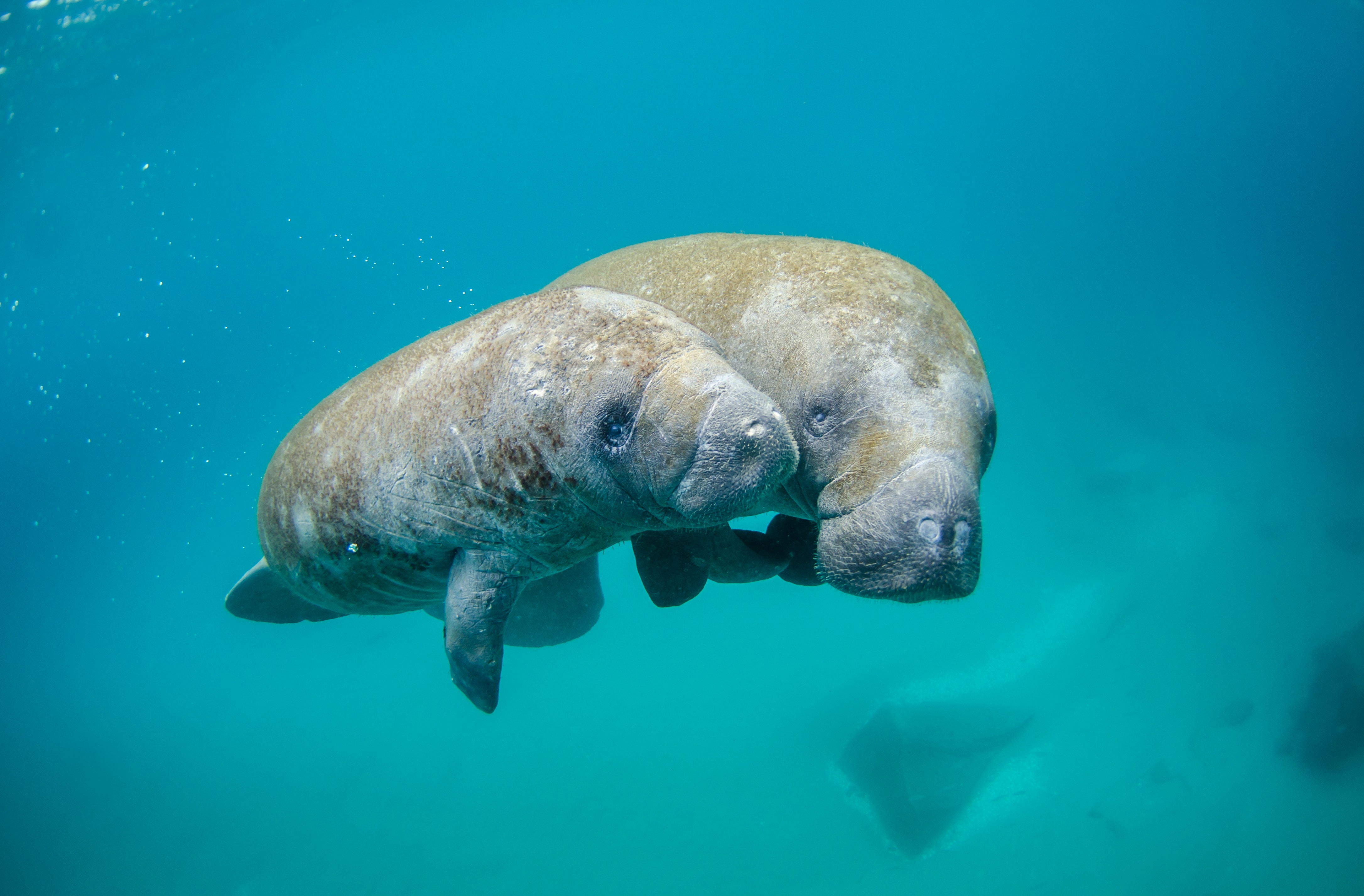
Photo: NOAA [National Oceanic and Atmospheric Administration].
The return of seagrass in Florida is a hopeful sign for the embattled manatee.

One doesn’t normally think of Florida politicians as being big environmentalists, but whatever their motivations for supporting cleaner water, one has to cheer them for putting some funding behind it. Florida treasures like the manatee need the help.

Richard Luscombe reports for the Guardian, “A picturesque expanse of water along Florida’s space coast is offering a modicum of hope for the state’s embattled manatees as wildlife officials review whether to restore the beloved sea cows to the endangered species list.

“The recovery of seagrass, the manatees’ favorite food, in Mosquito Lagoon means that an emergency hand-feeding program that has kept many of the starving aquatic animals alive over the last two winters can be discontinued, at least temporarily.

“While scientists say this might be only a small step in the wider fight to rescue a species that has seen a record die-off in recent years from water pollution and habitat loss, what’s happened at Mosquito Lagoon offers signposts to how the manatees’ battle for survival might ultimately be won.

“ ‘At least in a portion of the lagoon, we are seeing a rather rapid resurgence of the Halodule variety of seagrass that, even if we don’t know exactly how it happened, does tell us that it’s much more resilient than we might have been thinking,’ said Dennis Hanisak, a professor of marine botany at Florida Atlantic University’s Harbor Branch Oceanographic Institute, and director of its seagrass nursery. …

“Hanisak and his team, in partnership with the Florida fish and wildlife commission (FWC), have focused their restoration efforts on the lagoon in northern Brevard county, one of the most popular feeding grounds for manatees during the colder winter months.

“That’s where the majority of manatee deaths, an unprecedented 1,100 in Florida in 2021, 10% of the population, and another 800 in 2022, occurred. They were part of what federal and state authorities classify as an ongoing unusual mortality event (UME) with the majority of fatalities through malnutrition and starvation, a reflection of the loss of about 90% of the lagoon’s seagrass to algae blooms and pollutants.

“It’s too early to say exactly what role the seagrass nursery project has had there; Hanisak says it has ramped up in size and resources in recent years as wildlife agencies respond to the disaster with improved funding.

“It’s one of several projects underway in Florida [and] a prominent component of a catalog of FWC manatee habitat restoration schemes, themed mostly around improvements in water quality and aquatic vegetation, that experts believe has potential to turn years of declining numbers into a robust recovery. …

“[In January], Florida’s governor Ron DeSantis announced a $100m award of state funds for water-quality improvements in the Indian River Lagoon, one of North America’s most biologically diverse waterways. The cleaner the water, the better the seagrass. …

“Hanisak and his students have steadily been building the capacity of the seagrass nursery at multiple locations. That seagrass will ultimately be transplanted into the Indian River Lagoon and elsewhere. …

“It remains to be seen if this year’s drop in manatee deaths in Florida is a one-off, or represents the start of a recovery. But more abundant seagrass in Mosquito Lagoon, which led to the welcome suspension of the experimental lettuce-feeding project, bodes well.

“Lawmakers also appear to be at least partly on board. Thompson said the Florida legislature provided an additional $20m in fiscal year 2022-23 to the FWC to enhance captive manatee support facilities and manatee habitat enhancement to supplement the previous year’s $8m. …

Patrick Rose, a veteran aquatic biologist and executive director of the Save the Manatee Club [said] the extra funding, which his group lobbied for, is welcome [but] ‘a drop in the bucket literally to what needs to be done.’ Ultimately, Rose said, manatees need clear, clean water to survive. Without it, seagrass will not flourish. …

“ ‘Nutrients are the direct cause of harmful algal blooms which have been so intense that they literally cut the light off to the seagrasses, and the seagrasses die,’ he said.”

More at the Guardian, here.

Read Full Post »

Photo: Wikipedia.

There are so many things on this beautiful planet that we’ve never given much thought — things that turn out to be important for our future. Insects, for example, fungi, seagrass.

Allyson Chiu , with Michaella Sallu contributing from Sierra Leone, has written about seagrass research for the Washington Post.

“From the deck of a small blue-and-white boat, Bashiru Bangura leaned forward and peered into the ocean, his gaze trained on a large dark patch just beneath the jade-green waves.

“ ‘It’s here! It’s here! It’s here!’ crowed a local fisherman, who led Bangura to this spot roughly 60 miles off the coast of Freetown. ‘It looks black!’

“Bangura, who works for Sierra Leone’s Environment Protection Agency, tempered his excitement. After two unsuccessful attempts to find seagrass in this group of islands, he questioned whether the shadowy blotches were meadows of the critical underwater greenery he and other researchers have spent the past several years trying to locate along the coast of West Africa.

“It was only once he was standing in the waist-high water, marveling at the tuft of scraggly hair-like strands he’d uprooted to collect as a sample, that he allowed himself to smile.

“The wet, reedy plants Bangura held in his hands were unmistakably seagrass, and the green blades stretched past the plastic 12-inch ruler he’d been using to measure specimens. His grin grew even wider.

“The dense grass swaying in the current appeared to be healthy, and the water teemed with schools of small, silvery fish, making it the best site researchers have documented in these islands since the existence of seagrass was first confirmed in Sierra Leone in 2019. …

“Seagrasses — which range from stubby sprout-like vegetation to elongated plants with flat, ribbon-like leaves — are one of the world’s most productive underwater ecosystems. The meadows are vital habitats for a variety of aquatic wildlife.

Sometimes described as ‘the lungs of the sea,’ the grasses produce large amounts of oxygen essential for fish in shallow coastal waters.

“But, long overlooked, these critical ecosystems are vanishing. In fact, researchers don’t know exactly how many exist or have been lost. One recent study estimated that since 1880, about 19 percent of the world’s surveyed seagrass meadows have disappeared — an area larger than Rhode Island — partly as a result of development and fishing.

“ ‘When you lose foundation species like seagrasses … then you lose fisheries really quickly,’ said Jessie Jarvis, a marine ecologist who, until recently, headed the World Seagrass Association. …

“But locating grasses in the world’s vast oceans is a formidable task. While some researchers are using drones and satellite imaging, in countries such as Sierra Leone, where resources are scarce, the search is painstaking and tedious.

“Without these efforts, though, seagrasses would probably be disappearing even faster.

“ ‘What we don’t know, we can’t protect,’ said Marco Vinaccia, a climate change expert with GRID-Arendal, an environmental nonprofit that helped put together West Africa’s first seagrass atlas. …

“Similar to terrestrial plants, seagrasses have roots, leaves, flowers and seeds. Seagrasses have been discovered in the waters off more than 150 countries on six continents. The meadows are estimated to cover more than 300,000 square kilometers, an area the size of Germany. Along with mangroves, kelp forests and coral reefs, these grasses play a vital role in maintaining healthy oceans, Jarvis said. But unlike those other ecosystems, she notes, the meadows can exist in a wider range of ocean environments and tend to be more resilient than most species of seaweed.

“Critters, such as sea horses, crabs and shrimp, along with juvenile fish — some of which are critical species for fishing — often lurk within the thick meadows, seeking refuge beneath the underwater canopy. Other creatures, including sponges, clams and sea anemones, can be found nestled between the blades of grass or in the murky sediment at the base of the plants. And much as mosses coat trees, many species of algae grow directly on the leaves.

“Seagrass beds can in turn attract larger animals, including turtles and manatees, that stop by to munch on the leaves and stems. …

“From the leaves down to the roots, these unassuming plants work as ‘ecosystem engineers.’ Through photosynthesis, they help fill the surrounding water with oxygen. The leaves also absorb nutrients, including those in runoff from land, while their roots stabilize sediment, which helps to reduce erosion and protect coastlines during storms.

“Seagrasses also have the potential to play a significant role in combating climate change. Just as trees pull carbon from the air, seagrasses do the same underwater. Then, as the carbon-filled parts of the plants die, they can wind up buried in the sediment on the seafloor. Over time, this can help create sizable carbon deposits that could remain for millennia.

“But the grasses aren’t showy like coral reefs or immediately recognizable like mangroves, and they’ve become one of the least protected coastal ecosystems.”

Read more about what is being done here, at the Post.

Read Full Post »

Photo: Erika Page/The Christian Science Monitor.
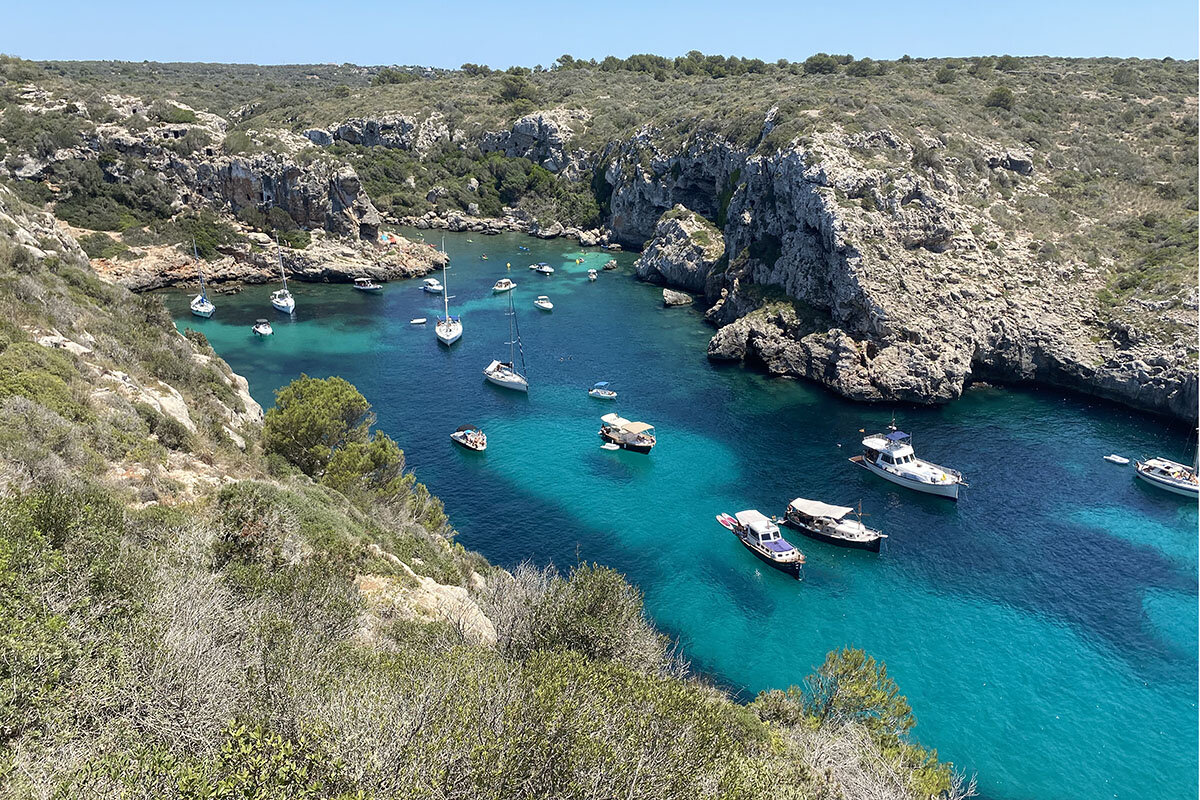
Yachts are not supposed to be anchored above Posidonia seagrass per a 2018 decree that the Mediterranean island of Menorca hopes will allow tourism to coexist with ecology.

Tourism can wreak havoc on a community’s determination to protect its environment, but educating tourists can make it work. At the Christian Science Monitor, Erika Page reports that on one Mediterranean island, even children know how to take action.

“When the yacht lowers its anchor into the sea off the Spanish island of Menorca, nine-year-old Nubia Manzanares, playing on a nearby dock with neighbors, immediately notices the ecological blunder and leaps into action.

“The untrained eye wouldn’t notice anything wrong. But Nubia, who has snorkeled in these waters her whole life, knows immediately that the ship has anchored itself directly on top of a meadow of Posidonia oceanica, a seagrass most tourists have never heard of. The anchor will damage the precious plant and likely tear it out of the earth when it goes to leave.

“She grabs her paddleboard and oar and sets out to warn the boat that it is parked illegally. (She brings her uncle along as well, just in case the boater doesn’t react kindly.)

“Nubia is one of many Menorcans who are doing everything they know how to protect the ribbon-like Posidonia, which lives underwater in expansive meadows, known to some as the ‘lungs of the Mediterranean.’ Occupying around 250 square miles in the Balearic Islands alone, the plant is as important in the fight against climate change as it is for the local ecosystem. But it is disappearing at the alarming rate of 5% per year.

Menorca has earned a reputation for its sustainable model of tourism, in many cases having prioritized environmental protectionism over tourist development.

“But as tourism has grown in recent decades, and Posidonia meadows continue to shrink, the island is facing a new and serious challenge. Menorcans are working to solve the problem by digging deep into the values that have made the island the oasis it is today: respect, balance, and well-informed care for the island as a whole.

“ ‘High-quality tourism is tourism that understands and values what and who we are,’ says Isaac Olives Vidal, director of sustainable projects for the Consell Insular, a local government body. ‘This is the most important thing: that the people who come to your house, or to Menorca, or to any other place, value what you are, what you have, and that they respect it.’

“Posidonia is found all around coastlines of the Balearic Islands, an archipelago off the Spanish coast that includes popular tourist destinations Ibiza and Mallorca, as well as the smaller and more pristine Menorca.

Posidonia meadows soak up five times more carbon dioxide each year than a similarly sized segment of the Amazon rainforest and are a major producer of the region’s oxygen.

“The seagrass also acts as a powerful water filtration system, provides a habitat for 20% of the Mediterranean’s species, protects coastlines from erosion, and is responsible for around 85% of the island’s sand formation. Without Posidonia, locals are quick to note, there would be no crystalline waters or white sand beaches for tourists to visit.

“Some scientists estimate that nearly 30% of the Mediterranean’s Posidonia has already disappeared, due to damage from boat anchors, eutrophication (excessive accumulation of nutrients), and construction projects. Because the plant grows back at the slow rate of less than half an inch each year, and replanting Posidonia is difficult and costly, protection is key.

“Saving what is left of the Posidonia won’t be easy for Menorca, an island whose economy depends fundamentally on tourism. …

“ ‘In general, the people of Menorca are much more conservationist,’ says Victor Carretero, a marine technician at the Balearic Ornithological Group (GOB) Menorca, an environmental organization that grew out of demonstrations against plans for urban development in the 1970s. …

“For Nubia’s mother, Rocio Manzanares, protecting the Posidonia is a matter of respect.

“When her two daughters were younger, they sometimes complained about the seagrass – even the most ardent Posidonia devotees admit that the plant stinks when washed up on the beach. So Ms. Manzanares modeled the reverence she knows the plant deserves.

“ ‘Well, I love the Posidonia,’ she would respond excitedly to her children, telling stories about the many ways the plant protects the island – things she learned from GOB Menorca. ‘When kids say it’s gross, I give them another vision,” she says.

“But in the past two decades, she’s noticed that the tourists who come to the island don’t treat the beaches or the ocean with the same respect her daughters now do. …

“ ‘The real political interest is nautical tourism,’ says Pep Escrivà, a firefighter who wrote a proposal to formally protect specific regions of the island from motorized boats. … ‘[Politicians are] scared that if they pressure the boat renters, they won’t have as much business. But that’s the wrong way of seeing things. Because if you protect the natural world, you create space for another type of tourist.’ ”

More at the Monitor, here. The beautiful pictures of the island will make you want to go there, but if you do, please be respectful of the seagrass!

Read Full Post »