Feeds:
Posts
Comments

Posts Tagged ‘species’

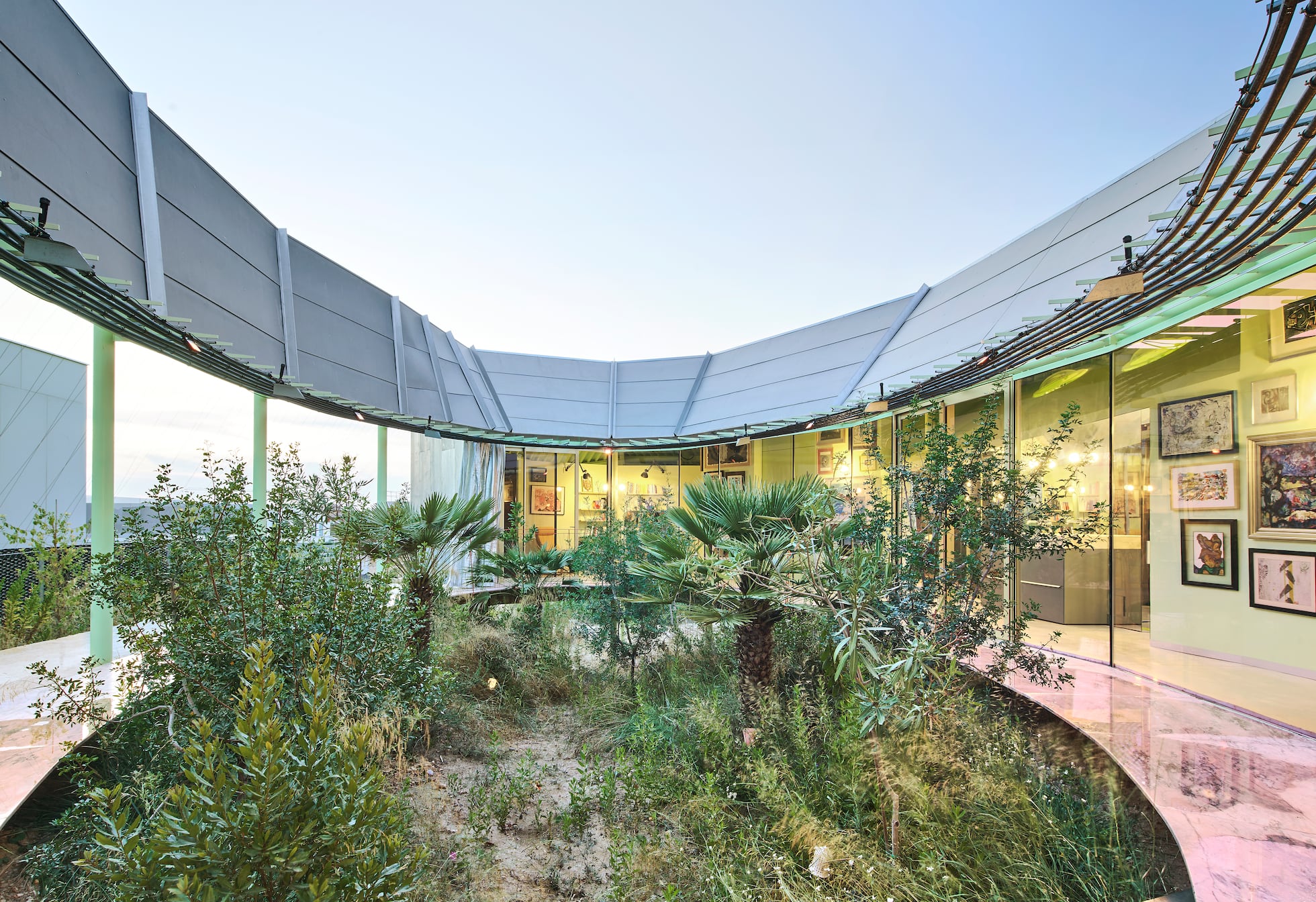
Photo: José Hevia.
Rambla Climate-House by architect Andrés Jaque in Molina de Segura, Spain.

Today’s article addresses how architecture can and should repair our ecological system. How in cities, for example, a comprehensive vision would extend beyond beautifying downtown to embracing the understanding that we are not the only species on the planet.

At El País, Miguel Ángel Medina interviews architect Andrés Jaque about buildings that can be good for the environment.

“For three years,” he says, “Andrés Jaque, 53, has been dean of the Graduate School of Architecture at Columbia University, one of the most cutting-edge centers in architectural innovation. The Madrid-born architect is spending his time at the university rethinking how buildings and cities should face climate change. He believes that we must commit to an ‘interspecies alliance’ and that buildings, beyond just being sustainable, should also contribute to repairing our ecology.

“Jaque has proposed several projects with this concept in mind, such as the Reggio School in Madrid — designed to create life within its walls and attract insects and animals. …

Andrés Jaque
“Architecture is the discipline that has most clearly assumed the responsibility of responding to the climate crisis. In the last 15 years, there’s been a radical transformation [in the field]: materials have gone from being sustainable to [repairing the ecology]. And [the architectural field] has revised its own mission, which is no longer to just build new buildings, but to manage the built environment. Additionally, it has brought about an intersectional vision: understanding that the material, the social, the ecological and the political are inseparable and that climate action has to coordinate these fronts of transformation. This has placed architecture at the center of environmental action.

Miguel Ángel Medina
“Do architects share this interpretation?

Jaque
There’s a part [of the field] that’s anchored in a heroic vision of modernity and another that’s commercial… but there’s another that has a political commitment to the planet. And [those who adhere to this] understand that architecture must respond not only to the most immediate circumstances of a commission, but also to action for the planet. …

“There are two systems: a material world of extractivism — which is a mix of carbonization, colonialism, anthropocentrism, heteropatriarchy and racialization — that’s currently collapsing. And, in the cracks of this system, another kind of architecture is emerging, which seeks alliances between species based on symmetry, which pursues a global regime of solidarity and which advances along a line of decarbonization that marks the esthetics, the materialities [and] the types of relationships that constitute contemporary culture. This is gaining undeniable strength. In the future, we’ll see a change that’s as important as the one that modernity once represented.

Medina
“What do we do with urban planning, given so many extreme phenomena?

Jaque
“We’ve been pioneers in proposing a change of focus, from an emphasis on the city as a kind of stain on the territory, to a trans-scalar approach. This is a way of understanding [the physical structure that is] an urban block of apartments, the microbial relationships that occur in the bodies of those who live on that block, as well as the large networks of resource extraction that make life on that block possible.

“The city has lost the capacity to contain all realities, [which is necessary] in order to think in a climatic and ecosystemic way. And we need a new model that allows us to understand that what happens on a molecular scale has implications on the scale of bodies, buildings, streets, neighborhoods, the planet and the climate. Designing [cities] in a trans-scalar way requires changes in the methodologies of architecture, which we’re exploring. …

“Cities are going through a period of great transformation. A transformation in which the city has to be understood as something physically porous, which allows for the circularity of water, which contributes to multiplying life… a transformation of materiality that promotes a flow of materials that also contributes to the health of bodies. [We require] a very different way of urbanizing the air – in such a way that it’s understood that there’s a direct relationship between our lungs and the climate – and a commitment to the generation of diverse and empowered living environments. The main difficulty is how to do this quickly, so as to mitigate the impact of the climate and environmental crises.

Medina
“What’s this new ‘interspecies diplomacy’ that you advocate in favor of?

Jaque
“Humans are just one of many forms of life. And the idea that humans can decide to sacrifice the rest of the species to serve their own interests has been shown to be harmful. Understanding that we’re dependent on many other species — and that we’re actually inseparable from them — is more realistic. We depend on the quality of the soil, on the ecosystems. An interspecies alliance based on protecting the living conditions of diverse species is beneficial for all life on the planet.”

More at El País, here.
Read Full Post »

Photo: John and Suzanne’s Mom.
Fungi and algae receive less than 0.2% of conservation funding, according to a new study. Small speices never seem as cool as rhinos and elephants.

Is it human nature to pay more attention to the large and aggressive than to the small and quiet? As a female, I think so.

At the Guardian, Mariam Amini writes about how that tendency, when applied to the study of the natural world, can be harmful to the planet.

“Most global conservation funds go to larger, charismatic animals,” she says, “leaving critically important but less fashionable species deprived, a 25-year study has revealed.

“Scientists have found that of the $1.963bn allocated to projects worldwide, 82.9% was assigned to vertebrates. Plants and invertebrates each accounted for 6.6% of the funding, while fungi and algae were barely represented at less than 0.2%.

“Disparities persisted among vertebrates, with 85% of all resources going to birds and mammals, while amphibians received less than 2.8% of funding.

“Further funding bias was found within specific groups such as large-bodied mammals towards elephants and rhinoceros. Although they represent only a third of that group, they were the focus of 84% of such conservation projects and received 86% of the funding. Meanwhile mammals such as rodents, bats, kangaroos and wallabies remained severely underfunded, despite being considered endangered.

“ ‘Nearly 94% of species identified as threatened, and thus at direct risk of extinction, received no support,’ said Benoit Guénard, the lead author of the study. ‘Protecting this neglected majority, which plays a myriad of roles in ecosystems and represents unique evolutionary strategies, is fundamental if our common goal is to preserve biodiversity.’

“Alice Hughes, a coordinating lead author of the research, said: ‘The sad reality is that our perception of “what is threatened” is often limited, and so a few large mammal species may receive more funding than the near-12,000 species of reptile combined.

“ ‘Not only does this limit our ability to implement protective measures, but it closes opportunities to researchers. I have lost count of the number of times collaborators have switched taxa [organism populations] purely because theirs was difficult to fund. This leads to a chicken and egg situation – some of the groups with the highest rates of recent extinction, like freshwater snails, have the most outdated assessments.’

“The study, led by Guénard and colleagues at the University of Hong Kong, analyzed 14,566 conservation projects spanning a 25-year period between 1992 and 2016. …

“ ‘We are in the midst of a global species extinction crisis,’ said research author Bayden Russell. … ‘We need to change how we think about conservation funding. The community needs to be educated about the value of biodiversity and protecting species that are under threat.’ …

“ ‘Governments, in particular those which represent the main pool of funding, need to follow a more rigorous and scientifically driven approach in conservation funding,’ said Guénard.”

More at the Guardian, here.

And be sure to check Anna Kuchment’s Boston Globe interview with Mandë Holford, here, about a poisonous snail with lifesaving properties. It reads in part: “Some of the most powerful drugs in our medical arsenal come from animal venom. Ozempic was derived from Gila monsters, a lizard native to the southwestern US; Prialt, used to treat chronic pain in HIV and cancer patients, comes from deadly cone snails; and captopril, the first ACE inhibitor, a class of drugs used to treat high blood pressure, came from Brazilian pit vipers.”

Read Full Post »

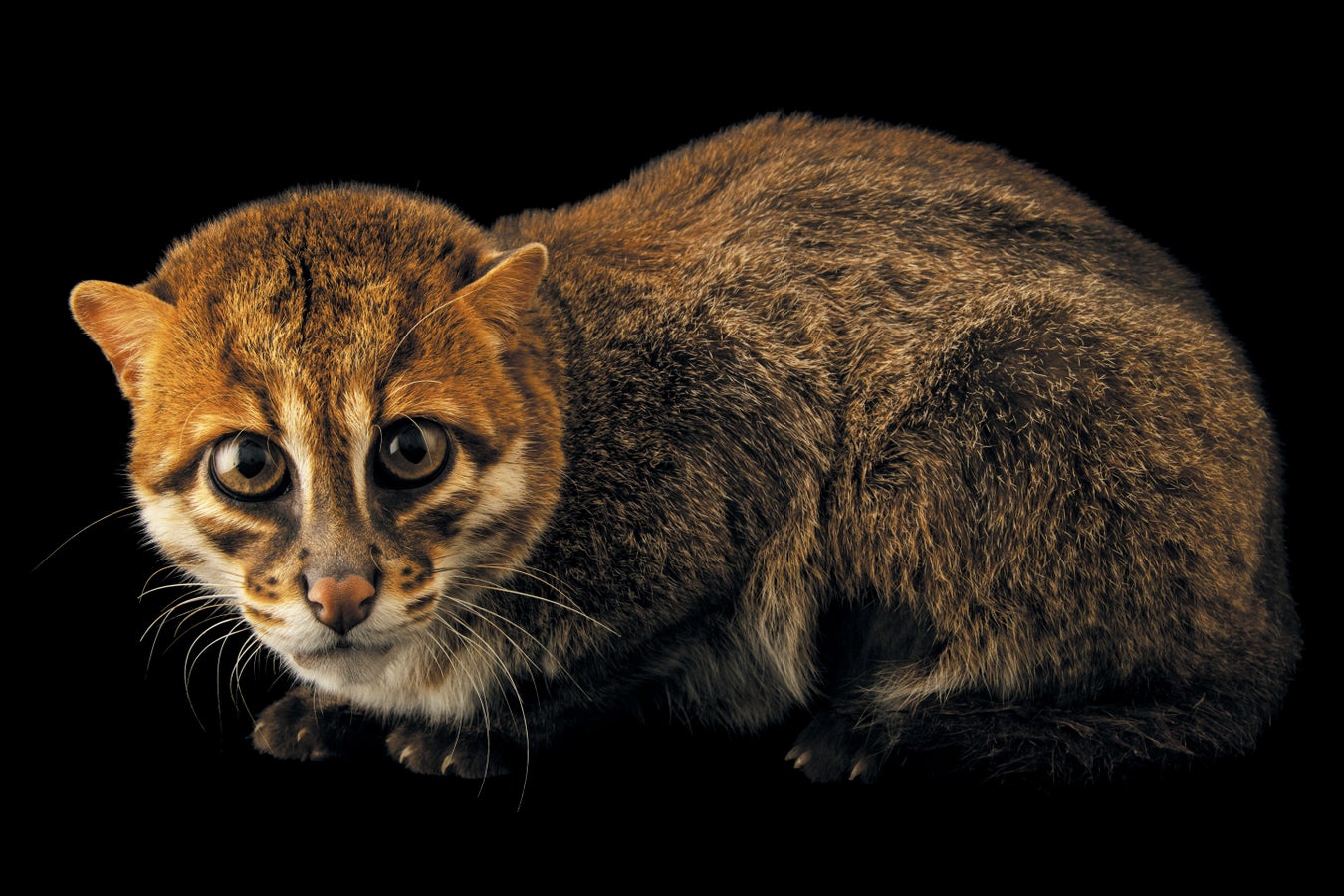
Photo: Joel Sartore/Photo Ark.
Rare flat-headed cats were declared “lost” before the species was rediscovered in 1995.

Lady Macbeth says, “What’s done cannot be undone.” Similarly, when a species is truly extinct, it’s done, never mind random talk of bringing back a wooly mammoth from its DNA. What is more feasible is bringing back to its former range a species that is merely extinct in that region.

Remember our post on the tiger quoll, thought to be extinct in southern Australia? And how about that gray whale, thought to be extinct in the Atlantic Ocean? It just showed up, although that was probably a sign of melting ice that could have opened a passage from the Pacific.

You might like Daniel Shailer’s related story at Scienific American on species that scientists think may yet be found. He explains how researchers will go about prioritizing their searches.

“Gison Morib was home lying in bed, sick from exhaustion after a month-long jungle expedition, when his phone buzzed and a black-and-white photograph appeared. Morib ran outside, jumped on his motorbike and sped through the city of Sentani on Indonesian New Guinea to his colleagues’ expedition and research base — where he broke down in tears.

“ ‘I cannot believe we found it,’ was all he could say, over and over. The photograph showed the first recorded sighting in more than 60 years of an Attenborough’s long-beaked echidna, an egg-laying mammal. After the researchers had spent three years of research and four weeks of trekking through the island’s remote Cyclops Mountains … the team’s camera trap had finally captured an image of the echidna. ‘Even now I can’t describe the feeling,’ … says Morib, a biology undergraduate student at nearby Cenderawasih University. …

“It can be painful for scientists to conclude that an entire species is gone forever. So after at least a decade without recorded sightings, local researchers sometimes simply declare a species temporarily ‘lost’ — hoping it may eventually be found again — instead of giving up entirely. In 2023 that hope led to rediscoveries of animals that included Attenborough’s echidna, De Winton’s golden mole in South Africa and the Victorian grassland earless dragon, a type of Australian lizard that went unseen for half a century. Such hope also fuels ongoing, decades-long searches for species such as the American Ivory-billed Woodpecker, which was last seen in 1944.

“Now an international study published [in] Global Change Biology aims to ‘bring a bit of science back to the search’ for all mammals, amphibians, reptiles and birds playing hide-and-seek, according to senior study author Thomas Evans, a conservation scientist at the Free University of Berlin. In a span of two years, Evans and a team of researchers across the globe — from the U.S. to China, Ecuador and South Africa — compiled what they call the most exhaustive catalog ever of four-limbed creatures that were considered lost to science and those among these animals that were later rediscovered. …

“Although there has been plenty of research into lost species, the study authors say that rediscoveries haven’t been thoroughly assessed since 2011. Analysis tallying losses and rediscoveries across animal groups is even rarer, Evans says.

“His team’s catalog suggests that 856 species are currently missing and that the number of lost species is growing around the world faster than expedition parties can keep up. And this is occurring even though researchers are finding animals through the use of increasingly sophisticated technology, including systems that detect environmental DNA (eDNA) traces of burrowing birds near the South Pole, software that disentangles the noises of different nocturnal species, and even techniques used to spot microscopic traces of rare frogs in ship rats’ stomachs.

“Adding up losses and rediscoveries also suggests that roughly a quarter of lost species are likely already extinct. … Analysis shows that many rediscovered species fit a certain profile: they are big, charismatic mammals or birds that tend to live across a range of habitats, often near humans and in more-developed countries. So, Evans says, if an animal fits the bill for the kind of species that is usually found more easily but continues to evade researchers after long searches, it is probably gone forever. The thylacine, or Tasmanian tiger, is a good example: since the last captive thylacine died in a zoo in 1936, the wolflike species has taken on huge cultural significance across Australia and inspired decades of searching, but it remains lost. The paper argues that precisely because the thylacine is a perfect candidate for rediscovery, the fact it remains lost strongly suggests that it is actually extinct. The same goes for more than 200 other lost species that have been thoroughly searched for as well, Evans says.

“On the other hand, creatures that don’t fit the profile for easy rediscovery, especially reptiles, could still be out there. Because they’re often hard to find and inspire less search effort, small, uncharismatic species are more likely to genuinely be lost but still alive, Evans says. His optimism is backed up by the numbers: new species of small reptiles continue to be discovered at a steady rate, and rediscoveries have boomed, with more than twice as many lost reptiles found between 2011 and 2020 than in the decade before.

“The thylacine has acquired a Bigfoot-like status, complete with amateur hunters and highly questionable sightings. Meanwhile reptiles such as the Fito leaf chameleon of Madagascar are probably sitting pretty and waiting to be found. …

“A probability analysis of some factors also rang ‘alarm bells’ in different ways for different classifications of lost species, Evans says. Mammals classified as lost on islands, such as the Bramble Cay melomys, a rat lost in 2009 and declared extinct in 2016, are disproportionately likely to be gone for good, compared with mammals in other environments. There’s also a sweet spot for finding birds after they’ve been lost: 66 years, on average. This time span is long enough to raise interest in search expeditions but not so long that the animals are considered extremely likely to be extinct. So the odds are not good for the more than a dozen bird species that were lost more than a century ago.

“Evans hopes such details about what may be simply unseen versus what is more likely extinct will help conservationists.”

More at Scientific American, here.

Read Full Post »

Photo: Siddarth Machado, Flickr, CC BY NC 2.0.
About half of all fish species live in freshwater,” says the environmental radio show Living on Earth. “Pictured above is the bluegill sunfish, commonly found east of the Rocky Mountains.”

As world leaders wrap up the latest climate-change conference, in Egypt — delivering scary messages to us all — I’d like to think stories like today’s are reassuring. But sometimes the discovery of new species means they were there all along and we just didn’t notice. How they are doing is important because they represent an early warning system.

From the environmental radio show Living on Earth we learn that “more than 200 new species of freshwater fish were discovered worldwide in 2021, including a blind eel found in Mumbai and a fish dubbed the Wolverine pleco for its hidden spines.

“Harmony Patricio is conservation program manager at Shoal, which compiled the report and she joins host Bobby Bascomb for details.

“BOBBY BASCOMB: These 212 new freshwater fish species, I mean, these aren’t just tiny little, you know, minnows or little things that you could see how they can easily be overlooked for a long time. Some of these are actually large fish, can you describe a couple of your favorites for us, please?

“HARMONY PATRICIO: One of them is called the Mumbai blind eel, and it has no eyes, fins or scales. It just has smooth skin that is full of blood vessels and gives it this reddish coloration. It’s a subterranean fish. It is from the northwestern Ghats of India. And the genetic analysis, the researchers who described the species have done show that it’s likely it’s split from its closest relative over 1 million years ago. So it’s had a lot of time to evolve very distinct attributes.

And one remarkable thing about this story of this discovery is that this blind eel was found in a 40 foot deep well, on the premises of a school for the blind. …

“BASCOMB: And I understand there’s also something scientists have called a wolverine fish. Can you tell us about that?

“PATRICIO: Yeah, this one has gotten a lot of interest, I think because of the name Wolverine. It’s a wolverine pleco. … It has these lateral spines that can protrude from its gill coverings that it uses to defend itself in a somewhat violent manner. If anything tries to mess with it, they’re gonna be in trouble. The researchers who described this species said in the process of collecting them from the wild, they ended up with bloody fingers. And interestingly enough, other closely related species in this family have never been seen to exhibit this type of behavior, even those that do have these type of spikes. … Apparently, the local fishers in the area where the scientists are working decided to call the fish Buffalo Bill, because it was so aggressive and stabbing everybody with its with its spines. …

“BASCOMB: On the other end of the spectrum, I understand that they found a fish where you can actually see its brain through the skin on its scalp. Can you tell us about that?

“PATRICIO: Yeah, this is a pretty interesting story. So this is an example of a species that was known to science, but had been misidentified for years. It’s native to Myanmar and it’s very tiny, about the size of your thumbnail. And it’s been used by neuroscientists for research for several years. So it’s just sitting under their noses until they did some genetic analyses, and found out it’s a completely different species than they thought it was. … The reason it’s such a great organism for neurophysiological research is because as you said, it has an open skull, and transparent skin on the top of its head. So you can visually observe its brain while it is alive. And you can use that to collect data on brain activity related to different behaviors. The males of these species communicate with each other through sound. And that’s another really interesting thing that they’re able to see is like, what does the brain do when they’re receiving these communicative sounds and how does it process those sounds? …

“BASCOMB: Why are freshwater fish so threatened right now?

“PATRICIO: It’s a combination of factors. A lot of it stems from the fact that humans are, you know, inherently reliant on freshwater ecosystems for our own survival. Part of the issue is for some species, is that they have been over harvested, especially in the cases of mega fish as we call them, which are the world’s biggest freshwater fish. Their populations have collapsed by around 94%. Typically, they do not mature to where they’re able to reproduce until very late age. And so if they’re harvested, you know, when they’re only five or 10 years old, they haven’t had a chance to breed yet, it’s going to really drop down the population very quickly.

“Another big problem is invasive species. About a third of modern freshwater fish extinctions can be traced back to the impacts of invasive species. They change the environmental conditions in the water bodies that they’re introduced too. They often prey upon native species, or compete with them for food sources. Also, pollution has been a huge problem all from agricultural runoff to industrial that can really affect fish’s health and ability to reproduce successfully. The fragmentation of habitats such as damming rivers and reducing fishes ability to complete their life cycles by moving from downstream to upstream has had a significant impact. And climate change is also starting to have a real impact as well. …

“They’re an indicator group of animals that show us what’s happening with the health of aquatic ecosystems that we as humans are highly dependent on. If the fish are not doing well, we can be assured that those systems are not going to be very useful for humans down the road.”

More at Living on Earth, here.

Read Full Post »

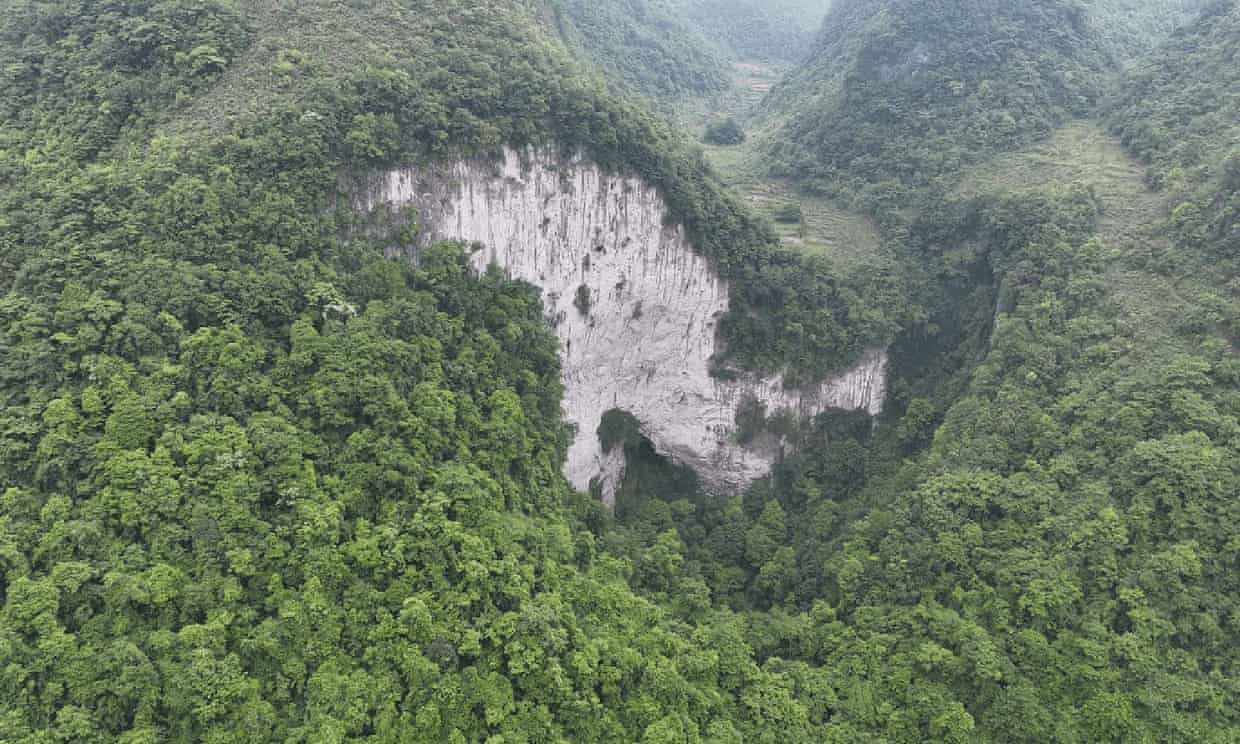
Photo: Guangxi speleology research team 702 via the Guardian.
Cave explorers have come across a sinkhole, or karst, in a semi-autonomous region of southern China. Previously known only to locals, it is 306 metres (335 yards) in length, 150 metres (164 yards) wide and 192 metres (210 yards) deep. It has a forest at the bottom.

When I was a kid spending summers on Fire Island, we all thought the Sunken Forest the most magical place ever. But just imagine if a forest were so removed from the world that it harbored previously unknown species! Scientists in China are beginning to study a forest of tantalizing possibilities at the bottom of a huge sinkhole.

Stephanie Pappas reports at Live Science, “A team of Chinese scientists has discovered a giant new sinkhole with a forest at its bottom. 

“The sinkhole is 630 feet (192 meters) deep, according to the Xinhua news agency, deep enough to just swallow St. Louis’ Gateway Arch. A team of speleologists and spelunkers rappelled into the sinkhole on Friday (May 6), discovering that there are three cave entrances in the chasm, as well as ancient trees 131 feet (40 m) tall, stretching their branches toward the sunlight that filters through the sinkhole entrance. 

” ‘This is cool news,’ said George Veni, the executive director of the National Cave and Karst Research Institute (NCKRI) in the U.S., and an international expert on caves. Veni was not involved in the exploration of the cave, but the organization that was, the Institute of Karst Geology of the China Geological Survey, is NCKRI’s sister institute. …

“Veni told Live Science, [that] southern China is home to karst topography, a landscape prone to dramatic sinkholes and otherworldly caves. Karst landscapes are formed primarily by the dissolution of bedrock, Veni said. Rainwater, which is slightly acidic, picks up carbon dioxide as it runs through the soil, becoming more acidic. It then trickles, rushes and flows through cracks in the bedrock, slowly widening them into tunnels and voids. Over time, if a cave chamber gets large enough, the ceiling can gradually collapse, opening up huge sinkholes. 

” ‘Because of local differences in geology, climate and other factors, the way karst appears at the surface can be dramatically different,’ he said. ‘So in China you have this incredibly visually spectacular karst with enormous sinkholes and giant cave entrances and so forth. In other parts of the world you walk out on the karst and you really don’t notice anything. Sinkholes might be quite subdued. … Cave entrances might be very small, so you have to squeeze your way into them.’ 

“In fact, 25% of the United States is karst or pseudokarst, which features caves carved by factors other than dissolution, such as volcanics or wind, Veni said. About 20% of the world’s landmass is made of one of these two cave-rich landscapes. 

“The new discovery took place in the Guangxi Zhuang Autonomous Region, near Ping’e village in the county of Leye, according to Xinhua. Guangxi is known for its fabulous karst formations, which range from sinkholes to rock pillars to natural bridges and have earned the region UNESCO world heritage site designation.

“The sinkhole’s interior is 1,004 feet (306 m) long and 492 feet (150 m) wide, Zhang Yuanhai, a senior engineer with the Institute of Karst Geology, told Xinhua. … Chen Lixin, who led the cave expedition team, told Xinhua that the dense undergrowth on the sinkhole floor was as high as a person’s shoulders. Karst caves and sinkholes can provide an oasis for life, Veni said.

‘I wouldn’t be surprised to know that there are species found in these caves that have never been reported or described by science until now,’ [team leader] Lixin said.

“In one West Texas cave, Veni said, tropical ferns grow abundantly; the spores of the ferns were apparently carried to the sheltered spot by bats that migrate to South and Central America.

“Not only do sinkholes and caves offer refuge for life, they are also a conduit to aquifers, or deep stores of underground water. Karst aquifers provide the sole or primary water source for 700 million people worldwide, Veni said. But they’re easily accessed and drained — or polluted.” More at Live Science, here. No firewall.

The Washington Post offers more on the forest. Reporter Marisa Iati writes, “Large sinkholes are known in Chinese as ‘tiankeng,’ or ‘heavenly pits.’

“The sinkhole near Ping’e village is known to local residents as Shenying Tiankeng, or ‘the bottomless pit.’ From a distance, the cliff looks like a pair of soaring wings, the Guangxi Daily newspaper reported.

“The researchers arrived at the sinkhole May 6 and saw dense trees blocking the bottom of the pit, the newspaper reported. They used drones to explore the area and then rappelled and hiked to the bottom for several hours, passing dense thorns and fig plants. They found three caves in the wall that may have formed early in the sinkhole’s evolution, Zhang Yuanhai, senior engineer at the Institute of Karst Geology of China Geological Survey, told Chinese state-run news agency Xinhua.

“While trees exist in other sinkholes, Veni said they can only grow if the hole is shallow enough and has a big enough opening to let in sunlight. The newly explored sinkhole is almost definitely home to small animals, such as insects, that are currently unknown to scientists, he said.”

More at the Post, here.

Read Full Post »

Photo: Natasha de Vere & Col Ford, Barcode Wales, Flickr, CC BY 2.0.
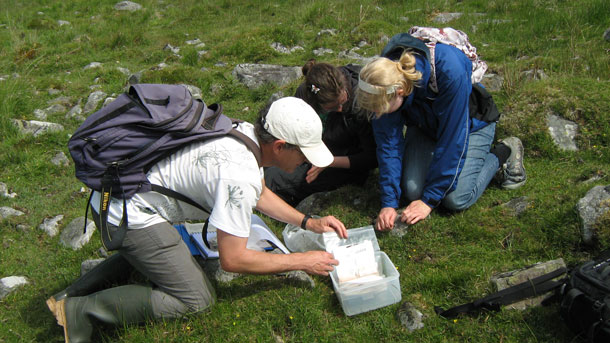
Samples of an organism’s genome are obtained in the field, before being brought back to the lab for the barcoding process.

Some years ago, I learned that students at High Tech High, which involves kids in real-world projects (click here), were helping rangers in Africa to identify poached meat with a DNA test they had developed. Turns out, using DNA that way was just the beginning of its possibilities for the environment.

According to the radio show Living on Earth, the 1.3 million species that have been identified and recorded on Planet Earth are just a small fraction of what exists. So host Steve Curwood decided to look at how DNA is helping to catalog many more.

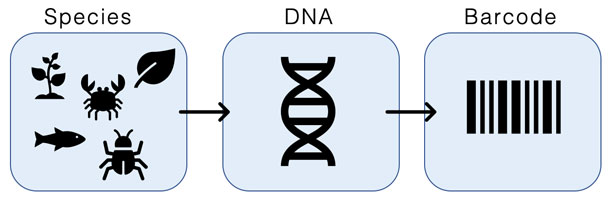
“CURWOOD: To make it easier to identify species, the International Barcode of Life Consortium is using a technique known as DNA barcoding. It can give a quick readout that tells whether a sampled organism is known to modern science, and if not, provide a marker to register it as a newly discovered life form. Paul Hebert is the molecular biologist who developed DNA barcoding.

“Paul, welcome to Living on Earth. Take us through the process of DNA barcoding. You find an organism you want to identify, and then?

Photo: LarissaFruehe, Wikimedia Commons.

“HEBERT: [You] might just touch it … and pick up enough of its DNA. [But] in the case of smaller organisms, where we may be prepared to sacrifice them, and where we want to have a voucher specimen in a collection that we can look at and photograph and analyze in other ways, we might remove a tiny piece of tissue. If it were an insect, six legs, remove one of those legs and extract the DNA from that. That’s a fairly simple process. When you do that DNA extraction, of course, you get all of the DNA in the genome. … In the case of an insect, it might be 500 million base pairs. And we just want to read 500 of them. And you can think of the whole genome as sort of a book of life. And we want to read just one of those pages. So to do that, we use the polymerase chain reaction, which basically Xerox copies a selected page in that much larger book of life. And that prepares [for] sequencing the DNA. …

“CURWOOD: Where can that information go from there? And what can it do? …

“HEBERT: It was important to develop an informatics platform that’s now been adopted by the global community. It’s a platform called the Barcode of Life Data System, acronym ‘BOLD’. And basically, all of the data from each individual specimen go into that database, together with an image of the specimen and where it was collected, and by whom; all of the details. And so, let’s say you begin by sequencing an American Robin, next time you were to encounter a feather on your lawn that happened to derive from that bird species, you would get a connection to that reference sequence in the bar code library, in BOLD. …

The idea is to build up this reference library, so it has representative sequences for every species on our planet. And that’s what we’re in the process of doing now.

“CURWOOD: Now, of course, this is a very handy approach in academia with nice big laboratories. What about somebody who’s in the field? How useful is this? …

“HEBERT: In Kruger National Park, [the rangers who] normally are involved in suppressing poaching of rhinoceroses joined in a massive collection program that gathered up about a million specimens from that largest national park in South Africa … and we then translated those specimens into barcode records and built a DNA barcode reference library for Kruger National Park. … In the future, [you’re] going to be able to take a walk through the woods with your kids or your grandkids and see an organism and simply touch it and from its DNA barcode sequence, gain its identity. …

“CURWOOD: What’s your biggest surprise now, in this project? …

“HEBERT: For a very long time, it has been argued that beetles were the most diverse group of insects, the most diverse order of insects. … But it turns out that’s wrong. Barcoding revealed that flies are by far the most diverse group of insects. And [one] particular group of flies, gall midges, are hugely diverse, more diverse than all of the beetles on our planet. [And] one of the earliest studies that we did in Costa Rica involved a beautiful iridescent blue butterfly that for the last 200 years has been regarded as a single species. [When] we barcoded that species, we found that in fact, it was 10 species, not one. There’s a lot of hidden diversity, even within the large species that we share on this planet, when you move down to the small stuff, it’s massive discovery.

“CURWOOD: Now, the International Barcode of Life Consortium has this mission of identifying each and every species on Earth using barcoding. What is the ultimate goal of the project? …

“HEBERT: Creating that reference sequence library for all species on the planet is going to place us in a position where it’s going to be possible for us to set up global bio surveillance system. So we can track what humanity is doing to the other life forms. … I see detailed information on the shifts in biodiversity that are happening on our planet motivating humanity to take the action needed to do better. …

“CURWOOD: Paul Hebert is a molecular biologist at the University of Guelph in Canada, and science director of the International Barcode of Life Consortium. Thank you so much, Paul, for taking the time with us today.”

More at Living on Earth, here.

Read Full Post »

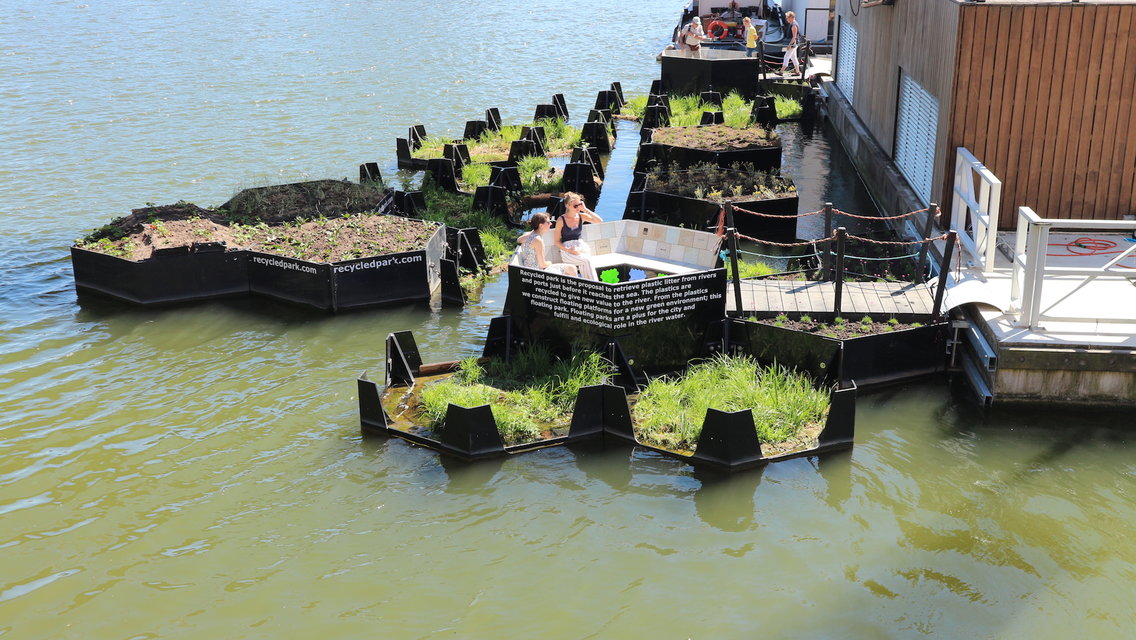
5b577d513b49fc31008b4699-1136-640

Photos: Recycled Island Foundation
This prototype for a floating park in Rotterdam is open to the public. It’s made of recycled plastic and is welcoming to many species, including homo sapiens (who is less than sapiens, it would seem, considering ongoing planet damage).

With the activities of humankind causing animal populations to decline 60 percent since 1970 and massive loss of essential insect species, I’m looking everywhere for more leadership in the environmental arena. So far, what I find are relatively small activities of isolated groups. But thank goodness for that! Small activities add up.

Jeremy Berke writes at Business Insider, “Rotterdam’s Floating Park — which is now open to visitors, though the park is just a prototype of what may become a much larger installation — is made out of plastic recycled from Rotterdam’s waterways.

“The recycled plastic is constructed into hexagonal pods, which mimic the landscape of Rotterdam’s Maas River before humans altered the landscape, according to the Recycled Island Foundation, the group behind the park.

“The pods can be used to create gardens, as habitat for wildlife, or for chilling out, and they can be molded into different seating arrangements.

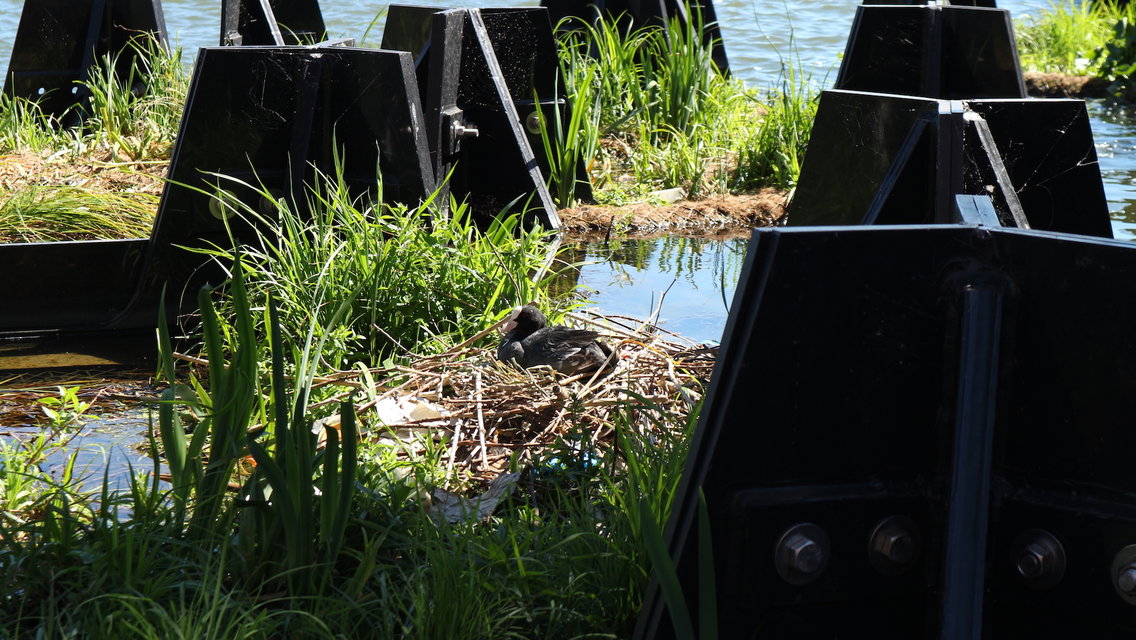
5b577d863b49fc2e008b4697-1136-640

The Recycled Island Foundation says the park’s plastic hexagons were designed to provide habitat for native waterbirds, plants, fish, and even algae.

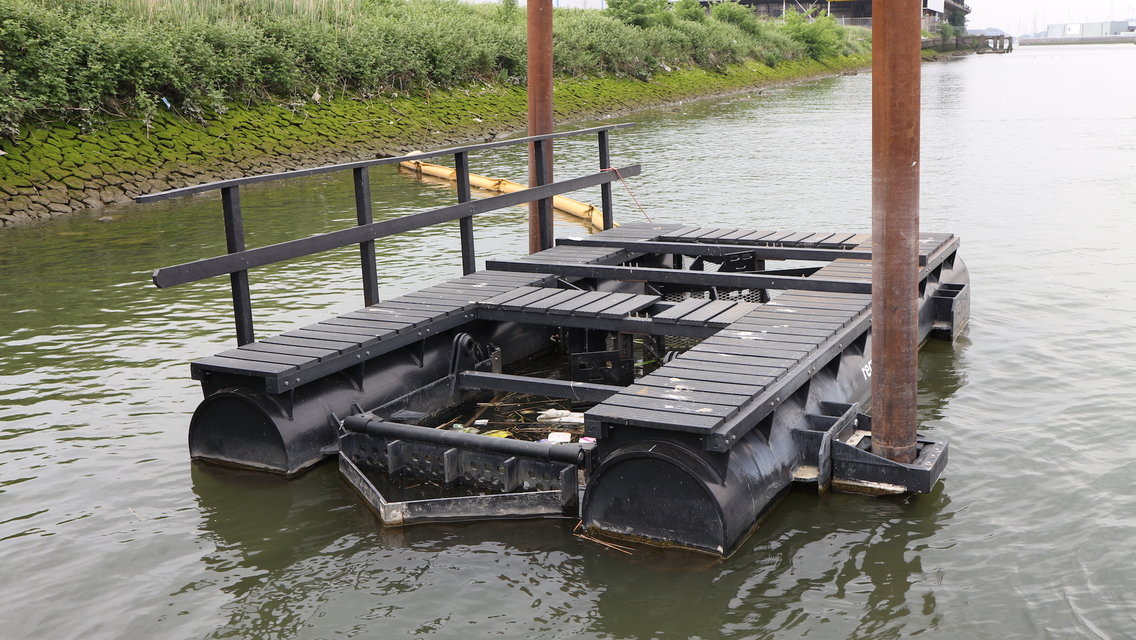
“On top of that, plastic dumped into the city’s canals is collected by ‘litter traps,’ which prevent plastic from flowing into the ocean.”

Pretty sure that dynamic and broadly effective leadership in the global-warming arena is going to come from people who are now only teenagers or even in middle school. Kids know what’s what.

More at Business Insider, here.

A litter trap in Rotterdam collects plastic waste, which can be recycled to make a floating park.

5b577c8e77bc282c008b4651-1136-640

Read Full Post »

Here’s a new one. Certain rats, with their renowned sense of smell, are being used in the fight against traffickers of endangered species.

The unusual rats had previously been tapped for tasks such as identifying who has tuberculosis and needs treatment. And as I noted a year ago, they have also been successful at sniffing out land mines.

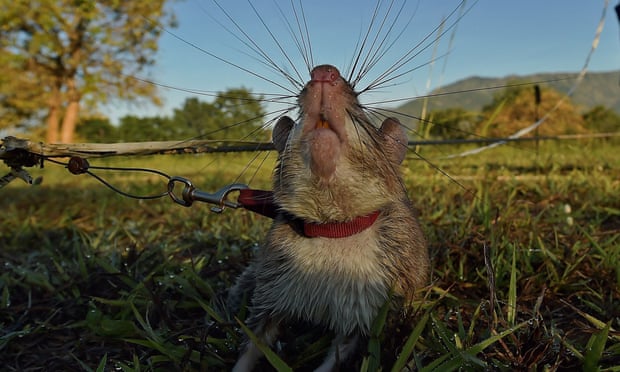
Now, according to Oliver Milman the Guardian, “An elite group of African giant pouched rats will be used at ports, initially in Tanzania, to detect illegal shipments of pangolins – the world’s most trafficked animal, which has been pushed towards extinction due to the trade in its scales and skins …

“The US Fish & Wildlife Service is spending $100,000 on a pilot project that will train rats to detect the illegal items and learn to communicate this to their human handlers. The rats, which can grow up to 3ft long, have poor eyesight but an excellent sense of smell. …

“The Fish & Wildlife Service said it hoped that the foray into the investigation of wildlife smuggling would be the first stage of a ‘much larger project to mainstream rats as an innovative tool in combating illegal wildlife trade.’ …

“The money for rat training is part of a larger $1.2m package that will provide funding for law enforcement in Cambodia, forest patrols to reduce tiger poaching in Indonesia and sniffer dogs to unearth illegal shipments of saiga antelope horn.”

More here.

Photo: Carl de Souza/AFP/Getty Images
African giant pouched rats like the one seen here are being trained to investigate illegal wildlife trafficking.

Read Full Post »

The radio show Living on Earth is a source of information that I find delightful — not only because the topics are about nature but because they are sometimes so offbeat.

Recently the focus was on a new species in the ocean under the ice.

“Under the Antarctic ice lurk newly discovered sea anemones. Frank Rack, Executive Director of the U.S. Antarctic Geological Drilling team, tells host by Steve Curwood about how the team discovered this new species that hangs upside down from the Ross Ice Shelf. …

CURWOOD: “A team from ANDRILL, that’s the Antarctic Geological Drilling, has discovered a new type of sea anemone, while testing a remotely operated vehicle under the Ross Ice Shelf off Antarctica. The researchers are geologists and sedimentologists. The director of the team is Frank Rack from University of Nebraska.

RACK: “We were melting holes through the 270 meters of ice. We were deploying oceanographic sensors to measure current speed and direction. …

CURWOOD: “How long did it take you to find sea anemones down there?

RACK: “It was a total surprise. We melted a hole through the ice, and we had been running a camera down to the sea floor and back up. And in those observations, the ice shelf looked plain and featureless, but when we put down the robot and had more sensitive camera systems and could get very close to the bottom of the ice, that’s where the anemones appeared. They were quite numerous and widespread, and they were living in burrows in the bottom of the ice shelf, hanging upside down into the water column. …

CURWOOD: “So if they’re on the bottom of the ice, way down under the sea, they’re upside down, they’re hanging down like bats, huh?

RACK: “They are. They’re at about 230 meters below the sea level, and then there’s another 650 to 680 meters of water below. So the currents are circulating water across the continental shelf and up underneath the floating ice shelf, and the anemones are feeding and surviving in that environment.”

Read the whole transcript here.

Photo: Frank R. Rack, ANDRILL Science Management Office, University of Nebraska-Lincoln
An underwater picture of the sea anemones.


Read Full Post »