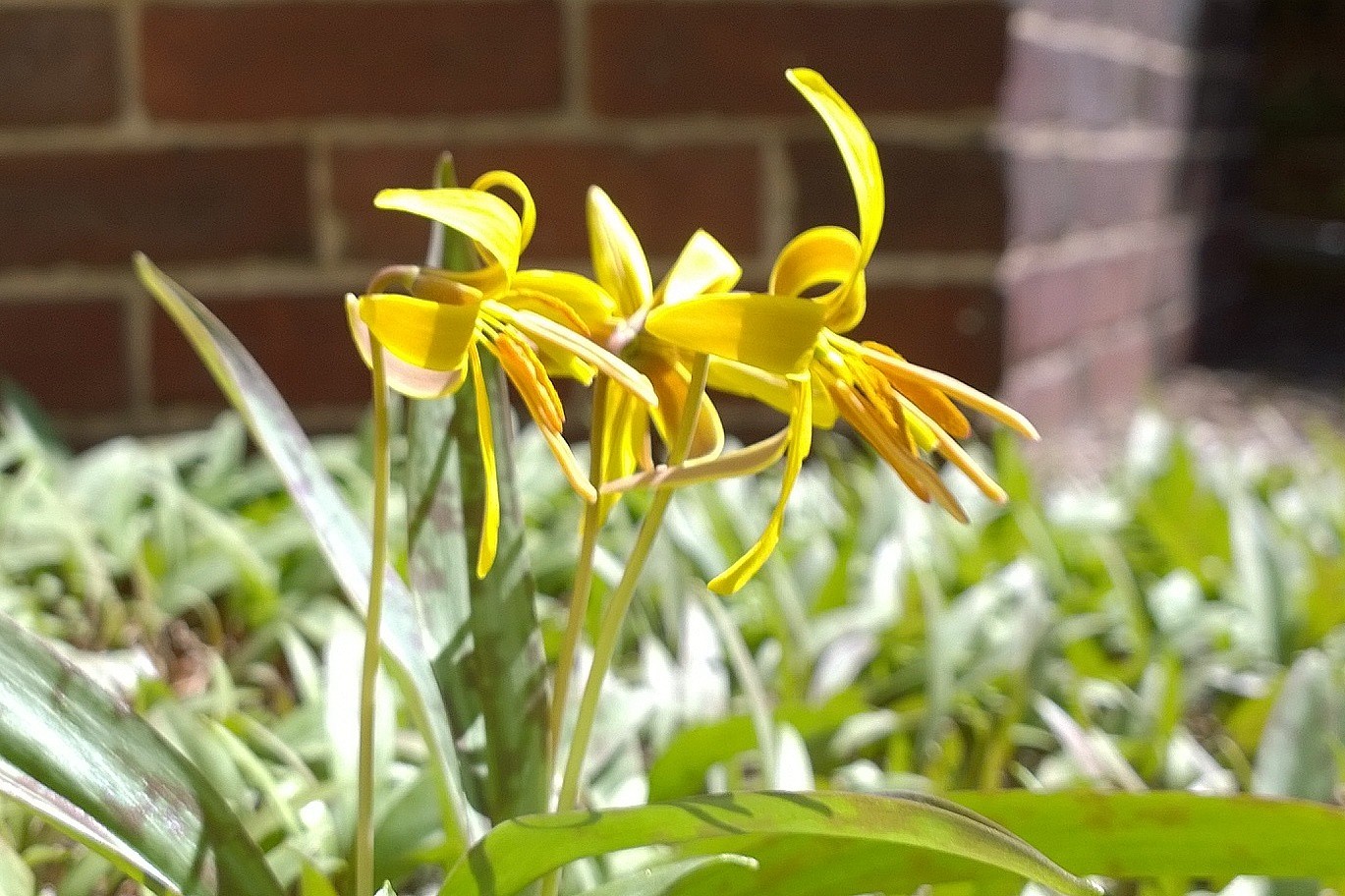
Photos: Suzanne and John’s Mom.
Trout lilies in Massachusetts.
I always look eagerly for the early spring wildflowers to emerge. I even planted several kinds when we had a house. You are not supposed to transplant them, because most require very special woodland conditions, but there are vendors who grow them from scratch, like Grow Native Massachusetts and Garden in the Woods, and their flowers are safe.
It was only this year I learned that these beloved wildflowers are called spring ephemerals.
The Massachusetts government website says, “Early flowering plants that produce leaves, bloom, and set seed quickly after the snow melts in the spring are referred to as spring ephemerals. … They represent the seasons changing. Spring ephemeral flowers also provide the much-needed first nectar and pollen of the season for over-wintering pollinators, including bumblebee queens, mining bees, halictid or sweat bees, early butterflies, beetles, flies, and gnats. In return, these insects transfer pollen from one plant to another.
“Spring ephemerals are found in deciduous forests dominated by sugar maple, ash, black cherry, and hop hornbeam trees. Before the trees have their leaves, these wildflowers show up early to take advantage of the unobscured access to sunlight. While the trees are still dormant, spring ephemerals are in a race against time. They take advantage of the above-average nutrient levels in the soil (from decomposing fall leaves) to photosynthesize quickly. This provides the energy they need for flowering, setting seed, and storing carbohydrates for the following year all before the tree canopy blocks sunlight from the forest floor.
“The forest trees pull large amounts of water out of the soil when they start to grow leaves. The amount of water being absorbed by the trees is so great that it causes groundwater levels to drop. Before this happens, spring ephemerals use the higher moisture levels in the soil to carry out their life cycle. The dampness also helps them tolerate low temperatures they often face in early spring.
“Please keep in mind that the survival of a plant population depends on each plant’s ability to produce seed for the following year. If you find a location with these beautiful plants, enjoy them in place and do not pick them. Other people who follow in your path will appreciate what you have admired and left untouched, as will the many native pollinator insects that depend on spring ephemerals for their survival.”
If you are interested in more, Wikipedia gets wonky with scientific explanations of not just spring ephemerals but desert, mud flat, and weedy ephemerals. Here’s what is says about the spring ones.
“Spring ephemerals are woodland wildflowers which develop aerial parts (i.e. stems, leaves, and flowers) of the plant early each spring and then quickly bloom, and produce seed. The leaves often wither leaving only underground structures (i.e. roots, rhizomes, and bulbs) for the remainder of the year. This strategy is very common in herbaceous communities of deciduous forests as it allows small herbaceous plants to take advantage of the high levels of sunlight reaching the forest floor prior to the formation of a canopy by woody plants. Examples include: spring beauties, trilliums, harbinger of spring and the genus of Dicentra particularly D. cucullaria, Dutchman’s breeches and D. canadensis, squirrel corn.”
More at Wikipedia, here. Mass.gov, here, has some great photos.
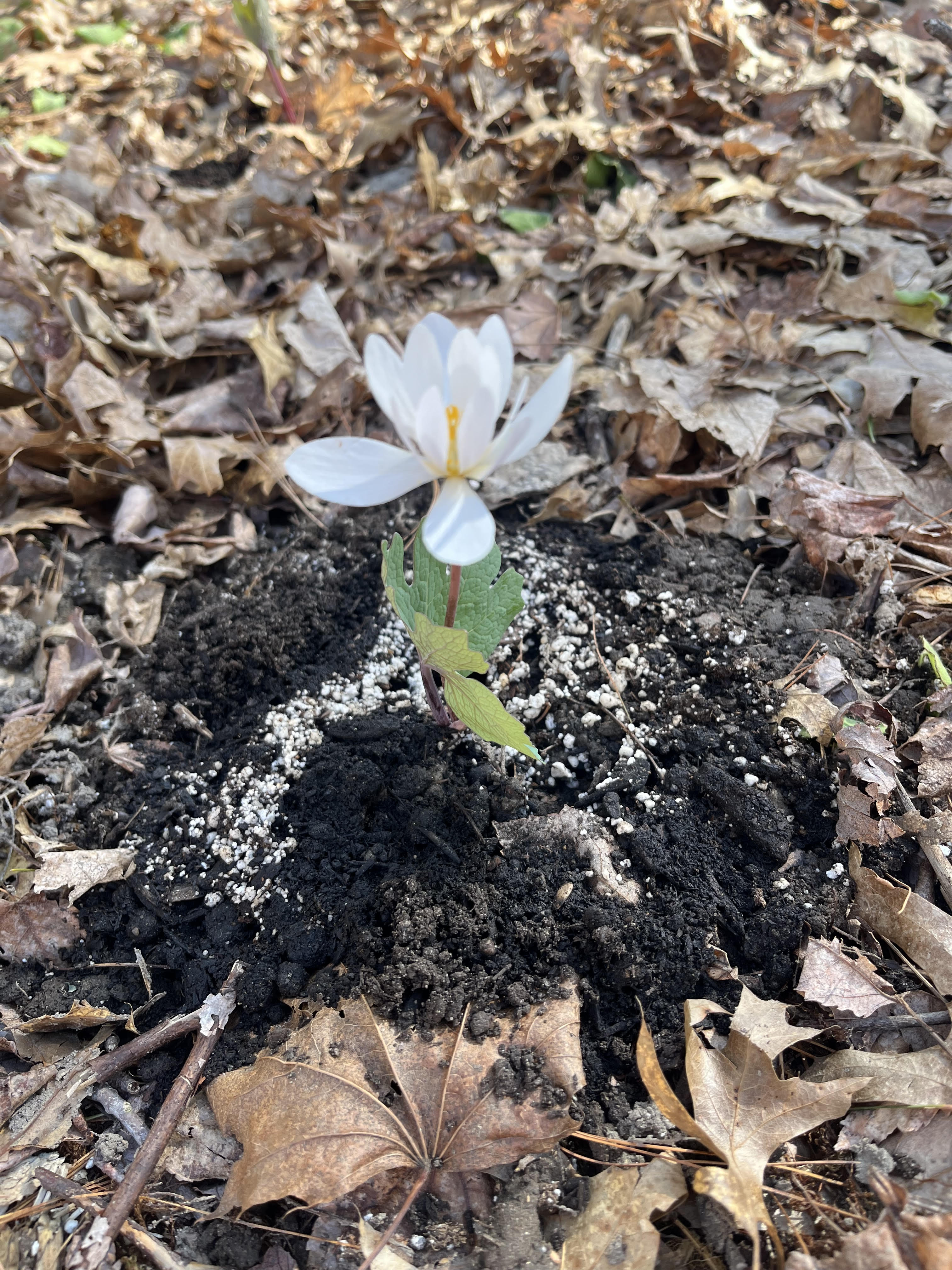
An early spring flower called bloodroot, planted by a committee at my retirement community.

 Suzanne's Mom's Blog